
You're at a Tuesday class next to two students learning the same routine. One runs it from start to finish every time, fixing nothing in particular. The other spends ten minutes on one weight transfer, films it, corrects one thing, and tries again. Within a month, the second student's lines look cleaner and their timing is steadier. That gap usually comes from how practice is structured, not from talent.
The dance technique tips below work as small, repeatable drills. Each one gives you a coaching cue to say out loud, a common pitfall to watch for, and a self-check you can do alone or with a partner. They cover posture, footwork, musicality, core control, partner connection, isolations, feedback, and recovery, and they apply whether you're learning Ballroom, Latin, or social dance.
Pick one drill at a time and repeat it at low speed until the movement feels automatic. If you want the background on why that works, explore how muscle memory works before you start. Beginners get a clear first target. Advanced dancers get a way to clean up habits that full routine run-throughs hide. Keep your phone nearby for video, work for ten focused minutes, and stop while your alignment is still good.
1. Build a Strong, Balanced Posture
Think of posture as an active stack, not a pose you freeze. Your head sits over your ribs, your ribs sit over your pelvis, and your weight falls through the middle of your supporting foot. In Waltz and Foxtrot, that stack lets a couple glide without the leader hauling the follower around the floor. In fast Latin work, the same lift keeps hip action from collapsing your chest or tipping your shoulders forward.
Here's a simple image to set the position before you drill it.
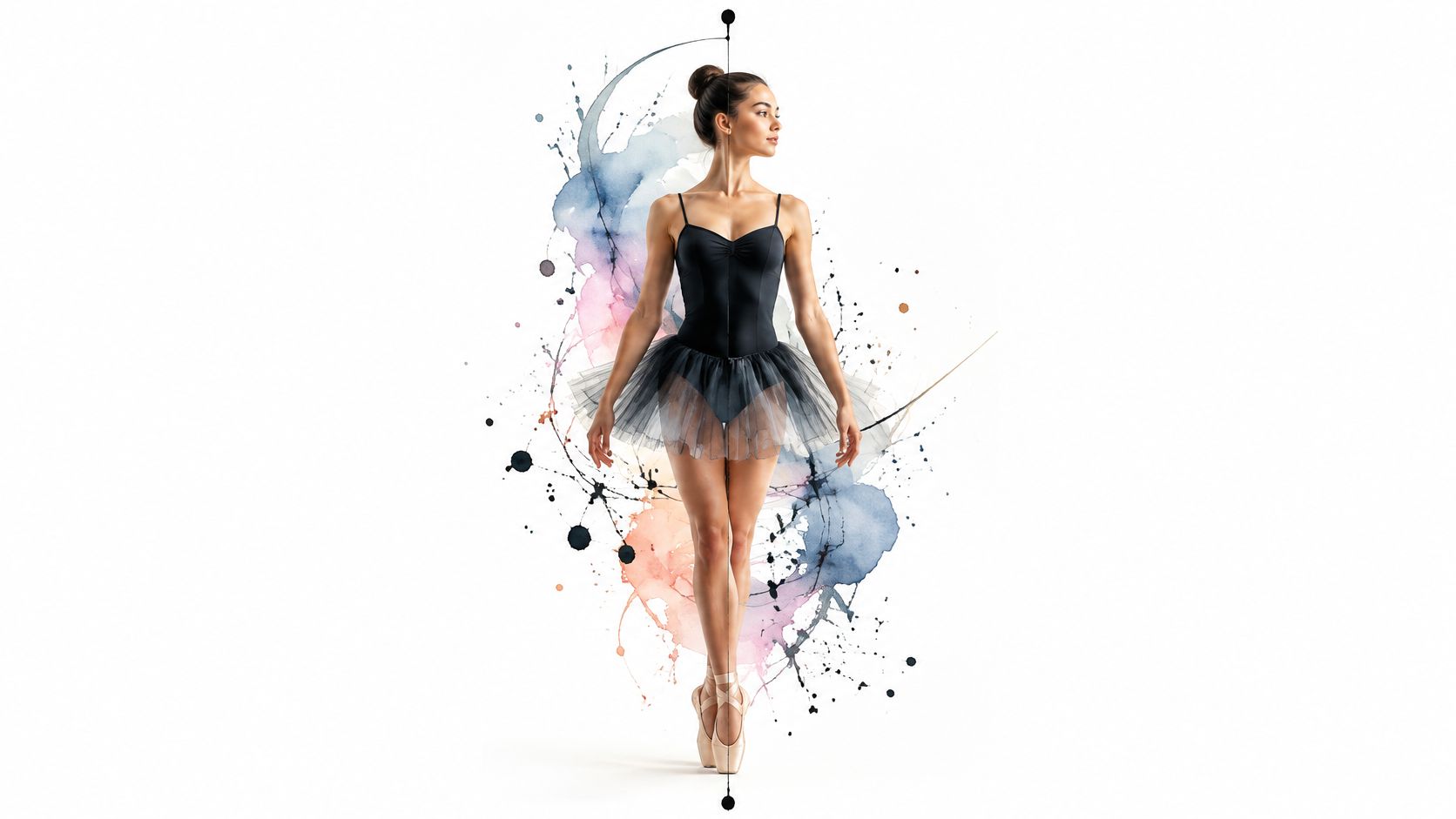
The Wall Stack Drill
Stand with your back to a wall so the back of your head, your shoulder blades, and your tailbone touch it lightly. Step six inches away and hold that alignment for five slow breaths, then walk forward eight steps without letting your chin poke out. Your cue is "ribs down, crown tall." Ribs down stops you arching your lower back to fake lift. Crown tall lengthens your spine without lifting your shoulders to your ears.
The pitfall is confusing stiffness with strength. If you can't breathe easily, turn your head, or lower into your knees, you're bracing, not stacking. Relax your jaw and let your shoulders drop, then find the lift again through your spine instead of your neck.
How to Check It
Film yourself from the side once a week while you do a basic box step or a slow walk. Pause the video on any frame and look at one thing only, whether your ear, shoulder, and hip roughly line up. That single-variable check is the practical core of the biomechanics-based dance-teaching study, which reported that a three-week method applied to 20 pupils cut learning time by 50% compared with traditional instruction by analyzing forces, balance, and movement execution.
Worked example for a wedding couple: practice the wall stack, then take hold and walk to your song without any steps at all. If you stay stacked while walking in frame, the actual choreography gets far easier to layer on top. For eyes on your own alignment, book your free complimentary lesson and ask for personal posture feedback.
2. Master Footwork and Weight Transfer
Most timing and balance problems are really weight problems. If your weight is stuck between two feet, you can't turn cleanly, you can't respond to a lead, and the next step arrives late no matter how well you know the counts. Clean footwork means you know exactly which foot holds you at every moment, and the free foot is ready to move.
Look at the feet first in this close-up, since placement is the whole drill.
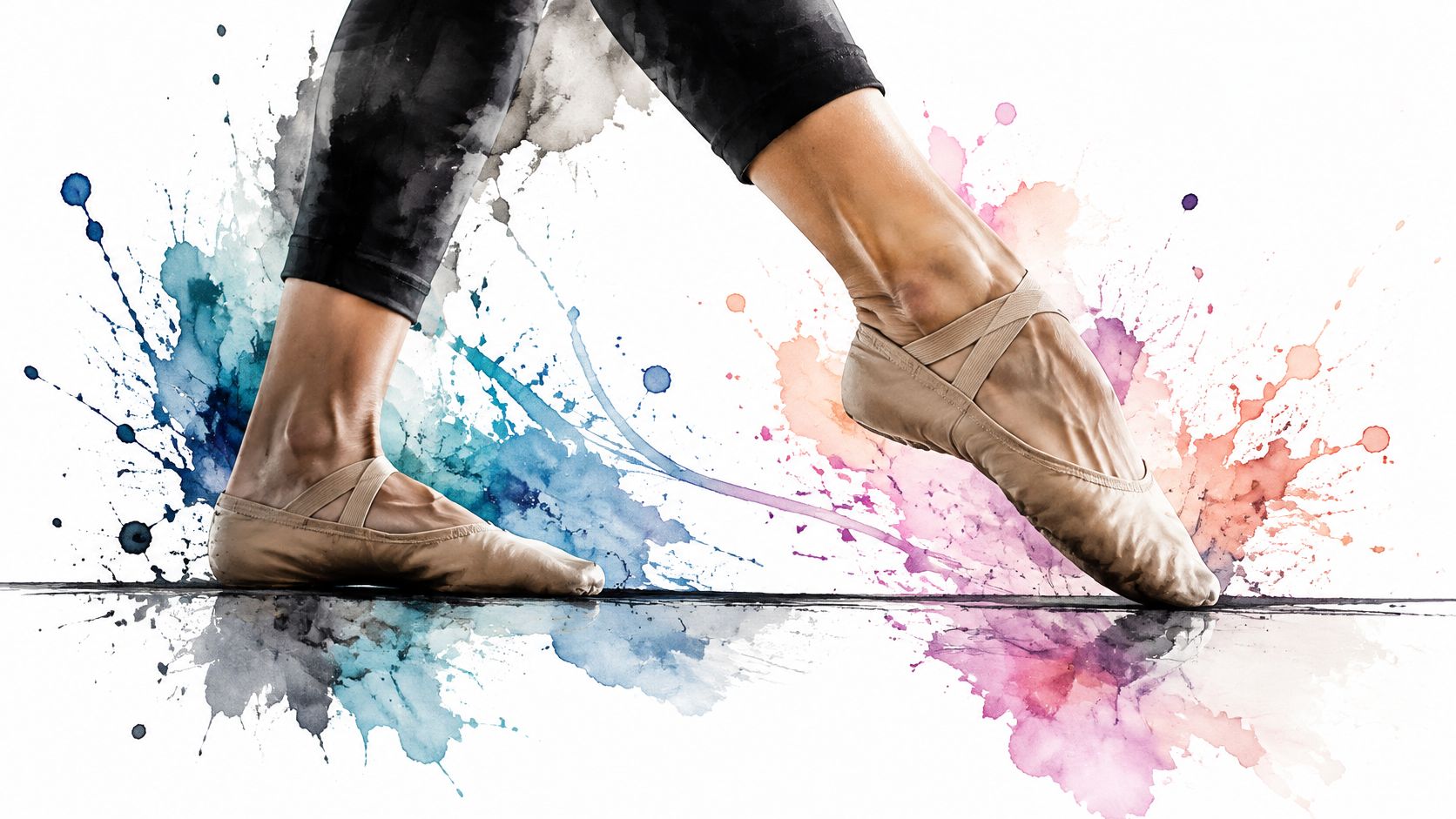
The Slow Walk Weight Drill
Put two short tape marks on the floor, one step-length apart. Walk between them at half speed, rolling through the ball of your foot, and say "arrive, settle, free" as your weight lands, centers, and releases the other foot. Do five minutes of this before you touch a full pattern. In Tango that deliberate arrival creates the grounded precision the dance needs. In Salsa and Cha-Cha, the same full transfer is what makes quick weight changes land exactly on the beat.
The pitfall is stepping and then dragging your body after your foot. Your foot places, but your hips stay behind, so every step looks like a small fall you're catching. Shorten your stride until your body travels with the step. A shorter, complete transfer beats a long, unfinished one every time.
Self-check: Pause mid-pattern on one foot. If you can't lift your free foot without wobbling or shifting, your transfer wasn't finished.
Track fewer things while you learn. In a study of 30 novice participants learning a complex dance movement, the real-time visual feedback study found that reduced feedback tracking four distal joint locations produced a significantly greater reduction in error across five error measures than full feedback tracking 12 joint-center locations. So watch your feet and hands, not all twelve joints at once.
Say you're drilling a Cha-Cha basic at home. Run the slow walk first, then the basic at half tempo with the tape marks as targets, then remove the tape for the last two minutes. If your placement holds without the marks, the skill is sticking. Our instructors can correct your footwork in person, so reserve a complimentary lesson when you're ready.
3. Develop Musicality and Rhythm
Steps done at the wrong moment still look wrong. Musicality means hearing beats, measures, phrases, and accents, and letting your body answer them instead of just surviving them. Social dancers need this more than anyone, because the DJ doesn't hand you the same track twice, and a routine memorized to one song falls apart on another.
The Count Before You Move Drill
Play your practice song through once without dancing. Count the beats out loud, clap the start of each phrase, and note where the chorus hits and where the energy drops. Then dance only your basic step for a full verse, with one job: land your weight change on the count you're saying. Your cue is "hear it, say it, step it." Wedding couples use this same listening pass to build their first dance around a chorus and bridge, so the big moment in the choreography lands on the big moment in the song.
Rumba dancers show the other end of musicality. The movement is slow and sustained, so you fill the space between beats rather than snapping from count to count. Practice that by stretching one basic across a slow track and refusing to arrive early. If you finish the step before the beat does, slow down and let the transfer last the whole count.
The pitfall is counting in your head while your feet do something else. Silent counting drifts the moment a pattern gets hard. Count out loud during practice, because your voice forces your ears and feet to agree. You can drop the voice later, once the agreement is automatic.
A Short Practice Session That Works
- Listen once: Count aloud, find the chorus, and mark any tempo change.
- Dance basics only: One verse, one basic step, weight on the spoken count.
- Change the track: Same basic, different genre, so your timing has to adapt.
Short bouts count more than people expect. In a pilot study of 48 adults aged 18 to 85 doing five-minute bouts of self-selected dancing, the National Endowment for the Arts report found that 92% reached vigorous intensity with music when instructed to dance vigorously. Five focused minutes on one rhythm is real practice.
Self-check: record yourself and watch with the sound off. If a viewer can guess the beat from your feet alone, your timing is visible. If they can't, go back to counting aloud. To train your ear with a coach, book a complimentary lesson and bring a song you love.
4. Strengthen Your Core and Maintain Body Control
Your core is not a six-pack you flex for photos. It's the deep abdominals, back, and hip muscles that brace your spine and steady your pelvis while your legs and arms move. When those muscles switch on at the right moment, your limbs move freely without dragging your balance with them. When they don't, your lower back and shoulders do the job instead, and they complain about it later.
This pose shows the control you're training, a steady center with everything else reaching away from it.
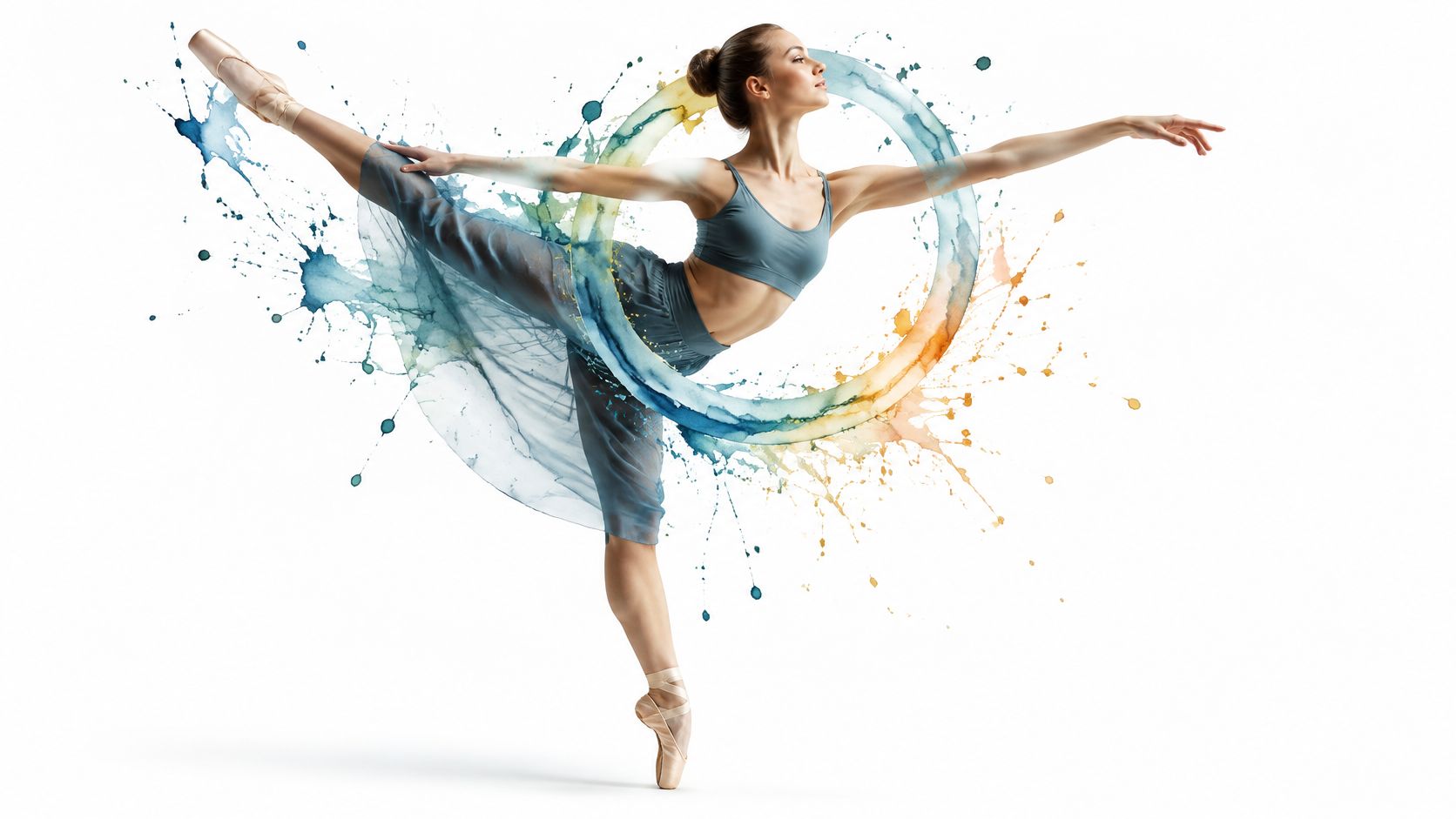
The Brace Before You Move Drill
Practice planks, dead bugs, and bird-dogs three times a week, then take the skill straight onto the floor. Before a turn, a rise, or a weight change, exhale gently and set your middle as if someone's about to poke you in the stomach. Your cue is "brace, then move." Competitive ballroom dancers use Pilates-style work like this to hold frame through Viennese Waltz rotations, and Latin dancers use the same control to move their hips while the upper body stays quiet.
The pitfall is tightening constantly. A core that's clenched for a whole song locks your ribs, kills your breathing, and makes isolations impossible. Brace for the moment of effort, then soften to a low background tension. Control is timing, not permanent tension.
Conditioning pays off in durability too. The 2013 peer-reviewed review of dance-injury research reported a three-year prospective study in which professional male ballet dancers saw injury incidence fall from 4.76 to 2.22 injuries per 1,000 exposure hours after physical training was implemented, a reduction of approximately 53%. That's ballet, but the ankles, knees, hips, and spine you load in ballroom turns and rises follow the same logic.
Worked example: do eight dead bugs, stand up, and immediately drill four slow spot turns. If your torso stays stacked instead of tipping sideways, the brace is transferring to your dancing. Stretch your hip flexors and lower back afterward, since tight hip flexors pull your pelvis out of position and undo the work. Our instructors can recommend core exercises matched to your level, so schedule a complimentary lesson to get a starting set.
5. Refine Partner Connection and Frame
Two people can know the same steps and still feel like they're wrestling. The difference is the frame, the shape your arms and torso make so movement information travels from one body to the other. A good frame is firm enough to communicate and soft enough to adapt. The lead guides through body movement, the follow responds to weight and direction, and nobody has to guess or shove.
Notice the shared shape in this couple before you look at their feet.

The Light Pressure Drill
Stand facing your partner, palms touching at chest height, elbows down. One of you walks slowly in any direction while the other matches, keeping the palm pressure constant, never heavier, never gone. Your cue is "move your body, not your hands." Then take a real dance hold and repeat it with a simple basic. Swing dancers live on this skill, because a responsive frame is what makes fast, dynamic moves possible on a crowded floor without collisions.
Switch roles every few minutes. Leads who've followed stop muscling their partners around, and follows who've led stop back-leading out of impatience. If you want the lead's side of that conversation in more depth, our guide to how leading works in ballroom dancing breaks down the signals step by step.
The pitfall is gripping with the hands and hiking the shoulders. Connection comes from your center through a toned arm, not from squeezing fingers. If your shoulders creep toward your ears, drop your elbows slightly and reconnect from your back. The self-check is simple: your partner should feel your weight change before your feet arrive, not after.
Frame also has to fit the body in front of you. If a standard hold position hurts someone's shoulder, lower the hand, widen the stance, or change the activity rather than forcing the person into the shape. Recent inclusive-dance research recommends accessible spaces, flexible yet consistent instruction, individualized participation and communication, and proactive attention to sensory considerations. The standard stays the same, clear timing and communication. The shape adapts.
Wedding couples feel this fast. Ten minutes of palm-pressure walking usually does more for first-dance confidence than learning three new steps. Practice it, then experience partner work in a complimentary lesson with an instructor adjusting your hold in real time.
6. Improve Isolations and Hip Movement
Isolation is a party trick with a serious job. Moving one body part while the rest stays still is what gives Salsa, Cha-Cha, and Rumba their character, and it's also how you prove your core control is real. Hip action in Latin dance doesn't come from wiggling. It comes from weight transfer through a bent knee into a straightening leg, with the pelvis responding.
The Slow Figure-Eight Drill
Stand in front of a mirror, feet under your hips, knees soft. Trace a small, slow figure-eight with your pelvis while your ribs and shoulders stay level and quiet. Your cue is "pelvis moves, chest stays home." Do ten slow reps, rest, then ten more slightly larger. Salsa dancers use this action on every step to stay grounded and expressive, and Cha-Cha dancers match it to the pulse of the music so the hips mark the rhythm the feet are dancing.
Watch this demonstration once before your first set, paying attention to which body part initiates each movement.
The pitfall is driving the movement from your lower back. If your back arches and rounds to swing your hips, you'll get a sore spine and a muddy look. Keep the range small, move from the pelvis, and let your knees do the work of leveling the motion. Warm your hips up first with gentle circles and leg swings, since cold hip joints borrow range from your back.
Match your correction style to what you're fixing. In a 10-day experiment with 40 ballet dancers, the feedback study found the interaction between feedback type and movement type was significant, with visual feedback more beneficial for technical movement and verbal feedback more useful for expressive movement. Use the mirror to check hip placement, then use imagery, like stirring a large pot with your pelvis, once you start shaping expression.
Self-check: rest your fingertips lightly on your bottom ribs during the drill. If your fingers ride up and down, your torso is joining in. Worked example: drill figure-eights for three minutes, then dance a Rumba basic box and notice whether the hip settles on each weight change without your shoulders swaying. For coaching on authentic Latin hip technique, book a complimentary lesson and bring your questions.
7. Use Feedback, Video, and Structured Practice
You can't fix what you can't see, and you can't feel everything you're doing. Shoulders rise, weight sits back, and timing drifts, all while the movement feels fine from the inside. That's why competitive dancers review routine recordings with coaches between rehearsals, and why students who keep a short practice notebook tend to improve more steadily than students who rely on memory.
The One Goal Practice Drill
Start each session by writing one technical goal at the top of a page, like finish my weight transfer in the underarm turn. Record a thirty-second clip at the start, drill for ten minutes, then record the same clip at the end. Your cue is "one goal, one clip, one fix." Compare only that one variable between the two clips. Our full guide on practicing dancing at home explains how to set up space, music, and session length so this loop happens.
Structure is the difference between practice and just dancing a lot. The 2025 mixed-methods study on motor learning in dance technique identified four central training principles for dance educators: directing the learner's focus of attention, using repetition, incorporating rest, and providing feedback. Notice that rest and feedback sit beside repetition. Unfocused drilling without either one mostly rehearses your mistakes until they're comfortable.
Repeat a movement only while you can still do it the way you intend. Once fatigue changes the shape, you're practicing the wrong version.
The pitfall is recording everything and analyzing nothing, or its opposite, watching one clip and trying to fix six things at once. One correction per session feels slow for a day and compounds fast over a month. Film from the front to check alignment and from the side to check weight placement, and keep clips dated so month-to-month change is obvious.
Worked example: a social dancer films a Foxtrot basic every Sunday for four weeks, fixing only frame height. By week four the before and after clips show level arms and, as a bonus, fewer collisions with their partner's feet. Self-review gets you far, but a second set of trained eyes gets you farther, so start with a complimentary lesson for direct feedback on your next goal.
8. Prioritize Flexibility, Breathing, and Recovery
Technique lives in a body, and bodies that don't recover stop cooperating. Flexible hips, hamstrings, and ankles give you cleaner lines and safer range, controlled breathing keeps tension from creeping into your frame, and rest is when the practice you did consolidates. Professional ballroom dancers schedule rest days and mobility sessions across long training seasons for exactly this reason. Social dancers who train twice a week need the same logic at a smaller scale.
The Warm Up, Breathe, Cool Down Routine
Before dancing, spend five to ten minutes on light cardio and mobility. March in place, circle your ankles and hips, swing your legs gently, and roll through your spine. During practice, breathe slowly through your nose during holds and transitions, and let a long exhale start each new sequence. Your cue is "exhale to begin." Holding your breath braces your whole torso, lifts your shoulders, and makes a relaxed frame impossible.
After dancing, walk until your breathing settles, then stretch calves, hip flexors, hamstrings, and chest while you're still warm. Our cool down stretches guide gives you a short sequence you can follow without thinking. Schedule at least one full rest day a week, and treat sharp pain, joint pain, or pain that changes how you move as a stop signal, not a challenge. Normal muscular effort fades during rest. A warning sign gets louder set after set.
Volume deserves respect. The 2025 systematic review of dance injury prevention reported that dance injury rates across recreational through professional populations ranged from 0.7 to 8.4 injuries per 1,000 hours of dance exposure, and it supported conditioning and exercise programs and neuromuscular warm-ups among the main prevention strategies. The same turn that's safe fresh at moderate tempo is a different proposition repeated fast while tired.
The pitfall is stretching cold before class and skipping the warm-up because you're short on time. Mobility work belongs to warm muscles, so move first and stretch second. Worked example: a wedding couple adds a five-minute warm-up and a short stretch to rehearsals at home and arrives at lessons loose instead of stiff, which buys them more actual dancing time. Self-check: if your alignment falls apart in the last ten minutes of every session, shorten the session and add a rest day before you add intensity. Our team can suggest mobility routines for your body during a lesson, so book a complimentary lesson to build yours.
How the eight dance technique tips compare by focus, drill, and common pitfall
| Item | Primary Focus | Key Drill | Common Pitfall | Styles Where It Matters Most |
|---|---|---|---|---|
| Build a Strong, Balanced Posture | Aligned spine, relaxed shoulders, centered weight | Stand against a wall and check alignment | Becoming stiff by overcorrecting | Waltz, Foxtrot, Latin |
| Master Footwork and Weight Transfer | Precise steps and complete weight shifts | Practice slow walks, marking each weight change | Rushing repetitive basics or reinforcing poor habits | Tango, Salsa, Cha-Cha |
| Develop Musicality and Rhythm | Hearing and expressing beats, phrases, and accents | Count beats aloud while listening to music | Focusing on counting at the expense of expression | Lindy Hop, Salsa, Mambo, Rumba |
| Strengthen Your Core and Maintain Body Control | Core stability, balance, and controlled movement | Practice planks, dead bugs, and bird-dogs | Overtraining until movement feels rigid | Viennese Waltz, Latin |
| Refine Partner Connection and Frame | Elastic frame and clear, comfortable communication | Practice partner frame with light pressure | Using too much tension and blocking movement | Swing, Ballroom, West Coast Swing |
| Improve Isolations and Hip Movement | Controlled hip, chest, and rib movement | Practice slow isolations with soft knees | Forcing hip movement and straining the lower back | Salsa, Cha-Cha, Rumba |
| Use Feedback, Video, and Structured Practice | Goal-focused practice with specific feedback | Record a short clip and review it weekly | Reinforcing errors without qualified guidance | Competitive Ballroom, all styles |
| Prioritize Flexibility, Breathing, and Recovery | Mobility, relaxed breathing, and recovery | Warm up with light cardio and mobility drills | Overstretching or neglecting rest | Ballroom, performance and competition styles |
Turn These Eight Tips Into a Practice Plan You Can Keep
Don't adopt all eight tips this week. Pick two. Most beginners should start with posture and weight transfer, because everything else, frame, timing, hip action, sits on top of a body that knows where its weight is. If you're preparing a wedding first dance, swap in partner connection as your second pick, since ten minutes of frame work will steady your nerves faster than new choreography. Competitive dancers usually get the most from the feedback drill and the recovery routine, the two habits that keep high training volume from eroding technique.
Give each chosen drill ten minutes a day. That's enough time to warm up the specific joints involved, run several slow sets with your cue said out loud, and film one short clip at the end. Ten focused minutes beat an unfocused hour, because you stop before fatigue rewrites the movement. On Sunday, record the same clip again and compare it with the previous week, judging only the one variable you trained. Ear over shoulder over hip for posture. Keep free foot free for weight transfer. Partner feeling your weight change early for frame.
Progress the drills in a deliberate order. First make the movement accurate at half speed, then make it consistent at practice tempo, and only then add full music, a partner, or a crowded floor. If a drill falls apart at a new level, that's information, not failure. Drop back one level, rebuild, and try again next session. Add practice days before you add practice length, and keep at least one rest day in the week so the work settles.
Honesty about the evidence helps you plan well too. A 2025 systematic review searched six databases and found only 8 eligible dance-injury-prevention studies out of 2,209 records, concluding that both adherence and efficacy remain understudied. So treat any single method, including these drills, as a sensible structure rather than a guarantee. What you can control is showing up regularly, working on one measurable thing, resting on purpose, and getting knowledgeable eyes on your movement before small compensations become habits.
That's where a studio helps most. Danza Academy of Social Dance has been teaching Philadelphians to dance for two generations, with studios in Philadelphia and Exton, PA, and no partner is needed to start. We welcome beginners, and our instructors bring decades of international experience across Ballroom, Latin, and social styles, from Waltz and Foxtrot to Salsa, Swing, and Hustle. Private lessons give you one-on-one coaching suited to your goals and pace, while group classes add practice partners and community.
Your first step is small on purpose. Choose your two tips tonight, put ten minutes on tomorrow's calendar, and film your starting point before you practice anything. Then, if you want expert eyes on your frame, footwork, or timing, your first lesson with us is complimentary and easy to book. Reserve your complimentary lesson, bring your Sunday clip, and let an instructor turn it into your next drill.
Bring one drill from this list to Danza Academy of Social Dance and we'll coach it with you in a free complimentary first lesson, whether you're starting Ballroom or Latin, preparing a wedding first dance, or looking for kids' classes in Philadelphia or Exton. You'll leave with a clear cue, a corrected repetition, and a practice plan sized for your week. Book today and feel the difference a single focused fix makes on the floor.