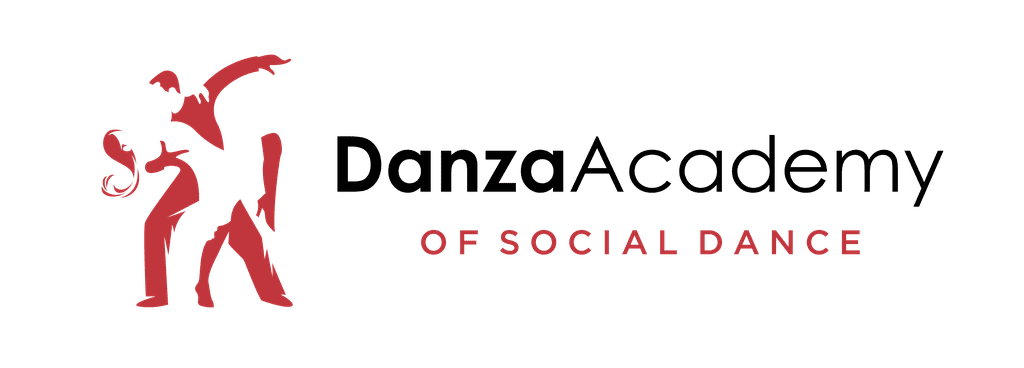
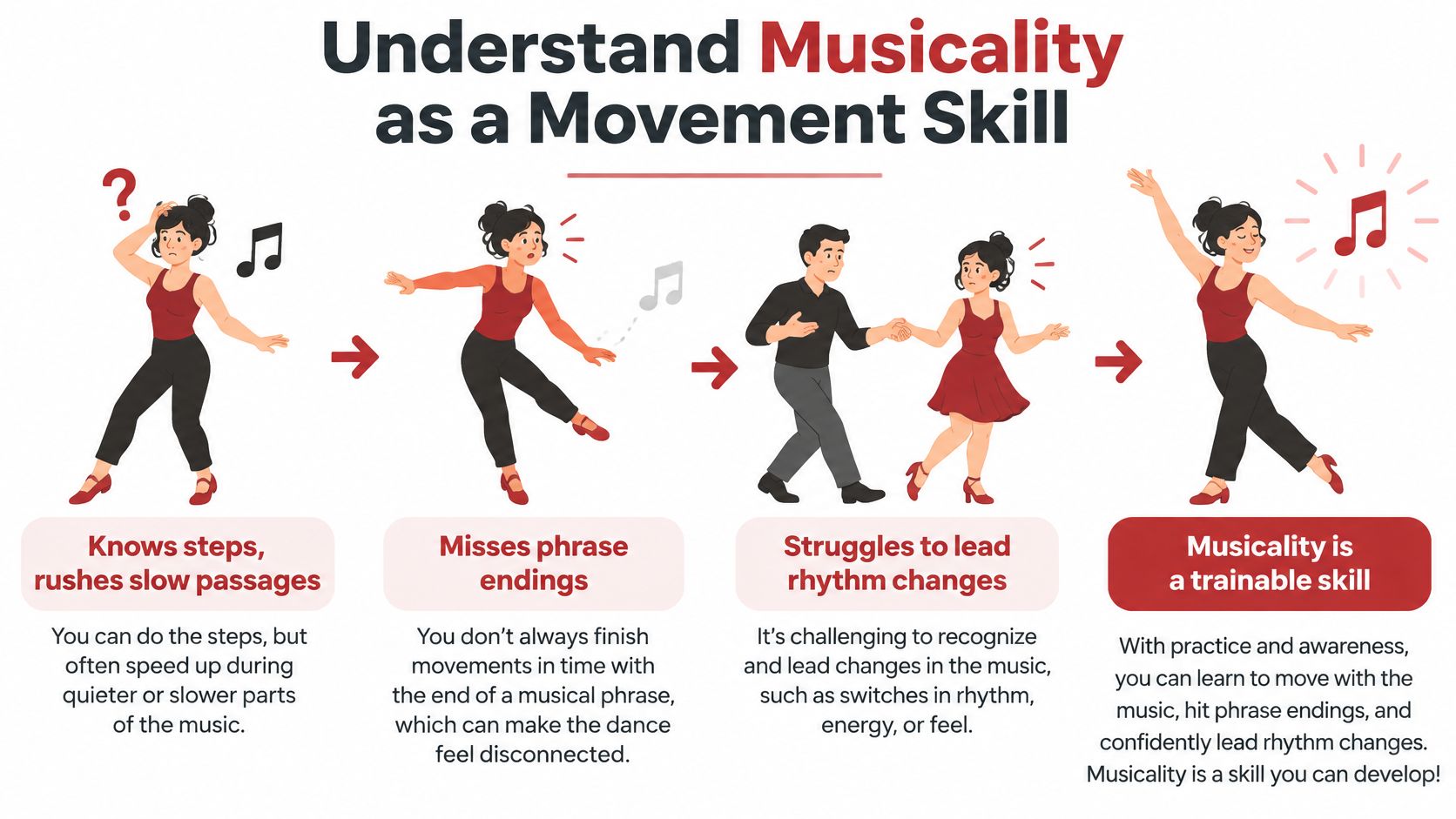
You know the steps, but the music changes and suddenly you're rushing. A slow passage feels awkward, a phrase ends before your movement does, or your partner seems surprised by a rhythm change you thought was clear. Learning how to improve musicality starts with making those moments specific, so you can practice the connection that's missing rather than repeat the routine.
Understand Musicality as a Movement Skill
On a social dance floor, knowing what comes next isn't the same as knowing when and how it belongs in the music. You might remember a turn perfectly yet begin it before your partner has finished transferring weight. You might stay on the beat but dance through a quiet passage with the same force you used during the chorus.
For practice purposes, think of musicality as the ability to hear meaningful musical details and translate them into clear movement choices. That includes timing, movement quality, and communication with another person. Counting helps, but counting alone doesn't tell you whether to sustain an action, soften a transition, or prepare an ending.
Connect listening to a physical response
Build your foundation around these connected abilities:
- Pulse: Recognize the steady beat underneath the music.
- Subdivisions: Hear the smaller divisions between main beats.
- Phrasing: Notice how musical ideas begin, develop, and resolve.
- Interpretation: Choose movement qualities that suit what you hear while remaining understandable to your partner.
A study comparing rhythm perception and production across musical backgrounds found that musicians outperformed non-musicians, while accuracy also varied with tempo, meter, and beat placement. The practical lesson isn't that dancers must become musicians. It's that you should practice different listening and timing tasks instead of treating rhythm as a single ability.
Use this progression to recognize where your connection breaks down.
Establish a baseline without choreography
Choose familiar music and stand comfortably. Tap the pulse, then replace the tapping with small weight transfers. Notice whether you can continue listening once your body starts moving.
If you lose the beat, simplify the movement rather than concentrate harder on a complicated pattern. If your timing stays steady but your weight never fully arrives over the supporting foot, ask for technical feedback.
Practical rule: Musicality isn't a verdict about whether you look talented. It's a repeatable connection between something you hear and something you do.
Practice technique and musical response together, but keep the task small enough that you can tell which needs attention.
Train Your Musical Attention
A teacher plays the same Cha Cha twice. The first time, she asks the class to clap the beat; the second, to hum the melody. Half the room nails the first task and drifts on the second, while a few dancers do the opposite. Both groups are listening. They are listening to different layers.
Your ear already has a front door, a layer it finds before the others. For one dancer it is the drum pattern, for another the singer's line, for a third a sharp accent that seems to jump out of the track. Musical attention works like a camera lens: whatever you focus on first sharpens, and the rest blurs. The skill is not hearing everything at once. It is learning which layer you default to, then deliberately shifting focus to the ones you miss.
A pilot study of professional dancers responding to rhythmic and melodic structures found different synchronization responses among dancers, with differences still noticeable one week later. Rotating listening tasks respects those differences; forcing everyone to enter the music through percussion does not.
Give yourself permission to listen before adding steps.
Ask a different question on each replay
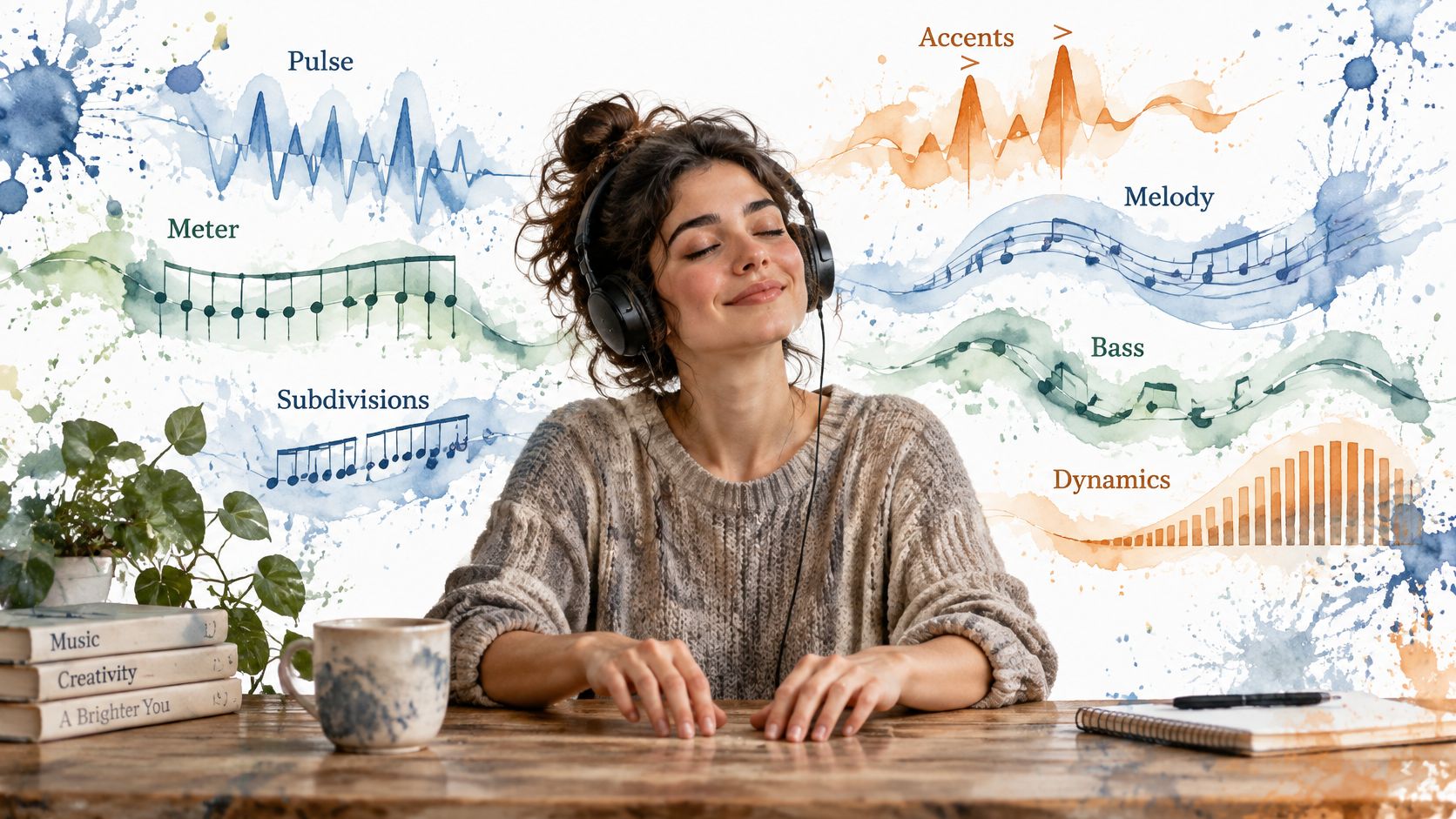
Choose a song you know well and replay one short passage four times, chasing a single layer each round.
| Replay | Question to ask | Try this |
|---|---|---|
| Pulse and meter | Where's the steady beat, and how do the beats group? | Tap evenly, then speak the grouping your teacher uses for the dance. |
| Subdivisions and accents | What happens between the main beats? | Clap one recurring detail while keeping the pulse separate in your head. |
| Bass and melody | What is the lowest line doing, and what is the tune doing? | Hum the bass line first, then the melody. |
| Dynamics | Where does the music grow or breathe? | Track the change with your hand instead of your feet. |
If the tune comes through clearly but the pulse underneath keeps slipping away, work through this guide to finding the beat in music before moving on. Chasing every layer at once is the fastest way to hear none of them.
Find the layer you skip
Run a quick comparison across styles. In a Waltz excerpt, tap the pulse and listen for its recurring grouping. With Rumba, keep your feet quiet and notice where a slow, deliberate step would want to land. With Salsa, pick out one energetic accent without assuming you must step on every prominent sound.
Then test your phrasing ear. Hum along and stop where the musical thought seems to pause. Did you feel the ending coming, or only recognize it after it passed?
Trouble picking speech out of a noisy room is a different question from hearing musical layers, and it deserves a separate resource: Z Audiology's speech in noise tool addresses that specifically. Keep it out of your dance assessment.
Whatever felt easiest is your entry point, and whatever disappeared is your practice target. Write both down.
Build Timing From Beat to Movement
A dancer can land every step and still look late because the audience sees preparation before contact. Timing works as a chain: attention selects one audible event, the body organizes around it, and the movement arrives with enough lead time to look intentional. If any link is weak, the feet may be correct while the dancing feels behind.
Choose a tempo that lets you hear the event you plan to use. Slow music can blur pulse because the space between beats invites guessing; quick music can hide a late preparation until the step is already gone. Treat the beat like a doorway: you do not run after it, you arrive as it opens.
In a 12-week controlled study involving 36 university sports-dance students, rhythmic auditory feedback combined with spatial-orientation training produced greater improvements than conventional instruction in rhythm accuracy, rhythm stability, limb coordination, center-of-gravity smoothness, and technical performance. This supports pairing ears and feet in the same drill, while leaving room for different learning speeds.
Climb one timing ladder, then change only one rung
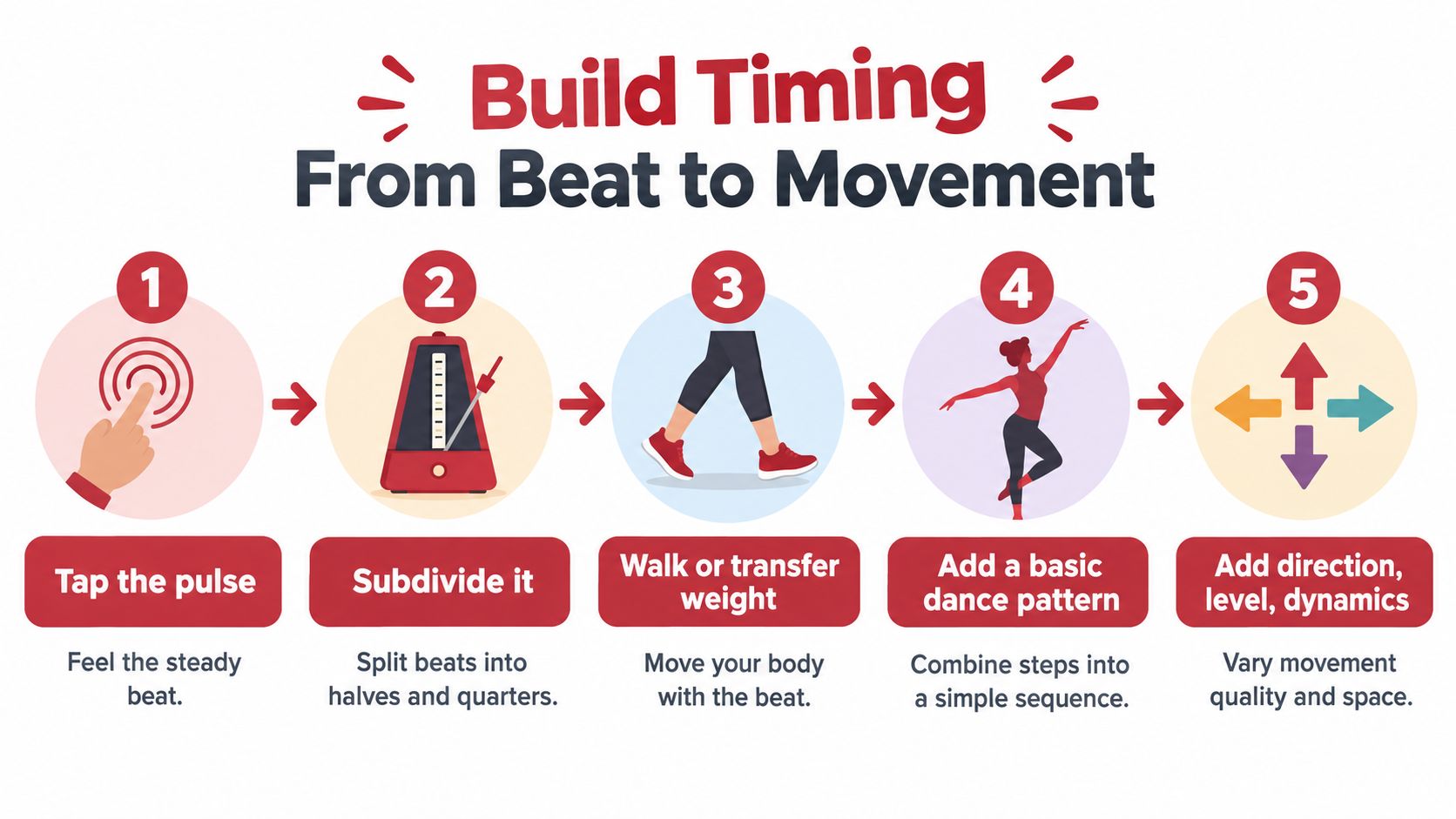
Use the same song for four short passes. First, tap the pulse with a loose hand and notice whether your attention slides to the vocal rhythm. Second, keep those taps and add a quiet “and” between them, checking that the original tap never hurries. Third, trade the tap for a walk or small weight transfer and feel the body settle over support before the next step begins. Fourth, use a basic pattern you already know and keep styling modest until the same timing survives a direction change.
When accuracy drops, lower one demand at a time. If a turn breaks the pulse, reduce travel. If the basic is clean but the arms pull you early, remove them for two repetitions. A Ballroom dancer might keep timing through a promenade change; a Latin dancer might separate foot placement from the completion of weight transfer to learn which event is being timed.
Test it with another person in the room
Agree on one visible event, such as the finish of a weight transfer, and mark it side by side before moving. Then let the leader travel a simple pattern while the follower keeps the same arrival. A missed repetition gets a diagnosis before it gets more effort: was the sound chosen clearly, was the preparation late, or did bigger movement steal the time?
Raise difficulty by changing one variable at a time. If speed is the question, this guide to dance music tempo helps separate a faster song from a denser rhythm pattern. Count out loud first, then remove the counting after both partners can name what they heard and what changed.
Shape Timing With Accent and Phrase
A dancer can land every beat correctly and still look like the music is happening somewhere else. The difference usually lives in where the movement is going. Take a familiar passage and keep the steps identical, but aim the action toward a musical arrival instead of a count. The feet stay accurate while the movement learns to grow and settle.
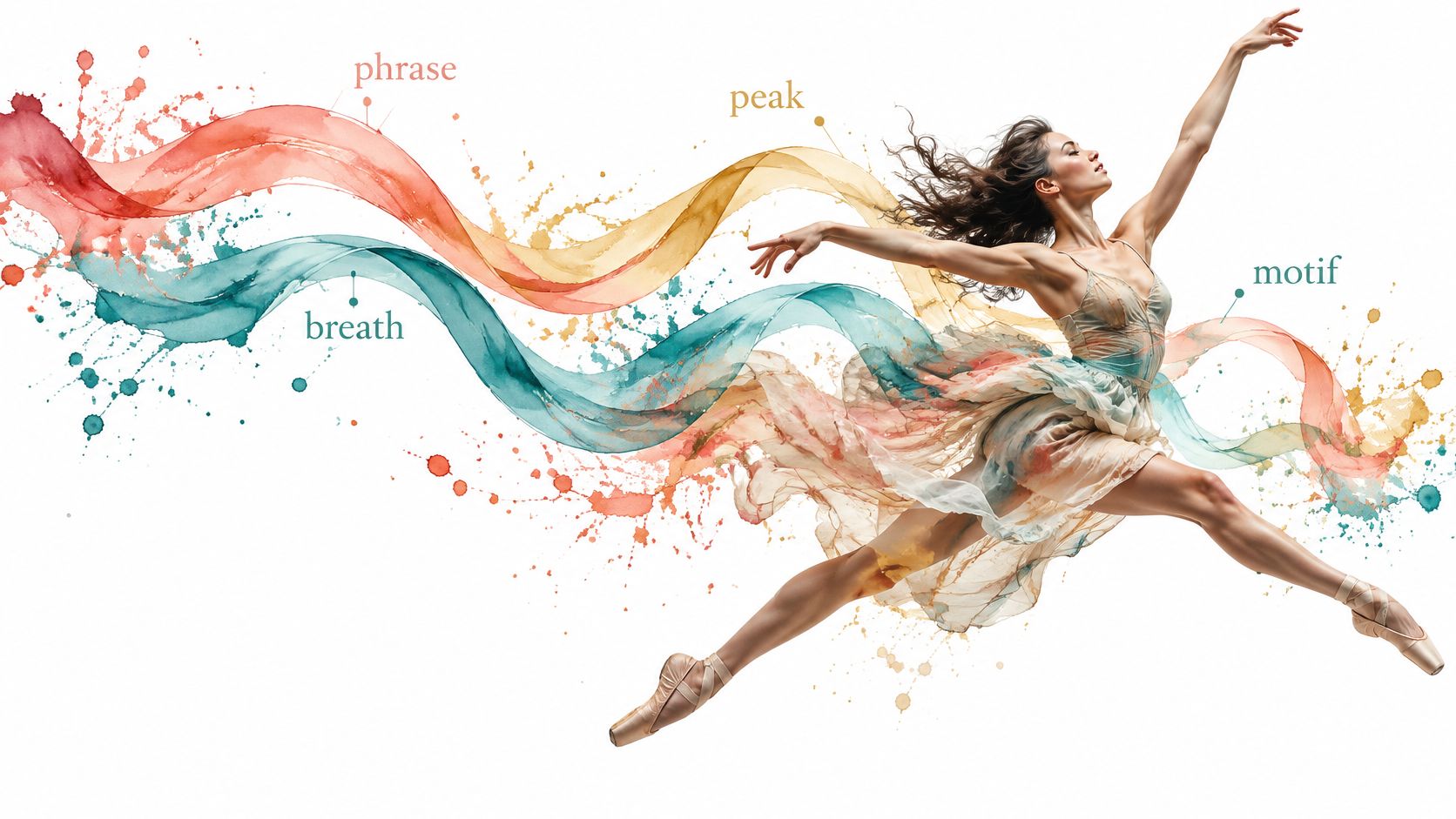
A phrase is a musical thought that stretches across successive sounds, the way a sentence stretches across words. Follow a melodic line that seems to breathe, a motif that returns, or an accompaniment change announcing a new idea. A cadence is the arrival point, a feeling of completion rather than necessarily silence.
Find the destination before adding expression
Hum the melody and lift your hand as it develops, then let the hand settle where you hear completion. Run the passage again and prepare that settling action before the ending arrives. Now listen with three questions. Where does the music pause or release? Where does it climb toward a peak? Where does one idea answer another? A pause gives you room for a quieter transition, a peak can be approached through expansion, and a call-and-response exchange invites contrasting movement qualities. A returning motif can be acknowledged consistently without repeating your whole sequence.
In a slow Ballroom passage, sustain the movement toward the cadence rather than rushing to finish the figure. In Latin practice, give a chosen rhythmic event a clearer settling action. Social dancing adds one more rule: if you cannot hear your favorite accent pattern in the track, leave it out.
Choose a decisive moment within the action
Research on timing markers in classical ballet found that the movement point aligned with the beat or offbeat changed with the action itself. Floor contact, the end of a leg gesture, or maximum velocity each served as the reference, so no single body-wide hit applied to every step.
Choose an anchor that suits the step and style: foot placement, hip settling, the completion of a rise, a rotational peak. Confirm the choice with your teacher, since different actions can legitimately finish on different counts.
An accent is a choice about emphasis. Timing and weight create it; tension only imitates it.
Surrounding movement should stay continuous, and bigger styling stops being musical the moment it hides the rhythm or makes a partner's transition harder to read.
Choose Drills for Solo and Partner Practice
A dancer may follow the melody closely, then lose the pulse during a traveling turn. Another may keep every weight transfer steady while dancing straight through the end of each phrase. Both need musicality work, but the same drill would not solve their problems.
Choose exercises by tracing the chain from what you hear to what your body does. Start with the musical layer you perceive most consistently: pulse, melody, or accents. Connect that cue to one physical action, develop it across a phrase, and check whether the result remains readable to a partner.
Match the drill to your entry point
| Practice Focus | Best For | Solo Drill | Partner Application | Measure of Progress |
|---|---|---|---|---|
| Rhythm-led | Losing pulse when footwork becomes demanding | Maintain a basic weight-transfer pattern while changing direction | Keep the agreed rhythm through a simple lead-and-follow pattern | Timing remains recognizable when direction changes |
| Melody-led | Accurate steps with little phrase shape | Hum a passage, then move toward its ending without adding steps | Agree on a musical destination while the leader keeps the pathway clear | Both partners recognize the intended arrival |
| Accent-led | Flat dynamics or unclear transitions | Contrast a light action with a more defined action on an audible accent | Prepare a direction change that acknowledges the accent without forcing it | The transition feels clear without extra pressure |
Your preferred layer is a starting point for transfer. If rhythm gives you stability, practice letting melodic movement ride above that steady base. If melody is easiest to hear, keep its shape while checking whether each weight change still arrives predictably. A dependable entry point gives you something firm to return to when the neglected layer becomes harder to follow.
For a partner exercise, give each dancer a different responsibility. One maintains a quiet walking rhythm while the other matches a melodic rise or responds to an accent. Swap responsibilities after a few phrases, then compare what each person heard. One may have followed the bass while the other relied on percussion, which gives you something concrete to discuss if your timing separates.
Make feedback descriptive and specific. “I felt the direction change before my weight arrived” gives you more to work with than “That wasn't musical.”
When you repeat a drill, vary the musical question rather than the choreography. Dance an uncomplicated pattern with attention to pulse, then melody, then a chosen accent. After each version, ask whether timing stayed clear, the intention remained visible, and your partner could respond comfortably. In class, ask the observer to assess only the target you selected. A posture correction may still help, but it will not tell you whether your phrase ending became clearer.
Create Class and Home Practice Routines
A useful routine should fit your actual week. If you can't practice daily, choose repeatable opportunities at home, in class, and during social dancing instead of waiting for a long uninterrupted session.
A meta-analysis of deliberate practice and performance found that structured practice explained approximately 21% of variation in music performance. That finding concerns music performance, not a predicted improvement in dance musicality; use it as a reason to prioritize focused work without promising that repetition alone determines achievement.
A short home session
Try this suggested ten-minute routine, adjusting the duration to your attention and available space. These timings are a practice template, not research-established requirements.
- Opening two minutes: Listen to a familiar excerpt and name a specific target, such as keeping weight transfers even beneath a changing melody.
- Middle six minutes: Alternate short attempts with immediate checks. Record an attempt, listen back, and change only the action connected to the target.
- Final two minutes: Dance without spoken counting, then note what remained dependable and what needs another attempt.
Use a clear floor area and choose movements appropriate to your space. For practical setup ideas, consult this guide to practicing dancing at home.
If you want broader musical study alongside dancing, House of Lyrics' guide on how to become a musician is an optional starting point. Keep that exploration separate from the immediate movement problem you're trying to solve.
Bring a question to class and a test to the social floor
In class, select a timing or phrasing detail before the next repetition. Ask your teacher, for example, whether you're preparing the turn early enough to complete the intended action without rushing. Preserve the technique you already know rather than changing your whole performance to emphasize the music.
After class, write a brief practice note:
- Target: What musical event were you responding to?
- Feedback: What did the teacher or partner notice?
- Next attempt: What single adjustment will you test?
At a social dance, check whether the improvement survives a different partner, track, or amount of floor space. Review afterward rather than narrating corrections throughout the dance.
Increase difficulty only when you can reproduce the target without constant rescue from counting or demonstration. Recording and later recall give you a way to compare what you thought happened with what you can repeat.
Build a Musicality Feedback Loop
When a movement misses the music, don't immediately practice it faster or repeat the whole routine. Diagnose where the connection failed: hearing, preparation, physical control, or partner communication. Each problem needs a different correction.
Use a compact cycle: listen, isolate, move, refine, apply. Listen for the event you intend to express, isolate the smallest relevant action, and test it in movement. Refine from specific feedback, then apply it outside the familiar practice conditions.
Diagnose the source of the mismatch
These checks help you avoid correcting the wrong problem:
- You're rushing: Check whether you're anticipating the beat accurately or just shortening the movement before it. Reduce travel and keep the preparation calm.
- You're dragging: Check whether you wait to hear the beat before initiating an action that needs preparation.
- You emphasize everything: Select a musical destination and deliberately leave less important beats understated.
- You succeed only in choreography: Change the order of familiar actions and see whether you can still make musical decisions.
- Your technique improves but expression stays flat: Revisit the listening target rather than adding more difficult figures.
A 2024 EEG study of ballroom dancers and non-dancers found stronger neural resonance to external rhythmic stimuli in dancers and a tendency toward predictive synchronization. Treat anticipation as preparing for an expected event, not permission to arrive early.
A comparison of musicians, dancers, and control participants also found dancers performed especially well on whole-body beat-production tasks. Keep your checks physical as well as auditory.
Verify the change outside the polished attempt
Return to the exercise after a delay, without watching the demonstration first. Try it without a metronome, then with different suitable music. Ask a partner whether the intended timing remains understandable.
For video review, a phone recording is enough. If you're considering an additional video tool, LunaBloom AI's studio-quality video maker app is an option to explore, but keep the original practice footage and audio unchanged for timing assessment. An edited presentation shouldn't become your evidence of improvement.
Progress check: Can you reproduce the musical choice when the routine, track, or partner changes?
You don't need every attempt to look polished. You need to recognize what happened, choose a useful correction, and test whether it holds. That's a more practical standard than deciding you either have musicality or you don't.
Danza Academy of Social Dance offers Ballroom, Latin, and social dance instruction where you can work on timing, phrasing, and partner communication with personalized feedback. Bring a favorite song or a step that keeps slipping off time, and book your free complimentary lesson to identify a clear next step for your dancing.