
You're on the couch with the wedding song on repeat, tapping a knee and hoping the steps will still be there when everyone is watching. You don't need dance experience to look confident and romantic. Easy first dance choreography is a small hold, a count you can say out loud, and a pattern short enough to recover if you blank.
These seven ideas match simple footwork to slow waltzes, ballads, upbeat pop, swing, and country songs. Each one includes a count and a practice shortcut so you can choose in minutes. A WeddingWire survey reported that 92% of couples chose to have a first dance, so this moment is a familiar tradition even when neither of you has ballroom training. The old guest-of-honor opening became a short presentation. A walk-on, a basic step, and a clear ending still do that job.
Match the pattern to the pulse you can already hear. Practice it slowly until the count feels boring. That's when it starts to look easy.
1. Basic Waltz Box Step
The waltz box is the calmest start when your song moves in threes. You trace a small square: forward, side, close, then back, side, close. That six-count loop in 3/4 time teaches frame, rise and fall, and rhythm in one repeat. Many classic wedding dances are this box plus a simple turn or a change of hold. Newcomer and bronze syllabi begin here for the same reason.
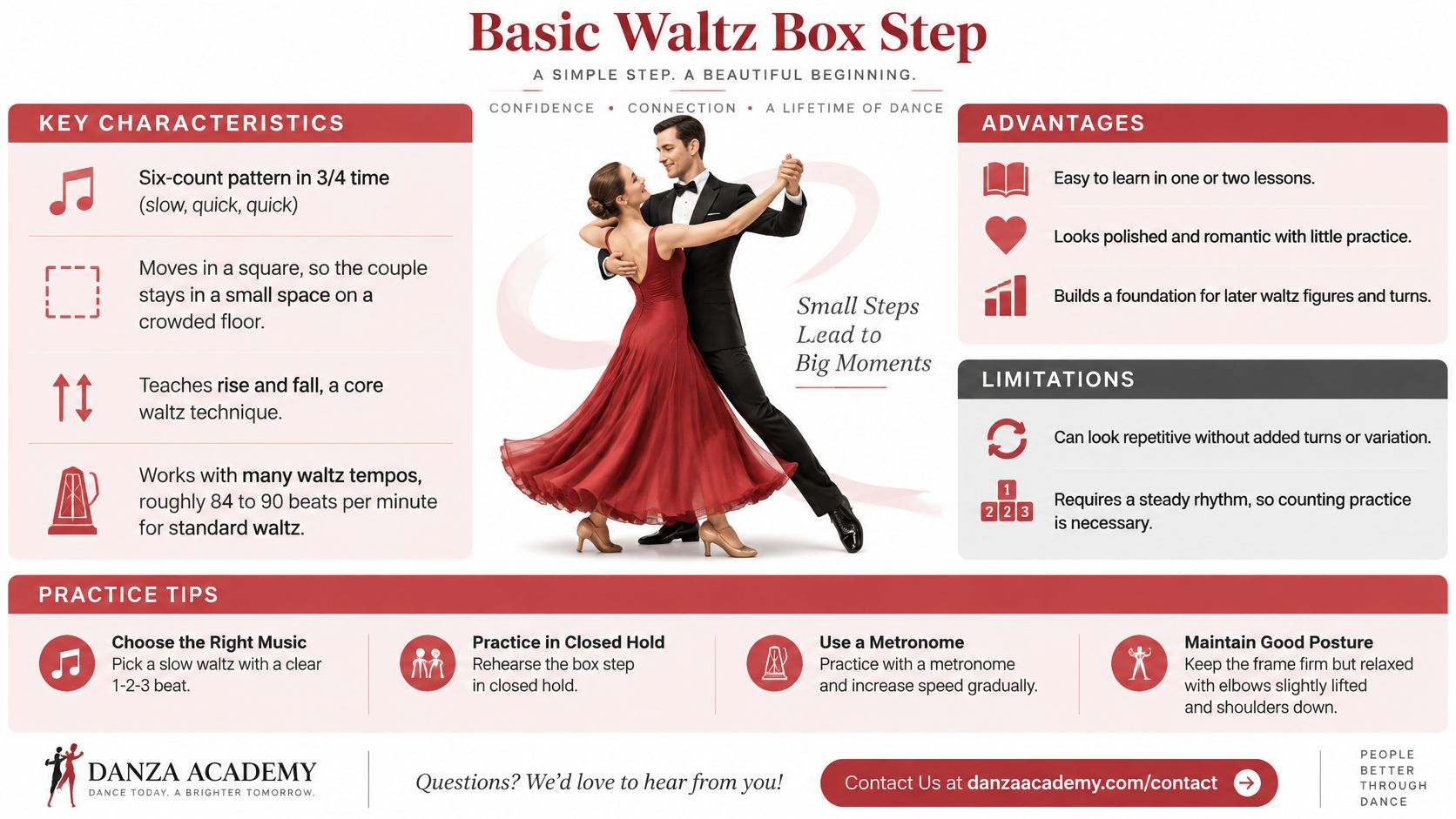
If the track feels like a slow waltz, test it against first dance song ideas before you memorize anything else.
Count the square
Leader: forward on 1, side on 2, close the feet on 3, then back, side, close.
Follower: the opposite, starting back on 1.
Hold: elbows slightly lifted, shoulders down, frame firm but not stiff.
Use a clear 1-2-3 waltz and a slow metronome. Increase speed only after the close feels quiet. Keep every step smaller than your shoulders. At a crowded reception, dance the box almost in place and save one outside turn for the chorus.
Practical rule: If the count vanishes, stop traveling and sway until the next strong 1.
2. Foxtrot Basic (Slow-Slow-Quick-Quick)
Foxtrot is a smooth walk in 4/4. Two slow steps, then two quick steps. Big-band standards, crooner records, and plenty of modern ballads all accept that glide, so you get a classic look without a trick step.
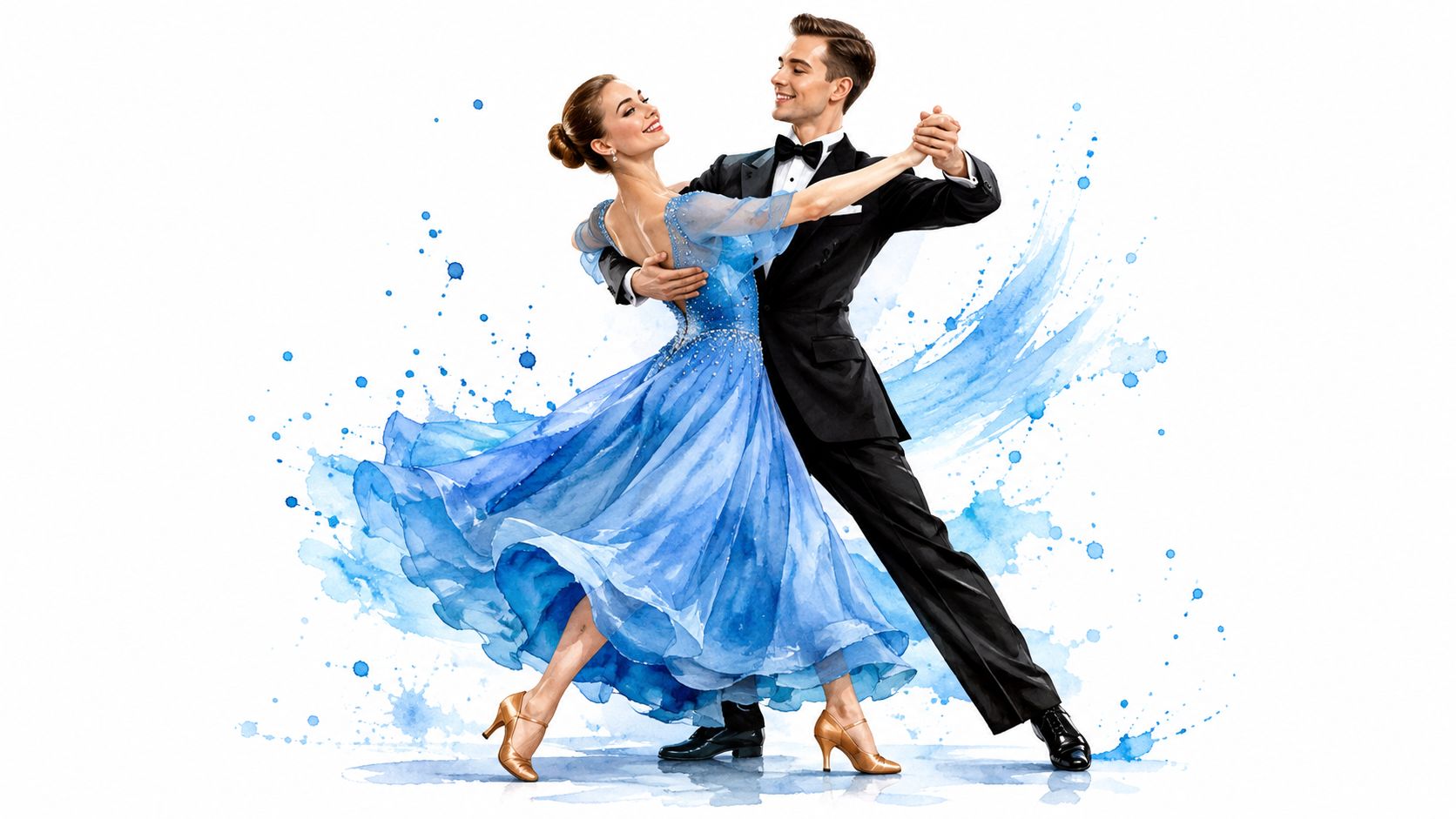
Competition newcomers and social dancers start with the same shape because the feet stay close to the floor. The knees absorb the change, which keeps a long dress or a nervous leader from bouncing.
Protect the quick steps
Drill the two quicks at half speed until you can finish them without a hop. Then put the slows back in front.
- Tempo window: beginner-friendly tracks generally sit around 60–100 beats per minute, while songs above roughly 100–130 BPM need quicker weight changes, as Anatole's first-dance tempo guide explains.
- Floor size: if the space is tight, walk the pattern nearly on the spot.
- Add-on: a simple promenade waits until the basic feels automatic.
A steady ballad lets you arrive on the slows and pass through the quicks. That timing is the whole style.
3. Simple Rumba Walk and Sway
Rumba is the slow, romantic choice when you want eye contact more than travel. The music is 4/4, and the feeling settles on beat 2. Beginners should walk and sway first. Let the hips answer the step instead of forcing a Latin shape you haven't practiced.
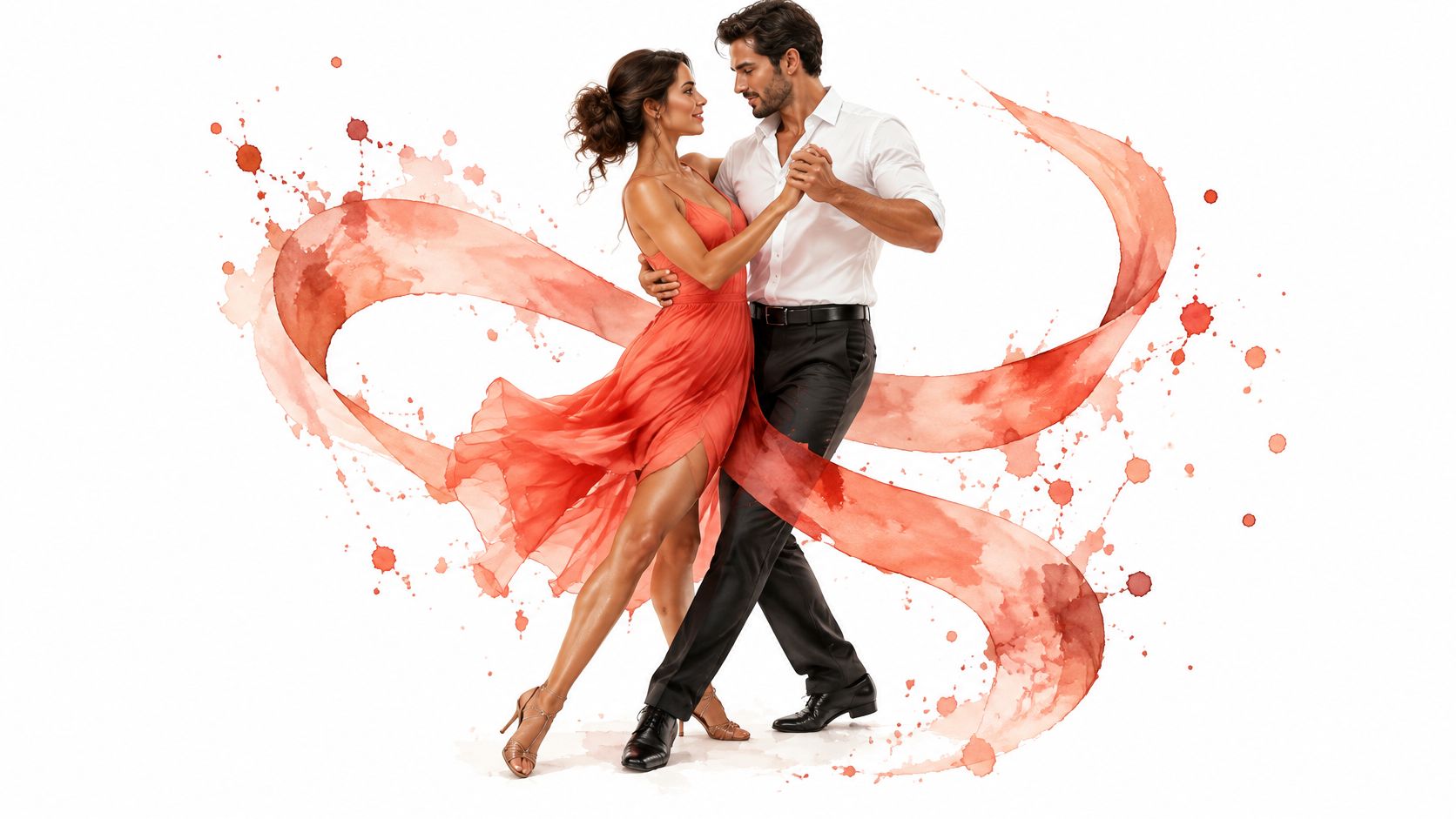
Studios put this basic early in Latin syllabi because a slow pop ballad already supplies the mood. Your job is a soft connection and a clear weight change.
- Walk before music: notice which foot is holding you.
- Hips follow: they shift when the standing leg takes the load.
- Song choice: a clear, slow pulse makes beat 2 easier to find.
The Knot's first-dance tips note that a steady beat is easier for beginners than frequent tempo changes, especially when practice time is short. Save rubato songs for later.
A calm face and a small step will look more romantic than a perfect hip that arrives late.
4. Basic Cha-Cha (Quick-Quick-Slow)
Cha-cha is the playful option when the song has percussion and you want energy without a long routine. Say one, two, cha-cha-cha. The last three steps are light, quick, and usually side to side. Master that loop before any turn or arm styling.
Couples often use a short cha-cha section for a high-energy finish, and beginner Latin classes use the same basic at parties. Soft knees keep it from looking stiff. Step as if the floor has a little give.
Keep the package small
A 2025 SurveyMonkey poll of 209 U.S. adults found that 56% would look to a local dance studio for a choreographer, 33% would hire one if their budget allowed, and 32% saw $300–$500 as a fair range. The same poll said 34% viewed choreographed wedding dances as increasingly common, while 34% said routines could add stress, according to Style Bouquet's write-up of the poll. That split is why "easy" has to build confidence.
- Count out loud: lock the rhythm in the living room first.
- Side basic only: add styling after the cha-cha-cha stays even.
- Fallback: if the turn feels risky in formalwear, repeat the side pattern and smile.
A steady beat with clear drums is the right track. You don't need a faster song to look fun.
5. East Coast Swing Six-Count Basic
East Coast swing is built for a bouncy backbeat. The six-count basic is a rock step, a triple step, and another triple step. Swing, rock and roll, and bright pop all work if you can find beats 2 and 4.
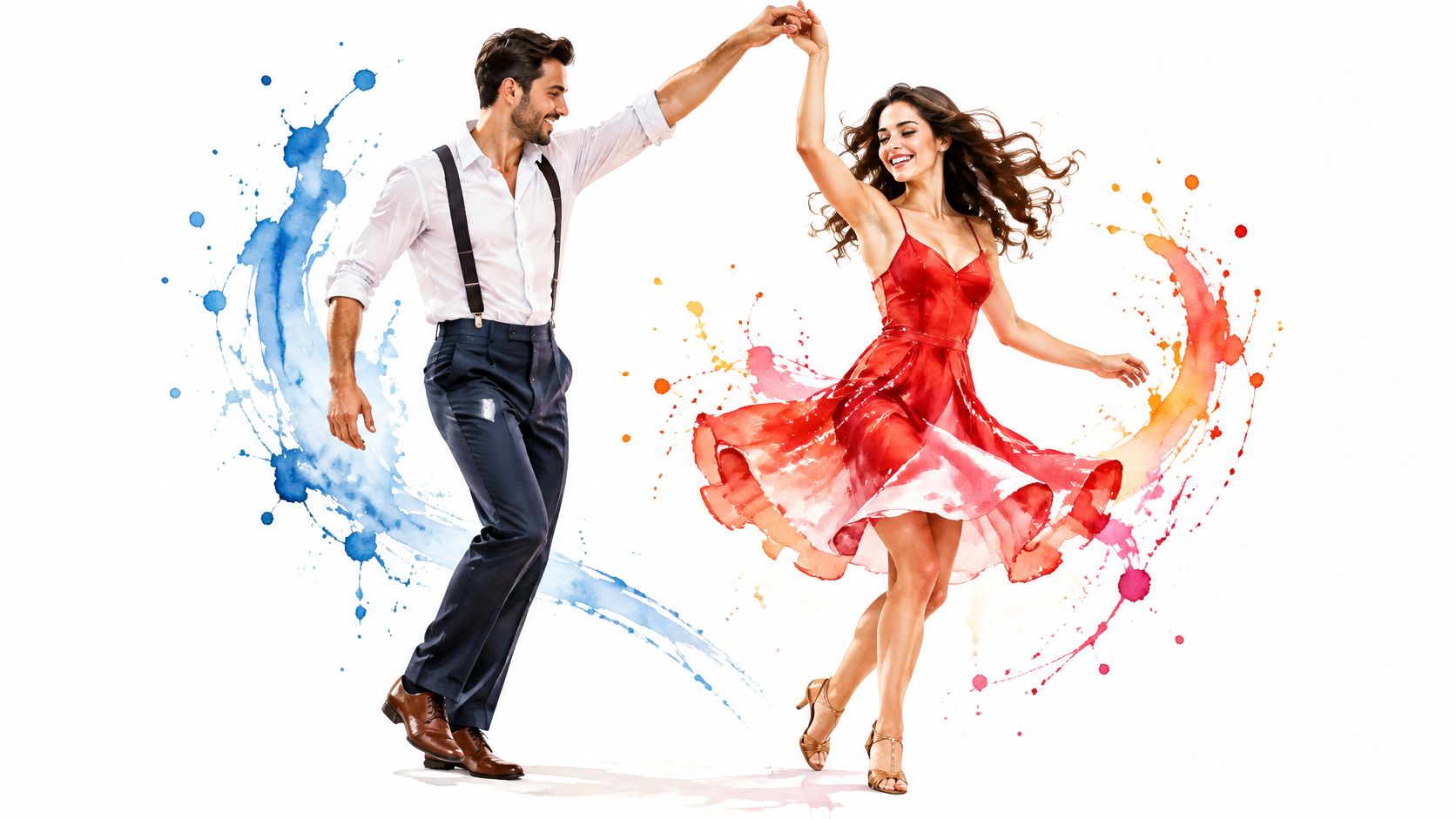
Social dance nights across the United States use this basic because it looks lively while the steps stay small. If you're unsure which swing you want, read the difference between East Coast and West Coast swing and stay with the six-count version for the reception.
Speed is the last adjustment
Keep the rock step tiny so the triples stay light. Add one underarm turn, then return to the basic. If you miss a triple, rock again and keep moving.
Song taste changes, so don't weld the routine to one hit. The Black Tux survey of more than 900 married people found 10.9% of baby boomers chose The Righteous Brothers' "Unchained Melody," 7.3% of Generation X chose the same song, and 7.6% of millennials chose John Legend's "All of Me." Oldies were more than 50% of choices in the 1960s and 14% in the 2010s. A six-count basic still maps onto many of those grooves.
6. Country Two-Step
Quick, quick, slow, slow. That's the country two-step. It glides instead of bouncing, usually in a slightly open hold, and it suits rustic weddings and country dance halls. Practice on a straight line before you add a gentle turn. The slows must last longer than the quicks.
The room changes the dance. A train, new heels, a small floor, or a balance limit can shrink the step, which is why LoDance's wedding-dance guide treats those limits as design inputs and suggests shortening set choreography to roughly 60–90 seconds before you return to natural movement.
- Calendar: Easy Weddings recommends starting lessons or home practice about 3 to 4 months out, once or twice a week, and rehearsing in wedding shoes, or a similar heel, about one month before.
- Crowded floor: trade the traveling line for a stationary weight change.
- Hold: relaxed frame, comfortable connection, no squeezing.
A clear mid-tempo country beat is enough. You don't need a fast boot-scoot to look celebratory.
7. Slow Dance Sway with Simple Turns (Choreographed Routine)
This is the routine for couples who want a signature moment without a full syllabus. Closed-hold sway, one safe turn, and a small dip or pose on the last phrase. It adapts to nearly any slow song.
Dance with Me USA suggests most first dances work best at about 2 to 3 minutes, shorter dances of 90 seconds to 2 minutes suit a sway or nervous couples, and a fuller routine can run 2.5 to 3 minutes.
Use this walk-through for the shape, then keep only the moves you can repeat.
Assign one move per section
Intro is the sway. Verse is a slow quarter turn. Chorus is one underarm turn. The last phrase is a pose you hold. Pix Wedding notes that choreography can take 4–12 hours of practice and that an emotionally present sway may be better when the routine causes stress. If the track is too long, fade after the first chorus rather than dancing every verse, which is the practical edit described in Pix Wedding's reception dance order.
Record a rehearsal and check the ways to remember dance choreography. If you can't rejoin after a missed step, cut a move.
7 Easy First Dance Choreographies Compared
| Dance Option | Learning Complexity | Resource Requirements | Expected Outcome | Ideal Use Case | Key Advantage |
|---|---|---|---|---|---|
| Basic Waltz Box Step | Low; six-count pattern | Steady 3/4 music; rhythm practice | Elegant, compact waltz with rise and fall | Romantic first dances and small floors | Builds a foundation for turns and other waltz figures |
| Foxtrot Basic | Low to moderate; walking-based timing | Steady 4/4 music; posture and balance practice | Smooth, gliding ballroom movement | Ballads, jazz standards, and big-band songs | Versatile across many song styles |
| Simple Rumba Walk and Sway | Low to moderate; emphasis on the second beat | Slow, clear-pulse music; relaxed weight changes | Intimate, expressive movement | Slow romantic songs | Creates a strong connection between partners |
| Basic Cha-Cha | Moderate; quick footwork and rhythm | Upbeat music; coordination and timing practice | Playful, energetic movement | Upbeat first dances or reception sets | Short pattern is quick to memorize |
| East Coast Swing Six-Count Basic | Moderate; rock step and triple step | Bouncy music; rhythm and bounce practice | Lively, social dance with optional turns | Upbeat pop, rock and roll, or swing songs | Offers playful styling and broad social use |
| Country Two-Step | Low; repeatable quick-quick-slow-slow pattern | Steady country music; basic line-of-dance practice | Relaxed, flowing movement around the floor | Country, folk, or roots-inspired songs | Beginner-friendly and comfortable on shared floors |
| Slow Dance Sway with Simple Turns | Low; moves are customizable | Chosen song; planning and rehearsal for transitions | Personalized routine with simple signature moments | Couples seeking a flexible routine for a slow song | Adapts easily to the couple and song |
Dance It With Confidence on Your Big Day
Pick the routine that fits the tempo you can already count. Waltz if you hear groups of three. Foxtrot, rumba, or a sway if the song strolls. Cha-cha, swing, or two-step if the beat makes you want to play. Practice the count slowly, then add one turn or a small dip only after the basic survives a full chorus.
Danza Academy of Social Dance in Philadelphia and Exton teaches these patterns in private wedding lessons. Instructors can build a routine to your song or help you improvise if a memorized sequence feels like too much. The studio has taught social dance for over 40 years, including waltz, foxtrot, rumba, cha-cha, swing, and country two-step. No partner experience is required, and a complimentary first lesson is there so you can test the track before the floor fills up.
You don't need a long showcase to look married and happy. You need a hold you trust, a count you can find, and an ending you have practiced. For the rest of the party, wedding entertainment tips from EventUploader can sit beside your dance plan. Book your free complimentary lesson today at Danza Academy's contact page and shine with a routine you can remember.
Danza Academy of Social Dance offers private wedding-dance coaching and custom choreography for the exact song you'll use, from a simple sway to a short cha-cha, swing, or waltz. A complimentary first lesson lets you test the tempo, choose a hold that feels natural, and leave with a practice plan. Visit Danza Academy of Social Dance to book that lesson and walk into the reception already knowing your count.