
You're standing in the kitchen, music is on, and your baby starts bouncing in that messy, delightful way that makes you wonder if this is the right age for a class. Maybe a friend mentioned infant dance classes, or you've seen a studio ad with smiling babies and scarves, and you're trying to figure out what's real, what's just marketing, and whether your child would get anything out of it. That cautious question is the right one to ask.
A good infant class is not a mini version of adult dance. It's a caregiver-led, movement-to-music experience built around your baby's current stage, with less focus on technique and more focus on participation, rhythm, and comfort. The tricky part is that brochures often blur the age range, so parents are left guessing whether a non-walking infant, a sitter, or a new walker belongs in the same room.
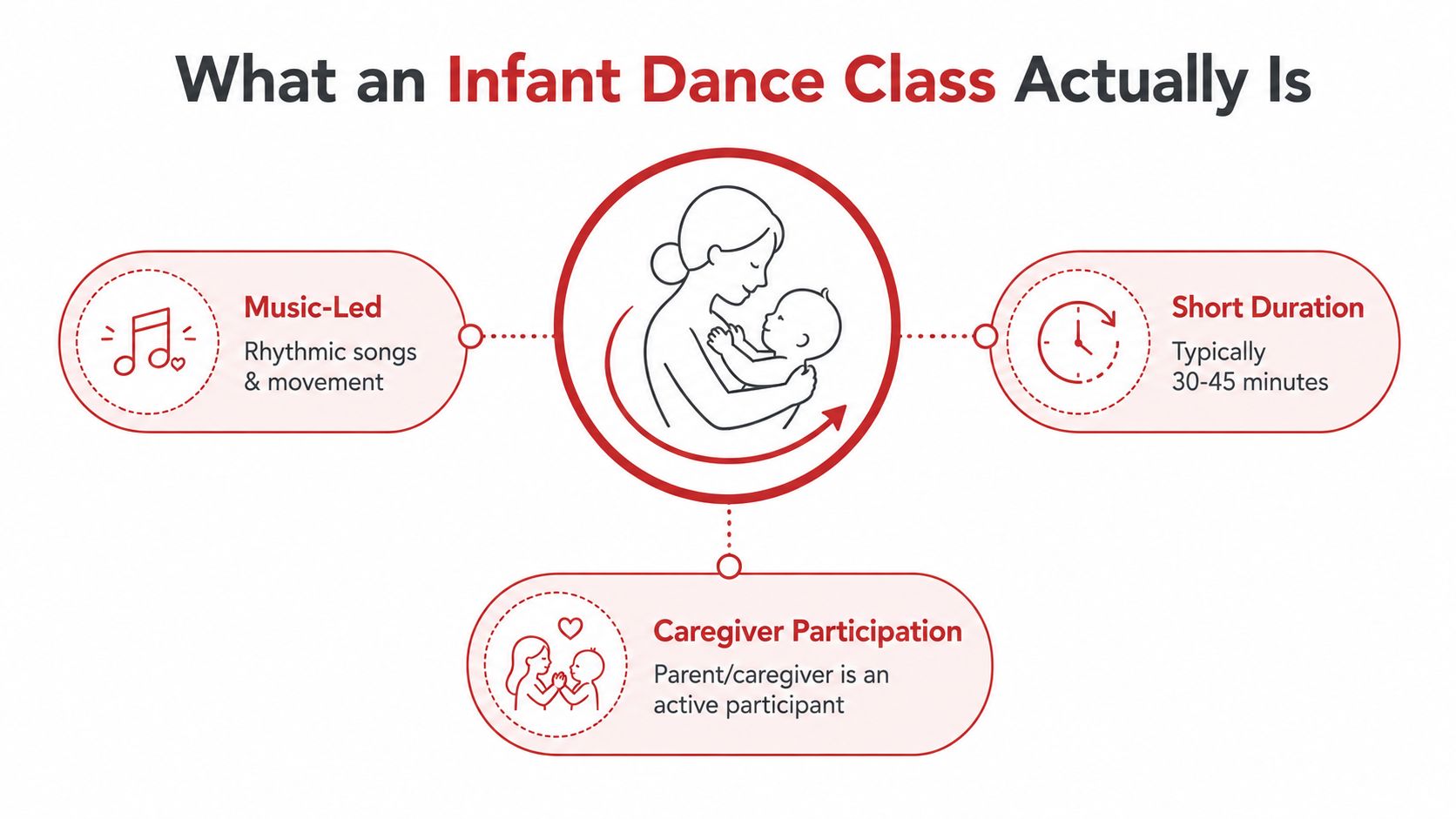
What an Infant Dance Class Actually Is
A first-time parent often expects a room full of tiny dancers trying to copy a teacher. That's not what most infant dance classes are. The better ones are short, music-led sessions where a parent or caregiver stays close, joins in, and helps the baby move, watch, listen, and explore.
What makes it different from toddler dance
The biggest difference is the caregiver role. In infant classes, the adult isn't waiting on the sidelines. You're part of the class structure itself, helping your baby settle, lift, sway, clap, crawl, reach for a scarf, or just observe if that's all they're ready for. There's usually no formal technique, no correction-heavy instruction, and no expectation that a baby will “perform” on cue.
That makes these classes closer to movement exposure than training. The goal is to introduce rhythm, body awareness, social presence, and a predictable weekly routine. Babies can participate in very different ways, too. One child may bounce in place the whole time, another may spend half the class looking around, and both can still be getting something meaningful from the room.
A useful way to think about it is this. If a toddler class is about following directions and repeating steps, an infant class is about shared experience. The parent is there to interpret the room, keep the baby comfortable, and model movement without pressure.
Practical rule: if a class description sounds like it expects tidy technique from a baby, it's probably not an infant class in the developmental sense.
The question underneath all of this is simple. Is this just what a baby already does at home when music plays, or does the structure matter? The next sections answer that carefully, because the answer is more interesting than a yes or no.
The Developmental Case for Early Movement Classes
Babies do not wait for toddlerhood before they respond to rhythm. A developmental review reports that infants may begin moving more rhythmically to music as early as 2 months, often by 6 months, and almost always before their first birthday in laboratory studies and parent reports (developmental review). For parents, that helps explain why movement-to-music is not an artificial demand for most babies, it fits behaviors many of them are already starting to show.
Key findings from recent studies
A 2023 peer-reviewed study of 278 parents of infants aged 0 to 24 months found that 90% of infants who danced produced recognizable dance by 12.8 months, and those infants danced almost every day on average. The same study found that 80% of these infants had begun incorporating learned or imitated gestures by 17.9 months. The point is not that a weekly class causes those milestones by itself. The study does show that dance-like movement and imitation appear across the first two years in a real and observable way.
That matters because early movement classes fit a natural window. They do not ask a baby to do an older child's job early. A calm, responsive class gives shape to behaviors your child is already trying out, a little like arranging blocks that are already on the floor instead of handing the child a finished tower.
If you are watching your baby creep, roll, pull to stand, or bounce when music comes on, those movements belong to the same developmental picture. For parents who want a gentle companion activity at home, tips for crawling milestones can help show how floor movement and music-related play fit together.
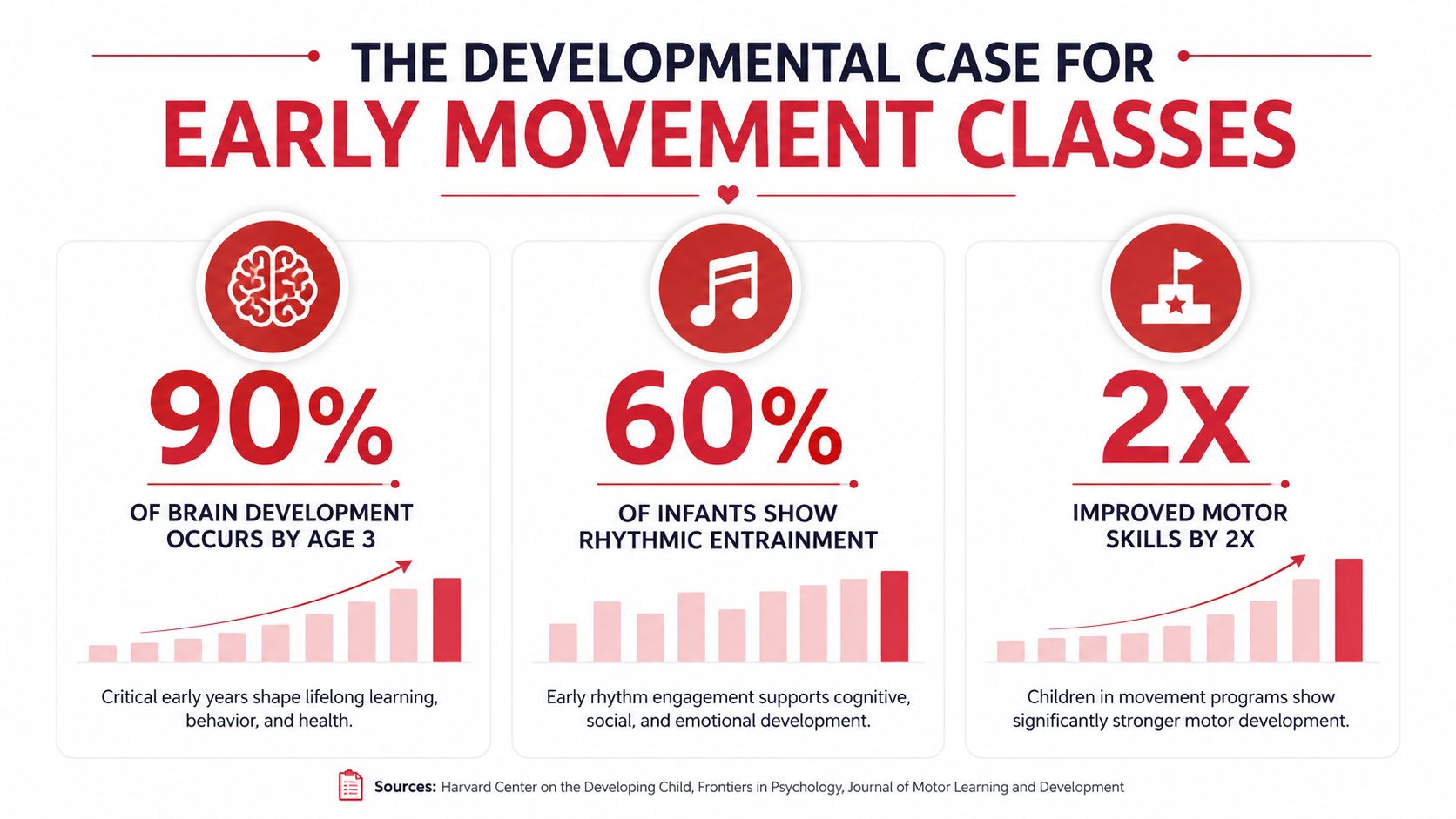
What that means for parents
The promise is modest, and that is a good thing. A baby class will not transform development overnight, and it should not be sold that way. What it can do is give babies a safe place to repeat, imitate, pause, and try again, which are the same habits they use when learning to move in everyday life.
A structured class can also help parents see what their child is ready for. A sitter who likes to watch may need a different setup from a baby who is already pulling to stand or a new walker who wants to move and return on their own terms. That is why matching classes to the child's mobility stage matters more than trusting the calendar age on a brochure. A program written for older toddlers, such as an 18-month-old dance class, may ask for more steady walking, more copying, and more attention than a younger infant can give.
The useful question is simple. Does the class match the way your baby moves now, or does it expect the baby to behave like a child who is already walking confidently? Early movement classes work best when they meet the child where movement is beginning, not where the marketing copy wishes the child already were.
Matching Class Types to Your Baby's Mobility Stage
A lot of studio pages list age bands as if they were universal. They're not. The more useful lens is mobility stage, because a baby who sits well but doesn't walk yet needs a different setup than a confident toddler who wants to run, climb, and copy everything in the room.
A better way to read the age range
The market is fragmented. Some Baby & Me classes run from 4 months to 2.5 years, baby ballet is sometimes listed for 6 to 18 months, other infant and toddler programs span 2 to 4 years, and one toddler dance program defines the stage as 12 to 36 months and requires the child to be walking (developmental appropriateness overview). That spread tells you something important, age alone doesn't decide fit.
What matters more is what your child can do. A non-sitter may do best in a class where the caregiver carries most of the participation. A sitter might enjoy floor-based rhythm play and props. A new walker usually needs room to toddle, pause, and rejoin without constant correction. A confident walker may be ready for a more structured toddler format, even if the brochure still calls it “baby” class.
| Mobility Stage | Typical Age Range | Class Format | Caregiver Role |
|---|---|---|---|
| Non-sitter | Very early infancy | Gentle music exposure, lap-based or held movement | Full-time support and interpretation |
| Sitter | Later infancy | Floor play, scarves, clapping, simple repetition | Active participant and guide |
| New walker | Early toddler stage | Short guided movement, lots of repetition, space to roam | Helps redirect and model participation |
| Confident walker | Toddler stage | More structure, simple group directions, transitional dance play | Supports turn-taking and attention |
How to choose without overthinking it
If your baby spends most of the class on your lap, that's fine. If your baby wants to crawl away, that's also fine, as long as the room is designed for it. The useful question is not “Is my child old enough?” It's “What does my child do right now, and does the class expect that stage?”
For a nearby example of a program designed for children around the toddler threshold, see this 18-month-old dance class page.
What a Typical Class Looks Like
Most infant sessions are built to feel familiar after the first few minutes. A parent checks in, sets down a bag, and helps the baby adjust to the room. Then the teacher starts with a brief warm-up, often using rhythm instruments, scarves, or simple songs to get everyone settled.
From arrival to cooldown
After the warm-up, the class usually moves into caregiver-assisted movement to recorded music. That might mean bouncing, swaying, marching in place, reaching overhead, or gently rocking a baby while the group follows the same beat. Then comes a short period of free exploration on a soft floor, which gives babies room to move at their own pace.
A typical class may also include props like ribbons or parachutes, because babies respond well to visual movement and simple repetition. The final minutes usually slow down into a cooldown, with quieter music and calming motions so the room doesn't end on a burst of stimulation.
A baby who cries, crawls away, or needs a pause is not failing the class. That's part of the class.
This is why a lot of infant classes feel repetitive from week to week. Repetition helps babies recognize cues, settle faster, and know what comes next. That predictability matters more than novelty at this age. Most classes run 30 to 45 minutes, which is long enough for a rhythm-based routine without exhausting a young child.
If you want a helpful model for how teachers open a room with very young children, the Little Venture Co. preschool song guide is a useful example of how a greeting song can create a calm start for children who need a familiar entry point.
What the Research Supports and What It Doesn't
Parents often hear broad promises around infant classes, then assume every benefit is backed by the same level of evidence. It isn't. The strongest case for these classes is usually about shared attention, caregiver bonding, sensory exposure, and regular movement practice, not dramatic developmental leaps.
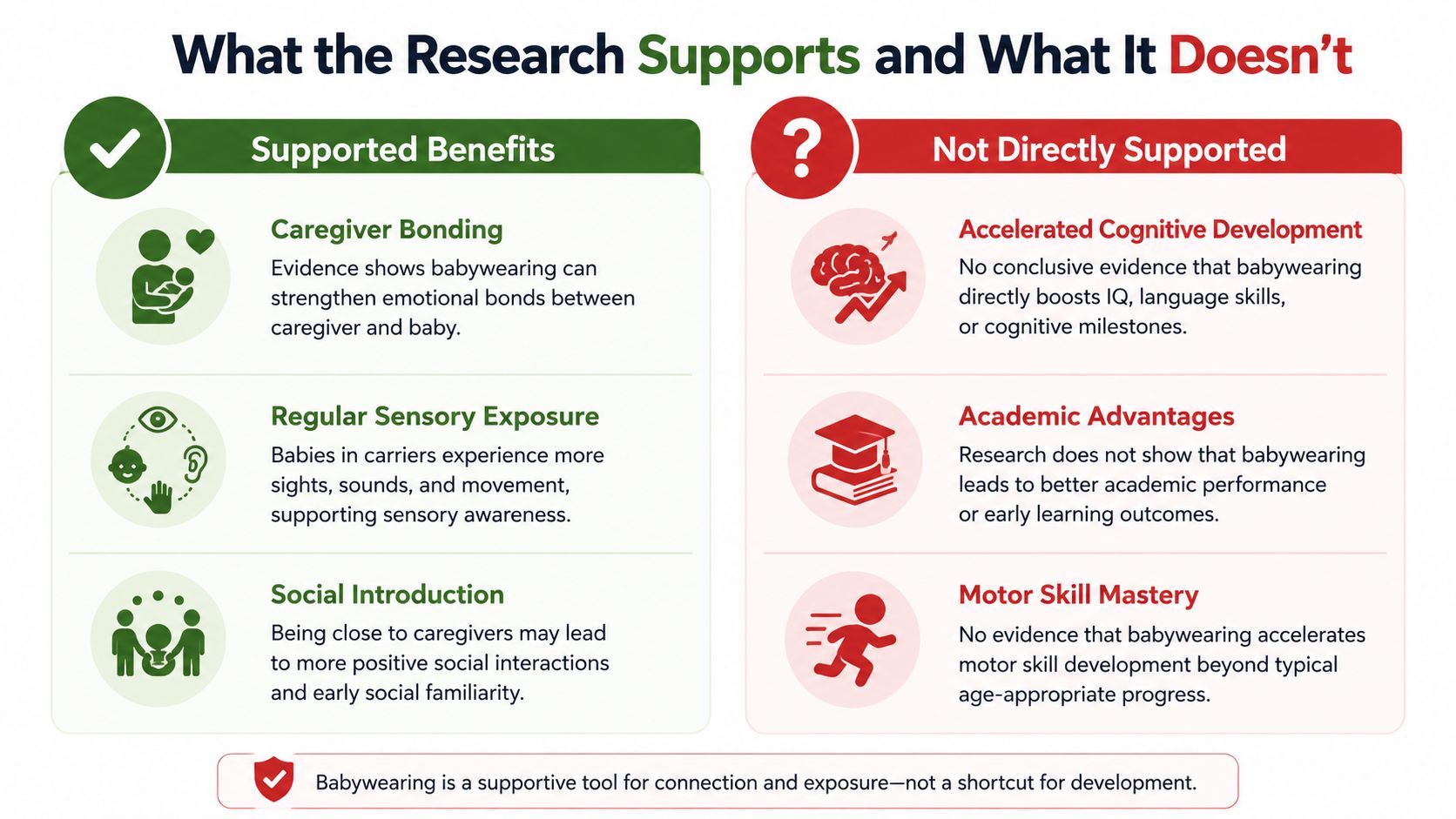
The benefits parents can reasonably expect
A class gives you structured time together. That alone can be valuable. Babies also get repeated exposure to music, rhythm, other children, and a new room with predictable activity. For many families, that social introduction matters, because it gives a young baby a low-pressure way to be around a group without being asked to perform.
That's where the evidence and the marketing language start to diverge. Studio pages often promise coordination, confidence, gross motor skills, or even broader mental growth. Some of those outcomes may happen in a child's overall life, but consumer-facing pages rarely explain the dosage, the timeline, or what part of the class caused what result.
Where the claims get too strong
A once-a-week class is best understood as enrichment, not training. That's an important distinction. One class can build familiarity with movement and music, but it shouldn't be sold as a path to measurable motor mastery. The same caution applies to claims about cognition. A baby moving happily to music is a good thing. It's not the same as proving an academic or developmental advantage.
One studio may describe the value as motor skill practice, another as strength building, and another as introducing babies to the joy of movement, but the language often runs ahead of the evidence (example program descriptions). A careful parent can appreciate the experience without turning it into a miracle story.
Safety, Environment, and Teacher Qualifications
With babies, safety isn't an afterthought. It's the main filter. A room can look charming and still be wrong for infants if the floor is hard, the sound is too loud, or the teacher has no idea how young children move.
What to check before you enroll
Start with the floor. It should be clean, sanitized, and safe for babies who may sit, roll, crawl, or lie down. The room should also feel comfortable for partially undressed infants, which means temperature matters more than many studios realize. If the space is too hot, too cold, or too crowded to move safely, that's a problem.
Next, look at the teacher. A strong adult dance background is nice, but it's not enough by itself. For infant classes, the more relevant background is early-childhood development, plus comfort with motor milestones, hygiene protocols, and family-centered teaching. Pediatric first-aid certification is also a serious plus.
A published teacher-to-baby ratio helps you understand how much attention your child will get. So does the studio's handling of illness, cleanup, and shared equipment. If the class uses scarves, mats, or props, they should be age-appropriate and easy to sanitize.
Check for this before the first visit: if the teacher cannot explain how they handle crying, crawling, or overstimulation, keep looking.
For a broader example of how one studio describes a young-dancer pathway, see Danza Academy's young dancers page. Even when a class is playful, the adult structure behind it still matters.
Choosing the Right Program and Getting Ready for the First Class
The easiest mistake is signing up based on the studio name alone. A better approach is to ask direct questions before you commit. How many babies are in the room? Does the caregiver participate? What happens if your child needs to nurse, nap, crawl off, or cry? Is there a trial class, and how do makeup visits work?
A simple decision checklist
- Ask about class size: Smaller groups are easier for babies who get overwhelmed quickly.
- Ask about instructor training: Early-childhood experience matters more than performance credentials alone.
- Ask how the studio handles flexibility: If babies are expected to sit still for long stretches, that's a red flag.
- Ask about policies: Trial classes, refunds, and makeup rules tell you a lot about how the studio treats new families.
- Ask what the adult role is: Some classes want you actively moving with the baby, others are more observation-based. You should know which one you're buying.
For a practical guide on comparing studios, the page on how to choose a dance studio is a useful starting point.
What to bring and how to prepare
Pack a change of clothes, a comfort item your baby already knows, water, and a small snack if your child is on solids. Try to arrive rested and not rushed. A baby who is alert but not overstimulated usually does better than a baby who's already overtired from errands.
Timing matters more than many parents expect. The same class can feel smooth at one time of day and difficult at another, depending on nap timing and temperament. If possible, book a trial class before buying a package, then watch the teacher closely when your baby does something unexpected. That response tells you a lot.
Common Questions and Your Next Step
Parents usually ask the same few questions after they've read this far. Can a non-walking infant really participate? Yes, if the class is designed around caregiver involvement and floor-level flexibility. Is one class a week enough? For enrichment, yes, but it's not a training schedule, and it shouldn't be treated like one.
Another common question is when to move on. The answer is usually tied to mobility and attention, not birthdays. If your child starts wanting more structure, more independent movement, or more room to follow directions, a toddler program may fit better than an infant one. And no, you don't need to be a dancer yourself. A calm, willing adult is usually enough.
For many families, the harder part isn't understanding the class. It's deciding whether a new routine will fit into real life. That's why a short trial is so useful. It gives you a chance to see how your baby responds, how you feel in the room, and whether the studio can adapt when the moment is messy, which infant classes always are.
If you'd like to see how this feels in person, Danza Academy of Social Dance offers a complimentary first lesson so you can try a gentle, parent-involved class before making a long-term commitment. Visit Danza Academy of Social Dance to book your free lesson and see whether this kind of movement-to-music experience is a fit for your baby right now.