
You've probably seen Mambo Pa Ti Dance Company come up while searching for salsa or bachata in Rhode Island and wondered the question that matters most: is it a great studio for you, or just a great studio for a different kind of dancer?
That distinction matters. A strong dance school can still be the wrong fit if your goals don't match its culture, pace, or teaching style. Some dancers want stage training, drilling, and auditions. Others want to feel comfortable at a social, learn solid partner skills, or start without feeling behind on day one.
Mambo Pa Ti has built a real name in New England Latin dance. It also has a specific identity. If you're trying to sort out whether that identity lines up with your goals, this guide should help.
Your Guide to Mambo Pa Ti Dance Company
Mambo Pa Ti Dance Company gets attention for a reason. It has an established presence, a recognizable name in regional Latin dance, and a clear emphasis on serious training. If you're drawn to salsa with structure and ambition, that's a meaningful signal.
What many dancers still need, though, isn't more branding. They need practical guidance. They want to know what starting there feels like, how intense the environment is, whether it's built for social dancers or performers, and what kind of student usually thrives in that room.
That's the lens worth using. Don't choose a studio only because it's visible. Choose it because its teaching model fits your actual goal.
A useful way to think about any growing dance business is the same way operators look at service brands in other industries. Strong studios usually become recognizable because they build repeatable systems, clear programming, and a distinct offer. If you're interested in how service businesses grow that kind of footprint, Twizzlo's article on strategies for multi-location expansion is a good parallel. The point for dancers is simple: visible studios are often systemized studios, but systemized doesn't automatically mean beginner-friendly.
Practical rule: Before you sign up anywhere, decide whether you want social comfort, technical specialization, performance training, or a mix of all three.
That one decision filters almost everything else. It tells you whether a rigorous Latin company is the right home, or whether you'd do better in a studio that slows the first steps down and makes the entry process more explicit.
What Is Mambo Pa Ti
Mambo Pa Ti Dance Company was established in Pawtucket, Rhode Island by director Carlos Gonzalez and is located at 560 Mineral Spring Ave, Pawtucket, RI 02860. Public studio information describes it as a leading Latin dance company in the New England region, which matches the way many dancers in the area already recognize the name.
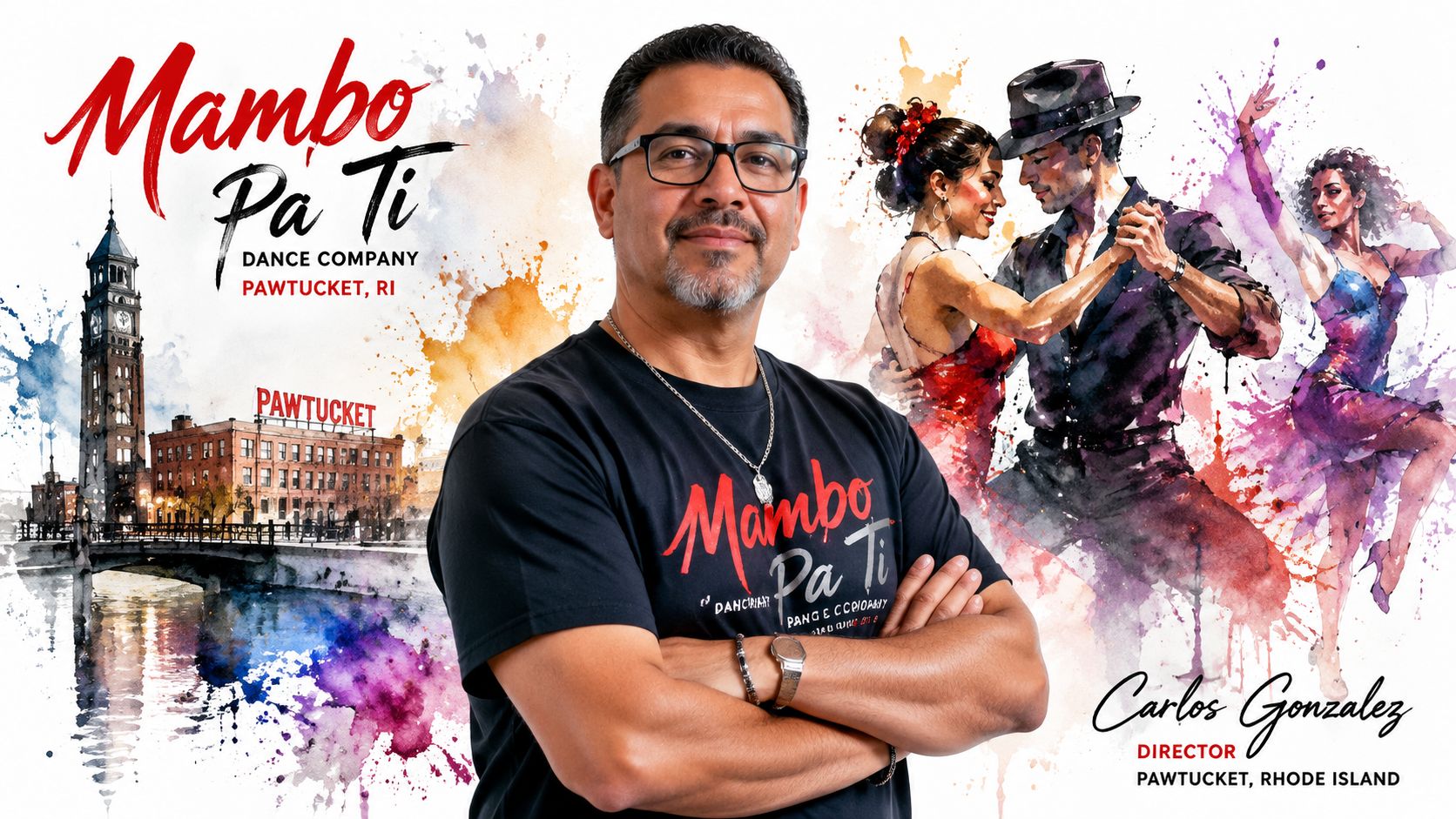
Its identity is closer to a company than a casual studio
That wording matters. Some dance businesses mainly function as recreational schools. Others operate more like a performance organization that also teaches classes. Mambo Pa Ti reads much more like the second type.
Its public-facing structure supports that impression. The company offers a broad weekly schedule, monthly events, and a recognizable training culture tied to a director-led brand. It also offers the MPT Monthly Pass, which gives access to salsa, bachata, and Afro-Cuban classes, plus admission to weekly Salsa Fever Thursdays and a 50% discount on private lessons and workshops, according to its official class listing.
There's another practical detail that tells you something about how the studio runs. Mambo Pa Ti's class listing explicitly states that all sales are final. That doesn't make the policy unusual in a training business, but it does tell prospective students that the studio expects commitment once you enroll.
What the public setup tells a first-time dancer
The company's operations suggest structure, not improvisation. It offers over 30 hours of intensive studio training weekly across specialties including New York Salsa On2 and authentic Dominican Bachata, and it hosts monthly social events on the first Saturday of each month with guest instructors from Boston such as Lily and Rafa. Public event listings show workshop tickets starting at $28 and social tickets ranging from $28 to $32 via Eventbrite.
For experienced dancers, that kind of ecosystem can be appealing. You're not just buying a class. You're entering a scene with training, socials, teams, and a visible artistic identity.
For beginners, the same structure can feel exciting or unclear, depending on how comfortable you already are walking into a Latin dance environment.
Training Intensity and Class Styles
Mambo Pa Ti's strongest differentiator is volume. Its official site states that it offers over 30 hours of intensive studio training each week through its published program, and that amount of supervised repetition usually points to a serious skills environment rather than a light drop-in model.
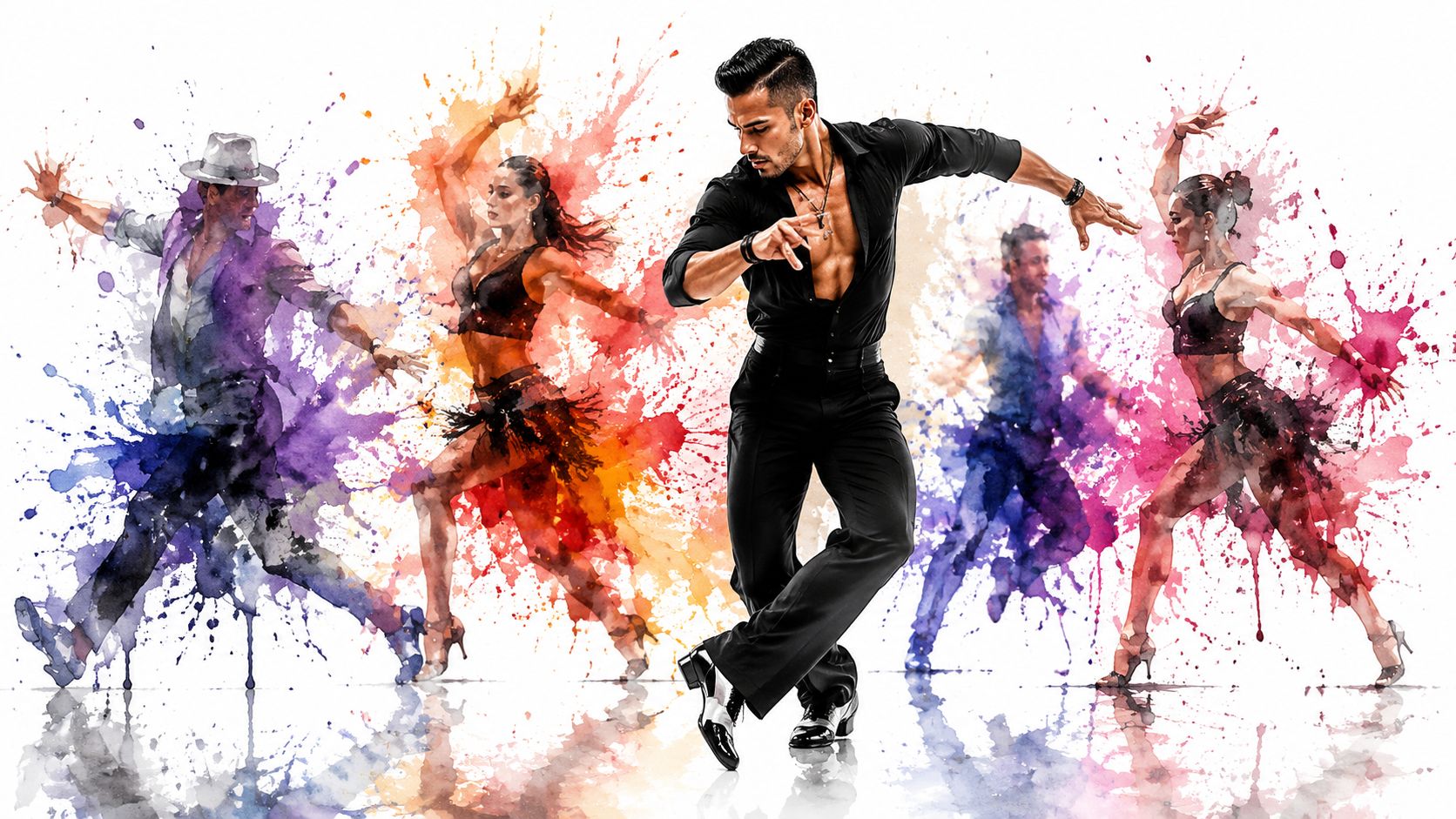
What high-volume training actually does
In partner dance, frequency matters. Students improve faster when they repeat timing, frame, body action, and lead-follow patterns often enough that corrections stick between sessions. That's especially true in salsa, where small timing errors and inconsistent connection show up quickly.
A studio with that much training time available usually gives dancers more chances to work on:
- Timing control so counts stay stable under pressure
- Partner consistency so signals feel clearer instead of forceful
- Pattern retention through repetition, not guesswork
- Stylistic accuracy in genres that have distinct technique expectations
That kind of setup works well for dancers who want momentum. It usually works less well for students who need a slower onboarding pace, more verbal explanation, or a wider buffer for mistakes.
High-volume schedules help when a student already knows why they're in the room. They can overwhelm students who are still deciding what kind of dancer they want to be.
The styles suggest a focused Latin identity
Mambo Pa Ti publicly highlights New York Salsa On2 and authentic Dominican Bachata as part of its offerings. Those labels matter because they signal more than just “Latin dance.”
New York Salsa On2 asks for control, timing precision, and comfort with a specific rhythmic feel that many beginners don't grasp immediately. Dominican Bachata brings its own flavor, footwork vocabulary, and musical response. A studio that names these styles directly is telling you that it cares about lineage and stylistic distinction, not just general social dancing.
That's a strength if you want immersion in Latin forms with a clear identity. It can be a limitation if you're looking for broad social dance sampling or a more gradual introduction to partner movement overall.
A quick visual sample helps show the performance-minded energy behind that style focus:
What works and what doesn't for beginners
For a self-motivated student, this environment can work very well. You get exposure, repetition, and a culture that likely expects dancers to improve through steady attendance.
For a hesitant newcomer, a few friction points usually matter more than style names:
Pacing
Fast rooms reward students who already process rhythm and partner mechanics comfortably.Expectation level
Intensive culture often assumes you'll practice, return, and commit.Psychological comfort
Some adults learn best when mistakes feel private and normal, not public and accelerated.
If your goal is technical salsa development, this setup makes sense. If your goal is to become comfortable dancing with another person at a wedding, party, or social night out, a more deliberately paced entry model is often the better teaching tool.
A Focus on Performance and Competition
Mambo Pa Ti doesn't present itself as only a social dance school. It presents itself as a performance-oriented Latin dance organization with a visible stage pathway. That's a different proposition.
Its performance teams have appeared at major events including the Salsa Boston Salsa Festival, Miami Salsa Congress, and New York Salsa Congress, and the company states that it holds regular auditions for new talent. Public descriptions also note that the Pro Team has years of intensive training and that performers are personally educated by founder Carlos Gonzalez and experienced staff.
What that means in practice
A performance track changes the culture of a studio, even for dancers who never audition. It tends to raise standards across the room.
When a studio builds around staged routines and congress appearances, teachers usually have to emphasize things that casual students can ignore for longer:
- Clean synchronization
- Spatial awareness
- Reliable timing under stress
- Projection and stage expression
- Role assignment based on technical fit
That can sharpen everyone. It can also make the environment feel more exacting.
Why auditions matter
Regular auditions are more than an administrative detail. They create a filter. In dance terms, that means teachers can sort dancers by readiness, partnering reliability, stylistic alignment, and ability to handle choreography pressure.
For ambitious students, that's attractive. There's a visible ladder. You don't have to guess whether the studio has a next step.
For someone who mainly wants to dance socially, that same structure may feel like the culture is oriented toward output rather than onboarding.
A competition-capable studio is valuable when your goal is performance. It's not automatically the right environment when your goal is confidence, comfort, and a fun night out.
That distinction is where many dancers make better decisions. Mambo Pa Ti appears to serve the first category very well. The question is whether you belong in that category.
Mambo Pa Ti vs Danza Academy A Clear Comparison
The biggest practical difference isn't quality. It's fit. Mambo Pa Ti appears built around specialized Latin training and a performance-minded culture. Some students need exactly that. Others need a studio that answers beginner questions more directly and offers a softer entry point.
Public information on Mambo Pa Ti often leaves basic onboarding questions less clearly answered, including what a first visit looks like or whether partners are required, according to its public fitness-partner listing. That information gap matters because nervous beginners often judge a studio by logistics before they ever judge the teaching.
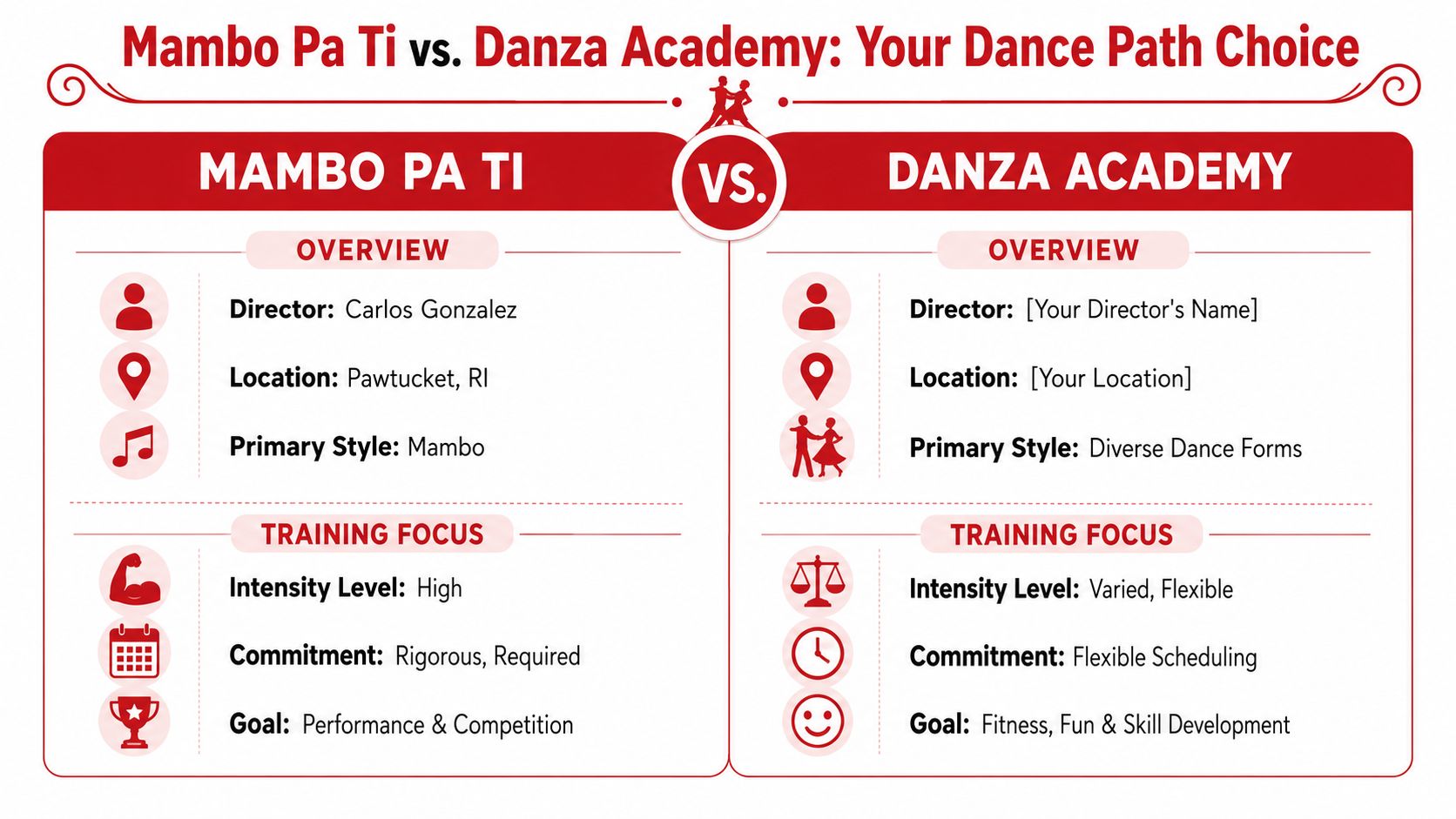
Mambo Pa Ti vs. Danza Academy at a glance
| Feature | Mambo Pa Ti Dance Company | Danza Academy |
|---|---|---|
| Primary identity | Latin dance company with a strong performance culture | Social dance studio with broad instruction options |
| Training feel | Intensive, specialized, commitment-oriented | Structured, supportive, and more flexible |
| Beginner onboarding clarity | Less explicit in public-facing information | Clearer path for newcomers exploring salsa lessons in Philadelphia |
| Style emphasis | Salsa, bachata, Afro-Cuban, performance development | Ballroom, Latin, and social styles across multiple goals |
| Best fit | Dancers seeking immersion, auditions, and stage progression | Adults, couples, social dancers, and students wanting guided progression |
Where Mambo Pa Ti has the edge
Mambo Pa Ti has a distinct identity, and that's a real advantage. Students who want a strong Latin scene often prefer a studio that knows exactly what it is.
Its likely strengths include:
- Specialization: If your goal is Mambo-centered salsa training, the brand focus helps.
- Scene access: Monthly socials and team culture usually create community through shared practice and performance.
- Aspirational pathway: Dancers who want to perform can see a concrete route forward.
Where many newcomers prefer a different model
A lot of adults don't start dance because they want a team. They start because they want confidence, connection, and a manageable first step. That usually means they need clearer level placement, more guidance on partner expectations, and less ambiguity about where to begin.
That's where broader social studios often do a better job. Danza Academy of Social Dance, for example, presents a more explicit first-step model for people exploring ballroom, Latin, wedding preparation, or social dance without already identifying as performers.
If a studio's public message makes experienced dancers feel excited but leaves first-timers guessing, the teaching may still be strong. The onboarding just may not be built around the beginner's questions.
Neither model is wrong. They serve different students.
If you already know you want salsa immersion and a performance-oriented atmosphere, Mambo Pa Ti may feel energizing. If you want patient guidance, more style variety, or a lower-pressure introduction, the comparison usually tilts the other way.
Is Mambo Pa Ti the Right Choice for You
This decision gets easier when you stop asking whether Mambo Pa Ti is good and start asking whether its structure matches the way you learn.
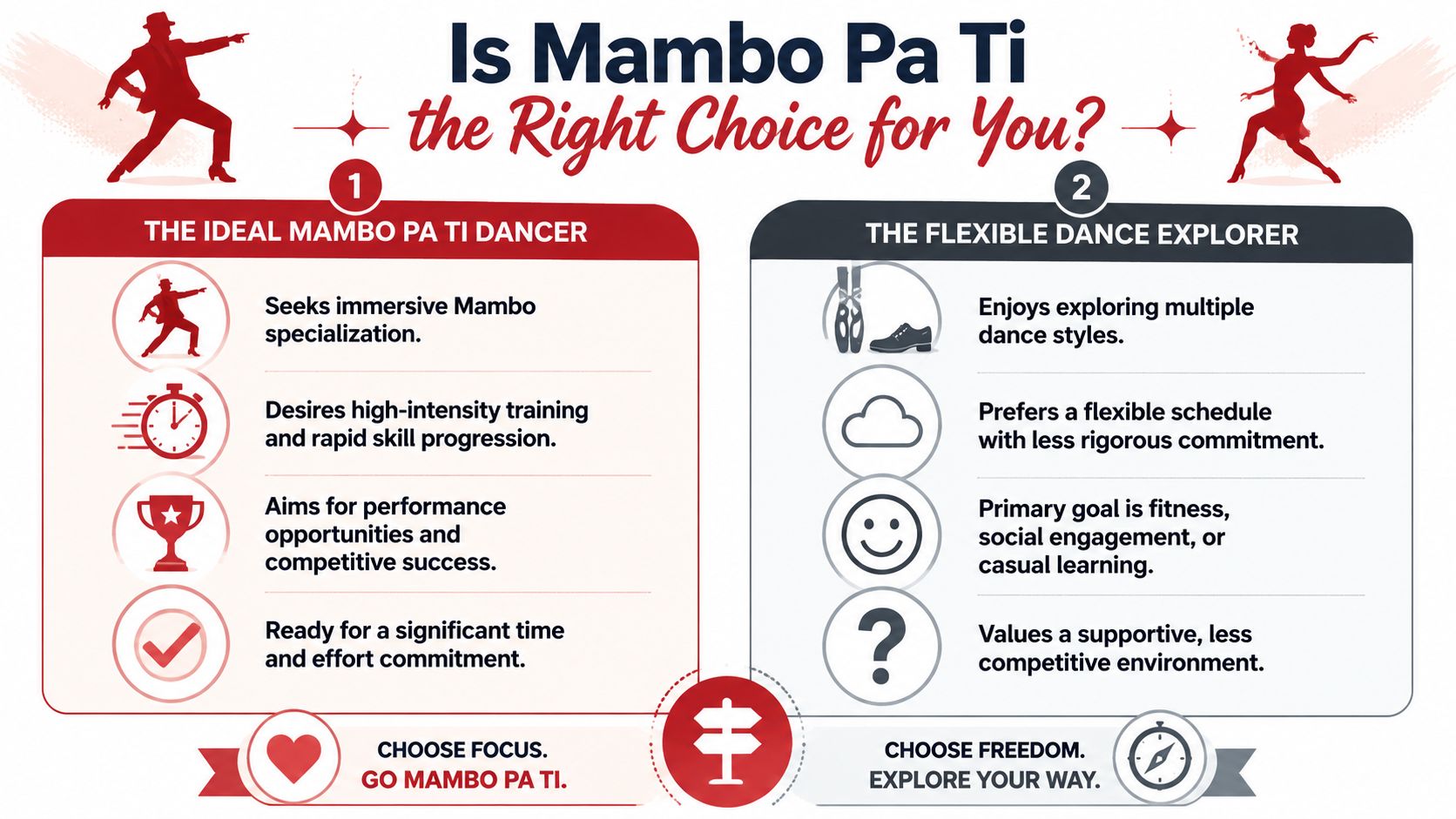
The dancer who will likely thrive there
Mambo Pa Ti looks like a strong fit for a student with a specific profile.
- You want Latin specialization. You're not browsing casually. You already know salsa or bachata is your lane.
- You respond well to intensity. Frequent training, visible standards, and a serious room motivate you rather than intimidate you.
- You care about performance. Even if you're not ready now, you like knowing auditions and stage pathways exist.
- You're comfortable figuring some things out as you go. You don't need every first-step question answered in advance.
That kind of student often enjoys the energy of a company environment.
The dancer who may need a different kind of studio
Some dancers need less pressure and more orientation. That isn't a lower standard. It's just a better teaching match.
You may want a different model if:
- You're a true beginner and want very clear expectations before your first class.
- You're learning for social confidence, not for congress stages or auditions.
- You're a couple preparing for a wedding and need targeted instruction, not scene immersion.
- You want multiple style options rather than one concentrated Latin track.
A second practical issue is accessibility. Public information suggests the space is wheelchair-friendly, but public-facing materials don't clearly explain policies or class structures for kids, seniors, or beginners with mobility limitations, as noted in this public social reference. That doesn't mean support isn't available. It means a prospective student may need to ask more questions before feeling confident about fit.
A simple way to decide
Use this checklist before you commit to any studio. A fuller version of this thinking appears in Danza Academy's guide on how to choose a dance studio.
Define your real goal
Social dancing, competition, wedding prep, fitness, and technique training are not the same purchase.Look for beginner clarity
If you're new, unclear onboarding usually feels bigger after enrollment, not smaller.Match the culture to your temperament
Some students bloom in a demanding room. Others progress faster in a supportive, lower-stress setting.Ask about practical access
Parking, comfort level, mobility needs, age fit, and partner logistics all affect whether you'll keep going.
The best studio is the one you'll return to consistently.
Find Your Perfect Dance Home
Mambo Pa Ti Dance Company appears to serve a committed Latin dancer well, especially someone who wants focused training, a strong scene, and a pathway toward performance. That's a real strength.
But plenty of dancers need something else. They want a studio that makes the first step easy, explains the process clearly, and teaches in a way that builds confidence before intensity. That's often the better route for adults starting from scratch, social dancers, couples, and students who want variety instead of a single performance-centered track.
Danza Academy of Social Dance has over 40 years of teaching experience and offers a complimentary first lesson for newcomers through its contact page. If you want to test a welcoming environment before committing, that first lesson is a practical next step.
If you want a dance studio that meets you at your current level, helps you build skill without unnecessary pressure, and gives you a clear starting point, book a complimentary first lesson with Danza Academy of Social Dance.