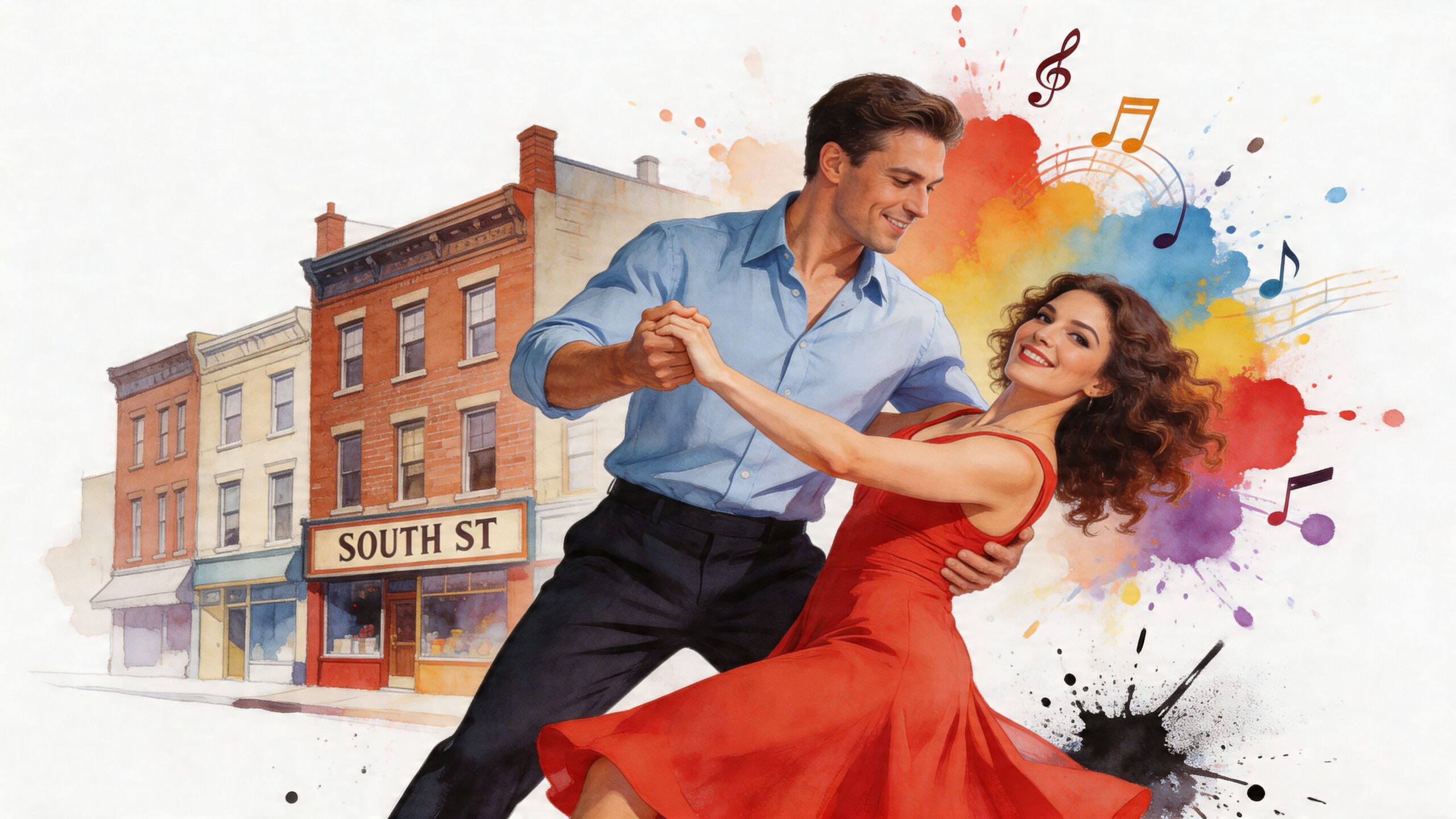
You hear it before you see it. A conga pattern drifting out of a restaurant, a trumpet line bouncing down the block, a couple turning in perfect time on a crowded floor. That’s often how people fall into salsa dance philadelphia life. They weren’t planning to become dancers. They just felt something in the music and started wondering, “Could I do that too?”
You probably can.
Maybe you’re brand new and worried you’ll feel stiff. Maybe you’ve gone to a social once, stood by the edge of the floor, and promised yourself you’d try “next time.” Maybe you’re searching because you want a hobby that gets you moving, helps you meet people, or gives you a way to show up to a wedding, date night, or party feeling more at ease in your own body.
Salsa is a strong choice for all of that. It gives beginners a clear starting point, it grows with you, and in Philadelphia, it lives in studios, community events, and social nights across the city. You don’t need to be naturally gifted. You need a little rhythm, a little patience, and a place to begin.
Feel the Rhythm An Introduction to Salsa in Philadelphia
There’s a moment I love watching in new students. The music starts, they count under their breath, and their shoulders are still tense. Then the beat settles in. Their steps get smaller, cleaner, and more relaxed. They stop trying to “perform” salsa and start feeling it.
That’s what salsa really is. Not a test. Not a secret club. It’s a social dance built around rhythm, connection, and shared energy. When people say salsa looks exciting, they’re usually noticing three things at once. The music is lively, the footwork has shape, and the partners look like they’re having a conversation without words.
What salsa feels like when you’re learning
In the beginning, salsa can feel like patting your head and rubbing your stomach at the same time. You’re listening to the beat, remembering your steps, and trying not to overthink your arms. That’s normal.
After a few lessons, most beginners start to notice simple wins:
- Better body awareness because you’re paying attention to weight changes and timing
- More focus because the music pulls your attention into the present moment
- A social outlet because partner dancing gives you a natural way to meet people
- A fun workout because you’re moving steadily without staring at a treadmill
A lot of people assume salsa is only for outgoing people. It isn’t. I’ve taught quiet engineers, busy parents, college students, retirees, and people who walked in saying they had “two left feet.” Salsa doesn’t require a certain personality. It rewards practice and openness.
Practical rule: Don’t judge salsa by how advanced dancers look on a Saturday night. Judge it by how teachable the first basic step is.
Why Philadelphia is such a natural salsa city
Philadelphia has real salsa roots. This isn’t a city where Latin dance feels imported or occasional. It’s woven into neighborhood life, festivals, studios, and social calendars.
A memorable example came when Philadelphia tried to break the Guinness World Record for the largest choreographed salsa routine on July 3, 2007, with thousands of dancers gathering on the Art Museum steps. The event aimed to beat the then-current record of 4,100 dancers set in Barcelona, and it showed how organized and passionate the city’s salsa community already was, as reported by The Philadelphia Inquirer’s coverage of the Art Museum salsa record attempt.
That matters because beginners often ask, “Is there really a salsa scene here?” Yes. There is history behind it, and there are people at every level. You’re not arriving late to something closed off. You’re stepping into a scene that already knows how to welcome newcomers.
Salsa is a culture, not just a class
If you only think of salsa as a sequence of counts, it can seem technical. If you experience it as music, community, and celebration, it starts to make sense much faster.
Philadelphia dancers learn in different ways. Some start in a studio and go social dancing later. Some discover it through a free lesson in the city and then decide they want stronger technique. Some begin because they saw a friend dancing and wanted that same confidence.
If you want a sense of the style itself before your first class, take a look at salsa classes and style basics at Danza’s salsa page. Even a quick preview helps you recognize the rhythm and shape of the dance before you step onto the floor.
Salsa works because it gives you both structure and freedom. You learn a pattern. Then you learn how to make it yours.
Your First Steps to Becoming a Salsa Dancer
Most beginners don’t struggle because salsa is too hard. They struggle because they think they’re supposed to get everything right immediately.
You’re not.
Your first job is simpler than that. Learn to hear the pulse, transfer your weight clearly, and stay calm enough to keep moving when you miss a step. That’s the foundation.
Start with the beat, not the flashy turns
When students say they “can’t find the rhythm,” I usually tell them to stop listening to the whole band at once. Salsa music has a lot happening. Instead, listen for a steady pulse, almost like a heartbeat under the song.
Try this at home:
- Put on a salsa track and just march in place.
- Don’t dance yet. Just step evenly.
- Once that feels steady, shift to a forward-and-back basic.
- Keep your steps small enough that you stay balanced.
Small steps help more than big effort. Beginners often lunge, rush, or try to decorate too early. Clean basics beat messy enthusiasm every time.
The rhythm doesn’t need you to chase it. It needs you to settle into it.
Understand lead and follow like a conversation
This part confuses people because they assume leading means forcing and following means guessing. Neither is true.
A better way to think about it is this. Leading is making clear suggestions through timing, frame, and direction. Following is listening through your body and responding to that information. It’s closer to conversation than control.
If one person mumbles and the other interrupts, the dance feels messy. If both people communicate clearly, even simple steps feel smooth.
Here are the beginner truths that help most:
- You don’t need to memorize dozens of moves. You need a reliable basic and a few clear patterns.
- You won’t look natural on day one. Nobody does.
- Being early or late to the beat happens. Good dancers fix it and continue.
- Partner work gets easier when your own balance improves. Solo practice matters.
What to do if you feel awkward
Feeling awkward doesn’t mean you’re bad at dancing. It means you’re learning a new coordination skill in public.
That’s vulnerable. It’s also normal.
A useful mindset shift is to treat your first lessons the way you’d treat your first time driving in a busy city. You wouldn’t expect yourself to glide through every turn without thinking. You’d expect attention, repetition, and gradual comfort.
Keep your focus on three goals:
- Stay on time
- Finish your weight transfer
- Keep breathing
That last one matters more than people think. Tension makes the body feel slower and heavier. Relaxed dancers learn faster because they can feel what their feet and partners are doing.
Your first milestone
The first real milestone in salsa isn’t a spin. It’s when you can dance a basic step without freezing when the music starts.
Once that happens, the rest builds more quickly. Turns, cross-body movement, styling, musicality, and social confidence all grow out of that first quiet skill. You hear the music, trust your feet, and stay present.
That’s when beginners stop saying, “I hope I can learn salsa,” and start saying, “I think I’m becoming a dancer.”
How to Choose the Perfect Philadelphia Salsa Class
You find a salsa class in Philadelphia, open three more tabs, compare prices, read reviews, and then close your laptop without booking anything.
That happens all the time.
The best class is usually the one that matches your next goal and gets you in the room. Salsa works a lot like learning to cook. If you want to make dinner at home, you do not need a chef’s table experience first. You need a recipe you can follow, a teacher who explains the basics clearly, and enough repetition to stop second-guessing every step.
Start with your real goal
Before you compare studios, ask one simple question. What do you want salsa to do for your life right now?
Your answer shapes the class that will help you most.
If you want to try salsa without a big commitment, a beginner group class is usually the easiest entry point. If you have a wedding coming up, private lessons often make more sense because the instruction can focus on your music, your comfort level, and the exact moments you want to feel steady. If your goal is social dancing, look for a program that teaches fundamentals in class and gives you chances to practice them outside class.
That last part matters more than beginners expect.
A class should not feel like a one-off experience. It should feel like the first mile of a clear road.
Which format fits you best
A lot of confusion disappears once you stop asking, “What is the best class?” and start asking, “What setting helps me learn?”
| Which Salsa Learning Format is Right for You? | Best For | Pros | Cons |
|---|---|---|---|
| Group class | Beginners who want structure and community | Lower cost, shared energy, steady repetition of basics | Less individual correction |
| Private lesson | Students with a specific event or sticking point | Personal feedback, faster adjustments, flexible pacing | Higher cost per session |
| Practice socials or guided socials | Dancers who know the basics and need real partner experience | Confidence, adaptability, better timing under real conditions | Can feel like a lot too soon without class preparation |
Here is a simple way to read that chart.
Group classes are your homeroom. You build habits there. Private lessons are closer to tutoring. They help when you want personal feedback or need to improve quickly. Social dancing is the lab where you test what you have learned with different partners, different songs, and a little more unpredictability.
None of these formats is better in every case. They each do a different job.
Three questions that make the choice easier
If you feel stuck, use this filter.
Do you need encouragement from a room full of people, or do you learn better from direct correction?
Some beginners relax once they see others making the same mistakes. Others improve faster when a teacher can catch a small timing issue right away.
Are you learning for fun, for confidence, or for an event?
Someone preparing for a wedding first dance has a different need than someone who wants a weekly hobby. Event-based goals usually benefit from private instruction. General confidence often grows well in beginner group classes.
Do you want a place to keep going after week one?
A good beginner class should answer, “What comes next?” If there is no clear next step, progress can feel random.
Key takeaway: Choose the class that fits your current goal, your learning style, and the kind of support that helps you keep showing up.
What to notice besides price
Beginners often focus on the class fee and miss the things that shape the experience far more.
Look for:
- A clear beginner pathway so you know how level one leads into level two
- Teachers who explain and correct with patience because calm feedback helps adults learn faster
- A welcoming room culture where new students are not treated like they are already supposed to know the rules
- Practice options such as socials, workshops, or review classes that help lessons stick
- Flexibility for real-life goals such as wedding dances, busy schedules, or starting with zero experience
If you want to compare different teaching environments across the city, this guide to dance classes in Philadelphia is a useful place to start.
One structured option in the city is Danza Academy of Social Dance, which offers private lessons, group classes, wedding dance preparation, and programs for different ages and goals. That kind of setup can help beginners who do better with one consistent home base instead of piecing everything together on their own.
If you are caught between curiosity and commitment, a complimentary lesson can make the choice much easier. One conversation with an instructor often clears up more confusion than an hour of online comparison.
Where to Learn and Dance Salsa in Philadelphia
You finish a beginner class feeling good, then the next question hits. Where do you go to practice, meet people, and turn class steps into real dancing?
That question matters more than many beginners expect. Learning salsa in Philadelphia works a lot like learning a new language. Classes teach the vocabulary. Socials teach conversation. A good dance home gives you both, so your progress does not stay trapped inside one weekly lesson.
Studios to consider for lessons
Philadelphia gives you several solid ways to learn, and each setting serves a different kind of student.
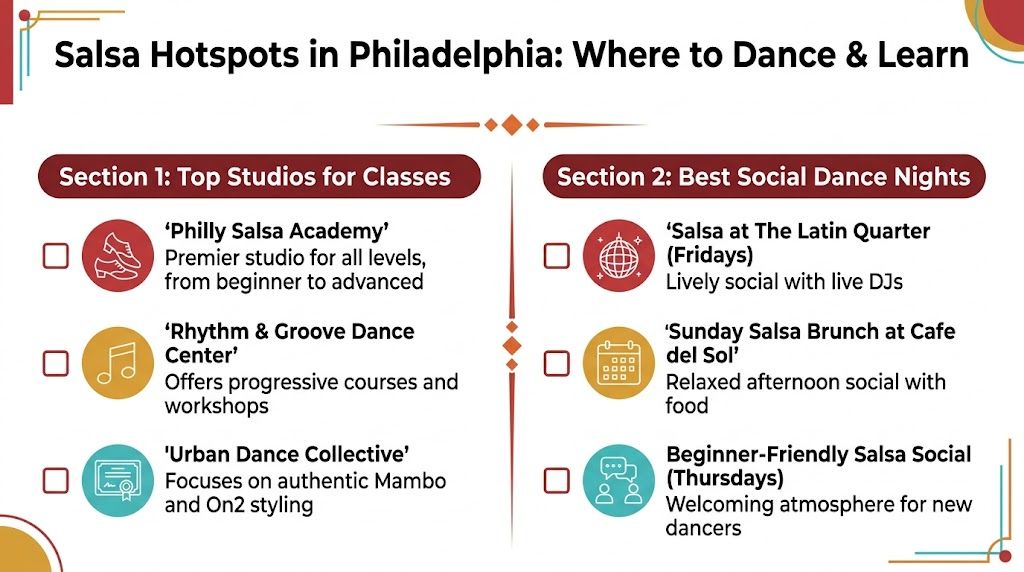
Urban Movement Arts is a useful option for people who want a Center City location and the choice of group or private lessons. If convenience helps you stay consistent, that matters.
Estilo Dance Studio in Fishtown appeals to dancers who enjoy a dedicated studio atmosphere and want a more focused class environment.
Albasario Dance Company gives students another path, especially if they want group classes with the option to add private coaching later.
Danza Academy teaches in Center City and Exton, which can help students who want one school that covers beginner instruction, private lessons, social dance skills, and support for special events. That last piece matters for couples who may start with salsa classes now and later want wedding dance lessons built around their first dance goals.
The best studio for you is the one you will return to. Fancy floors do not build confidence by themselves. Clear teaching, repetition, and a room that feels welcoming do.
Social nights that help you grow
Once you know a basic step and a simple turn, social dancing becomes part of the learning process.
Philadelphia has studio socials, bar and lounge nights, and community-run events that let beginners practice without needing a full performance mindset. Local dancers often mention spots like The 7165 Lounge for weekly salsa nights, along with community groups such as Siempre Salsa and Dance Republic that share lesson and social opportunities around the city.
If that sounds intimidating, start smaller than you think you need to. You do not have to dance every song. You can arrive early, watch the room, take one beginner lesson if the event offers it, and dance two or three songs before heading home. That still counts as progress.
Socials teach skills classes cannot fully recreate. You learn how different partners feel, how to recover if timing slips, and how to stay relaxed when the music changes. Those are the moments that turn memorized steps into real dancing.
How to match the venue to your personality
Students grow faster when the setting matches their comfort level.
A shy beginner often does better starting with weekly classes and a smaller practice dance instead of jumping straight into a packed late-night social. A very social person may stay motivated by mixing lessons with community events right away. Someone preparing for a milestone, like a showcase or even planning your wedding, may want private lessons sooner so practice time stays focused.
Here is the simple version:
- You like structure. Choose a studio with a clear weekly schedule.
- You learn by doing. Add a beginner-friendly social early.
- You want extra feedback. Book a private lesson once you know your sticking points.
- You feel nervous in crowds. Start with shorter events and leave while you still feel good.
I tell new dancers this all the time. Confidence is not a personality trait. It is a habit built one comfortable, slightly brave visit at a time.
A practical first-month approach
Keep your first month simple.
Pick one main place to learn and one place to practice. Then repeat that rhythm long enough for your body to recognize the music and your mind to stop overthinking every count.
A beginner-friendly first month might look like this:
- Take one salsa class each week at the same studio.
- Practice the basic step and right turn at home for a few minutes at a time.
- Attend one social, community event, or studio practice night.
- Dance a few songs, then leave with energy still in the tank.
- Write down one question to bring back to class.
That pattern works because it removes guesswork. You are not chasing every event in the city. You are building a bridge from absolute beginner to social dancer, one repeatable week at a time.
Philadelphia gives you plenty of options, but you only need a starting point that feels clear and friendly. Find one place to learn, one place to practice, and let your confidence grow from there.
Creating an Unforgettable Wedding First Dance with Salsa
A lot of engaged couples love the idea of a first dance that feels joyful, personal, and memorable. Then reality hits. One partner says, “We’ve never danced before.” The other says, “We don’t want to look stiff.” Both start searching for help and find plenty of general salsa events, but not much guidance for building a wedding dance from scratch.
That gap is real. Local coverage around Philadelphia salsa often centers on classes and socials, while guidance for couples preparing a salsa-based first dance is much thinner. The need for a clearer roadmap for engaged couples is reflected in this Philadelphia salsa calendar overview discussing the wedding dance content gap.

Why salsa works beautifully for weddings
Salsa gives a wedding dance warmth and personality. It can be romantic, playful, elegant, or energetic depending on the song and choreography. It also adapts well. You don’t need to perform a high-speed club routine to have a striking first dance.
For many couples, the strongest wedding dances mix simple salsa basics with clean turns, easy directional changes, and moments that feel natural for their relationship. Some also blend salsa with ballroom movement for a smoother transition into formal wedding style.
That’s often the smartest approach. A wedding dance should fit your comfort level, your music, and your venue. It’s not about proving how advanced you are.
A useful planning path for couples
Start with the timeline. If the wedding is approaching quickly, keep the choreography compact and polished. If you have more time, you can build confidence gradually and refine musical details.
Couples also do better when they answer these questions early:
- What mood do we want? Romantic, festive, dramatic, relaxed
- Do we want pure salsa or a blend? A fusion can feel more natural
- Will we dance the full song? Shorter edits are often easier for guests to enjoy
- What shoes and clothing will we wear? Practice in something similar
If you’re organizing lots of wedding details at once, a planning checklist can help keep dance prep from becoming an afterthought. This guide for planning your wedding is useful for fitting special moments like the first dance into the larger schedule.
A visual example helps many couples see what’s possible with instruction and choreography:
What couples usually need from instruction
Wedding couples usually don’t need “more moves.” They need a teacher who can simplify, sequence, and tailor.
That means helping with:
- song choice
- entrance and ending
- transitions that feel smooth
- movements that work for uneven experience levels
- rehearsal strategies that reduce panic
Private coaching is usually the most practical path for this because the dance needs to fit two specific people, one date, and one event. If you’re looking for that kind of personalized support, wedding dance lessons at Danza are one example of a program built around custom first-dance preparation.
A good wedding dance doesn’t have to be flashy. It has to feel like you two, moving confidently together while everyone you love watches.
Essential Salsa Drills and Social Dance Etiquette
You don’t have to wait for class to start building confidence. A few simple home drills can make your first lesson feel much less overwhelming.
The goal isn’t to become advanced in your living room. It’s to make the basic patterns familiar enough that your brain doesn’t panic when music and partner work get added.
Three drills that help beginners fast
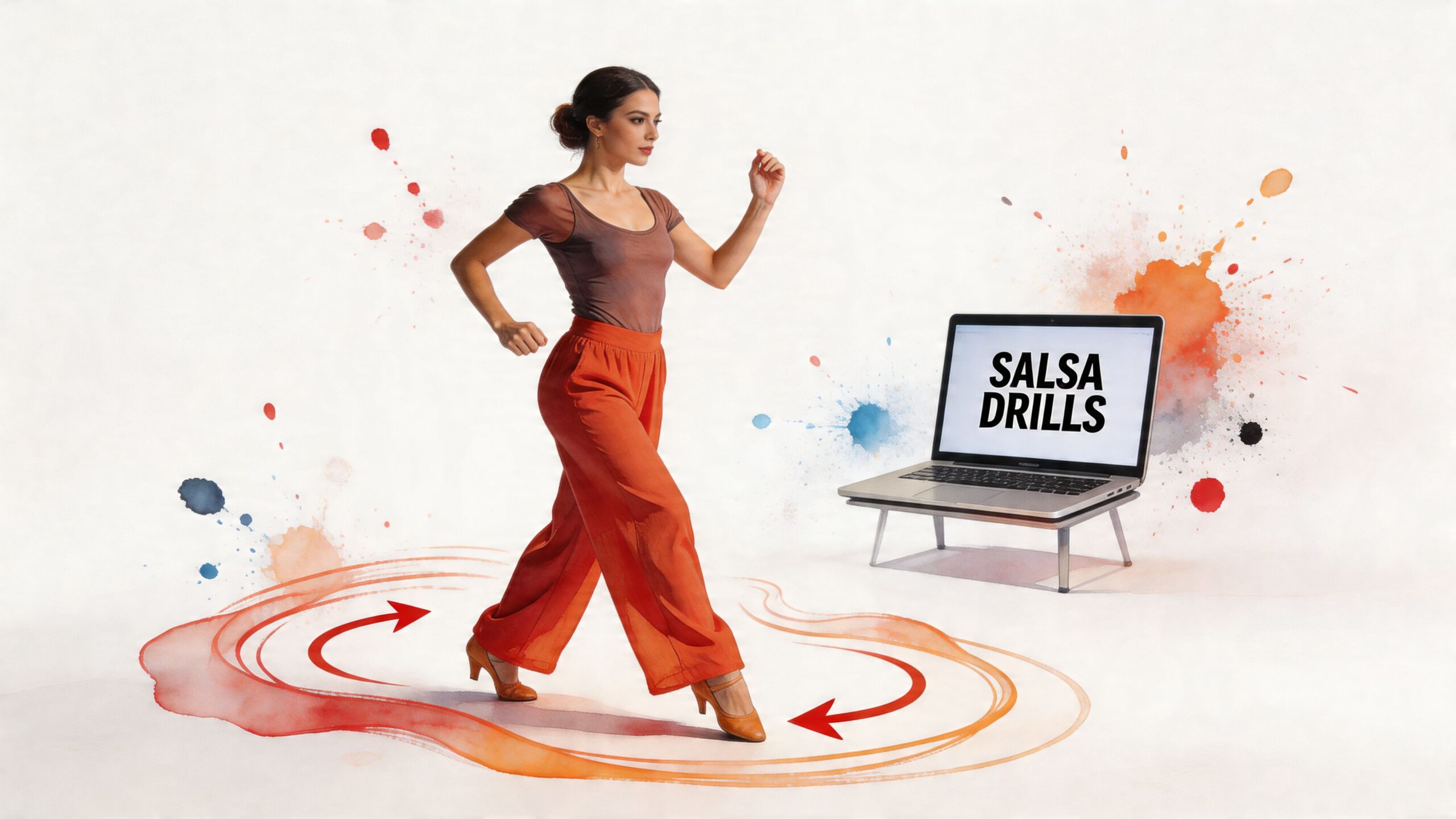
Drill one: march and count. Put on music and count steadily while marching in place. This teaches you to stay calm with the beat before adding dance mechanics.
Drill two: forward and back basic. Keep your steps under your body. If you feel yourself reaching, shorten the movement. Balance comes before style.
Drill three: side basic with pause awareness. Many beginners rush because they think every count should look equally big. Practicing the weight change and the brief held moment helps your timing look cleaner.
Try rotating those drills instead of overpracticing one. Short, focused practice works better than exhausting yourself.
What to do at your first social
The social floor has its own rules, but they’re friendly once you know them.
- Ask politely. “Would you like to dance?” is enough.
- Accept a no graciously. People may be resting, talking, or sitting out a song.
- Keep it beginner honest. If you’re new, say so. Most dancers appreciate clarity.
- Watch your space. On a crowded floor, smaller movement is better floorcraft.
- Thank your partner after the song. It matters.
Floor tip: Social dancing isn’t about showing everything you know. It’s about making the dance comfortable for both people.
The etiquette beginners often forget
Hygiene is part of dance etiquette. Bring what you need to stay fresh. If you sweat a lot, pack an extra shirt or a towel. If you’re wearing shoes that stick too much or slip too much, your dance will feel harder than it should.
Also, don’t apologize through the whole song. One quick “I’m still learning” is fine. Repeating “sorry” over and over makes both dancers more tense. Keep going, smile, and reconnect to the beat.
A better goal than perfection
At your first social, success doesn’t mean dancing every song. It means leaving with more comfort than you had when you arrived.
Maybe you danced twice. Maybe you stayed on beat for half a song. Maybe you asked someone you didn’t know and survived the nerves. That all counts.
Those are the small victories that turn salsa from an idea into part of your life.
Start Your Philadelphia Salsa Journey and FAQ
You hear a salsa track, your foot starts marking the beat, and for a second you can almost see yourself on the floor instead of watching from the side. That moment matters. In Philadelphia, salsa can start as a curiosity and grow into a real skill, a social hobby, a wedding goal, or even a family activity. The key is giving yourself a clear first step.
Learning salsa works a lot like learning a new neighborhood route. The first trip feels uncertain. Then a few landmarks start to stand out. After that, you stop overthinking every turn. With the right class and steady practice, your body begins to recognize the timing the same way.
That is why a good starting point matters so much. Danza Academy of Social Dance helps beginners turn interest into a plan, whether you want to become comfortable at socials, prepare a first dance for your wedding, or build confidence from the ground up. If you have been waiting to feel ready, start now. Readiness usually shows up after the first class, not before it.
FAQ
Do I need a partner to start salsa
No. Many salsa classes in Philadelphia are designed for solo students, and partner rotation is a normal part of learning. Coming alone is often helpful because it teaches you to lead or follow with different people instead of memorizing one person’s habits.
What should I wear to a salsa class
Wear clothes that let you move easily and shoes that allow you to pivot. You do not need anything flashy. For most beginners, breathable clothes and comfortable shoes are enough.
How long does it take to feel comfortable
It depends on how often you practice, but beginners usually notice a change once the basic step stops feeling like a puzzle. Salsa comfort builds in layers. First you hear the beat more clearly. Then your feet find it faster. Then you start noticing the person in front of you instead of only thinking about your own steps.
Is salsa only for adults
No. Adult classes make up a big part of the local salsa scene, but salsa can also work well for younger students because it builds coordination, rhythm, and confidence. Danza Academy also offers kids' programs, which is helpful for families who want dance training in one place instead of piecing it together across different activities.
I’m interested in community dance events. Where can I learn more about running them
If salsa has you thinking beyond dancing and into hosting, organizing, or building community, this guide on how to start an event business gives a practical overview of the work behind successful events.
What if I feel nervous walking into my first class
That feeling is normal. Even confident social dancers had a first day when they were not sure where to stand or what to expect.
Arrive a few minutes early. Introduce yourself. Let the instructor know you are new. A good studio will help you settle in quickly, and within a few songs, the room usually feels much smaller and friendlier than it did at the door.
If you are ready to stop watching from the sidelines, book your free complimentary lesson with Danza Academy of Social Dance. It is a simple, low-pressure way to feel salsa in your own body, ask questions, and get a starting plan that fits your goals, whether that means social dancing, a wedding first dance, or finally becoming the kind of person who says yes when the music starts.