
You're standing in the lobby with your phone out, searching “youth dance classes near me”, and every studio page starts to blur together. Same smiling kids, same polished photos, same vague promise that your child will “love dance.” The key question is simpler and harder at the same time: which class will fit your child, your schedule, and your family's expectations?
A good youth program does more than teach steps. It shapes how a child feels about movement, being seen in a group, and sticking with something long enough to get better. A poor fit can make a child shut down early, especially if the class feels too fast, too intense, or too advanced for where they are right now. Danza Academy's Young Dancers Academy is one example of how a studio can frame kids' training around age, readiness, and confidence instead of just filling a calendar slot.
Why Finding the Right Youth Dance Class Matters
The first search result rarely tells the whole story. A parent might see a studio with great photos, a long list of styles, and a polished homepage, then assume the options are basically the same. They're not. Two programs can both say “kids dance,” but one may be built for steady developmental growth while another leans hard toward performance pressure or competition.
That difference matters because children don't just learn choreography in class, they learn how to take instruction, handle correction, and keep showing up after a mistake. In a well-run room, a shy child can start small, watch others, and build trust with the teacher. In the wrong room, the same child may decide dance is “not for me” after one uncomfortable class.
Practical rule: If your child leaves a class feeling curious and capable, you're probably in the right place. If they leave confused, embarrassed, or overwhelmed, the fit needs a second look.
Parents often think they're choosing a style. In reality, they're choosing a learning environment. That's why the best search is not just for youth dance classes near me, it's for a studio that matches your child's age, temperament, and goals. Some families want gentle creative movement. Others want a more technical path. Both can be right, but only if the placement is clear.
What Youth Dance Classes Actually Include
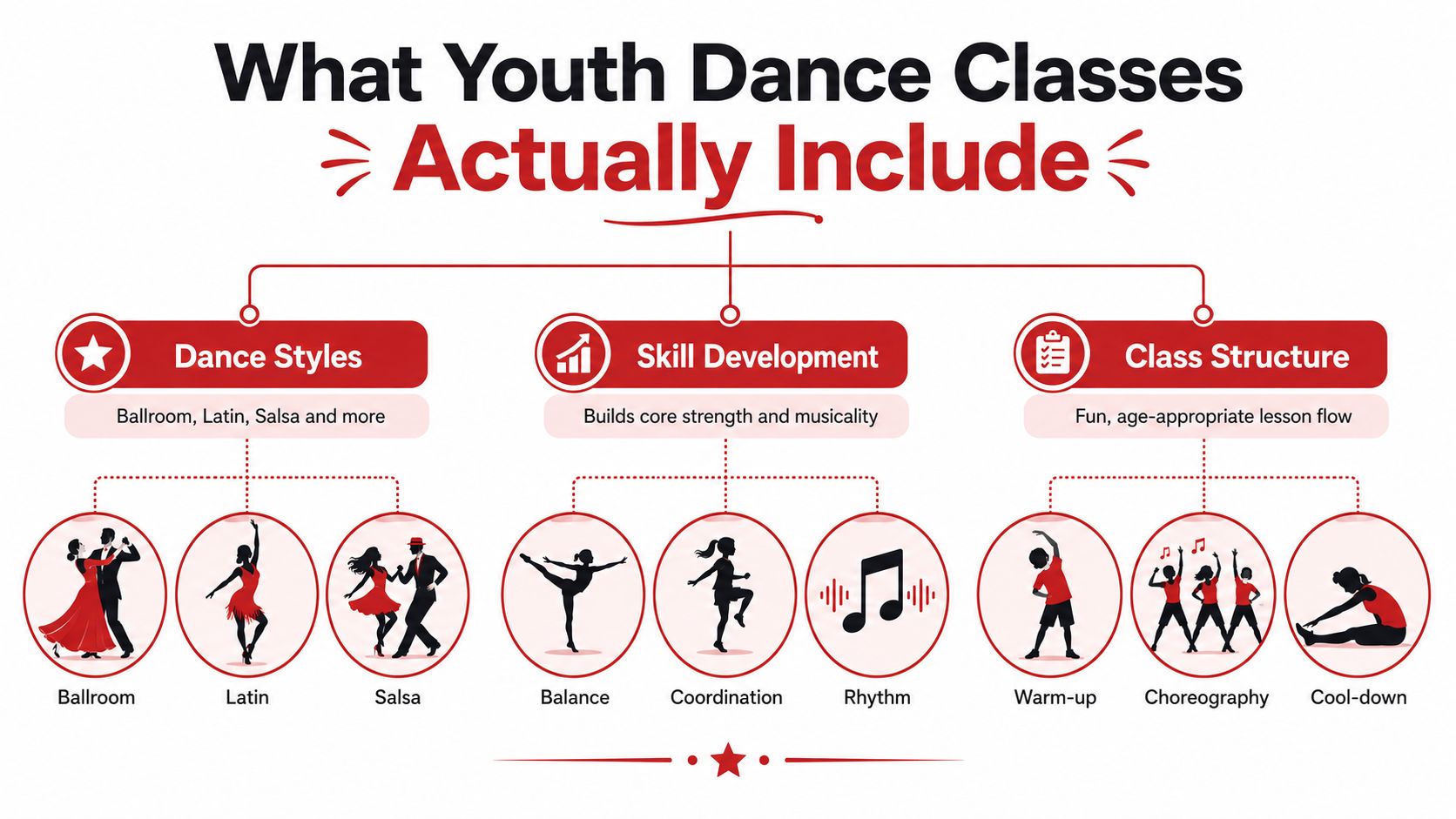
A solid youth class usually has three parts, style, skill, and structure. Parents often focus on the style first, but the other two matter just as much. A child can be in the “right” genre and still struggle if the class moves too fast or groups kids by age alone without checking readiness.
Styles are only the starting point
For younger children, creative movement is often the easiest entry point because it gives them room to listen, copy, and explore without worrying about precision right away. Older children may do well in Ballroom, Latin, Salsa, or Swing because those styles give them clear rhythm, partner awareness, and a sense of pattern. In a good studio, the style matches the child's temperament, some kids want play and imagination, while others like structure and clear goals.
Placement should reflect development
Studios commonly separate classes into developmental bands such as ages 2–6, 5–12, and 13–18 Columbia Dance. That kind of grouping reduces motor-skill mismatch and lets the teacher adjust tempo, cue complexity, and coordination demands to the students in front of them. If a class mixes children who are at very different stages, some kids will spend the lesson waiting, while others will spend it catching up.
The lesson itself has a rhythm
Most classes begin with warm-up, move into simple drills or combinations, then shift into a movement pattern or choreography section, and finish with a cool-down. Younger children often do best in 30-minute sessions, while older children may handle 45 minutes or longer, depending on the program Greater Wichita YMCA. Recreational tracks usually focus on joy, coordination, and social comfort, while technique-focused tracks ask for more repetition, precision, and consistency.
A parent watching from the hallway should expect movement, listening, correction, and repetition, not perfect performance. That's the point. The best class helps a child feel the structure without making the room feel stiff.
Developmental and Social Benefits of Dance for Children
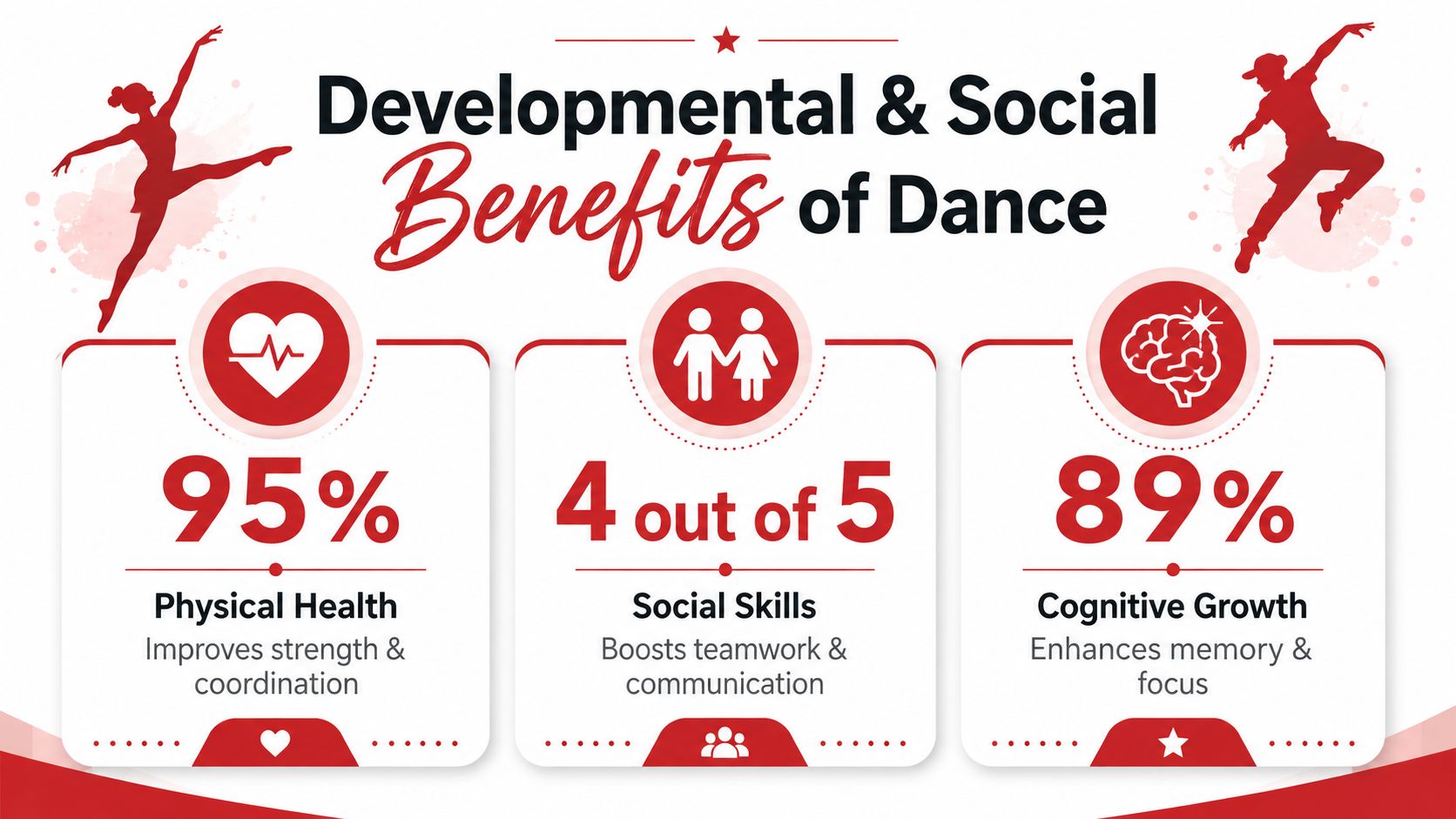
Dance gives children more than exercise. It asks them to listen, remember sequences, notice other bodies in space, and recover when they miss a step. That mix is valuable because it blends physical, cognitive, and social learning in one setting.
The physical side is easy to see first. Children work on balance, coordination, and body control while they move through warm-ups, turns, traveling steps, and partner patterns. A class is not the same thing as a gym workout, but it still asks the body to pay attention, and that attention matters for developing control.
Confidence grows through repetition
A child rarely walks into dance feeling sure of everything. They usually gain confidence in small layers, learning the room, remembering a sequence, then realizing they can do it again without help. That experience is different from sports where a child may spend a long time sitting out or waiting for a turn.
Dance also gives children room to express themselves without needing to be the loudest person in the room. Some kids love being watched, while others need time before they want an audience. Good instructors make space for both.
The social side shows up in partner work, group mirroring, and taking turns. Children learn how to look up, follow a lead or follow a cue, and stay aware of other dancers around them. Those are useful skills for school, group activities, and everyday confidence.
Dance works especially well for children who don't thrive in purely competitive environments. They still get challenge, but they get it inside a learning process that can feel more encouraging and less confrontational.
Parents usually see the earliest changes in comfort and coordination before they see big leaps in performance. That's normal. A child who starts to walk into class without clinging to you, or remembers a short sequence by heart, is already showing meaningful progress.
How to Evaluate a Dance Studio Before Enrolling
A polished website doesn't tell you whether a studio is strong for children. You want to know who is teaching, how classes are run, and whether the room feels age-appropriate once real kids are moving in it. That's where the hidden evaluation criteria matter most.
Ask about the teacher, not just the style
A teacher can be excellent with adults and still be the wrong fit for young children. Look for instructors who have child-specific experience, clear communication habits, and a way of correcting without embarrassing students. If you're comparing options, it helps to think beyond the front desk and check what the software includes in terms of scheduling or parent communication tools, because organized communication often reflects how a studio handles families day to day.
You should also ask how classes are grouped, whether teachers follow a progression, and how they place children who are new to dance. A strong studio can explain that clearly without sounding defensive or vague.
Look closely at culture and logistics
Observation policies tell you a lot. Some studios welcome parent viewing, while others prefer a quieter room so children can focus. Either approach can work, but you should know the policy before you enroll. Cost transparency matters too, registration, costumes, recital expectations, and cancellation rules should be easy to understand before you commit.
A few red flags are hard to miss if you pay attention.
- Too much pressure too early: Young children should not feel pushed into competition before they can enjoy class.
- No clear curriculum: If the teacher can't explain what your child will learn next, progress may be improvised.
- Loose safety habits: Flooring, supervision, and emergency procedures should be obvious, not assumed.
- Unclear parent communication: Families should know what's expected, especially around attendance and performance events.
If you want a simple checklist for comparing studios, how to choose a dance studio can help you organize the questions before you visit. A good studio should make the evaluation easier, not harder.
What to Expect at Your Child's First Dance Lesson
The first lesson usually feels more ordinary than parents expect, and that is a good thing. Your child will likely arrive, check in, meet the instructor, and spend a few minutes getting oriented before class starts. A shy child may stay close to you at first. An energetic child may want to move right away and have trouble waiting for directions.
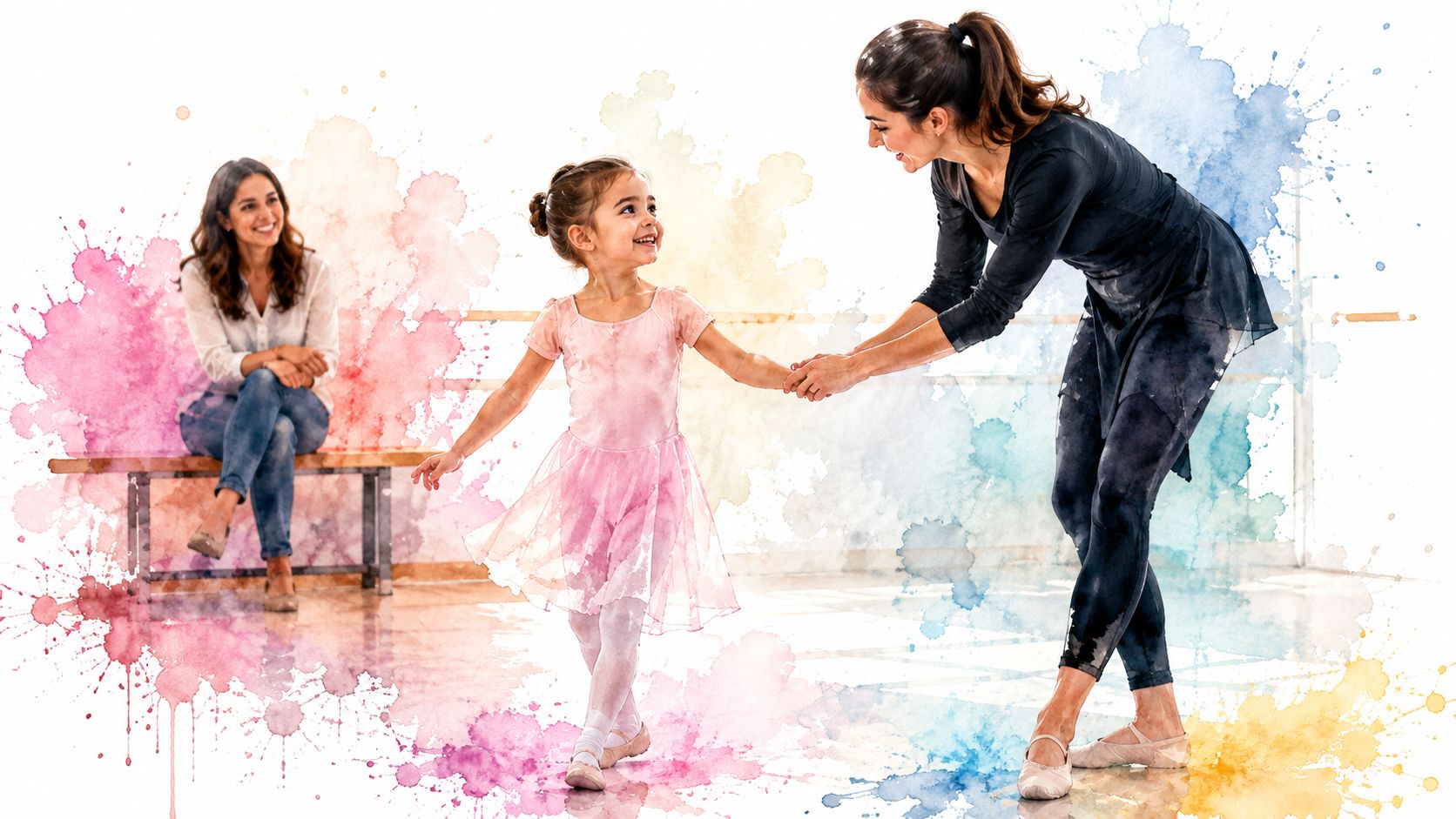
Younger children often begin with a name game, a simple walking pattern, or a movement activity that helps them settle in. Older students may learn a foundational step, try a basic sequence, or do a short exercise that lets the instructor see how they pick up rhythm and direction. In both cases, experienced teachers are usually watching for attention, comfort, and readiness. They are not trying to test the child.
A first class should feel like a gentle introduction, with the instructor setting a supportive tone.
Bring comfortable clothing, proper shoes if the studio requires them, and water. Whether parents stay or leave depends on the studio policy and the child's age, but the goal stays the same, help your child settle without turning the lesson into a family performance. If the instructor allows it, you can usually watch from the side without interrupting the room. A short video can also help parents understand the flow of a beginner class before they arrive. See our guide to what to expect at your child's first dance lesson for a step-by-step walkthrough.
The first few weeks are about adjustment, not mastery. Some children warm up quickly. Others need several visits before they relax. Parents usually help most by staying positive, avoiding heavy coaching at home, and treating each class as a step toward comfort, not a verdict on talent.
Youth Dance Programs at Danza Academy of Social Dance
For families in the Philadelphia area, Danza Academy of Social Dance offers kids' programming built around Ballroom, Latin, and social dance styles such as Salsa, Cha-Cha, Swing, and more. The academy brings 40+ years of teaching experience into a setting that is welcoming, structured, and focused on skill development. Its youth classes are designed to build coordination, confidence, and musicality without making the room feel intimidating.
The studio's presence in Center City Philadelphia and Exton, PA gives parents a local option that's practical for regular attendance. That matters because consistency is one of the biggest predictors of whether a child settles in and keeps progressing. A supportive community environment also helps, especially when instructors know how to guide kids through technique while keeping the tone encouraging.
Danza Academy of Social Dance also offers a complimentary first lesson, which gives families a low-pressure way to see how the studio feels before making a commitment. No partner is needed, and the visit is a chance to watch how the instructors work with children in real time. If you're comparing local programs right now, booking a free trial lesson is a simple way to get a clearer answer than search results alone can provide.
Parents can book directly through Danza Academy of Social Dance and see whether the studio is the right fit for their child.
Common Questions Parents Ask About Youth Dance Classes
A lot of parents hesitate because they're trying to solve several small problems at once. Can my child join without a partner? Usually yes, especially in group settings where instructors rotate roles or use structured pairings. If your child has school sports, music lessons, or homework-heavy nights, the better choice is often a class format that runs on a predictable schedule rather than one that changes constantly.
Siblings can sometimes take classes together if the studio places by age and readiness in a way that makes sense for both children. Recitals are another common question, and they're not always mandatory, so it's worth asking before enrollment. If your child wants to quit mid-session, the best response is to slow down and ask what felt hard, whether it was the room, the pace, or the social side of the class.
Children who had a negative first experience often need a reset, not pressure. A different teacher, smaller group, or more age-appropriate class can change everything. That's especially true for children with disabilities or sensory needs, because families often need to ask specific questions about accommodations, caregiver participation, and whether the class is adaptive rather than just inclusive in name.
If your child is resistant, don't oversell it. Keep the language simple, explain that they're trying one class, and let the instructor do the teaching. Parents usually get the clearest answer by observing whether their child leaves curious enough to come back.
If you're looking for a warm, structured place where kids can build confidence through movement, Danza Academy of Social Dance offers youth classes that fit that goal. Their Philadelphia and Exton locations, plus the complimentary first lesson, make it easy to see whether the studio feels right for your family. Visit Danza Academy of Social Dance to book a free lesson and find a class that matches your child's age, comfort level, and interest.