
Foxtrot is a smooth 4/4 ballroom dance built on a slow-slow-quick-quick walking rhythm that glides across the floor. In the classic pattern, each slow takes 2 beats and each quick takes 1, creating a complete phrase of 6 beats, or 1.5 measures of 4/4 music.
You may have seen a couple move around a ballroom with almost no visible effort, their steps looking more like an elegant walk than a set of complicated figures. Then the music starts, someone asks you to dance, and the question appears: what is the foxtrot dance, exactly, and how are you supposed to begin?
The answer is friendlier than its formal appearance suggests. Foxtrot uses walking steps, a comfortable partner connection, and a steady musical pulse. Its smooth travel comes from giving the longer steps time to breathe, while the quick steps help the dancers keep moving naturally.
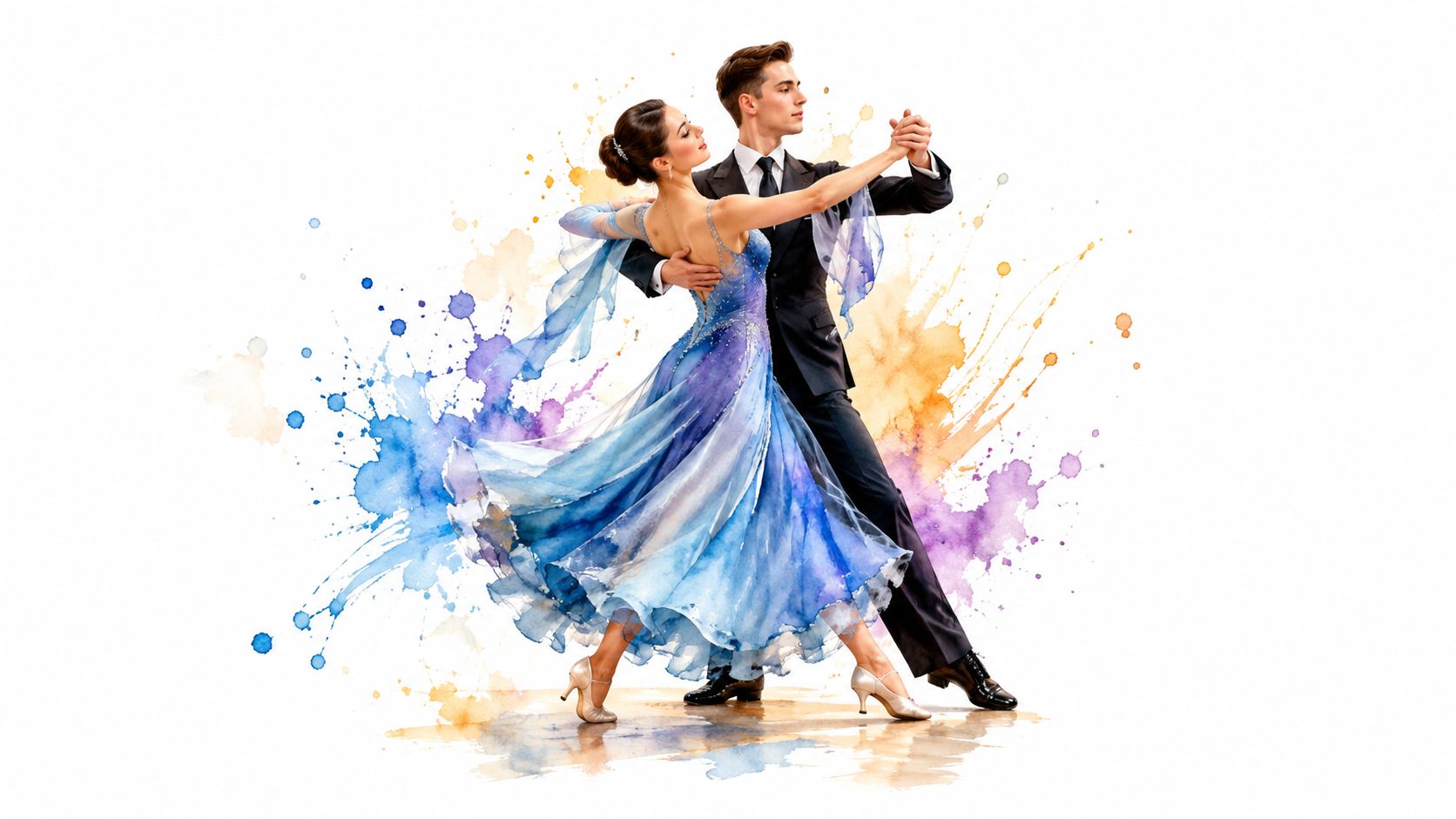
You don't need previous ballroom experience, and you don't need to arrive with a partner. Once you understand the rhythm, the walking action, and the difference between the major styles, the dance becomes much easier to recognize and try.
Introduction to What the Foxtrot Feels Like
At a wedding or social dance, you may notice a couple crossing the room with the calm ease of an elegant walk. There is little bouncing, no abrupt stopping, and no rush through showy figures. One partner suggests a direction, the other responds, and both keep moving with a relaxed, sweeping quality.
That feeling comes from foxtrot's traveling design. The partners usually progress around the room instead of repeating a stationary pattern in one small spot. They adjust their route around other couples while keeping the upper body quiet, the connection comfortable, and each step controlled.
The basic idea
Foxtrot is a social ballroom dance in 4/4 time with a central slow-slow-quick-quick rhythm. Each slow lasts 2 beats, and each quick lasts 1 beat, so the pattern spans 6 beats, or 1.5 measures of 4/4 music. The count does more than organize the feet. It shows when to let the body travel, when to change weight, and how to stay connected with a partner. This technical explanation of foxtrot characteristics explains how this timing supports the dance's sustained glide and forward movement.
Try the count while walking across your room. Allow the first step to continue for two beats, take another two-beat step, then add two lighter one-beat steps. Keep the action ordinary and comfortable. You are practicing how each step fits the music, rather than trying to make every movement look dramatic.
Beginner mindset: Foxtrot looks polished because dancers manage weight, timing, and direction, not because every step is complicated.
Foxtrot also describes a family of related dances. International Slow Foxtrot asks for a more refined hold and careful floorcraft, while American Social Foxtrot can feel more flexible for weddings, social floors, or modern playlists. The right version depends on the tempo, available space, and setting. History explains its early character, musical timing shapes its glide, and floorcraft helps couples share the room comfortably.
How the Foxtrot Started and Became a Ballroom Classic
Foxtrot began in the United States around 1914, during a period when ragtime, vaudeville, and social dancing were shaping popular entertainment. The dance is widely traced to vaudeville entertainer Harry Fox, whose 1913 Ziegfeld Follies act used a trotting step that helped inspire the name and early form of the dance. Britannica's history of the fox-trot connects those early theatrical steps with the dance that later entered the ballroom.
The earliest version wasn't the smooth, floating style many people recognize today. Its roots included the one-step, two-step, and ragtime dances, so the action had more bounce and a more obvious trotting quality. That history matters because it explains why the name sounds lively even though modern Slow Foxtrot looks exceptionally calm.
From stage novelty to refined ballroom dance
Vernon and Irene Castle helped popularize foxtrot in 1914, adding the refined, smooth character that became associated with the ballroom form. Dance teachers gradually shaped the movement for social use, replacing rougher or more exaggerated actions with longer, quieter travel and clearer partner connection.
That refinement made the dance adaptable. Couples could use it at social gatherings, while instructors could organize its figures and technique for formal teaching. A significant step in standardization came in 1915, when foxtrot was introduced to the Imperial Society of Teachers of Dancing in London, helping establish its place in international ballroom education. Danza Academy's history of the foxtrot offers a longer look at this transition from American entertainment to ballroom tradition.
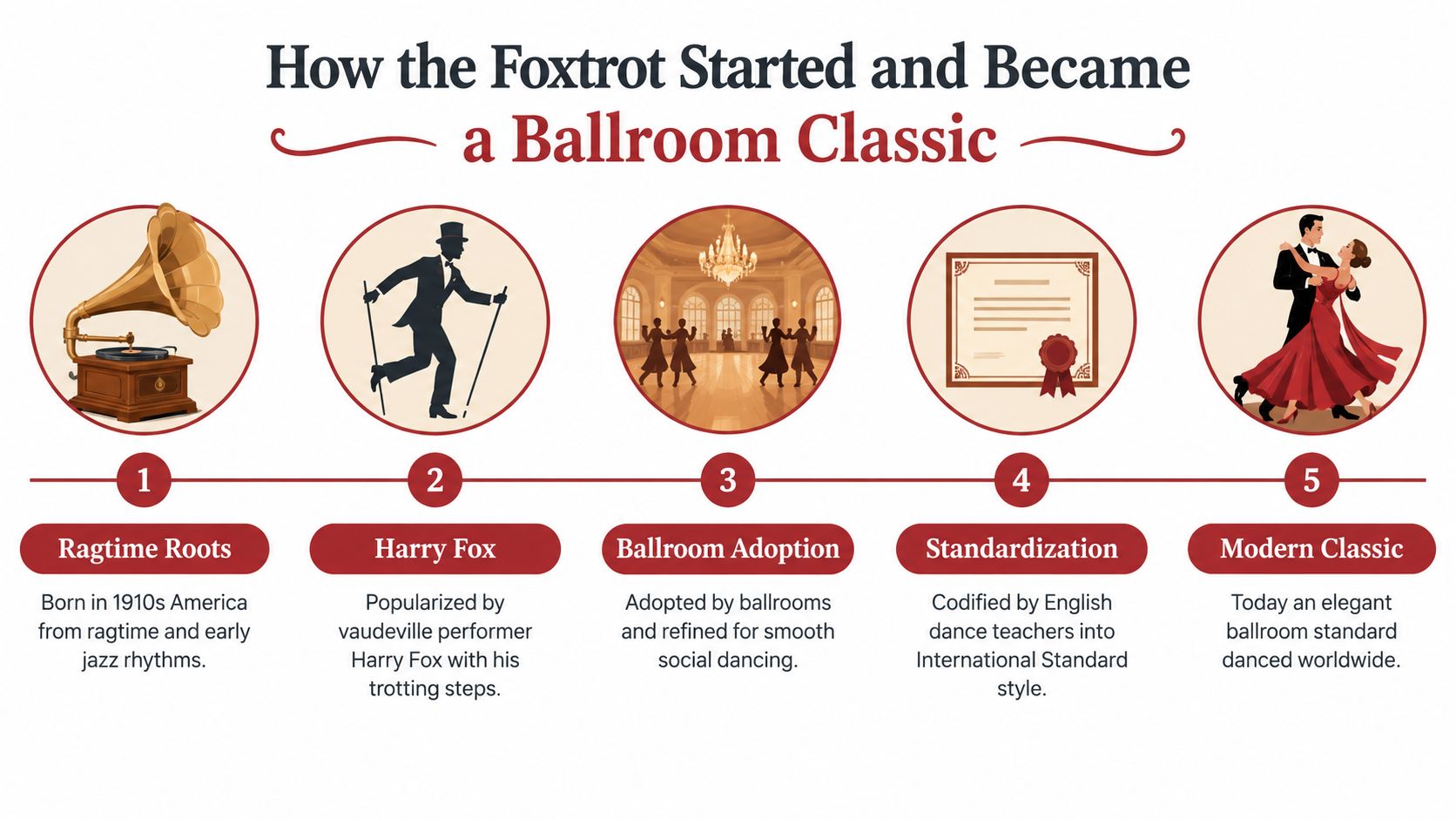
Foxtrot then became one of the dominant social dances of the early twentieth century. Historical coverage describes it as the most popular fast dance in the United States from the late 1910s through the 1940s, while another account places its height of popularity in the 1930s. The dance didn't disappear when fashions changed. Instead, teachers and dancers separated it into recognizable branches, preserving its smooth identity while making room for different tempos and settings.
By 1924, the style was distinguished into Slow Fox and Quickstep in historical coverage, and by 1963, foxtrot had been included in the World Dance Program in the German source reviewed. Those milestones show a dance moving from popular novelty to standardized international form. This historical overview of foxtrot's development details that broader evolution.
Understanding Foxtrot Music Timing and Tempo
At a wedding reception, the song may sound relaxed while the room keeps moving around you. Foxtrot gives that music a clear walking pulse, helping you decide when to travel, pause into a longer step, or make a lighter action. Start by hearing the regular beat beneath the melody.
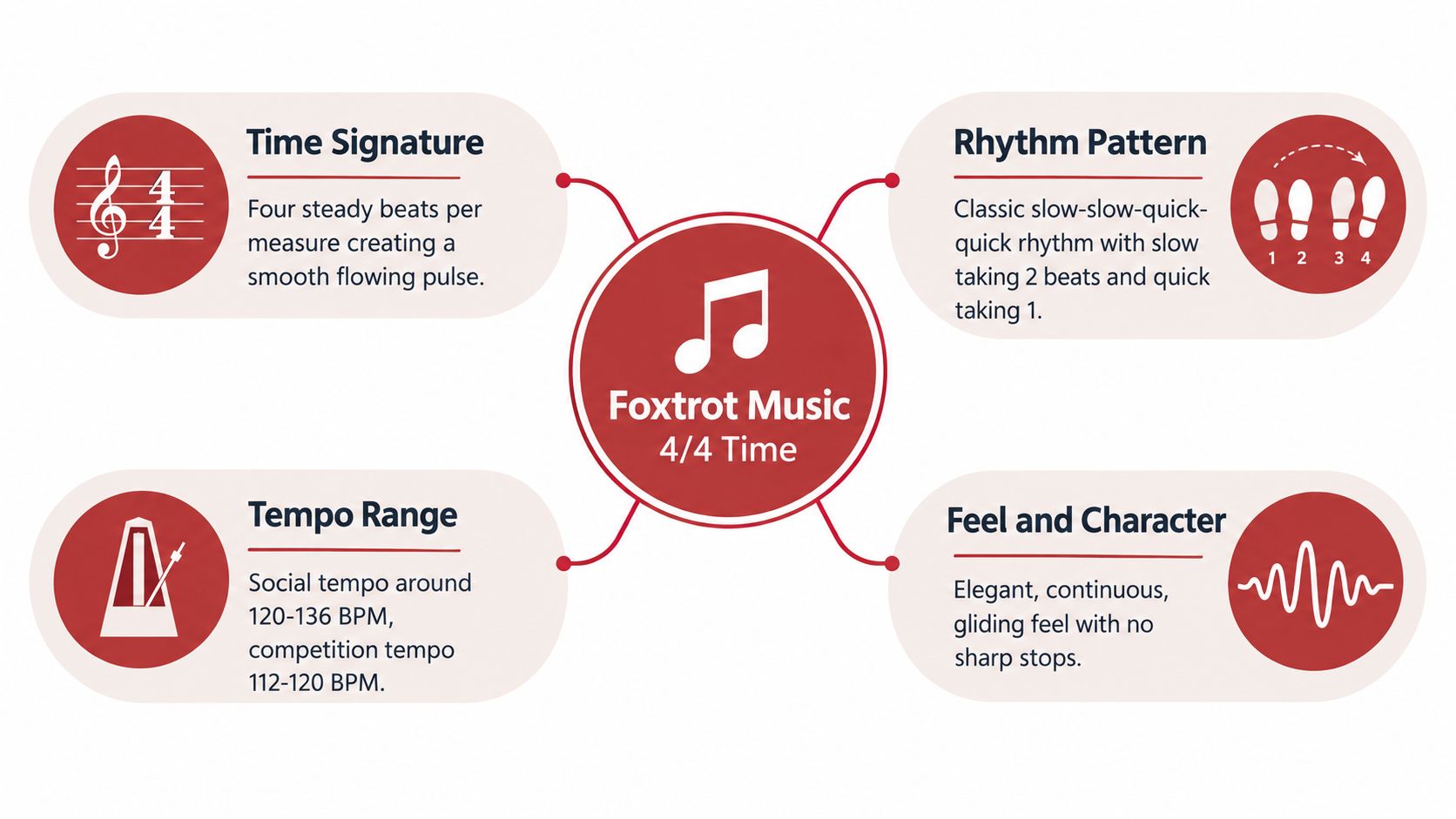
Foxtrot music is commonly written in 4/4 time, so each measure contains four even beats. Count “one, two, three, four,” then repeat while keeping the pulse steady. The dance places steps across that pulse in a pattern that feels stretched and flowing:
- Slow: This action uses 2 beats, giving you time to transfer weight and glide.
- Slow: The second long action continues the phrase and keeps the connection steady.
- Quick: This action uses 1 beat and adds forward energy.
- Quick: The final light action finishes the pattern and prepares the next movement.
Why the count changes the feeling
The two slows create room for travel. Hurrying them makes the dance feel choppy, while allowing the weight change to finish helps produce foxtrot's calm glide. The quicks are smaller and lighter, not frantic. They keep the couple progressing and help the pattern fit the musical phrase.
Matching movement to what you hear is part of musicality. This guide to musicality in dance explains how phrasing, accents, and song character can shape your choices, so counting becomes a support rather than the entire dance.
Tempo also affects which foxtrot branch feels comfortable. International Slow Foxtrot is commonly associated with a slower, spacious feel, while American social and competition versions may use a broader, quicker range. That difference can change stride length, partner hold, and how much floorcraft you need. A guide to foxtrot characteristics and tempo offers further context for these musical choices.
At a suitable tempo, the slows feel open and the quicks stay clean. Music that is too fast can compress your steps and tighten your frame. Music that is too slow may tempt you to add unnecessary movement instead of sustaining the phrase.
Social dancers can use foxtrot with many kinds of 4/4 music. For a wedding, choose a song with a dependable walking pulse and enough space for your current stride. On a social floor or with a modern playlist, listen for phrasing you can follow and leave room to adjust your timing around other couples.
Essential Foxtrot Steps Styling and Floorcraft
Foxtrot begins with an action most adults already understand, walking. The difference is that ballroom walking uses deliberate weight transfer, a shared direction, and a partner connection. The steps should feel grounded and controlled rather than large for the sake of appearance.
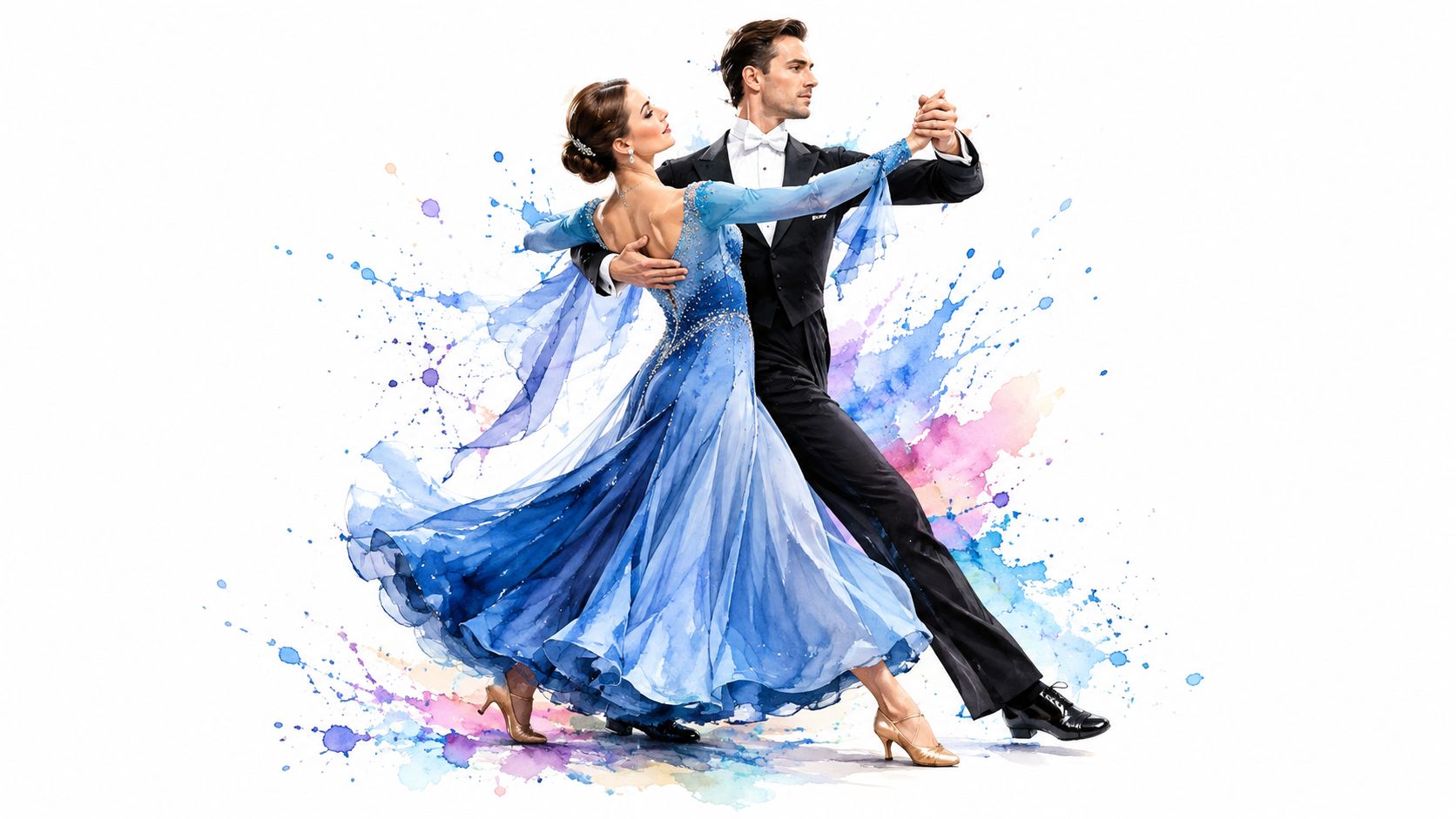
A beginner's first pattern often starts with forward walking steps, followed by side-and-close actions that fit slow-slow-quick-quick. The slow steps take two beats each, while the quick steps take one beat each. This beginner foxtrot step description outlines that walking-based foundation.
Build the movement from the floor up
Start by practicing the count alone. Walk forward on the first slow, continue on the second slow, then make two smaller quick actions. Keep your feet underneath your body instead of reaching so far that your balance moves ahead of your supporting leg.
Your posture should feel tall but not stiff. Let the shoulders remain relaxed, keep the head comfortably lifted, and maintain a light frame so your partner can sense direction without being pushed. The follower shouldn't guess from arm pressure alone. Both dancers contribute through body alignment, weight changes, and timing.
The traditional closed hold gives the pair a stable relationship while they travel. It shouldn't feel like a rigid embrace. Think of the connection as a flexible doorway. The partners stay coordinated while allowing the legs to move freely beneath the body.
Practical rule: Make the slow steps smooth before trying to make them large. A smaller step with clear balance looks and feels better than an oversized step that breaks the connection.
Floorcraft becomes important as soon as other couples join you. Foxtrot dancers generally travel around the room, so keep your eyes aware of the space ahead, avoid cutting across another couple's path, and shorten your stride when the floor becomes crowded. A leader may choose a smaller figure or change direction, while the follower stays responsive rather than anticipating every move.
Use the video below as a visual reference for the relationship between walking, timing, and partner movement. Watch the dancers' feet, but also notice how little their upper bodies need to do.
The polished appearance comes from continuity. Don't freeze between figures, lift sharply, or force a dramatic sway. Let one weight transfer prepare the next, and allow the music to create the sense of glide.
Choosing Between Slow Foxtrot Quickstep and Social Styles
The word “foxtrot” can describe more than one practical experience. A learner preparing for a wedding may need a comfortable social version, while a competitor studying International Standard will work with a more exacting progressive form. Quickstep belongs in the conversation because it developed as the faster branch, but it doesn't feel like speeding up a beginner foxtrot.
International Slow Foxtrot is a continuous, progressive dance usually performed in closed hold. It emphasizes smooth travel, controlled stride, and refined floorcraft. American Foxtrot, often called Social Foxtrot, is more flexible and can accommodate a wider range of 4/4 music and social situations. It may resemble a slow Quickstep in energy, but its practical purpose is often adaptability rather than strict syllabus precision.
Which style fits your goal
| Style | Tempo and Feel | Hold and Movement | Best For |
|---|---|---|---|
| International Slow Foxtrot | Around 28 to 30 measures per minute, with a continuous, gliding quality | Closed hold, progressive travel, carefully controlled stride and floorcraft | International Standard study and formal competition |
| American Social Foxtrot | Flexible social tempo, with an adaptable walking feel | More flexible social movement and figures, while retaining coordinated partner connection | Social floors, adult beginners, and wedding preparation |
| Quickstep | Faster and more buoyant than Slow Foxtrot | Progressive movement with quicker energy and more lively changes of direction | Dancers specifically drawn to fast ballroom travel |
The table is a starting point, not a permanent label. A wedding couple might learn American Social Foxtrot because it lets them shape movement to their chosen song and available floor space. A social dancer may begin there, then explore International Slow Foxtrot after becoming comfortable with timing and frame.
Couples planning a reception often need to think beyond the first dance. Music, guest participation, floor size, and the overall atmosphere all influence the right entertainment choices, so wedding reception entertainment ideas can help broaden that planning conversation.
For modern playlists, don't judge a song only by its label. A 4/4 track may work socially if its phrasing supports walking and the dancers can maintain a smooth connection. A technically suitable tempo may still feel awkward if the melody gives you no comfortable place to phrase the slows.
Your Next Steps to Learning Foxtrot with Confidence
Foxtrot suits adults who want a graceful introduction to ballroom without memorizing a demanding sequence immediately. It also works well for couples who want a timeless wedding dance and for social dancers who enjoy vocal jazz, big-band character, or contemporary music with a steady walking pulse.
Your first practice can be simple:
- Practice the walk: Count slow-slow-quick-quick while moving across a clear space. Keep the slows grounded and let the quicks stay compact.
- Use comfortable clothing: Wear clothes that let your shoulders, hips, and legs move without restriction. Shoes should feel secure rather than distracting.
- Listen before dancing: Find the regular pulse, notice the phrasing, and ask whether the song gives you room to travel smoothly.
- Start with connection: If you're dancing with a partner, agree on a relaxed hold and focus on responding to weight changes instead of pulling with the arms.
- Record your practice: Short instructional videos can make timing and posture easier to review. These video tutorial best practices are useful when you want online learning to support, rather than replace, guided practice.
You can practice alone, too. Walking the rhythm helps your body understand the timing before you add a partner. In a lesson, an instructor can then adjust your stride, frame, balance, and floorcraft while you apply the pattern to real music.
For focused guidance, private dance lessons for adults can be shaped around a wedding, social confidence, or a longer-term ballroom goal. Danza Academy of Social Dance offers foxtrot instruction alongside other ballroom styles, with lessons available for adults who arrive with a partner and those who don't.
Danza Academy of Social Dance offers welcoming foxtrot lessons for adults, couples, and social dancers, with instruction that builds timing, connection, and smooth floor movement from the first class. Book the free complimentary lesson through Danza Academy of Social Dance and bring your questions about wedding music, social dancing, or the style that fits you best.