
You're standing at the edge of a dance floor, watching couples move like they've known each other for years. The music sounds inviting, but your feet feel heavy, your mind starts listing excuses, and the thought of stepping in can make even a confident person feel clumsy. That reaction is normal, and it doesn't mean ballroom dancing is out of reach. It usually means you're exactly where most beginners start.
Taking Your First Step onto the Dance Floor
A first lesson often begins with one simple realization, ballroom dancing isn't a test of talent, it's a skill you build in layers. Beginners commonly worry about having “two left feet,” but the main challenge is just learning a few new things at once, timing, posture, movement, and connection. Those pieces feel strange at first, then start to fit together with repetition.
A woman I once taught came in convinced she'd be the most awkward person in the room. She wasn't. She just needed a clear starting point, a patient teacher, and a class where nobody expected perfection on day one. If fear is the only thing keeping you from starting, the right support matters more than natural rhythm.
Practical rule: your first goal is not to look polished, it's to feel oriented in the music and comfortable in your body.
If public dancing feels intimidating, a few confidence-building ideas can help before you ever walk into a studio. This guide on overcoming fear of dancing in public is useful if nerves are the main barrier.
The rest of this guide follows the same logic I give new students in the studio. Start small, choose one direction, practice the fundamentals, and give yourself enough time to get comfortable before chasing fancy patterns. That approach makes how to start ballroom dancing feel manageable instead of mysterious.
Choosing Your Dance Style Ballroom vs Latin
Some beginners freeze because they think they must choose from a huge menu of dances all at once. That's the wrong way to think about it. A cleaner way is to split the choices into two vibes, Ballroom and Latin, then pick the one that matches how you like to move.
Ballroom feels smooth, upright, and elegant. Waltz and Foxtrot are good examples because they ask you to travel, stay lifted through the torso, and move with a sense of glide rather than snap. For many people, the appeal is the calm, spacious quality of the music and the feeling of moving as a unit with a partner.
Latin feels more grounded, rhythmic, and playful. Salsa and Cha-Cha bring quicker rhythm changes and more visible energy, which can be exciting if you like music that feels lively right away. If you're someone who enjoys beat-driven songs and a little more attitude in the motion, this lane often feels natural sooner.
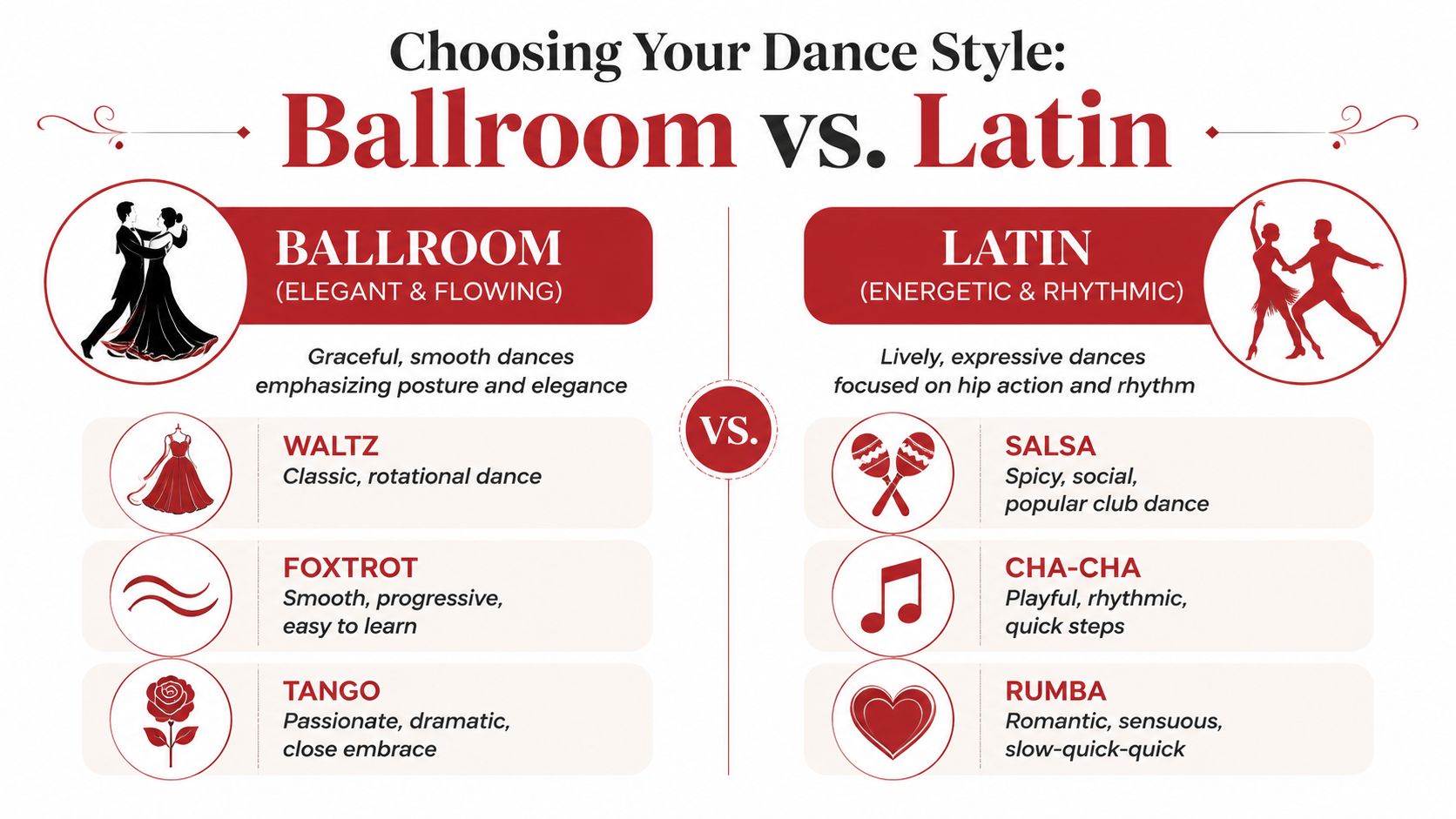
The easiest beginner mistake is trying to sample everything at once. Beginner-focused sources advise choosing a single style like Foxtrot or Cha-Cha first rather than mixing dances too early, because it reduces cognitive load and motion errors. That advice holds up in the studio. If you learn too many rhythms before your body understands one, everything starts to blur.
Pick one lane first
A practical first choice often comes down to personality, not technique.
- If you like elegance and flow, start with a smooth style such as Foxtrot or Waltz.
- If you like lively rhythm, start with a more percussive style such as Cha-Cha or Salsa.
- If you want the fewest mental tangles, choose one style and stay with it long enough to recognize the music automatically.
No partner is required to start. Group classes can substitute for a partner, and many studios rotate partners so beginners can focus on learning instead of worrying about having the “right” person on hand. If you want a studio that teaches both Ballroom and Latin in a structured setting, Danza Academy's Latin and ballroom lessons are one option to compare while you decide what fits your learning style.
The best early decision is simple, choose the style that feels easiest to return to next week. Confidence grows faster when your practice feels familiar instead of scattered.
Finding Your First Class or Private Teacher
A good first studio removes a lot of guesswork. The room should feel welcoming, the schedule should be easy to read, and the teaching path should make sense before you ever step onto the floor. A poor fit can turn basic footwork into stress, while the right environment lets you focus on learning instead of second-guessing yourself. If you want a practical way to compare studios, how to choose a dance studio is a useful place to start. Independent guidance for new dancers also points to group lessons in the Bronze syllabus, waiting on long contracts until you know what you need, and pairing structured instruction with social dancing once you feel ready as described in this getting-started overview.
What to look for before you book
A beginner-friendly site should make the next step obvious. Look for plain descriptions of beginner programs, a schedule that clearly shows entry-level classes, and direct wording about whether you need a partner. If a studio offers private lessons, group classes, and social practice, that usually gives you room to choose based on comfort, pace, and budget.
A trial lesson is worth asking about. A complimentary first lesson lowers the pressure because you can see the room, meet the instructor, and get a feel for the teaching style before you commit further. Danza Academy of Social Dance offers that kind of first-step introduction, and for many beginners that is a practical way to see whether the environment feels supportive.
Ask this before you enroll: “How do you help a brand-new student who has never taken a dance class before?”
Questions that reveal a lot
Use these questions to check a studio quickly and calmly.
- Do beginners rotate partners in group class, or can I stay with one person if I prefer?
- Which style should I start with if I'm completely new?
- How much of the class is technique, and how much is pattern memorization?
- Do you expect students to buy a package right away, or can I start with a single lesson?
- What happens if I don't have a partner?
- Is there a trial lesson or introductory session available?
The answers tell you more than a polished homepage ever will. A welcoming studio explains the learning path clearly enough that a beginner can relax into it, and it gives straight answers without making the process feel confusing.
Private lessons or group classes
Private lessons give you direct feedback and a pace that matches your needs. Group classes give you repetition, social comfort, and a chance to see the same step from other angles. If you are unsure, start where the friction is lowest and move up from there.
A private teacher is often the better fit when you want fast correction or have a specific goal. Group class is often the better fit when you want to build confidence around other beginners and learn the social side of dancing. Either path can work, but the right one is the one you will attend consistently.
Your First Lesson Checklist and Basic Etiquette
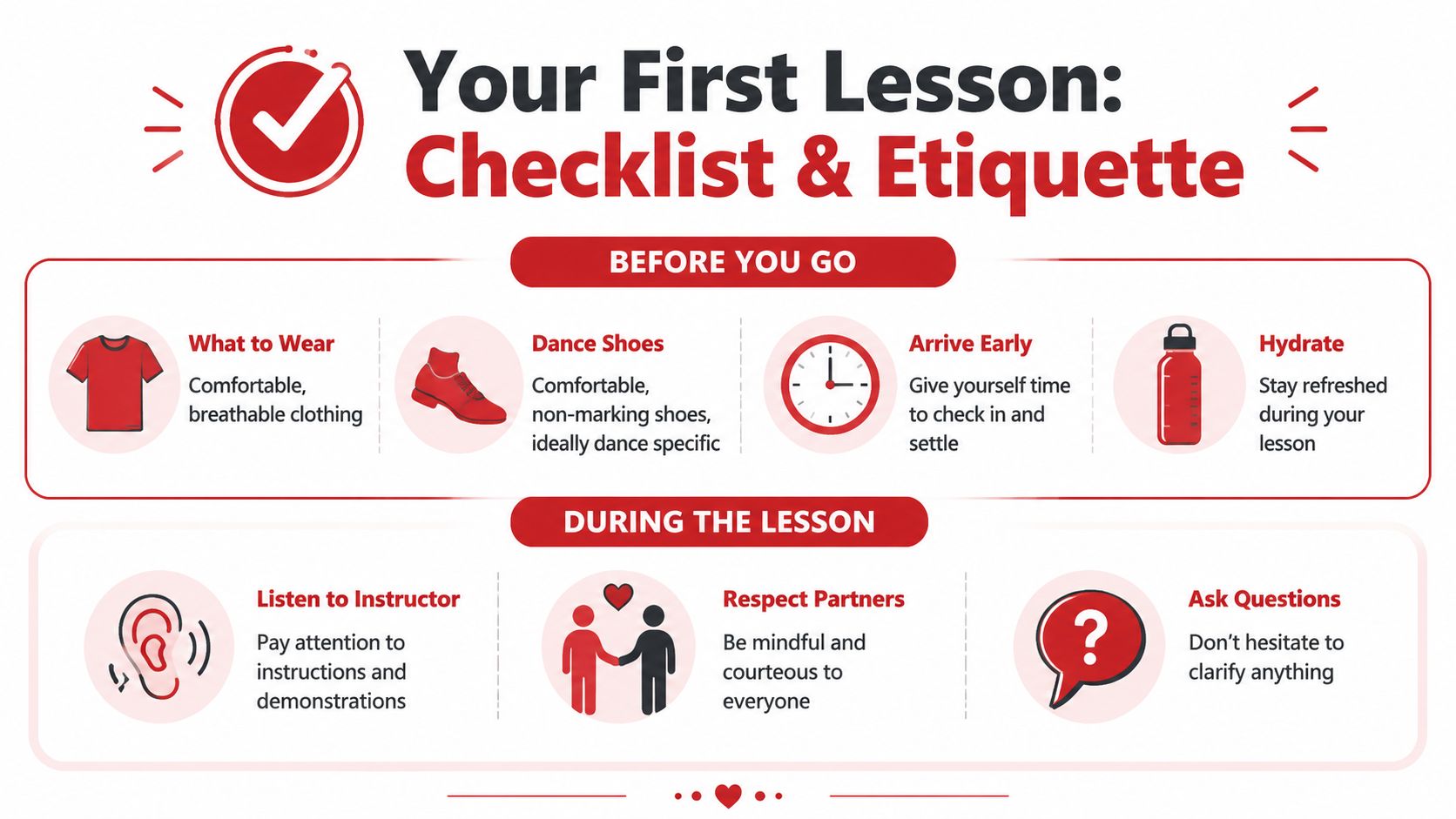
First-day nerves usually come from small unknowns, not big ones. What do you wear, what shoes do you need, do you have to know the music, and what if you accidentally step on someone's toes? Those are normal questions, and they all have simple answers.
Before you walk in
Comfort matters more than style. Wear clothing that lets you move freely, and choose shoes that feel secure and stay on your feet. You don't need to make an expensive shoe purchase before your first class, because the point is to learn the basics first and see what kind of practice suits you.
Arrive early enough to settle in. That extra time helps you check in, put your things down, and breathe before the lesson starts. If you're taking a class after work, bring water and a small towel, because being physically comfortable makes it much easier to focus on timing and posture.
During the lesson
Listen closely to the instructor's demonstrations, then copy the shape before worrying about perfection. Group classes often rotate partners, and that's normal, so treat each new partner with the same courtesy and patience. If you need something repeated, ask. Clear questions prevent confusion from building up later.
Good etiquette is simple: be kind, stay clean, and stay aware of your partner's space.
A few habits make a stronger first impression than flashy moves ever will. Keep personal hygiene in check, respect the line of dance, and don't crowd people who are still learning. Ballroom is social, but it's also structured, and beginners usually feel calmer once they know there's a predictable rhythm to how the room works.
The biggest mindset shift is this, your first lesson is not a performance. It's a learning appointment. If you show up prepared, you've already done enough.
Your 30-60-90 Day Dance Practice Roadmap
The quickest way to feel overwhelmed is to treat ballroom as one giant skill. Break the first three months into stages, and each week has a clear job. That approach matches how beginners usually learn, since the basics often come together in about 1 to 3 months and many dancers feel noticeably more relaxed by about the eighth week according to this studio guide.
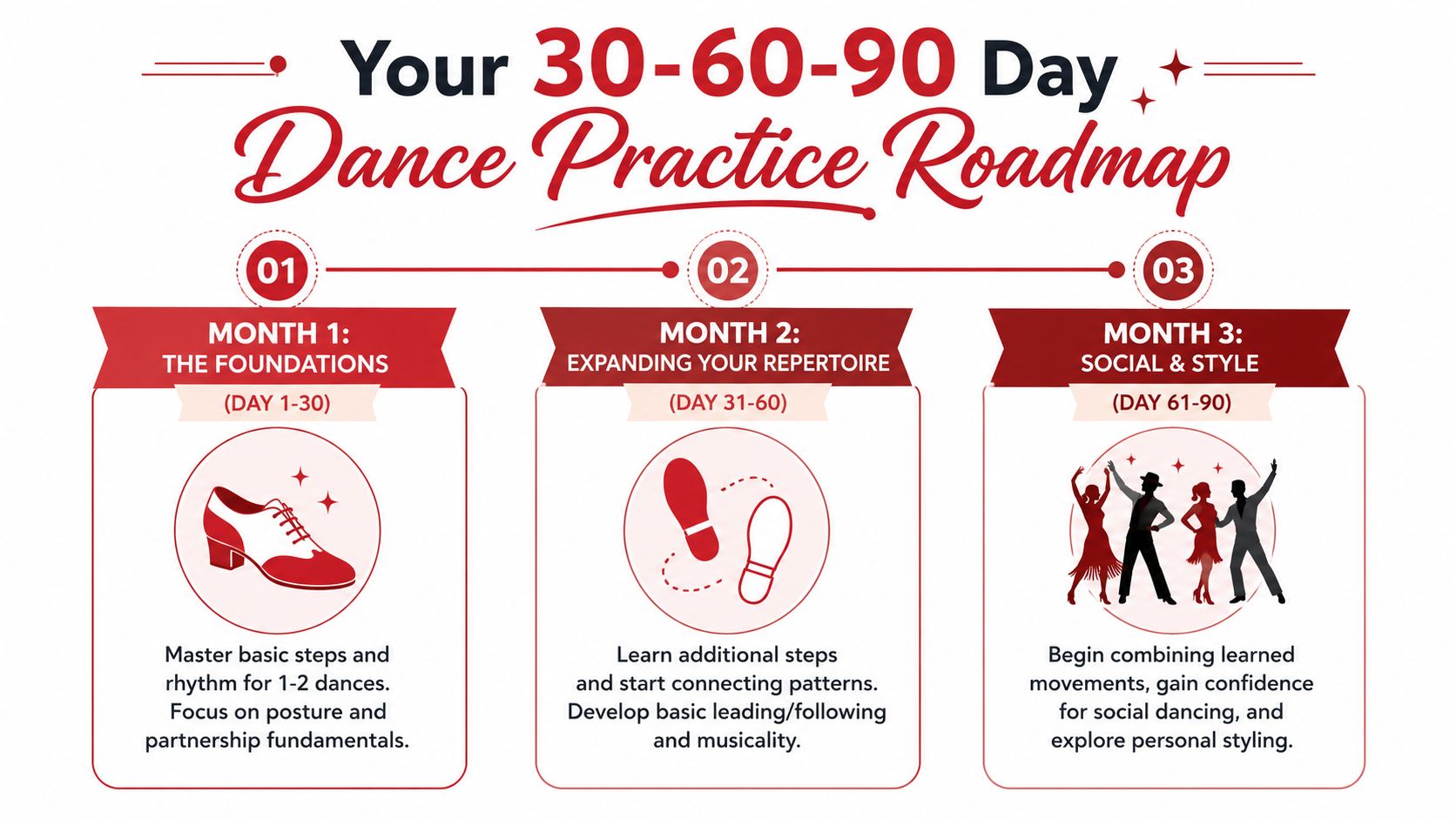
Days 1 to 30, build the base
Your first month should focus on posture, rhythm, and one basic step pattern. Keep the movement slow, repeat it without music first, and check simple markers like whether your weight transfers fully and whether your frame stays steady. A practical beginner method is to drill one style at a time, count out loud, and add music only after the pattern feels clear.
Short, focused home practice helps more than long, unfocused sessions. One studio guide says that even five minutes a day at home can make a “monumental difference” when you spend it walking through the basic steps learned in class as described here. Early repetition builds confidence faster than random effort.
Practical rule: if you can pause mid-movement and stay balanced, the connection is improving.
Days 31 to 60, add structure
In the second month, add one more pattern and pay attention to how your body changes direction. Many beginners rush into styling here, but that usually creates more mistakes than progress. Keep the tempo manageable, keep your shoulders quiet, and let the pattern settle in before you try to make it look fancy.
At home, a 45-minute session works well when split into three 15-minute blocks, each one used for a different focus. One block can be for footwork, one for timing, and one for the full pattern. That structure helps isolate errors without overwhelming your attention, and it keeps practice from turning into a vague shuffle through steps you half-remember.
Days 61 to 90, make it social
By the third month, the goal is not to memorize every possible pattern. The goal is to combine what you know, stay calm under music, and feel ready to try a social dance. Ballroom dancing basics are often learned in about 1 to 3 months, and many instructors note that dancers are typically more relaxed and ready for social dancing by the eighth week according to this studio guide.
Use this phase to notice what still breaks down under pressure. Maybe it is your weight transfer, maybe it is your timing, or maybe you need more practice keeping your frame steady while moving. The goal is to tighten the fundamentals you already know, not to chase a bigger library of steps.
If you practice with intention, the first 90 days stop feeling like a fog. They become a series of small wins, and that is what builds real confidence.
Ready to Dance? Book Your Complimentary Lesson
The first version of ballroom dancing isn't supposed to look effortless. It's supposed to feel learnable. Once you know how to choose a style, find a studio, show up prepared, and follow a simple practice rhythm, the whole process gets a lot less intimidating.
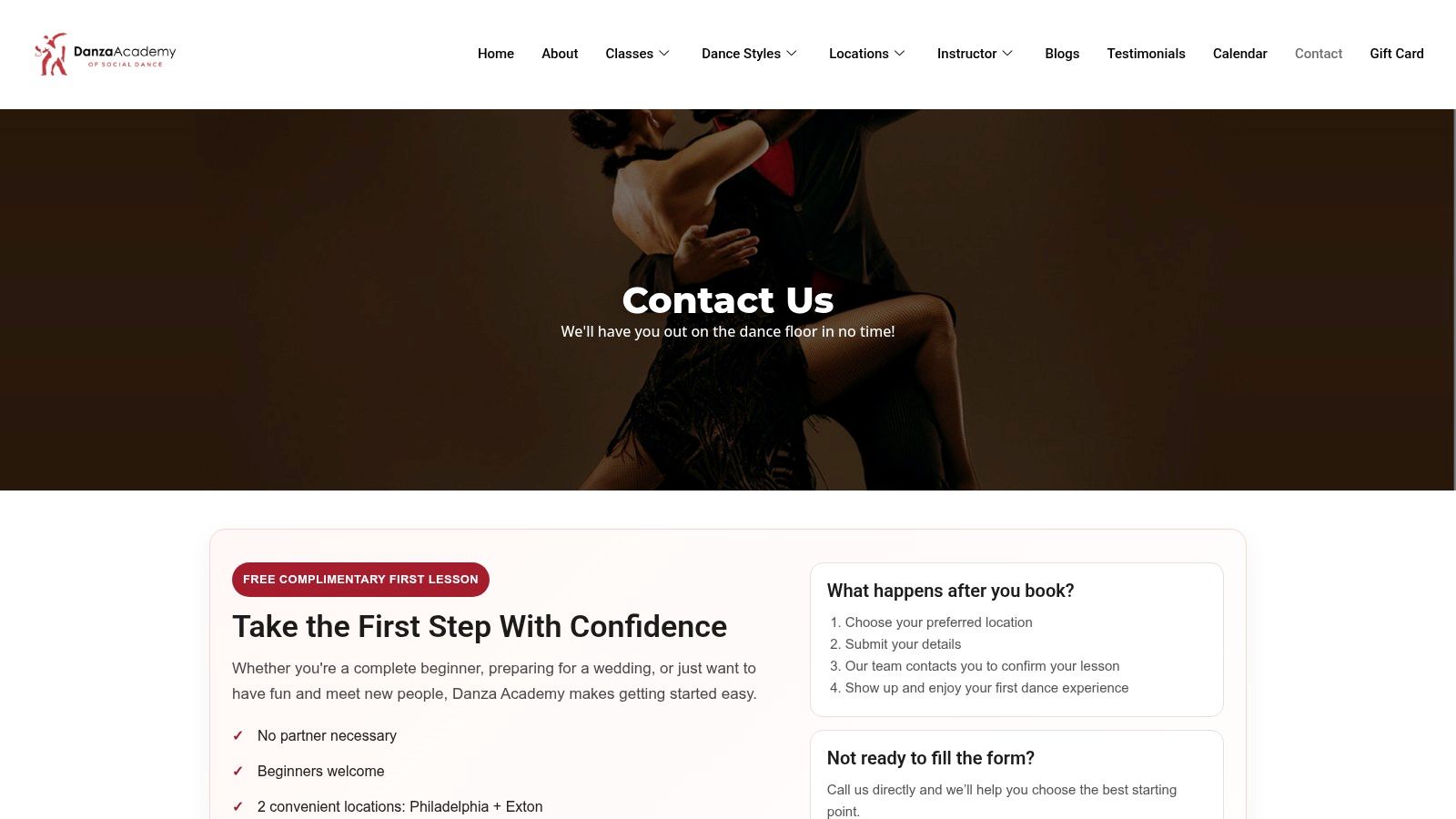
A complimentary first lesson is a smart next step because it lowers the commitment risk before you buy anything bigger. Service businesses often use free trials for exactly that reason, because people are more willing to book when the first step feels low pressure as noted in this marketing summary. For a beginner, that means you can test the experience without overthinking it.
What that first visit should answer
By the end of one intro lesson, you should know whether the studio's teaching style makes sense, whether the room feels welcoming, and whether dancing feels enjoyable enough to continue. That clarity matters more than taking in a dozen patterns on day one. The right first lesson leaves you informed, not overwhelmed.
If you've been waiting for the perfect moment, this is it. Book your complimentary lesson at Danza Academy of Social Dance, step into the room, and give yourself a real first experience of ballroom dancing.