Somewhere in the last few years, you may have found yourself at a wedding, a family party, or even watching a dance clip online and thinking, I'd love to do that, but I'm too old to start now. That thought is more common than you might think.
I've taught dance long enough to recognize the look. It's the look of someone who feels drawn to the music but also carries a little hesitation. Maybe your knees aren't what they once were. Maybe you haven't been in a class setting in decades. Maybe you're worried everyone else will know what they're doing.
The good news is simple. Dancing lessons for the advanced in age are not about keeping up with younger people. They're about learning in a way that respects your body, wakes up your mind, and brings real pleasure back into movement.
It's Never Too Late to Find Your Rhythm
A woman once told me she spent an entire anniversary party watching other couples dance the Waltz. She smiled, clapped, and stayed in her chair. On the drive home, she said to her husband, “I think my dancing days passed me by.” What she really meant was, “I still want this, but I'm afraid I've missed my chance.”
That feeling deserves kindness, not correction.
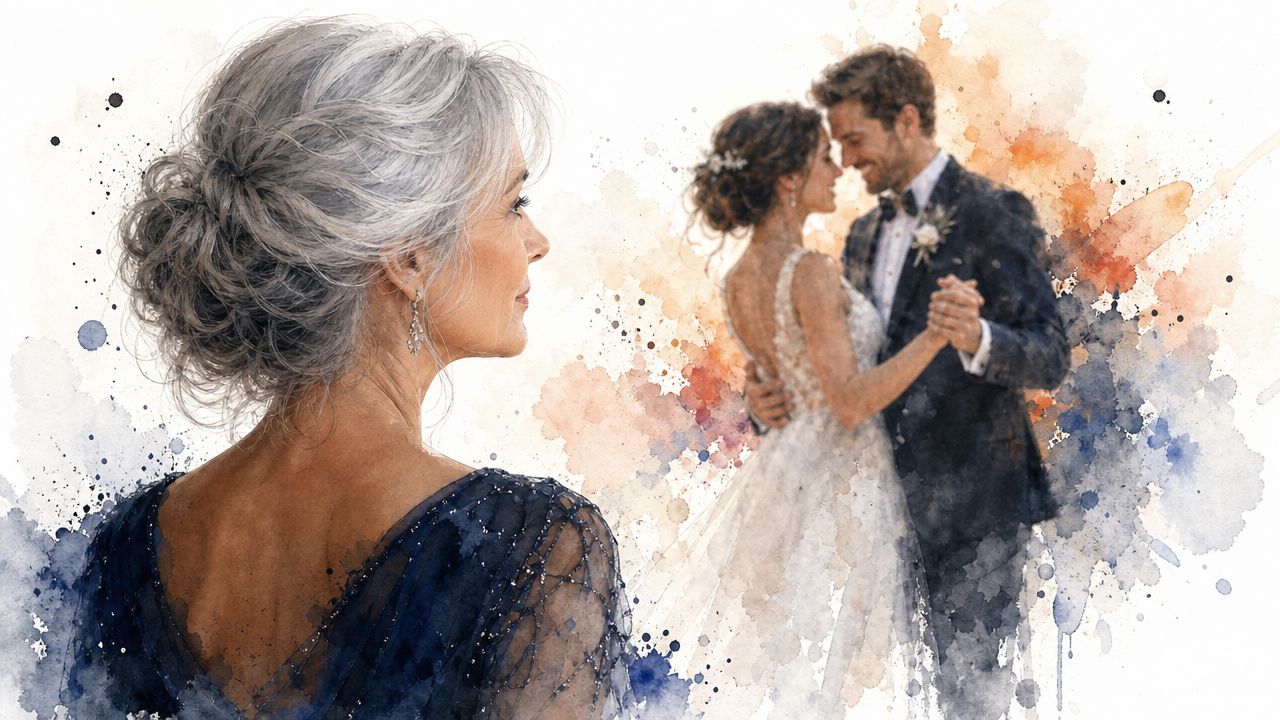
Many older adults carry memories of dancing from years ago. Some remember a school dance, a favorite song, or a partner who used to lead them around the living room. Others never had lessons at all and assume it's too late to begin. It isn't. If you can walk, sway, listen, and laugh, you can start.
What makes adult learning different
You don't need to leap, spin fast, or memorize long routines on day one. A well-taught beginner lesson starts with the basics. You learn where to place your feet, how to hear the beat, and how to move with comfort rather than strain.
That's one reason many adults feel relieved after their first class. Dance isn't treated like a performance test. It becomes a conversation between music, posture, balance, and confidence.
You're not trying to become a teenager again. You're learning a skill that fits the life and body you have now.
If you've wondered whether adults can really learn well later in life, this helpful piece on learning to dance as an adult may reassure you. The learning process is often steadier and more thoughtful than people expect.
Why hesitation doesn't mean you shouldn't begin
Nervousness usually means the idea matters to you. It doesn't mean you're unsuited for it.
A few worries come up again and again:
- “I have two left feet.” Most beginners think this. Usually they just haven't been shown the steps clearly yet.
- “I'll be the oldest person there.” Adult dance spaces often include people with many ages and backgrounds.
- “My balance isn't perfect.” That's exactly why guided movement can be so valuable.
- “I need a partner.” In many studios, you don't.
The first step isn't dancing beautifully. The first step is allowing yourself to begin.
More Than Just a Fun Workout
People often talk about dance as exercise, and yes, it does get you moving. But that description is too small. Dance asks your body to coordinate, your ears to listen, your memory to work, and your emotions to join in. That's what makes it so powerful for older adults.
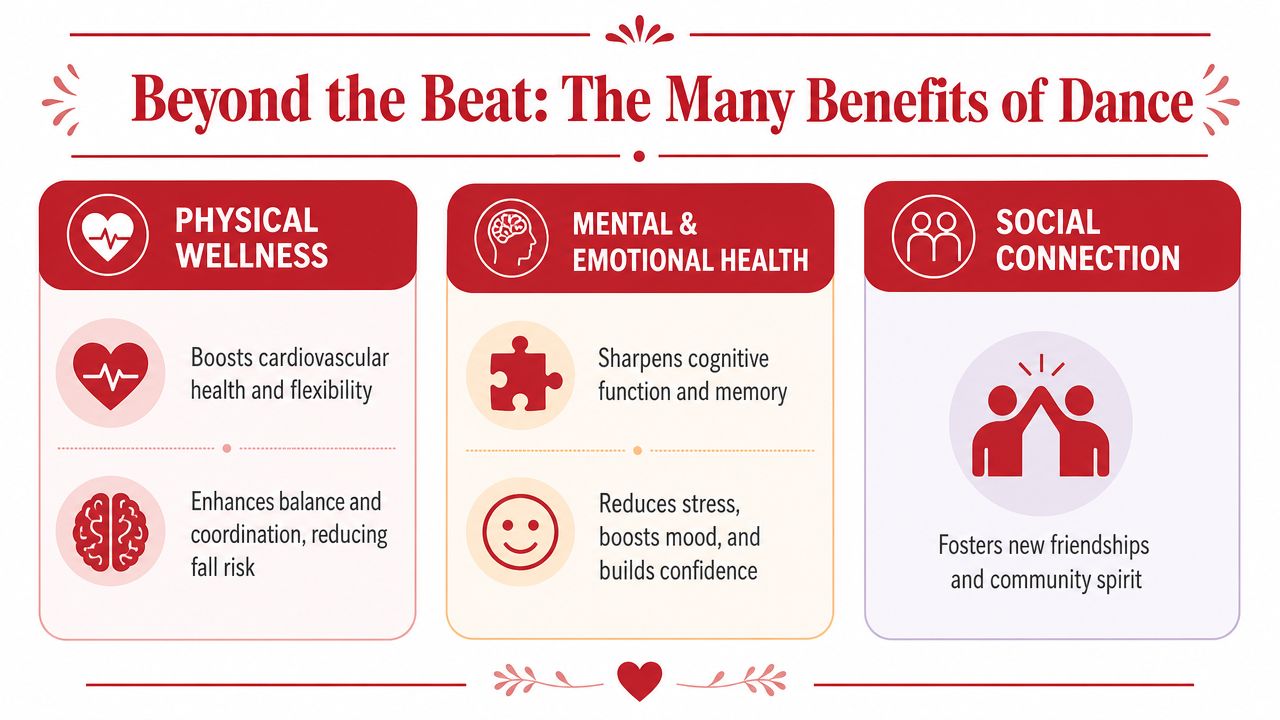
To see that whole picture at a glance, this summary says it well:
What dance does for the body
A systematic review found that dance interventions significantly improve functional fitness in older adults, with positive effects on muscular strength, endurance, balance, and daily task independence when practiced at least once per week for 6 weeks in sessions of 45 minutes or longer, and it also found that all dance styles reviewed produced significant positive changes in functional fitness regardless of specific dosage, though most participants were female, according to this systematic review on dance and functional fitness in older adults.
That matters in ordinary life. Better balance can help with stairs. Better endurance can make outings less tiring. Better strength can support simple tasks like getting up from a chair or carrying groceries.
If you're also working on leg stability outside the studio, practical guidance on gentle strength training for seniors can pair well with dance instruction.
Why lessons help the brain, not just the muscles
The most overlooked benefit of structured dance lessons is cognitive work. Moving to music is pleasant. Learning new step patterns is something more. Your brain has to recognize rhythm, remember sequences, adjust timing, and respond to another person or to the room around you.
Among individuals over age 75, dancing was identified as the only physical activity associated with a lower risk of dementia in a study of 469 participants, highlighting a unique cognitive benefit for older adults, as described in this article on dance and healthy aging.
That same discussion also points to emotional benefits such as reduced depression and anxiety, along with the social lift that comes from connection rather than isolation.
A fuller look at the social side of partner dance appears in this article on the benefits of social dancing. For many older adults, that piece matters just as much as the fitness side.
Here's a short look at dance in action:
The social benefit people underestimate
A dance class gives you somewhere to go where the goal isn't medical, stressful, or lonely. You arrive, greet familiar faces, focus on something enjoyable, and leave feeling more alive than when you walked in.
Practical rule: Choose activities that engage your body and ask your mind to learn something new. Dance does both at the same time.
That combination is rare, and it's one reason dance can become such a meaningful part of later life.
Finding Your Perfect Dance Style
Once people warm to the idea of dancing lessons for the advanced in age, the next question is usually, “What kind of dance should I try?” That's a smart question, because the right first style can make you feel at ease almost immediately.
The encouraging news is that there isn't one “correct” style for older beginners. As noted earlier, research found that all dance styles reviewed produced significant positive changes in older adults' functional fitness, so your best choice is often the one that feels inviting enough to keep you coming back.
How each style feels in real life
Waltz feels smooth, gliding, and elegant. If you like music that breathes and flows, this style often feels welcoming. Many beginners enjoy it because the rise and fall encourages posture, calm timing, and awareness of balance.
Rumba is slower and more grounded. It isn't about frantic motion. It's about rhythm, controlled steps, and learning to move with intention. People who say, “I want something graceful, but not too fast,” often do well here.
Foxtrot has a relaxed social feel. It works beautifully with classic music and gives dancers a chance to practice easy traveling patterns without feeling rushed. It's a lovely style for people who want elegance without stiffness.
Swing brings a brighter energy. It's playful and lively, and for some adults it feels instantly joyful. If you enjoy upbeat music and want a style that feels social from the first lesson, Swing may be your match.
Some students choose with their ears, not their feet. If the music makes you smile, that style is often a good place to begin.
Choosing based on comfort and curiosity
You don't need to overthink your first choice. Ask yourself a few simple things:
- Do you prefer slow or lively music
- Would you enjoy a close partner frame or more open movement
- Are you looking for poise, playfulness, romance, or variety
- Do you want a style that feels familiar from weddings and social events
The answers will point you in the right direction.
Choosing Your First Dance Style
| Dance Style | Pace & Energy | Key Benefit | Best For… |
|---|---|---|---|
| Waltz | Smooth, moderate, flowing | Posture and balance awareness | Adults who want grace and a gentle introduction |
| Rumba | Slow to moderate, rhythmic | Controlled movement and musical timing | Beginners who want expressive movement without high impact |
| Foxtrot | Easygoing, steady | Social confidence and traveling across the floor | Dancers who enjoy classic music and relaxed elegance |
| Swing | Lively, buoyant | Stamina, rhythm, and social fun | Adults who want upbeat energy and a cheerful atmosphere |
A good first style is one you'll repeat
That's the part many people miss. The “best” dance style isn't the most impressive one. It's the one you'll look forward to practicing next week.
If Waltz makes you stand taller, start there. If Rumba helps you feel musical, begin with that. If Swing lifts your mood, follow the joy. A teacher can always help you branch into other styles later.
Your First Steps on the Dance Floor
The unknown is often scarier than the lesson itself. Once older adults know what happens in a first class, much of the worry falls away.
A beginner lesson usually starts gently and calmly.
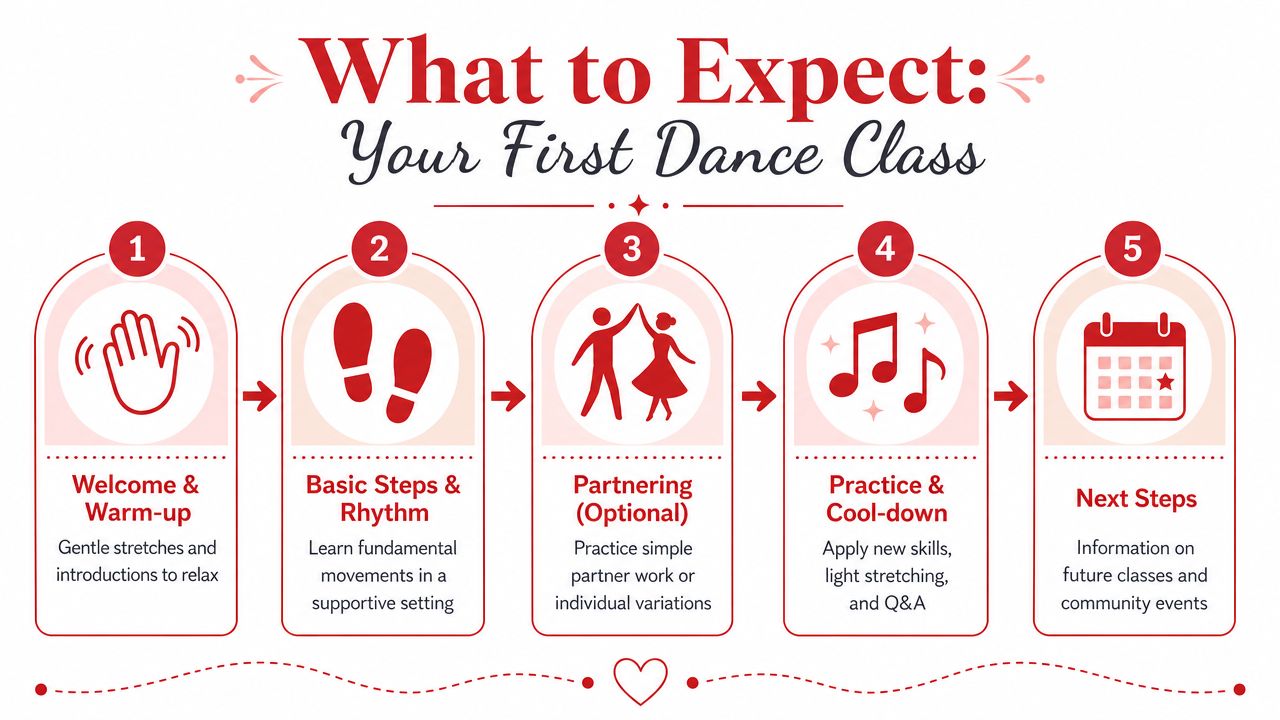
What usually happens in the room
You arrive and check in. There's time to settle yourself, ask questions, and get oriented. No one should expect you to know where to stand or what to do immediately.
Then comes a gentle warm-up. That may be as simple as loosening the shoulders, waking up the feet, and shifting weight from side to side. After that, the teacher introduces a few basic steps and the beat that goes with them.
A strong beginner experience often follows this rhythm:
Ease in slowly
You start with walking, weight changes, or side steps. These first movements are less about style and more about comfort.Learn one pattern at a time
Instead of dumping many figures on you, the instructor teaches one small sequence and repeats it enough for your body to recognize it.Practice with guidance
You may dance with the teacher, with a partner, or on your own. The point is supported repetition, not pressure.Pause and ask questions
Good teachers expect questions. They welcome them.
Why structured lessons matter for the mind
There's a reason formal instruction can feel different from dancing around the kitchen. Data suggests that while dance improves functional fitness, the mechanism for cognitive gain is tied to the “cognitive stimulation” of learning complex sequences, as explained in this Healthline overview of dancing for seniors.
That's why a lesson matters. You're not only moving. You're learning, recalling, adjusting, and refining.
If you want a clearer sense of what that first appointment can look like, this page on a beginner dance lesson gives a helpful preview.
A first class should leave you pleasantly challenged, not overwhelmed.
Private lessons and group classes
Private lessons are ideal if you want individual attention, a slower pace, or help with specific concerns. An instructor can modify movements, repeat material, and tailor the experience around your comfort.
Group classes add a different gift. They create shared laughter, social familiarity, and the pleasure of learning alongside other adults. Some students start privately, then add a group class once they feel settled.
Both paths work well. The key is not choosing the “best” format in theory. It's choosing the one that helps you relax enough to learn.
Modifications are part of good teaching
If you have arthritis, a stiff back, reduced stamina, or a balance concern, say so. A seasoned teacher can shorten steps, slow turns, adjust hold positions, and give you options that still let you enjoy the dance.
That isn't a compromise. That is good instruction.
Getting Ready for Your First Class
The day of your first lesson should feel manageable. You don't need special sparkle, expensive shoes, or a dancer's wardrobe. You need comfort, stability, and a little readiness.
What to wear
Choose clothes that let you move easily. A comfortable top and slacks work well. So does a simple dress that doesn't restrict your stride. If you're constantly tugging at sleeves or adjusting your waistband, you'll have a harder time relaxing.
Shoes matter more than clothes. Pick a pair that feels secure on your feet and won't slip off. For a first visit, stable everyday shoes are often fine as long as they're comfortable and allow easy movement. You can decide later whether you want dance shoes.
What to bring and what to say
A few small preparations can make you feel instantly more settled:
- Bring water: A few sips between rounds can help you stay comfortable.
- Arrive a little early: Having a few quiet minutes helps lower first-day nerves.
- Share physical concerns: Tell the instructor about knee pain, balance issues, or anything else that affects movement.
- Mention your goal: Maybe you want confidence at social events, better coordination, or a joyful hobby.
If something hurts, say it early. A good instructor would much rather adjust the movement than have you push through discomfort.
What not to worry about
Don't worry about making mistakes. You will, and so does everyone else. Don't worry about looking polished. Your first class isn't a recital. And don't worry if you forget the steps on the way home. Learning dance is like learning a language. Repetition is part of the process.
The only real job on day one is to show up and give yourself permission to enjoy it.
Start Your Dance Journey with Us Today
If you've read this far, part of you is already leaning toward the dance floor.
That instinct is worth trusting. Dancing lessons for the advanced in age can support balance, daily movement, memory, mood, and connection. Just as important, they can return something many adults miss without realizing it. A sense of lightness. A reason to get dressed and go somewhere pleasant. The pleasure of learning something new.
A first visit should feel welcoming, not confusing.

Resourceful Dance notes that implementing a structured first-visit experience that includes a studio tour, clear guidance on where to wait and store items, and a brief front-desk consultation increases trial-to-enrollment conversion by reducing the guesswork and overwhelm that often cause newcomers to drop out, as outlined in this article on making dance studio free trials more effective.
That makes perfect sense to me. Older beginners don't need pressure. They need clarity. They need to know where to go, what to expect, and that someone will meet them with patience.
There's another reason I prefer a complimentary first lesson over discounted bundles. Dance Magazine explicitly recommends to offer free trials rather than discounted blocks, because it lets prospective students experience the class without setting a low-price expectation for the studio's value, according to this piece on whether dance schools should offer discounts.
If you're ready to stop wondering and try, book the free complimentary lesson available through the contact page. It's a gentle, no-pressure way to step into the studio, meet an instructor, and feel what dancing can add to your life.
A complimentary first lesson at Danza Academy of Social Dance is the easiest way to begin. You can book through the contact page and visit with no pressure, no need for prior experience, and no need to have everything figured out before you arrive. If you've been waiting for the right moment, this is a lovely one to take your first step.