You're probably here because you're trying to answer a simple question that turns out not to be simple at all: what makes a dance teacher qualified?
Maybe you're an adult beginner comparing studios. Maybe you're a parent scanning class listings and teacher bios, trying to figure out what matters. Or maybe you've already noticed that one instructor has a degree, another has performance credits, and a third has taught for years but lists no formal certification at all.
That's where people get stuck.
A lot of guides treat dance teacher qualifications like a single checklist. They aren't. A teacher working in a public school is judged by one set of rules. A teacher in a private studio is often judged by another. And for most students, the key difference between an average class and a great one comes down to something many bios barely explain: the ability to teach well.
Starting Your Dance Journey The Right Way
Choosing a dance teacher can feel harder than choosing the class itself. You see words like certified, trained, professional, competitive, and experienced, but those labels don't always tell you how someone runs a room, explains movement, or helps a nervous beginner feel capable.
That confusion is normal. In dance, a teacher can be highly qualified in one setting and not in another. Someone may be exactly right for a private Salsa lesson, but not licensed to teach dance in a public school. Another instructor may hold strong academic credentials, but still struggle to connect with beginners in a social dance class.
What most people assume
Many people start with the same assumption: the best dancer must be the best teacher. Sometimes that's true. Often it isn't.
A strong teacher does more than demonstrate steps. They read the room. They break down timing. They adjust for fear, age, confidence, coordination, and pace. If you're comparing programs, a practical dance studio selection guide can help you evaluate the whole experience, not just the marketing.
Great teaching feels clear, safe, and encouraging. You leave class understanding more than when you walked in.
What you should actually look for
When people talk about dance teacher qualifications, they usually mix together three separate things:
- Formal credentials like degrees, licenses, and state certification
- Professional background such as training history, performance work, and style specialization
- Teaching skill including communication, structure, feedback, and classroom management
Those categories overlap, but they aren't the same. Once you separate them, the whole topic gets easier to understand.
The Two Worlds of Dance Education
The biggest source of confusion is that there isn't one universal standard. As Dance Magazine's overview of dance teacher certification explains, there are no universal qualifications for dance teachers across all settings, as requirements vary significantly depending on whether the educator works in public K-12 schools, private studios, or community programs. While K-12 educators often need a bachelor's degree and state license, private studios frequently prioritize demonstrated technique and teaching ability over formal degrees.
That one distinction clears up a lot.
Dance Teacher Qualifications at a Glance
| Qualification Area | Public/K-12 School Teacher | Private Studio Instructor |
|---|---|---|
| Primary requirement | Usually a bachelor's degree and state licensure | Often evaluated by teaching ability and dance background |
| Regulated by | State education system | Studio owner or program director |
| Training focus | Child development, curriculum, assessment, classroom management, supervised teaching | Style mastery, student engagement, class flow, communication |
| Hiring priority | Meeting state rules and school standards | Matching the studio's teaching needs and student population |
| Typical student setting | School day classes, large groups, academic structure | Private lessons, group classes, recreational or performance settings |
| Best question to ask | Is the teacher licensed for this school setting? | Can this teacher help students learn safely and clearly? |
Why this matters to families and adult students
A parent might see that one teacher doesn't list a degree and assume that's a red flag. In a private studio, it may not be. What matters more is whether that teacher can handle mixed abilities, build trust, teach progressively, and maintain a safe environment.
The reverse can also happen. An instructor may have impressive formal credentials, but if they can't explain rhythm without confusing the class or adapt when students fall behind, the credential alone won't make the experience better.
The practical takeaway
If you're choosing a school-based dance program, formal credentials matter because the setting requires them. If you're choosing a private studio, the better question is usually this:
- Can this person teach beginners without overwhelming them?
- Do they know the style they're teaching in depth?
- Can they manage a room with patience and control?
- Do students look supported, not intimidated?
Practical rule: Judge qualifications in the context of the job. A public school credential and a private studio teaching skillset aren't interchangeable.
Understanding Formal Degrees and Certifications
In school settings, formal qualifications aren't just paperwork. They signal that a teacher has trained for a regulated educational environment where lesson planning, student development, and classroom supervision all matter.
According to the Arizona Department of Education requirements for PreK-12 Dance Education, the most common path for dance educators in public schools is a Bachelor's degree in Drama and Dance Teacher Education. In states like Arizona, candidates for a PreK-12 Dance Education certificate must complete a teacher preparation program that includes at least 12 weeks of capstone student teaching experience, ensuring they can apply theoretical knowledge effectively.
What a formal route usually includes
A degree path for school-based dance education isn't only about dance technique. It often includes training in areas such as:
- Lesson design so classes build skills in a logical sequence
- Child and adolescent development so instruction matches age and stage
- Assessment methods for tracking progress in an educational setting
- Classroom management for leading groups consistently and safely
- Student teaching so future teachers practice under supervision
That 12 weeks of capstone student teaching experience matters because it puts a future teacher in a real PreK-12 classroom instead of leaving them only with theory.
Why these credentials exist
Public schools need consistency. They also need accountability. A licensed school teacher has to meet standards that go beyond artistic talent.
If you've ever compared qualifications across industries, the pattern is familiar. Education, safety, and regulated professions often require layered preparation rather than simple experience alone. A useful parallel is this guide for H&S managers on qualifications, which shows how formal roles often combine academic study, applied training, and supervised practice.
What a formal credential does and doesn't tell you
A formal degree tells you the teacher has completed a structured path designed for institutional teaching. That's valuable. It usually means they've studied pedagogy, worked under supervision, and met state expectations.
It does not automatically tell you whether they're the best fit for a private Ballroom lesson, a wedding dance, or an adult beginner class where emotional comfort matters as much as technical content.
Here's the cleanest way to read it:
- For public schools, formal credentials are often required.
- For private studios, they may be helpful, but they aren't the whole story.
The Unseen Skill Great Pedagogy
The most overlooked part of dance teacher qualifications is also the part students feel fastest in class: pedagogy.
Pedagogy means the craft of teaching. Not performing. Not competing. Not merely knowing steps. Teaching.
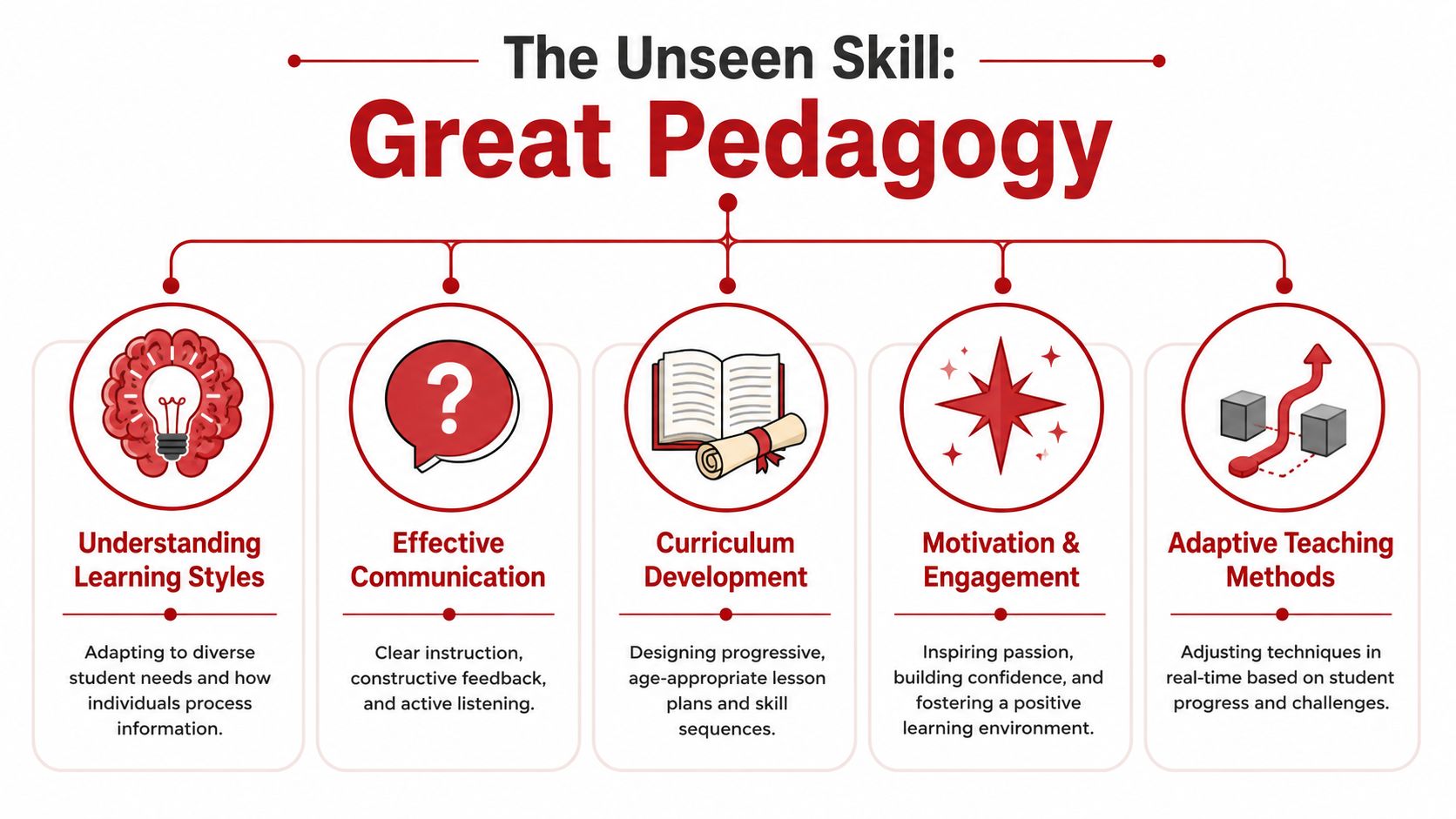
A teacher can dance beautifully and still be hard to learn from. Students run into this all the time. The instructor moves well, but explains too quickly, corrects vaguely, or teaches every student as if they learn the same way.
The sharper standard for private studios is teaching quality. As noted in this discussion of dance teacher competency and hiring priorities, while many private studios do not require a degree, the primary hiring criterion is 'pedagogical knowledge' over mere 'content knowledge' (dance skill). Research into dance teacher competency identifies four core themes: Supportive and Inclusive Mindset, Instructional Pedagogy, Forward-thinking and Integrated Dance Pedagogy, and Dance Skills with Subject Knowledge.
The four signs of a strong teacher
Empowering and Inclusive Mindset
A strong teacher helps students feel welcome, not judged. That matters for children, but it matters just as much for adults who walk in feeling awkward or behind.
You can often spot this quickly. Students ask questions without fear. Corrections sound specific, not embarrassing. Progress feels possible.
Instructional Pedagogy
This is the nuts-and-bolts teaching skill. Can the instructor break movement into manageable parts? Can they teach timing without losing the room? Can they sequence material so students build confidence instead of panic?
If you're looking at classes focused on precision and strong fundamentals, it helps to understand how technique-based dance instruction develops control over time.
Innovative and Integrated Dance Pedagogy
Good teachers adjust. If a class isn't getting it, they change the explanation. They might count differently, demonstrate from another angle, or connect the movement to music in a clearer way.
Students rarely need more information. They need the right explanation at the right moment.
Dance Skills with Subject Knowledge
Technique still matters. Style knowledge still matters. A teacher should know what they're teaching, where the movement comes from, and how it should develop.
The difference is that technique works best when it's delivered through clear teaching.
A quick test you can use
If you observe a class, ask yourself:
- Are instructions clear enough that a beginner can follow?
- Does the teacher correct with purpose instead of random comments?
- Do students improve during class, not just watch the instructor perform?
- Does the room feel focused and encouraging?
Those are real qualifications, even when they don't fit neatly into a certificate box.
Style-Specific Training and Continuing Education
Not all dance teaching asks for the same kind of expertise. A great social dance instructor, a children's creative movement teacher, and an adaptive dance specialist may all be excellent, but their preparation can look very different.
In private studios, many students should direct their attention. Not just “Is this person qualified?” but “Is this person qualified for this style, this age group, and this learning situation?”
Style matters
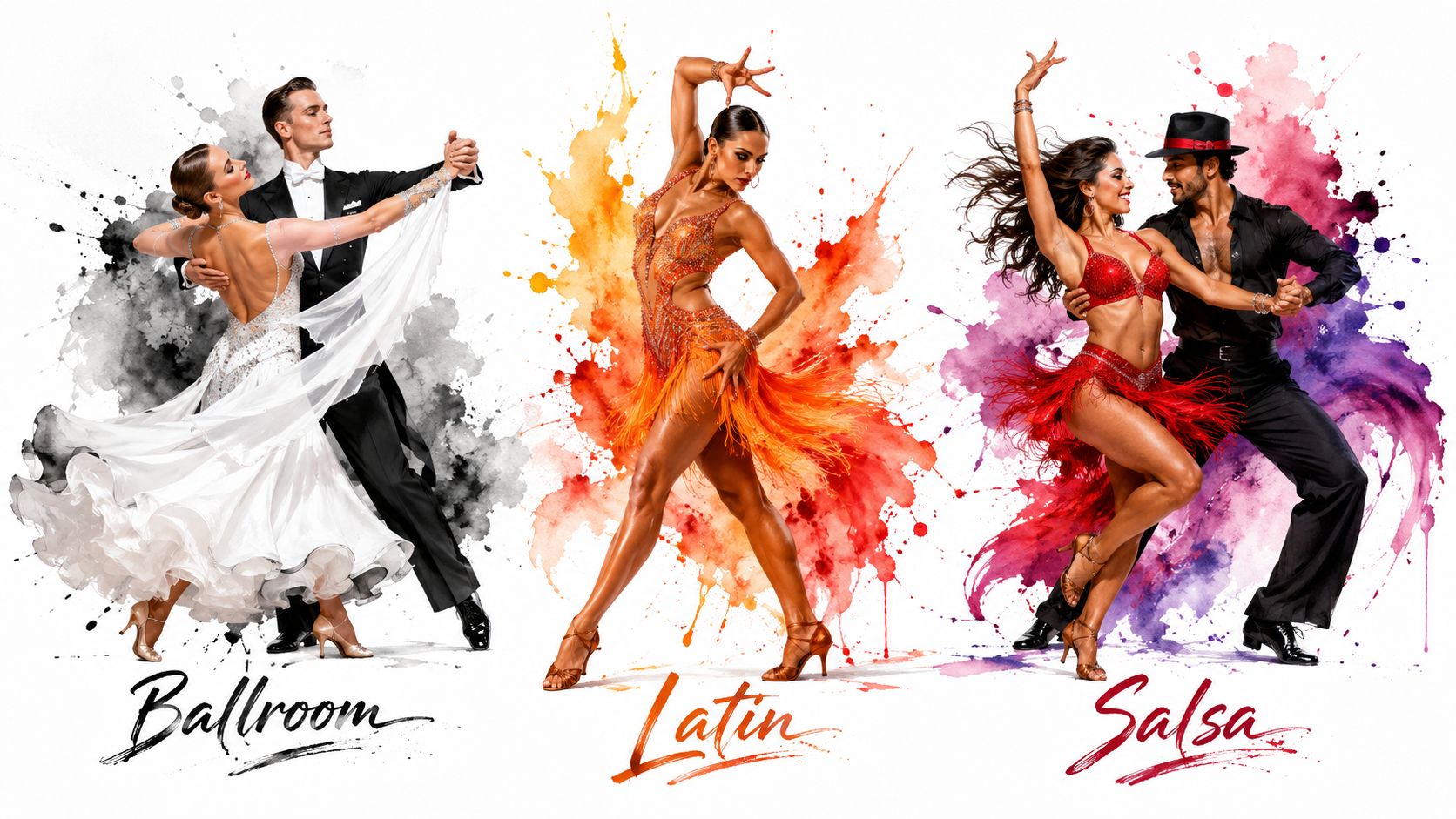
A Ballroom or Latin teacher needs more than general dance confidence. They should understand lead and follow, partnership mechanics, floorcraft, musical phrasing, and how to teach social application rather than only choreography.
A children's teacher needs a very different toolkit. They must keep attention, maintain structure, and know how much material is appropriate at a given age.
An adaptive teacher needs even more specialized preparation.
The clearest example is the DanceAbility International Teacher Certification, which requires 125 hours of full-time study across four weeks and specifically trains instructors to adapt teaching styles for diverse groups, including those with physical or cognitive differences. That tells you something important: some of the most meaningful qualifications in dance focus less on showing steps and more on adapting them for real human beings.
Continuing education is a green flag
A thoughtful teacher keeps learning. They take workshops. They study new teaching methods. They refine how they explain movement, count music, and support different kinds of students.
That matters because dance changes in practice. Music shifts. Student expectations change. Injury awareness improves. Good instructors don't stay frozen in the way they were first taught.
Here's a useful way to think about ongoing training:
- Style development keeps technique current
- Teaching workshops improve communication
- Inclusive training expands who can participate successfully
- Professional organizations can signal commitment to standards and growth
A short demonstration can also reveal how much style-specific detail good instruction really involves:
Questions worth asking a studio
You don't need to interrogate anyone. But you can ask smart, simple questions.
- What styles does this teacher specialize in?
- Do they teach beginners regularly, or mostly advanced dancers?
- How do they continue their training?
- Do they have experience with children, adults, couples, or adaptive settings?
The best teachers don't stop being students. They keep sharpening both the art and the method.
Essential Safety and Professionalism
Some of the most important dance teacher qualifications never appear in a flashy bio. They show up in policies, preparation, and professional habits.
According to this overview of dance teacher requirements and best practices, while self-employed instructors in the US often face no legal certification requirements, membership in a professional dance teachers association and holding appropriate liability insurance are industry-recognized best practices that mitigate risk and enhance professional credibility.
What professionalism looks like in practice
A professional studio treats safety as part of teaching, not as an afterthought.
That includes things like:
- Liability coverage that protects the business and supports responsible operation
- Association membership that signals engagement with professional standards
- Clear safety procedures for injuries, emergencies, and student supervision
- Appropriate first-aid readiness so staff know how to respond when something goes wrong
For instructors who work with active populations, CPR knowledge is a practical part of preparedness. A resource like ProMed Certifications CPR courses gives a good sense of the kind of emergency training many responsible professionals pursue.
If you're evaluating a studio environment, it also helps to understand the basics of dance injury prevention for students and teachers.
Questions you're allowed to ask
Parents and adult students sometimes worry that asking about safety sounds rude. It doesn't.
Ask whether the studio carries insurance. Ask how injuries are handled. Ask how children are supervised. Serious professionals won't be bothered by those questions. They'll be ready for them.
How Danza Academy Upholds the Highest Standards
Those interested in dance teacher qualifications usually want peace of mind. They want to know they're learning from people who can teach clearly, safely, and with real depth.
That's where experience, pedagogy, specialization, and professionalism all need to come together in one place.
Danza Academy of Social Dance serves Philadelphia-area students with over 40 years of teaching experience, and that matters because long-term teaching experience isn't just time on a calendar. It reflects years of working with beginners, couples, social dancers, children, and advanced students across different goals and comfort levels. In a private studio setting, that kind of experience often tells you more than a formal credential alone.
What that looks like for students
Students need instructors who can meet them where they are. An engaged couple preparing for a wedding dance needs calm structure and efficient coaching. A shy beginner needs patience and clarity. A social dancer looking to improve in Salsa, Waltz, Swing, or Tango needs style-specific instruction that turns confusion into usable skill.
Danza Academy focuses on Ballroom, Latin, and social styles, with instruction designed around technique, musicality, and encouragement. That combination matters. A teacher may know the material, but students progress faster when the room feels welcoming and the explanations make sense.
Why the environment matters too
A studio's standards show up in the full experience. Private lessons, group classes, kids' programs, and professional coaching all ask teachers to adapt their methods. Danza Academy's supportive structure, broad style offering, and welcoming community reflect the same principles that matter most when choosing a teacher: strong pedagogy, style knowledge, and professional care.
If you've been trying to sort through formal credentials, informal experience, and what counts in the studio, the simplest next step is to experience the teaching for yourself. You'll learn more from one well-run lesson than from hours of comparing buzzwords online.
If you're ready to see what supportive, high-level instruction feels like in person, book a free complimentary lesson with Danza Academy of Social Dance. You can reserve your spot through the contact page and meet instructors who bring together strong teaching skill, style expertise, and a welcoming approach for beginners through advanced dancers.