
So you’ve caught the dance bug. Whether you’re gliding through a Waltz or hitting every beat in a Salsa combination, the pure joy of movement is what it's all about. But to keep that journey going for years, your most important skill isn't a fancy step—it's learning how to prevent injuries from day one.
This isn’t about being timid on the dance floor. It's about being smart. It’s about building a body that can handle the demands of a fast-paced Cha-Cha or an elegant Foxtrot with total confidence.
Why Injury Prevention Is Your Best Partner
The biggest myth in dance is that injuries come from dramatic falls or sudden accidents. While those can happen, the reality is that most problems creep up slowly. They’re the result of repetitive stress and overuse.
Think of it this way: dance injury prevention isn't about holding back. It’s about empowering you to dance stronger and more freely. By understanding what causes strain, you can build a resilient foundation that lets you push your limits safely.
Know the Common Culprits
Most dance injuries aren’t random. They have clear causes, and spotting them is the first step to avoiding them entirely. Here’s what we see most often in the studio:
- Overuse: This is the big one, especially for enthusiastic beginners. You get hooked and dance for hours, day after day, without giving your body a chance to recover and adapt.
- Improper Technique: Bad habits in posture, footwork, or partner connection put a ton of unnecessary strain on your joints and muscles. Form isn't just for looks; it's for safety.
- Poor Conditioning: If your core is weak or your muscles lack flexibility, your body simply isn't prepared for the physical demands of dancing.
- Ignoring Pain: Pushing through a sharp or nagging pain is the fastest way to turn a minor issue into a major injury that can take you out for weeks or months.
The truth is, the vast majority of dance injuries affect the lower body—think ankles, knees, and feet. The good news? Most of these are preventable when you approach your training with awareness and care.
Spotting Risks Before They Become Injuries
To get ahead of potential problems, it helps to connect the dots between the aches you feel and what might be causing them. This table breaks down some of the most common issues we see in social dancers.
Common Dance Injuries and Their Root Causes
| Common Injury Location | Primary Causes | Affected Dance Styles (Examples) |
|---|---|---|
| Ankle Sprains/Strains | Improper footwork (not using the whole foot), unstable footwear, quick unbraced turns | Salsa, Swing, Hustle |
| Knee Pain (Patellofemoral) | Poor alignment over the foot, weak quadriceps and glutes, overuse of deep lunges or bends | Cha-Cha, Samba, Jive |
| Lower Back Strain | Weak core muscles, poor posture in dance frame, hyperextending the back in Latin motion | Waltz, Foxtrot, Tango, Rumba |
| Shoulder Strain (Rotator Cuff) | Incorrect lead/follow technique (muscling moves), improper arm styling, forceful lifts or dips | Swing, Salsa, Bachata, West Coast Swing |
| Foot Pain (Plantar Fasciitis) | Lack of foot articulation, worn-out or unsupportive dance shoes, jumping on hard floors | All styles, especially high-impact ones |
Recognizing that nagging knee pain after Cha-Cha might be a sign of poor alignment allows you to focus on fixing your technique before the pain becomes chronic.
From Reactive to Proactive
Adopting a preventative mindset is all about weaving smart habits into your dance routine. It's not a separate, boring task—it's part of becoming a better dancer. This guide will give you a clear roadmap, covering everything from dynamic warm-ups to mindful recovery strategies.
By focusing on these pillars, you create a practice that can last a lifetime. You'll learn to listen to your body, strengthen your weak spots, and perfect your form. This is what ensures your dance journey is filled with joy, not setbacks.
Ready to build a strong, safe foundation for your dancing? The best way to learn proper technique from the very beginning is with an expert. Claim your free complimentary lesson now by visiting our booking page. Our instructors will show you how to move with confidence and safety from your very first step.
Build Resilience with Dancer-Specific Conditioning
A standard gym workout is great for general fitness, but it won't prepare your body for the unique demands of dance. To truly prevent injuries, your conditioning has to mirror the exact movements you perform on the dance floor.
Think about it: a marathon runner doesn’t train just by lifting weights, and a dancer can’t build resilience by only jogging on a treadmill.
Your body needs the right combination of strength, flexibility, and stamina to support elegant Ballroom lines and power through dynamic Latin hip action. Dancer-specific training builds a body that isn't just fit, but "dance-fit"—ready to execute complex patterns with grace while protecting your joints from strain.
Strength Training for Stability and Power
Strong muscles are your body’s best shock absorbers. When you train for dance, the goal isn’t building bulk; it’s creating functional strength that supports your joints through every step, turn, and dip.
A strong core, for instance, is the absolute epicenter of your balance and control. Without it, everything else falls apart.
Imagine a fast-paced Cha-Cha combination. It demands quick weight transfers and explosive footwork. If the stabilizing muscles in your hips and legs aren't strong enough, your knees and ankles absorb all that impact, which is a fast track to overuse injuries.
The right conditioning program acts as a personalized shield against injury. It identifies your unique movement patterns and strengthens the exact muscles needed to perform them safely and effectively, turning potential weak points into sources of power.
This isn’t just a theory; it’s backed by science. In professional dance companies, conditioning programs tailored to individual dancers led to incredible results. One major study found that these programs reduced injury rates by over 50% for male dancers and 56% for female dancers.
Balance Flexibility with Mobility
Dancers need much more than just passive flexibility, like being able to hold a split. You need mobility, which is the ability to control your body through its full range of motion.
Mobility is what allows for a deep, graceful lunge in a Rumba or an elegant sway in a Waltz—all without losing your balance or stability. A common mistake is just holding static stretches on cold muscles. Instead, you need to incorporate dynamic movements and targeted exercises.
- Pilates: Fantastic for building a rock-solid core and improving spinal articulation, which is crucial for smooth turns and body rolls.
- Yoga: Helps develop balance, body awareness, and controlled flexibility, releasing tension in commonly tight areas like the hips and shoulders.
- Mobility Drills: Exercises like controlled leg swings, hip circles, and torso twists improve your range of motion while activating the supporting muscles at the same time.
Building Stamina for the Social Floor
Endurance is the final piece of the conditioning puzzle. It's what keeps you on the social dance floor all night without your form collapsing from sheer fatigue.
And when you get tired, your technique is always the first thing to go. That’s when you’re at the highest risk for an injury.
Cardio is key, but it should complement your dancing, not just be a separate activity. Instead of long, slow jogs, try interval training. This method, which alternates between high-intensity bursts and recovery periods, perfectly mimics the rhythm of social dancing—think a fast Jive followed by a slower Foxtrot.
To get ahead of potential issues, you can also incorporate specific routines like Ankle Sprain Prevention Exercises into your warm-ups. This proactive approach strengthens vulnerable joints before they ever become a problem.
Ultimately, building a resilient dancer’s body comes down to smart, specific training. The best way to learn which conditioning exercises will benefit you most is to get an expert eye on your movement. In a private lesson, an instructor can assess your unique strengths and weaknesses and suggest specific exercises to improve your technique and keep you safe.
Ready to build a stronger foundation? Book your free complimentary lesson on our contact page now. Let our world-class instructors assess your movement and help you develop the strength and control to dance with confidence for years to come.
Warm-Ups and Cool-Downs That Actually Work
Think of your warm-up and cool-down as the essential bookends for every single dance session. Whether you're heading to class or just going out social dancing, skipping them is one of the quickest ways to wind up on the sidelines with an injury. I get it—it’s tempting to jump right into the fun stuff, but prepping your body and helping it recover afterward is a non-negotiable part of any smart dance injury prevention plan.
Forget the old advice about holding long, deep stretches before class. That's outdated, and frankly, it can do more harm than good. Your muscles are a bit like cold taffy; try to pull them too far, and they're far more likely to strain or tear. The goal before you dance isn't to lengthen your muscles, it's to get them warm and ready to move.
The Power of Dynamic Warm-Ups
A proper pre-dance routine should be dynamic. This means you’re using active, flowing movements to get your blood pumping, raise your body temperature, and wake up your nervous system for the specific patterns you’re about to perform. It's a way of gently telling your body, "Hey, it's time to dance."
All you need is a 5-10 minute routine focused on movements that mimic what you'll be doing on the floor.
A solid dynamic warm-up for a Ballroom or Latin dancer could look like this:
- Leg Swings: Grab a wall or chair for a little balance. Swing one leg forward and backward, then side-to-side. This is fantastic for opening up your hips, getting them ready for everything from a smooth Rumba walk to a powerful Foxtrot stride.
- Ankle and Foot Articulation: Sit down and slowly circle your ankles, first one way, then the other. Follow that up by deliberately pointing and flexing your feet, feeling the movement through every tiny joint. This is absolutely crucial for the sharp, precise footwork you need in Tango and Cha-Cha.
- Torso Twists: Stand with your feet about shoulder-width apart and gently twist your upper body from side to side. This warms up your core and prepares your spine for all the rotation you’ll do in styles like Salsa and Swing.
A key principle of dance injury prevention is preparing the body for the specific demands of the activity. A dynamic warm-up increases muscle elasticity and joint mobility, which studies show can significantly reduce the risk of strains and sprains during athletic activity.
This process is part of a larger conditioning framework. A well-rounded dancer doesn't just show up and move; they build a resilient body through a combination of strength, flexibility, and stamina.
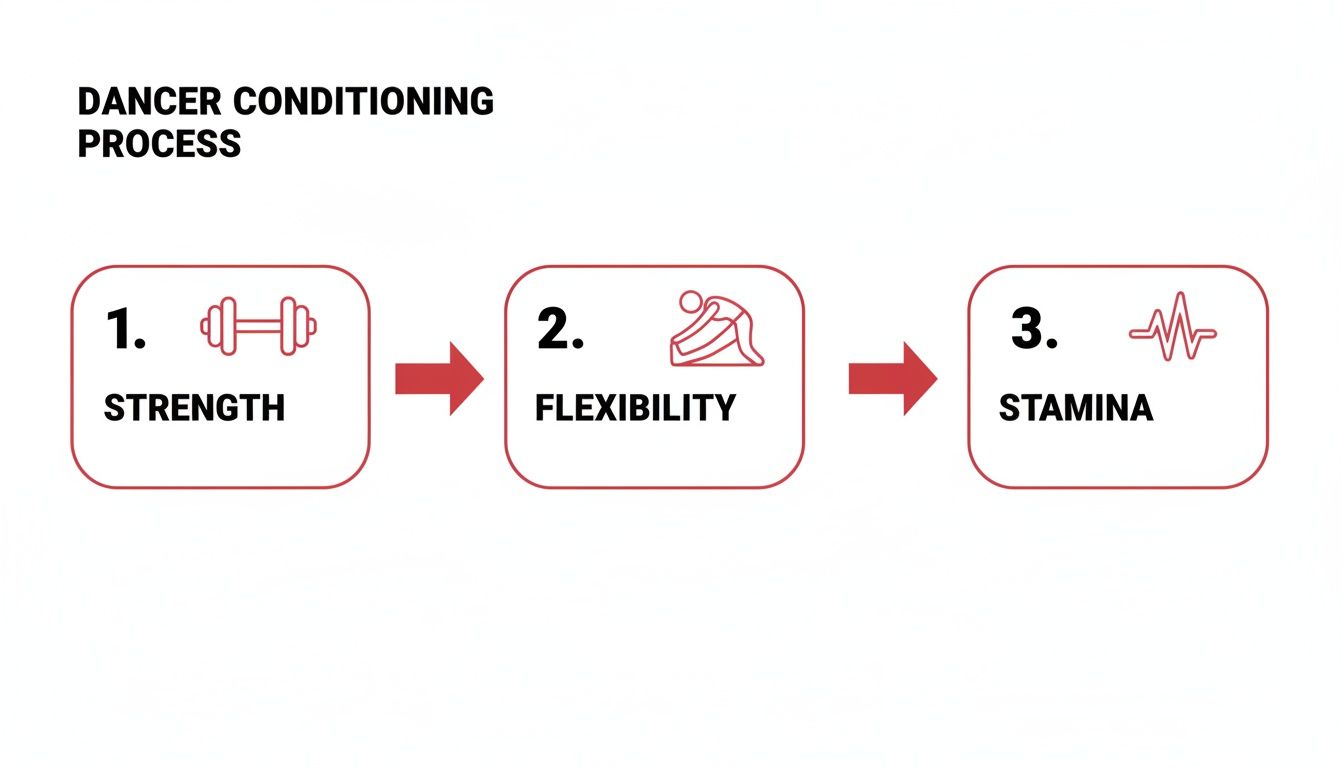
As you can see, each element builds on the others, creating a foundation that helps keep you healthy and dancing your best.
Cool-Downs for Smart Recovery
Now, once class is over, the tables turn. Your muscles are warm, pliable, and perfectly primed for a different kind of attention. This is the ideal time for static stretching—holding a gentle stretch for about 20-30 seconds. The goal here is completely different: you want to release any tension built up during class, improve your long-term flexibility, and give your body a head start on the recovery process.
Here are a few essential stretches to make part of your cool-down:
- Hamstring Stretch: Sit on the floor, extend one leg out, and gently reach for your toes. You'll feel this in the back of your thigh, which is vital after any style that involves a lot of leg action.
- Hip Flexor Lunge: Get into a lunge position, with one knee on the floor. Gently press your hips forward until you feel a good stretch in the front of your hip. This area gets notoriously tight on dancers.
- Calf Stretch: Face a wall, place your hands on it for support, and step one foot back, pressing your heel firmly into the floor. This is a must-do for releasing calf tension, especially if you've been dancing in heels.
Building these simple habits around your dancing will pay huge dividends for your entire dance journey, keeping you healthier and more mobile for years to come. If you want to dive deeper into this with guided instruction, you can learn more about our dance mobility group class.
How Great Technique Protects Your Body
Sure, great technique makes you look polished on the floor, but its real job is something far more important: keeping you safe. Good form is the single most effective tool for dance injury prevention. It's about being functional, efficient, and, above all, smart with your body.
When you use proper technique, you ensure the right muscles are doing the work, which takes a massive amount of stress off your vulnerable joints.
Think of it this way: when your form is solid, your body moves as it was designed. The moment your technique breaks down, you start putting pressure on delicate parts that were never meant to handle that kind of load. This is exactly how minor aches slowly snowball into chronic injuries.
The Connection Between Form and Safety
Every piece of proper technique directly impacts your physical safety. This isn't just theory—it's practical, body-saving mechanics at work.
A strong dance frame in a Waltz, for instance, isn't just about looking elegant. It correctly distributes force across your back and shoulders, preventing common issues like rotator cuff strain and lower back pain.
Precise footwork is another game-changer. During a fast-paced Cha-Cha, landing with your weight correctly over the ball of your foot absorbs shock. If you repeatedly land flat-footed or slam your heels down, those shockwaves travel straight up to your knees and hips, a classic recipe for patellofemoral pain syndrome.
Technique is your internal armor. It allows you to execute powerful, dynamic movements with control and grace, significantly reducing the cumulative micro-trauma that leads to most overuse injuries in dancers.
Focusing on your form isn't about being restrictive. It’s actually what gives you the freedom to move bigger, faster, and with more expression—all while keeping your body in one piece.
Technique Tips for Leaders and Followers
In partner dancing, safety is a team effort. Both leaders and followers play a crucial role in preventing injuries, and it all boils down to technique and clear non-verbal communication.
For Leaders:
- Lead with Your Core, Not Your Arms: A classic mistake is trying to muscle your partner through moves. A proper lead comes from your core and body-weight shifts, creating a clear signal without yanking on your partner’s shoulder or arm.
- Create a Safe Space: Especially on a crowded social floor, you are the navigator. Always be aware of your surroundings to avoid collisions that could injure you, your partner, or others.
- Give a Clear and Stable Frame: Your frame is your partner's main line of communication. If it’s unsteady or collapses, your partner will feel off-balance and have to tense up to compensate, leading to neck and back strain for them.
For Followers:
- Maintain Your Own Balance: Never hang on your partner or expect them to hold you up. Engage your own core and stay on your own axis. This makes you feel lighter to lead and protects you from being pulled off-balance.
- Respond, Don't Anticipate: Guessing the next move is a surefire way to create awkward, jarring moments. Wait to feel the lead, then respond. This creates a much smoother and safer dance for both of you.
- Use Your Frame to Receive the Lead: Your frame isn't just a pose; it should have muscular tone and connection. This allows you to feel the lead through your back and arms, not just your hands, preventing your partner from needing to use force.
When these skills click, the dance is transformed. A follower who maintains her own balance allows the leader to guide with a light, gentle touch. A leader who uses his body correctly protects his partner’s joints from harmful stress.
The fastest way to sharpen your technique is with personalized feedback. A great instructor can spot subtle misalignments you don’t even feel, correcting bad habits before they become a real problem. That kind of hands-on guidance is invaluable for long-term dance injury prevention.
Ready to see how an expert can refine your technique? We invite you to book your free complimentary lesson by visiting our contact page. Our instructors will give you personalized tips to help you move with confidence and keep you dancing safely for years to come.
Smart Recovery and How to Manage Your Dance Load
Your passion for dance can feel limitless, but your body isn't. Pushing yourself too hard without a plan is a fast track to burnout or injury. A massive part of staying healthy and dancing for the long haul is mastering load management—basically, the art of getting better without overwhelming your body.
So many dancers, especially when they're new and excited, fall into the "too much, too soon" trap. We see it all the time. But recovery isn't just about crashing on the couch when you're wiped out. It’s an active, non-negotiable part of your training that actually builds your resilience. The real progress happens not just in class, but in the hours and days afterward.
Understanding Load Management
Load management is all about finding that sweet spot. You want to challenge your body enough to improve, but not so much that it starts to break down. A huge piece of this is learning how to avoid overtraining, so you can spot the warning signs of fatigue before they sideline you.
An easy guideline to follow is the 10% rule. The idea is to increase your total weekly dance time or intensity by no more than 10%. For instance, if you’re currently dancing four hours a week, don’t suddenly leap to eight. Instead, just add about 20-25 minutes the following week. This slow and steady approach gives your muscles, tendons, and bones time to adapt and get stronger.
The Three Pillars of Effective Recovery
Smart recovery is more than just putting your feet up. It’s a powerful trio of sleep, nutrition, and strategic rest that helps your body repair itself and come back even stronger.
Quality Sleep: This is when the magic happens. During deep sleep, your body releases growth hormone, which is absolutely essential for repairing muscle tissue. You should be aiming for 7-9 hours of good, solid sleep every night.
Fueling Nutrition: Food is your fuel. Make sure you’re eating a balanced diet with plenty of protein for muscle repair, complex carbs for energy, and healthy fats to fight inflammation. Whatever you do, don't skip meals, especially after a tough dance session.
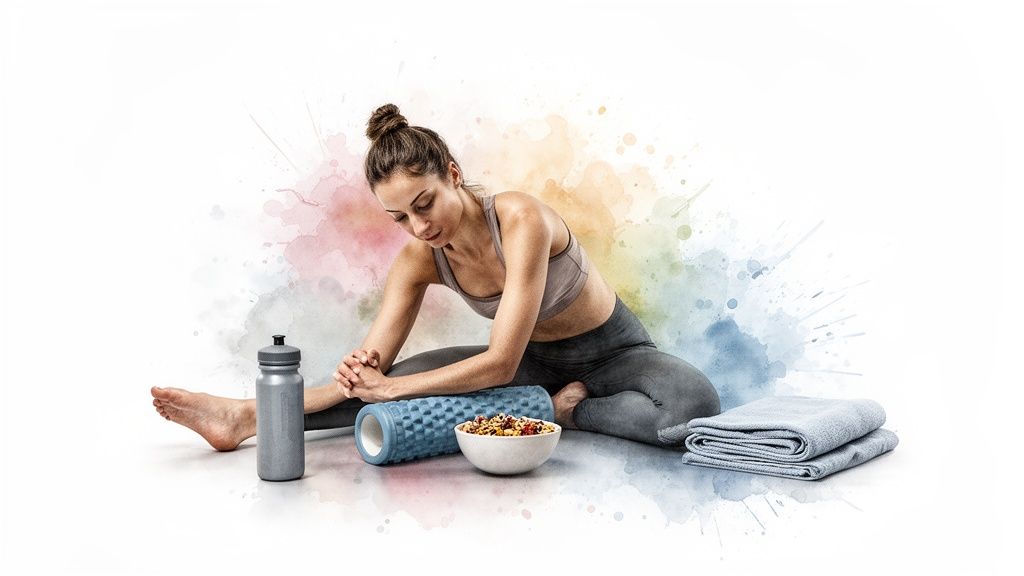
Active Rest Days: A "rest day" doesn't mean you have to be a couch potato. Gentle activities like a walk, some light stretching, or using a foam roller can boost blood flow and speed up recovery without putting more strain on your body.
Recovery isn't a sign of weakness; it's the signature of a smart, strategic dancer. It's the work you do today that allows you to show up stronger for class tomorrow.
This idea of balanced activity is especially critical for younger dancers. Research shows that while starting dance young is fantastic, specializing too early without any cross-training can actually raise the risk of injury. One study found that young dancers who only danced saw their injury rates go up over time. In contrast, those who also played other sports kept their injury rates stable. It all comes down to preventing those common overuse injuries by giving the body some variety.
Listening to Your Body’s Signals
Your body is talking to you all the time. The real skill is learning to understand what it’s saying. There's a world of difference between the 'good sore' you feel after a great workout and the 'bad pain' that signals a problem. If you feel like your schedule is just too much, it's a sign to pull back. You can learn more about preventing overloading yourself in our dedicated guide.
Good Sore (Delayed Onset Muscle Soreness – DOMS):
- Feels like a dull, general ache in your muscles.
- Shows up 24-48 hours after a tough practice.
- Goes away on its own in a few days.
Bad Pain (Potential Injury):
- Feels sharp, stabbing, or is centered on a specific joint.
- Hurts during a movement and makes you want to stop.
- May come with swelling, numbness, or a tingling sensation.
Never, ever "dance through" bad pain. That’s your body hitting the emergency brake. Listening to these signals is one of the most important habits you can build for a long and happy dance life. A good instructor can be a huge help in developing this kind of body awareness.
Start Your Injury-Free Dance Journey Today
Let's put all the pieces together. A long and happy life on the dance floor isn't about avoiding movement—it’s about moving smarter. True dance injury prevention is simply a collection of positive, powerful habits that let you dance with freedom instead of fear.
You can see now how everything connects. Smart conditioning builds a body that can handle the work, dynamic warm-ups get your muscles ready for action, and solid technique protects your joints with every single step you take. When you add in proper recovery, you’ve got a complete system for not only dancing better but loving it more.
A New Mindset for a Lifetime of Dance
Think of this as a complete shift in how you approach your dancing. Instead of just reacting to aches and pains, you're building a body that can confidently handle the demands of a fast Salsa or an elegant Waltz. It’s about empowering yourself to move beautifully, not being told to move less.
- You'll feel stronger and more centered in your frame and turns.
- You'll have more stamina to get through an entire night of social dancing.
- You'll recover faster and feel less of that "bad pain" that signals an injury.
The real goal isn't just to avoid getting hurt; it's to unlock your full potential as a dancer. When you learn to trust your body, you can finally focus on the music, the connection, and the pure joy of it all.
Trying to manage all these new habits on your own can feel overwhelming. This is where getting expert guidance in a safe, supportive space makes a world of difference. A great instructor can spot the tiny habits that might be straining your knees or back, helping you build a rock-solid technical foundation from day one.
And don't forget that what you eat is the fuel for both your performance and your recovery. To get a better handle on how your diet helps your dancing, take a look at our guide on dance and diet.
Take the First Step with Confidence
The best way to understand how all these concepts come together is to feel it for yourself. It’s time to take that first step toward a lifetime of healthy, joyful dancing.
We invite you to book your free complimentary lesson at Danza Academy today. It’s the perfect, no-risk opportunity to learn, move, and shine under the guidance of our world-class instructors.
Frequently Asked Questions About Dance Injury Prevention
As you get more into dancing, you’ll naturally have questions about how to keep your body in top shape. Here are some quick, straightforward answers to the things we get asked most often about staying healthy and injury-free on the dance floor.
What Are the Best At-Home Exercises to Prevent Dance Injuries?
The best exercises you can do at home are the ones that build a strong, resilient foundation without needing a gym full of equipment. Your focus should be on your core, balance, and ankle stability—three areas that are non-negotiable for any style of dance.
Here are a few simple but powerful exercises to work into your routine:
- Core Strength: Planks, bird-dogs, and glute bridges are your best friends. Think of your core as the powerhouse for every move you make; a strong one protects your lower back from strain, especially during turns and quick changes of direction.
- Balance and Stability: Try balancing on one leg for 30 seconds on each side. Want a challenge? Close your eyes. Even simple calf raises are fantastic for strengthening the small muscles around your ankles, which is crucial for sharp footwork and dancing in heels.
- Flexibility: Once you’re warm, gentle stretches for your hamstrings and hip flexors are key to maintaining a good range of motion.
Can I Learn to Dance Safely with Old Knee or Back Pain?
Yes, absolutely. Having a past injury or chronic pain doesn't mean you have to sit on the sidelines. The two most important rules are communication and modification. Always let your instructor know about any old injuries or sensitive areas before you start a lesson.
An experienced instructor doesn't just teach steps; they teach you how to move your specific body safely. They can adapt movements to protect you, like changing a deep lunge to be shallower or adjusting your posture to take pressure off your back.
This is where private lessons really shine. They give you a focused environment where your instructor can design a personalized plan, helping you dance with joy and confidence, not fear.
When Should I See a Doctor for a Dance-Related Pain?
Learning to tell the difference between normal muscle soreness and an actual injury is one of the most important skills a dancer can develop. That general ache you feel a day or two after a challenging class? That’s totally normal—it’s just your muscles getting stronger.
However, you should always stop and see a doctor for:
- Sharp, sudden pain that happens during a specific movement.
- Pain that doesn't go away and seems to get worse over time.
- Any pain that comes with noticeable swelling, numbness, or a tingling sensation.
Never, ever "dance through" sharp pain. That’s your body's alarm bell. Listening to it right away can prevent a minor tweak from turning into a major injury that keeps you off the floor for weeks.
Are Private Lessons or Group Classes Better for Injury Prevention?
They both have a place, and they serve different purposes. Group classes are amazing for building stamina, practicing your social dance skills, and getting lots of floor time.
But for targeted dance injury prevention, nothing beats private lessons. The one-on-one attention is priceless. An instructor can catch tiny, almost invisible habits in your alignment or technique—things you’d never feel yourself—that could lead to chronic strain down the road. We often suggest using private lessons to build that solid, safe foundation, then using group classes to practice and perfect what you've learned.
The best way to apply these principles is with an expert eye guiding you. At Danza Academy of Social Dance, our instructors are dedicated to helping you build a safe, strong, and beautiful dance practice from your very first step.
Ready to move with confidence and protect your body for a lifetime of dancing? Book your free complimentary lesson on our contact page now. Schedule your first session and discover how our expert instructors can help you start your injury-free dance journey today.