
Which dance style is really right for you, the one everyone recognizes, or the one that matches how you want to move? The most popular dance styles serve very different goals. Salsa creates social connection, waltz suits a romantic wedding moment, tango brings dramatic focus, and swing turns musical energy into a shared experience. Ballroom styles can also build elegant technique, while Latin dances invite playful rhythm and expressive movement.
A better choice starts with a few practical questions. Do you prefer fast or slow music? Do you want close partner connection, independent expression, or both? Are you preparing for a wedding, building beginner confidence, meeting people, improving fitness, or working toward competitive progression? Your answers will point you toward a style that feels enjoyable enough to keep learning.
At Danza Academy, instructors can adapt a class to your experience and goals. You don't need to bring a partner, and your significant other is welcome to join you. A complimentary first lesson offers a low-pressure way to try a style, understand the rhythm, and receive personalized guidance before choosing your next step.
1. Salsa and the Rhythmic Heartbeat of Latin Dance
Salsa is a strong choice if you want music, movement, and social connection from your first class. Its Cuban and Puerto Rican roots combine African, Spanish, and Caribbean influences, creating a partner dance built around rhythm, responsive footwork, and expressive styling.
The beginner experience usually starts with a forward-and-back basic step. Once that feels steady, you can add turns, directional changes, and the relaxed hip action associated with Cuban motion. Salsa rewards listening. Rather than rushing through a pattern, dancers learn to hear the pulse and respond to the person in front of them.
Why beginners enjoy salsa
Salsa works well for social dance nights, Latin clubs, community events, and fitness-focused classes. Couples may also use its turns and rhythmic character to create a wedding dance with Latin flair. The style can feel lively without requiring a performer's personality. You can start gently, gain timing, and gradually become more expressive.
Practical rule: Learn the basic step before trying to style every movement. Secure timing makes the later turns feel easier.
Wear comfortable shoes that let you pivot on the ball of the foot. Listen for the underlying rhythm in salsa music, then practice in a relaxed setting where mistakes are treated as part of learning. If you want a structured start, beginner salsa dance lessons can help you build confidence with clear instruction and partner rotation.
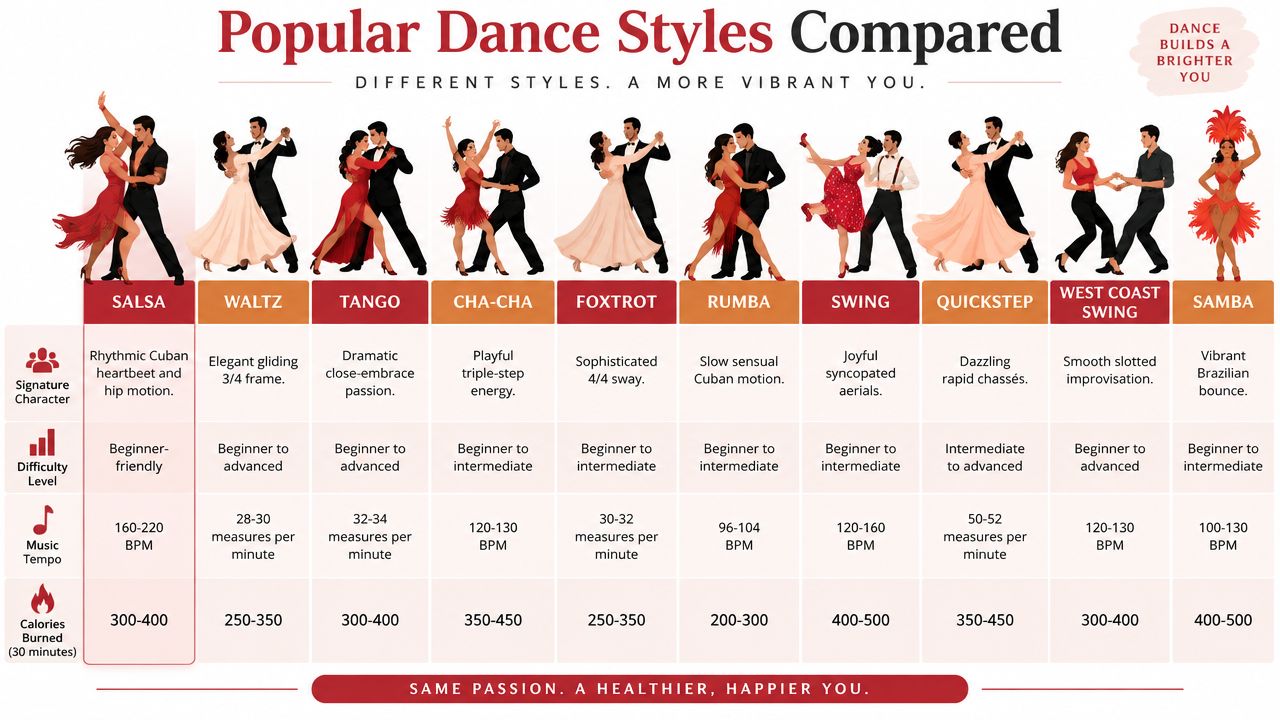
Here's a visual comparison of the styles discussed in this guide:
This video offers another way to observe salsa's energy and partner connection:
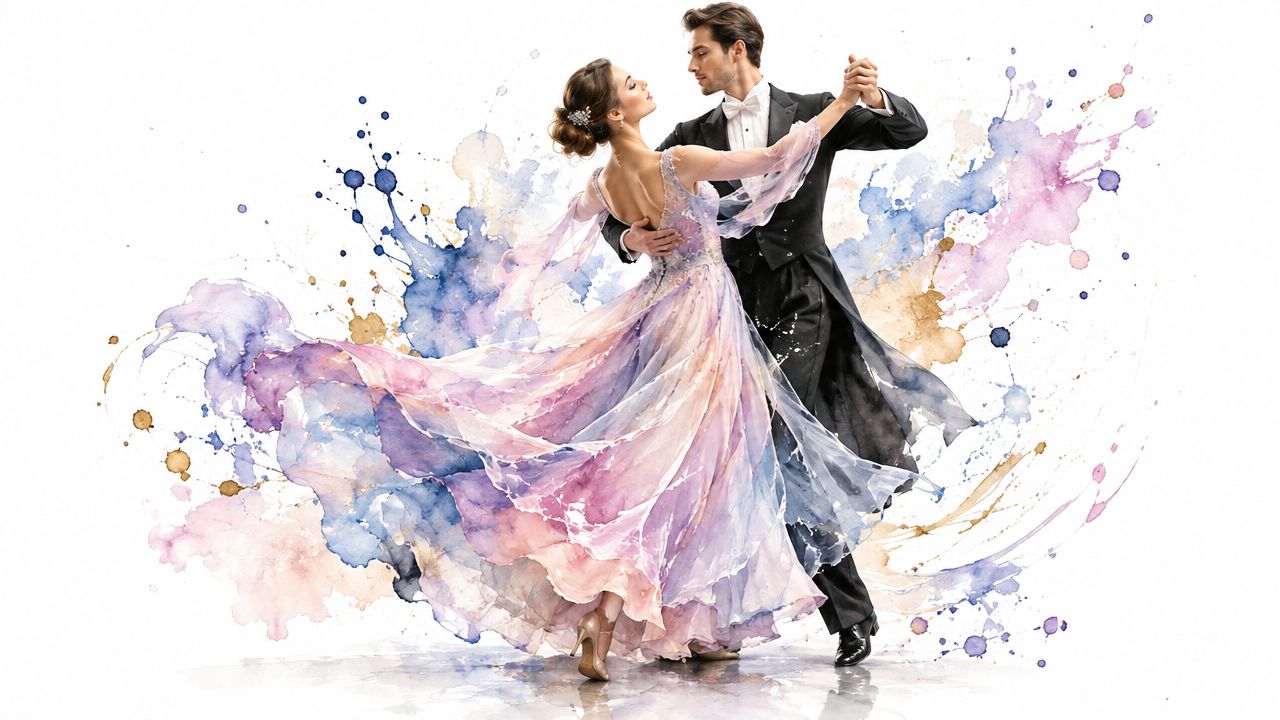
2. Waltz as the Elegant Foundation of Ballroom Grace
Waltz appeals to people who want smooth movement, formal posture, and a sense of occasion. Its characteristic three-part rhythm feels like one-two-three, one-two-three, giving dancers a clear musical structure while they learn to travel across the floor.
The style developed from Central European social dance traditions and became a defining ballroom form. In class, you'll work with an upright frame, balanced weight changes, and the gentle rise and fall that gives waltz its floating quality. The basic box step creates an early sense of achievement, but the deeper learning comes from making each step connect naturally to the next.
Where waltz fits best
Waltz remains a natural choice for wedding first dances, formal receptions, ballroom competitions, and elegant social events. It also provides useful training for other ballroom styles because frame, posture, balance, and floor awareness transfer into many partnered dances.
Start by making the box step comfortable before adding turns. Keep the upper body calm while the feet continue moving. When you practice rise and fall, think of it as a controlled change in level rather than a dramatic bounce.
For couples planning a formal first dance, learning how to dance the waltz can make the process feel more organized. A complimentary lesson can also help you establish frame and posture before you develop habits that are difficult to change.
3. Tango and the Passionate Dance of Connection and Drama
Tango suits dancers who enjoy intensity, controlled pauses, and a strong emotional atmosphere. Its history is connected to Buenos Aires, where African, European, and gaucho influences helped shape a dance known for walking patterns, sharp direction changes, and close communication between partners.
Unlike a dance that depends on constant bouncing energy, tango often gains power from restraint. A pause can matter as much as a step. Dancers learn to walk with intention, maintain a clear frame, and use subtle weight changes to communicate what comes next.
A focused learning experience
Beginners shouldn't start by chasing complicated footwork. Basic walking, a simple eight-count pattern, and comfortable leading and following provide a much stronger foundation. The goal is to understand how partners share balance and direction, not to perform every dramatic flourish immediately.
Tango works in Argentine tango salons, ballroom competitions, theatrical productions, and wedding choreography. A couple might choose it for a first dance that feels cinematic and personal rather than traditionally sweet. Social dancers may prefer its concentration and the satisfaction of making a small movement feel meaningful.
Tango becomes more expressive when both dancers listen through the frame instead of trying to control every step.
Choose music with a clear tango character and give yourself time to understand the embrace. A complimentary first lesson at Danza Academy can introduce connection and musicality in a respectful, supportive setting.
4. Cha-Cha as the Playful, Energetic Latin Favorite
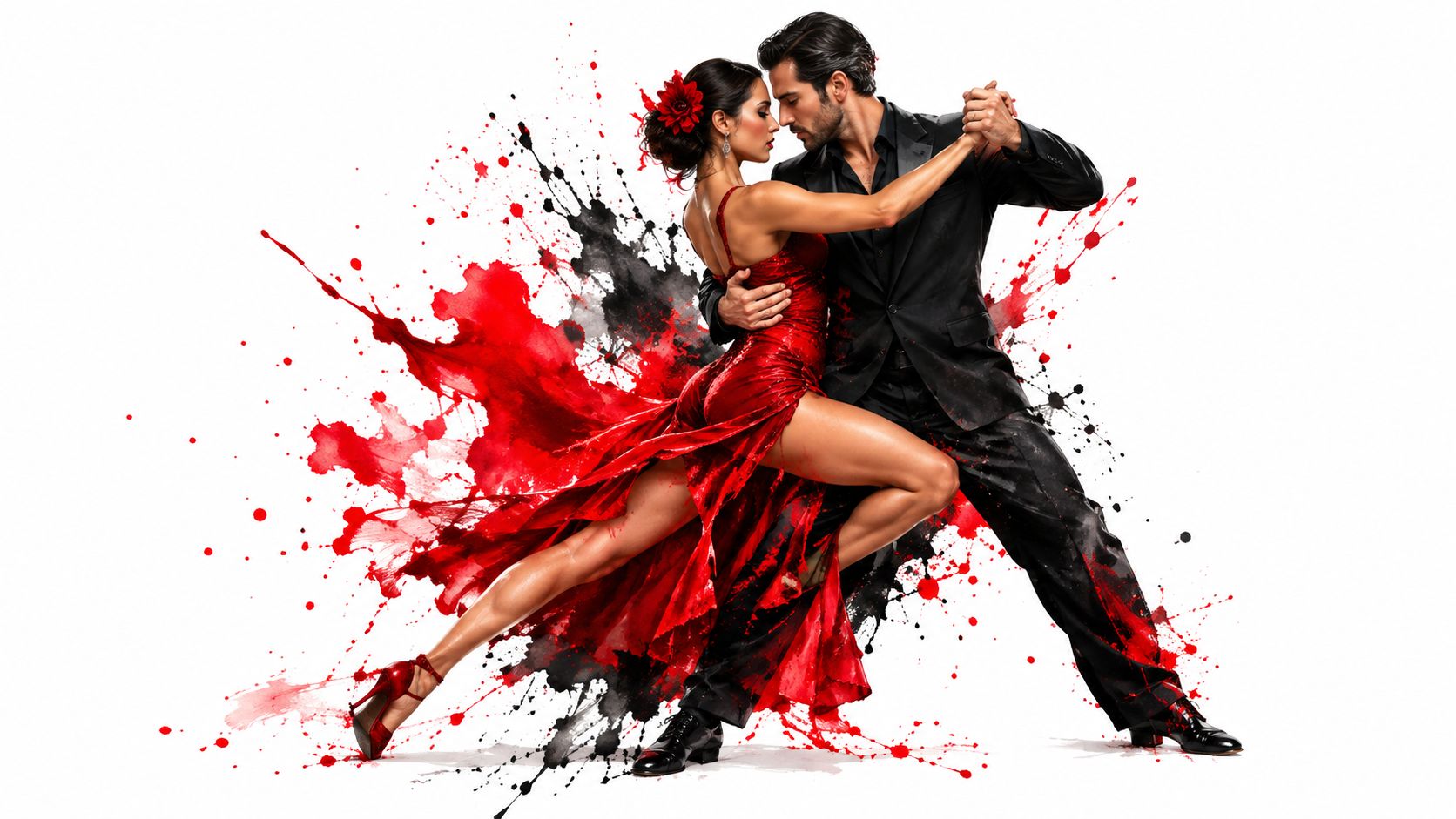
Cha-cha is for students who want a clear beat, quick footwork, and a playful mood. The Cuban style developed from mambo traditions and takes its name from the distinctive triple-step action that gives the dance its recognizable bounce.
The rhythm is in four-four time, with the familiar triple step creating a crisp cha-cha-cha feeling. That syncopation can seem surprising at first, so isolate the timing before combining it with turns or larger patterns. Your feet should stay precise and light rather than sliding as they might in a smooth ballroom style.
Building confidence through timing
Cha-cha fits Latin ballroom competitions, group classes, resort programs, wedding receptions, and dance events designed around fun. It can provide a quick emotional reward because the rhythm becomes engaging early, even while technique continues to develop.
Practice the triple step slowly. Let hip action emerge from accurate weight transfer and knee action instead of forcing movement from the waist. Shoes with reliable pivot support can help when patterns begin to include quick directional changes.
A beginner may enjoy cha-cha more than a slower style if music motivates them to move. A competitive dancer, meanwhile, can keep refining timing, body action, and styling for a long time.
Try the rhythm in a complimentary first lesson, where an instructor can correct foot placement before speed makes the pattern harder to manage. The best early target isn't a dramatic performance. It's hearing the beat and staying with it.
5. Foxtrot and the Sophisticated Standard of Smooth Ballroom
Foxtrot is a good match for dancers who picture themselves gliding through a formal room. Developed in the United States and associated with early twentieth-century entertainment, it combines a steady walking quality with varied timing and flowing patterns.
Many beginners learn the basic quick-quick-slow-slow rhythm first. That pattern gives the dance structure, while the frame and floorcraft create its polished appearance. Unlike waltz, foxtrot doesn't depend on a pronounced rise and fall. It uses smooth travel, controlled flex, and subtle sway to create elegance.
Learning to glide
The style appears naturally at galas, formal receptions, ballroom competitions, and classic film-inspired events. It can also serve couples who want an elegant wedding dance without the pronounced three-count feeling of waltz.
Keep your feet in contact with the floor and avoid turning each step into a separate event. Think about continuity. Your partner should feel a connected phrase rather than a series of stops and starts.
Foxtrot also rewards patient technical work. Frame consistency matters as patterns change, and moderate music is usually easier for a new dancer to interpret than a rushed tempo. A complimentary first lesson at Danza Academy can show you how the basic rhythm feels before you decide whether its smooth character suits you.
6. Rumba as the Slow, Sensual Latin Soul Dance
Rumba is built for dancers who value emotional expression, deliberate movement, and partner connection. The Cuban style draws from African and Spanish influences and uses a steady four-four rhythm to create space for musical interpretation.
Its slower pace doesn't make it effortless. Rumba asks you to transfer weight cleanly, bend and straighten the knees with control, and allow the hips to respond naturally. The well-known Cuban motion develops from those mechanics. Trying to force the hips before the feet and knees are working usually creates tension.
A natural choice for romantic goals
Rumba suits intimate wedding dances, showcases, social events focused on connection, and Latin ballroom competition. Couples often like its ability to tell a romantic story without requiring rapid choreography. A student who feels uncomfortable with fast footwork may also appreciate having time to understand each weight change.
Connection matters more than decoration. If the weight transfer is clear, the expressive quality has somewhere to come from.
Begin with a basic box step and pay attention to where your weight finishes. Use slower music while you learn, then gradually choose tracks that demand more control. Keep the frame comfortable and avoid gripping your partner.
A complimentary first lesson offers a practical introduction to rumba's timing and movement quality. An instructor can help you find the difference between relaxed hip action and exaggerated motion, which is one of the most useful distinctions for a beginner.
7. Swing as the Joyful, Energetic American Social Dance
Swing is the choice for people who want a lively room, playful interaction, and music that encourages movement. It grew alongside American big-band jazz and now includes related forms such as Lindy Hop, East Coast Swing, West Coast Swing, and Jitterbug.
That variety matters. Swing isn't one fixed experience. East Coast Swing offers an accessible starting point with a rock step and triple step. Lindy Hop brings more jazz phrasing and elastic energy. Other forms place different demands on rhythm, slot movement, or improvisation.
Why swing creates community
Swing works well at vintage dance events, social venues, wedding receptions, competitions, and community gatherings. The atmosphere often helps beginners relax because the dance values conversation, musical response, and shared enjoyment. You don't need to look polished before you join the floor.
Start with East Coast Swing if you want a straightforward entry. Practice the rock step until it feels like a dependable reset, then add the triple step. Keep your arms responsive rather than rigid, and communicate through a comfortable frame.
Swing can also be a good fit for someone who wants social confidence. The patterns are useful, but the bigger lesson is learning to adapt when music, space, or a partner changes. A complimentary first lesson can introduce that lead-and-follow communication without overwhelming you with variations.
Wear flexible shoes that support turning. More advanced aerials belong in appropriately supervised training, not in a first practice session.
8. Quickstep as the Dazzling, Rapid Ballroom Standard
Quickstep is designed for dancers who enjoy speed, precision, and a technical challenge. It developed in Britain as an up-tempo relative of foxtrot, combining light footwork with chassés, locks, and rotational figures that travel across the floor.
The visual effect is bright and effortless, but the learning process demands control. Dancers must maintain frame, listen closely to the rhythm, and place the feet accurately while moving quickly. Minimal rise and fall helps the style stay light, but that doesn't mean the body can become loose or careless.
A progression style
Quickstep is most suitable for students who already have some ballroom foundation. Foxtrot basics can help you understand travel, frame, and smooth weight changes before you add speed. Start slowly, divide patterns into small pieces, and increase tempo only when the feet remain clean.
This style fits Standard ballroom competitions, advanced showcases, formal events, and dancers who want a clear progression target. It can be thrilling once the timing settles, but beginners shouldn't measure success by how quickly they can perform a full routine.
Work with an instructor on frame consistency and floor awareness. Danza Academy can help assess whether you're ready for Quickstep and create a structured path from foundational ballroom work to faster patterns. A complimentary consultation provides a sensible starting point.
9. West Coast Swing as the Smooth, Versatile American Social Standard
West Coast Swing appeals to dancers who want partner connection with room for improvisation. It developed in Los Angeles as a slotted form, meaning dancers generally move along a defined lane rather than traveling freely around the entire floor.
That structure creates freedom. Within the slot, partners can stretch and compress the connection, interpret different musical phrases, and adapt patterns to swing, blues, country, or contemporary pop. The dance can look smooth and understated one moment, then become highly musical and expressive the next.
Feeling over memorization
Beginners often focus too heavily on collecting patterns. West Coast Swing usually becomes more enjoyable when you understand the elastic relationship between partners. The leader offers information through the frame, and the follower responds without becoming stiff or passive.
Learn the slot concept first. Then work on basic six-count and eight-count structures, comfortable weight changes, and the ability to keep movement controlled inside the lane. Soft knees and supportive shoes can make gliding steps easier.
West Coast Swing fits social venues, festivals, competitions, modern wedding dances, and blues or contemporary music events. It's especially useful for someone who wants a dance that can grow with personal musical taste.
Explore West Coast Swing basic moves to become familiar with the vocabulary, then use a complimentary lesson to feel how connection and improvisation work with a partner.
10. Samba and the Rhythmic, Vibrant Brazilian Pulse
Samba brings celebration into the room. Its Brazilian roots include African and Portuguese influences, and its many forms connect with Carnival, social dancing, fitness, and ballroom performance.
The movement is continuous and rhythmic. A beginner usually starts with a forward-and-back basic step, then learns how knee flexion and weight changes create the characteristic bounce. Hip and body action should develop from the feet. Forcing the hips before the timing is stable can make the dance feel tense instead of joyful.
Choosing samba for energy
Samba works for students who want an energetic class, a celebratory wedding dance, a Latin competition goal, or a fitness-oriented activity. It can also suit dancers who respond more strongly to percussion and driving rhythms than to slower romantic music.
Build endurance gradually and focus on the two-four pulse used in many samba settings. Keep the steps compact while you learn. Comfortable, flexible shoes are helpful because the style asks for repeated weight changes and responsive footwork.
Brazilian Carnival performances show samba's expansive cultural energy, while ballroom samba offers a more structured competitive pathway. Those experiences share rhythmic vitality but aren't identical, so clarify your goal before choosing a class.
A complimentary first lesson at Danza Academy can help you identify the version of samba that fits your interests and learn the basic action safely. You don't need to arrive with experience. Bring comfortable clothing, curiosity, and a willingness to let the rhythm develop.
Top 10 Popular Dance Styles Comparison
| Dance | Implementation complexity | Resource requirements | Expected outcomes | Ideal use cases | Key advantages |
|---|---|---|---|---|---|
| Salsa | Easy to start; stylistic depth with practice | Moderate space; partner optional; flexible shoes; rhythmic music | Cardio, musicality, social confidence | Social clubs, weddings, fitness classes | Highly social; quick progress; versatile |
| Waltz | Accessible basics; advanced technique demands strong frame | Smooth floor; partner; formal shoes | Posture, frame control, graceful travel | Weddings, ballroom competitions, formal events | Elegant; foundational ballroom technique |
| Tango | Moderate start; high emphasis on precision & connection | Partner required; close embrace comfort; musical sensitivity | Emotional expression, lead-follow clarity | Tango salons, theatrical/competitive performance | Deep partner connection; dramatic expression |
| Cha‑Cha | Easy entry; syncopation and triple-step require coordination | Partner optional; pivot-support shoes; upbeat music | Rhythmic timing, playful styling, cardio | Competitions, weddings, social/fun classes | Energetic, fun; rapid rhythm success |
| Foxtrot | Accessible basics; timing and sway need practice | Smooth floor; partner; ballroom shoes | Smooth traveling movement, refined footwork | Formal events, ballroom competitions, weddings | Sophisticated, versatile music choices |
| Rumba | Slow tempo but technical; body awareness essential | Partner; controlled space; musical sensitivity | Deep connection, hip action, expressive control | Romantic wedding dances, showcases, competitions | Sensual, expressive focus on movement quality |
| Swing | Fun entry; timing and aerials advance with skill | Large floor; good stamina; partner; supportive shoes | High cardio, improvisation, social connection | Vintage events, social nights, weddings, competitions | Extremely fun; social and forgiving timing |
| Quickstep | Technically demanding; fast footwork and stamina | Large floor; high fitness; strong Foxtrot foundation; partner | Speed, precision, showcase-ready routines | Competitions, advanced performances, showcases | Exhilarating, athletic, visually impressive |
| West Coast Swing | Flexible learning curve; musical interpretation important | Slotted/lane space; partner; genre‑versatile music | Connection, improvisation, musical adaptability | Social dancing, modern weddings, festivals | Highly versatile across music; improvisational |
| Samba | Energetic; hip/knee action requires conditioning | High energy/stamina; partner; flexible shoes; open space | Intense cardio, rhythmic timing, expressive bounce | Carnival/celebrations, fitness classes, competitions | Infectious rhythm; celebratory, vibrant energy |
Take Your First Step With Danza Academy
The most popular dance styles aren't interchangeable, and popularity alone won't tell you which class you'll enjoy. If you want social connection and lively music, start with salsa, swing, or West Coast Swing. If your goal is a romantic wedding dance, waltz, rumba, tango, or foxtrot may give you the atmosphere you want. Cha-cha and samba suit energetic students, while Quickstep offers a clear challenge for dancers building toward advanced ballroom work.
Your learning goal can guide the format as much as the style. Private lessons offer focused attention for an individual or couple, especially when you need wedding choreography or want to correct a specific technical issue. Group classes provide repetition, variety, and a social environment. Students with children can look for kids' programs that develop coordination and confidence, while experienced dancers can pursue coaching and competitive training.
Danza Academy of Social Dance offers instruction across Ballroom, Latin, and social styles, including salsa, waltz, tango, swing, cha-cha, rumba, samba, foxtrot, Quickstep, Hustle, West Coast Swing, and Country Two-Step. The academy has studios in Center City Philadelphia and Exton, PA, and its instructors emphasize technique, musicality, and encouragement.
You don't have to wait until you feel coordinated. A teacher can adjust the pace, explain the rhythm in plain language, and help you decide whether you prefer leading, following, or exploring both roles. No partner is required, and significant others are welcome to attend.
The simplest next step is to book the free complimentary lesson. Use it to experience the welcoming studio, discuss your goal, and receive a personalized starting point. You might arrive thinking you want waltz and discover that rumba fits your music better. You might choose salsa for social dancing, then add ballroom technique through private lessons or group classes. The first lesson gives you useful information without pressure to commit to a style that doesn't feel right.
Choose the music that makes you want to move, the level of connection you're comfortable exploring, and the occasion you're preparing for. Then let an instructor turn that preference into a practical plan. Consistent guidance can help you move from watching dance online to feeling comfortable using it in real life.
Danza Academy of Social Dance offers welcoming private lessons, group classes, wedding preparation, kids' programs, workshops, and competitive training across Ballroom, Latin, and social styles. Visit Danza Academy of Social Dance to explore your options and find a supportive starting point, with no partner required.