
A lot of fathers and daughters start in the same place. One person says, “We can just sway,” and the other worries to themselves that swaying for a whole song will feel long, awkward, or uncertain once everyone is watching.
That worry is normal. I've seen confident professionals freeze at the thought of one simple dance, and I've seen daughters panic because they think they need polished choreography to make the moment special. You don't.
What makes father daughter dance steps work isn't complexity. It's comfort, timing, and the feeling that you're sharing the moment together instead of trying to survive it separately. A calm lead, a steady rhythm, and one or two repeatable patterns can look far better than a long routine that never feels natural.
Your Unforgettable Father Daughter Dance Moment
The music starts, the room goes quiet, and for a second your brain may go blank. That moment feels big because it is. Still, a beautiful father-daughter dance does not come from doing a lot. It comes from feeling steady together.
The pairs that look best on the floor usually share one thing. They look comfortable with each other. Guests notice that before they notice the footwork.
A common worry is that the dance must be packed with movement to keep everyone watching. In practice, too many steps usually create the opposite effect. Shoulders rise, timing gets rushed, and both dancers start thinking about the next move instead of the person in front of them.
A better goal is simple. Build a dance that feels like home, then add one or two small moments that give it shape.
That is the idea behind a strong beginner routine. You need a home base and a figure. Your home base is the pattern you can return to any time, like a safe parking spot for the dance. Your figure is the extra detail, such as a turn, a short walk, or a change of direction. Home base keeps you calm. The figure gives the dance personality.
What helps the dance feel memorable
Start by lowering the pressure. You are not trying to perform for judges. You are sharing a milestone with someone you love, and the best father daughter dance steps support that feeling instead of competing with it.
Keep these priorities in order:
- Choose comfort first: a stable hold and easy spacing help both of you relax.
- Use a repeatable base pattern: a side step, forward-and-back pattern, or box step gives you something dependable.
- Add one clear highlight: one turn or one traveling moment is often enough.
- Stay with each other: eye contact, breathing, and a soft smile make the dance feel warm and natural.
If your song choice still feels wide open, browsing a list of father-daughter wedding songs that fit different moods can help you picture the kind of moment you want to create.
Simple rule: If you can return to the same basic pattern whenever you feel unsure, you already have the structure for a dance that looks polished and feels genuine.
Why this tradition matters
The father-daughter dance carries meaning because it marks a change in the relationship, even when the family structure is unique or nontraditional. Dance New Jersey notes that wedding dance customs grew out of 16th and 17th century ballroom traditions, where family dances had a formal social role. Today, the moment is usually less about ceremony and more about connection.
That is why there is no single correct version. Some families want something tender. Others want something light and funny. Some daughters dance with a stepfather, grandfather, mother, or another parent figure.
The goal stays the same. Create a few minutes that feel true to your relationship, easy to repeat, and comfortable enough that both of you can enjoy them in real time.
Choosing Your Song and Matching a Dance Style
Before you practice a single step, choose the kind of feeling you want on the floor. The song creates that feeling, and the song also tells you what dance style will feel easiest.
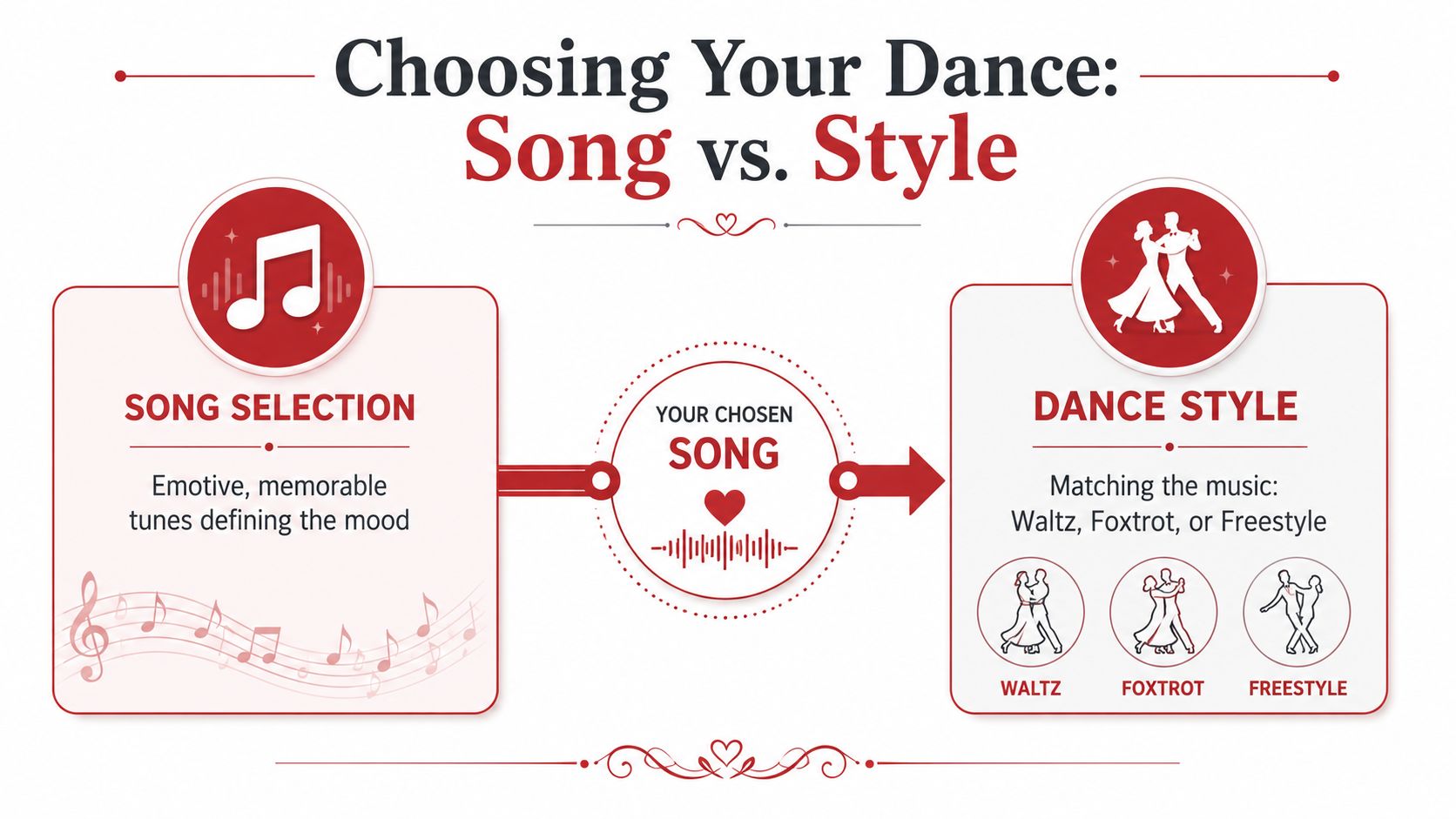
Match the music to the movement
The easiest father daughter dance steps usually fall into three buckets:
| Song feel | Good fit | What it feels like |
|---|---|---|
| Flowing, sweeping, three-beat music | Waltz | Graceful and classic |
| Romantic, steady four-beat music | Rumba-style basic | Smooth and grounded |
| Personal song with changing energy or unclear structure | Simple slow dance or freestyle | Relaxed and flexible |
If your song feels like “1-2-3, 1-2-3,” a waltz pattern often works well. If it feels like a steady “1-2, 1-2” or “slow-quick-quick” kind of pulse, a rumba-style basic or simple sway may feel more natural.
One beginner tutorial notes that step-touch, forward-side-together, and box-step patterns are commonly taught because they work across popular wedding songs, and a forward-side-together/back-side-together pattern can suit both Waltz and Rumba music in beginner settings, as shown in this wedding dance tutorial.
Choose for your relationship, not just tradition
Some pairs want a sentimental slow dance. Others want something with surprise, humor, or more personality. Recent wedding-dance coverage points to more personalized parent dances, including mashups and higher-energy choices, and it emphasizes that the best fit depends on song length, venue, family dynamics, and comfort level, as discussed in this guide to father-daughter dance choices.
That's why I always suggest asking these four questions first:
- Can you both hear the beat easily?
- Does the song feel like you two?
- Will the space support the style you want?
- Do you want heartfelt, fun, or a mix of both?
If you're still deciding, this list of best wedding dance songs can help narrow your options by mood and style.
A good song doesn't just sound meaningful. It makes movement feel easier.
The Foundation Three Basic Dance Moves
Most beginner father daughter dance steps come back to a few reliable patterns. You do not need a long routine. You need a handful of moves that feel stable enough to repeat without thinking.
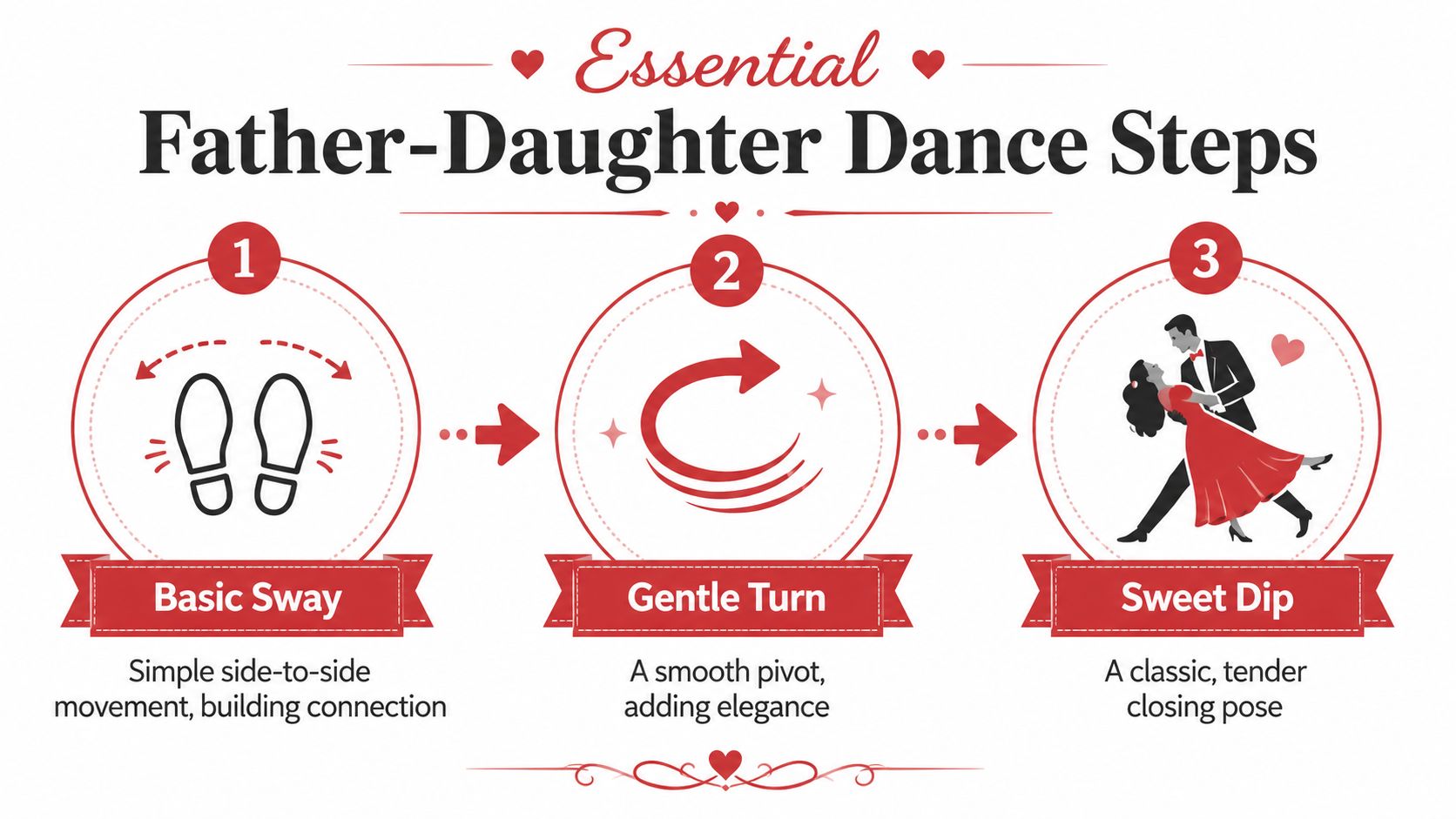
Step-touch for instant comfort
If one or both of you feel nervous, begin here.
- Count it: step right, touch left. Step left, touch right.
- Keep the knees soft: don't lock your legs.
- Let the upper body stay calm: the movement should look easy, not busy.
This move is excellent when you want to settle into the music. It also gives you time to breathe, smile, and get comfortable under the spotlight.
Forward-side-together for smooth travel
This is one of the most useful beginner shapes because it teaches direction without making the dance feel complicated.
Try it this way:
- Forward on 1
- Side on 2
- Together on 3
- Then reverse with a gentle back movement
This shape is often taught because it can adapt to wedding music in more than one style. If your pair struggles with timing, keep the steps smaller. Small, clean movement always looks better than giant uncertain steps.
Here's a visual reference to study before you practice on the floor:
The box step for a polished look
The box step gives beginners that classic ballroom feel without requiring advanced skill. It's especially useful when you want the dance to look intentional and elegant.
A simple version looks like this:
- Forward
- Side
- Together
- Back
- Side
- Together
If that sounds like a lot on paper, don't worry. Once you walk it slowly a few times, it starts to make sense. Think of it less as “memorizing six things” and more as drawing a little box on the floor with your feet.
Keep your steps under your body. Large steps make timing harder and balance shakier.
Which move should you start with
Use this quick guide:
- Very nervous pair: start with step-touch
- Want gentle structure: use forward-side-together
- Want classic ballroom shape: learn the box step
That's enough to build a complete dance. It really is.
Building Your Routine with a Simple Formula
A good father-daughter dance routine should feel steady, not fragile. The easiest way to build that feeling is with one repeatable pattern: Home Base + Figure.
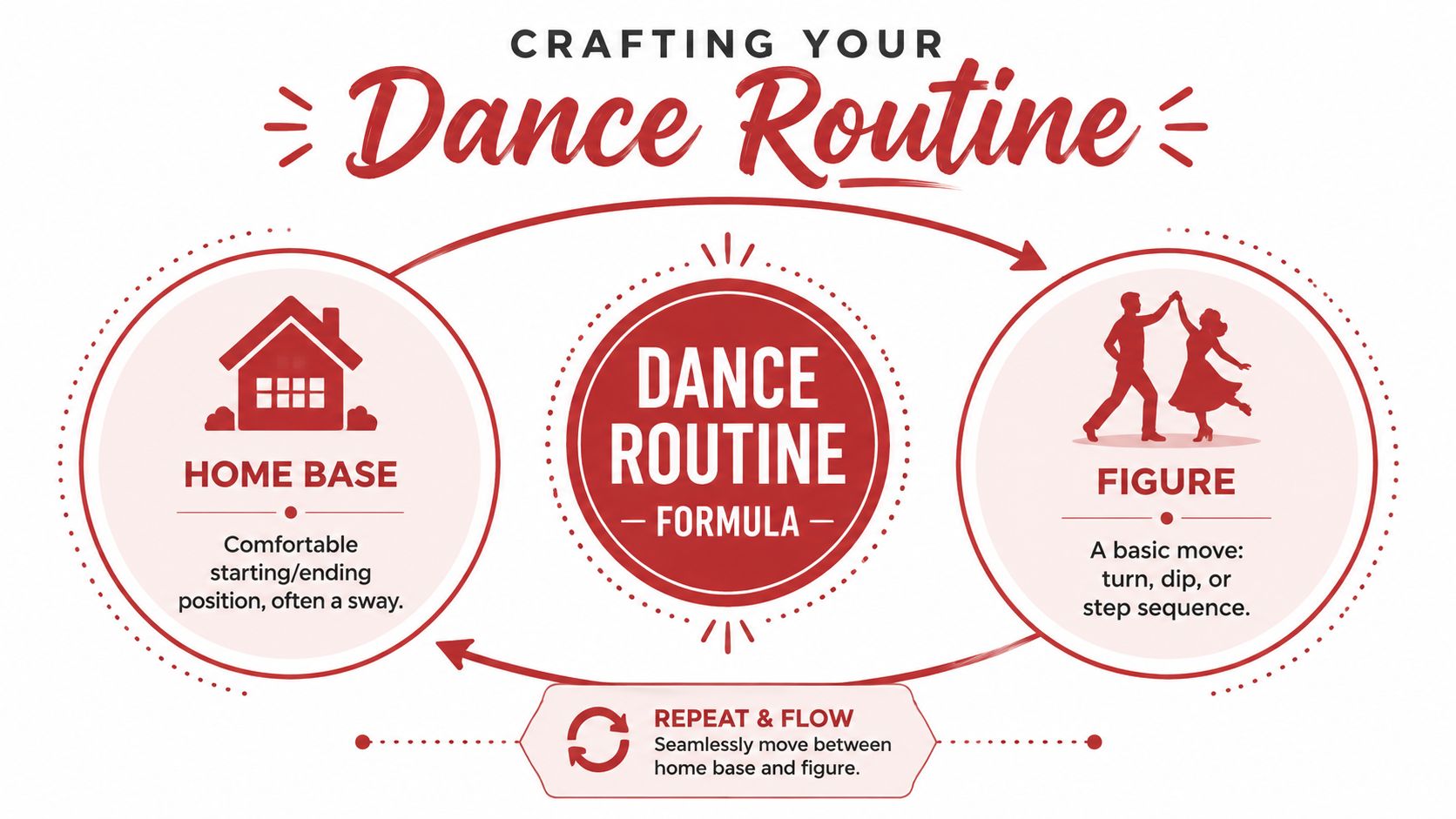
This structure works like a comfortable conversation. You return to something familiar, then add one small special moment, then return again. For nervous beginners, that rhythm builds confidence fast because nobody has to remember a long chain of steps under pressure.
What home base means
Your home base is the step you can always trust. If the music feels faster than expected, if a dress catches your shoe, or if your mind blanks for a second, home base is where you go.
For most fathers and daughters, home base is one of these:
- Step-touch
- A side-to-side basic
- A simple sway with gentle weight changes
Your figure is the part that adds shape and personality. Keep it small and clear. Good choices include:
- An underarm turn
- A box step
- A walk-around
- A gentle change of position
One figure is enough for many pairs. Two is often plenty.
Why this formula helps beginners
In my experience teaching wedding pairs, the vast majority of beginners using a home base and one simple figure finish their dance with far more confidence than pairs trying to memorize continuous choreography. The reason is simple. Familiar movement calms the body.
Once both of you know, "We can always come back to this basic step," the pressure drops. You stop performing every second and start dancing with each other. That is what guests notice most anyway: comfort, connection, and a relaxed lead.
Simple patterns look polished because they give you time to breathe, smile, and stay together.
A sample routine you can try
Here is an easy structure that feels organized without feeling stiff:
| Musical moment | What to do |
|---|---|
| Opening phrase | Step-touch in closed hold |
| Next phrase | Box step |
| Next phrase | Return to step-touch |
| Highlight moment | Underarm turn |
| After the turn | Back to home base |
| Final phrase | Slow sway and finish pose |
Notice how the pattern keeps circling back to the same safe place. That is the secret. A routine becomes easier to remember when each featured moment grows out of the same base step instead of competing with five new ideas.
If memory feels like the hardest part, this guide on how to remember dance choreography can help you organize each section of the dance so it sticks.
Keep the structure flexible
You do not need to match the music with stage-level precision. You only need a clear plan for each part of the song.
For example, the verse can be home base. The chorus can be your figure. The next verse returns to home base. That gives you a map without forcing every count.
If a turn starts a beat late, keep going. If you need another round of step-touch before the figure, take it. The goal is to feel grounded enough that both of you can enjoy the moment together. That is what makes the dance look natural and memorable.
Rehearsal Tips and Avoiding Common Mistakes
A father and daughter usually feel calm on the wedding day for one simple reason. They practiced in a way that made the dance feel familiar, not fragile.
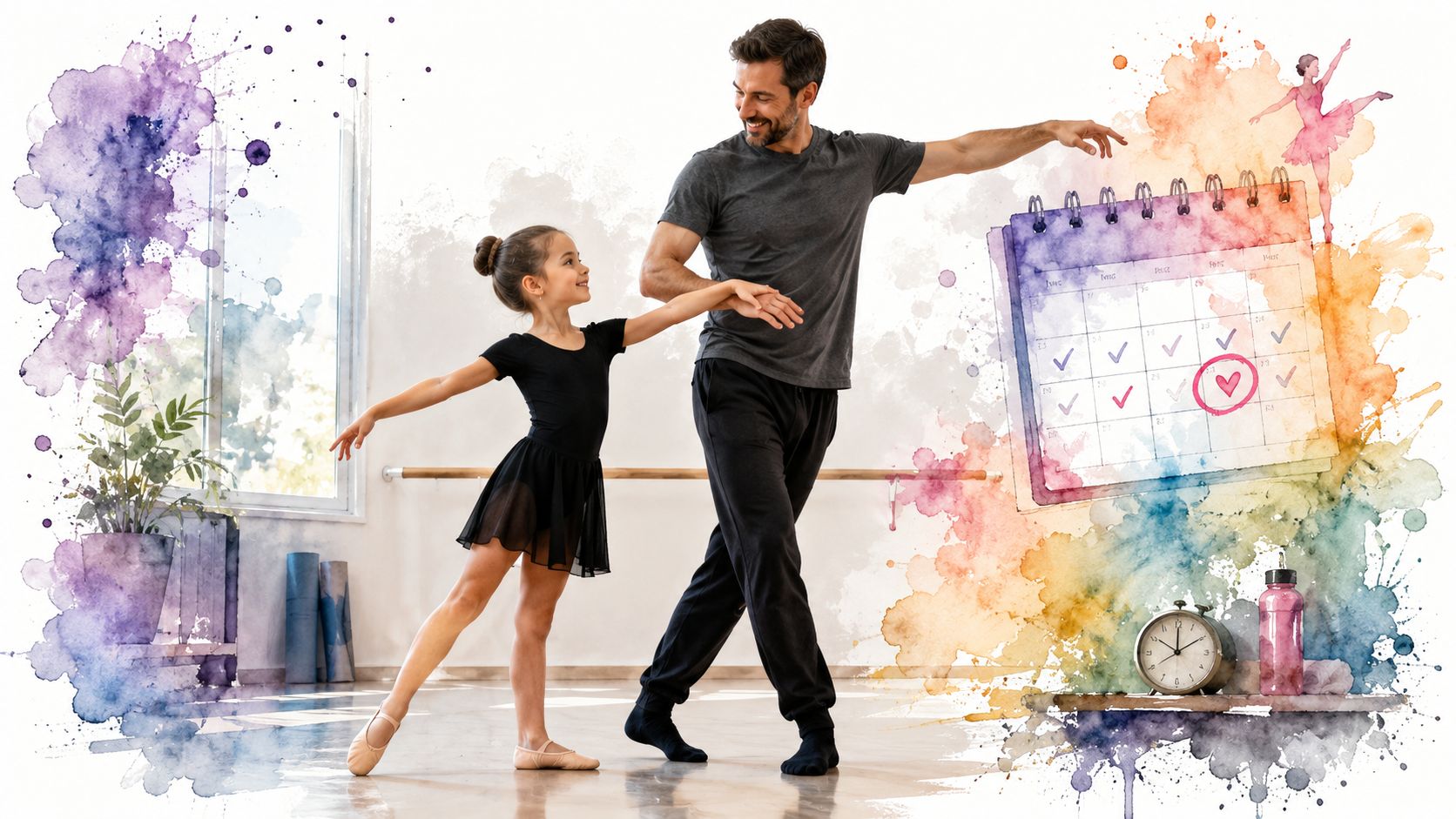
The goal of rehearsal is not to run the whole song until you are worn out. It is to make your home base feel so comfortable that either of you can return to it without stress. That is what builds real confidence. If a turn starts late or a hand placement feels off, you both still have a safe place to land.
Practice in a way your body remembers
Short, focused rehearsals usually work better than one long session. Your body learns dance the same way it learns a golf swing or how to back a car into a driveway. Clean repetition sticks. Tired repetition usually falls apart.
Try this rehearsal approach:
- Practice the entrance and first eight counts: the beginning sets the tone for everything that follows.
- Wear the shoes you plan to use: slick soles, dress shoes, and heels change balance more than people expect.
- Use the exact song version: even a small edit can throw off timing and confidence.
- Run your home base more than your figure: the pattern you return to should feel automatic.
- End after a strong run-through: finishing well helps the dance feel settled in your body.
If nerves matter more than footwork, this guide on how to overcome fear of dancing in public can help you settle your breathing and focus before the big day.
The mistake I see most often
The feet are rarely the actual problem. Connection is.
The most common mistake is a broken frame. That happens when the father tries to make a turn happen by pulling the daughter's arm instead of leading from a steady center. Pulling creates the same feeling as trying to steer a shopping cart by one loose wheel. The movement gets shaky fast, and balance becomes harder to trust.
A better lead feels clear and calm. Keep the hand connection light, keep the elbow soft, and let the turn begin with direction rather than force. The daughter should feel where she is being invited to go, not rushed there.
Soft arms and steady timing make simple dancing look polished.
Be careful with dips
A dip can be a lovely ending, but beginners often ask too much of it. For a father daughter dance, a small shaped lean is usually the smarter choice. It reads well in photos, feels safer, and matches the warm tone of the moment.
If you include one, keep these rules in mind:
- Support the upper back first: no one should lean before the hold feels secure.
- Keep it shallow: a slight dip often looks more elegant than a dramatic one.
- Lower and rise slowly: speed is what makes a dip feel unstable.
- Skip it if either person feels unsure: a close sway, hug, or cheek-to-cheek finish works beautifully.
For pairs who want personal feedback, one practical option is taking a private wedding lesson. Danza Academy of Social Dance offers wedding dance instruction that can be designed for simple parent-dance choreography, transitions, and comfort level.
Personalize Your Dance and Find Your Confidence
You are on the dance floor, the music starts, and for a second both of you feel that familiar question: what if we forget? In real weddings, that moment passes fast when the dance feels personal. A simple routine with one or two meaningful details gives you something better than flashy choreography. It gives you a shared memory you can trust.
That is the goal here. The best father daughter dance steps reflect your relationship, your comfort level, and the mood you want in the room. A strong dance often works like a favorite family story. It is easy to follow, full of feeling, and memorable because it sounds like you.
Personal touches do not need to be big. In fact, smaller usually reads better. A walk onto the floor together can calm early nerves. A smile before the first step can soften the whole room. One gentle spin, a forehead touch, a laugh after a missed step, or a warm hug at the end can say more than a long sequence of moves.
Small personal touches that work
Here are beginner-friendly choices that add personality without adding pressure:
- Start with a walk-in together: it gives you a few extra beats to settle, breathe, and find your timing.
- Choose one signature moment: a turn, a pause to look at each other, or a simple finish pose is plenty.
- Match the feeling of the reception: a formal room often suits a warm, steady dance, while a lively crowd may enjoy one playful surprise.
- Shape the dance around your family story: if a stepfather or another parent figure is part of the moment, build the dance in a way that feels natural and respectful.
Keep your routine manageable, too. As noted earlier, father-daughter dances come from a long tradition, but modern receptions respond best to clarity and warmth. One song is usually enough, and many pairs feel more comfortable with a shortened edit. Guests remember confidence, connection, and a clean ending far more than extra counts.
The home base plus figure approach helps again. Your home base is the place you can always return to, like a safe parking spot between moves. The figure is the little highlight you add on top, such as a turn, promenade, or side-by-side sway. If either of you feels nervous, return to home base, breathe, and continue. That simple structure makes the dance feel stable even when emotions are high.
Confidence grows from repetition, but it also grows from permission. Permission to keep things simple. Permission to smile through an imperfect moment. Permission to make the dance feel like the two of you, not like a performance for judges.
If you want calm guidance before the big day, book a free complimentary lesson with Danza Academy of Social Dance. We'll help you choose simple father daughter dance steps, build a routine that feels natural, and practice it in a way that replaces nerves with confidence.