Group dance lessons typically range from $15 to $25 per class, while private lessons often run $60 to $120+ per hour. The actual cost, though, depends less on the headline rate and more on your goal, how often you want to dance, and whether you buy one class at a time or commit to a package.
Looking for how much dance lessons cost, you're probably in a familiar spot. You want to try dancing, but the pricing pages feel inconsistent. One studio lists a drop-in class. Another pushes a membership. Another talks about private coaching, cards, or intro specials, and suddenly a simple question starts feeling more complicated than it should.
That confusion is normal. As an instructor, I can tell you that most students don't just want an hourly number. They want to know what they'll spend in a real month, and whether that spending makes sense for a wedding, a hobby, a child's program, or serious training.
Your Guide to Dance Lesson Pricing
A good starting point is this. A widely cited benchmark for beginner instruction puts group classes at $12 to $20 per hour, which can work out to about $48 to $160 per month for regular attendance. The same pricing overview also lists traditional group classes at $60 to $200 per month and private lessons at $50 to $120+ per hour in many situations, which shows how quickly cost changes when instruction becomes one-on-one. You can review that benchmark in Superprof's dance lesson cost overview.
That range helps, but it doesn't answer the question most beginners are really asking. It doesn't tell you whether you're better off taking one private lesson each week, joining a group class, or mixing both. It also doesn't explain why two studios can look similar online but feel very different once registration fees, class cards, and scheduling flexibility enter the picture.
Why prices can feel hard to compare
Dance studios don't all sell the same thing, even when the lesson length looks similar.
One studio may focus on social group learning. Another may focus on private coaching and faster progress. A third may build programs around weddings, children, or competitive dancing. That changes what you're paying for.
Practical rule: Don't compare dance prices the way you'd compare two identical products. Compare them based on your goal, the teaching format, and how much structure you want.
For many new students, the smartest first question isn't "What's the cheapest lesson?" It's "What's the least expensive path that still helps me improve?" Sometimes that's a weekly group class. Sometimes it's a short private series. Sometimes it's a mix.
If you're also weighing studios, how to choose a dance studio is just as important as the sticker price. The right fit can save you money by keeping you consistent and helping you progress with fewer false starts.
Understanding Different Pricing Models
Studios rarely use just one pricing model. That's why two places can both say they offer dance lessons, yet ask you to pay in completely different ways.
Drop-in classes
A drop-in is the simplest model. You pay for one class, attend, and leave with no ongoing commitment. This works well if you're trying a new style, visiting a studio for the first time, or need maximum flexibility.
The tradeoff is value. A drop-in rate is usually the least efficient way to buy lessons if you plan to come regularly. You're paying for flexibility, not for consistency.
Class cards and bundles
A class card or multi-class pass gives you several classes at a lower per-class rate than a drop-in. This option tends to suit students who want a little commitment without locking into a longer membership.
You keep some flexibility, but the studio also gets a clearer sense that you're likely to return. That's one reason these options are common. They sit in the middle ground between casual interest and a full program.
Memberships and monthly tuition
Monthly pricing often works best for students who want dance to become part of their routine. Instead of deciding every week whether to attend, they reserve space in their budget and schedule.
That structure can help beginners more than they expect. When people pre-commit, they usually practice more consistently, and consistency matters in dance.
Private lesson packages
Private lessons are personal. You're paying for personalized feedback, direct correction, and a lesson built around your pace. Because of that, studios often sell them in packages rather than one at a time.
A 2024 forum discussion about current industry pricing put it bluntly: "Package-azation has taken hold more than ever," and it also noted that studios often don't want to sell individual lessons and that free trials have become less common, with even an intro lesson sometimes requiring a $50+ commitment. You can see that discussion in this 2024 dance pricing thread.
Paying for a package isn't automatically a bad deal. It becomes a bad deal only when the package doesn't match your schedule, your goal, or your level of commitment.
Which model fits which student
A simple way to think about it:
- Drop-in classes work for exploration.
- Class cards work for light consistency.
- Memberships work for habit-building.
- Private packages work for focused progress.
If you're considering one-on-one instruction, private dance lessons for adults can make sense when you want faster feedback, a flexible curriculum, or help with a very specific goal like confidence on a social dance floor.
Key Factors That Influence Lesson Costs
Price isn't random. Studios usually build pricing around a small set of variables, and once you understand those variables, dance pricing becomes much easier to read.
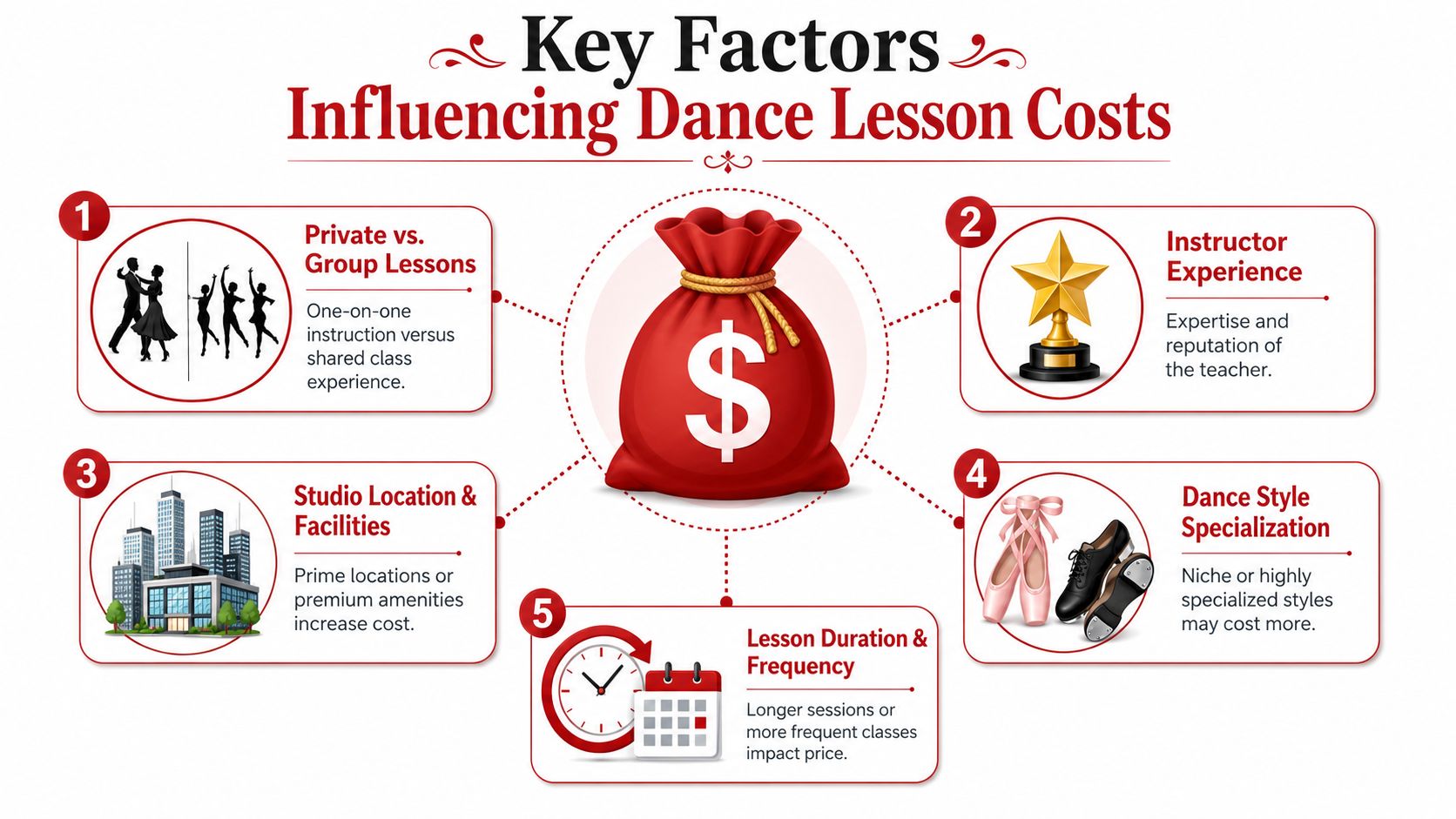
Private or group instruction
This is the biggest cost driver for most students.
A group class spreads the instructor's time across several people. That lowers the cost for each student. A private lesson gives you the full attention of the teacher, so the rate goes up.
Consider the difference between a seminar and a personal coaching session. Both can be useful. They just solve different problems.
Instructor experience
An instructor's background matters. Teachers with deep technical training, strong teaching skill, or specialized expertise usually charge more than newer instructors.
That doesn't mean the highest-priced teacher is automatically the right choice for every beginner. It means you're paying for a different level of customization, diagnosis, and refinement.
Location and facilities
Studio overhead affects tuition. A studio in a central, high-demand area with polished facilities, scheduling staff, and regular events may price differently from a smaller local space.
Students sometimes miss this because they only compare lesson length. But the environment, convenience, and studio experience are part of the cost.
Lesson length and style
Longer sessions cost more than shorter ones, and some dance styles call for more specialized instruction or a different learning pace.
One large U.S. studio pricing schedule listed single drop-in classes at $25, 5-class cards at $110, and private lessons at $65 for 30 minutes, $85 for 45 minutes, and $100 for 60 minutes. The same pricing page also included a 2.89% credit-card surcharge and a $40 non-refundable registration fee, which is a useful reminder that real-world pricing often includes more than just tuition. You can review that full structure on the American Dance Institute pricing page.
Small fees change the real cost more than many beginners expect. Always ask what happens before your first lesson, at checkout, and after enrollment.
A simple checklist before you commit
When you're comparing options, ask:
- How often will I attend? A package only helps if you'll use it.
- What format helps me most? Group classes lower cost. Private lessons increase personalization.
- Are there added charges? Registration, card surcharges, shoes, or attire can change the first-month total.
- How fast do I need results? A wedding or performance goal usually needs a more focused plan than casual social dancing.
Example Budgets for Common Dance Goals
Here, pricing considerations become concrete. The same student who feels comfortable spending on a weekly hobby may hesitate at a wedding package, while a parent might care more about steady monthly tuition than a one-time intro deal.
Wedding couple
Wedding dance pricing varies a lot because goals vary a lot. Some couples want to feel relaxed and coordinated for one song. Others want custom choreography, multiple songs, entrances, dips, or support for a parent dance.
According to Thumbtack's private dance lesson cost guide, private lessons in most U.S. cities run about $75 to $100 per hour, and wedding prep can range from $100 for a single lesson to $2,500 for a dozen weekly classes plus choreography and extras.
That wide range tells you something important. The cost isn't really about "wedding dance lessons" as a category. It's about the scope of the job.
If you're planning the dance itself, it's also smart to think about the room you'll dance in. This guide to DJ space in a wedding tent is useful because floor size, layout, and equipment placement can shape what choreography will feel comfortable on the day.
Social hobbyist
A hobbyist usually does best with consistency over intensity. That often means one group class a week, or a combination of group learning plus occasional private coaching when technique or confidence stalls.
This student doesn't need the fastest path. They need a sustainable one. A lower-cost recurring format often wins because it keeps dance enjoyable rather than stressful.
Parent enrolling a child
Parents usually care about routine, structure, and whether the class supports confidence as well as movement skills. The best budget is often the one the family can maintain without constant rescheduling.
For kids, the monthly cost isn't just tuition. Parents should also think about practical extras like attire, shoes, recital expectations, or transportation time. Those details don't always look large individually, but they affect the true cost of participation.
Aspiring competitor or advanced student
This student usually invests in more individualized training. Group classes still help, especially for repetition and partnering, but competitive progress often depends on regular private coaching and more guided practice.
The monthly total can rise quickly when training becomes more personalized and frequent. That's normal. The goal here isn't casual exposure. It's precision, performance quality, and refinement.
Sample monthly dance budgets by goal
| Dance Goal | Recommended Mix | Estimated Monthly Cost |
|---|---|---|
| Wedding couple | A small number of private lessons for timing, partnering, and choreography support | Varies widely based on goals and timeline |
| Social hobbyist | Weekly group classes, with occasional private help when needed | Often lower than a private-heavy plan |
| Parent enrolling a child | Recurring group program with possible attire and participation extras | Best planned as a monthly family activity |
| Aspiring competitor | Regular private coaching plus group classes and practice opportunities | Usually the highest ongoing investment |
The most useful budget is the one tied to your goal. A student training for competition and a couple preparing for one wedding song shouldn't shop the same way.
If your goal is specifically a first dance, wedding dance lessons cost is easier to understand when you think in terms of confidence, complexity, and timeline instead of just one lesson price.
Smart Ways to Save Money on Your Dance Journey
You sign up for a few lessons because dancing sounds fun. A month later, the main question is no longer "What does one class cost?" It is "What will this goal cost me if I stay with it long enough to feel confident?" That is the budget that matters.
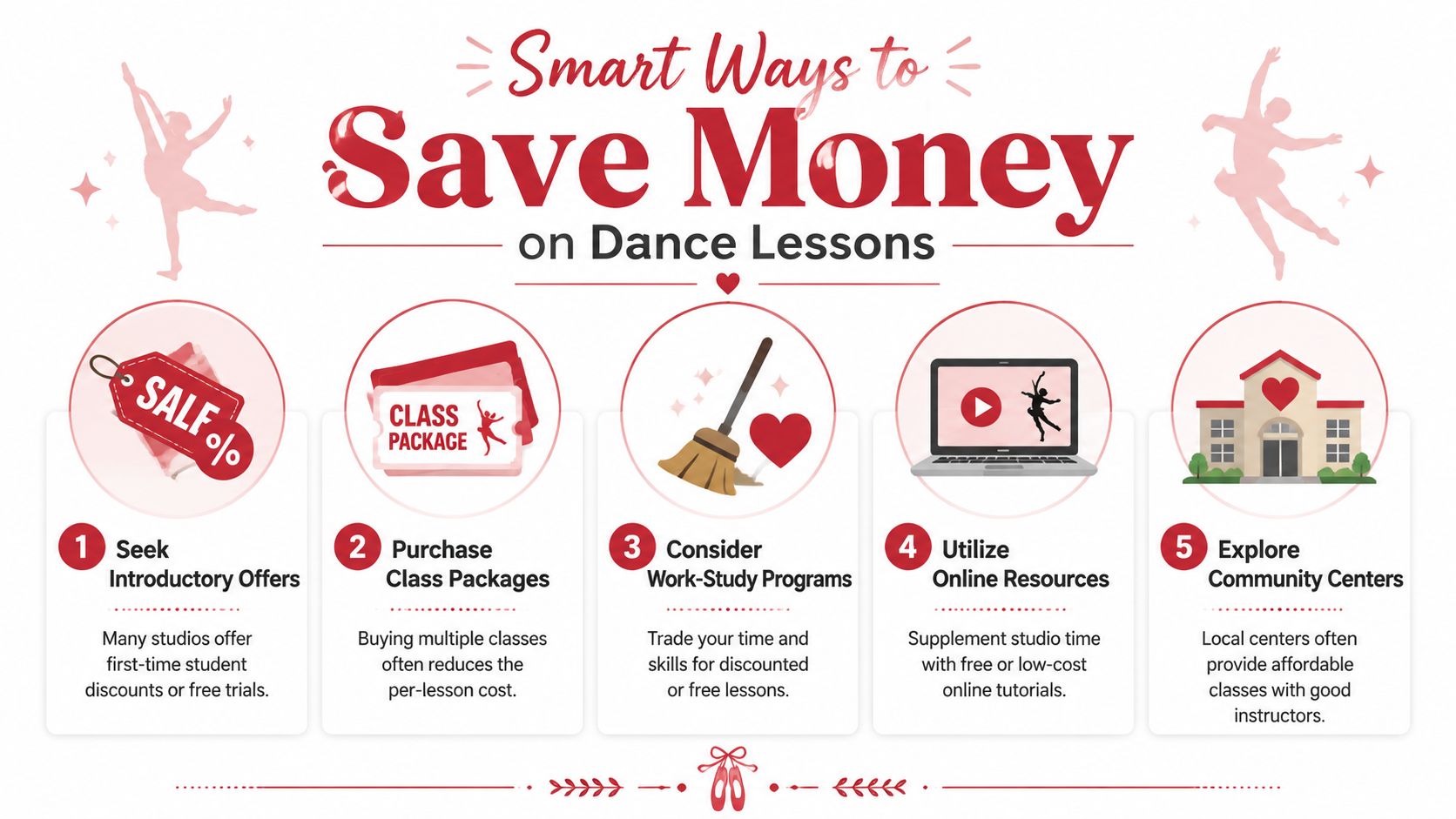
The smartest way to save is to reduce waste, not just pick the lowest sticker price. In dance, waste usually looks like paying private-lesson rates for basics you could learn well in a group, buying a large package before you know your schedule, or overlooking extra costs such as shoes, registration, or practice time.
A good budget works like a training plan. Each part has a job.
Match your spending to your goal
Start by asking what you need the lessons to do.
- Testing the waters: A trial lesson, intro offer, or small package keeps the first month affordable while you decide whether you enjoy the style and the studio.
- Building a steady hobby: If you already know you want weekly classes, a membership or class bundle often lowers the cost per lesson.
- Preparing for something specific: For a wedding, showcase, or competition goal, spend more on the lessons that directly support that outcome and less on extras that do not move you forward.
This approach helps you compare total investment, not just single-lesson price. A lower drop-in rate can still cost more over time if you end up needing extra help that a better-structured package already includes.
Use private lessons with purpose
Private lessons are valuable, but they work best when you treat them like targeted coaching.
Group classes usually cover the foundation well. You get repetition, musical timing, partner rotation, and the chance to practice patterns more than once. Then a private lesson can focus on the part that is hard to fix in a crowd, such as your frame, balance, lead and follow, or a short routine.
That mix often gives students better value than trying to learn everything one-on-one.
Ask for the full price, not just the class price
A lesson rate is only one line in the budget. Before you commit, ask what else may show up on the monthly total:
- Are practice sessions included or separate?
- Is there an enrollment or registration fee?
- Will you need dance shoes or performance attire soon, or can that wait?
- Do lessons expire if you miss a week?
- Can you pause if your work schedule or family schedule changes?
These details matter because two studios with similar lesson prices can feel very different once you add the full cost of learning.
Compare value in packages carefully
Packages are not automatically a better deal. They are a better deal only if the number of lessons matches your pace.
A 10-lesson package works well for a student who attends consistently. For someone with an unpredictable schedule, a smaller package may protect the budget better, even if the per-lesson rate is a little higher. It is similar to buying groceries. Bulk saves money only if you use what you buy.
Danza Academy of Social Dance offers group classes, private lessons, wedding preparation, and kids' programs, plus a complimentary first lesson for new students. That can help a beginner compare options before paying for a full plan.
The best savings usually come from choosing the right mix of lessons for your goal, then staying consistent long enough to benefit from what you paid for.
Start Your Dance Journey with Danza Academy
You have a goal in mind. Maybe you want a fun weekly hobby, a confident first dance at your wedding, or a structured activity for your child. You check a few lesson prices, and the numbers seem simple at first. Then a crucial question appears. What will it cost to get from where you are now to where you want to be?
That is the most helpful place to start.
A first visit should give you more than a class price. It should help you map out the full investment. That means talking through your goal, your timeline, and the lesson mix that fits both your budget and your schedule. A beginner who wants social confidence may need a different plan from a couple preparing for one important day. The monthly number can look similar on paper, but the value is different because the goal is different.
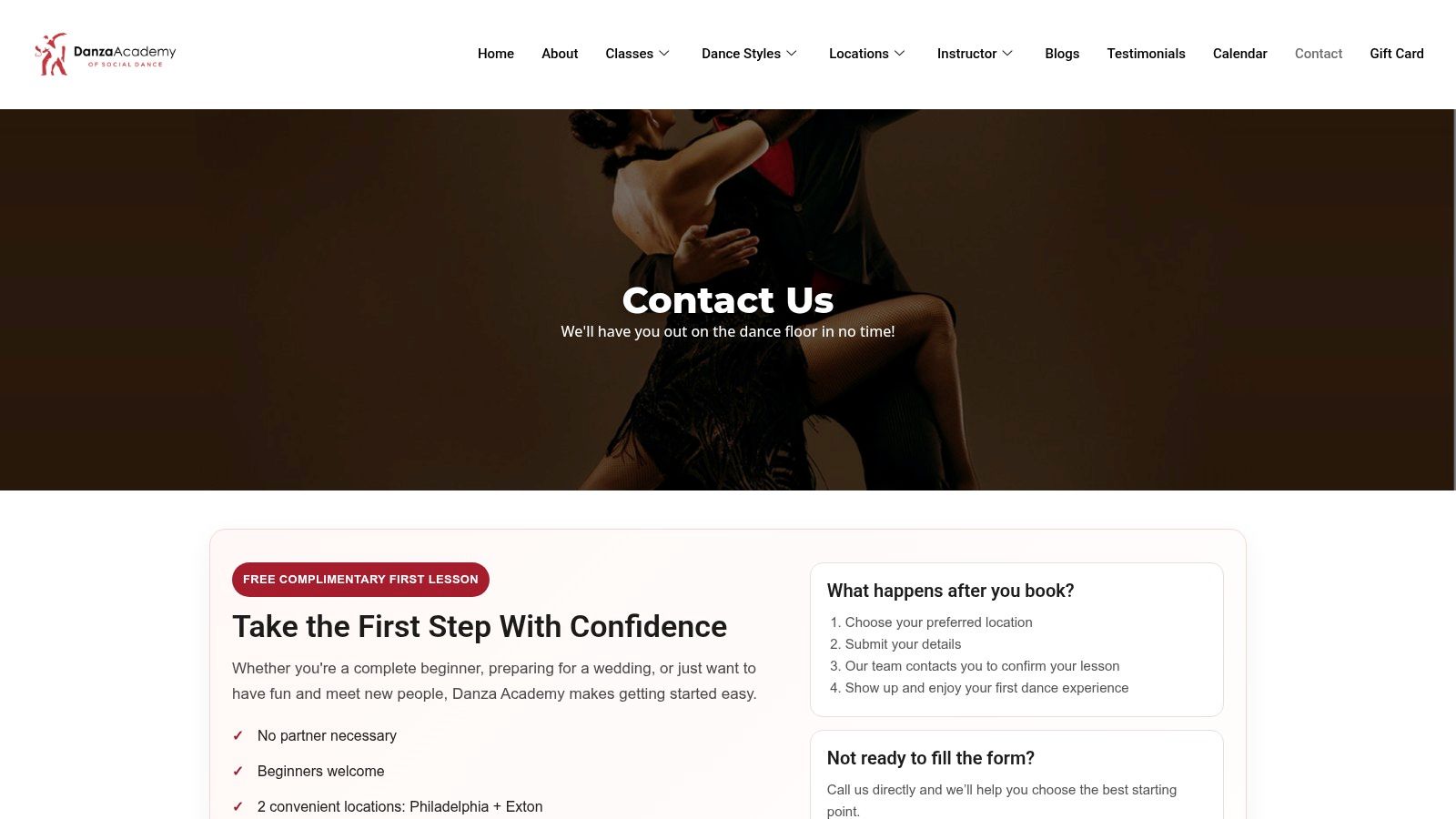
A complimentary lesson helps you sort that out before you spend money on the wrong format. It gives you a chance to see the studio, meet an instructor, and ask practical questions about pacing, package options, and what your first month may look like. That conversation often clears up the biggest source of confusion. The cheapest lesson is not always the lowest-cost path to your goal.
Why a complimentary first lesson matters
A free first lesson gives you room to ask, "What am I buying?" That is a better question than "What does one class cost?" because dance progress works like learning a language or going to the gym. One session can be useful, but a plan is what produces results.
It also helps answer the questions that pricing pages cannot settle on their own:
- Will I feel comfortable learning here?
- Does the teaching style fit how I learn?
- Would group classes, private lessons, or a mix make the most sense for my goal?
- What is a realistic budget for my first month, not just my first visit?
If you'd like to see the atmosphere before booking, this short video gives a feel for the experience:
Danza Academy of Social Dance offers group classes, private lessons, wedding dance preparation, and kids' programs. For a new student, that range matters because it allows for a plan that matches the reason you are starting, rather than pushing everyone into the same format.
If you want to dance for fun, prepare for a wedding, help your child begin, or return after years away, a complimentary lesson is a practical next step. You can leave with a clearer picture of the total investment, a starting recommendation that fits your life, and a better sense of whether now is the right time to begin.
A CTA for Danza Academy of Social Dance. Book your free complimentary lesson through the Danza Academy contact page and get personal guidance on the most sensible starting option for your budget, schedule, and dance goals.