
When June gets close, a lot of Philly-area parents end up in the same spot. School is winding down, the calendar is filling up, and you're trying to find something that keeps your child active, happy, and off a screen without turning summer into a stressful shuffle of pickups and drop-offs.
You may want more than simple babysitting. You may want an activity your child looks forward to. Something with structure, movement, creativity, and a chance to make friends. For many families, summer dance programs for kids fit that need surprisingly well.
Dance gives children a place to move with purpose. They learn how to listen, follow directions, express themselves, and feel comfortable in their own bodies. Even children who don't see themselves as “dancers” often light up once the music starts and the pressure stays low.
Planning Your Child's Perfect Summer
A parent usually starts with practical questions. What can my child do this summer? Will they enjoy it? Will it help them grow, or just fill time for a week or two?
Dance can answer all three.
For younger children, a summer program often feels like a mix of play, music, imagination, and routine. For older kids, it can be a chance to build skills, try new styles, and gain confidence in a fresh setting. Many programs are built around age bands and format, with options ranging from about ages 2 to 18 and including camps, weekly classes, workshops, and intensives, which is why families can usually find something that fits both age and attention span (Balanced Dance Studios summer programs).
That age-based structure matters more than parents sometimes realize. A preschooler needs movement games, short combinations, and lots of encouragement. A tween may want more challenge, clearer technique, and a stronger sense of progress. Good summer dance programs for kids account for that difference.
If you're also trying to balance quiet time at home, it can help to pair movement-based activities with creative downtime. Some families rotate dance days with simple hands-on projects like these fun summer crafts for kids, especially when siblings have different interests.
What parents usually want
- A real routine: Kids do better when they know what comes next.
- A positive outlet: Dance gives energetic children a healthy place to focus that energy.
- Something age-appropriate: The right program should match your child's stage, not just their age on paper.
- Flexibility: Some families need a camp week. Others need classes that can fit around vacations and other plans.
Practical rule: The best summer activity isn't the one that looks most impressive. It's the one your child will walk into willingly and leave feeling proud of themselves.
If you're comparing local options, it helps to start with programs that clearly explain age groups, schedule format, and teaching style. If you want to see one local example, you can look at summer dance classes and camps to get a sense of how a studio lays out its seasonal offerings.
More Than Just Steps The Benefits of Summer Dance
Parents often ask whether dance is “worth it” if their child isn't aiming for performances or serious training. My answer is yes, because the value of dance goes far beyond memorizing steps.
A strong summer program helps children develop physically, emotionally, socially, and mentally. They're learning movement, but they're also learning how to manage frustration, pay attention, and keep trying when something feels new.
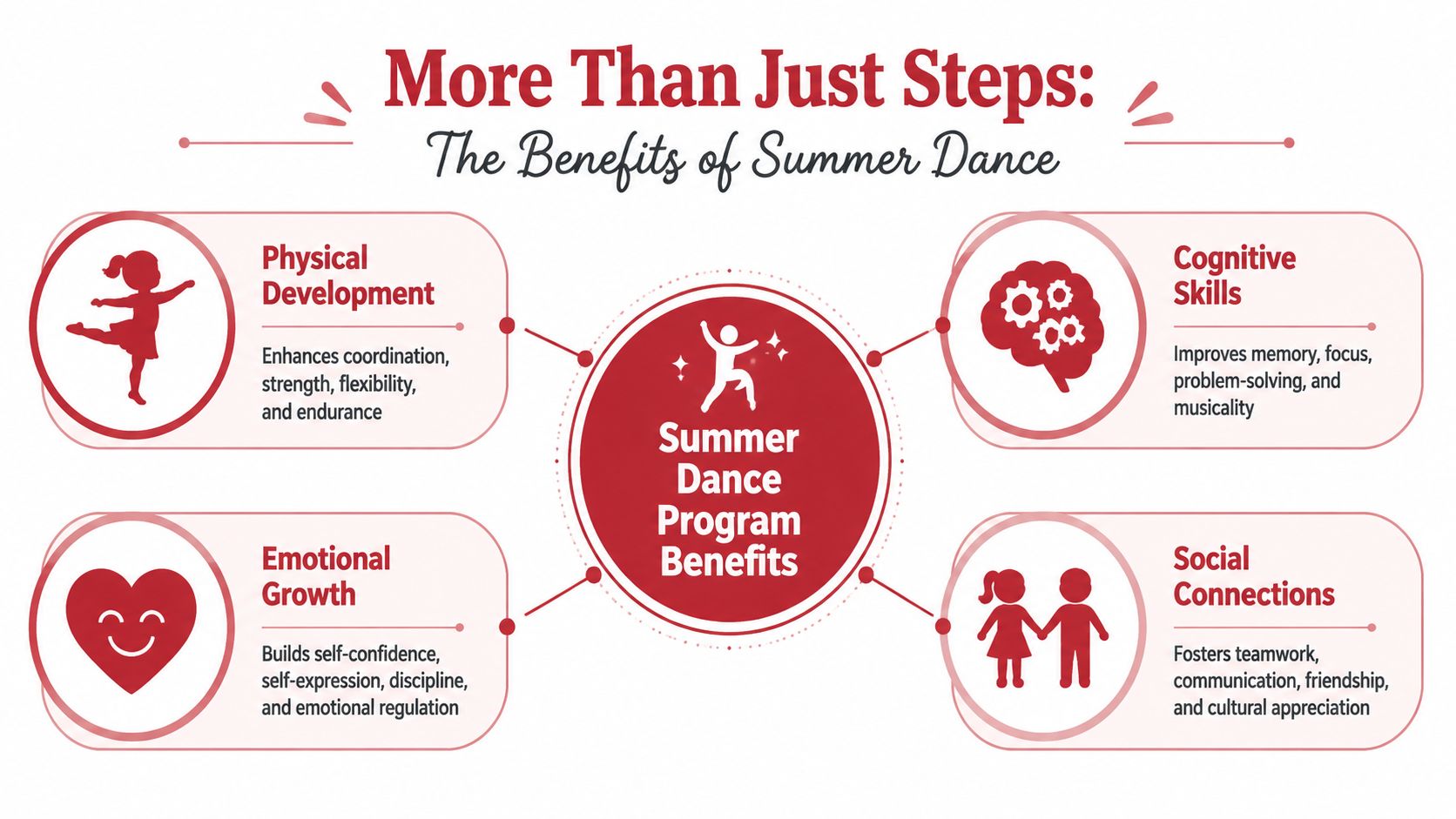
Physical growth children can feel
Dance asks the body to do many things at once. Balance on one foot. Change direction. Match movement to music. Remember where to place arms and feet. For children, that supports coordination, body awareness, balance, and control in a natural way.
You'll often notice these changes outside the studio too. A child who used to feel clumsy may start moving with more confidence on the playground or in gym class. A child who struggled to follow physical directions may start catching on faster.
Confidence grows through practice
Children don't build confidence because an adult says, “Good job.” They build it when they do something hard, repeat it, and realize they can improve.
That's one reason dance is so useful in the summer. The stakes are usually lower than a full school-year commitment, but the progress still feels real. A child learns a short routine, remembers it, and performs it for family or classmates. That sequence matters.
When a child says, “I couldn't do that on Monday, but I can do it now,” that feeling carries into school, sports, and everyday life.
Dance also gives children a language for self-expression. Some kids are talkative. Others aren't. Movement can help both types of children communicate emotion, personality, and imagination.
Social and cognitive benefits
In a dance class, children take turns, watch others, move together, and share space. They learn how to be part of a group without disappearing inside it. That mix of teamwork and individuality is one of the healthiest parts of a good class.
There's also a learning component that parents sometimes overlook. Children are listening for cues, remembering patterns, and connecting movement to rhythm. If your child learns best by doing, this short explanation of what is kinesthetic learning style may help put that into words.
- Physical: Better control, posture, and movement awareness.
- Cognitive: Focus, sequencing, memory, and musical response.
- Emotional: Self-expression, patience, and resilience.
- Social: Cooperation, communication, and friendship.
That's why summer dance programs for kids can be such a solid choice even for complete beginners.
Finding the Right Fit Types of Dance Programs
A parent in the Philly area often starts with one simple question. Should my child try a playful camp, a weekly class, or something more serious?
The answer depends less on the word "dance" and more on the shape of your child's summer. A good program should fit your child's age, energy, attention span, and confidence level, while also fitting your family calendar and budget. That is what makes the search feel easier once you know what to look for.
Many summer programs sort children by age and experience for a reason. A 4-year-old usually learns best through short activities, music, and imagination. A middle schooler may want clearer instruction and more repetition. An experienced teen may be looking for challenge and steady practice. Good studios build around those differences instead of expecting every child to learn the same way.
Theme camps for younger or brand-new dancers
For many beginners, a themed camp is the gentlest starting point. It works like a swimming lesson with toys in the shallow end before lap practice in the deep end. Children still learn real skills, but the environment feels playful and safe.
These camps often mix movement games, basic dance steps, story themes, and simple routines. That matters for more than dance technique. Younger children are practicing listening, waiting their turn, following directions, and joining a group without feeling pressured to "perform."
This format usually fits well for:
- Preschool and early elementary children: Kids who need movement changes and short blocks of activity.
- First-time dancers: Children who may say yes to fun before they say yes to formal instruction.
- Shy or cautious kids: A camp setting often feels warmer and less intimidating than a technique-heavy class.
If your child is the kind of kid who warms up slowly, this can be a strong first step.
Weekly classes for flexible summer schedules
Weekly classes are often the easiest option for families juggling vacations, sports, grandparents, or camp in another half of the day. Instead of building the whole week around dance, you place one class into the schedule and let it become a steady point.
That pace helps many children. They get time between classes to rest, remember what they learned, and come back ready to try again. For some kids, especially beginners, that rhythm leads to better confidence because the class feels familiar by week two or three.
For Philly and Exton parents, this format can also be easier to test. If you are still figuring out whether your child wants ballet, hip hop, or a social dance style, a weekly class gives you useful information without a large upfront commitment. That is one reason many families start with a trial class at Danza Academy before choosing a full summer plan.
Intensives for experienced or highly motivated students
An intensive is a different type of summer experience. The days are longer, the instruction is faster, and the child is expected to stay focused for bigger blocks of time.
One youth intensive for older students schedules 7 to 9 hours per day of training, which shows how some summer programs use a near-professional daily load to speed up skill development in a short period (Mount Calvary Summer Dance Intensive).
That level can be exciting for the right dancer. It can also be too much for a child who is still exploring. Parents should read the description carefully and look for clues such as age range, daily hours, dress code, and whether prior experience is expected. "Summer program" can describe a relaxed half-day camp or a demanding training block. Those are very different commitments.
Which Summer Dance Program is Right for Your Child?
| Program Type | Best For | Typical Schedule | Intensity |
|---|---|---|---|
| Theme-based camp | Younger children, beginners, kids who enjoy variety | Half-day or full-day camp blocks | Light to moderate |
| Weekly classes | Families balancing several summer activities | Recurring class on set days | Moderate |
| Multi-week intensive | Older or more experienced dancers | Concentrated training over multiple days or weeks | High |
A quick way to decide
If you feel stuck, use the same approach a good teacher uses on day one. Start with fit, not ambition.
Ask yourself:
- Does my child need comfort, consistency, or challenge most right now?
- What schedule can our family handle without turning summer into a rush from place to place?
- What practical details matter most for us, such as drive time, class length, shoes, or tuition?
A strong match should stretch your child without making them dread the car ride there. That is the goal. For many local families, the clearest next step is simple. Try one class, see how your child responds, and build from there.
A Week in the Life at Summer Dance Camp
For many parents, the biggest mystery is simple. What happens during the day?
In most programs, the week has a rhythm. Children arrive, settle in, warm up, and then move through a series of activities that keep them engaged without feeling chaotic.
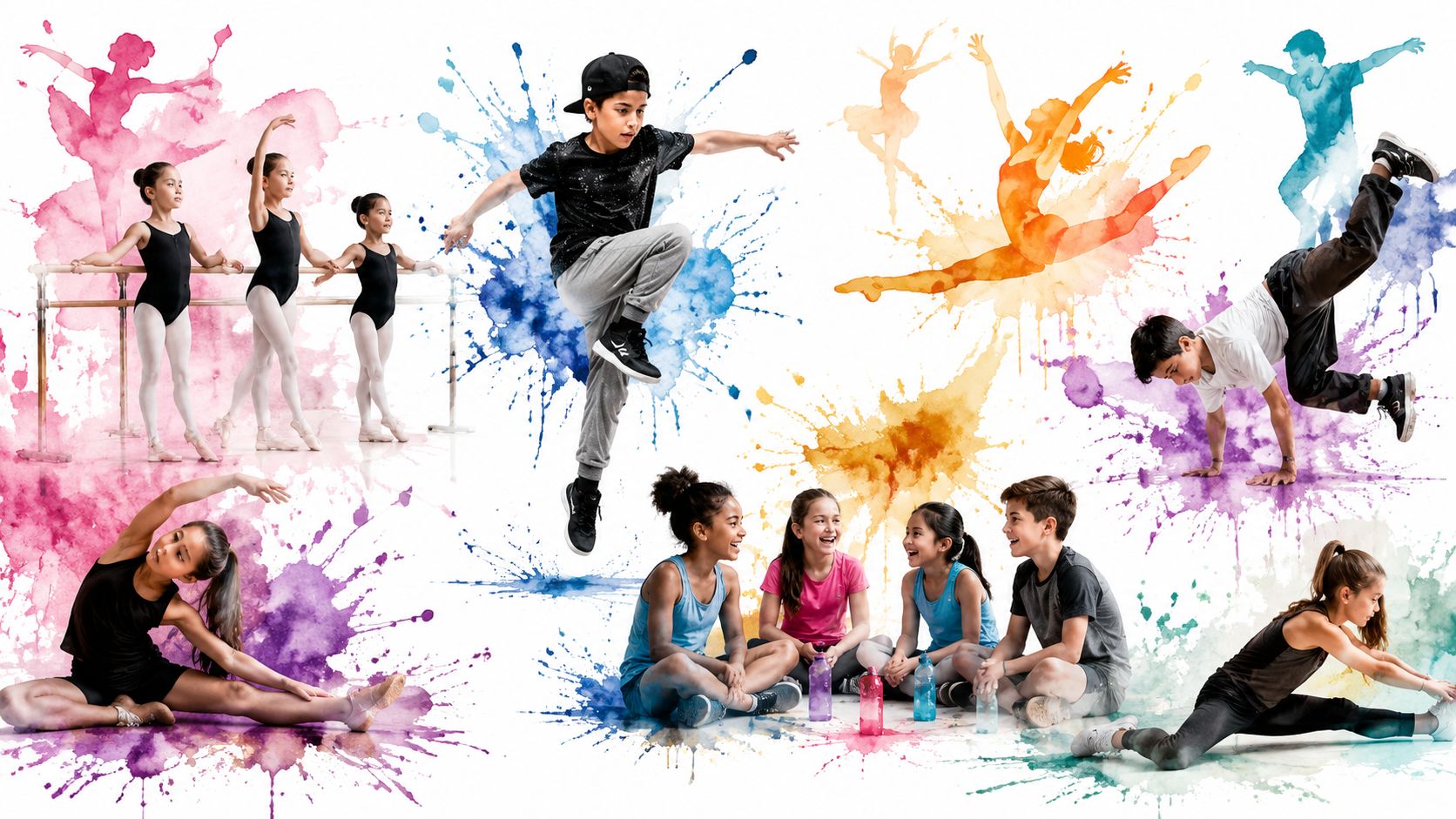
What a typical day feels like
A younger group might begin with a circle warm-up, stretching, and a simple movement game. Then they may practice traveling across the room, learn a few basic steps, and build a short routine tied to the camp theme.
An older group often starts with technique drills. That might include posture, rhythm, turns, foot patterns, or partner-free social dance basics. In one part of class, a child may work on timing in a Cha-Cha pattern. Later, they may switch to a smoother movement quality in a Waltz exercise.
Many modern programs run in short, focused cycles such as Monday-to-Friday schedules. They often combine repetition with exposure to multiple styles like ballet, jazz, tap, hip-hop, modern, musical theater, and international dance, and many end with an in-class performance that lets families see visible progress by the end of the week (Atlanta Ballet Centre summer dance programs).
How the week builds confidence
Monday is usually the most cautious day. Children are learning names, room routines, and what the teacher expects. By Tuesday or Wednesday, they start anticipating the order of class and remembering combinations on their own.
That's when parents often notice the shift. The child who clung to your leg at drop-off starts walking in independently. The child who said “I can't” starts practicing at home in the kitchen.
Here's a look at the kind of movement environment many families are looking for:
The final-day showcase
A showcase at the end of the week doesn't need to be fancy to matter. It works because it gives children a finish line. They know they're preparing for something, even if it's just a small in-class presentation.
The goal of a summer showcase isn't perfection. It's giving children a moment to say, “Look what I learned.”
That kind of ending helps the whole week feel meaningful.
The Practical Details Enrollment Costs and What to Pack
Once you've found a program your child might enjoy, practical questions move to the front. When should you register? What will it really cost? What should go in the bag each day?
Families can save themselves stress by reading carefully and planning early.
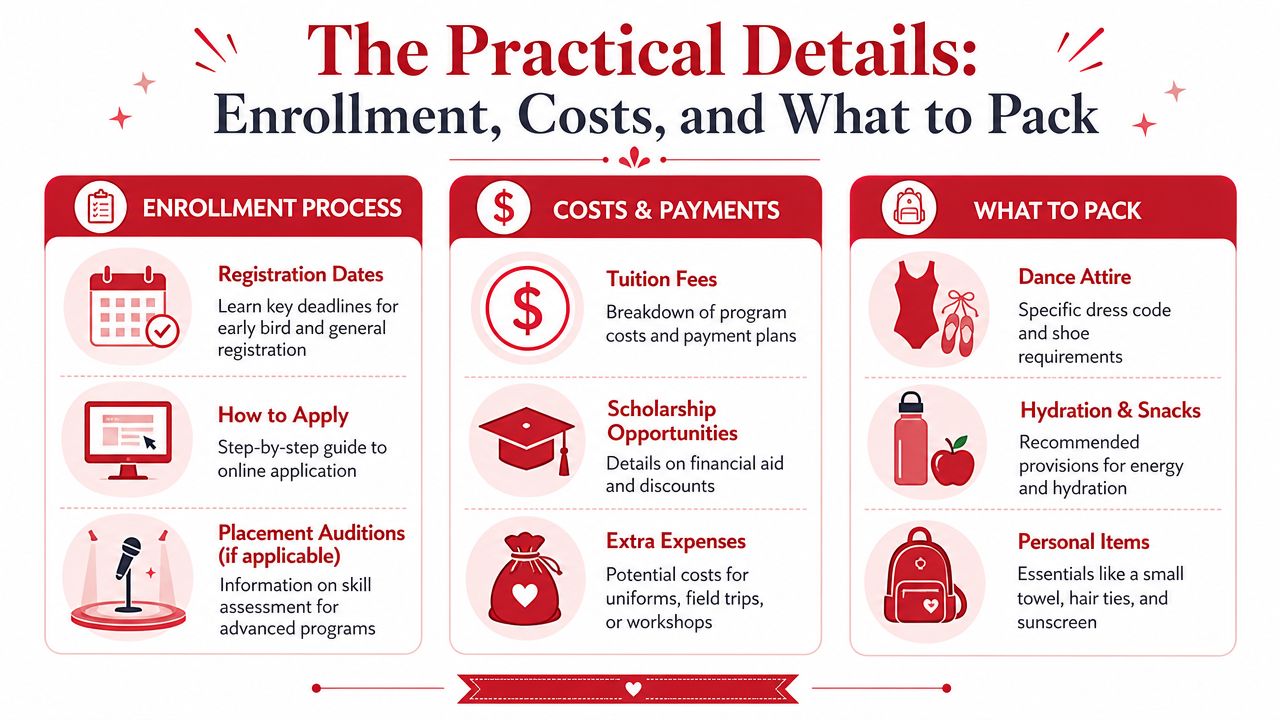
Understand the full cost, not just tuition
Parents often focus on the listed program fee first. That makes sense, but it's only part of the picture.
Beyond tuition, families should also think about transportation, attire, and meals. Cost can vary widely, from around $25 per class at a municipal center to over $4,000 for a university intensive, which is why total budgeting matters so much (Dance to Unite access and affordability context).
That range doesn't mean you need to spend heavily for your child to have a good experience. It means you should ask direct questions before registering.
Questions worth asking a studio
Before you enroll, ask for clear answers on:
- Dress code: Does your child need ballet shoes, sneakers, jazz shoes, or clean indoor shoes?
- Food rules: Should they bring their own snack and water bottle?
- Arrival and pickup: Is there early drop-off or late pickup?
- Class structure: Will your child stay with one teacher or rotate through different styles?
- Safety procedures: How does the studio handle supervision, check-in, and approved pickup?
- Placement: Is the program open level, age-based, or skill-based?
If your child is very young, it also helps to ask how the staff supports bathroom breaks, separation nerves, and transitions between activities.
A simple packing checklist
What children need depends on the program, but most families do well with these basics:
- Comfortable dancewear: Clothes your child can stretch and move in easily.
- Proper shoes: Only what the studio requests.
- Water bottle: Labeled clearly.
- Snack or lunch: Based on program length and studio rules.
- Hair supplies: Extra ties, clips, or a brush if long hair needs to stay secure.
- Small personal items: Sunscreen or a light layer if outdoor breaks are part of the day.
If you want a helpful parent-friendly guide for labels and camp bag organization, this article on how to pack like a pro for camp is worth a read.
One more practical note for younger children
For little ones, simpler is better. Avoid sending special toys, complicated outfits, or anything your child will worry about losing.
If you're looking specifically at beginner-friendly youth options, young dancers programs can give you a sense of how some studios shape early dance experiences around age, comfort, and routine.
Start Your Child's Dance Journey in Philly or Exton
By the time most parents finish researching, they usually want the same thing. A place that feels welcoming, organized, and easy to try without making a huge commitment upfront.
That matters even more with children. The right studio fit is personal. Your child should feel safe, seen, and encouraged. You should feel clear on scheduling, expectations, and how classes are run.
For families in Center City Philadelphia or Exton, one local option is Danza Academy of Social Dance, which offers kids' dance instruction in social styles such as Ballroom and Latin, along with a complimentary first lesson for new students. If your child enjoys movement, music, rhythm, and learning in a guided setting, trying one class can tell you much more than reading a program description ever will.
Why a free first lesson helps
A complimentary lesson takes away a lot of pressure. Your child can step into the studio, meet the instructor, hear the music, and see whether the environment feels comfortable.
That's especially helpful if your child is:
- New to dance: They can try it without feeling locked in.
- A little nervous: Familiarity makes the next visit easier.
- Choosing between activities: One real class often makes the decision clearer.
A first class should answer the question, “Can I see my child growing here?”
If you're searching for kids dance classes near you, a local trial lesson is one of the most practical next steps. It gives your child a real experience, and it gives you real information.
Summer moves quickly. The families who feel best about their decision usually aren't the ones who researched forever. They're the ones who found a reasonable option, asked smart questions, and let their child try.
If you're ready to see whether dance is the right fit this summer, book a free complimentary lesson with Danza Academy of Social Dance. It's a simple, no-pressure way for your child to meet the instructors, experience the studio, and take the first step toward a fun, confidence-building summer in Philadelphia or Exton.