
You're standing at the edge of the floor. The song is good. You want to dance. You've already spotted two or three people you might ask, but now your brain is busy creating problems that may not even exist.
That moment is normal.
It's often assumed confidence starts with the words. It usually doesn't. Confidence starts earlier, when you understand what you're looking at, what the room is telling you, and what a dance invitation is. In social dancing, asking isn't a dramatic leap. It's a small, respectful social skill with clear etiquette.
If you want to know how to ask someone to dance without feeling pushy, awkward, or fake, the key is simple. Read first. Ask second. Accept the answer well. Then repeat until it feels natural.
Before You Ask Reading the Room
A lot of awkward dance invitations happen before a single word is spoken.
Someone sees a person they'd like to dance with, gets nervous, and rushes in while that person is deep in conversation, heading to the restroom, catching their breath, or already making eye contact with someone else. Then they conclude they're “bad at asking.” Usually, the issue wasn't the ask. It was the timing.
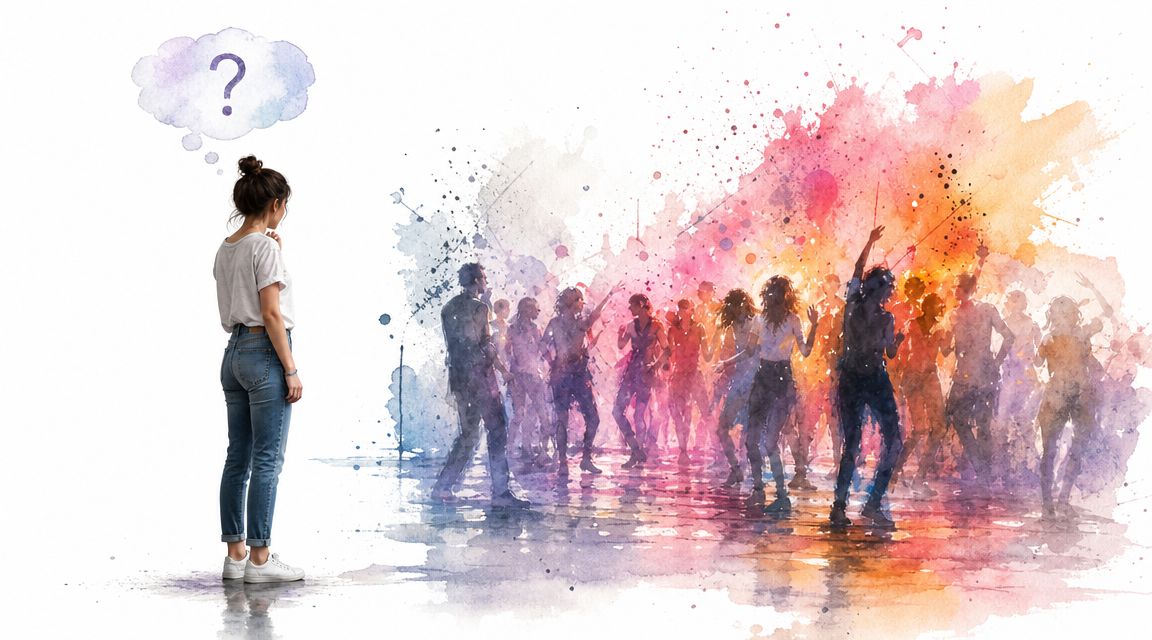
If you're new to partner dancing, it helps to understand what social dancing looks like in practice. The floor has rhythms beyond the music. People drift on and off, scan for partners, regroup with friends, and take breaks in predictable ways.
Signs someone may be open to being asked
The best asks usually happen when the other person is already mentally available.
Look for cues like these:
- Watching the floor instead of being absorbed in a conversation
- Tapping a foot or moving with the music
- Standing at the edge of the floor as a song ends
- Making casual eye contact around the room
- Turning outward from their group rather than inward
Those cues don't guarantee a yes. They do tell you your timing is reasonable.
Signs to wait
You'll save yourself a lot of stress by treating dance invitations like timing decisions, not bravery contests.
Hold off if the person is:
- Mid-conversation and clearly engaged
- Eating, drinking, or catching their breath
- Walking off with another partner
- Looking down at their phone with focus
- Giving closed body language, like crossed arms and turned shoulders
Practical rule: Don't ask the first person you notice. Ask the first person who looks available.
That mindset changes everything. You stop chasing a high-stakes moment and start making a smart social read.
Read the room, then calm your own mind
Your nerves get louder when the room feels unpredictable. The fix is observation.
Give yourself one full song to do nothing except watch. Notice who rotates often, who seems friendly, who is taking a break, and who is looking for the next dance. Once you do that, asking feels less like interrupting and more like joining an activity people already came to do.
That's the shift. You're not proposing marriage. You're inviting someone into one song.
The Art of the Invitation Scripts and Body Language
Once the moment is right, keep the invitation plain.
Dance etiquette supports this. One practical method recommends a simple sequence: get their attention, make brief eye contact, speak slowly and clearly, then offer a hand or gesture only after they've noticed you. That approach reads as confident and non-intrusive, and asking at the start of a new song can reduce awkwardness and make the timing smoother, as noted in this dance-invitation guidance.
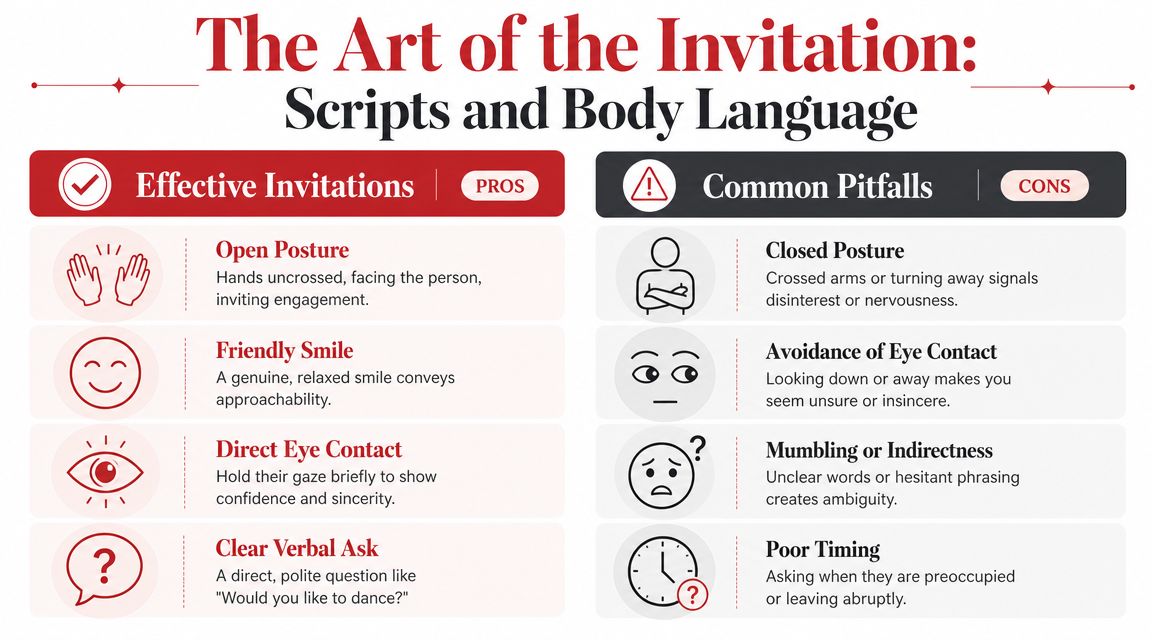
A repeatable invitation sequence
Use this every time until it becomes automatic.
Approach from where they can see you
Don't appear at someone's shoulder and start talking before they know you're there.Get their attention first
A small smile and brief eye contact are enough.Ask clearly
Say it like you mean it. Not loudly. Not apologetically.Offer your hand after the ask lands
The gesture should support the invitation, not replace it.
Here are scripts that work well:
- “Would you like to dance?”
- “Shall we dance?”
- “Want to dance?”
- “I love this song. Want to dance?”
These work because they're clear. That matters more than originality.
What works and what doesn't
A good invitation feels easy to answer.
| Approach | Why it works or fails |
|---|---|
| Direct question | Clear, respectful, and easy to respond to |
| Warm eye contact | Signals attention without pressure |
| Relaxed posture | Helps you look calm even if you're nervous |
| Silent hand thrust | Can feel confusing if they haven't noticed you |
| Mumbling | Forces the other person to guess what you want |
| Cheesy pickup line | Shifts the moment away from dancing and toward performance |
A visual summary helps if you're practicing this before going out:
Ask for the dance you actually want. Don't hide it behind jokes, hints, or a vague hand wave.
Body language matters more than flair
You don't need swagger. You need clarity.
Keep your shoulders open. Face the person. Don't crowd them. Don't grab. In modern dance etiquette, consent comes before choreography. A clean ask with words and eyes is stronger than any rehearsed line.
If you've just had a brief conversation, that's often a good moment to ask. If they're leaving the floor with someone else, ask for the next song instead of trying to intercept them. Good social dancers don't just know steps. They know when to create ease.
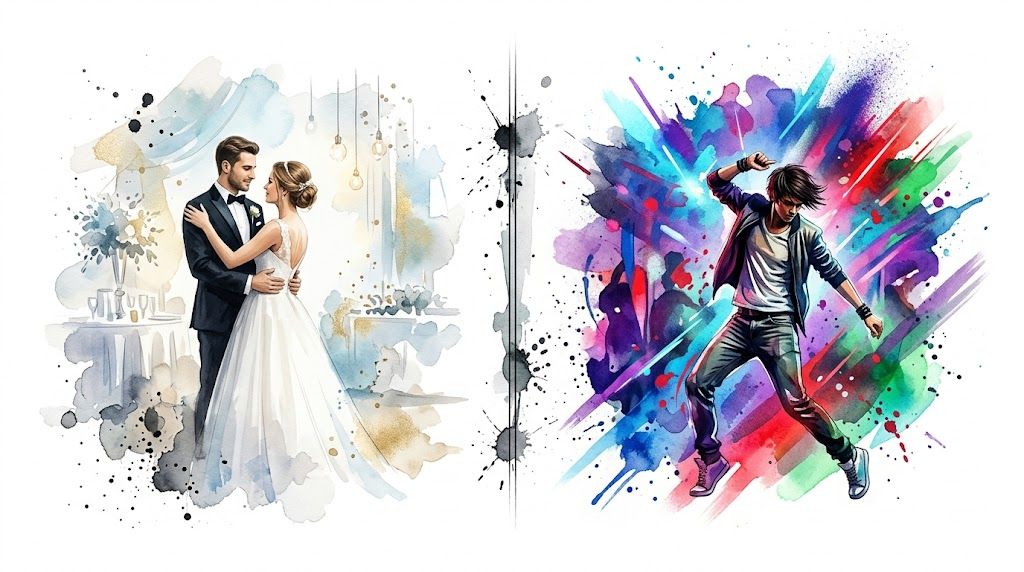
Adapting Your Approach From Weddings to Dance Clubs
The same sentence can feel perfectly natural in one room and oddly loaded in another.
That's why context matters so much. In a dance social, people usually expect partner rotation. At a wedding, the dance floor is mixed with family dynamics, alcohol, old friends, work acquaintances, and people who may not dance often at all. In those settings, the emotional weight of a simple invitation can feel much bigger. One source notes that 40–60% of adults in social-dance spaces report anxiety about initiating dances, especially in delicate situations like weddings or work-related events.
Weddings
Weddings call for extra awareness.
You may be asking a friend's spouse, a cousin you just met, a coworker from table six, or someone who's dressed beautifully and getting a lot of attention. If you're attending a formal event, it can help to discover elegant wedding guest styles ahead of time so you feel comfortable and read the room more accurately.
At a wedding, good scripts are a little softer:
- “Would you like to dance?”
- “Want to join me for this one?”
- “Would you care to dance?”
Keep the tone celebratory, not intimate. If there's any doubt, ask once and leave plenty of room for a no.
Dance clubs
Clubs move faster. The ask can be shorter.
If you're heading out locally, it helps to know the culture of the room before you arrive. A place built around partner dancing behaves differently from a general nightlife spot, so local guides like Latin dance clubs in Philadelphia can help you choose a setting where asking is normal.
In clubs, the main risk is poor timing. Music is louder, eye contact matters more, and people may already be transitioning between partners. Keep your ask visible and simple.
Classes and studio socials
Classes are the easiest place to practice because rotation is built into the culture.
People are there to learn. Asking is expected. Declining still happens, and consent still matters, but the atmosphere is more structured. That structure helps beginners relax because they don't have to invent the whole social script from scratch.
In a class social, don't try to impress people with bold moves or a big personality. Try to be easy to dance with.
That standard travels well everywhere. Weddings need tact. Clubs need timing. Classes need steadiness. The words may stay almost the same, but the social meaning changes with the room.
Graceful Responses Handling a Yes or a No
The invitation isn't the whole interaction. Your response after the answer is what people remember.
A graceful yes feels safe. A graceful no feels easy. Both matter.
If they say yes
Start simple.
Take them to the floor without rushing. Match the energy of the setting. If it's your first dance together, don't open with the biggest pattern you know. Focus on rhythm, connection, and making the dance feel comfortable.
A useful etiquette guideline is that it's rare for someone to agree to more than one dance in a row with a new partner, and it's considered good form to walk your partner back to their seat or group afterward, as explained in this swing etiquette guide.
That creates healthy expectations. One dance is one dance. Not a claim on the rest of the night.
A strong first impression usually includes:
- A clear start so they know your timing
- Simple lead or follow choices rather than overcomplicated patterns
- Attention to comfort instead of showing off
- A clean finish and a friendly thank you
If they say no
At this point, many people make the moment awkward.
The correct response is short. Smile. Acknowledge it. Move on.
Use one of these:
- “No problem. Have a great night.”
- “Of course. Enjoy.”
- “Maybe later.”
Only say this if the tone is light and you can let it go.
Don't ask why. Don't stand there. Don't try to negotiate. Don't make them comfort you.
A declined dance is usually about timing, energy, comfort, or context. It isn't useful to turn it into a verdict on your worth.
What not to do after either answer
There are a few mistakes that create unnecessary tension:
- Hovering afterward makes the interaction feel heavier than it needs to.
- Immediately asking for several dances can feel pushy.
- Reading romance into one yes causes trouble fast.
- Acting wounded by a no makes future interactions harder.
Social dancing works because the stakes stay low and the etiquette stays clear. The smoother you are with both answers, the more confident you'll feel the next time you ask.
From Nerves to Natural Practice and Confidence Exercises
The hardest moment is usually the five seconds before you walk over.
Heart up. Thoughts racing. You start judging yourself before anything has happened. On real dance floors, that inner spiral causes more trouble than lack of charm. The fix is simple practice that trains your eyes, your timing, and your nervous system together.
A lot of beginners treat confidence like a feeling they need to wait for. Social dancers who do well treat it like a routine. They learn to notice who looks open to interaction, choose a low-pressure moment, and ask in a calm, ordinary voice. That shift matters. You stop treating the invitation like a performance and start treating it like a normal part of the room.
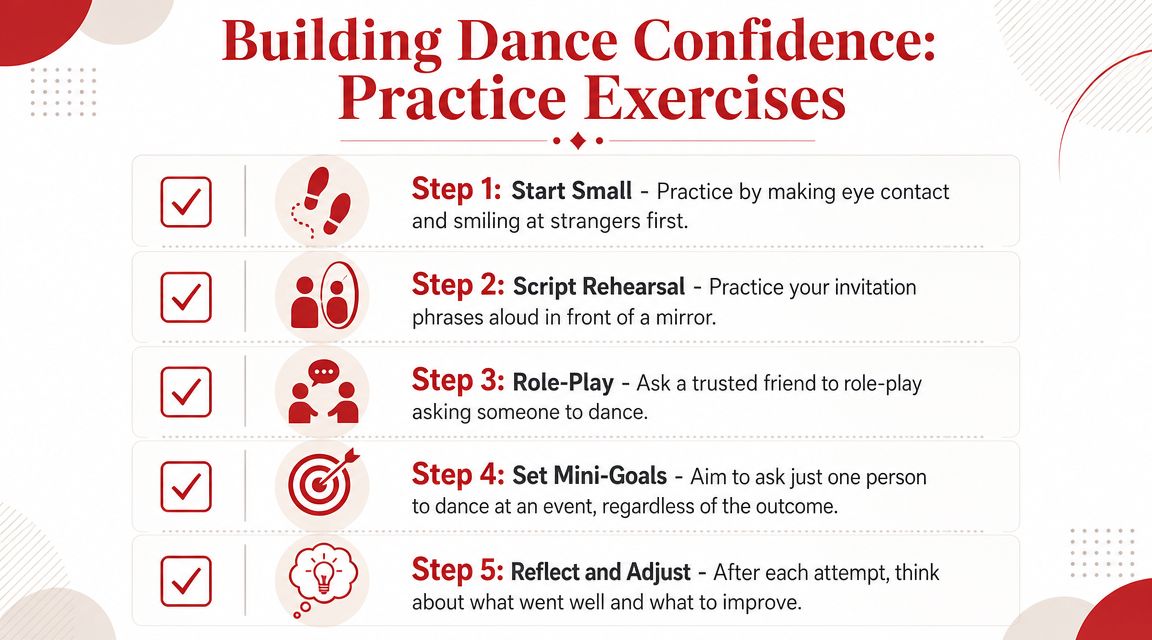
Practice the full sequence, not just the line
Good practice starts before the words.
Run this sequence a few times at home, then use it at real events:
- Spot one approachable person. Look for relaxed posture, eye contact, and a moment when they are not in the middle of a conversation or rushing off the floor.
- Walk up at a steady pace. No sneaking up, no sudden lunge from the side.
- Pause, make eye contact, and smile. That half-second gives them time to register you.
- Say one clear invitation out loud. Keep it simple and easy to hear.
- Hold still long enough for the answer. Nervous chatter is what makes many asks feel messy.
- Leave cleanly either way. A yes starts a dance. A no ends the interaction politely.
This kind of rehearsal works because it trains your body as much as your words. If public nerves run deeper than dance nerves, this guide on overcoming fear of dancing in public can help you settle the mental side too.
Build confidence in what happens after yes
Asking gets easier when you trust yourself to handle the next three minutes.
I see this all the time with new students. They say they are afraid of being rejected, but once we work on basics, their true fear was, "What if they say yes and I waste their time?" Fair concern. The answer is practice with a modest goal: offer a comfortable dance, not an impressive one.
Use these confidence builders:
- Practice your first few counts so your start feels clear instead of rushed.
- Choose simpler patterns you can lead or follow well under pressure.
- Match the room's energy instead of forcing big moves because you feel you need to prove something.
- End on purpose with a smile and a thank you.
That is how social confidence grows. You ask for the dance you want, and you know how to make it feel pleasant once it begins.
Train for high-stakes situations
Weddings, work events, and family parties can feel harder than a dance social because every interaction carries extra meaning. A no can feel public. A yes can feel loaded. That is why mindset practice matters.
Before the event, decide what success looks like. At a wedding, success might be asking one person kindly and keeping the mood light regardless of the answer. At a club, it might be asking earlier instead of circling the floor for half an hour. Specific goals calm people down because they replace vague pressure with one doable action.
A useful rule is this: keep the ask small in your own head. You are inviting someone to share one song, not asking for approval, chemistry, or a memorable life event.
A better target than fearlessness
Steady beats fearless.
The dancers who seem relaxed are rarely free of nerves. They have practiced enough to stay polite, read the room, and recover fast from awkward moments. That is a realistic standard, and it works in every setting from beginner socials to weddings with a full audience watching.
Your First Step to the Dance Floor
Knowing how to ask someone to dance helps. Doing it in a supportive room helps even more.
The biggest improvement usually comes when you combine social etiquette with actual partner skills. Dancers are more likely to say yes to people who can make them look good and offer a clear, adaptable lead, and structured lessons focus on exactly those abilities, as explained in this discussion of asking skilled partners to dance.
Here's what that looks like in practice:
| Feature | Benefit |
|---|---|
| Complimentary first lesson | Lets you try the experience without pressure |
| Structured partner instruction | Helps you lead or follow more clearly |
| Beginner-friendly environment | Gives you a safer place to practice asking |
| Social dance focus | Builds skills you can use at weddings, parties, and socials |
| No partner required | Removes one of the biggest barriers to getting started |
If you've been waiting to feel ready before taking action, flip that around. Action is what makes you ready. One lesson can give you better timing, better body language, and a much calmer first ask on the social floor.
A CTA for Danza Academy of Social Dance. Book your free complimentary lesson on the Danza Academy contact page and practice these skills in a welcoming setting where asking, leading, following, and social etiquette are all part of the learning process.