
You've probably had this moment already. A samba track comes on, the rhythm feels exciting, and you want to move. Then you try a few steps, and instead of feeling smooth and playful, everything feels stiff, rushed, or a little unclear.
That's normal.
When looking for how to dance the samba, dancers are often met with two distinct styles mixed together. One approach is for International Ballroom Samba, which is performed with a partner and relies on specific timing and technique. The other style is for Brazilian social or Carnival samba, which features a different look, posture, and movement rhythm. If you don't sort that out first, even good practice can feel confusing.
This guide focuses mainly on International Ballroom Samba for beginners, but I'll help you understand the difference so you can choose the right path. More importantly, I'll show you the two things that make samba actually look like samba: rhythm and body action. Once those start working together, the steps stop feeling like memorization and start feeling like dancing.
Feel the Beat and Understand Samba's Character
Samba has a joyful, lively feeling, but it isn't wild movement for the sake of it. It has structure. Britannica describes samba as a ballroom dance of Brazilian origin that became popular in Western Europe and the United States in the early 1940s, danced in 4/4 time with syncopated rhythm, using simple forward-and-backward steps with tilting and rocking body movement, and rooted partly in earlier social dances such as the maxixe (Britannica on samba dance).
That tells beginners something important. The challenge usually isn't learning a huge number of steps. The challenge is learning how the body carries the rhythm.
Which samba are you learning
A lot of frustration disappears once you label the style correctly.
| Feature | International Ballroom Samba | Brazilian (Carnival/Social) Samba |
|---|---|---|
| Main setting | Partner dance in ballroom or Latin classes | Social, party, street, and Carnival contexts |
| Partnering | Usually danced with a partner, often in hold or open positions | Often solo or loosely social rather than formal partner hold |
| Movement focus | Bounce rhythm, weight transfer, figures like whisks and walks | Individual groove, grounded footwork, freer body expression |
| Learning emphasis | Timing, technique, posture, lead and follow | Rhythm, body coordination, natural groove |
If you're unsure which style you want, ask yourself a simple question: Do I want to learn a partner dance for classes and social ballroom settings, or do I want the Brazilian social feel first? Both are valid. They just aren't the same training path.
What gives samba its personality
Samba feels springy, grounded, and a little teasing. The body rocks, the timing nudges forward, and the energy never goes dead between steps. Even when the footwork looks simple, the dance has a lot happening underneath.
Practical rule: If your feet are moving but your body feels quiet, it won't read as samba yet.
Musicality matters here more than most beginners expect. If you want a helpful companion idea while you practice, take a look at musicality in dance. It will help you hear why samba feels playful instead of flat.
Find Your Rhythm with the Samba Bounce
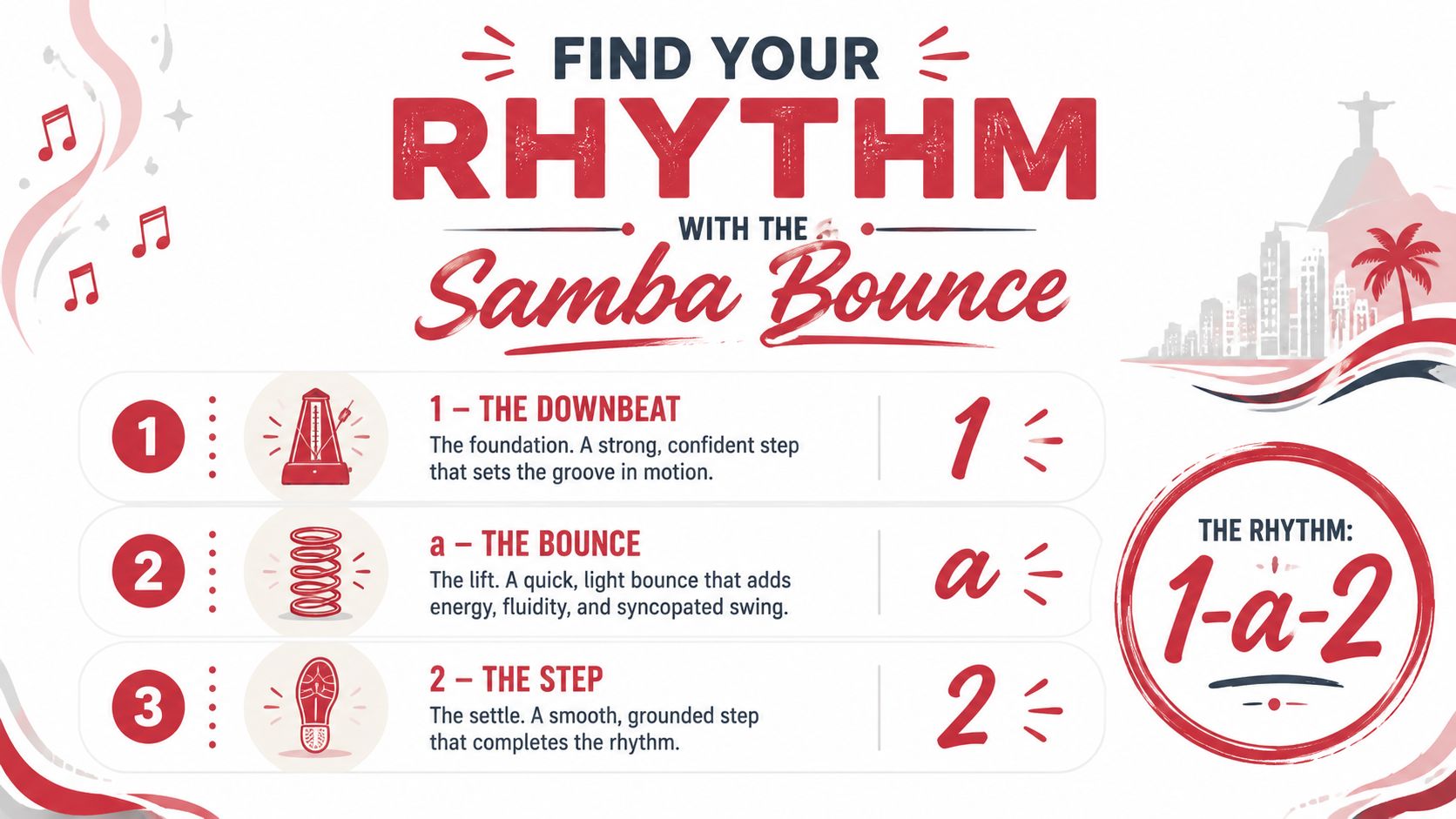
Before you think about fancy figures, get the timing into your body. In International-style samba, the rhythm is built on 2/4 meter with a three-step timing often counted as 1-uh-2. That syncopation is what creates the bounce, and when dancers lose it, the movement starts to look mechanical instead of alive (Dance Central samba technique).
Count it before you dance it
Try saying this out loud:
- One
- Uh
- Two
Then repeat.
Don't say it like three equal beats. The first count lands. The middle count is quicker. The last count settles. That uneven feel is the heart of the rhythm.
If “1-uh-2” feels awkward, clap it first. Then march it in place. Then bend and soften your knees slightly as you count. You're teaching your body to feel the rhythm before asking it to perform steps.
What the bounce really is
Beginners often think samba bounce means bobbing up and down. It doesn't. It comes from knee and ankle action, with the body absorbing and releasing the rhythm instead of jumping on top of it.
Use this home drill:
- Stand tall with your weight centered and your feet under you.
- Count 1-uh-2 slowly.
- On 1, settle into the standing leg.
- On uh, allow a small compressed action through knees and ankles.
- On 2, release into the next settled position.
Keep your chest lifted and your shoulders quiet. The action is subtle. Small is better than exaggerated.
The bounce should feel like a spring inside the legs, not like your head is being pushed up and down.
Three rhythm drills that work in a small space
You don't need a partner for this part. In fact, solo rhythm drills often clean up samba faster than partner practice does.
Clap and step drill
Clap 1-uh-2, then shift weight right and left in place. Your goal is to keep the timing even when the body starts moving.Wall balance drill
Stand near a wall or chair for light support. Shift onto one leg, then the other, while counting. This helps you avoid falling into steps too early.Metronome drill
Use a metronome or steady beat and keep the count soft but precise. Start slow enough that you can feel each transfer clearly.
A common mistake is rushing the “uh” and then freezing on “2.” Another is trying to create bounce from the shoulders or ribcage. Keep the upper body calm. Let the lower body do the rhythmic work.
Your First Samba Steps and Correct Posture
Once the rhythm starts making sense, the footwork becomes much easier. Your first goal isn't speed. It's learning how to place the feet so the body can keep that samba action going.
Posture that helps instead of fights you
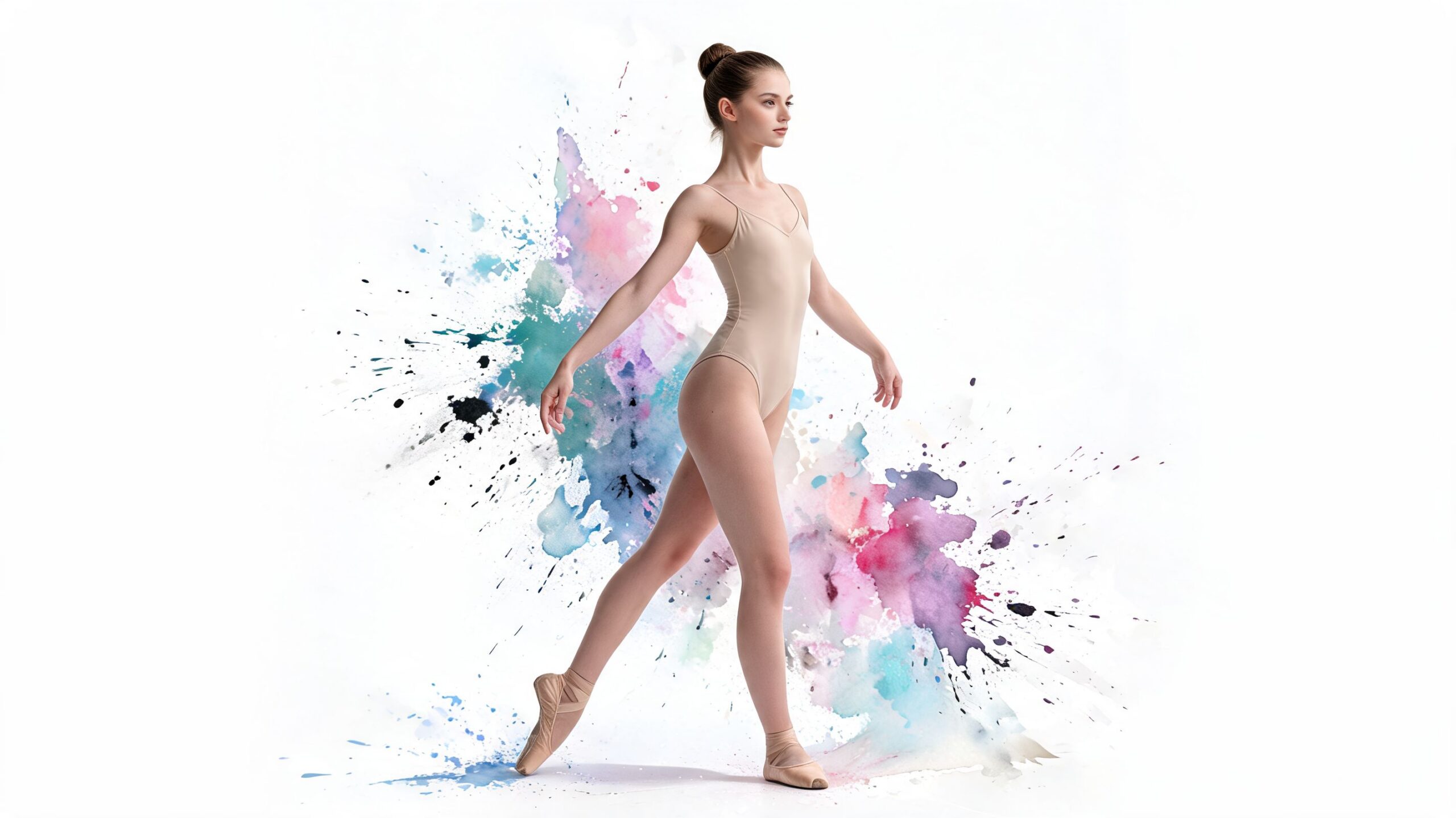
Good samba posture is active, but not rigid. Think of it this way:
- Chest lifted so you don't collapse forward
- Core engaged so the torso stays organized
- Shoulders relaxed so the arms don't stiffen
- Weight forward enough that you can use the balls of the feet
If you stand too far back in your heels, samba feels heavy. If you grip your upper body, the lower-body rhythm can't flow cleanly.
Samba's deeper roots also help explain its grounded quality. The historical root most often cited is Samba de Roda from Bahia, a circle dance later carried to Rio de Janeiro, and UNESCO recognized the Bahian Samba de Roda as Intangible Cultural Heritage in 2005. That heritage still shows up in samba's grounded footwork and communal, percussive feeling (background on samba's roots)).
Learn the basic forward and back action
Start with a simple ballroom basic. Don't worry about making it look flashy.
For the leader's timing pattern:
- Step forward with the left foot on 1
- Replace or collect on the quick “uh”
- Settle the weight on 2
- Mirror the action going back for the next half
For the follower, the pattern reverses.
The most useful beginner thought is this: each count needs a real weight decision. If you only tap or hover, the body can't produce clear samba action.
Quick check: If you can pause at any moment and tell which leg holds your weight, you're practicing correctly.
After you've read the steps once, it helps to watch them in motion:
Add a stationary samba walk
A stationary samba walk is useful because it teaches body organization without sending you across the room.
Try it like this:
- Place one foot slightly forward.
- Transfer weight with control.
- Let the body stay lifted while the legs create the action.
- Keep the step compact.
Small steps are your friend here. Beginners often overstep, which kills balance and bounce. Compact foot placement gives the body room to react naturally.
Unleash Fluid Movement with Samba Hip Action
Many beginners get stuck at this stage. They know the counts, they know a basic step, but they still feel awkward. Usually the problem isn't memory. It's that they're trying to make the hips move instead of letting the hips respond to correct technique.
Many beginners focus on steps first, but samba's look comes from body action, not just foot patterns. Isolating knee and ankle action is one of the most useful ways to develop the bounce and hip movement that give samba its character (solo samba drill insight).

Don't twist the hips on purpose
Forced hip movement usually looks tense. In good samba, the hip action is a result of three things working together:
| Cause | What you do | What happens |
|---|---|---|
| Weight transfer | Move fully from one foot to the other | The hip settles naturally |
| Knee action | Soften and release through the legs | The body gains elasticity |
| Stable upper body | Keep chest lifted and shoulders quiet | The lower-body action becomes visible |
That's why some dancers know the same step pattern, but one looks relaxed and the other looks blocked.
Solo drills for fluidity
Use a chair, countertop, or wall for light support if balance is distracting you.
Chair-supported weight shift
Hold lightly with one hand. Shift right, then left, using the samba count. Watch how the hip settles as your weight changes. Don't push it.Knee pulse drill
Stay in place and pulse through knees and ankles while keeping the torso calm. The movement should feel cushioned, not bouncy in a vertical way.Mini basic without arms
Dance the basic with your hands on your waist. This removes arm styling and lets you feel whether the hips are reacting naturally.
Keep the movement compact until it feels smooth. Bigger doesn't look better if the timing and body action aren't connected.
What helps most if you still feel stiff
If your samba still looks tight, check these first:
- Are you taking full weight? Half-committed steps freeze the hips.
- Are your knees locked? Locked legs stop the bounce before it starts.
- Are you trying to “wiggle”? Samba hip action isn't decoration. It grows out of mechanics.
If you want guided feedback on this part, technique-focused dance classes can help you feel the difference between forced movement and functional movement much faster than guessing on your own.
Simple Partner Figures for Social Dancing
You know that moment when two beginners can do the basic alone, then suddenly feel clumsy as soon as they face each other. That is normal. Partner samba adds one new challenge. You are keeping your own rhythm while listening through the connection at the same time.
In social ballroom samba, the partnership needs a little breathing room. If you stand too close, your knees and feet start competing for space. If you drift too far apart, the lead feels blurry. A good hold feels clear and light, like carrying a conversation where both people can hear each other without shouting.
Start with a comfortable, usable hold
Keep the connection simple at first. You are not trying to create a stiff frame. You are creating a shape that still allows the samba action to happen underneath.
A few checkpoints help:
- Stand slightly apart so both dancers have room for compact steps
- Keep gentle tone in the arms so signals travel clearly
- Stay lifted through the center so the body does not collapse forward
- Let the shoulders stay easy so the movement looks relaxed instead of braced
If something feels crowded, fix the distance before you fix the step. That solves many partner problems faster than repeating the figure again and again.
Two beginner figures that work well at a social dance
Start with the whisk. It gives you a clear side action and a crossed position, but it is still simple enough for beginners to manage. The main job is arriving together on time. Keep the steps small, keep the bounce rhythm present, and let the hips respond naturally instead of trying to decorate the movement.
Then try a basic underarm turn. Leaders should prepare the turn early and keep the timing steady. Followers should continue their own rhythm through the turn, rather than speeding up to “help” the figure happen.
Here is the idea that makes both figures work. The figure sits on top of the samba rhythm. If the rhythm disappears, the figure is too big or too rushed.
If a whisk or turn starts to feel messy, make it smaller and protect the timing first.
Clear lead and follow feels calmer
Many new leaders use too much force. Many new followers guess too early. Both habits interrupt the easy, springy quality that makes samba look alive.
Try these instead:
- Leaders should show direction a little early and keep the signal clear
- Followers should wait, receive the lead, and keep their own balance
- Both dancers should return to the basic if the figure breaks down
That reset matters. A simple basic danced with the right bounce and hip action looks better than a complicated turn danced off time.
If you want guided partner practice after working on your solo drills at home, a beginner dance lesson with a teacher can help you correct hold, timing, and connection without turning social dancing into guesswork.
Your Practice Plan and First Professional Lesson
Samba improves fastest when practice is short, focused, and repeated often. Long sessions can turn into sloppy sessions. A better plan is to revisit the same core skills until they feel automatic.
A simple weekly practice rhythm
Try this format on your own:
Rhythm work
Spend a few minutes clapping or stepping the samba count before you dance anything else.Basic movement practice
Repeat the forward-and-back basic slowly enough to feel every weight change.Body action drill
Do one knee-and-ankle drill and one hip-response drill without worrying about choreography.Partner review
If you have a partner, dance only one or two simple figures and protect the timing.
Common mistakes and quick fixes
| Mistake | Quick fix |
|---|---|
| Flat-footed dancing | Stay more alive through the ball of the foot |
| Losing the bounce | Return to counting out loud and reduce step size |
| Stiff arms and shoulders | Relax the top half and let the legs carry the rhythm |
| Overstepping | Make the movement smaller so balance improves |
| Forced hip motion | Rebuild from weight transfer and knee action |
If you want to keep learning on your own between classes, beginner dance lesson guidance can help you understand what to expect when starting with a teacher.
A professional lesson matters because samba is one of those dances where tiny details change everything. A teacher can spot whether your weight is late, your knees are locking, or your partner hold is interfering with the bounce. Those corrections are hard to catch by yourself, even if you're practicing seriously.
If you're ready to stop guessing and start feeling samba the right way, book a free complimentary lesson with Danza Academy of Social Dance. We'll help you figure out which samba style fits your goals, clean up your rhythm, and give you clear feedback in a welcoming setting. It's a simple first step, and you can book it directly through the contact page.