
You're probably here because you've felt that pull before. The music starts, a few confident couples step onto the floor, and part of you wants in. Another part says you should wait until you “know how.”
That hesitation is normal. Most adults don't need more hype around latin moves dance. They need a clear starting point, safe technique, and a way to stop feeling like everyone else got the manual first.
The good news is that social Latin dancing isn't reserved for performers. It's a learned skill. Like learning to drive a manual car or ride a bike in traffic, confidence comes from understanding what the body is doing and why. Once that foundation clicks, the floor feels a lot less intimidating.
From the Sidelines to the Spotlight
A lot of beginners think “Latin dance” is one thing. They see fast turns, sharp hip action, and polished partners, then assume they're looking at a single world they either belong in or don't.
That's not how it works.
What people mean when they say Latin dance
In the formal competition world, International Latin includes exactly 5 dances: Cha-cha-cha, Rumba, Samba, Paso Doble, and Jive, as outlined in Wikipedia's overview of Latin dance. Social dancing is broader. That wider family includes styles like salsa, mambo, merengue, and bachata, which grew through social settings rather than strict competition rules.
That distinction matters for beginners.
If your goal is a wedding, a social night out, or feeling comfortable at a party, you don't need to begin with competition styling. You need a social entry point. You need patterns that work with real music, real partners, and real bodies that may not be as flexible as they were at 18.
You don't have to dance like a finalist to enjoy dancing socially. You have to move clearly, stay on time, and feel safe in your body.
The first shift is mental, not physical
I've seen this over and over. A new student stands at the edge of the room studying everyone else's feet, convinced they're behind before they've even started. Then they learn one basic rhythm, one clean weight change, one simple partner cue, and their whole posture changes. Not just their spine. Their attitude.
If fear of being seen is the primary obstacle, this guide on overcoming fear of dancing in public can help put words to what a lot of adults feel.
Latin moves dance gets easier the moment you stop treating it like a talent test. It's a coordination skill. And coordination improves when the method makes sense.
Build Your Foundation with Posture and Weight Transfer
Most beginners want steps first. That's understandable, but it's backwards.
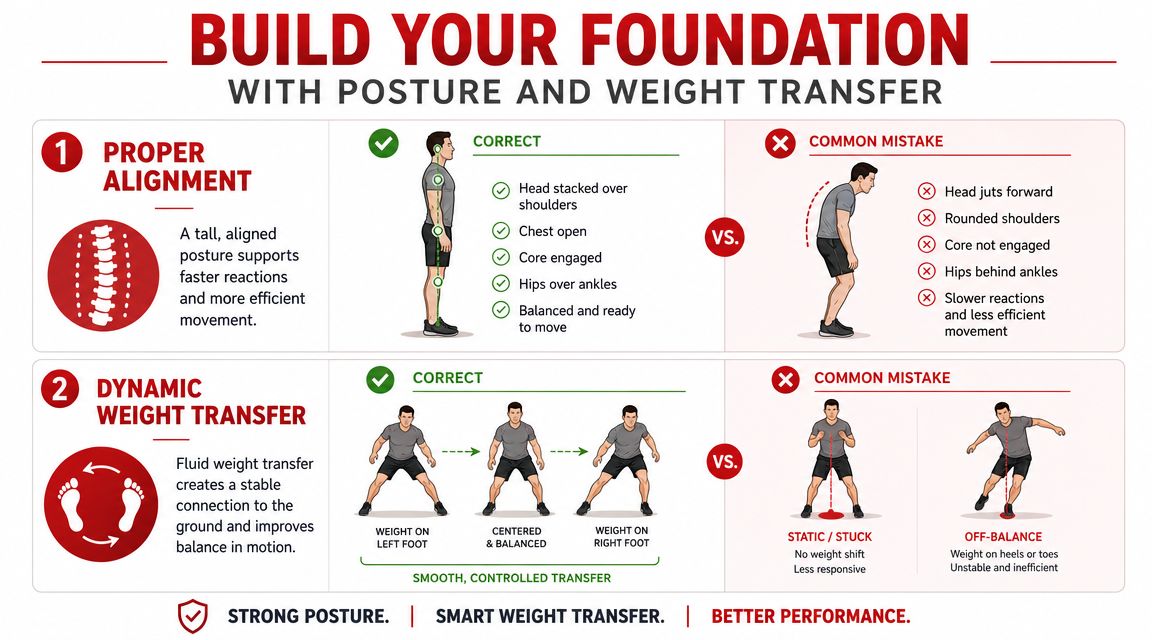
In Latin dance, the body has to organize itself before the feet can do anything useful. If your posture is off, every move feels late, heavy, or unstable. If your weight sits back on your heels, you'll feel stuck to the floor and your partner will feel that hesitation immediately.
Start with where your weight lives
The core rule is simple. Keep your body weight forward over the balls of the feet, as explained in Dance Central's breakdown of Latin basic mechanics. That forward poise gives you quicker movement, cleaner balance, and more responsive direction changes.
This doesn't mean leaning from the waist. It means your whole body is organized slightly forward, ready to move. Think of a tennis player waiting for a serve. They're not stiff and upright. They're alive over the feet.
Why hip action should not be forced
One of the biggest myths in latin moves dance is that hip motion comes from wiggling the hips harder. It doesn't.
Hip action is a result. It shows up when weight transfers fully, the standing leg settles, and the free leg releases properly. If you try to manufacture the look from the torso, timing gets muddy and the lower back often takes the strain.
Practical rule: If your hips are working harder than your feet, the mechanics are probably upside down.
A few body cues help:
- Stand on one leg completely: Don't hover between feet. Half-committed weight creates weak motion.
- Let the standing leg support you: That leg needs to organize the body, not collapse under it.
- Keep the torso calm: Expressive doesn't mean loose. A stable center gives the hips room to move.
- Avoid the heel drift: Once weight falls back, you lose mobility and have to fight your own body to get moving again.
A safer setup for adult beginners
Adults often copy the dramatic shape they see in showcases. That usually means too much chest lift, too much lower-back arch, and steps that are larger than their control.
A better approach is neutral alignment with engaged core support. You want the feeling of length through the spine, not a posed-back curve. That's what allows repeated practice without making your back complain the next morning.
If you want guided feedback on these fundamentals, technique dance classes at Danza Academy focus on body organization, movement quality, and control rather than just memorizing patterns.
A quick self-check
Use this short checklist while practicing:
| Cue | What works | What doesn't |
|---|---|---|
| Weight placement | Forward over the balls of the feet | Rocking back into the heels |
| Spine | Neutral and long | Over-arched lower back |
| Hips | Result of weight transfer | Forced side-to-side swiveling |
| Step size | Small enough to control | Reaching too far and losing timing |
When this foundation is right, even a basic walk starts to look more Latin. Not because you added style, but because your body stopped fighting the movement.
Your First Three Latin Dances Salsa Bachata and Cha-Cha
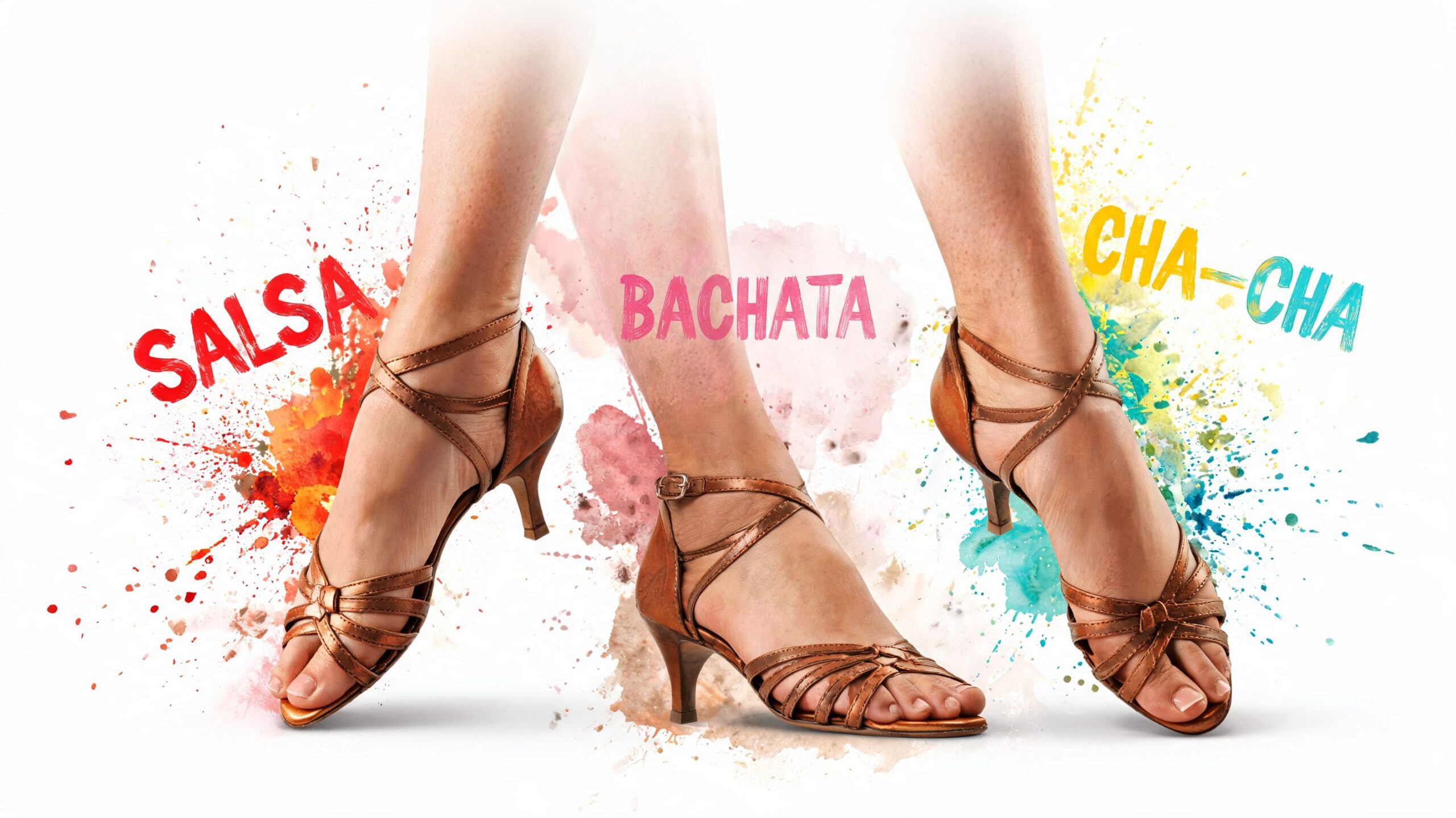
If you're new, start with social dances you're likely to hear in everyday life. That usually means Salsa, Bachata, and Cha-Cha.
These aren't identical cousins. Each one has a different pulse, a different personality, and a different way the body settles into the beat. Once you feel those differences, latin moves dance stops being a blur.
Salsa feels alive and directional
A widely cited dance-school source describes salsa as “by far” the most popular Latin dance style, with schools and clubs in nearly every major city, and it also places bachata and cha-cha among the top 5 Latin dances by popularity in its guide to popular Latin dances.
Salsa developed in the 1960s in the United States, largely through Puerto Rican and Cuban communities in New York City. That history matters because salsa still feels social at its core. It wants conversation, not perfection.
For a beginner, the basic idea is usually a forward-and-back relationship with the floor.
- Step on 1
- Replace on 2
- Recover or close on 3
- Pause or hold the next beat, depending on the style you're learning
The feel is crisp but not rigid. Think of salsa as walking with intention inside the music.
Bachata feels grounded and intimate
Bachata is often easier for beginners to hear because the phrase structure feels steady and the basic step is simple to map in the body.
A practical beginner version is side to side:
- Step to the side
- Bring the other foot in
- Step to the side again
- Tap
Then repeat the other direction.
The common mistake is treating the tap like a throwaway. It isn't. That small finishing action helps organize balance and gives the dance its relaxed groove. Bachata works best when you keep the movement compact and listen for the sway, not when you race through the counts.
Cha-Cha teaches timing fast
Cha-Cha is one of the best teachers in the room because it exposes lazy weight transfer immediately. If your feet are late or your steps are too big, Cha-Cha tells on you.
The signature rhythm most beginners recognize is:
- 2
- 3
- Cha-Cha
- then continue
Keep the steps short. Cha-Cha isn't traveled by force. It's teased across the floor. The playful quality comes from precision, not speed.
If you want extra help with this style, this guide on how to dance the Cha-Cha is a useful next step.
A short visual can help lock in the timing before you try it with a partner:
Which one should you start with
That depends on your goal more than your personality.
- Choose Salsa if you want the most common social option and enjoy energy.
- Choose Bachata if you want a simpler entry point and a more grounded groove.
- Choose Cha-Cha if you like structure, musical clarity, and sharp rhythm.
If you can hear the pulse and finish your weight transfer, you're already doing more than most beginners think they are.
The best path is usually one dance first, then a second before habits harden. That gives your body contrast. You learn what changes between styles and what fundamentals stay the same.
The Art of Connection in Partner Dancing
A lot of online dance content teaches moves without teaching partnership. That's like teaching sentences without teaching listening.
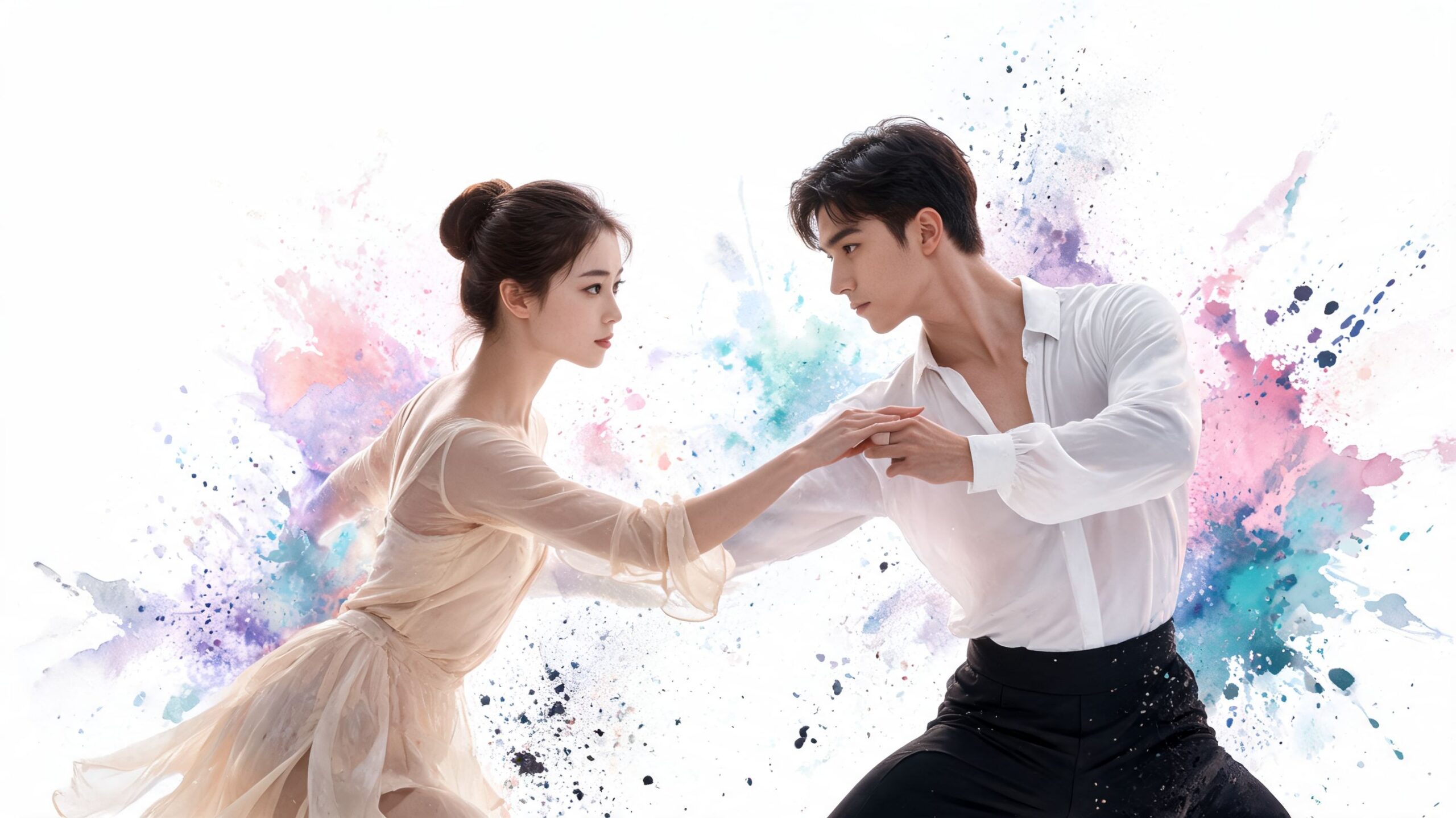
Partner dancing works when both people maintain their own balance and share information clearly. Leading isn't pushing. Following isn't guessing. Good connection feels more like a handshake with rhythm than a wrestling match.
Your frame carries the conversation
The first job is to create a usable frame. That means your arms aren't dead weight, but they also aren't gripping. The body stays organized enough that a signal can travel from one person to the other without distortion.
A reliable frame usually includes:
- Responsive hands: Light contact, not clenched fingers
- Supported upper back: Not military-stiff, but not collapsed
- Independent balance: Each dancer stands on their own center instead of hanging on the partner
When beginners skip this, every turn feels sudden and every lead feels late.
Movement starts from the floor up
In Latin technique, the feet initiate the spine's movement, and the stepping leg should be straight before weight is transferred, according to Dance Central's notes on Latin movement. That gives the body a stable base for both leading and following.
A partner can only read what is physically clear. If the upper body starts flinging around before the feet and weight have organized the action, the message arrives garbled.
A clear lead doesn't feel strong. It feels early, calm, and easy to understand.
What works socially
On a social floor, the best partner dancers are usually not the flashiest. They're the ones who make the other person feel safe, balanced, and musical.
For leaders, that means initiating with direction and timing, not force. For followers, that means receiving information while keeping your own rhythm alive. Both dancers need enough tone in the body to communicate and enough softness to adapt.
If latin moves dance ever feels rough, confusing, or heavy, connection is usually the issue, not talent.
Essential Practice Drills and Common Mistakes to Avoid
Beginners often practice too much choreography and not enough mechanics. That's why they can survive one memorized pattern at home and then freeze when music or a partner changes.
Practice should be boring in the right way. Repetition builds trust in the body.
Three drills that actually help
Try these without a partner and without rushing.
Forward poise hold
Stand with your weight slightly forward over the balls of your feet and stay there while breathing normally. Don't grip your toes. The goal is to get comfortable living in a ready position.Slow weight transfers
Shift fully onto one leg, pause, then change to the other side. Let each transfer finish. This teaches commitment. Half-weight is the enemy of clean Latin movement.Small-step rhythm walks Walk basic rhythms with very short steps. Adults improve fastest through this practice. Shorter steps reveal timing. Larger steps usually hide mistakes until balance breaks.
Mistakes that show up in almost every new dancer
A common one is copying performance posture. An exaggerated back arch can increase strain, while safer social Latin technique uses a neutral spine and core engagement, as discussed in this adult-beginner-focused technique video.
Other frequent problems are easier to fix than people think:
- Looking down at the feet: This pulls the head and spine out of alignment. Use peripheral vision and trust smaller steps.
- Stepping too large: Big steps feel dramatic but usually kill timing and connection.
- Forcing hip motion: If the feet and weight aren't right, the hips can't save the movement.
- Rushing the count: Many beginners move before the beat because they're anxious about missing it.
A cleaner way to correct yourself
Use this order when something feels off:
- Check the feet first
- Then check weight transfer
- Then check posture
- Only after that, think about styling
Most problems in latin moves dance are mechanical, not artistic. If you solve the engine, the appearance improves on its own.
Taking Your Moves to the Dance Floor
The first real test usually happens in a crowded room. The music starts, a partner steps in front of you, and the move that felt easy in the kitchen suddenly feels less certain. That moment is normal. Social confidence is built in live conditions, where timing, space, and connection have to work together.
Adult beginners do best when they treat the dance floor as practice, not performance. The goal is not to impress the room. The goal is to stay organized enough that your body can hear the music, transfer weight clearly, and respond to another person without tension.
A good social dancer is not the one doing the most. It is the one who feels clear, safe, and easy to dance with.
What helps most once you leave practice mode
Keep your basics compact. In a real social setting, small steps give you more control, protect your knees, and make it easier to adjust if the floor is crowded or your partner has different experience.
Practice often, even in short sessions. Ten focused minutes with music does more for timing and body memory than one long session where fatigue starts to blur everything.
Get corrections early. Adults learn patterns fast, but habits settle in fast too. If posture, timing, or connection are off, fixing them sooner saves a lot of frustration later.
Complexity can wait. Clean basics carry you much farther on a social floor than flashy material you cannot control yet. In salsa, that means staying on time and finishing each step. In bachata, it means keeping the rhythm steady without overworking the hips. In cha-cha, it means letting the footwork stay precise instead of rushed.
One more practical point matters. Choose beginner-friendly floors when you can. A quieter social, a practice party, or a class social gives you enough breathing room to apply technique without feeling pushed to keep up with advanced dancers.
You do not need to arrive polished. You need a body that knows where its weight is, a basic rhythm you can trust, and the willingness to keep going after small mistakes. That is how real dance floor confidence starts.
Your Latin Dance Questions Answered
The first question many adults ask is not about steps. It is whether they will feel out of place walking into the room. That concern is normal. Good beginner training solves it by giving you clear mechanics, manageable goals, and enough understanding of your body to move safely instead of guessing.
Do I need a partner
No. Many adult beginners start on their own, and that often helps because they learn to hold their own balance, timing, and direction first. Later, partner work makes more sense because you are not asking another person to manage weight shifts you do not yet control.
If you do come with a partner, treat that as a bonus, not a requirement.
What should I wear
Wear clothing that lets you breathe, lift your arms, and rotate through your ribs and hips without restriction. Early on, comfort matters more than style.
Shoes matter a lot. A shoe with a little slide usually works better than a sticky rubber sole, because turning against the floor can put extra stress on the knees and ankles. The goal is not fancy footwear. The goal is a foot that can place, push, and pivot without fighting the floor.
How long does it take to get good
That depends on what you mean by good. If good means feeling calm enough to join a social dance and get through a few songs with basic rhythm, many adults can reach that point sooner than they expect. If good means clean technique, clearer body action, and reliable partner connection, that takes longer because the body learns through repetition, not through memorizing patterns.
I tell beginners to measure progress by better control. Can you change weight without wobbling? Can you stay on the beat without rushing? Can you keep your shoulders quiet while the hips do the work? Those markers matter more than how many moves you know.
Am I too stiff or too old to start
No. Adults often blame stiffness when the actual issue is coordination. Social Latin dance does not require extreme flexibility. It requires organized movement, steady timing, and joints that are not being forced past what they can handle.
That is why sound technique matters from day one. A small, well-placed step works better than a big step that pulls you off balance. Controlled hip action works better than throwing the body around and hoping it looks Latin.
What if I'm nervous about looking awkward
You will probably feel awkward at first. That is part of learning any physical skill. The body is sorting out new timing, new directions, and new ways of transferring weight.
Awkward does not mean incapable. It usually means your brain is building a map. Keep the movements simple, stay with the rhythm, and let repetition do its job. Confidence grows after the body starts recognizing what comes next.
Which style should I start with first
Start with the style you are most likely to dance regularly.
Salsa is a strong choice if you want energetic social dancing and clear rhythmic structure. Bachata often feels more approachable at the beginning because the basic pattern is easy to hear and repeat. Cha-Cha suits dancers who enjoy sharper timing, playful footwork, and more precision through the feet.
There is a trade-off. Salsa often asks for faster directional changes. Bachata can tempt beginners to fake hip motion instead of building it correctly. Cha-Cha rewards accuracy, but it also exposes rushed foot placement quickly. None of that should scare you. It just helps to know what each dance asks from your body.
If you want personal guidance, Danza Academy of Social Dance offers a complimentary first lesson through its contact page. It is a practical way to ask beginner questions, get feedback on posture and movement habits, and choose between Salsa, Bachata, or Cha-Cha based on what fits your body and goals.