You're probably sitting with a few tabs open, typing beginner latin dance classes near me, and wondering whether this is finally the week you try something new.
Part of you is excited. Part of you is thinking, “I have no rhythm,” “I don't have a partner,” or “What if everyone else already knows what they're doing?” Those thoughts are normal. Nearly every new student has them before walking into a studio for the first time.
What usually helps is realizing that beginner classes are built for exactly this moment. You're not supposed to show up polished. You're supposed to show up curious. In Philadelphia and Exton, many adults start dancing for simple reasons: they want a fun way to move, meet people, build confidence, or break up the routine of work and home.
A good class takes that nervous energy and turns it into something useful. You learn a few steps, laugh at your mistakes, hear the music differently, and leave feeling better than when you arrived.
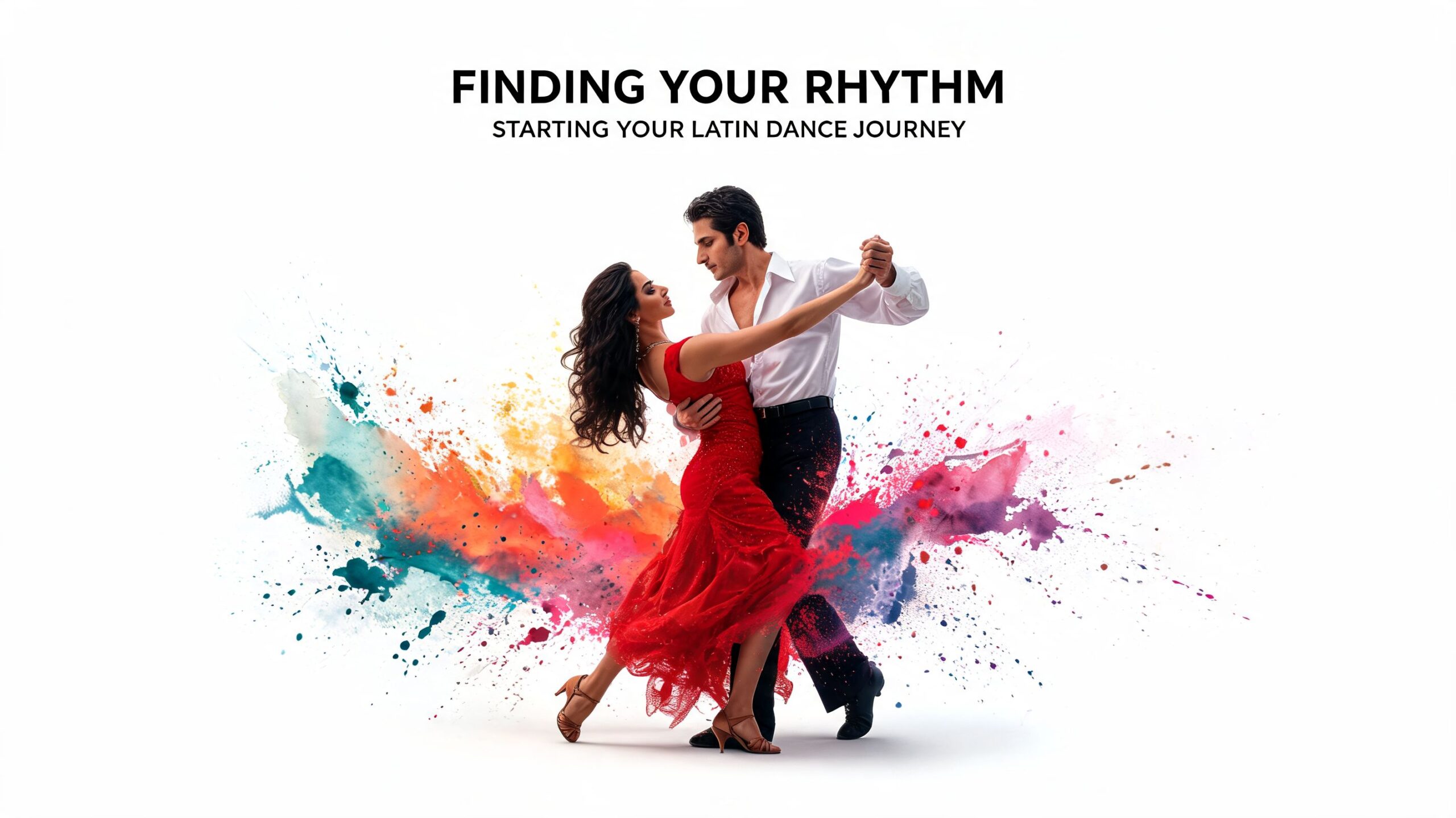
Finding Your Rhythm Starting Your Latin Dance Journey
The first search is often the hardest part. Not the dancing. The decision.
Maybe you've watched salsa clips online. Maybe a friend keeps inviting you out social dancing. Maybe you want an activity that feels alive, not another workout you have to force yourself through. So you type beginner latin dance classes near me and hope the right place feels clear.
What most beginners are really looking for
People rarely search for dance lessons because they want perfect technique on day one. They usually want one of these:
- A fresh start: Something social and energizing after a long stretch of routine.
- A confidence boost: A way to feel less awkward in social settings.
- A practical skill: Music comes on at a wedding, party, or night out, and you want to know what to do.
- A fun challenge: You want to learn with your body, not just your mind.
That mix of excitement and hesitation matters. It's why the right beginner class doesn't throw complicated patterns at you. It gives you structure, repetition, and encouragement.
You don't need talent to begin. You need a room where beginners are expected.
Latin dance is especially welcoming for adults because progress shows up quickly. In your first lessons, you can already learn how to find the beat, transfer your weight, and move with another person without feeling stiff. That early success is what helps people keep going.
What “beginner” should actually mean
A true beginner class assumes you may have never danced before. It should explain basics clearly, use music at a manageable pace, and repeat fundamentals enough that your body starts to remember them.
If a class listing says beginner, intro, fundamentals, or basics, that's usually the right place to start. You do not need to “get in shape first” or “practice before joining.” The class is the practice.
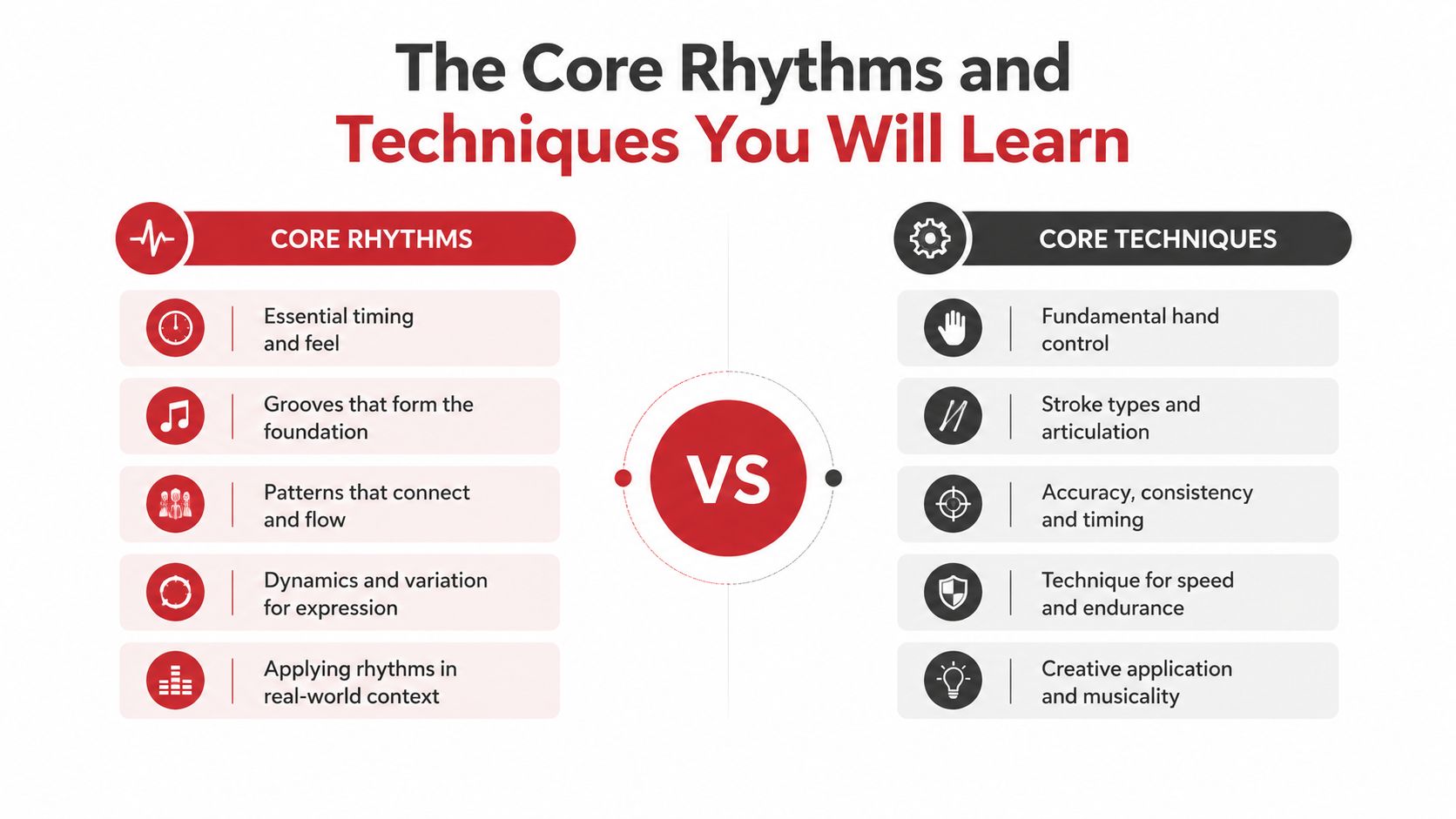
The Core Rhythms and Techniques You Will Learn
Most new students worry that Latin dance will feel complicated right away. In reality, beginner classes narrow the focus. You're usually learning a few core dances, a few clear rhythms, and the body mechanics that make the steps feel easier instead of forced.
Salsa feels like forward motion
Salsa is often the first style people meet in a beginner Latin program. It has drive. It feels social, upbeat, and connected to the music in a very direct way.
Think of salsa as walking with purpose to a rhythm. The basic step teaches you how to shift weight cleanly, stay balanced, and hear the structure of the music. Many studios begin with On1 timing, where the break step happens on count 1. That timing is easier for many beginners to hear and organize in their bodies.
Salsa is one of the world's most popular partner dances, with 28 million active participants, and its foundational On1 timing, taught in beginner classes, helps reduce injury risk by up to 40% by building core stability before students advance to faster tempos, according to this overview of beginner salsa fundamentals.
If you want to see how these styles fit into a broader program, Danza Academy offers Latin and ballroom dancing lessons that include foundational social dance instruction.
Cha-Cha feels playful and sharp
Cha-Cha has a different personality. If salsa is a smooth conversation moving across the floor, Cha-Cha is witty and flirtatious. It asks for quick footwork and clearer accents.
Beginners usually learn the basic rhythm before anything fancy. The goal isn't speed. It's learning to place your feet with intention and let the music give the dance its bounce. At this stage, students often discover that “rhythm” isn't magic. It's a skill made of listening, counting, and repeating.
A few things help right away:
- Keep your steps small: Large steps make you late and off balance.
- Land your weight fully: Partial weight changes create confusion on the next count.
- Let your knees soften: Latin dances need mobility, not stiffness.
Rumba teaches control and connection
Rumba is slower and more deliberate. That slower pace is useful because it exposes habits. If you rush, lean, grip too hard, or lose your center, you'll notice it sooner.
Many instructors use rumba to teach patience, posture, and partner awareness. It helps you understand that dancing isn't just memorizing a pattern. It's timing, body action, and communication.
Practical rule: In beginner partner work, your first job isn't to perform. It's to stay balanced enough that you can listen and respond.
The technique underneath the steps
Students often think technique means advanced styling. At the beginner level, technique is simpler and more important than that. It includes:
| Focus | What it means in class | Why it matters |
|---|---|---|
| Timing | Stepping on the correct counts | Keeps you with the music |
| Weight transfer | Fully moving from one foot to the other | Prevents wobbling and hesitation |
| Frame | Holding your upper body with gentle tone | Makes leading and following clearer |
| Body action | Using knees, hips, and torso naturally | Creates authentic Latin movement |
You may also hear terms like Cuban Motion or contrabody movement. Don't let the vocabulary scare you. In plain language, your teacher is showing you how the body works together so the dance looks and feels smoother.
Most beginners improve fastest when they stop trying to look advanced and start trying to move clearly.
More Than Just Steps The Transformative Benefits of Dance
People often sign up for dance because it looks fun. They stay because it changes more than just what they can do on a floor.
The physical shift is usually the first thing students notice. You become more coordinated. You learn to stand, turn, and move with more control. Your body starts reacting faster because it's practicing rhythm, balance, and directional changes at the same time.
Beginner Latin dance programs deliver measurable health benefits, with studies reporting a 20-30% improvement in cardiovascular health after 12 weeks and a 35% boost in mood scores after just 8 weeks of classes. That summary appears in the verified beginner dance data provided for this topic.
Physical gains that feel useful in everyday life
Dance fitness is different from repetitive exercise. You're not just working hard. You're solving movement problems in real time.
Students often notice benefits like these:
- Better coordination: Your feet and upper body stop feeling disconnected.
- Improved stamina: Songs feel shorter because you're not getting winded as quickly.
- Stronger posture: You become more aware of how you stand and carry yourself.
For readers interested in how movement supports emotional wellbeing, this article on physical therapy for mental health benefits gives a helpful overview of why guided physical activity can improve mood and resilience.
Mental relief that doesn't feel like work
A dance class asks for your attention in a healthy way. You listen to the beat, remember a pattern, and react to a partner or instructor. That focus can be refreshing because it leaves less room for the mental clutter you brought in with you.
Some students come to class stressed from work. Others arrive tired, distracted, or self-conscious. Then the music starts, the counting begins, and their attention lands in the present moment. That reset matters.
When your brain has to count, move, and listen at the same time, everyday stress often quiets down for a while.
Social confidence grows through repetition
Social dancing sounds intimidating until you realize how structured the learning environment is. Beginner classes usually give you a clear pattern, a partner, and a short amount of music. You practice, rotate, and repeat.
That repetition teaches more than steps. It teaches comfort around other people. You start making eye contact more easily. You stop apologizing for every mistake. You learn that most adults in class are just as relieved as you are that everyone is learning together.
This is one reason dance becomes a long-term hobby for so many people. It supports fitness, mood, and community in the same place.
How to Choose the Right Dance Class for You
When people search beginner latin dance classes near me, they usually find several studios and class formats. That's good news, but it can also make the choice harder. The simplest way to decide is to match the class format to your personality, schedule, and learning style.
Group classes versus private lessons
Both formats work. They just solve different problems.
| Option | Usually best for | What to expect |
|---|---|---|
| Group class | Adults who want energy, repetition, and social learning | Shared instruction, partner rotation, community feel |
| Private lesson | Adults who want personal feedback or faster correction | One-on-one attention, tailored pacing, custom goals |
Group classes are often a strong starting point if you want to meet people and get comfortable with partner changes. You hear the same concept several times, watch others learn it, and benefit from the room's momentum.
Private lessons are useful if you feel nervous in groups, have a specific event in mind, or want more direct correction. If you're comparing options, this guide to private dance lessons for adults can help you understand what that format offers.
How to tell if a studio is beginner friendly
A studio can offer “beginner” classes and still feel too fast. The signs to look for are practical.
Choose a studio that does these things well:
- Defines the level clearly: You shouldn't have to guess whether “intro” really means no experience needed.
- Teaches fundamentals first: Rhythm, posture, weight transfer, and partner basics should come before flashy combinations.
- Creates a calm learning environment: Instructors should correct without making people feel exposed.
- Supports adult learners: Adults learn differently from kids. They need explanations, repetition, and context.
One local option people consider in this area is Danza Academy of Social Dance, which teaches Latin and social dance styles in Center City Philadelphia and Exton and offers both private and group instruction.
Questions worth asking before you book
You don't need to interview a studio like you're hiring a lawyer, but a few questions can save you frustration.
Ask things like:
- Is this class for absolute beginners?
- Do I need a partner?
- How does partner rotation work?
- What should I wear?
- What happens if I miss a class?
A good studio will answer these without making you feel like you should already know them. That tone matters. If the response feels welcoming before you ever walk in, that's usually a good sign for the class itself.
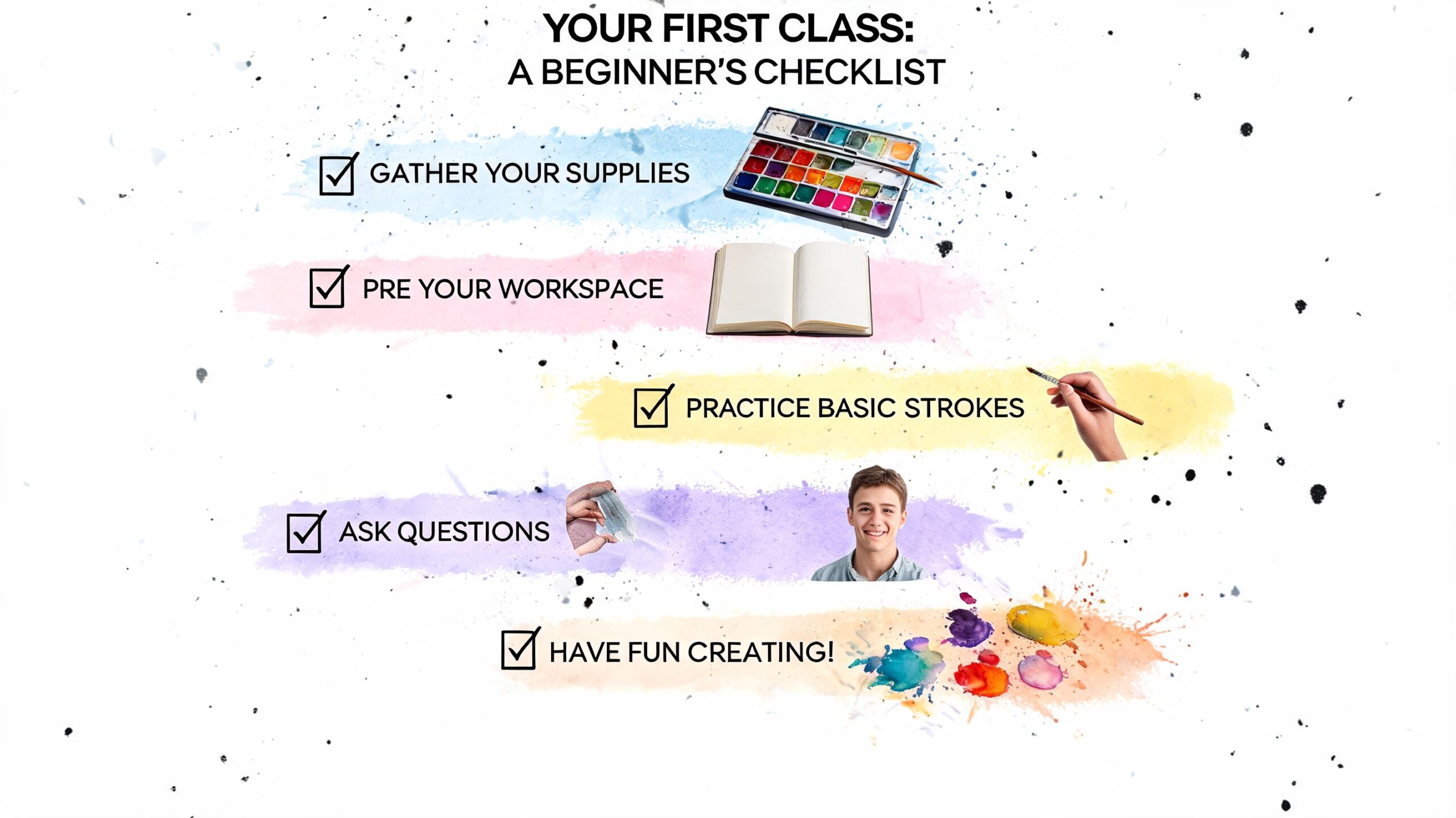
Your First Class A Beginner's Checklist
First-day nerves usually come from uncertainty, not the dancing itself. Once you know what to wear, what to expect, and how partner rotation works, most of the pressure drops.
What to wear and bring
You do not need a flashy outfit. You need clothes that let you move and shoes that won't fight you.
Use this simple checklist:
- Wear something comfortable: A fitted top or shirt and pants or leggings that move easily work well.
- Choose clean shoes with smooth movement: Avoid heavy tread if possible. You want to pivot without getting stuck.
- Bring water: You'll appreciate it even in a beginner class.
- Arrive a little early: A few quiet minutes helps you settle in and meet the instructor.
- Pack an open mind: You will not get every step right immediately, and that's normal.
If you're new to movement training in general, this MedEq Fitness performance wellness guide offers practical reminders about warm-up habits and injury prevention that apply well to dance students too.
Going solo is normal
This is one of the biggest worries beginners carry into class, and it stops many people from starting.
If you're worried about not having a partner, you're not alone; a 2025 Dance Magazine survey found that 68% of beginners hesitate to join classes for this reason, which is why most studios, including Danza Academy, use a partner rotation system to ensure everyone can learn and participate, as summarized in the verified source material and supported by this discussion of no-partner-required beginner dance participation.
Partner rotation helps for a reason. You learn to adapt. You stop depending on one person's habits. You become a better leader or follower because you get clear feedback from different bodies and timing styles.
Most students who arrive alone feel nervous for about ten minutes. Then class starts, rotations happen, and being solo stops feeling like a problem.
If you want a starting point designed specifically for newcomers, you can explore a beginner dance lesson before committing to a broader schedule.
Easy etiquette that makes class better
You don't need to memorize a rulebook. Just follow a few basics.
- Be on time: It helps you catch the warm-up and first explanation.
- Practice good hygiene: Partner dancing is close enough that this matters.
- Listen before asking for extra details: Many questions get answered in the next demonstration.
- Be kind to yourself: Everyone misses counts, turns the wrong way, or forgets a pattern.
Beginners often think the class is judging them. It usually isn't. The instructor is teaching. Other students are concentrating on their own feet. The room is much less intimidating than it looks from the outside.
Understanding Dance Class Pricing and Schedules
Most adults want to know two practical things before starting. How much will this cost, and can it fit into my week?
Studios usually organize pricing in a few common ways. Some offer drop-in classes, which work well if you want to try a style without a longer commitment. Others use class packages, which can help if you know you'll attend regularly and want better value per class. Many also offer monthly memberships for students who plan to dance consistently and like having a routine.
Private lessons are usually priced separately from group classes because the instruction is individualized. That format can feel more focused, while group classes often feel more social and budget-friendly.
A smart approach is to choose a format that matches your current behavior, not your ideal future self. If your schedule changes often, a flexible option may keep you from dropping off. If you do better with accountability, a recurring class can help you build momentum.
Scheduling that works for adult life
Most reputable studios in metro areas like Philadelphia try to accommodate working adults with evening and weekend options. When reviewing a calendar, look for:
- Consistent beginner time slots: Predictability makes attendance easier.
- Reasonable class length: Enough time to learn, not so long that it feels exhausting.
- A clear progression path: You should be able to tell what comes after your first series or intro lesson.
The best schedule is the one you'll consistently follow. One class per week that you attend consistently beats an ambitious plan you abandon after two weeks.
Your Invitation to Dance at Danza Academy
Starting dance doesn't require a special background, natural talent, or a partner waiting in the wings. It starts with a decision to try. If you've been searching beginner latin dance classes near me, you're already closer than you think.
For adults in Center City Philadelphia and Exton, the easiest next step is to experience a lesson in person and see how it feels in your own body. Reading helps. Watching videos helps. But the significant shift happens when you hear the music, take the first few steps, and realize this is learnable.
That first class doesn't need to be perfect. It just needs to happen.
"From feeling awkward and clumsy to confidently leading on the social dance floor in just a few weeks, Danza Academy changed my life! The instructors are patient and make learning so much fun." – Mark S., Philadelphia
A complimentary first lesson gives you a low-pressure way to find out what style fits you, ask questions, and get comfortable with the studio environment before making a bigger commitment. If you've been hesitating because you feel shy, out of practice, or unsure where to begin, that's exactly why an introductory lesson helps.
You don't need to prepare a routine. You don't need dance experience. You just need the willingness to walk in.
Take the first step with Danza Academy of Social Dance. You can book a free complimentary lesson through the contact page and try beginner Latin dance in a welcoming setting near Philadelphia or Exton. If you've been waiting for the right moment, this is a simple, low-pressure way to start.