Ready to learn to dance, but not sure whether you need a wedding specialist, a social ballroom studio, or a fitness-driven class schedule?
That is the problem with searching for the best dance studios in Philadelphia. A lot of roundups list names without helping you choose a studio that fits what you want to do after the first lesson. For beginners, that usually means wasted trial classes. For experienced dancers, it means joining a program that does not match your pace, goals, or budget.
The smarter way to choose is to start with your goal. If you want to feel comfortable at weddings and social events, look for a studio that teaches partner fundamentals and gives you chances to practice with other people. If you want performance or competition, pay attention to coaching depth, progression, and whether the studio can take you past the beginner stage. If fitness is the priority, class variety, schedule consistency, and room energy matter more than formal syllabus structure.
Philadelphia has good options across each lane. Some studios focus on adult social dancers. Others are stronger for DanceSport training, Latin styles, wedding prep, or movement-based fitness. One of the biggest differences is how easy it is to start. A complimentary first lesson can tell you a lot, especially if you use a few practical criteria from this guide to choosing a dance studio: teaching clarity, partner rotation policy, class flow, and whether the next step is obvious after you walk out.
This guide is built to help you decide, not just browse. You will get a studio-by-studio breakdown, a quick comparison table, and a clear sense of which places make the most sense for social dancing, competitive goals, wedding preparation, or fitness.
1. Danza Academy of Social Dance
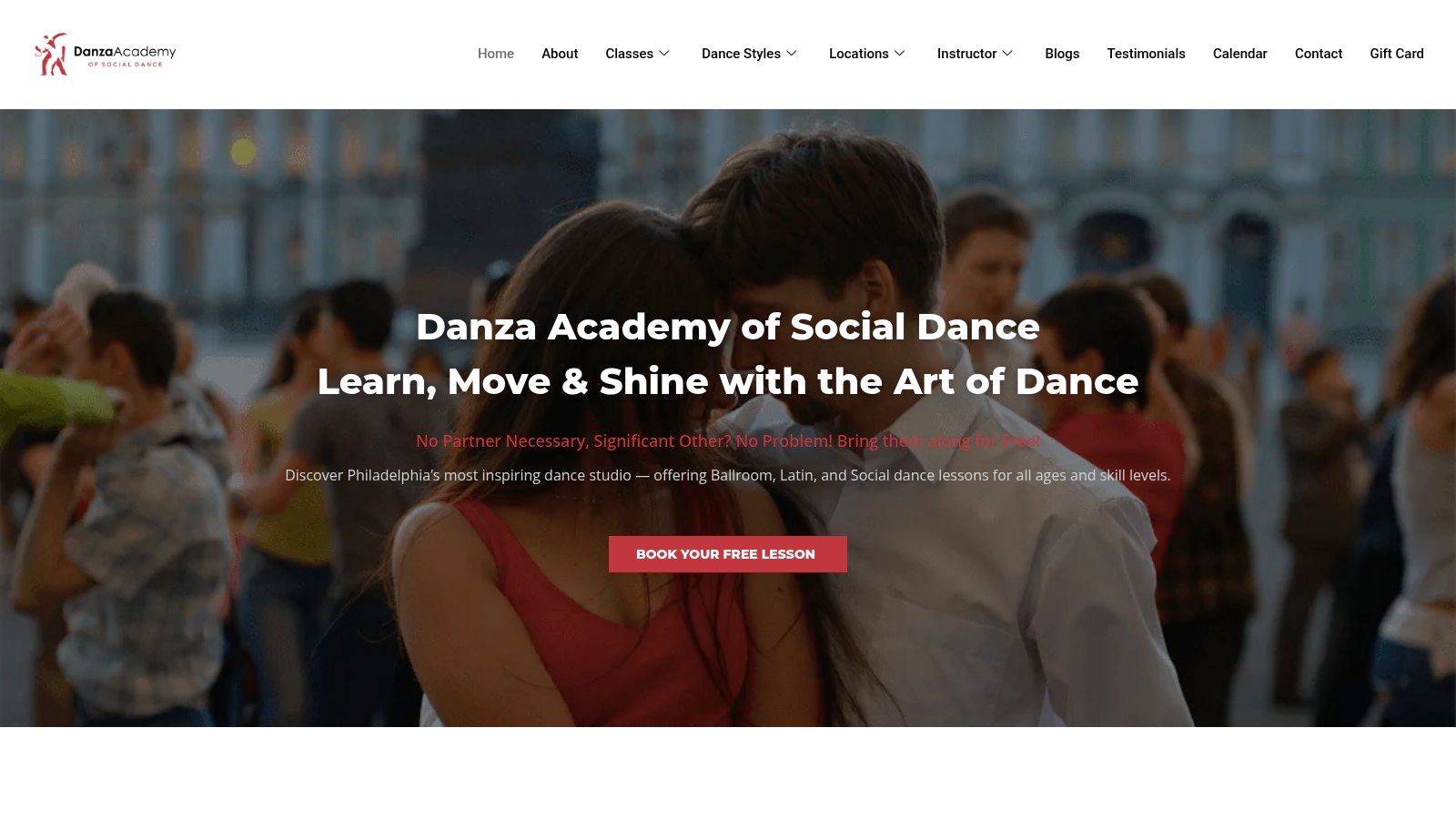
Danza Academy of Social Dance is the studio I’d put first for adults who want the widest path from beginner nerves to real confidence. It’s been teaching since 1976, and that longevity matters because social dance studios either learn how to welcome hesitant beginners or they don’t last. Danza clearly has.
What stands out most is that Danza removes the friction that stops adults from starting. The studio welcomes people without partners, and that solves a common problem in ballroom and social dance. Public-facing messaging around solo-friendly partner dance is still surprisingly rare in Philadelphia, which leaves many adults unsure whether they can start alone. Danza’s long-running no-partner-friendly approach addresses that gap directly, as reflected in the local market analysis published through the Philadelphia School of Dance Arts reference page.
Best for adults who want options
Danza isn’t boxed into one lane. You can take private lessons, group classes, wedding dance coaching, kids’ programs, and more advanced training without switching studios midway through your development.
That matters because many dancers change goals after they begin. Someone who starts with “I just want to survive a wedding reception” often ends up wanting Salsa, Swing, or ballroom technique a few months later.
Practical rule: Pick the studio that fits your next goal, not just your first one.
If you’re comparing schools and want a useful lens, Danza’s own guide on how to choose a dance studio is worth reading. It lines up with what experienced dancers already know: the environment, teacher fit, and progression model matter more than flashy marketing.
Where Danza works especially well
- Beginner adults: You don’t need a partner, prior training, or a performance mindset.
- Engaged couples: Wedding dance preparation is customized instead of pushed through a one-size-fits-all script.
- Social dancers: Styles include Salsa, Cha-Cha, Rumba, Samba, Waltz, Foxtrot, Tango, Quickstep, Hustle, Swing, West Coast Swing, and Country Two-Step.
- Serious students: There’s room to move into stronger technique and competitive-style coaching.
The main drawback is simple. Danza doesn’t publish broad studio-wide pricing online, so you need to contact them to understand rates and packages. Some people prefer instant pricing transparency.
Still, the complimentary first lesson lowers the risk. That’s the smartest way to evaluate a studio anyway, because chemistry with instructors and comfort on the floor are hard to judge from a website.
2. Society Hill Dance Academy
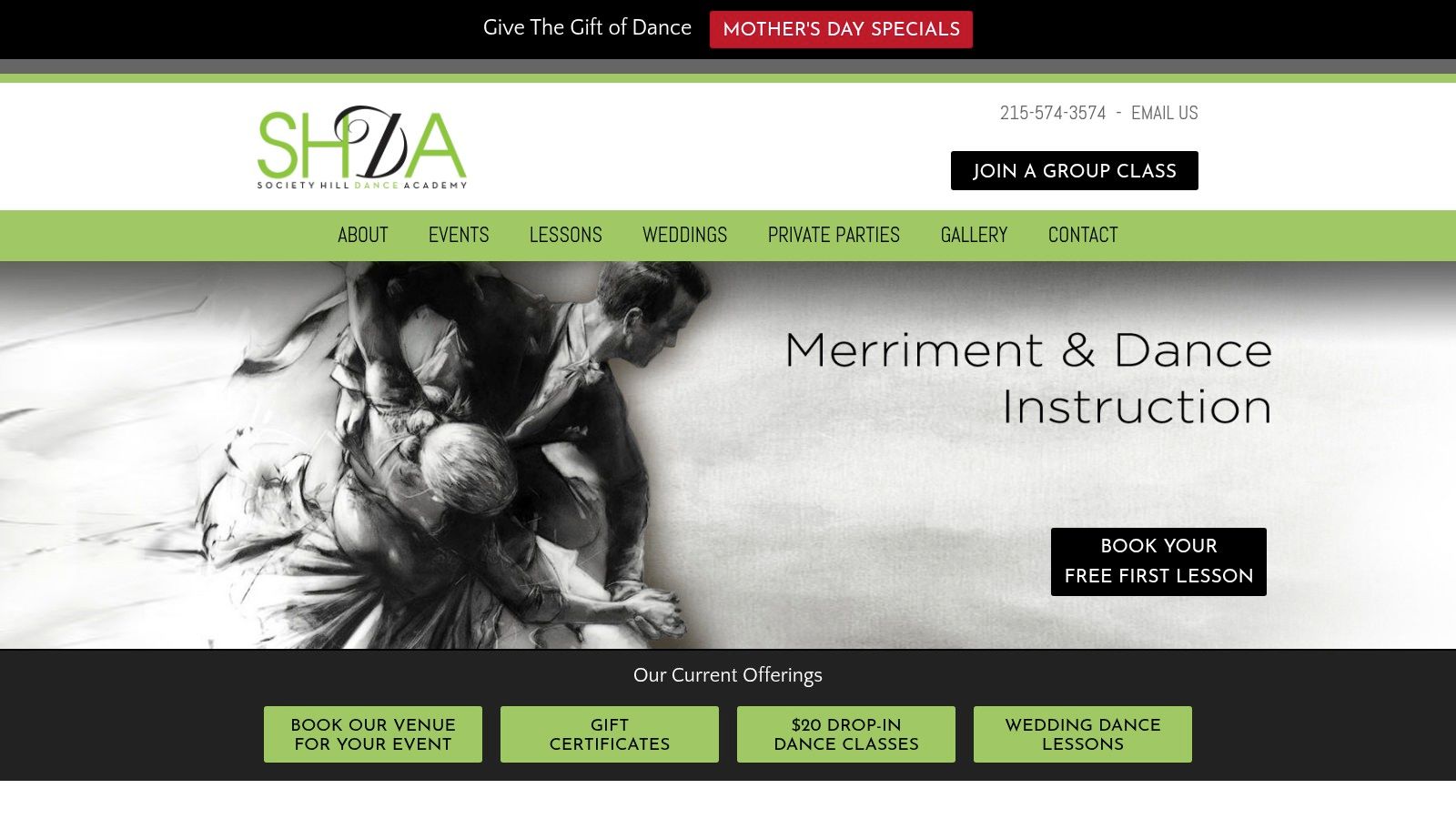
Society Hill Dance Academy makes sense for adults who want partner dancing to become part of their week, not just a one-off lesson. The studio’s value is straightforward. You can study classic ballroom and Latin, then practice those dances in a real social setting with other adults who are there for the same reason.
That matters because progress in partner dance rarely comes from lessons alone. Students improve faster when they rotate partners, hear the music in a social room, and learn how to recover when a lead or follow does not go exactly as planned. Society Hill has long appealed to that kind of dancer.
Where Society Hill fits best
This is a strong option for people deciding between social dancing and more structured training. Its mix of Waltz, Tango, Foxtrot, Salsa, Mambo, Cha-Cha, Rumba, Samba, Swing, Hustle, and West Coast Swing gives you room to test styles before narrowing your focus.
It is especially useful for these goals:
- Social dancers: Good for adults who want regular chances to use what they learn.
- Beginners who want structure: A steady cycle of classes, private lessons, and parties helps build consistency.
- Couples and singles: You are not boxed into one path. You can train with a partner or plug into the broader studio community.
- Dancers comparing formats: If you want a clearer sense of how private lessons, group classes, and practice events work together, this guide to what to expect from a top dance academy in Philadelphia is a practical reference.
A studio with active socials usually builds usable confidence faster than a studio that stays in lesson mode.
Trade-offs to know before you book
Society Hill is a better fit for dancers who want community and repetition than for someone who only wants the cheapest drop-in class. That is the key decision point. If your goal is to dance comfortably at parties, weddings, or local socials, the environment helps. If your goal is pure technical drilling in a quieter setting, busy events may feel less focused.
Pricing is another point to check directly. The website highlights select offers, but you may still need a conversation to understand the full cost of lessons and packages. I usually tell new dancers to treat that as a screening step. Ask how beginners start, how often socials run, and whether there is a complimentary lesson or intro offer. Those answers tell you more than marketing copy will.
3. Top Hat Dance Studio
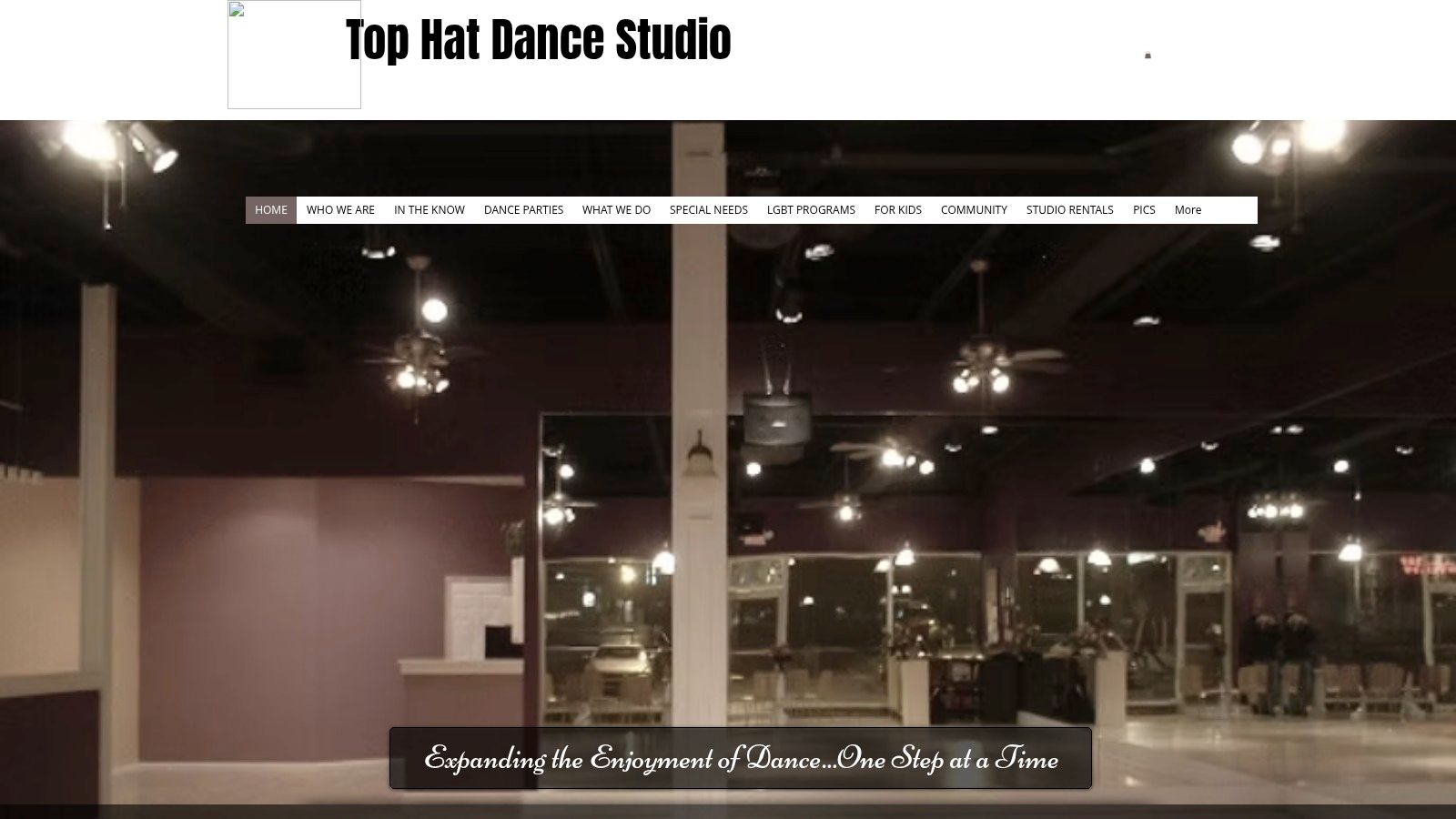
Top Hat Dance Studio has the feel of a traditional local ballroom home base. If you like the idea of one place handling private lessons, group classes, social events, wedding work, and competition coaching, Top Hat is built for that model.
Some dancers need exactly that kind of all-in-one setup. It reduces friction. You don’t have to learn in one place, practice in another, and hunt around for floor time somewhere else.
Where Top Hat shines
Top Hat’s strongest appeal is breadth inside the ballroom and social dance world. It offers private lessons, group classes, social parties, wedding packages, and competition-oriented training. It also has facility rental options and a large floating ballroom floor, which matters more than beginners realize.
Floor feel changes how turns, balance, and travel work. If you’re training for ballroom styles or doing repeated partner practice, a good floor isn’t a luxury. It affects comfort and technique.
- Best for traditional ballroom learners: Good if you want a studio that feels rooted in social and partner dancing.
- Best for multi-goal students: Wedding prep, socials, and competitive coaching can all live in one place.
- Best for Northeast residents: The location is more convenient if you’re already in that part of the city.
For newer dancers trying to separate a polished studio from a useful one, this article on what to expect from a top dance academy in Philadelphia lays out sensible criteria.
What to watch
Top Hat doesn’t make public pricing the centerpiece of its website, so you’ll need to inquire. That’s common in ballroom, but it can still slow down decision-making. The other obvious limitation is geography. If you live in Center City or rely on quick transit access, the commute may be the deciding factor against it.
4. VIBE DanceSport
VIBE DanceSport is the studio I’d point to when someone says, “I don’t just want to dance socially. I want to get technically good.” That’s a different search, and not every studio serves it well.
VIBE leans toward the DanceSport side of ballroom, with emphasis on International Latin and Standard, coaching, athletic conditioning, and more serious skill development. If your brain likes drills, body mechanics, and detailed correction, VIBE proves to be an excellent fit.
Best for serious technique
A lot of studios say they teach beginners through advanced students, but the feel changes once you walk in. VIBE reads as more training-oriented than socially casual. That can be excellent for motivated adults and intimidating for people who only want a fun night out.
This is the right environment if you want structure, sharper feedback, and a stronger technical foundation. It’s also a reasonable choice for dancers considering performance or competition pathways, even if they aren’t ready to commit immediately.
The wrong studio for one student can be the perfect studio for another. Technique-heavy rooms reward focus, but they don’t always feel relaxed on day one.
Trade-offs that matter
The upside is clear. You get a more serious coaching atmosphere, plus later weekday availability and weekend scheduling by appointment, which helps working adults.
The downside is also clear. If you’re looking for frequent social dance parties and a highly casual entry point, you may find other studios warmer on the first visit. Pricing also isn’t posted publicly, so expect a consultation before you get specifics.
5. Estilo Dance Studio
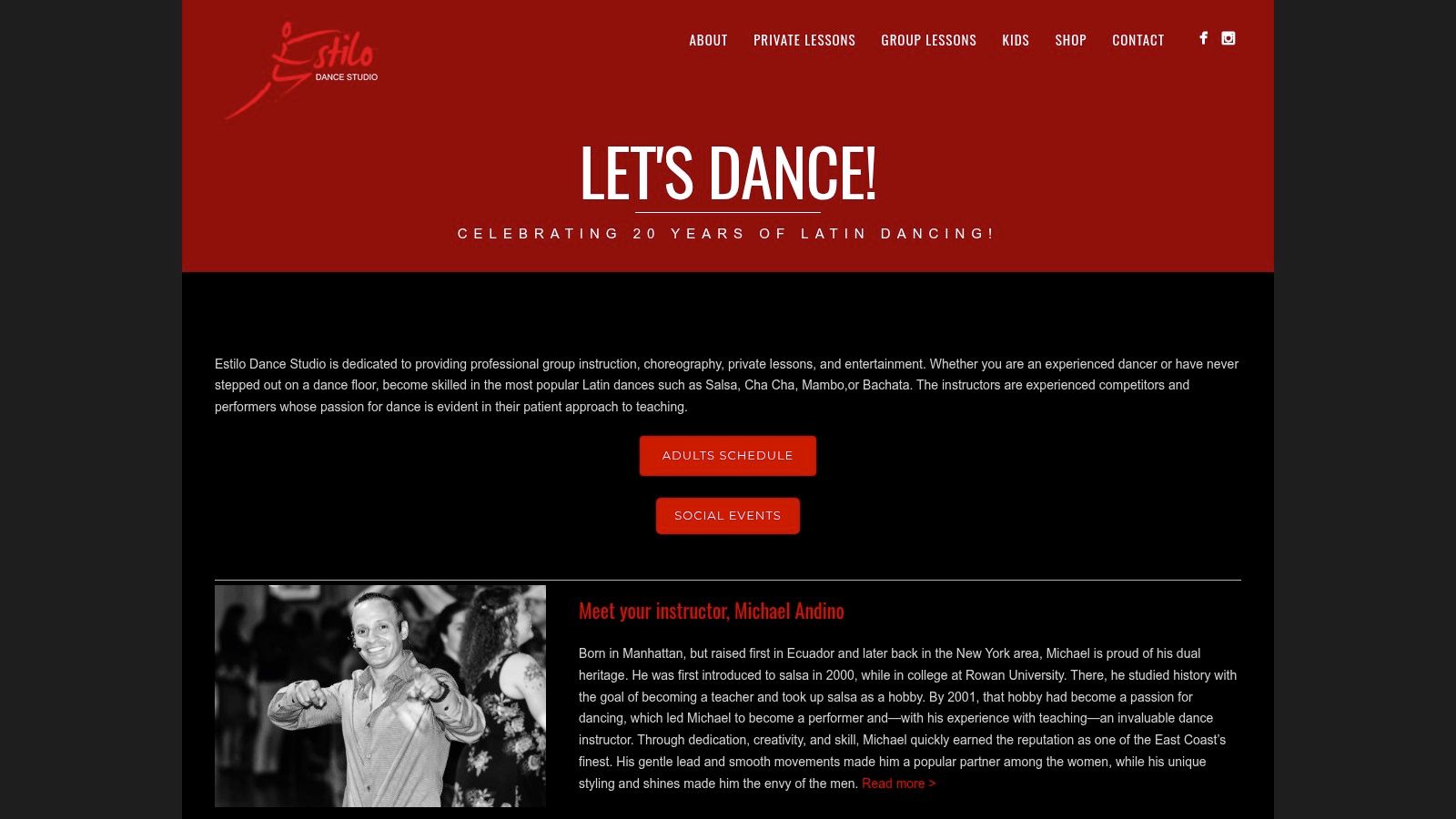
If your goal is Salsa, Bachata, Latin shines, and being able to walk into a social with confidence, Estilo Dance Studio belongs high on your list. This is not the pick for someone deciding between Foxtrot and Viennese Waltz. It’s a Latin-first studio with a clear identity.
That focus is a strength. Specialists tend to build better communities around the dances they care about teaching.
Best for Salsa and Bachata social dancers
Estilo is well suited for adults who want group classes, private coaching, choreography, and a regular connection to Latin social dance culture. If you’re trying to improve timing, body movement, partner connection, and comfort at socials, a studio like this makes more sense than a generalist ballroom program.
You also avoid the common trap of becoming “class good” but not socially functional. Latin-focused studios often do a better job connecting students to real dance-floor use.
Where it may not fit
- Great fit: Salsa On1, Mambo, Bachata, shines, performance work.
- Less ideal: Traditional smooth ballroom, standard ballroom frame work, or broad partner-dance sampling.
- Worth asking upfront: Class progression, social event cadence, and private lesson structure.
Pricing isn’t prominently public, so you’ll likely need to register or inquire before comparing cost. That’s the main friction point. The other is style range. If you want one studio for Salsa on Friday, Waltz on Sunday, and wedding prep in between, you may outgrow a more focused Latin environment.
6. Ballroom Bliss
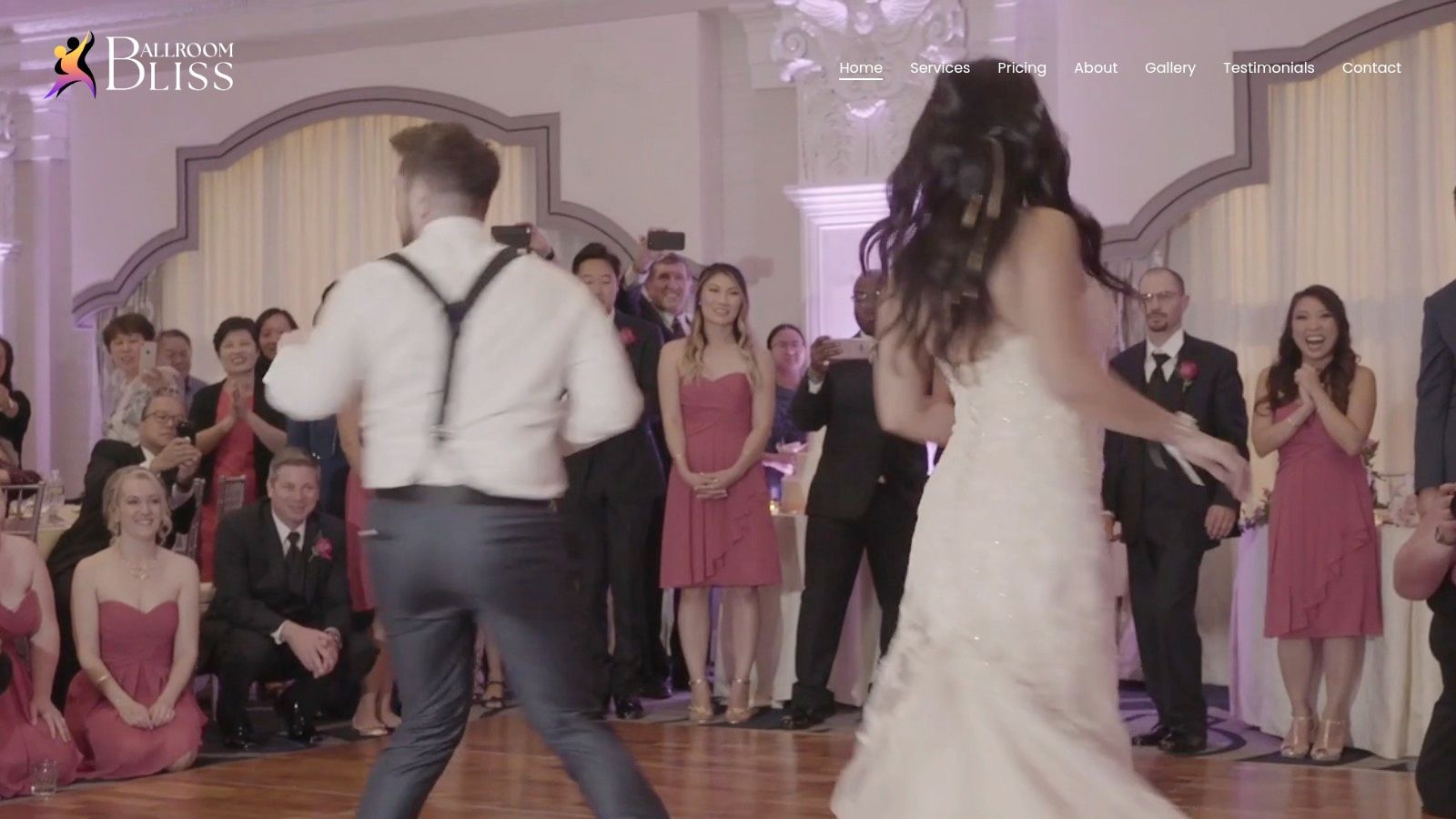
Ballroom Bliss makes sense for one very common Philadelphia goal. Get a first dance ready without turning dance lessons into a second hobby.
That focus matters. Couples shopping for studios often waste time comparing broad ballroom programs, social calendars, and style menus when what they really need is a short, clear plan, a teacher who can choreograph around their song choice, and scheduling that fits wedding prep.
Best for couples with a deadline
Ballroom Bliss fits the decision framework well under the wedding category. If your priority is a polished first dance, parent dance, or a few confidence-building lessons before the reception, a boutique wedding studio usually gives you better value than a general studio package built for long-term students.
I recommend places like this when the question is practical. How fast can we get comfortable? How many lessons will we likely need? Can the choreography match our song, floor space, shoes, and actual ability level? A wedding-focused studio is usually better at answering those questions directly.
One advantage stands out right away. Ballroom Bliss publishes pricing and package information on its site. That makes comparison easier, especially for couples deciding between a complimentary intro at a broader studio and a more targeted private-lesson path.
Good wedding instruction should reduce stress. The goal is to look natural, stay on time with the music, and enjoy the moment.
Where Ballroom Bliss may not be the right fit
The trade-off is breadth. Ballroom Bliss appears better suited to private instruction for a defined event than to students who want weekly group classes, varied partner-dance styles, and a studio community after the wedding.
That does not make it a weaker option. It makes it a narrower one.
If your dance goal ends with the reception, that narrow focus is useful. If you want the wedding dance to be your entry point into salsa nights, ballroom socials, or longer-term technique work, a studio with stronger group programming may serve you better over time.
7. Urban Movement Arts
What if your real goal is not ballroom technique or a competition track, but becoming a more confident, more musical mover across different styles?
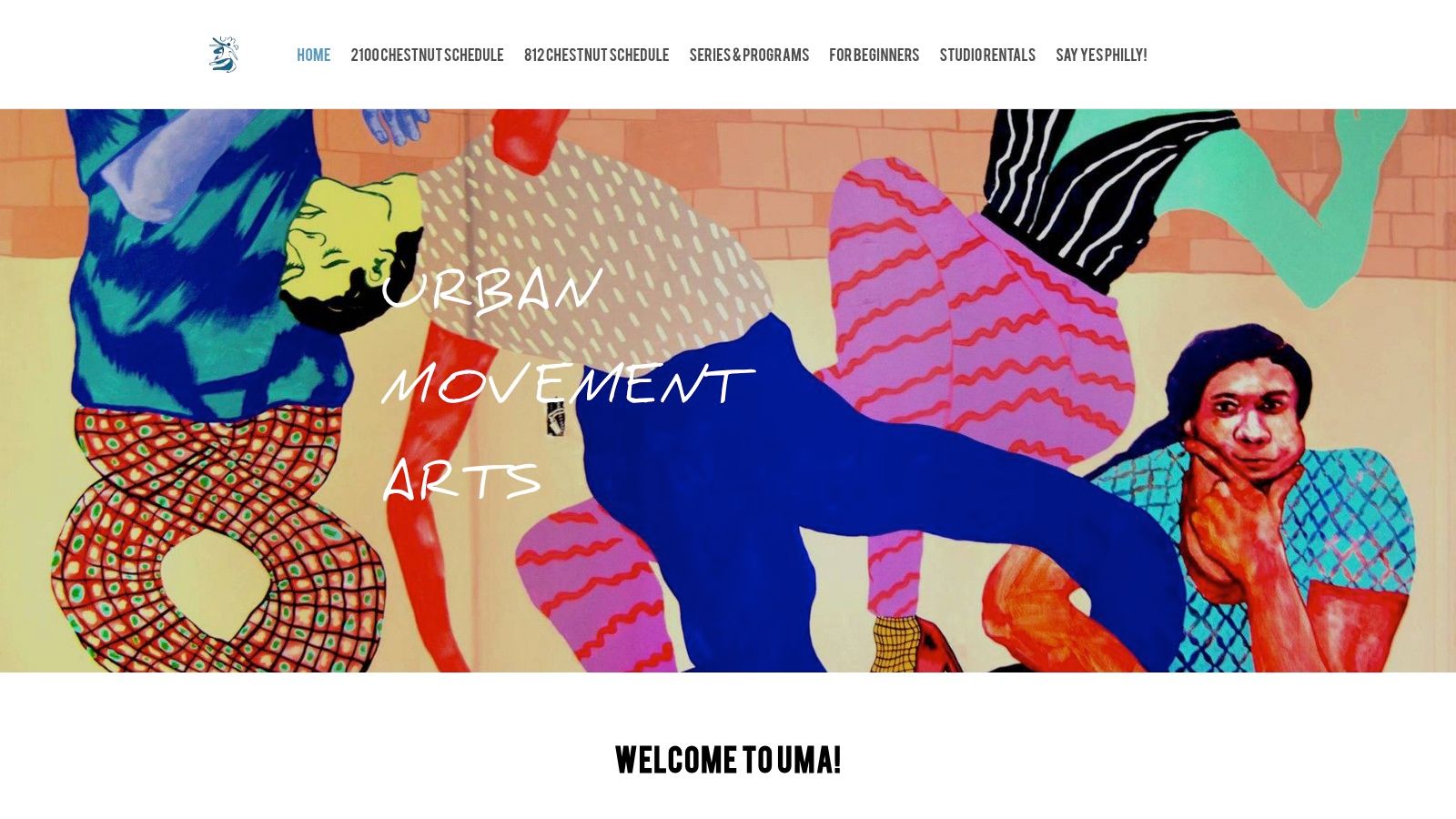
Urban Movement Arts fits that goal well. It serves adults who want to build coordination, groove, rhythm, and comfort in a studio setting before deciding whether they want to commit to one dance lane. In Philadelphia, that matters. Plenty of students do not start by saying, "I want silver-level Foxtrot." They start by wanting to feel less stiff at parties, pick up club styles, or try classes that reflect the city’s wider dance culture.
I point people here when they need range more than specialization. If your decision framework is social confidence, fitness, and exploration, this studio makes more sense than a private-lesson-first ballroom model.
Best for exploring styles without a long commitment
Urban Movement Arts offers a beginner-friendly on-ramp. The studio lists an intro month for $40, regular drop-ins for $19, and membership options on its site. That setup is practical for students who want to test a few classes before committing to a package or weekly private lessons.
The bigger advantage is variety. Urban Movement Arts is a strong pick for hip hop, house, waacking, voguing, African diasporic forms, Lindy Hop, and Hustle. That mix helps students improve musicality and body awareness while also learning what kind of room, music, and teaching style keeps them coming back.
There is a trade-off. Students who want a complimentary first lesson, a partner-dance curriculum, or a clear path into ballroom medals and competitions will usually find a better fit at studios built around that system.
Where Urban Movement Arts stands out
This studio works best for adults who want dance to feel social and lived-in, not formal. The Center City location also lowers the barrier for trying a class after work, which matters more than people think. Convenience is often the difference between taking one lesson and building a real habit.
For beginners, my advice is simple. Use Urban Movement Arts if you want to sample broadly, get moving fast, and develop confidence in your body before choosing a specialty. If your end goal is wedding choreography, ballroom technique, or a complimentary intro session that leads into a structured private program, another studio on this list will likely match your needs more closely.
Top 7 Philadelphia Dance Studios Comparison
| Studio | Ease of getting started (implementation complexity) | Resource requirements | Expected outcomes | Ideal use cases | Key advantages |
|---|---|---|---|---|---|
| Danza Academy of Social Dance | Low, complimentary first lesson; in-person at two PA locations | Moderate time/fees (private & group); pricing by inquiry | Confident social dancing; clear beginner→competitive progression | Beginners, wedding clients, those seeking long-term progression | Decades of experience, wide style menu, welcoming partner-optional policy |
| Society Hill Dance Academy | Low, free first-lesson consult; $20 group drop-in available | Affordable drop-ins; packages require inquiry | Improved ballroom/Latin/social skills with party practice | Beginners→advanced who want regular social events and wedding prep | Broad style coverage and steady social calendar |
| Top Hat Dance Studio | Moderate, established studio, contact for pricing | Private lessons, group classes, rentals; commute may vary | Social dance competence, competition coaching, event hosting | Local adults wanting privates, group classes and studio rentals | Long local history, large floating ballroom floor, full-service options |
| VIBE DanceSport | Moderate, consultation-based onboarding; competitive focus | Intensive technical coaching and conditioning; appointment scheduling | High-level technique and competition readiness | Serious competitors and dancers seeking technical training | International Latin/Standard coaching and athletic conditioning |
| Estilo Dance Studio | Low, active social calendar; Latin-focused enrollment | Group classes and privates; pricing by inquiry | Salsa/Bachata proficiency, performance and choreography | Salsa/bachata enthusiasts and Latin social dancers | Deep local Latin specialization and community reputation |
| Ballroom Bliss | Very low, transparent published pricing and packages online | Pay-as-you-go or bundled lesson packages; time-limited wedding plans | Polished, stress-reduced wedding first dances and choreography | Engaged couples and absolute beginners focused on wedding dances | Clear pricing, wedding specialization, video support between lessons |
| Urban Movement Arts | Very low, clear intro month ($40), drop-ins and memberships | Affordable memberships/drop-ins; frequent workshops and pop-ups | Improved groove, musicality and social-floor confidence | Club/urban dancers (Hip Hop, House, Waacking, Voguing) | Wide social/club style range, accessible intro pricing, active programming |
Take the First Step on Your Dance Journey
Which studio gives you the best first lesson for the kind of dancer you want to become?
Use the list above as a decision tool, not a popularity contest. Social dancers usually do better in a studio with a welcoming group-class culture and room to try different styles. Competitive dancers need tighter coaching and clearer technical standards. Couples preparing for a wedding usually care less about variety and more about a clean plan, reliable scheduling, and choreography that looks good under pressure. If salsa or bachata socials are your main goal, pick the studio that already serves that crowd well.
That is the Philadelphia trade-off. Breadth helps if you are still figuring out your style. Specialization helps if your goal is already clear.
For beginners, the first visit matters more than the full class menu. Check four things: whether you can start without a partner, how instructors handle nervous adults, what the entry cost looks like, and whether the studio gives you a low-pressure way to test the fit. Those details decide whether you keep showing up after week one.
Danza Academy of Social Dance is a practical option for adults who want an easy starting point and enough range to grow later. I have seen that matter again and again. A couple comes in focused on a first dance, then stays because social ballroom turns out to be fun. A new student starts with one style, gains confidence, and branches out once the basics feel comfortable.
If you are still torn between two or three studios, keep the choice simple. Match the studio to your goal, your budget, your comfort with structure, and the room where you will feel okay being new. Then take the lowest-friction first step available.
Book your FREE complimentary lesson at Danza Academy today! There’s no obligation, just a wonderful opportunity to start dancing. Visit Danza Academy’s contact page to schedule your session now.
If you run a studio or fitness-adjacent business and care about growth systems as much as client experience, this guide on how to scale your fitness business is a useful outside read.
A complimentary lesson is often the smartest place to start. You meet the instructor, get a feel for the teaching style, and learn quickly whether the studio fits your goals before you spend more time or money.