
You’re probably here because of a familiar moment.
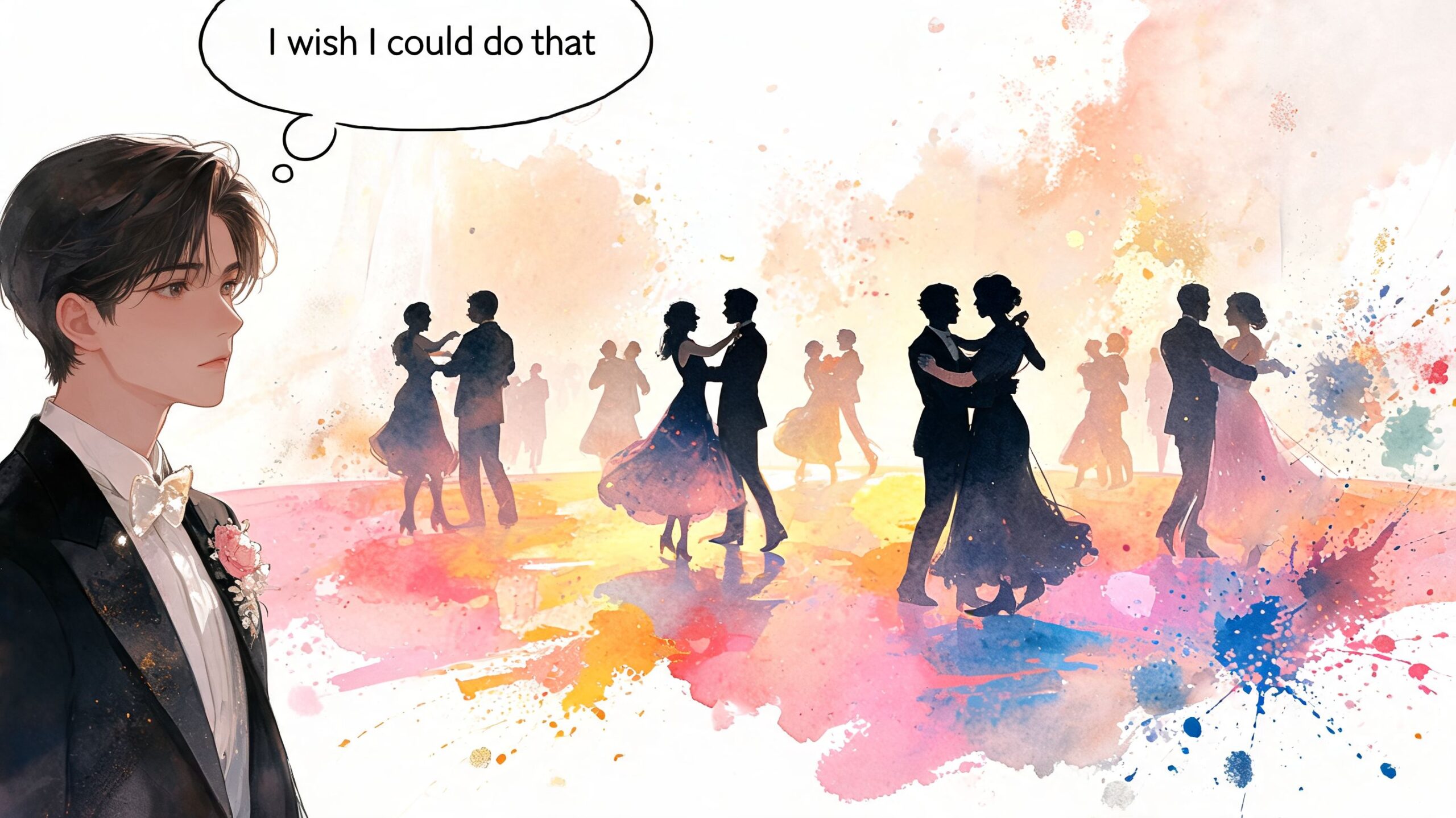
Maybe you were at a wedding and watched one couple glide onto the floor while everyone else stepped back and smiled. Maybe you were at a party when the music changed, people paired off, and you suddenly wished you knew what to do with your hands, your feet, and your nerves. Maybe your thought was simple: I wish I could do that.
After forty years of teaching adults, I can tell you this with complete confidence. That thought is where many good dancers begin.
Most adults don’t walk into their first class feeling bold. They walk in hoping they won’t look foolish. They worry they have no rhythm, no partner, no time, or no natural ability. Then they discover something important. Social dancing is not a gift a lucky few are born with. It is a skill. Skills can be taught, practiced, and enjoyed at any age.
Thinking About Dancing? You Are Not Alone
The adults I meet often say the same things in different words.
“I’ve always wanted to learn.”
“I should have started years ago.”
“I’m probably too stiff.”
“My spouse wants to dance, but I’m the nervous one.”
“I don’t want to be the only beginner.”
You won’t be.
In Philadelphia, interest in adult dance has grown sharply. Adult enrollment in dance classes surged 35% from 2020 to 2025, with over 50 dedicated studios and a 28% rise in overall adult participation, especially in social dances, according to this look at the growing popularity of adult dance in Philadelphia. That tells me two things. Adults are hungry for something active and social. And your curiosity is part of a much bigger movement.
What stops most people
The obstacle usually isn’t age or talent. It’s embarrassment.
Adults are used to being competent. You know how to do your job, manage a schedule, solve problems, and carry on a conversation. Being new at something can feel uncomfortable. Dancing asks you to let go of being polished for a little while so you can become capable.
You do not need to be graceful before you begin. Beginning is how grace starts.
If fear of being seen is the thing holding you back, this guide to overcoming fear of dancing in public speaks directly to that worry.
What your first success really looks like
Your first win in social dance classes for adults usually isn’t dramatic. It’s small and wonderful.
It might be standing a little taller.
It might be hearing the beat more clearly.
It might be making it through one simple pattern without freezing.
It might be laughing because you expected panic and felt fun instead.
That’s how confidence grows. Not all at once. One clear step at a time.
A lot of adults in the Philadelphia area start because they want to feel comfortable at weddings, parties, galas, reunions, and nights out. Others come because they want movement that feels human, not mechanical. Some come alone. Some come as couples. Many discover that the class they almost talked themselves out of becomes the part of the week they look forward to most.
If you’ve been thinking about trying dance, you’re closer than you think. Curiosity is enough to begin.
A World of Styles Finding Your Rhythm
The style names sound bigger than they are.
For many adults around Philadelphia, the first real question is not “Can I dance?” It is “Which dance am I even supposed to start with?” That confusion is normal. Social dance has a lot of labels, and at first they can feel like a restaurant menu with no pictures.
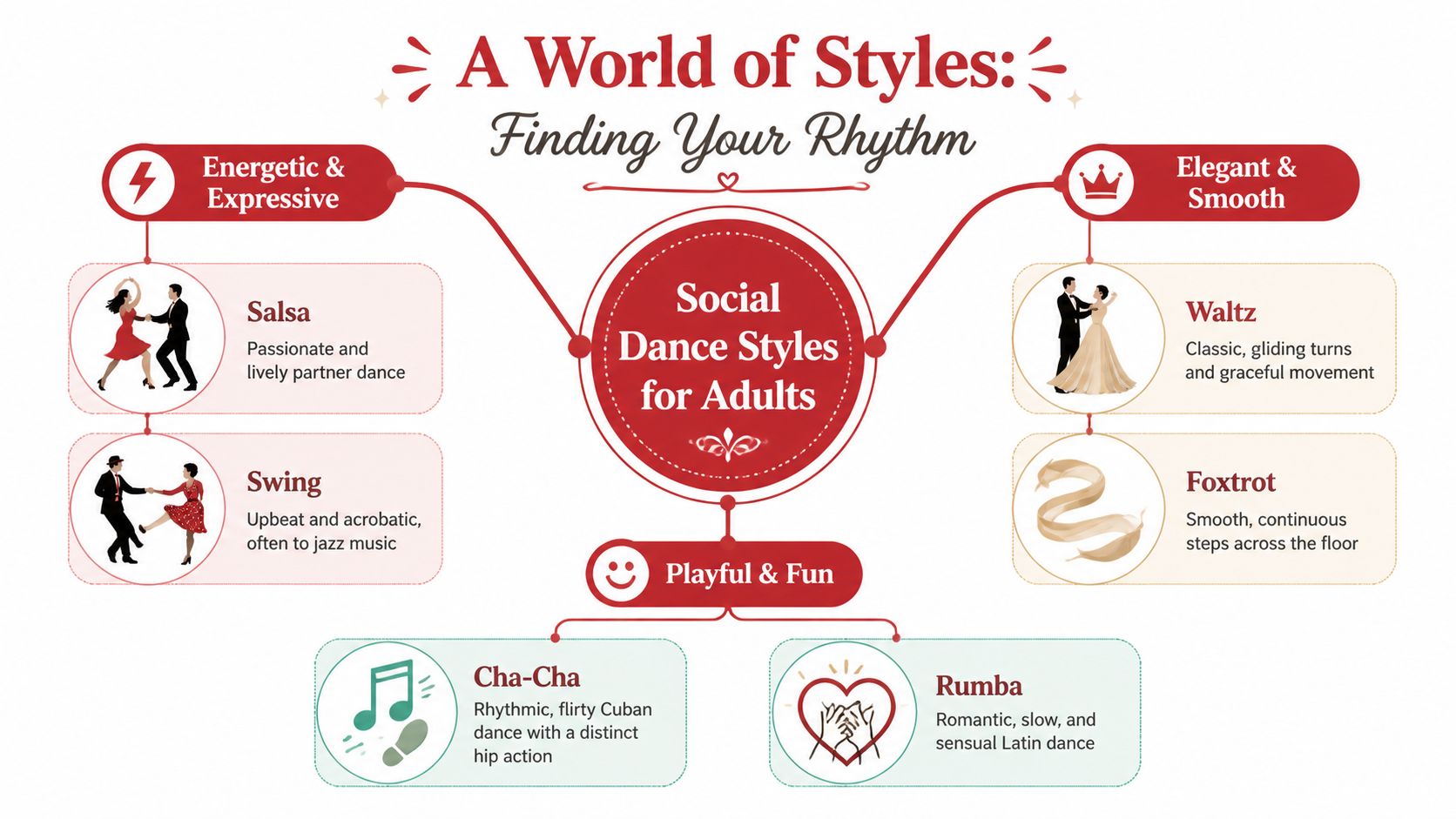
Waltz. Foxtrot. Salsa. Rumba. Swing. Hustle. Tango. Cha-Cha. West Coast Swing. Country Two-Step.
A better way to sort them is by how they feel in your body and where you might use them. Once you understand that, choosing a first class gets much easier at a studio like Danza Academy.
Elegant and smooth
These are the dances many people associate with ballroom evenings, weddings, and formal events.
Waltz is known for its flowing travel around the floor and its gentle rise and fall. The motion has a rolling quality, like moving with the music instead of marching through it. If you want a dance that feels graceful from the start, Waltz is often a welcoming place to begin.
Foxtrot has a calm, polished character. It moves cleanly, adapts well to classic standards, and helps adults look comfortable without asking for dramatic styling. Many beginners like it because it feels practical. You can use it in a lot of real social settings.
Tango belongs in this family too, but it brings a different mood. It is grounded, sharp, and deliberate. Where Waltz glides, Tango places each step with intention. Adults who enjoy clarity and focus often connect with it quickly.
These dances suit people who want poise and structure.
Energetic and expressive
Some adults want a style that feels more conversational, rhythmic, or alive from the first few minutes.
Salsa has that quality. The rhythm is bright, the partnership feels active, and the music gives you something clear to respond to. Beginners often assume Salsa is only for experienced dancers in crowded clubs. In class, it is taught step by step, and many new students pick up the pulse faster than they expected.
Cha-Cha is playful and precise. It asks you to hear the rhythm more clearly and gives the dance a cheeky personality. If you enjoy musical detail and a little sparkle, Cha-Cha can be a very satisfying fit.
Rumba moves at a slower pace, which is one reason teachers like it for newer adults. Slower does not mean easier in every way, but it does give you time to feel your weight shift, notice your timing, and understand partner connection without being rushed.
Samba brings bounce, lift, and a festive spirit. Some students love it immediately. Others warm up to it once they get more comfortable with rhythm in their bodies.
Playful and social
Then there are the dances that tend to put a smile on people’s faces early.
Swing feels light, buoyant, and welcoming. It suits adults who want a party atmosphere and music that pulls them onto the floor. Even simple Swing patterns can feel social right away, which is why many beginners find it encouraging.
Hustle works beautifully for parties and upbeat music. It keeps moving, has great energy, and does not require a theatrical performance style to be enjoyable.
West Coast Swing is smoother and more elastic. It stretches and settles, almost like a conversation with pauses built in. Adults who like variety in their music often enjoy it because it can work with many different songs.
A simple rule: Choose your first dance by the music and setting that appeal to you, not by the flashiest video you saw online.
A quick way to choose your starting point
If you are unsure where to begin, this guide can help.
| If you want to feel… | Try starting with… |
|---|---|
| Graceful at formal events | Waltz or Foxtrot |
| Comfortable at Latin nights | Salsa or Rumba |
| Playful at parties | Swing or Hustle |
| Romantic and connected | Rumba |
| Sharp and dramatic | Tango |
One more thing helps adults relax. You are not choosing a permanent identity.
Starting with one or two dances is enough. That is how social dance classes for adults usually work in practice. You build a base first, then add new styles as your ear improves and your body gets more coordinated. Timing carries over. Balance carries over. Partner awareness carries over. By the time many Philadelphia students try a second or third style at Danza Academy, they realize they are not starting from zero anymore.
More Than Just Steps The Benefits of Social Dance
You walk into a room in Philadelphia after a long workday, shoulders a little tight, mind still buzzing. An hour later, you leave standing taller, breathing easier, and smiling at people who were strangers when class began. That change is a big part of why adults stay with social dancing.
Your body learns by doing
Social dance gives your body a job that feels enjoyable and clear. You are not repeating motion for the sake of burning time. You are stepping with purpose, matching music, organizing your posture, and learning how to move with another person.
That matters more than beginners often realize.
Adults who describe themselves as stiff, clumsy, or uncoordinated usually are not lacking ability. They are lacking practice in a skill their body has not used much lately. Dance class works like waking up an old pathway. Your feet start placing themselves more carefully. Your spine lengthens. Your balance improves because your body has a reason to improve it.
Over time, simple things outside the studio can feel easier too. Walking with confidence. Turning smoothly. Feeling less hesitant in your own skin.
Your mind gets a real break
Many adult students are carrying a lot before they ever step onto the floor. Work deadlines, family logistics, constant phone alerts. Social dancing asks for attention, but it asks for the kind that clears mental clutter instead of adding to it.
You listen for the beat.
You notice your partner.
You respond to what is happening now.
That kind of focus pulls you into the present in a very practical way. It is hard to replay your to do list while counting rhythm and learning a turn at the same time. Many adults in the Philadelphia area tell us class becomes one of the few hours in the week when their mind finally settles.
If you want a fuller explanation of how dancing supports mood, confidence, and connection, these benefits of social dancing lay it out clearly.
Your social life grows without forced small talk
This is one of the most overlooked gifts of social dance.
Meeting people as an adult can feel awkward because so many social settings depend on conversation first. Dance flips that around. The activity comes first. You already have something to do, something to learn, and something to share. That takes pressure off.
A partner class works a lot like a guided conversation. One person offers information through movement. The other responds. Then both adjust. You do not need a perfect line or a big personality. You just need willingness. That is why adults who feel rusty socially often relax faster in dance class than at a typical mixer or networking event.
At Danza Academy, many students start with one goal, maybe feeling comfortable at weddings or having a new hobby close to home in the Philadelphia area. Then something else happens. They begin recognizing familiar faces, laughing between rounds, and feeling part of a community.
If you’re planning a celebration and want dancing to be part of it, it can also help to book your ultimate dance party with music and atmosphere designed to get people participating.
Here’s a short demonstration that captures the energy many adults are looking for:
Wedding couples gain more than a routine
For engaged couples, dance lessons solve a very specific fear. Nobody wants to step onto the floor for a first dance and feel exposed, uncertain, or stuck swaying in place.
Lessons replace that worry with a plan.
You learn how to stand together comfortably, start without fumbling, move across the floor, and finish in a way that feels natural. It does not need to look theatrical. It needs to look like you two know where you are going.
There is another benefit couples do not always expect. During wedding planning, dance lessons can become one of the few appointments that feels fun. You are not comparing vendor quotes or updating a seating chart. You are learning a shared skill, making mistakes safely, and building a memory before the wedding day arrives.
And after the wedding, the skill stays with you. The same comfort and connection you build for one song can show up later at anniversaries, parties, vacations, and every celebration where music starts and you want to say yes instead of sitting it out.
How Adult Dance Classes Actually Work
If you’ve never taken a dance class, the unknown can feel bigger than the dancing itself. Adults often ask practical questions first. Will I be lost? Do I need a partner? Will everyone be watching me?
The answer to that last one is no. They’ll be busy learning too.
Group classes and private lessons
Most adult instruction falls into two main formats.
Group classes are excellent for learning in a social setting. You hear the teacher explain a concept, watch a demonstration, and then try it with others who are also learning. Group work helps adults relax because nobody is expected to be perfect. You build timing, coordination, and partner awareness together.
Private lessons are more personal. They give you one-on-one attention and are especially useful if you want faster progress, help with confidence, wedding preparation, or support with a specific dance.
Some adults do best with one format. Many enjoy a combination.
What no partner required actually means
This point confuses people all the time.
“No partner required” doesn’t mean you’ll be left standing alone. In social dance classes for adults, it usually means the class uses a rotation system. You learn with different partners during the lesson so you can practice leading and following with a range of people, body types, and movement styles.
That rotation helps in three ways:
- It improves skill because you stop memorizing one person and start learning the dance.
- It lowers pressure because nobody expects instant chemistry.
- It builds community because you meet everyone in the room.
If you come with a spouse or friend, you can still join. If you come by yourself, you are not unusual.
Why structure matters more than beginners realize
A good class doesn’t throw random steps at you. It builds progressively.
One model of progressive learning showed 70% of new students progressed to intermediate levels within 8 weeks, and correct frame alignment improved connection efficiency by 40% to 50% in a few sessions, according to this explanation of progressive social dance training. The lesson for beginners is clear. When teachers introduce movement in the right order, adults stop feeling overwhelmed and start feeling capable.
Teacher’s note: Beginners don’t need more moves first. They need a clearer frame, better timing, and simpler repetition.
What usually happens in a beginner class
A typical class often follows this rhythm:
- You start with a basic stance or frame. This is how you hold yourself and connect with a partner.
- You learn a core step. Usually something simple enough to repeat comfortably.
- The teacher adds one new element. Maybe a turn, a change of direction, or a timing variation.
- You practice to music. Slowly at first, then with a little more freedom.
- You finish feeling better than when you came in. Tired sometimes, but encouraged.
That’s the part many adults don’t expect. A well-run class doesn’t make you feel exposed. It makes you feel included.
How to Choose the Right Dance Studio for You
You might find three studios online, open four browser tabs, and still feel no closer to a decision. That is common, especially for adults in Philadelphia who are new to social dancing. A polished website can look reassuring, but the better question is simpler. Will this place teach you in a way that helps you relax, learn, and keep coming back?
Start with the teacher, not the wallpaper.
A good studio has a clear way to place beginners. Social dance works a lot like learning to drive. If someone puts you on a highway before you can steer, the problem is not your potential. The problem is the starting point. Your first conversation or trial lesson should help the instructor notice your timing, coordination, comfort level, and goals, then guide you into the right class or lesson path.
That first visit should help you answer a few practical questions:
- Does the instructor teach adults clearly? Good dancers are not always good teachers.
- Do the explanations make sense to you? You should not need a translator for basic steps.
- Do you feel encouraged while being corrected? Clear feedback helps. Pressure usually does not.
- Can they match your goal? A wedding couple, a salsa beginner, and someone who wants ballroom for nights out may need different starting points.
If you want a useful comparison tool, this guide on how to choose a dance studio lays out what to look for in more detail.
Next, pay attention to the room itself.
Adult beginners learn best in a space that feels organized, friendly, and calm. That does not mean casual in the sloppy sense. It means the class has structure, the teacher keeps things moving, and nobody is made to feel foolish for being new. After forty years of teaching, I can tell you this with confidence. Adults improve faster when they feel safe enough to make ordinary mistakes.
That matters a great deal in social dance, because learning is visible. You are using your body, listening to music, and sometimes working with a partner all at once. A supportive studio understands that beginners need repetition, plain language, and patience.
If you are comparing options in Center City, the Main Line, or nearby suburbs, look at the practical side too. Can you get there without turning every class into a commute problem? Are class times realistic for your work and family schedule? Does the studio offer the styles you want to use socially, such as ballroom, Latin, swing, or wedding dance instruction?
One local option many Philadelphia-area adults consider is Danza Academy of Social Dance. It offers adult group and private instruction in Ballroom, Latin, and social styles, along with a complimentary first lesson and locations in Center City Philadelphia and Exton. For many beginners, that setup is helpful because it combines flexibility with a real starting assessment.
Listen carefully to how a studio talks to beginners before you ever step on the floor. If the message sounds like, "Keep up or get left behind," keep looking. If it sounds like, "We will meet you where you are and show you the next step," you are probably in the right kind of place.
A simple test helps. Ask yourself, can I picture walking back in next week?
If the answer is yes, pay attention to that feeling. It often tells you more than any sales pitch.
Your Complimentary First Lesson What to Expect
The first lesson is often the hurdle people build up in their minds. Once they’ve done it, the mystery disappears.
Here’s what it usually feels like.
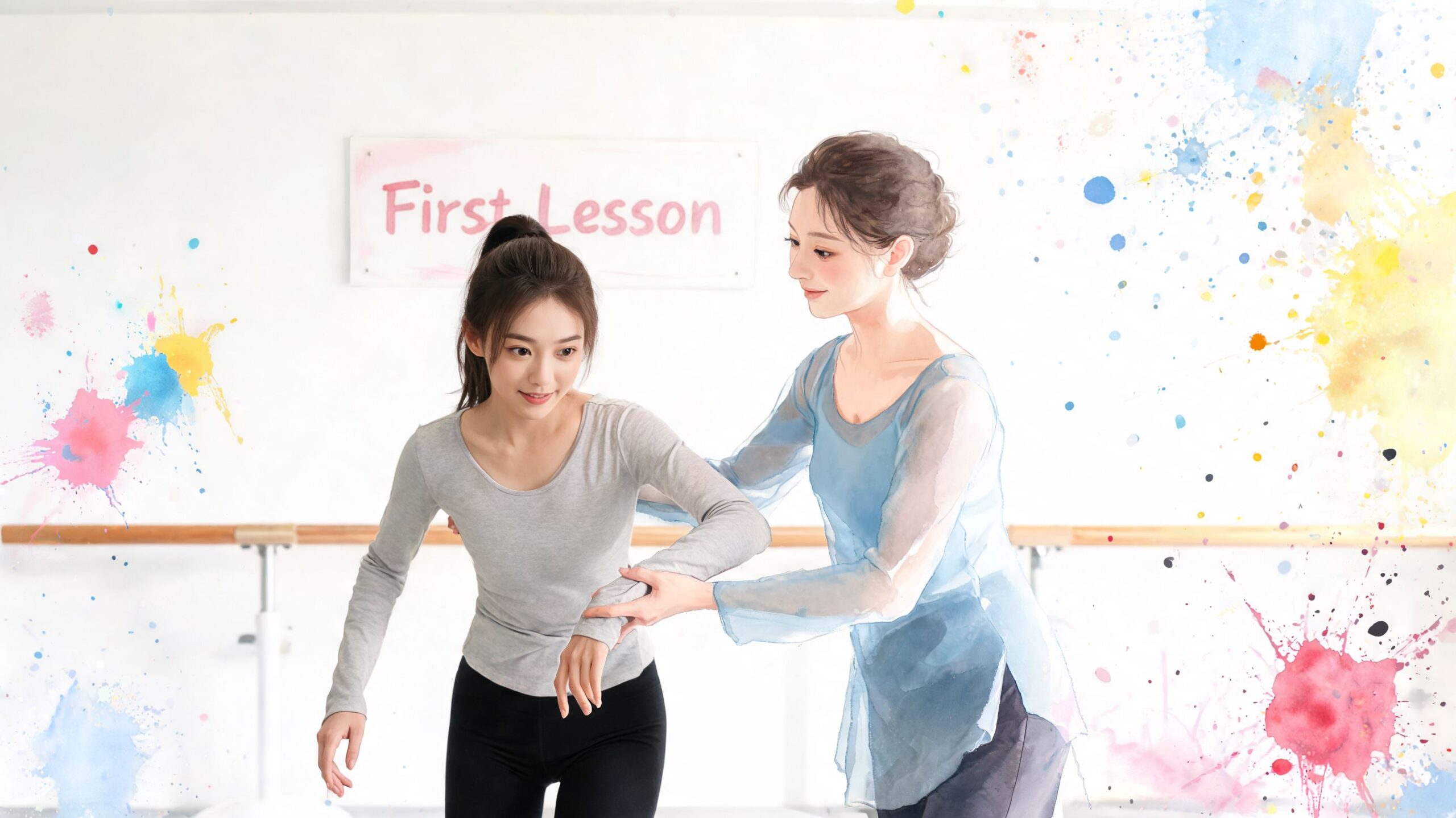
You arrive a little early because you don’t want to rush in flustered. That’s smart. You walk through the door, notice the music, and realize nobody is inspecting you. The instructor greets you, asks what brought you in, and listens. Maybe you say wedding. Maybe you say salsa. Maybe you say, “I’ve always wanted to do this and I’m nervous.”
That’s a perfectly good place to start.
What should you wear
Keep it simple.
Wear clothes you can move in comfortably. You do not need sequins, practice wear, or anything fancy. For shoes, avoid heavy sneakers with a lot of grip if you can. Shoes that let you pivot a bit more easily tend to feel better on the dance floor.
If all you have is a neat, comfortable outfit and sensible shoes, that’s enough for a first visit.
What the instructor usually checks
An experienced teacher is noticing useful things right away. Not to judge you, but to help you.
They may look at your posture, how you transfer weight, whether you naturally hear the beat, and how you respond to a simple lead or direction. If you come as a couple, they’ll also notice how you move together. If you come alone, they’ll focus on your individual coordination and comfort.
That first lesson often includes:
- A conversation about your goals: Social confidence, weddings, fitness, fun, or all of the above.
- A few very basic movements: Enough to let you succeed quickly.
- A sense of possible next steps: Group classes, private lessons, or a blend.
What if you have no rhythm
Most beginners say this before they’ve had any instruction.
Rhythm is not a personality trait. It’s a skill of listening, counting, and repeating. Some people pick it up quickly. Others need more guided practice. Both are normal.
If you can walk, pause, and listen, you can learn rhythm.
The first lesson is not a test you pass or fail. It’s an introduction to the process. Your teacher isn’t waiting for you to impress them. They’re looking for the clearest way to help you learn.
What you’ll probably feel by the end
Not perfect. Better.
You’ll likely know a few steps, understand a little more about timing, and feel less intimidated than you did before you walked in. Many adults also feel relieved. They expected something formal and frightening. Instead, they found instruction, movement, and a lot less pressure than they imagined.
If you come with a partner, you’ll leave having done something together. If you come solo, you’ll leave knowing that solo beginners belong there too.
That’s why a complimentary first lesson matters. It turns a vague fear into a real experience, and real experiences are much easier to build on.
Start Your Dance Journey Today at Danza Academy
A lot of adults around Philadelphia have the same quiet thought. "I’d love to learn, but I’m probably too late."
After forty years of teaching, I can tell you that thought is common, and it is wrong.
Adults delay dance classes for practical reasons. Work gets busy. Family schedules fill the calendar. A wedding, reunion, or party comes and goes, and the idea gets pushed a little further out. Then one ordinary week, something shifts. You decide to try one evening instead of waiting for the perfect season, because the perfect season rarely appears on its own.
That is how many dance journeys begin at Danza Academy. Not with a grand plan. With one visit, one lesson, and one small decision to stop wondering and start learning.
If you are new to social dancing, it helps to see the process clearly. Learning to dance works a lot like learning to drive in a new neighborhood. At first, you notice every turn. Soon, the route starts to make sense. With a little guidance and repetition, your body stops feeling like a stranger in motion. It begins to feel like home.
For adults in the Philadelphia area, Danza Academy offers a practical place to begin. You can come in, talk about what brought you there, and get a recommendation that fits your goals, whether that means social dancing, a wedding, better coordination, or trying something new for yourself.
A simple next step is enough:
- Schedule your complimentary first lesson and ask any questions you have. The studio can help you sort out whether group classes, private lessons, or a mix of both makes the most sense for you.
What changes for adult students is not only their footwork. They carry themselves differently. They make eye contact more easily. Music stops feeling like a threat and starts feeling like an invitation.
That change often starts sooner than people expect.
Frequently Asked Questions About Adult Dance Classes
How long will it take before I feel confident
Confidence usually builds the way a song becomes familiar. First you recognize the rhythm. Then you know when a change is coming. After that, your body starts responding with less effort.
For adult beginners, confidence rarely appears all at once. It grows class by class. One week you remember the basic step. Another week you notice you are no longer staring at your feet. Then comes the pleasant surprise. A song starts, and instead of freezing, you begin.
Steady attendance matters more than natural talent. Adults in the Philadelphia area often ask for a timeline, but the better measure is rhythm of practice. If you show up regularly, your comfort has a chance to stack up.
Do I need special dance shoes right away
No.
Start with comfortable clothing and shoes that stay secure on your feet and let you move without pain. You do not need to arrive looking like an experienced dancer. You need to arrive ready to learn.
Later, if you settle into salsa, ballroom, bachata, swing, or another style, an instructor can explain what kind of shoe helps and why. That approach saves money and confusion. Buying shoes after a few lessons is like buying tennis gear after you know you enjoy the game.
Is it awkward to come by yourself
Solo beginners are common.
In many social dance classes, coming alone makes the first weeks simpler. You meet more people, rotate partners if the class format includes that, and learn to respond to different styles of movement. That is part of what makes social dancing useful. You are not memorizing steps in a bubble. You are learning how to connect, listen, and adapt.
If you are worried about walking into a room where everyone already knows each other, that fear makes sense. It also fades quickly. Adult classes usually include plenty of people who had the same concern the week before.
Are there options for adults with physical limitations or disabilities
Yes, and it is smart to ask about this before your first class.
Good dance instruction can be adjusted for mobility limits, balance concerns, chronic pain, sensory needs, injury history, and other physical considerations. The goal is not to force every student into the same mold. The goal is to teach rhythm, coordination, and connection in a way your body can work with.
A teacher may adjust pacing, range of motion, partner holds, breaks between exercises, or how patterns are introduced. Some students need more repetition. Some need seated options for part of a lesson. Some do better with quieter, clearer instruction. None of that is unusual to an experienced instructor.
If you are considering social dance classes for adults in Philadelphia and have a concern about what your body can handle, ask directly. A thoughtful conversation before class often removes a lot of worry and helps you start with confidence instead of guesswork.
Adults begin for all kinds of reasons. Curiosity is enough. Nervousness is normal. Your first class does not need to be perfect. It only needs to be your first step.