
Wedding planning has a way of turning even happy decisions into mini stress tests. You choose a venue, answer family texts, compare timelines, and then one quiet thought keeps popping up: what are we doing for our first dance?
For a lot of couples, that question carries more pressure than it should. One partner worries about looking stiff. The other worries about forgetting steps. Both are trying to fit one more thing into an already full calendar. That's exactly why first dance lessons work best when they're approached as a break from wedding logistics, not another task to survive.
Your First Dance A Moment to Connect Not Stress
Your first dance doesn't need to feel like a performance review in formalwear. It can be one of the few moments in the day when you get to tune out the room, hear your song, and enjoy each other.
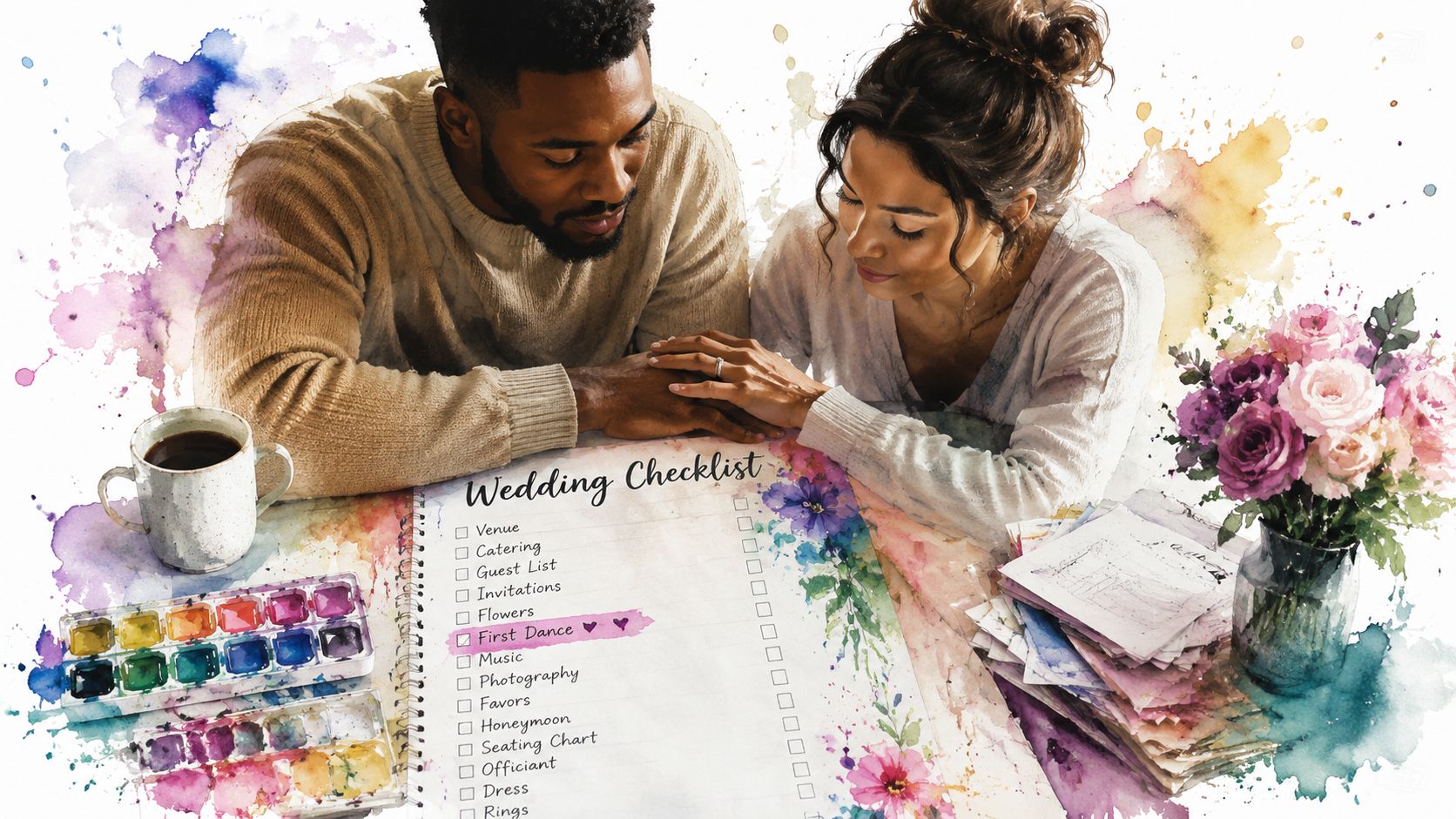
That mindset matters, because couples often assume the first dance has always been a big spotlight moment. Historically, the custom comes from older ball traditions, where the guest of honor opened the event with the first dance to invite everyone else onto the floor. In earlier eras, that opening dance was often a waltz, which reflected a time when ballroom dance was a shared social skill rather than a private showpiece, as described in this history of the first dance tradition.
The tradition began as an invitation to join the celebration. That's a much gentler standard than “we need to wow the room.”
Seen that way, first dance lessons become less about perfection and more about comfort. You're not trying to become competitive dancers in a few weeks. You're learning how to move together with enough ease that the moment feels natural.
What usually works best
Most couples feel better once they stop asking, “What's impressive?” and start asking, “What feels like us?” A calm, connected dance almost always reads better than a complicated routine done with panic in the shoulders.
A practical goal looks like this:
- Stay present: Make eye contact, breathe, and listen to the music.
- Move with clarity: Use simple steps you can repeat without overthinking.
- Create one memorable moment: A turn, a pause, or a clean ending is often enough.
- Leave room for joy: If you're smiling at each other, guests feel that immediately.
That's the key promise of first dance lessons. Done well, they don't add pressure. They remove it.
Choosing Your Song and Dance Style
The first big decision isn't choreography. It's choosing a song you want to live with for the next stretch of wedding prep. You'll hear it in lessons, during practice, and in your head while driving, so personal meaning matters. But so does practicality.
Pick a song you can move to
A beautiful song isn't always an easy dance song. Some tracks slow down and speed up a lot. Others have long music-only breaks or phrasing that makes beginners feel lost. If you're unsure, test it in your kitchen before you commit. Stand in hold, take a few side steps, and notice whether the beat feels steady enough to support calm movement.
If you need ideas, browse a curated guide to wedding dance songs and compare that with Danza Academy's own list of best wedding dance songs. Looking at examples side by side usually helps couples notice what they're naturally drawn to. Some want timeless and elegant. Others want warm, modern, and relaxed.
Practical rule: Choose the song first for meaning, then confirm it works for movement. Don't force yourselves into a style just because it looks good online.
Match the style to your personality
Once the song is chosen, the dance style becomes easier to identify. A soft romantic ballad may suit a Rumba-inspired feel. A classic standard often fits Foxtrot or Waltz. A modern acoustic track may be best with a polished social sway and a few clean patterns rather than a formal ballroom structure.
This is also where couples need to be honest about their goal. Many don't want a fully choreographed performance. They want something polished that still feels natural, especially when one partner is more comfortable dancing than the other. Accessibility and comfort matter just as much as appearance.
A useful way to choose is to think in three lanes:
| Approach | Best for | What it feels like |
|---|---|---|
| Simple social dance | Couples who want ease and connection | Natural, calm, low pressure |
| Semi-choreographed routine | Couples who want structure plus flexibility | Polished with a few highlight moments |
| Full performance piece | Couples who love rehearsal and want a showpiece | Detailed, planned, more demanding |
Don't pick against your real life
The wrong choice usually isn't the “wrong” dance. It's the mismatch between the dance and the couple. If you have packed workweeks, travel, nerves about attention, or a big skill gap between partners, a simpler plan often creates the better result.
A polished first dance should feel like an extension of your relationship. Not a costume you're trying on for three minutes.
Your Wedding Dance Lesson Timeline
Timing changes everything. Couples who start with a realistic schedule tend to enjoy the process more, practice more consistently, and make calmer decisions when something needs adjusting.
For the clearest planning benchmark, guidance for wedding first dance preparation recommends starting 3 to 6 months before the wedding for a fully choreographed routine, or about 2 months before the event for a simpler polished dance, aiming for at least two lessons. That same guidance also emphasizes practicing weekly, using your actual song, and rehearsing in wedding shoes or similar attire to help the body transfer what it learned into the event context, as explained in this wedding first dance planning guide.
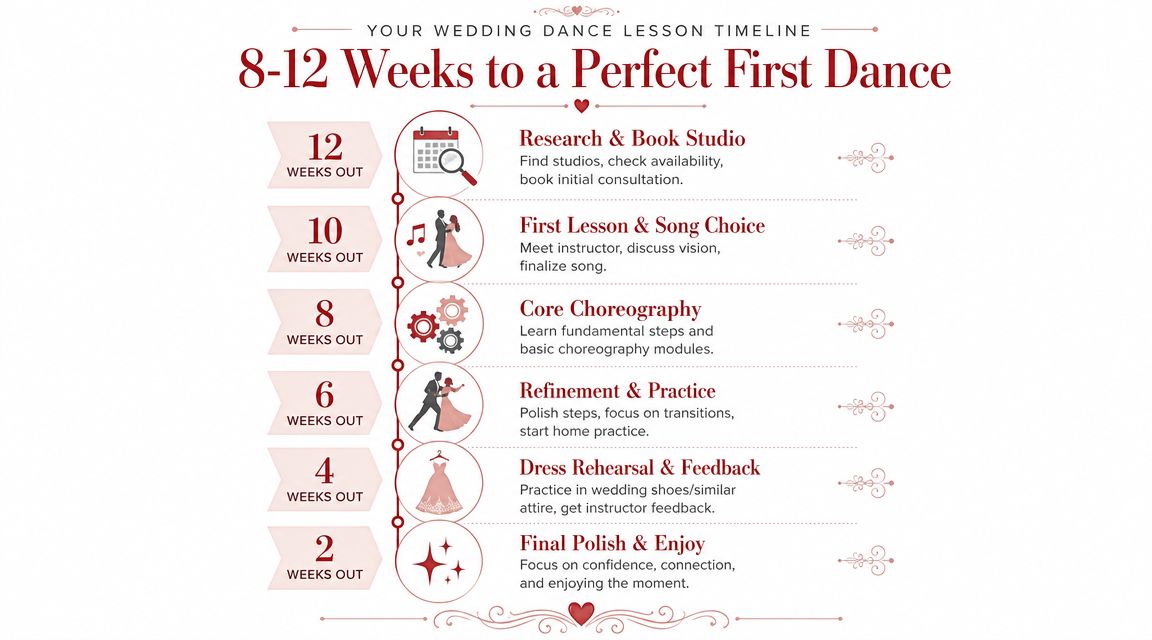
If you want simple and polished
An 8 to 12 week window works well for many couples because it gives enough repetition without making the dance feel stale. If your goal is a clean, comfortable first dance rather than a full showpiece, think in stages instead of in one giant task.
Early phase
Finalize the song, meet your instructor, and decide the overall feel, clarifying whether you want a natural social dance or something with a few planned moments.Middle phase
Learn the core step pattern and get used to moving together. Most early frustration comes from timing, frame, and transitions, not from “hard moves.”Later phase
Add entrance, turn, ending, and musical accents. This is when the dance starts to look intentional rather than improvised.Final stretch
Practice in the shoes you'll wear, or something close to them. If the outfit changes your stride or turning ability, you want to know that early.
If you want a choreographed routine
A more detailed routine needs more runway because choreography takes longer to settle into the body than people expect. Memory isn't the only issue. Couples also need time to make the routine look relaxed.
Here's where extra time helps:
- Musical detail: Hitting a phrase cleanly takes repetition.
- Partner coordination: One partner may learn faster than the other.
- Comfort under pressure: Steps that look easy in the studio can disappear under wedding-day nerves.
- Dress and floor adjustments: Long gowns, jackets, and unfamiliar floors change movement.
Starting early doesn't mean making the dance bigger. It means giving yourselves margin.
A simple planning filter
If you're unsure when to begin, use this quick check:
- Choose the shorter runway if you want a natural dance with minimal choreography.
- Choose the longer runway if your song has multiple sections, your routine includes featured moments, or you're both complete beginners.
- Add extra cushion if your schedule is unpredictable.
The best timeline is the one you can keep. A modest plan followed consistently beats an ambitious one that keeps getting postponed.
Beginner Choreography Building Blocks
“Choreography” can sound intimidating, but beginners do best when they stop thinking of the dance as one long sequence. A stronger approach is to build from small, repeatable modules.
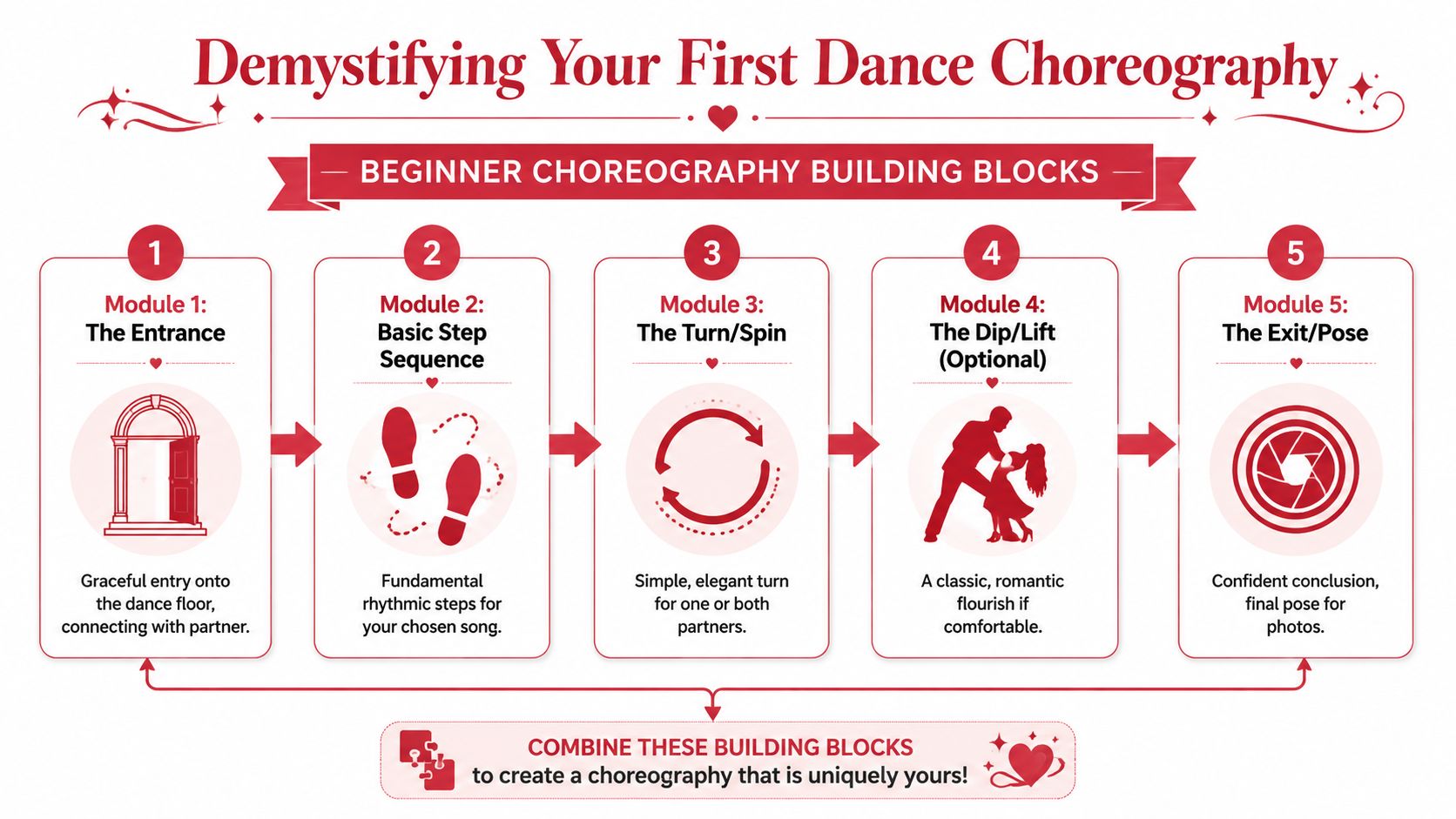
A practical teaching framework for first dance lessons is to start with a home-base pattern, add a simple feature such as a turn, and finish with a controlled ending like a dip. Organizing movement around musical phrasing, often in 4 or 8 beat sections, makes the dance easier to remember under stress. Advice based on this modular approach also warns against cramming in too many figures too early or choosing movement that doesn't fit the available floor space, as shown in this first dance choreography tutorial.
Module one and module two
The first two modules do most of the heavy lifting.
The entrance and first hold set the tone. Couples often overlook this part, then feel awkward before the dance has even started. Walk on at a natural pace, find your spot, take a breath, and connect before the first step. Don't rush to “begin performing.”
The home base is the pattern you can return to anytime. That might be a side-to-side sway, a basic box step, or another simple repeating pattern that fits your song. This is your safety net. It keeps the dance moving even if you blank on what comes next.
If you can always return to one reliable pattern, you're never actually lost.
For a visual example of how simple wedding dance movement can look when broken into pieces, this short video gives a helpful reference point:
Module three and module four
After the home base feels steady, add one feature moment.
A good wow moment is simple enough to repeat calmly. An underarm turn works well because it reads clearly to guests but doesn't require advanced technique. A promenade-style walk can also be lovely because it opens the shape of the dance without making either partner feel exposed.
Then build a clean finish.
- A dip works if both partners feel secure and have practiced the entry and exit.
- A held pose works for almost everyone and photographs beautifully.
- A close embrace can be the strongest ending of all if it matches your style.
What doesn't work
Beginners usually struggle when they treat the dance like a memory test instead of a movement pattern. Common problems include:
- Too many figures too soon: More steps create more hesitation.
- No musical anchor: If you don't know where the phrase changes, everything feels random.
- Ignoring floor space: Big traveling patterns can fall apart on a crowded reception floor.
- Rushing the entrance: Starting flustered makes the rest of the dance feel faster than it is.
Simple structure creates confidence. Confidence creates presence. And presence is what people remember.
Making the Most of Your Lessons and Practice
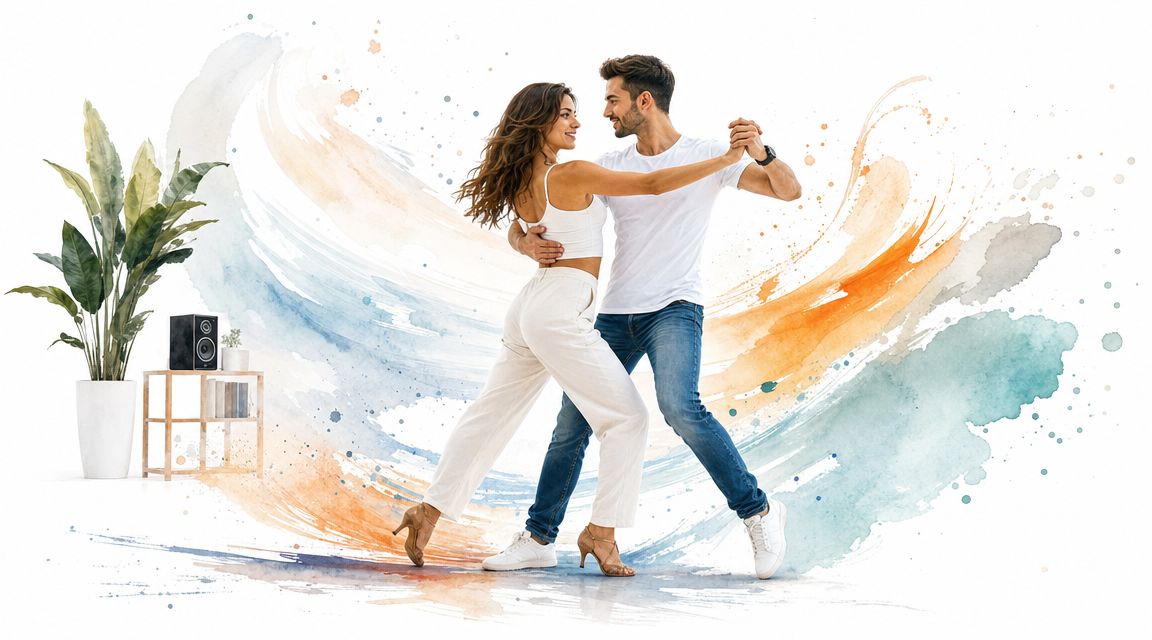
A good lesson should leave you clearer, not more confused. Most wedding couples take 5 to 10 lessons, with an average of 5 lessons spaced 1 to 2 weeks apart described as a common and effective package in this overview of wedding dance lesson planning and participation. That range is useful because it gives couples permission to plan realistically instead of assuming they need endless rehearsal.
What to do during the lesson
Show up with your actual song, shoes that are easy to move in, and a clear sense of what you don't want. That last part helps more than people expect. If you know you don't want dips, spins, or anything that feels theatrical, say so early.
During the lesson:
- Ask for plain-language cues: “Step side, close, hold” is easier to retain than a long technical explanation.
- Be honest about discomfort: If a move feels awkward, unstable, or unlike you, change it.
- Record short review clips if your instructor allows it: Watching a short demo at home can save a lot of guesswork.
- Keep notes right after class: Even two or three phrases help jog memory later.
If memory is your biggest worry, this guide on how to remember dance choreography can help you turn lesson material into something easier to retain between sessions.
What to do between lessons
Practice doesn't need to be long to be effective. It needs to be consistent. Short sessions tend to work better than one draining marathon because they keep frustration lower and recall fresher.
A simple home routine might look like this:
| Focus | What to practice |
|---|---|
| Start | Entrance, first hold, first phrase |
| Middle | Home-base pattern and one transition |
| Finish | Ending pose, dip, or final embrace |
Short practice sessions done regularly beat occasional “catch-up” rehearsals every time.
Also, make your practice environment match reality as much as possible. Use the actual song. Clear enough space to move comfortably. Practice in shoes with a similar height or sole to what you'll wear. If a gown, suit jacket, or fitted outfit changes your range of motion, account for that before the wedding week.
One more thing matters here: keep the emotional tone light. Couples learn faster when the practice session feels like shared time, not correction time.
How to Choose the Right Dance Studio
The right studio won't just teach steps. It will shape how you feel about the entire process. For first dance lessons, that matters as much as the choreography itself.
What to look for first
Start with fit, not flash. A studio may produce dramatic routines, but that doesn't tell you whether it teaches nervous beginners well.
Look for these signs:
- Wedding-specific experience: Teaching social dancers is different from preparing a wedding couple with one song and one big moment.
- A beginner-friendly atmosphere: You should feel welcomed, not evaluated.
- Flexible teaching style: Some couples learn by counting. Others learn by feel, repetition, or video review.
- A realistic philosophy: Good instructors know when to simplify.
One practical option for couples in the Philadelphia area is Danza Academy's guide to finding your perfect wedding dance teachers, which reflects the kinds of questions worth asking any studio before you book.
Questions worth asking before you commit
You'll learn a lot from the answers to a few direct questions.
- How do you work with complete beginners?
- How do you adjust for mixed-skill couples?
- Can you create something natural rather than heavily choreographed?
- What happens if we start late or have limited time to practice?
A strong studio gives clear answers without pushing you into a bigger routine than you need.
The best way to know whether an instructor is right for you is to meet them. That's why a no-pressure first experience matters. If you leave feeling calmer, more coordinated, and more excited than when you arrived, you've probably found the right place to start.
Common First Dance Questions Answered
What if one of us has no rhythm
That's common. Most couples don't walk into first dance lessons with matching skill levels. A good instructor builds from fundamentals, uses clear counting or musical cues, and gives you a reliable home-base step so the dance never feels out of control. Connection matters more than flashy technique.
How long should our first dance song be
If your song is long, it often helps to edit it down so the dance feels focused and comfortable. Most guests respond best to a first dance that makes its point and ends confidently, rather than one that asks the couple to sustain nerves for too long. If you love a specific later section of the song, that can often become the featured part.
What if we mess up on the wedding day
Return to your home base. Smile, look at your partner, and keep moving. Guests usually don't notice nearly as much as couples think they do. They're watching the feeling of the moment more than the technical details.
Recovery is a dance skill too. Calmly returning to a simple pattern is often invisible to everyone else.
Can we dance to a fast song
Yes, but it usually takes a little more care. Fast songs can work well with Swing, Salsa-inspired basics, or a simplified social pattern, but speed gives beginners less time to think. If you want a lively song, keep the structure clean and avoid packing in too many tricks.
Do we need a fully choreographed routine
Not at all. Many couples are happiest with a semi-structured dance that includes a clear beginning, a repeatable middle, and one or two highlighted moments. That approach often looks more relaxed and more genuine than a routine that feels over-rehearsed for the couple performing it.
If you're ready to make your first dance feel simple, confident, and fun, book a free complimentary lesson with Danza Academy of Social Dance. It's a low-pressure way to meet an instructor, talk through your song and style, and find a first dance approach that fits your schedule, comfort level, and wedding vision.