You're probably staring at a workshop page that tells you the event name, maybe the city, and not much else. That's not enough. A useful dance workshop schedule should help you decide whether the style fits your goals, whether the level is realistic, whether the timetable is stable enough to plan around, and whether the pass you're eyeing includes the classes you want.
That's the difference between a fun weekend and a frustrating one. Some dancers want a social-first event with plenty of room to sample classes. Others need a tightly structured intensive, clear registration rules, or a schedule they can build travel around. In practice, the best option often isn't the biggest event. It's the one whose planning details match how you learn.
The seven picks below move from local studio training to major festival and convention formats. Recheck schedules, passes, and availability before you book, especially because workshop calendars often change close to the event. If you want a lower-pressure place to start in the Philadelphia area, Danza Academy's workshops and complimentary lesson give you a way to get guided instruction, even if you don't have a partner.
1. Danza Academy of Social Dance
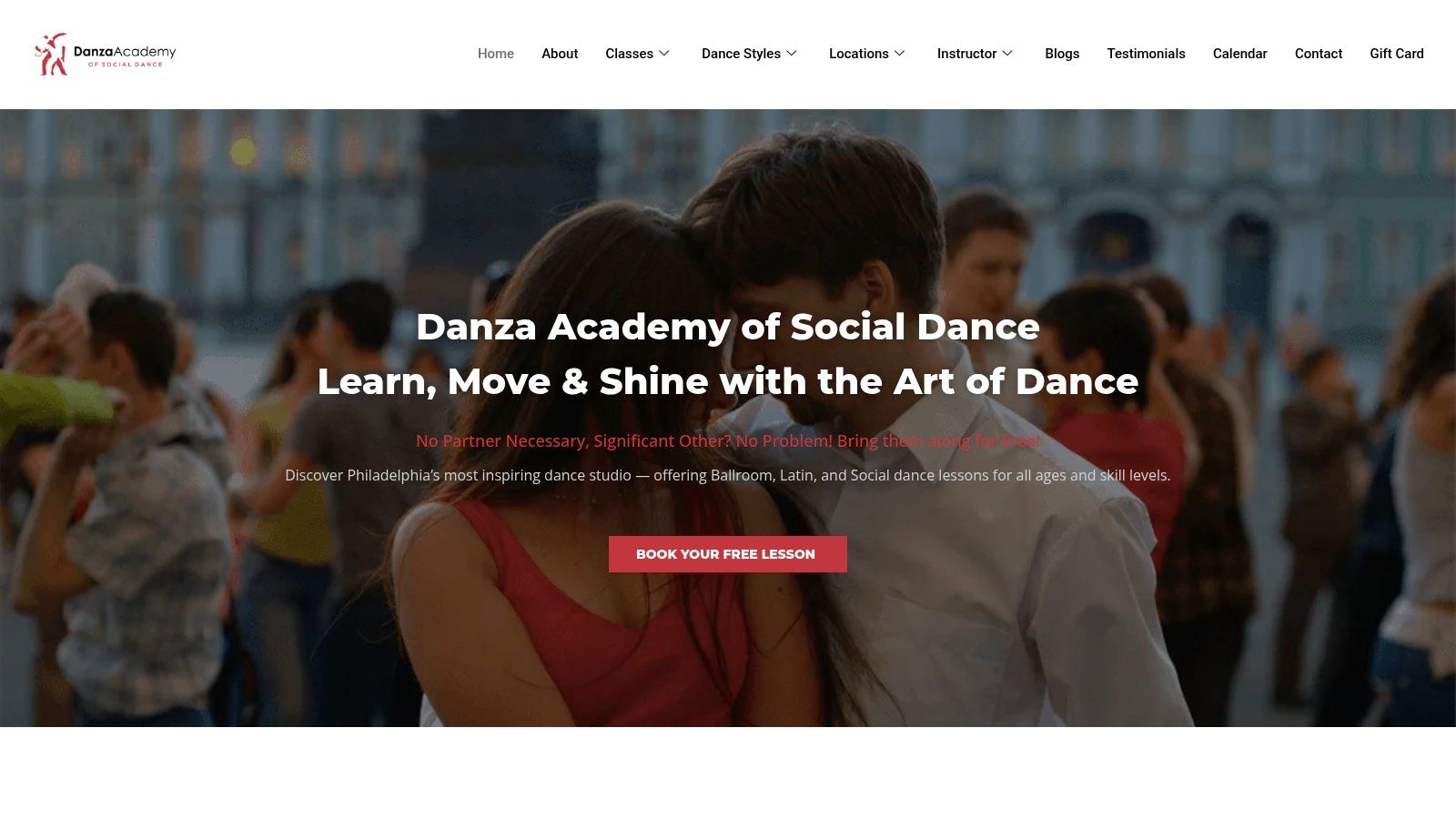
Danza Academy stands out because it solves the biggest problem most workshop pages don't address. It gives dancers a practical local path after the event. If you try a Salsa, Ballroom, Swing, or Latin workshop and realize you want continuity, you can move straight into private lessons, group classes, wedding dance prep, kids' programming, or competitive training without switching ecosystems.
The studio's identity matters here. Danza Academy has been teaching since 1976 and has a 40+ year legacy in the Philadelphia area, with studios in Center City Philadelphia and Exton. That kind of longevity changes how you should read its workshop offering. This isn't a pop-up event brand. It's an ongoing instruction environment designed to turn one good session into actual progress.
For local options, the most useful next click is Danza's page for dance workshops near you.
Why its schedule format works for real learners
A lot of adults don't need the largest possible event. They need the right pace. Published studio guidance on lesson frequency often recommends a weekly rhythm, from one to two sessions per week for beginners up to heavier weekly training for advanced dancers, which makes a recurring local workshop or class schedule easier to sustain than an overloaded festival weekend (Bravo Dance Studio lesson frequency guidance).
That's where Danza's setup is strong. The studio supports both sampling and follow-through:
- Low barrier to entry: You don't need a partner, and a significant other can join for free.
- Better fit for cautious beginners: A complimentary first lesson lets you test instructor fit before buying into a broader program.
- More than one path: You can stay social, train for a wedding, or move toward competitive work without changing studios.
- Support between sessions: Workshops, showcases, and blog content help keep momentum going.
Practical rule: If you're unsure about level placement, a studio with ongoing classes is safer than a festival with only fixed workshop blocks.
Best for
Danza is the best pick here for Philadelphia-area dancers who want feedback, continuity, and a welcoming first step. It's also a strong choice for adults who feel intimidated by festival schedules or don't want to decode multiple passes before even taking a class.
The main trade-off is transparency at the shopping stage. Pricing and package details aren't published on the site, so you'll need to contact the studio for current options and availability. Still, for many beginners, that's a reasonable trade if what you want isn't just an event, but a plan.
2. New York International Salsa Congress
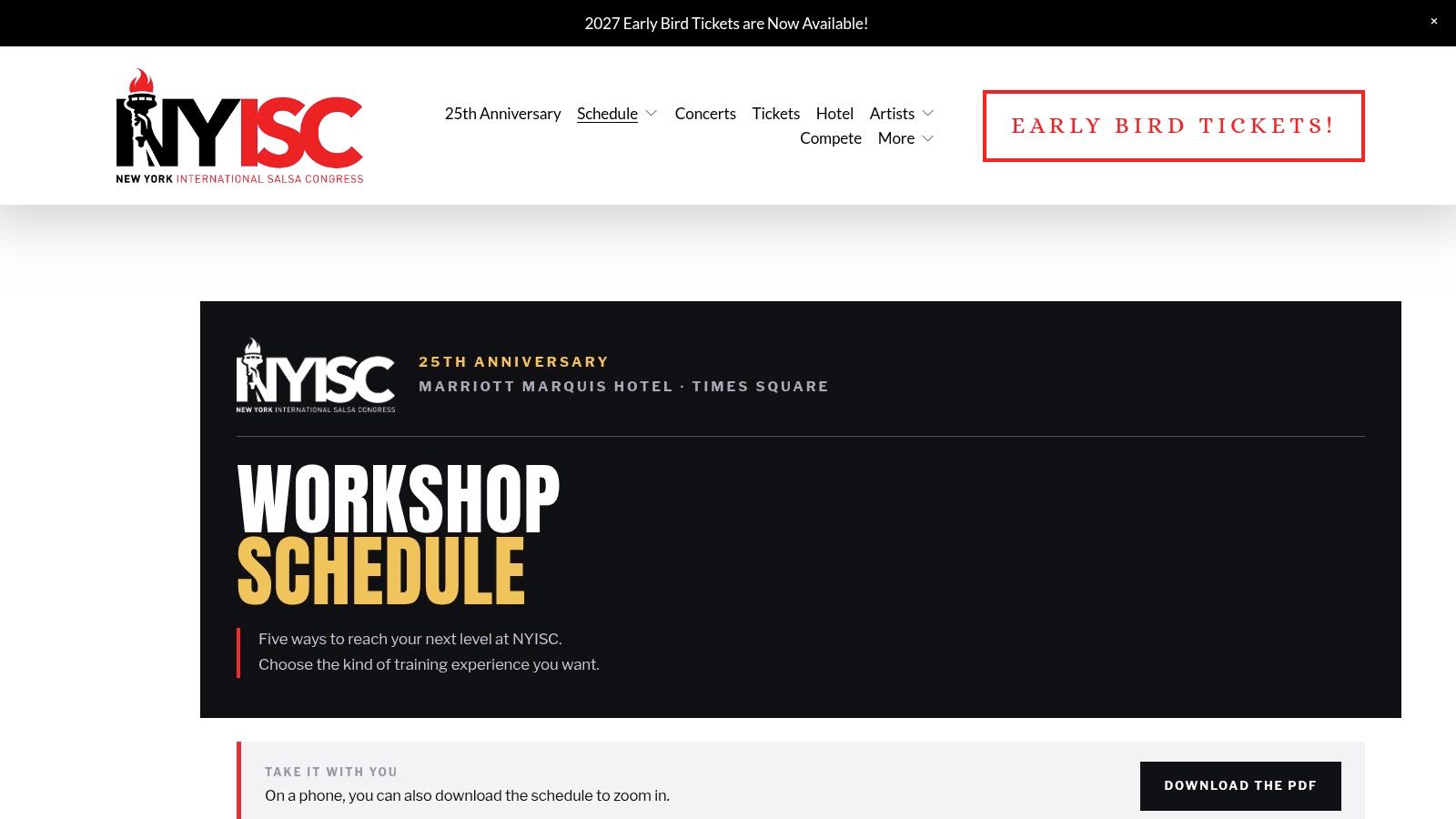
If your priority is density, this is the strongest Salsa-first schedule on the list. The New York International Salsa Congress publishes room-by-room workshop timetables, level tags, topic labels, and pass options that help you map a full weekend instead of guessing what's included.
That matters because adult dance participation is broad, but formal class-taking is much smaller. In the United States, 24% of adults danced in the prior 12 months, while 2% took a dance class, according to the dance participation figures summarized by The Catalyst News. A festival like this sits right at that crossover point. It attracts people who are already socially engaged with dance and are ready for a concentrated learning block.
If you're still building fundamentals before committing to a congress weekend, Danza's beginner Salsa dance lessons are a more controlled on-ramp.
Where it helps most
The biggest strength here is planning visibility inside the event itself. You can compare workshop topics, note which rooms matter to you, and decide whether you want technique, styling, partnerwork, or a specialty add-on such as a boot camp.
A few details make it especially useful:
- Room-by-room timing: Better for dancers trying to avoid overlaps.
- Pass-specific workshop access: Helpful if you only want classes, not the full festival package.
- Festival extras: Shows, socials, and specialty sessions expand the value beyond class hours.
Final schedule details can stay fluid until close to the event, so don't build travel assumptions from an early draft alone.
This event fits social through advanced dancers who want a full Latin dance atmosphere, not just instruction. The downside is the same one that affects many large workshop weekends. Some extras require separate registration, and close-in schedule shifts can complicate travel, childcare, or budgeting.
Direct site: New York International Salsa Congress workshops
3. Camp Hollywood
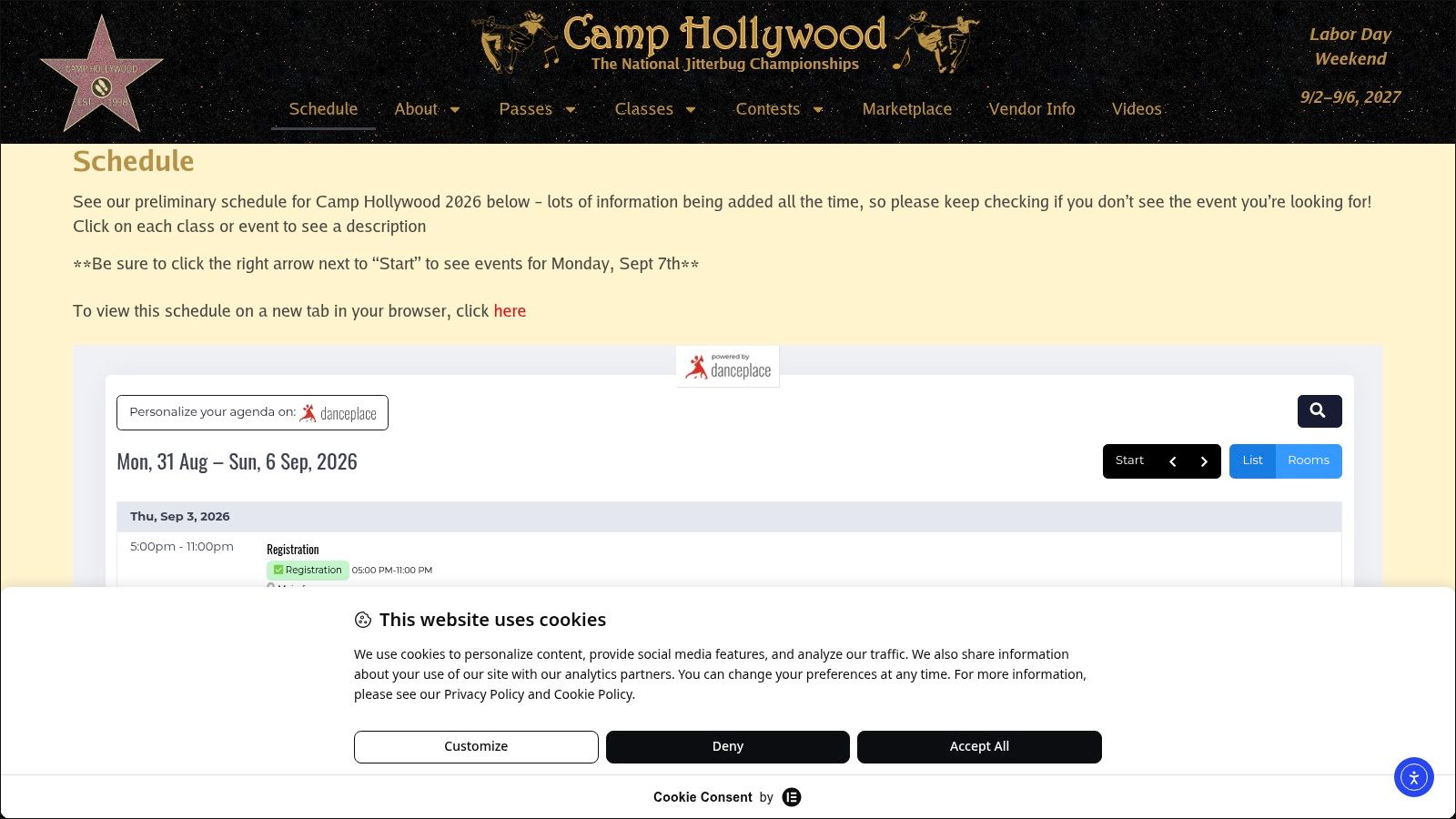
You open a swing event schedule to answer a basic planning question, which classes fit your level and which pass gets you into them. Camp Hollywood gets closer than many events because the schedule shows the full shape of the weekend in one place, not only the teaching blocks.
That matters for a different reason than it did in the salsa congress above. Camp Hollywood serves dancers weighing several vintage swing styles at once, often across Lindy Hop, Balboa, and Collegiate Shag. For that group, timetable clarity is not only about avoiding overlap. It also helps them decide whether the event is class-first, social-first, or worth the cost as a mixed weekend.
The useful part is the way planning details connect. You can check the Camp Hollywood schedule for class timing, then trace how contests, talks, and social activities sit around those blocks. If you are comparing all seven workshop schedules in this article, Camp Hollywood stands out less for price visibility and more for event-structure visibility.
A practical read on this schedule:
- Style coverage is clear: Good fit for dancers choosing among vintage swing tracks rather than committing to one narrow format.
- Timetable context is stronger than average: Classes appear alongside other event components, which makes daily pacing easier to judge.
- Pass research still matters: The schedule helps with time planning, but registration and access details still need a separate check.
- Best for independent planners: Dancers who like to build their own weekend can sort priorities faster here than on events with fragmented menus.
One trade-off remains. A schedule can be highly readable and still leave uncertainty on room assignments, final placement, or pass-related limits until closer to the event.
For dancers deciding between workshop weekends, Camp Hollywood works best if the extras are part of the value calculation. If you mainly want a tightly bounded class package with simple pass logic, other events may be easier to compare at a glance. If you want to measure instruction, social dancing, and competition energy together, this schedule gives more of the information that choice requires.
4. Sea to Sky West Coast Swing
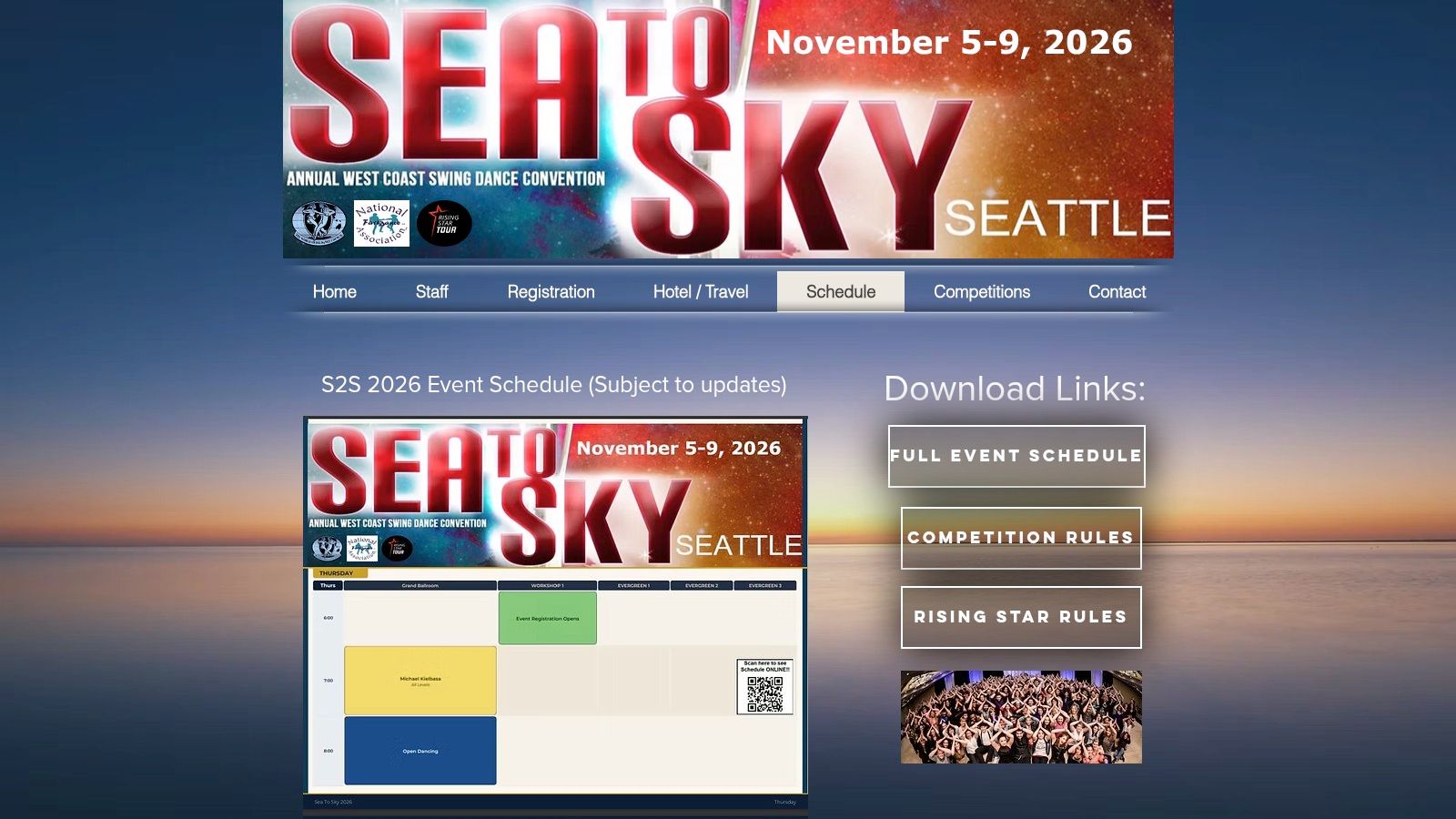
Sea to Sky is the pick for dancers who want a West Coast Swing weekend that's easy to budget in different ways. Its registration pages explain what each pass includes, and the schedule is time-stamped enough to help you understand the flow of the event before you arrive.
That matters because many dancers don't attend every part of a convention evenly. Some care most about workshops. Others want competition access, dances, or à la carte drop-ins. Sea to Sky does a better-than-average job separating those decisions.
For dancers still building foundations, Danza's guide to West Coast Swing basic moves can help you decide whether a convention weekend is the right next step.
Best use case
This is a strong choice if you're somewhere between social dancer and competitive participant. You can see the workshop windows, note where competitions sit in the day, and choose a registration model that matches your actual use.
One reason this structure works is that dance programs often need exact scheduling mechanics. Studio examples in the market show recurring group instruction built around 60-minute and 90-minute formats, with courses running across multiple weekly sessions, according to the Arthur Murray Woodbridge scheduling examples. Convention formats compress that logic into a weekend. Sea to Sky makes that compression readable.
A preliminary convention schedule is useful for planning blocks of time, but not for assuming every room, instructor, or pass detail is final.
Sea to Sky's trade-off is simple. You need to read the registration terms carefully. The event is clear, but only if you pay attention to what each pass provides.
Direct site: Sea to Sky West Coast Swing schedule
5. Seattle Easter Swing
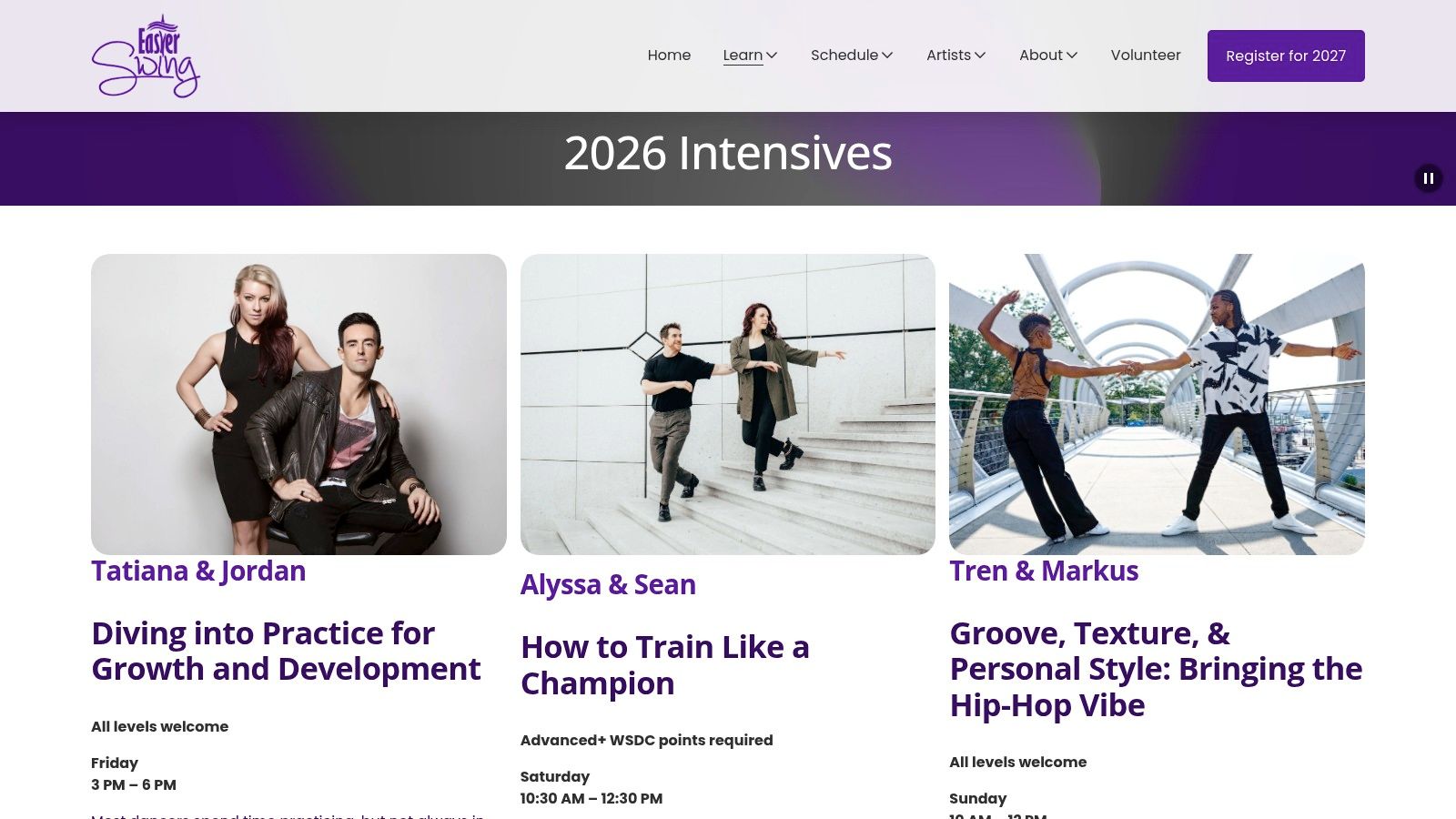
You are deciding between a full weekend pass and a single high-level training block. Seattle Easter Swing makes that choice easier than many swing events because the intensives page answers the planning questions that usually slow registration down: start times, level requirements, and posted pricing.
That matters in this seven-event comparison because Seattle Easter Swing is one of the clearest examples of schedule design aimed at targeted improvement, not broad sampling. If you care more about fit than volume, its format stands out.
Here is the practical read:
- Style focus: West Coast Swing with a training-first structure.
- Level visibility: Strong. Posted requirements help dancers screen themselves before buying.
- Timetable clarity: Strong. Exact intensive times support travel and day planning.
- Pricing visibility: Better than average because intensive prices are listed directly.
- Pass structure: Worth checking closely, especially if intensives sit outside general event access.
- Registration friction: Lower for planners who want defined offerings instead of a sprawling weekend grid.
- Event extras: Specialized options, including judging education, widen the audience beyond social dancers.
The main trade-off is breadth. Seattle Easter Swing gives less of the browse-and-try appeal some dancers want from a convention weekend. In exchange, it gives a clearer path for dancers who already know the skill gap they want to address.
That makes it a strong option for intermediate and advanced dancers comparing actual training value across schedules, not just headline event size. It also creates a useful contrast with a local studio next step at Danza Academy. If a dancer is not ready for level-gated intensives or specialty tracks, a studio setting may be the better staging point before committing to this kind of event.
Direct site: Seattle Easter Swing intensives
6. USA Dance Nationals Social Celebration and Workshops
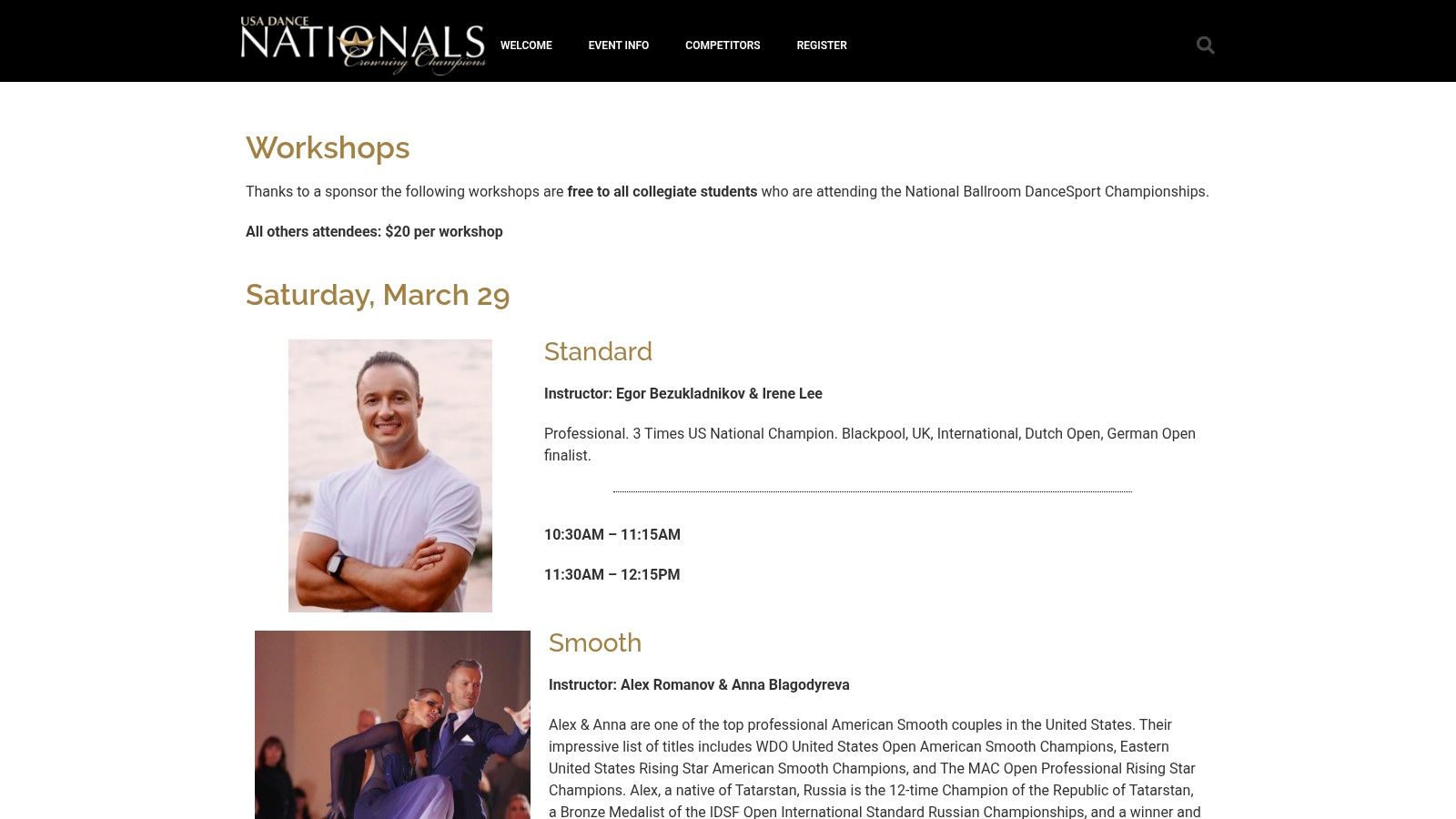
You are comparing schedules on a lunch break and need three answers fast: what styles are offered, what each session costs, and whether you can buy only the classes you want. USA Dance Nationals handles that planning problem better than many convention-style pages because the workshop information is presented at the session level, not buried inside a broader weekend pass pitch.
That matters for this seven-event comparison. Several events in this list ask dancers to evaluate bundles, intensives, or level tracks first. USA Dance Nationals flips that logic. You can start with the actual workshop, then decide whether the event fits your budget and goals.
Its value is strongest for ballroom dancers who want a narrower purchase decision:
- Style coverage: Standard, Smooth, Rhythm, and Latin are clearly separated.
- Timetable clarity: Dates and times are posted in a format that supports quick filtering.
- Pricing visibility: Per-workshop pricing is visible, which makes side-by-side cost checks easier.
- Instructor visibility: Bios are available, useful when teacher background affects the decision.
- Pass structure: Simpler than all-access models because single-session buying is easier to understand.
The limitation is just as clear. A per-workshop menu is efficient, but it usually gives less progression than a schedule built around intensives or multi-class tracks. Dancers looking for cumulative training may find more depth elsewhere on this list.
This also affects who should skip it. If you are still sorting out basics, a local studio format can be a better first step because it offers continuity, easier level matching, and less pressure to choose isolated classes well. In that sense, USA Dance Nationals works better as a selective add-on than as a full training plan for every dancer.
For ballroom-focused planners, though, the page does something many workshop schedules fail to do. It reduces comparison work.
Direct site: USA Dance Nationals workshops
7. Boston Tea Party Swings
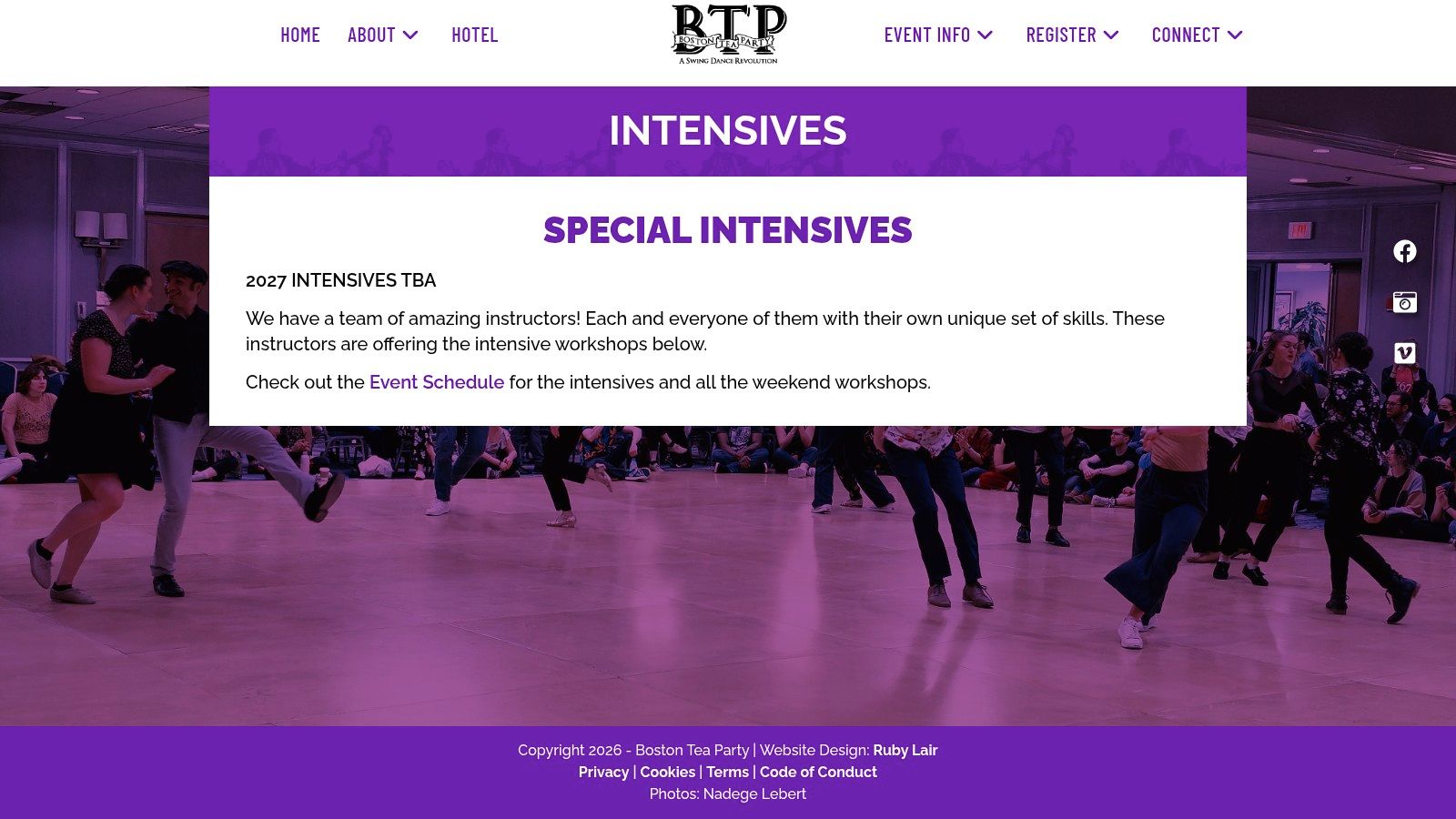
Boston Tea Party Swings is the most flexible multi-style swing option here. It covers West Coast Swing, Lindy Hop, and Balboa, and it separates intensives from workshop and DJ scheduling so you can build your weekend around either focused study or broader social participation.
That split is more important than it sounds. A lot of workshop pages only show the clock. Boston Tea Party Swings gives you a better sense of what kind of commitment each session represents.
Who should choose it
This is a strong fit for dancers testing adjacent styles. That matters because workshops are often the easiest entry point for emerging or unfamiliar dance interests. Industry commentary from 2024 to 2026 points to growing interest in styles such as Afrobeats, Amapiano, bachata, Latin fusion, TikTok-driven choreography, and a stronger practice culture, as summarized in Swyvel's dance trend overview. The broader lesson applies here too. Modular workshop blocks are ideal when you want to explore without committing to a full series immediately.
Boston Tea Party Swings supports that mindset with itemized intensives, instructor names, times, and visible pricing structure. It's easier to compare a short deep-dive against a general workshop block when the site treats them as different products.
Choose this event if you want to cross-train across swing styles without committing your whole weekend to one track.
The caution is annual rollover. Some event details may carry forward before seasonal updates are complete, so it pays to verify that the information you're reading is current before booking travel or passes.
Direct site: Boston Tea Party Swings intensives
7-Event Dance Workshop Schedule Comparison
| Item | Implementation complexity | Resource requirements | Expected outcomes | Ideal use cases | Key advantages |
|---|---|---|---|---|---|
| Danza Academy of Social Dance | Low, regular class/lesson operations | Studio spaces (Center City, Exton), instructors, scheduling | Progressive skill-building, confidence, wedding-ready dances, competition prep | Beginners, wedding couples, local students, kids, ongoing training | 40+ years experience, no-partner policy, free first lesson, broad programming |
| New York International Salsa Congress (NYC) | High, multi-room festival logistics | Large venue, international instructors, production staff, ticketing | Intensive weekend immersion, varied technique/styling exposure, social networking | Social → advanced salsa/bachata dancers seeking festival atmosphere | Extremely comprehensive schedule, international instructors, shows & late-night socials |
| Camp Hollywood | Medium–High, festival with contests and panels | Venues, contest infrastructure, panels, downloadable materials, organizers | Packed workshops, community engagement, contests and meetups | Vintage swing dancers (Lindy/Balboa/Shag) seeking community festival | Strong community focus, contests, clear interactive schedule and handouts |
| Sea to Sky West Coast Swing | Medium, convention with clear scheduling | Convention space, competition setup, registration systems, varied pass options | Plan-able weekend with competitions and flexible learning options | West Coast Swing social and competitive dancers wanting flexible passes | Time-stamped schedule, transparent registration, multiple pricing tiers |
| Seattle Easter Swing | Medium–High, focused intensives and pro tracks | Specialized instructors, intensive curricula, additional fees for tracks | Deep skill development, professional tracks (e.g., judging), advanced training | Advanced dancers and pros seeking focused intensives and certification | Skill-targeted intensives, professional development tracks, high-caliber instruction |
| USA Dance Nationals – Social Celebration & Workshops | Low–Medium, scheduled workshops alongside nationals | Ballroom venues, national-level instructors, per-workshop registration | Exposure to multiple ballroom styles, competition-focused technique, clear cost | Competitive ballroom dancers, collegiate attendees, drop-in learners | Transparent per-workshop pricing, multiple ballroom styles, national pros |
| Boston Tea Party Swings | Medium, hybrid event with intensives and DJs | Multiple rooms/venues, DJ coordination, tiered pricing and scheduling | Targeted deep-dives across swing styles plus community sessions | Swing dancers seeking à‑la‑carte intensives and community-building | Itemized intensives, early-bird/ tiered pricing, separate DJ and workshop schedules |
Turn Your Dance Workshop Schedule Into Progress
A strong dance workshop schedule isn't just a list of start times. It's a planning tool. Before you book anything, confirm the latest date and time, match the listed level to your actual experience, verify whether the workshop is included in your selected pass, and check whether intensives, boot camps, or specialty tracks require a separate registration.
Then save the details you'll need on the day. That means venue location, room assignment if available, instructor name, and any check-in or attendance rules. Online registration has become central to dance-studio operations, with 57% of dance studio registrations happening online, 73% of parents saying online registration matters when choosing a studio, and 26% of registrations occurring outside business hours when booking is available online, according to Scheduling Kit's dance studio statistics roundup. In practice, that means many dancers are booking late, checking updates on their phones, and relying on digital confirmations instead of static event pages.
Don't overload your weekend just because a pass allows it. One focused workshop that matches your level and goals usually produces better results than hopping between too many classes. If you want to improve partner connection, choose the partnerwork session. If you need confidence, choose the beginner-friendly workshop with the clearest progression. If you're testing a new style, prioritize the session that makes the next step obvious.
A little calendar discipline helps too. Save workshops, socials, travel blocks, and follow-up classes in one place so the event doesn't become a pile of screenshots. If you manage multiple schedules already, this guide on how to sync your calendars is a practical companion.
If you're in the Philadelphia area, the most useful move may be smaller and smarter. Book Danza Academy's free complimentary lesson through the Danza Academy contact page, talk through your goals, and get help choosing a class or workshop that fits your level, schedule, and interests before you commit to a bigger event.
Danza Academy of Social Dance offers workshops, group classes, private coaching, wedding dance instruction, and a supportive no-partner-necessary environment that makes schedule decisions much easier to act on. If you want to turn a workshop idea into steady progress, visit Danza Academy of Social Dance and book the complimentary first lesson to find the right next step.