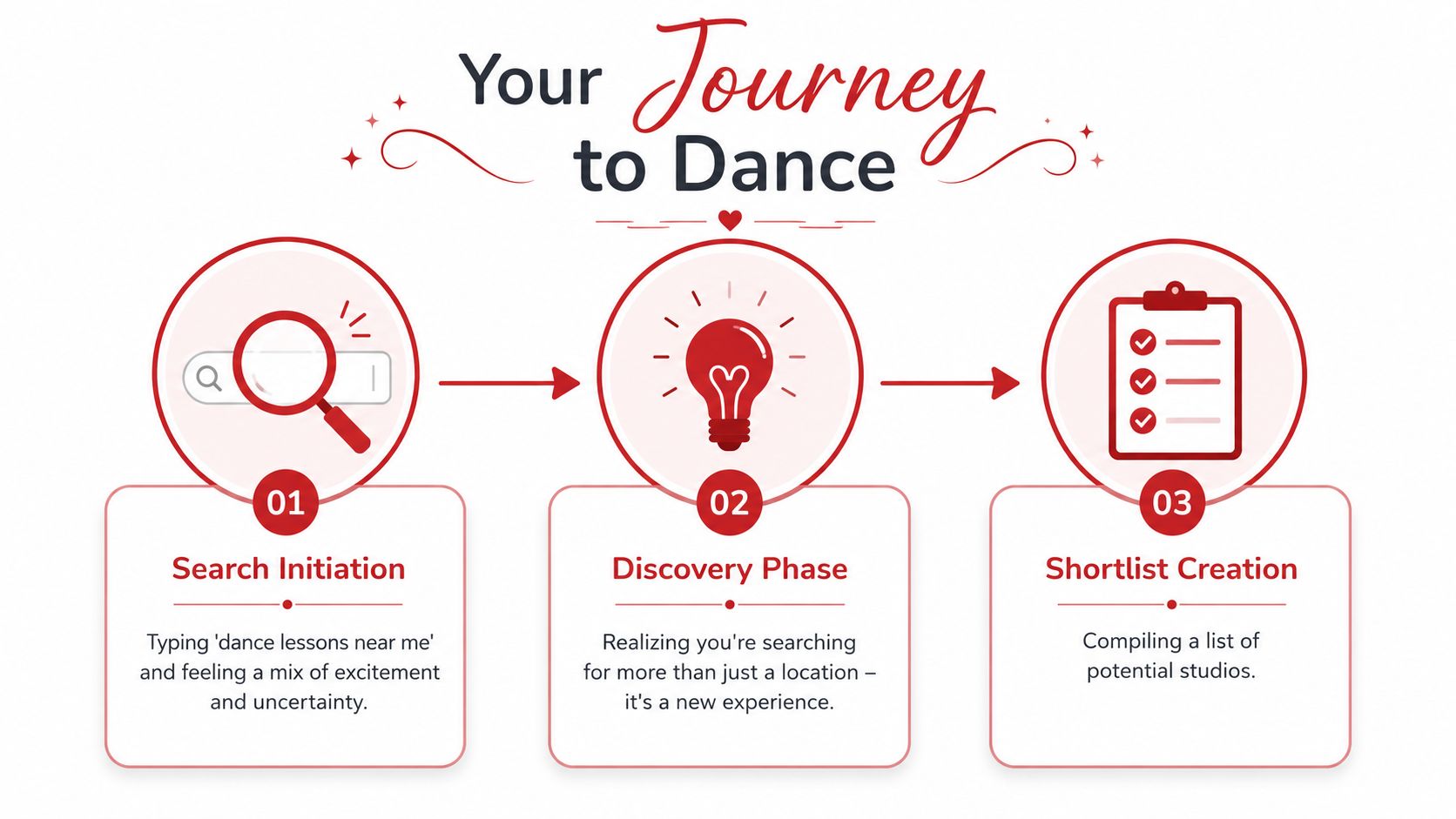
Typing Dance Lessons Near Me often starts with a simple feeling. You want to move, meet people, prepare for a wedding, try something new, or get back to a hobby you've put off for years. Then the search results appear, and suddenly the question isn't just where to go. It's where you'll feel comfortable enough to begin.
That part matters more than most guides admit. A studio can have a polished website and still feel cold in person. Another can look modest online and turn out to be the place where beginners relax, laugh, and keep showing up. The right choice usually isn't just the closest studio. It's the one where the teaching style, atmosphere, and people line up with your goals.
A good search helps you find classes. A smart search helps you find your place.
The First Step Begins with Your Search
That first search deserves more attention than it often receives. In 2026, approximately 46% of all Google searches carry local intent, with 76% of mobile "near me" searches resulting in an in-person visit to a business within 24 hours, which shows how effective local search can be for finding a studio that fits your life and schedule (dance training marketing statistics).
Start broad, then narrow fast
Begin with the obvious phrase. Then improve it.
Searching Dance Lessons Near Me is useful for a first pass, but it often mixes together kids' programs, competitive schools, wedding studios, fitness dance classes, and social dance instruction. Add one detail that matches your actual reason for starting.
Try searches like:
- Beginner Salsa classes near me if you want fun, energy, and a social scene
- Wedding dance lessons near me if you're preparing for a first dance
- Ballroom dance lessons for adults if you want structure and partner skills
- Private dance lessons near me if you feel nervous about starting in a group
That one extra phrase changes the quality of the results. It also helps Google Maps show studios that describe themselves clearly.
Use Google Maps like a filter, not a directory
Open the map listing and study three things before you click a website.
- Photos: Look for real class photos, not only posed portraits or stock imagery. You want to see what an actual lesson looks like.
- Reviews: Read for patterns. Friendly staff, patient teachers, and welcoming beginners are stronger signals than vague praise.
- Category fit: Some listings say “dance school,” but the actual focus may be youth competition, not adult social dancing.
Practical rule: If a studio makes it hard to tell who they teach, what they teach, or what a first lesson feels like, expect more friction after you book.
Local search works best when studios communicate clearly. If you're curious how these results get shaped behind the scenes, this guide to Tampa Bay local search optimization gives useful context on why some nearby businesses appear stronger than others.
Check what locals say when they're not being sold to
Google is only one layer. Local Facebook groups and neighborhood Reddit threads can help you spot the difference between a convenient studio and a compatible one.
Look for comments about the room's energy, how staff treat newcomers, and whether adults feel out of place or welcomed. The best recommendations usually mention something specific, such as whether the teacher remembers names, whether couples and singles both fit in, or whether beginners feel lost.
Your goal at this stage isn't to pick one studio. It's to build a shortlist of two or three places that look promising for your kind of dancing.
Decoding a Dance Studio Website
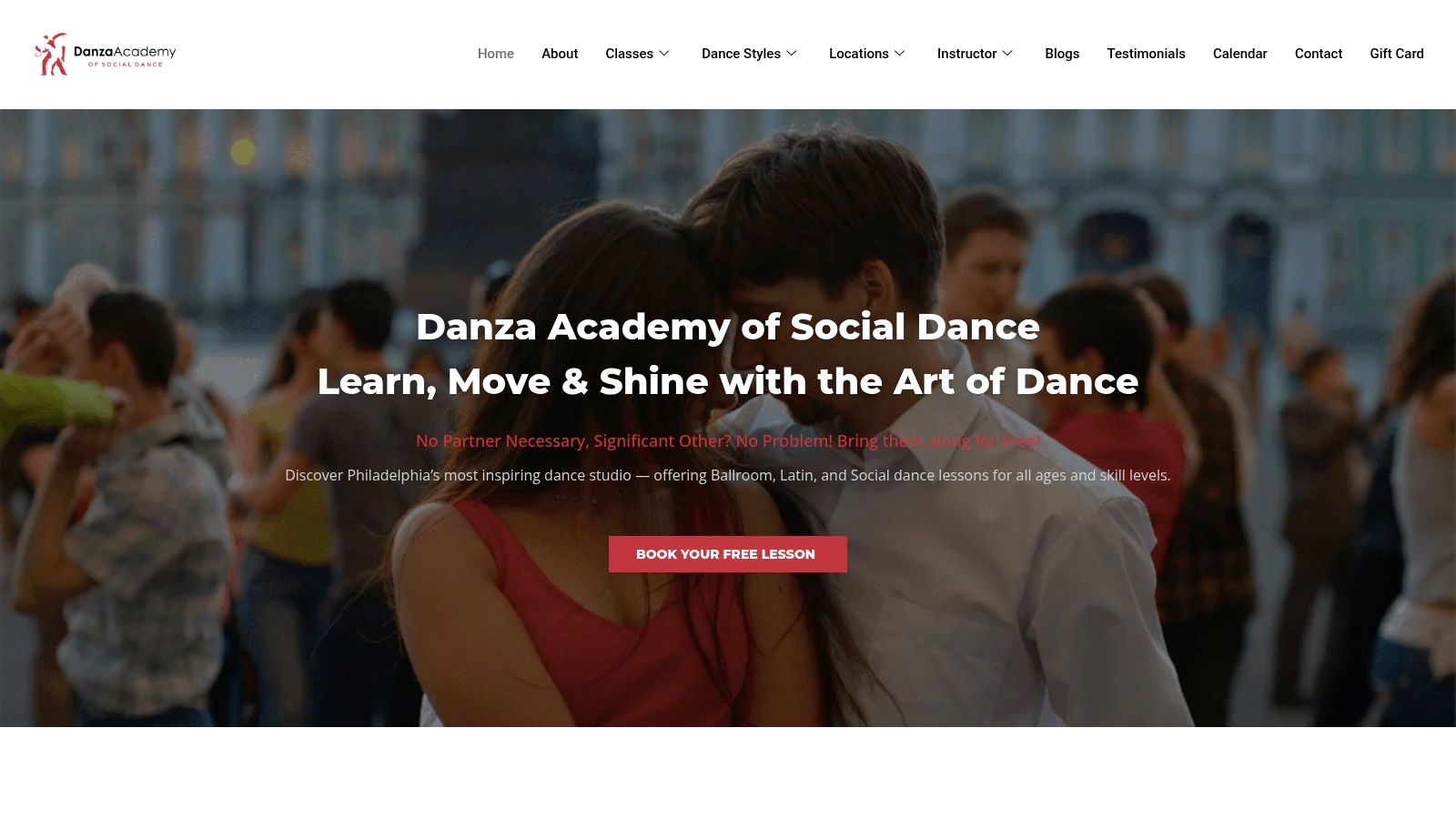
Once you have a shortlist, the website becomes the studio's digital front desk. It tells you how the business thinks, how organized the teaching is, and whether beginners are being guided or left to figure things out alone.
A strong site doesn't need to be flashy. It needs to answer practical questions without making you chase basic information.
Read the schedule like a real customer
Don't just check whether classes exist. Check whether they fit your actual week.
A good schedule tells you who the class is for, what level it serves, and whether you can realistically build consistency. If every beginner class happens at one inconvenient time, that's not a small issue. Attendance is what creates progress, confidence, and community.
Look for signs of clear planning:
- Level labels: Beginner, intermediate, or all-level should be easy to identify
- Class types: Group classes, private lessons, workshops, and wedding instruction should be distinct
- Location clarity: If a studio has multiple locations, the class listings should make that obvious
Study the instructor page carefully
Instructor bios reveal more than credentials. They show whether the studio values teaching or only performance.
A beginner needs teachers who can break things down, not just demonstrate beautifully. Good bios usually mention teaching experience, dance styles, and the kinds of students they work with. If every bio reads like a competition résumé and says nothing about helping new dancers, that's worth noticing.
A studio's personality often shows up most clearly in how it talks about its teachers. If the language feels welcoming, specific, and student-centered, the lessons often feel that way too.
Watch the photos for emotional clues
Photos and videos can tell you whether the room feels stiff, transactional, playful, elegant, or warm. You're not only looking at dance positions. You're watching faces, posture, spacing, and body language.
Ask yourself:
- Do students look engaged or merely posed?
- Do beginners appear included?
- Do couples, singles, and different age groups seem comfortable?
- Does the room look active and cared for?
A current, well-kept website usually reflects a studio that pays attention. A neglected site with outdated details, broken pages, or missing schedules often signals the same kind of disorganization in real life.
Pricing transparency matters
Not every studio posts every package online, and that's not always a problem. But there's a difference between thoughtful consultation and avoidable vagueness.
If a site hides everything behind “contact us for pricing,” pay attention to whether it at least explains the lesson formats and what a first step looks like. Clear next steps show respect for beginners. Confusion tends to push people away before they ever walk in.
Matching a Dance Style to Your Goals
Most beginners don't struggle because dance is too complicated. They struggle because they think they have to pick the “right” style before they've even taken a step. A better way to choose is to match the style to the life you want around it.
If you want a lively night out, your answer may be different from someone preparing for a wedding or someone who wants a polished social skill they can use for years.
Choose by feeling, not by jargon
Some styles feel playful and high-energy from the first lesson. Others feel smooth, romantic, grounded, or elegant. That emotional fit matters because it affects whether you'll keep coming back.
| Dance Style | Energy Level | Best For | Partner Connection |
|---|---|---|---|
| Salsa | High | Social fun, nightlife, confidence | Dynamic and responsive |
| Cha-Cha | High | Rhythm, personality, sharp timing | Playful and expressive |
| Waltz | Moderate | Elegance, weddings, classic ballroom | Soft and flowing |
| Tango | Moderate | Drama, control, precision | Strong and focused |
| Swing | High | Parties, versatility, upbeat movement | Elastic and lively |
| Hustle | Moderate to High | Weddings, clubs, social events | Smooth and connected |
This table won't choose for you, but it can point you in the right direction. If you light up when you hear “fun,” “social,” and “fast,” Latin styles may suit you. If you want grace and partnership, ballroom may feel more natural from day one.
Group classes versus private lessons
This is one of the biggest practical decisions, and there isn't one correct answer.
Group classes work well if you enjoy learning with others, like a lively room, and want a lower-pressure way to explore styles. They can also help you get a sense of the studio's community quickly.
Private lessons work well if you want personalized instruction, have a specific goal, or feel uneasy about learning in front of strangers. They also make sense for couples with a deadline, especially wedding couples or adults returning after a long break.
For dancers who want one-on-one instruction built around personal goals, private dance lessons are one route to consider.
The best starting format is the one you'll actually attend consistently. The “ideal” class on paper doesn't help if it makes you anxious enough to delay starting.
Don't overcommit to a dance identity too early
You don't need to declare, “I'm a salsa person” or “I'm a ballroom person” before you've had a lesson. Many students start with one reason and stay for another. They come in for a wedding dance, then discover they love swing. They try ballroom for structure, then fall for salsa because the room feels alive.
The right first style is usually the one that gets you through the door with curiosity instead of pressure.
Asking the Right Questions Before You Commit
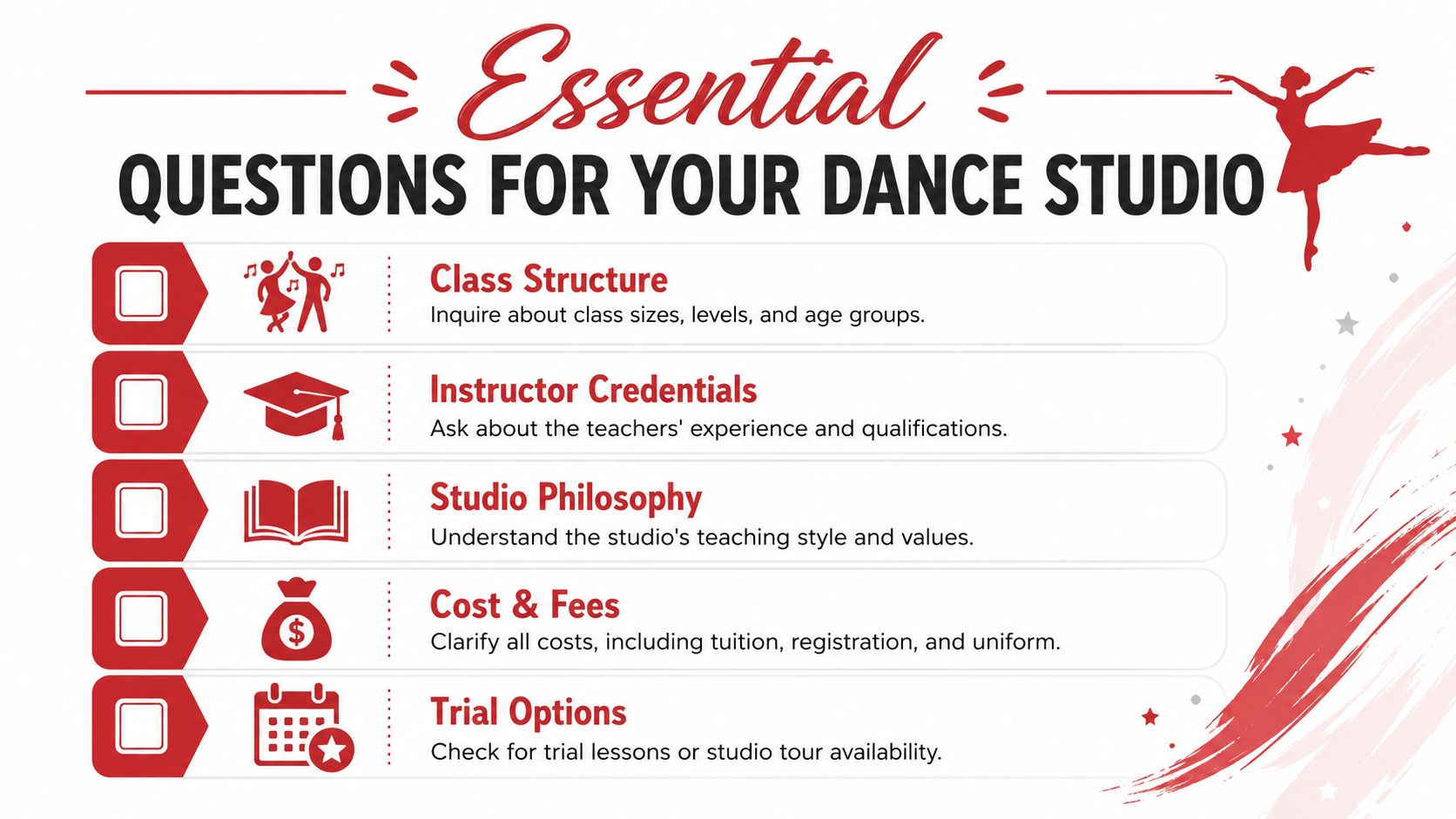
A lot of people ask the easiest question first. How much does it cost? Fair question. It just shouldn't be the only one.
If you want a studio that lasts in your life beyond a trial lesson, ask about how they teach, how they protect students, and how they handle the human side of learning. Those answers tell you far more about your future experience than a price sheet alone.
Ask questions that reveal culture
A polished reply can still hide a poor fit. What you want is specificity.
Ask things like:
- How do you help complete beginners feel comfortable?
- What's your teaching philosophy for adults who've never danced before?
- If I miss a class, what happens next?
- Do you focus more on social dancing, performance, competition, or a mix?
- How do you place students in the right level?
The answers matter, but so does the tone. A studio that values beginners usually answers with patience and clarity. A studio that treats questions like obstacles often behaves the same way once you enroll.
Safety should be a direct conversation
This matters for parents, teens, and adults. Respectful studios don't dodge it.
Industry data reveals a significant gap: 68% of parents rate “safety verification” as a top priority, yet 79% of studio websites fail to mention specific safety protocols, which is exactly why direct questions matter (find a safe studio).
Ask clearly about:
- Instructor screening: Background checks and hiring standards
- Child safety policies: Supervision, pickup procedures, and reporting protocols
- Studio expectations: Professional conduct, physical boundaries, and respect in partnered work
- Accessibility: Whether staff can discuss accommodations openly and specifically
If you want more guidance on evaluating these details, this article on how to choose a dance studio is a practical companion.
A strong answer sounds concrete. Vague reassurance isn't the same as a policy.
Notice whether they invite the right kind of commitment
Good studios don't pressure beginners into pretending they already know what they want. They help you take the next sensible step.
That may mean suggesting a trial lesson, a beginner group, or a short consultation before recommending a package. Studios that rush too quickly toward the sale often skip the fit question entirely. That usually leads to mismatched classes and discouraged students.
When a studio can explain not only what they offer, but also who each option is for, you're dealing with people who understand teaching rather than just scheduling.
Your First Visit and Trial Lesson Checklist
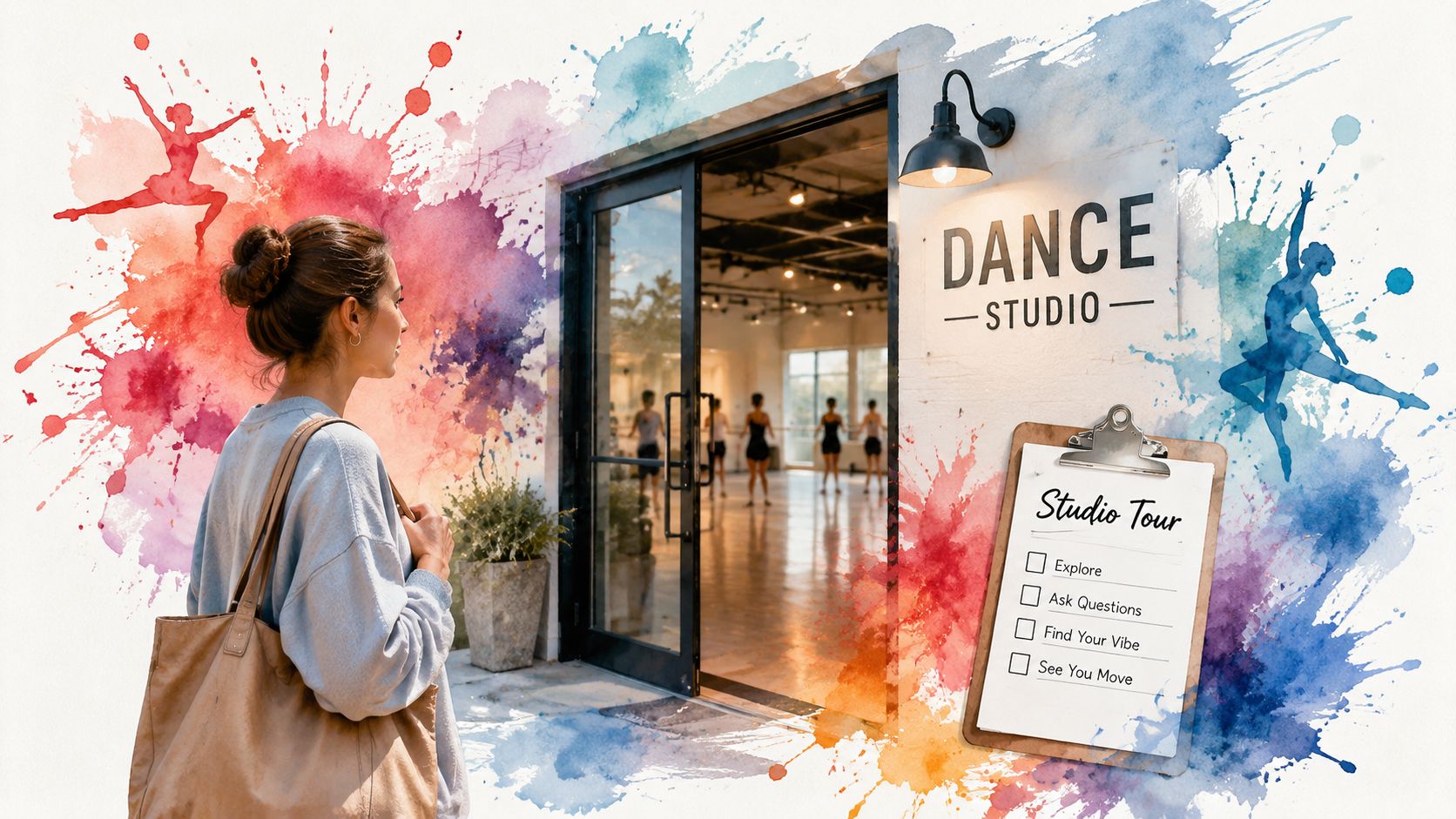
The first visit tells you what the search results can't. You'll feel the pace of the front desk, hear the room before class starts, and see whether the students around you look guarded or at ease.
As you walk in, notice what happens in the first few minutes. Are you greeted like a person or processed like an appointment? Small moments matter here because they often predict the larger experience.
What to notice before the music starts
A good first impression isn't about luxury. It's about care.
Look for these cues:
- Cleanliness: Floors, mirrors, seating, and restrooms should feel maintained
- Traffic flow: Students should know where to go without confusion
- Atmosphere: You want energy without chaos, friendliness without pressure
- Staff behavior: The front desk and instructors should communicate calmly and clearly
If the room feels tense before class even begins, beginners usually feel that tension too.
What the lesson should feel like
During the lesson, focus less on whether you “do well” and more on whether the teaching makes sense. A good instructor gives corrections without making you self-conscious. They adjust when a student is nervous, confused, or physically limited.
If you're trying your first class, a beginner dance lesson can give you a useful picture of what that early learning stage should look like.
In established studios, healthy student retention can exceed 80%, and that kind of long-term loyalty often shows up as a room full of comfortable, returning students rather than people drifting in and out without connection (dance school business data guide).
Watch the students who aren't performing for anyone. They'll tell you the truth about the room.
Check your own reaction honestly
After class, ask yourself a few plain questions.
Did you feel welcome? Did the teacher help without talking over you? Could you imagine returning next week without dread? Did the room make you want to loosen up, or did it make you protect yourself?
That answer is usually clearer than people expect. Technique can improve later. Belonging is harder to fake.
Take the Floor with Your Complimentary Lesson
By this point, the search has done its job. You've moved from random listings to real criteria. You know how to read a website, how to match style to goal, how to ask stronger questions, and how to judge the room once you walk in.
What's usually left is hesitation.
That's normal. Starting dance feels personal because it puts you in motion in front of other people. For beginners, the hardest step is often the first booking, not the first basic step. That's one reason offering free or low-cost trial classes is a proven strategy for reducing commitment anxiety for newcomers (dance studio trial bookings).
At this stage, trying a lesson is more useful than thinking about one.
Danza Academy of Social Dance offers Ballroom, Latin, wedding, and social dance instruction in Philadelphia and Exton, with private lessons and group classes for different goals and comfort levels. If your search for Dance Lessons Near Me has brought you this far, the clearest next move is to test the fit in person, without pressure and without guessing from the outside.
A complimentary first lesson lets you answer the questions that matter most. Do you like the teaching? Does the room feel right? Can you imagine yourself growing there? That kind of clarity doesn't come from scrolling. It comes from stepping onto the floor.
If you're ready to stop searching and start dancing, book your complimentary first lesson with Danza Academy of Social Dance. You'll get a chance to meet the team, experience the atmosphere, and see whether the studio feels like the right home for your next step. You can reserve your free lesson directly through the contact page.