
The most popular beginner advice is also the least reliable: “Wear whatever comfortable sneakers you already own.” Comfort matters, but walking comfort and dance-floor comfort aren't the same thing. A shoe that feels supportive on pavement can grip a studio floor so firmly that your foot stops while your body continues rotating.
The better question isn't only, “What shoes match this dance style?” Ask, “What does this shoe do on this floor, with my feet, at my current skill level?” A smooth studio surface, sticky commercial flooring, carpet, polished wedding venue, and outdoor pavement each create a different relationship between sole and floor. Your footwear should let you transfer weight, turn, and stop with control, without forcing your ankle or knee to absorb movement the shoe has blocked.
Why Your Everyday Sneakers Belong Outside the Studio
Everyday athletic shoes are designed primarily for walking, running, and forward motion. Their rubber outsoles usually create strong contact with the ground, which is useful outdoors but can become a problem during dance turns. In a pivot, your foot needs a controlled amount of release. If the sole catches abruptly, your foot may remain planted while your lower leg and body rotate above it.
That doesn't mean every sneaker is automatically unsafe in every class. It means you shouldn't assume that softness, cushioning, or a familiar brand makes a shoe suitable for dancing. A 2011 systematic review examined 16 studies on footwear and dancers and found that footwear type and condition significantly affect lower-limb biomechanics, particularly during jump landings, when ankle and knee injuries are common. You can read the review in the Journal of Dance Medicine & Science.
Why gripping can create strain
A high-grip sole may feel reassuring when you're standing still. During a quick change of direction, however, excessive friction can make a turn feel jerky. You may compensate by twisting through the knee, rolling onto the edge of the foot, or fighting to keep your balance.
Worn footwear creates a different problem. A damaged sole can lose its predictable friction, while a loose upper lets the foot shift inside the shoe. Both conditions make it harder to repeat a basic step consistently.
Practical rule: A dance shoe should release when you rotate and hold when you transfer weight. It shouldn't behave like a suction cup or an ice skate.
Respecting the studio floor
Most studios require clean indoor footwear for a practical reason. Outdoor shoes carry grit, moisture, and debris onto specialized floors. That contamination can change how everyone's shoes interact with the surface, and wet or dirty areas can create slipping hazards.
Bring purpose-built dance shoes whenever possible. If you're attending your first lesson and don't yet own a pair, use clean indoor shoes with a secure upper and a sole that allows controlled movement. Don't wear the same shoes indoors that you've worn on pavement, through rain, or across a parking lot.
Flip-flops, loose backless shoes, and heavily treaded trainers are poor choices because they can either detach from your foot or catch the floor. Your footwear should stay attached through a weight shift, a side step, and a turn. That basic reliability gives you a better chance to learn the movement instead of managing your shoes.
Choosing Footwear by Dance Style
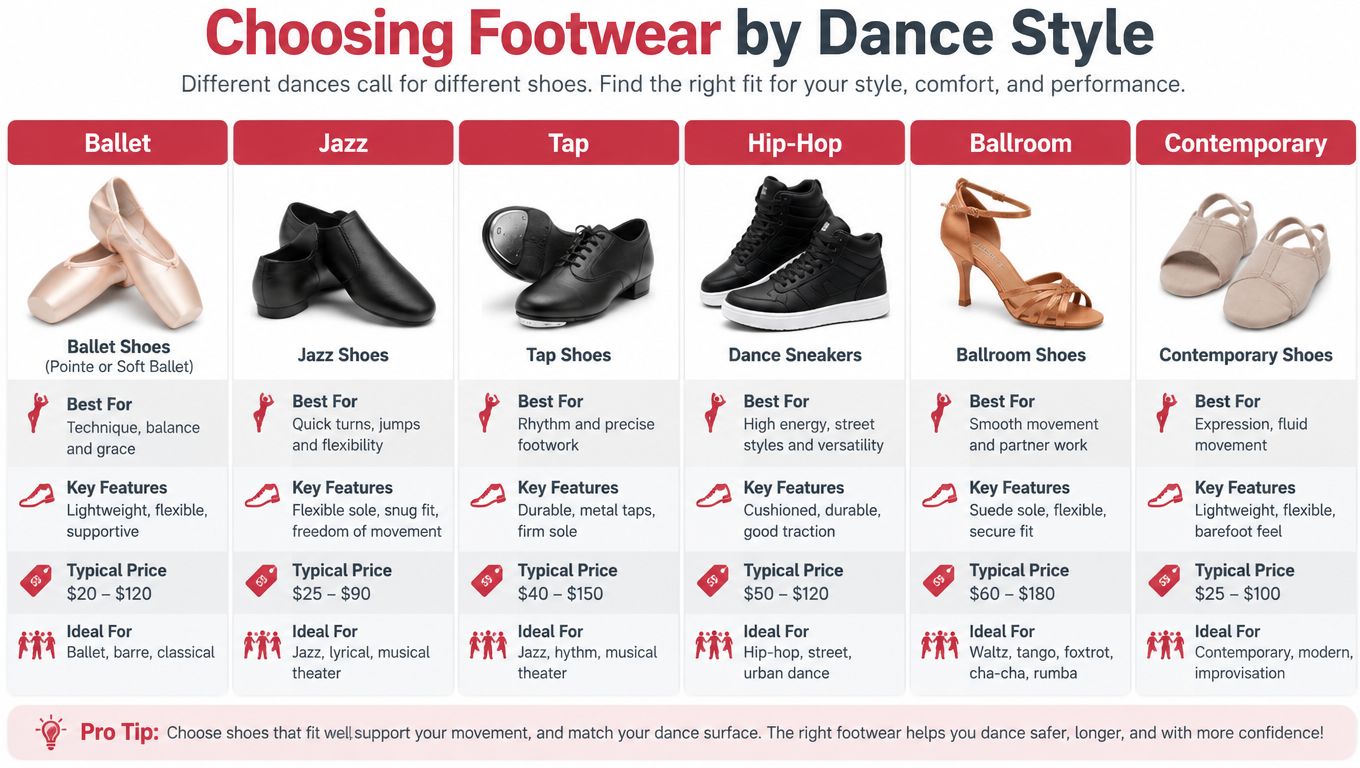
Dance styles use different patterns of weight transfer, foot articulation, travel, and rotation. A shoe that works well for a long Ballroom step may feel restrictive during a fast Latin sequence, while a flexible social-dance shoe may not provide enough structure for a dancer who is still developing balance.
Ballroom needs glide and stability
For Waltz, Foxtrot, Tango, and related Ballroom styles, look for a shoe that supports smooth travel across the floor. A leather or suede sole can help you move through heel leads, controlled gliding, and directional changes without the abrupt stop created by a thick rubber trainer.
The shoe should still hold your foot securely. A loose heel can make a heel lead feel unstable, and an upper that shifts can interfere with posture and partner connection. Beginners often do well with a closed shoe or a securely strapped style that feels stable before they begin thinking about appearance.
Dance footwear has always adapted to movement demands. The Victoria and Albert Museum's history of the ballet shoe describes how dance shoes changed as movement vocabularies and performance environments changed, including a transition from heeled shoes toward the flat ballet shoes widely recognized today. That history reflects a useful principle for modern dancers: choose the shoe for the movement, floor, and control required.
Latin calls for articulation and controlled release
Salsa, Cha-Cha, Rumba, and other Latin styles often involve quick weight transfers, hip action, turns, and time spent toward the ball of the foot. Latin shoes commonly have a heel, but a beginner doesn't need to start with the highest option available.
Choose a sole that permits a controlled pivot, plus an upper that keeps the foot centered. If you prefer a heel, begin with a lower, broader, stable design until your balance and alignment remain consistent during basic steps. A flat practice shoe can also be a sensible starting point.
Social and Swing styles need dependable movement
Swing, Hustle, Country Two-Step, and other social styles can involve quick grounded steps, lateral movement, and repeated turns. A purpose-built dance shoe with a smooth leather or suede sole is generally more predictable than a rubber-soled athletic shoe.
For beginners, comfort should include lateral security. Your toes shouldn't be squeezed, but your foot shouldn't slide from side to side inside the shoe. If you're managing a foot or ankle concern, an instructor can help you choose a practical compromise. Dancers with persistent symptoms may also benefit from professional guidance through a specialized dance rehab program that understands the demands of turning, weight transfer, and repeated practice.
The Biomechanics of Soles and Heel Heights
The sole controls how your foot meets the floor, while heel geometry changes how your body organizes itself above that contact point. Together, these features affect balance, turning, pushing off, and the amount of work demanded from the forefoot.
A smooth leather or suede sole is useful because it balances traction and release. You need enough friction to push off and control a landing, but you also need the foot to rotate when the dance requires it. Suede offers a practical middle ground because you can brush it to change the surface texture and replace it when it no longer performs reliably.
Why maximum grip isn't maximum safety
A study of 15 country-swing dancers found that running shoes and rubber-bottom boots produced higher measured free moments during rotational movements than leather-bottom boots, indicating that leather soles may reduce torsional loading during turns. The findings are available through PubMed's report on footwear and rotational movement.
In plain language, a shoe that sticks during a turn can transfer more twisting demand into the body. That doesn't make a slippery shoe safe. Too little friction can cause an uncontrolled slide, especially on a polished or unfamiliar surface. The goal is controlled release, not the lowest possible grip.
Avoid using outdoor shoes indoors. Grit can damage suede, moisture can change friction, and debris can affect the floor for other dancers. A dedicated indoor pair gives you a consistent starting point.
What heel height changes
A heel shifts your center of pressure toward the forefoot. That may support the visual and technical qualities of some Latin movement, but it also increases the load carried by the metatarsal area. Beginners, wedding couples, and dancers building ankle strength should consider a stable moderate heel or a flat practice shoe first.
A 2025 study of Sportive Latin American Ballroom dancers found a strong relationship between shoe heel height and hallux valgus angle. It also noted that commonly recommended Latin heels shift pressure toward the metatarsals over years of training. The study is published in Healthcare.
The right progression is simple: choose the lowest height that lets you maintain balance, alignment, and controlled weight transfer. Increase height only when your movement remains stable and comfortable. Pain isn't a training milestone. Persistent pain, swelling, or a noticeable change in how you move deserves professional assessment.
Finding the Right Fit and Accommodating Your Feet
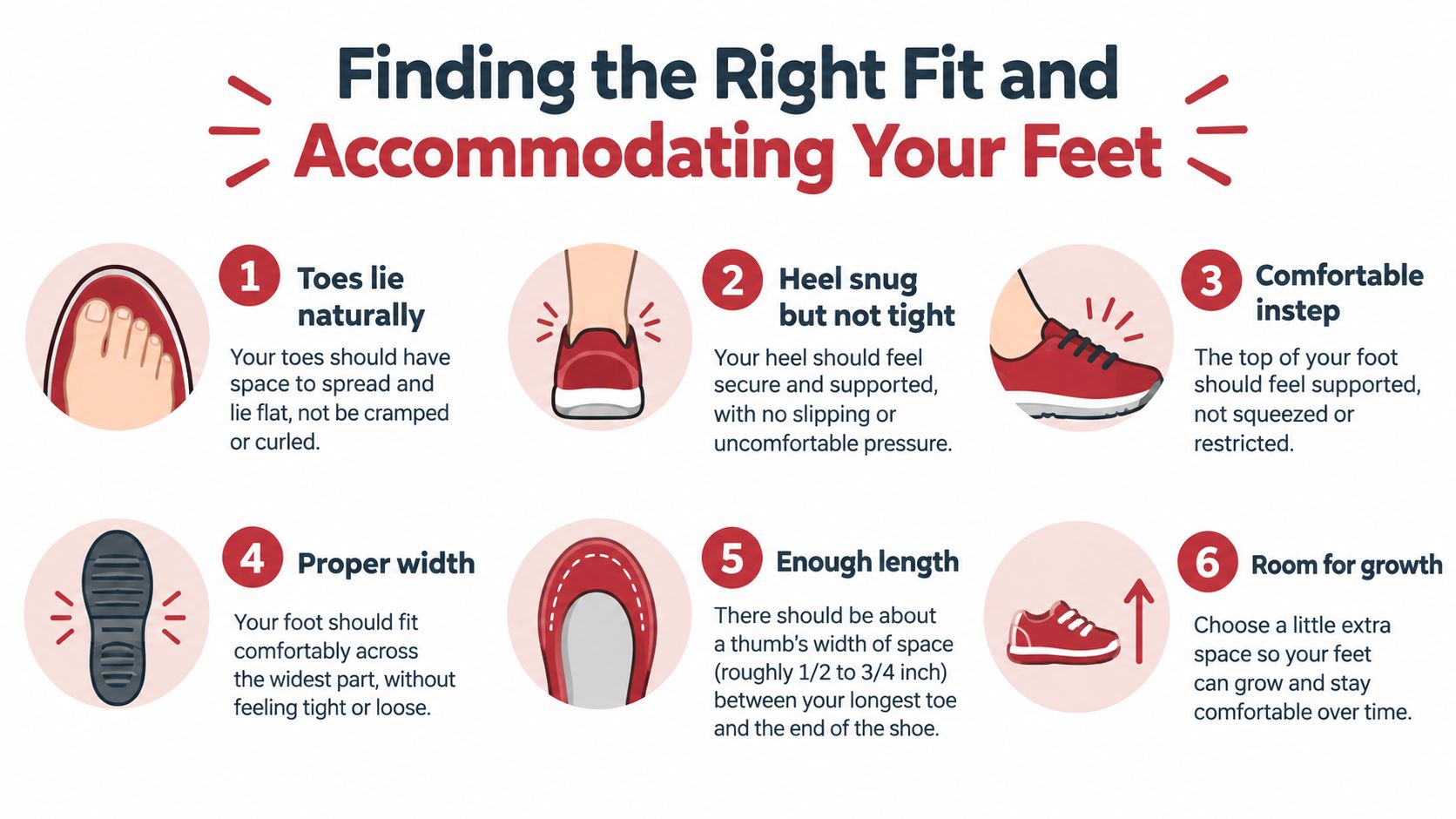
A dance shoe should feel connected to your foot without squeezing it. Start by checking length, width, heel security, and toe position rather than choosing a size based only on the number printed inside the shoe.
A practical fit check
Try the shoes on with the socks or tights you'll wear for class. Stand, walk, shift weight, and make a gentle turn. Your toes should lie naturally, your heel should stay secure, and the shoe should conform to your foot without compressing it.
Use this checklist:
- Natural toes: Your toes should have room to flex instead of being pushed forward or folded together.
- Secure heel: The heel should stay attached without painful pressure or rubbing.
- Correct width: The shoe shouldn't pinch the bunion area or force the forefoot into a narrow shape.
- Stable upper: Straps, laces, or a closed design should prevent the foot from sliding during direction changes.
- Controlled flexibility: The shoe should articulate with your foot, but it shouldn't collapse when you transfer weight.
- Class-ready comfort: Rehearse a few minutes in the shoes before a longer lesson so you can find hot spots early.
A shoe that's too tight can create pressure, rubbing, blisters, and forefoot or nail stress. A shoe with too much internal volume allows your foot to slide, which reduces ankle control. Don't try to solve a poor fit by adding layers of cushioning.
Making room for different bodies and needs
People with plantar pain, bunions, arthritis, hypermobility, diabetes, or a previous ankle injury may need a different balance of support and flexibility. Depending on the class and floor, possibilities can include a wide-fit dance shoe, a dance sneaker, supportive socks, an orthotic, or a low heel. Each option has trade-offs, so test it with an instructor and, when symptoms persist, seek medical advice.
Padded dance-support socks may be useful for suitable barefoot or studio-floor classes. In one controlled study, dancers wearing padded socks during a modern-dance sequence and sauté-jump landing had lower heel-force and ground-reaction measurements than during barefoot testing, although the researchers described the findings as preliminary and called for further study. The published study on padded dance-support socks does not mean socks replace shoes when you need traction, support, or protection from the floor.
Your footwear can also reflect your identity. Color, heel height, shape, and gender expression are personal choices. You don't have to sacrifice appearance to find a secure shoe, and you don't have to wear a traditionally gendered style to participate safely. Start with the movement requirements, then choose an appearance that feels like you.
Buying Versus Renting and Essential Shoe Care
You don't need an expensive wardrobe before your first class. If you're trying a style for the first time, ask the studio whether it offers rental footwear or whether clean indoor shoes are acceptable for an introductory lesson. A dedicated pair becomes more worthwhile once you know the class fits your schedule and you're practicing regularly.
Borrowing can work, but inspect the shoes before wearing them. Check that the sole is intact, the heel doesn't wobble, the fastenings hold, and the interior doesn't allow your foot to slide. A secondhand shoe with a worn sole may be less predictable than a simple new practice shoe.
Protect the sole you chose
Keep dance shoes indoors from the moment you buy them. Outdoor grit can roughen or contaminate a suede sole, while rain and moisture can change how the material meets the floor. Store the shoes somewhere dry, and let them air out rather than sealing them immediately after class.
For suede, use a suitable wire brush to lift the nap when the surface becomes flattened. Brush gently and follow the shoe manufacturer's guidance. Don't use household cleaners or water casually on dance footwear, because you may change the sole's friction.
Care principle: Replace a shoe when the sole, heel, upper, or fastening no longer performs predictably. A worn shoe isn't a bargain if it changes how you turn.
Labeling and cleaning habits help when several people in a household share equipment. For general guidance on caring for rubber footwear and using cleaning rain boots with name labels, adapt the principle to your dance gear, while remembering that suede and leather require different care.
Your first purchase should solve the problem you have. If the issue is slipping inside the shoe, prioritize fit. If the issue is sticking during pivots, prioritize sole behavior. If you dance on different floors, a backup indoor pair may be more useful than a more expensive single shoe.
Testing Your Shoes on the Studio Floor
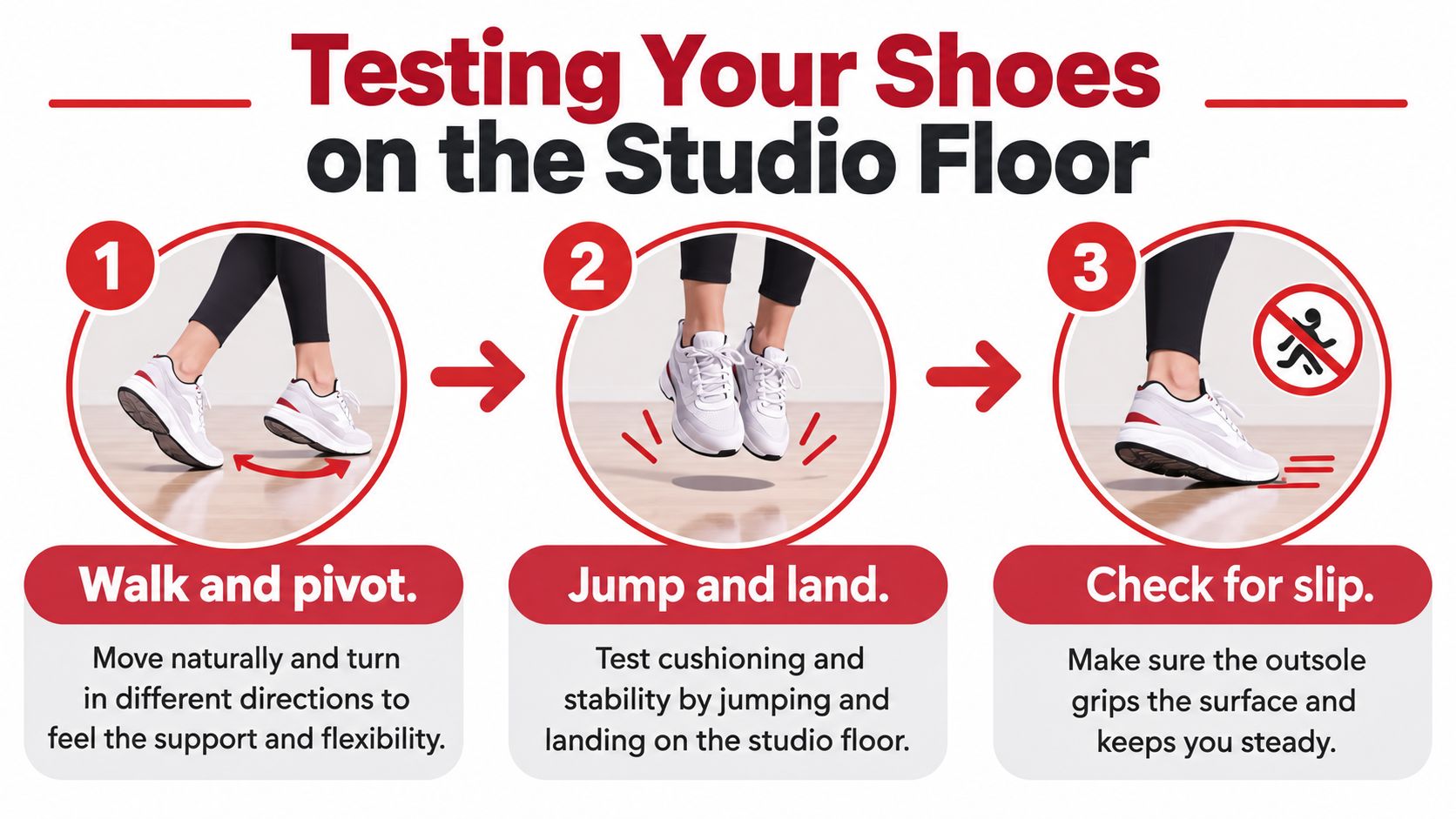
The same shoe can feel different on different surfaces. A suede sole that behaves well on a smooth studio floor may need adjustment on sticky commercial flooring, carpet, or a polished venue. Test before class rather than discovering the mismatch during a fast turn.
Use a short pre-class routine
- Walk and pivot. Take several ordinary steps, then make a controlled quarter-turn. Your foot should release smoothly without catching or collapsing.
- Shift and step sideways. Transfer weight from one foot to the other, then take a side step. Notice whether the shoe stays attached and whether the sole drags.
- Check for slip. If the foot slides beyond your control, you need more friction or a different shoe. If it catches abruptly while your body rotates, the sole is too grippy for that surface.
Research identifies hard or slippery surfaces as dance-injury risk factors, and it cautions that maximum grip isn't automatically safer. Excessive traction during rotational movements may shift stress toward the knee or ankle, as discussed in this review of dance injury risk factors.
A jump or landing test should remain gentle and appropriate to your experience. Don't test unfamiliar shoes with a forceful movement. Basic walking, weight shifts, and a small controlled turn tell you enough to decide whether the shoe feels predictable.
Watch this visual demonstration before your next class:
If you're practicing at a wedding venue or another unfamiliar location, bring a clean backup pair when possible. Test the actual floor in the shoes you plan to wear, and tell your instructor if the surface feels unusually sticky, slippery, hard, or uneven. For structured guidance before your first visit, see Danza Academy's beginner dance lesson.
Step Onto the Floor with Confidence
The right shoe won't perform the dance for you, but it can remove an unnecessary obstacle. When your foot stays secure, the sole releases predictably, and the heel matches your balance, you can focus on timing, posture, connection, and musicality instead of fighting the floor.
Danza Academy of Social Dance offers private lessons, group classes, wedding preparation, kids' programs, workshops, and training across Ballroom, Latin, and social styles in Center City Philadelphia and Exton, Pennsylvania. No partner is required, and students can ask instructors for help matching their footwear to the movement, floor, and personal needs.
For clothing and footwear ideas before your first visit, use Danza Academy's guide to what to wear to dance class. Bring the shoes you're considering, explain any foot or ankle concerns, and let an instructor watch how they behave during basic steps. That conversation can be more useful than choosing a shoe from a product photo alone.
A first lesson is also a chance to discover what your body needs. You may find that a flat practice shoe gives you better control than a heel, that a suede sole turns more comfortably than a rubber trainer, or that a wider fit lets your toes move naturally. Those are useful answers, and you don't need to have them before you begin.
Book Danza Academy of Social Dance's free complimentary lesson to receive welcoming instruction and practical guidance on moving comfortably across Ballroom, Latin, and social styles. Visit Danza Academy of Social Dance to take the first step, bring your questions about footwear, and experience a supportive class environment with no partner required.