
You're standing outside a dance studio, checking the address on your phone and wondering whether the class inside will welcome a complete beginner. The listing looked polished, but you still need answers about parking, schedules, partners, shoes, pricing, and whether you'll feel comfortable after the first visit. Searching for dancing lessons near me is easy. Choosing a studio you'll return to takes a better process.
Many dancers focus first on dance styles or introductory deals. I'd start somewhere more practical: choose a studio that fits your real week, your current confidence level, and the reason you want to dance. A nearby class that you attend consistently will do more for you than a glamorous studio across town that becomes inconvenient after the first few visits.
Starting Your Search for Local Dance Lessons
A useful search begins before you open Google. Ask yourself what you want dance to do for you. Someone preparing a wedding first dance needs a different lesson structure from someone seeking social confidence, fitness, a new hobby, or a route toward competition. If you don't define the destination, every studio listing will look roughly the same.
Your preferred style matters, too. Ballroom, Latin, swing, salsa, contemporary, and hip-hop attract different audiences and use different teaching approaches. You don't need to know the exact style name before you begin, but you should know the kind of experience you want. Do you want to dance with a partner, move independently, learn choreography, or feel comfortable at social events?
Practical rule: Search for the experience you want, not just the nearest business category.
A weekly time budget will narrow the field quickly. If you can reliably attend one evening class, don't shortlist studios whose useful programs run only during a difficult commute or at a time that regularly conflicts with work. A studio's schedule needs to fit the week you live, not the ideal week you imagine having.
Dance already has a broad cultural audience, but structured lessons attract a much smaller group. In the United States, the National Endowment for the Arts participation report found that 24% of adults danced during the prior 12 months, while only 2% took a dance class. The same report recorded 15% attending a live dance performance and 14% using electronic media for dance-related content. That gap tells me there are plenty of adults who enjoy dance informally but haven't found an approachable way to start formal instruction.
Write down your goal, preferred style lane, available evenings, and maximum realistic travel time. Then search with those details in mind. “Beginner salsa group class near me” will produce a more useful shortlist than a vague search for every dance option in the area.
Mapping Studios Near You the Smart Way
Start with Google Maps and Apple Maps. Search for the style and level you want, then examine studios within a drive you can repeat comfortably. I generally recommend a realistic radius of 15 minutes or less, because enthusiasm fades quickly when every class requires a complicated journey.
Local search behavior helps explain why map research matters. Independent local-search data for dance instructors reports that 46% of Google searches have local intent, 88% of consumers use Google Maps to find local businesses, and 76% of near-me mobile searches lead to an in-person visit within 24 hours. Those figures don't guarantee that a particular studio will suit you, but they show why practical access details deserve as much attention as the studio's style list.
Read the listing like a student
Don't stop at the star rating. Open the newest reviews and read the actual language students use.
- Check recency: Look for recent comments rather than relying on praise from years ago.
- Look for names: Repeated mentions of specific instructors can reveal who students value.
- Notice patterns: Complaints about scheduling, billing, cancellations, or crowded classes matter more than one isolated negative review.
- Inspect photographs: Look for the teaching floor, mirrors, lighting, changing areas, and entrances. Stock images tell you nothing about the visit.
- Confirm the schedule: Cross-check Maps with the studio website, Facebook page, or other active social channel.
A polished website can hide an inconvenient timetable. An older website paired with current community posts, recent class photos, and active announcements may point to a studio with a loyal local following. Treat every channel as evidence, not proof.
Verify the route before booking
Check parking rules, nearby transit, evening traffic, stairs, accessibility, and the walk from the car. Ask whether students can arrive early, whether the building entrance is easy to find, and whether the class uses a dedicated studio or a rented multipurpose room.
Then call. A short conversation reveals how the studio handles beginners better than a homepage does. Tell them your experience level and goal, then ask which class they'd put you in. A responsive answer should mention the actual instructor, class level, expected footwear, and what happens when you arrive.
Private Lessons, Group Classes, and Social Nights Compared
The three main formats solve different problems. Private lessons give you the most individual attention, group classes create regular momentum and shared energy, and social nights provide real-world practice that turns a memorized pattern into something you can use.
Private instruction makes sense when you have a specific deadline, such as a wedding, or when a technical issue keeps stopping your progress. The teacher can adjust the pace, focus on your posture or timing, and schedule around your week. The tradeoff is cost per hour, and some beginners find one-to-one attention intense until they settle in.
Group classes suit adults who want structure, community, and repeated practice with different partners. You'll learn at the room's pace, so a class may move too slowly for one student and too quickly for another. A good instructor manages that gap by offering useful variations, rotating partners, and giving beginners clear corrections without derailing the group.
Social nights and practice parties are often undervalued. They let you test skills without the pressure of a formal lesson, meet other dancers, and discover whether the studio feels welcoming outside class time. They shouldn't replace instruction, but they can strengthen retention between lessons and make social dancing feel less mysterious.
| Format | Typical Cost | Pacing | Best For | Watch Out For |
|---|---|---|---|---|
| Private Lessons | Usually the highest hourly commitment | Built around you | Wedding choreography, targeted correction, flexible scheduling | A teacher who rushes into packages before understanding your goal |
| Group Classes | Usually a lower per-person commitment | Set by the class | Beginners, fitness, community, steady weekly momentum | Crowded rooms, unclear levels, or no individual feedback |
| Social Nights | May be included, ticketed, or offered as a drop-in | Informal and self-directed | Practice, confidence, meeting dancers, applying patterns | Treating social dancing as a substitute for foundational instruction |
Most adults benefit from a blend rather than a permanent choice. Weekly group classes build a habit, occasional private instruction resolves specific problems, and social nights give you practical floor time. For focused wedding preparation, start with private lessons and add group practice if the studio offers it. For a longer dance life, group classes and socials usually create the strongest routine.
If private instruction sounds like the right starting point, compare the structure and expectations described in private dance lessons for adults before you book.
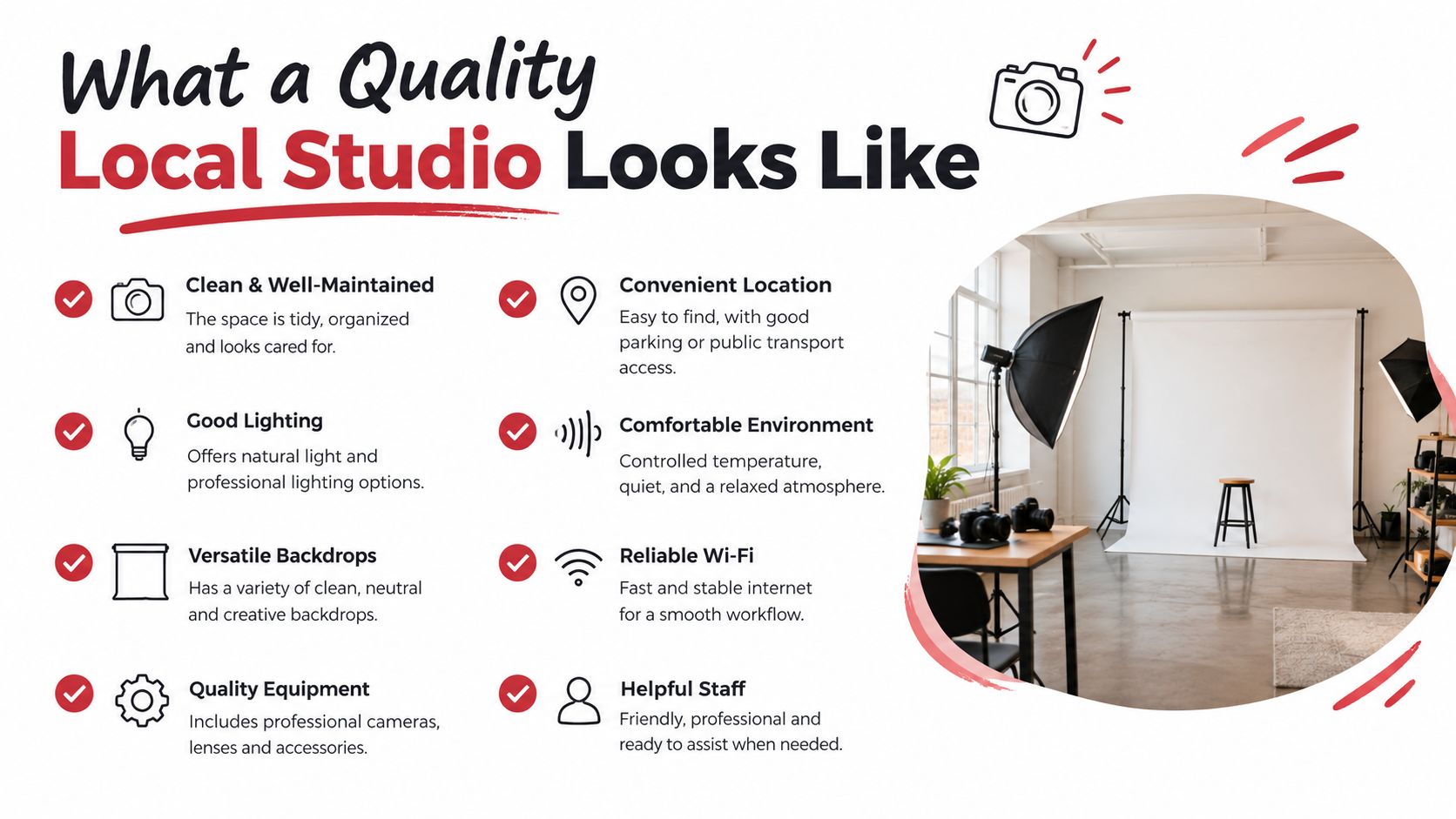
What a Quality Local Studio Looks Like
Marketing language is easy to copy. A real studio shows its quality through small, observable details that affect how safely and confidently you learn.
Seven signals worth checking
1. The floor supports movement. Clean, sprung wood is preferable to tile laid over concrete. The room should be bright enough for you to see your partner's frame, foot placement, and direction.
2. Instructors engage before teaching. A good teacher introduces themselves, asks what brought you in, and checks your experience. They don't assume every beginner wants the same outcome.
3. Group classes include the whole room. Watch whether instructors rotate partners and prevent established cliques from controlling the floor. New dancers shouldn't be pushed into a corner with minimal attention.
4. Style-specific experience is clear. Ask, “How long have you taught this particular style?” Teaching ballroom isn't identical to teaching salsa or swing. Each style has its own rhythm, partnership mechanics, vocabulary, and progression.
5. Levels are understandable. Beginners should know where to start and what they need before moving up. Ask whether students can change levels without awkward politics or pressure.
6. Pricing is direct. The studio should explain lesson formats, packages, cancellations, and any recurring commitments before asking for payment. A hard sell during your first conversation is a warning sign.
7. People are remembered. The front desk or instructor should know your name by your second visit. That personal attention often reflects the community habits that help a studio remain stable and useful over time.
The guide to choosing a dance studio can help you prepare more questions before visiting. Don't judge a studio only by décor. Judge how it organizes beginners, handles questions, and makes the floor feel usable.
Dance also has a practical social advantage. A community study of adults linked social partner dancing with perceived improvements in physical fitness, cognitive functioning, social functioning, mood, and self-confidence, with stronger perceived benefits among people who participated more frequently and for longer periods, as reported in this study of social partner dancing. That makes the studio environment part of the learning product, not a decorative extra.
Watch this short visual example, then compare it with what you see during your own visit.
Making the Most of a Trial Lesson
Treat a complimentary first lesson as an evaluation, not a freebie. You're testing the teacher's communication, the studio's organization, the physical environment, and your own response to the learning process.
Wear clothes that let you move without constant adjustment. Choose shoes with a smooth leather sole if possible. Sneakers grip the floor too strongly for many partner-dance movements, which can make turns feel awkward and place extra strain on your joints. Arrive 10 minutes early so you can find the entrance, complete any paperwork, and begin calmly.
Tell the instructor the truth about your experience. Say whether you've never danced, learned informally, taken lessons elsewhere, or feel nervous about partnering. Explain whether you came for a wedding, fitness, social confidence, or simple curiosity. The teacher can only adjust the lesson when they know what you're bringing into the room.
What to observe during the lesson
A strong beginner lesson should include demonstration, explanation, guided practice, and correction. Notice whether the instructor:
- Shows the movement clearly: You should see the action before being expected to reproduce it.
- Explains the count: Timing should make sense rather than feeling like a series of unexplained foot commands.
- Demonstrates both roles when relevant: Partner dancing becomes easier when you understand what each person contributes.
- Corrects without scolding: Precision matters, but embarrassment doesn't improve learning.
- Breaks patterns into manageable pieces: Long combinations introduced too soon usually create confusion rather than progress.
A learner-centered approach is supported by a 2026 systematic review of 38 dance-pedagogy studies, which connected reflection, dialogue, collaboration, observation, and choice with better cognitive, psychosocial, and implementation outcomes. A controlled dance-learning study included in that evidence also found that beginning with visual observation of a human model produced better recall and movement approximation than beginning with verbal instruction.
After class, ask yourself three questions. Did you understand why the steps happened? Did you feel physically safe and respected? Did you want to return next week? If any answer is no, thank the instructor and try another studio. A good fit matters more than a low introductory price.
For a first class designed around beginners, review the information about a beginner dance lesson before you arrive.

Committing to a Studio You Can Walk Back To
The best studio is usually the one you can reach without negotiating with your entire day. A cheap package at a studio far from home, work, or your normal route becomes expensive in time and motivation. A beautiful downtown room won't help if parking turns every lesson into a stressful event.
Choose a location you can reach in under 20 minutes from home or work, with parking or transit that works during the class's actual start time. Check the route on a weekday evening, not only on a quiet weekend afternoon. Ask whether students can arrive early, where they enter, and whether the studio has enough space for changing shoes and getting settled.
The habit beats the fantasy studio.
Commit to a small starting block rather than a long contract. Four to six lessons gives you enough time to test the instructor's teaching style, the class atmosphere, the floor, the schedule, and your own physical response. You can make a more informed decision after attending repeatedly than you can during a sales conversation.
Build a rhythm you can keep
Put the lesson on your calendar like any other appointment. Keep practice short and repeat it soon after class instead of waiting until you've forgotten the sequence. Dance-learning guidance on spaced repetition recommends immediate review, another practice within 24 hours, and continued retrieval across several days. That approach is more useful than one exhausting practice session.
A simple home routine works well:
- Learn one short phrase.
- Mark it slowly without forcing speed.
- Run it with music.
- Practice away from the mirror.
- Repeat it across several short sessions.
Don't rely only on watching the teacher. Don't stay permanently dependent on the mirror. Your goal is to recognize timing, direction, and partnership cues in the room, not merely copy an image while standing in class.
Geography, consistency, and trust beat discount pricing. Pick the studio you can return to on an ordinary week, then let steady attendance create the progress.
Your Next Step and Quick Answers
Stop browsing once you have three pieces of information: the style you want to learn, two or three studios within a realistic route, and a clear answer from one of them about the right first lesson. Call the most responsive option, ask practical questions, and book a visit this week.
Structured dance offers more than steps. A 2024 systematic review of dance interventions found that structured dance was generally as effective as, and sometimes more effective than, other physical-activity interventions for psychological and cognitive outcomes. The review also identified social support, partnership, enjoyment, accountability, and relaxation as reasons dance can work as both exercise and a social activity.
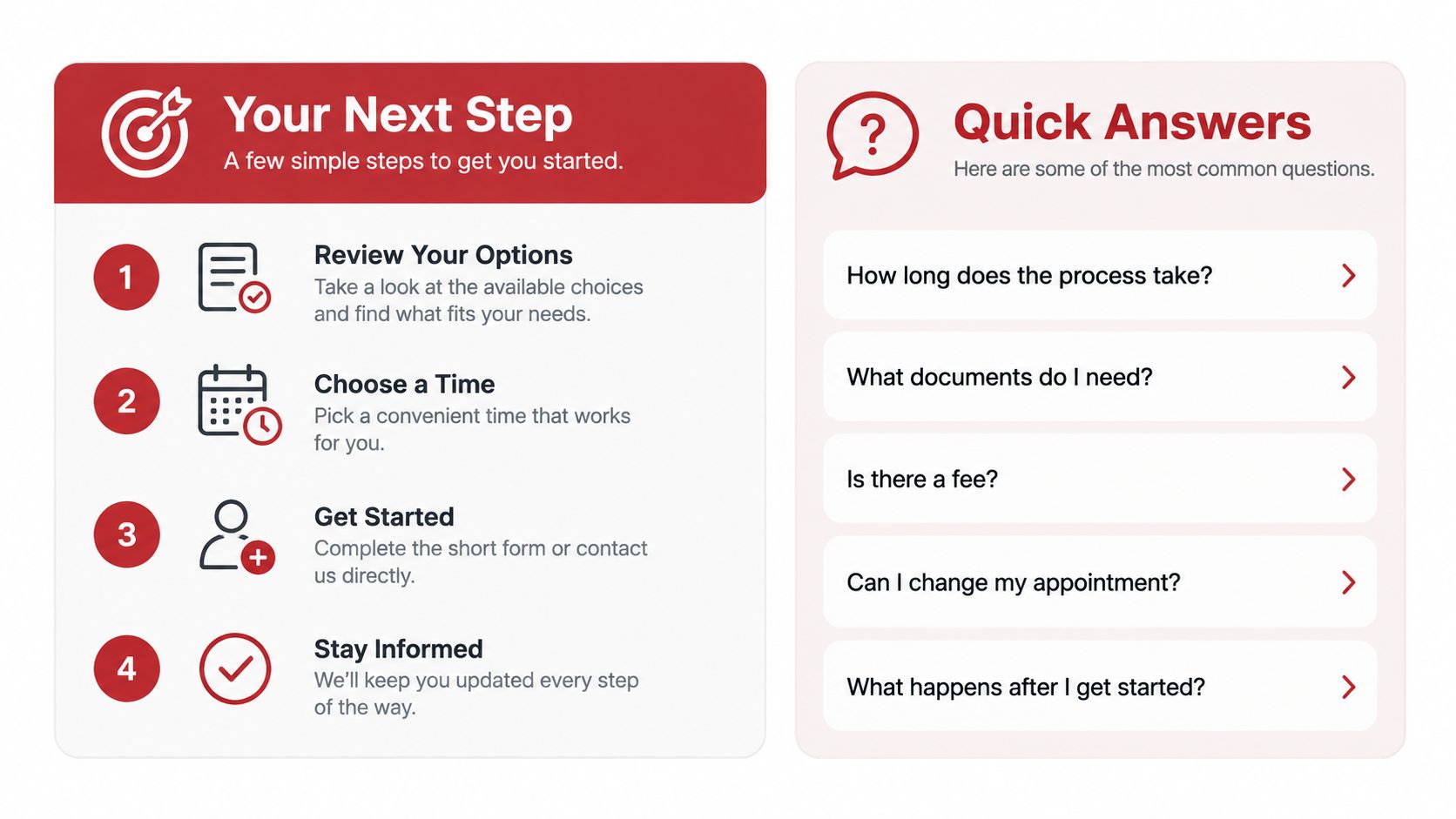
Quick answers for local beginners
How much do dancing lessons near me typically cost per hour?
Prices vary by city, instructor experience, format, and package. Private lessons usually cost more per hour than group classes, while social nights may be included or priced as drop-in events. Ask for the full price, cancellation terms, and package conditions before paying.
Do I need a partner to start?
No. Many studios rotate partners in group classes, and private instructors can teach you individually. If you have a significant other, they're welcome to join, but you don't need to wait for someone else before beginning.
What should I wear to a first lesson?
Wear comfortable clothes that allow movement and shoes that won't grip the floor aggressively. Smooth-soled dance shoes are useful, but you can ask the studio what they recommend for your specific style.
How long until I can dance socially?
You can begin using simple patterns once you understand timing, connection, and floor etiquette. Your comfort grows through regular lessons and practice nights, not through collecting complicated choreography.
Are studios safe for absolute beginners?
A quality studio should explain the class level, introduce you properly, correct you respectfully, and make it easy to ask questions. Use the trial lesson to judge those behaviors in person.
Book a complimentary first lesson rather than trying to solve every question from a map listing. Danza Academy of Social Dance offers private lessons, group classes, and instruction in ballroom, Latin, and social styles, so you can test the teaching environment against your actual goals. Visit Danza Academy of Social Dance and reserve your complimentary lesson before another week passes without taking the first step.