
You're in a timeline meeting with your planner, DJ, and venue coordinator, and someone asks the question that suddenly makes the whole evening feel complicated: “When exactly should you have your first dance?” You know you want the moment to feel intimate, relaxed, and memorable, but you also need to fit in parent dances, dinner, toasts, and an open dance floor without creating long pauses.
The answer isn't only about etiquette. The wedding first dance order acts as the structural anchor for the reception. Its placement affects when the formal dances begin, how the DJ or band builds energy, when guests sit for dinner, and how smoothly everyone moves onto the dance floor. A beautiful routine can lose its impact if it happens too late, runs too long, or gets buried inside an overfilled formalities block.
A university thesis citing a WeddingWire study reports that 91% of couples choose to perform a first dance during their reception, and estimates that, with about 2.4 million U.S. weddings per year, roughly 2.18 million first dances happen annually (Rustic and Main's first-dance etiquette overview). That makes this tradition familiar, but familiarity doesn't remove the need for a thoughtful plan.
Introduction to Your Wedding First Dance Order
Most couples don't struggle because they lack options. They struggle because every choice seems connected to another. Move the first dance, and the parent dances may move. Delay the parent dances, and dinner or speeches may need to shift. Let the song play in full, and the transition to open dancing may feel slower than expected.
After decades of teaching couples, I've found that the calmest wedding days usually begin with one clear decision: choose the first-dance position before filling in the rest of the reception timeline. Once that moment has a definite place, the DJ can prepare the music cues, the planner can arrange announcements, and the couple can rehearse for the actual room they'll enter.
The most common arrangement is simple. The couple makes a grand entrance, dances together while guest attention is high, then moves into parent dances and the remaining formalities. Depending on the reception format, dinner or speeches may follow before the floor opens to everyone.
Practical rule: Treat the first dance as a timing decision first and a choreography decision second.
That doesn't make the dance less romantic. It protects the romance by giving the moment enough attention and by keeping the rest of the evening from feeling improvised. The right order also gives you flexibility. A couple having a seated dinner may dance before the meal, while a cocktail-style reception may place formal dances after dinner. The important part is that the sequence has a deliberate anchor.
Your dance doesn't need advanced lifts or a complicated routine to feel polished. It needs a song that suits you, movement you can repeat comfortably, and a clear ending that tells the room what happens next.
Where the First Dance Fits in Your Reception Timeline
The first dance sets the reception's working rhythm. If it follows the grand entrance, guest attention is already gathered, parent dances can follow without another reset, and the DJ has a clear path into dinner or open dancing. The Knot's guide describes the common order as grand entrance, first dance, then parent dances, with many couples choosing to dance before dinner (The Knot's order of dances guide).
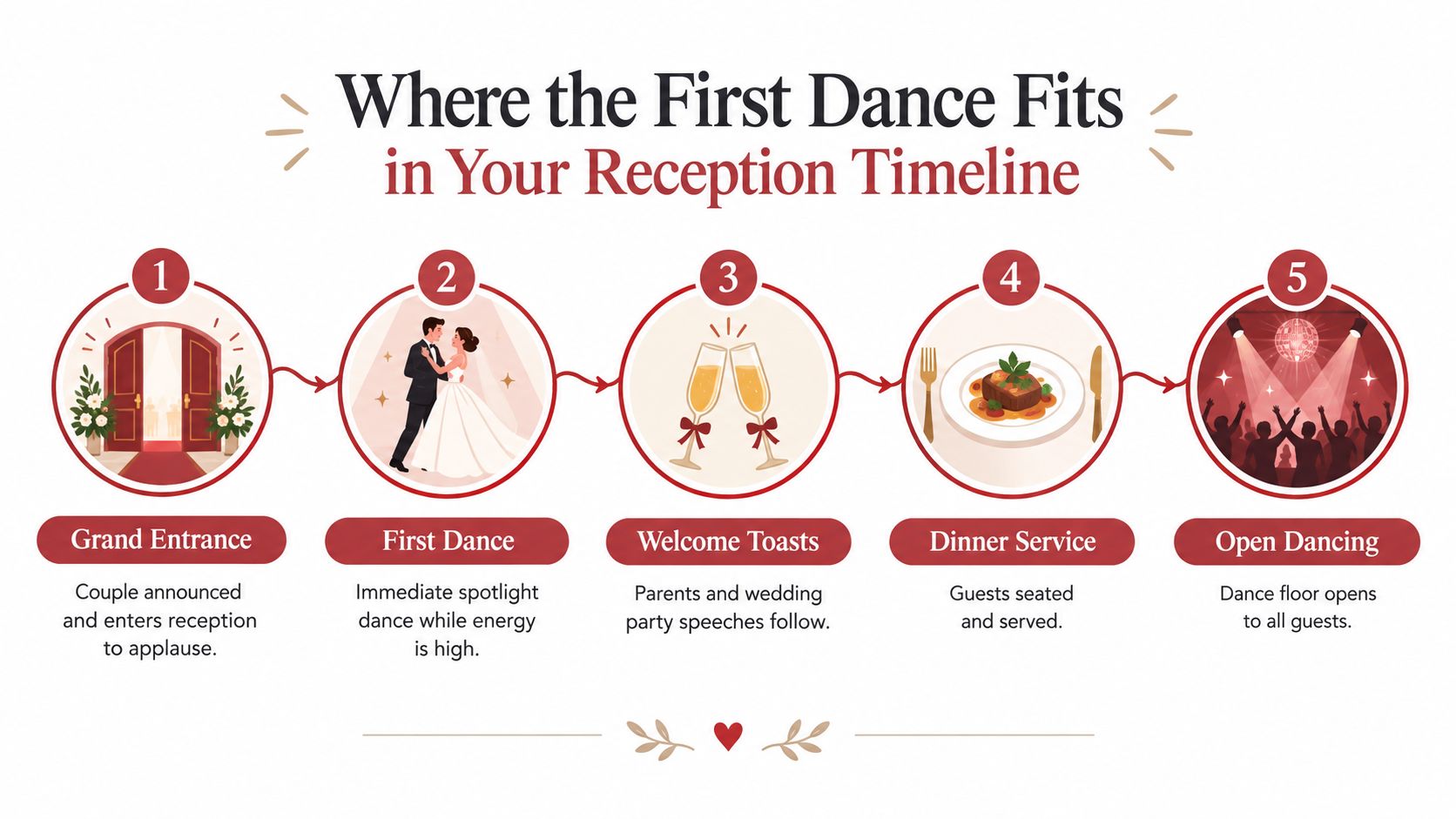
The standard sequence
A practical run-of-show often looks like this:
- Grand entrance: The couple is announced and enters to applause.
- First dance: They take the floor while the room is focused on them.
- Parent dances: Father-daughter and mother-son dances follow, if included.
- Dinner or welcome formalities: The meal and speeches fit around the venue's service plan.
- Open dancing: The DJ or band invites everyone onto the floor.
This order keeps the formal dances together. That matters because a long gap for photographs, several announcements, or an early meal can drain the room's attention before the couple has danced. Keep the handoffs short and tell the DJ exactly which song or announcement follows each dance.
Dinner can move without breaking the structure. At a seated reception, placing the dances before the meal gives the evening a strong opening, then lets guests settle in to eat. If the venue serves dinner first, schedule the first dance afterward, but confirm the cue with the planner, DJ, and catering team.
Build around the anchor
Set the first-dance slot before assigning parent dances, toasts, and open dancing. Then check the total length of the formal segment. A full song followed by two parent dances and multiple speeches may delay the floor longer than guests expect, while a concise sequence keeps energy available for dancing.
A tent or temporary layout needs the same planning attention. Review this dance floor DJ space wedding tent guide before placing tables, speakers, and the couple's entry path. The dance should have a clear approach, enough room for the planned movement, and a visible route for the next participants.
The usual timing problems are predictable. A first dance placed too late can meet distracted guests. Too many speeches beforehand can cool the room. A short edit, a rehearsed announcement, and a confirmed handoff to the next formal dance keep the reception moving without making the moment feel rushed.
Choosing and Timing Your First Dance Song
The song may feel perfect in your headphones, yet leave you searching for the beat on the floor. Tempo changes, irregular phrasing, or an early chorus can make a meaningful track difficult to dance to. Choose music that gives you emotional connection and clear information for moving together.
Listen for three practical markers:
- Can you hear the beat? A slow song still needs a pulse you can recognize and share.
- Does the mood fit your reception? A gentle sway, classic waltz, or playful Latin-inspired routine will set different expectations for the room.
- Can you imagine the ending? A clear final phrase lets you finish together instead of continuing until the track stops.
Use this first dance song guide to compare emotional tone, tempo, and dance possibilities before committing. Danza Academy's wedding dance song ideas can provide further inspiration. Walk or sway to each shortlisted song, because the track that sounds best may not feel easiest to lead or follow.
Edit for the room
In my studio, a first dance of 2 to 3 minutes usually gives couples enough time to establish the moment without holding the reception floor too long. A shorter presentation, around 60 to 90 seconds, can suit a tight timeline and keep parent dances, toasts, and open dancing closer together, as described in Anatole's reception order guide.
A 2026 wedding music trend report describes 2 to 2.5-minute edits as a new sweet spot. Our Wedding Dance's etiquette guide also identifies a “60-second trend” toward studio edits that move quickly into the party. These are options, not rules. Match the edit to your comfort, choreography, and the amount of time available before the next formal event.
Ask your DJ or band for a clean version that reaches a satisfying musical resolution. Fading after the first chorus often works, provided the fade does not cut through a lyric or planned turn. Send the final file early, label it clearly, and rehearse only to that version.
Song length shapes the rest of the order. A short edit can hand the floor directly to parent dances or invited guests. A longer routine can work for a performance-focused reception, but it demands more stamina, rehearsal, and a clear reason to keep the room watching.
Keep the technical choice tied to the feeling you want. An unusual edit is fine when it protects a meaningful song. The aim is an intentional start, middle, and finish that supports the entire reception timeline.
Structuring Choreography Segments and Smooth Transitions
A polished first dance doesn't require a long sequence of difficult figures. It needs a beginning that settles your nerves, a middle that gives you something repeatable, and an ending that the photographer and guests can recognize.
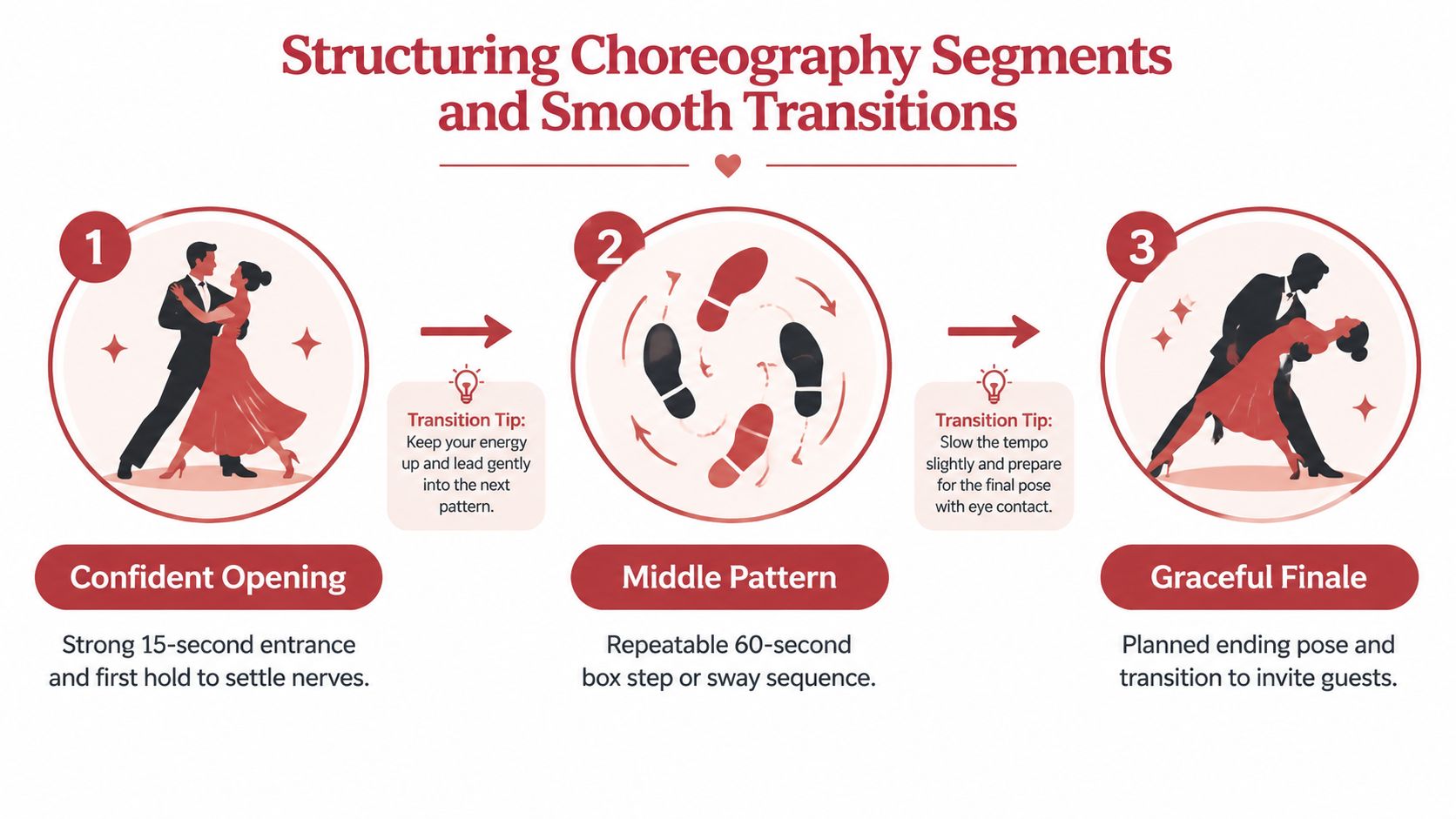
Begin with control
Use the opening musical phrase to establish your posture, connection, and direction. Walk onto the floor together, pause for the first hold, and begin with a movement you've practiced often. A simple sway, box step, or progressive pattern can look confident when your shoulders are relaxed and your timing is shared.
The first moments aren't the place for your most demanding move. They're where you get comfortable with the lights, floor surface, dress, and audience. Give yourselves room to breathe.
Build a repeatable middle
The middle section can use one reliable pattern with a few planned variations. You might begin with a box step, add a turn when the chorus arrives, then return to the base pattern before the next phrase. Repetition isn't boring when it matches the music. It gives you a safe pathway if nerves interrupt your memory.
Floorcraft matters: The routine should fit the actual dance area, not the largest studio where you rehearsed it.
Keep turns compact if the room is narrow. If the floor is generous, travel with purpose rather than drifting toward tables or the DJ booth. Both partners should know which direction the couple will face for the key moment, especially if photography and videography are positioned at one side of the room.
A highlight can be a dip, a shaped pause, a gentle lift, or a musical accent. Choose only what you can execute safely and consistently. A smaller movement performed with connection will photograph better than a risky trick that makes either partner tense.
Finish with a cue
Plan the final pose as carefully as the first step. Hold it long enough for the photographer to capture the moment, then release cleanly and walk off together or turn toward the parent-dance participants.
If parent dances follow, the DJ should announce the next pair while you leave the floor. If open dancing comes next, the couple can remain near the edge and invite guests in. That transition tells everyone the formal spotlight has ended and the celebration has opened.
If you lose your place, return to the base pattern. Don't apologize, stop abruptly, or search for the next move with your face. Your partner can guide you back into the rhythm, and most guests will remember your connection rather than a missed step.
Rehearsal Tips That Build Confidence Before the Big Day
A couple can know every count in the studio and still feel unsettled on the wedding floor. Confidence comes from practicing the conditions that will shape the reception, while keeping sessions short enough to stay focused and connected.
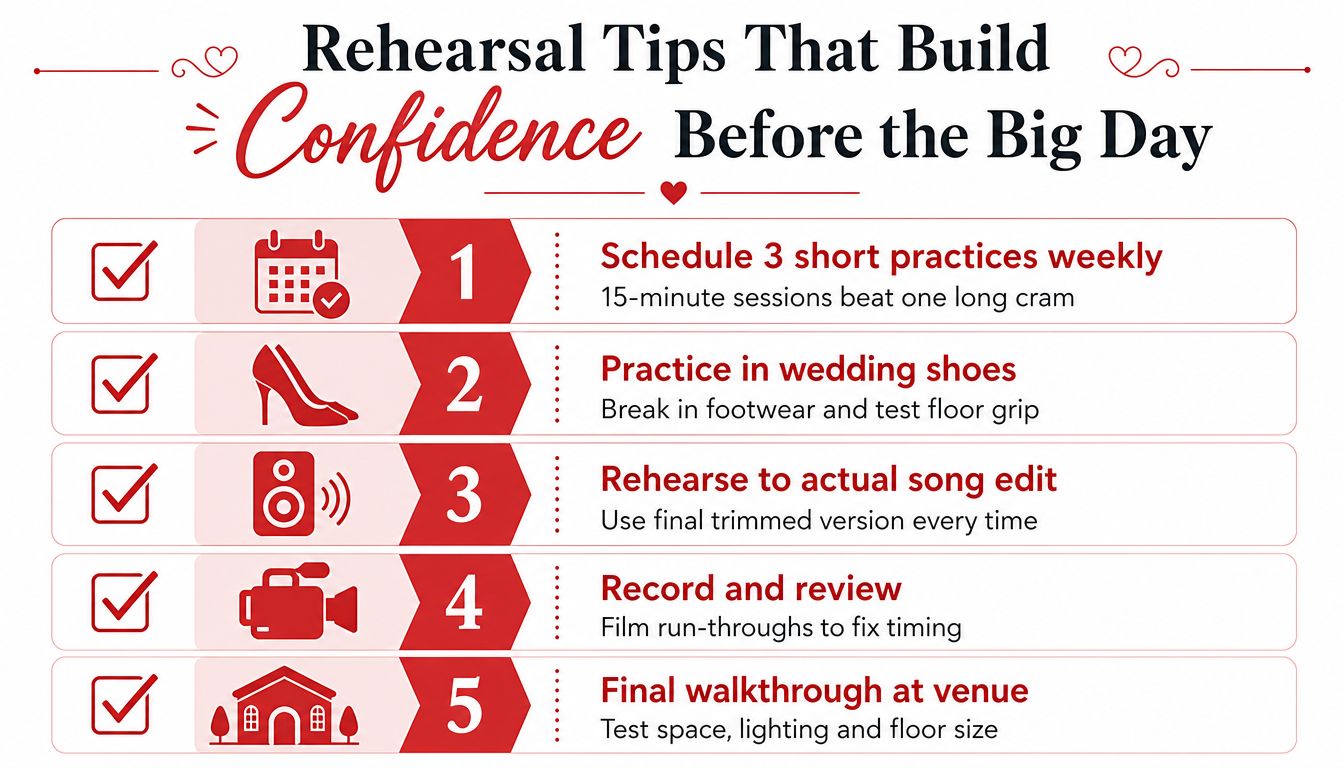
Build practice around these checks:
- Schedule focused sessions: Place several short rehearsals on the calendar each week. Stop after a successful run instead of practicing until fatigue changes the timing.
- Use the wedding shoes: Test heel height, dress length, shoe grip, and any jacket or train that affects movement.
- Rehearse the final edit: Practice the exact version the DJ will play. Your body should recognize its opening, cuts, and ending.
- Record a run-through: Video can show rushed turns, uneven spacing, or an ending that looks uncertain from the audience.
- Test the venue conditions: Walk the floor, confirm usable space, and ask your planner about lighting, staging, and nearby tables.
A rehearsal should also test the reception sequence. Confirm how the dance will hand attention to parent dances, toasts, or open dancing, because a song that runs long can shift every cue after it.
Practice communication, not only steps
Agree on simple signals before you practice at speed. Gentle pressure can indicate a turn, while a change in hand position can prepare a transition. The leader should guide clearly without pulling. The follower should maintain a responsive connection without anticipating every move.
Count aloud during early rehearsals, then reduce the counting as the rhythm becomes familiar. If one section repeatedly causes confusion, simplify it. A natural routine will serve you better than a difficult sequence that works only under ideal conditions.
Set the first-dance position in the reception schedule before confirming parent dances, toasts, and open dancing. This anchor shows the DJ and planner where formalities begin, how long the spotlight lasts, and when guests can join the floor. Couples who want structured help can explore Danza Academy's wedding dance lessons for a routine shaped around their song, space, experience, and comfort level.
Complete a final walkthrough
At the venue, confirm where you enter, where the dance begins, and where you finish. Ask who gives the music cue, who announces the dance, and how the next formal activity starts. Run through that handoff once with the people managing the reception. Those details remove uncertainty that choreography alone cannot solve.
Bring Your First Dance Order Together With Confidence
A successful first dance order has a clear logic. The grand entrance gathers attention, the couple's dance establishes the emotional center, parent dances continue the formal spotlight, and dinner, speeches, or open dancing follow according to the reception format.
Your song should be meaningful and workable. Your edit should leave enough room for the rest of the evening. Your choreography should include a dependable opening, a repeatable middle, and a planned ending. Your rehearsal should prepare you for the floor, shoes, lighting, music file, and partner connection you'll use.
The first dance doesn't need to look like a stage performance. It needs to look like the two of you belong in the moment. Couples who feel comfortable can make a simple routine memorable, while couples who feel rushed often lose the connection guests came to see.
If nerves are your biggest concern, practical preparation can change the experience. Guidance on overcoming fear of dancing in public can help you replace self-consciousness with specific tools, such as breathing, visual focus, and a reliable recovery pattern.
A well-planned order gives your DJ, planner, photographer, parents, and guests the same roadmap. That shared roadmap creates smoother transitions and lets you concentrate on your partner instead of wondering what happens next.
Danza Academy of Social Dance offers private wedding dance lessons that turn your chosen song into comfortable, personalized movement, with coaching for timing, connection, choreography, and reception transitions. Visit Danza Academy of Social Dance to book your free complimentary lesson and start building a first dance you'll feel ready to enjoy.