
What makes a social dance example worth learning: the name of the style, or the way it fits the music, the room, and the connection you want to feel? A long list can introduce you to salsa, waltz, swing, tango, and many other choices, but it can't tell you which dance will feel natural at a wedding, a social event, a club, or your first studio lesson.
Social dance remains a measurable cultural practice rather than a niche hobby. In England, 16.0% of adults participated in dance in 2016/17, while 11.6% attended a dance event, and the wider survey reached adults through both attendance and participation in the Arts Council England dance profile. The right starting point depends on the atmosphere you want, the pace you enjoy, and whether you prefer expressive solo movement or close partner communication.
This guide connects each style to its music, social setting, learning curve, and first practical action. Try the foundational skill before committing to a long course, and consider booking a free complimentary lesson at Danza Academy to test the fit with an instructor.
1. Salsa
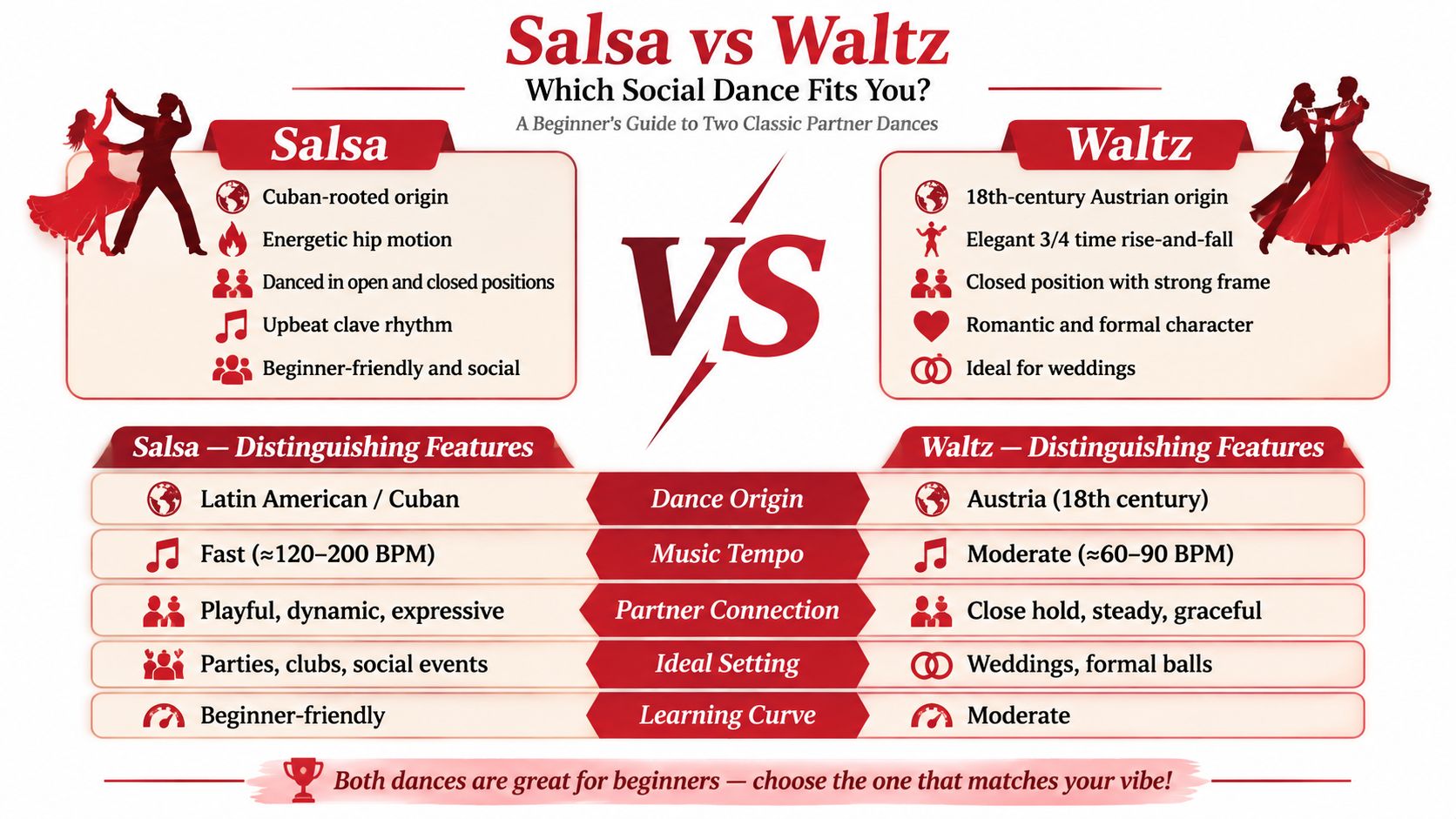
Salsa brings quick footwork, rhythmic hip movement, and upbeat Latin music together in a partner dance built around musical conversation. Its Cuban roots draw from traditions including Cuban son and mambo, while its social form has developed across dance communities in cities such as Miami, New York City, and Philadelphia.
The dance alternates between open and closed positions. Partners use a clear frame, weight changes, turns, and responsive lead-and-follow communication. The familiar basic timing is often counted 1-2-3, 5-6-7, with the pause creating space for the next phrase. Listen for the clave rhythm, but don't force hip action before your posture and alignment are stable.
Your first salsa action
Stand tall, soften your knees, and practice the basic step without adding a turn. Once your weight transfers feel even, add a small amount of Cuban motion through the hips. The goal isn't to make the movement large. It's to stay balanced while hearing the rhythm.
Practical rule: Build timing and connection first. Spins become easier when your basic step remains calm.
Salsa works well for social clubs, studios, festivals, and energetic nights out. At Danza Academy, beginners can work from foundational patterns toward turn techniques while learning frame and partner connection. Start with the beginner salsa dance lessons and use the complimentary first lesson to experience the teaching approach.
2. Waltz
Waltz suits dancers who want flowing movement, elegant posture, and a strong sense of partnership. Its music uses 3/4 time, creating the familiar ONE-two-three pulse. The couple travels around the floor with a smooth rise-and-fall action rather than sharp, isolated steps.
A basic box step gives beginners a reliable map. One partner moves forward, side, and together, while the other mirrors the pattern by moving back, side, and together. The closed position requires an upright body, a stable frame, and enough shared space for both dancers to move comfortably.
Waltz often appears at formal ceremonies, wedding first dances, ballroom showcases, and competition settings. It also gives social dancers a useful foundation for floor awareness because the couple must manage direction while keeping the rhythm continuous.
Start with the box step
Count aloud before trying to travel. Keep your shoulders quiet, then practice rising through the balls of your feet during counts two and three. Don't treat rise and fall as decoration. It should support the shape of the step and help the movement glide.
A wedding couple might begin with a simple box step, add a natural turn, and finish with a pose that feels personal rather than overly complicated. Beginners can learn those foundations through how to dance the waltz, then use a complimentary lesson at Danza Academy to discuss a social or wedding goal.
3. Swing
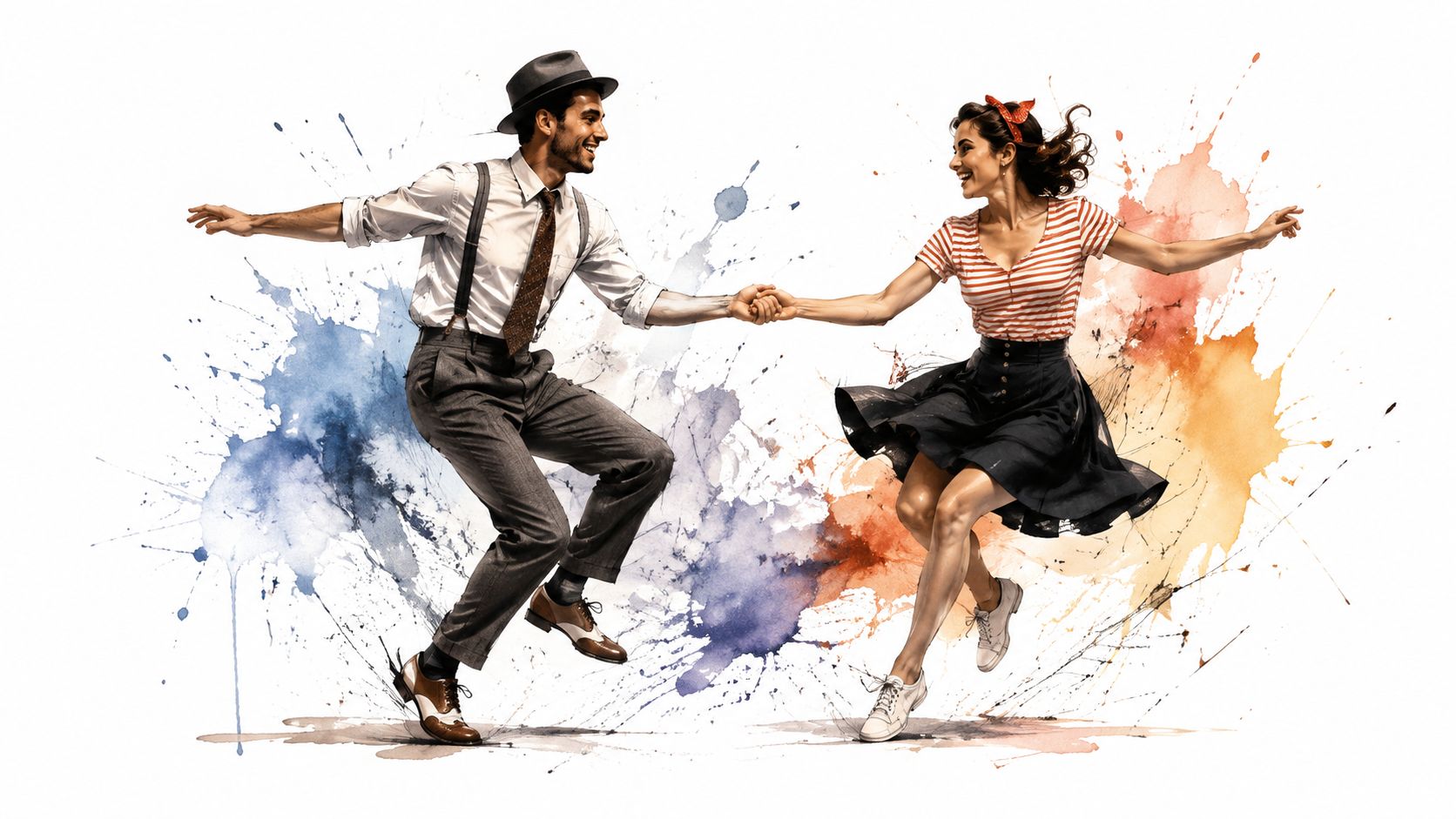
Swing feels conversational, playful, and open to improvisation. It developed through African American and European American dance traditions and is usually danced to jazz or swing music in 4/4 time. The relaxed, syncopated quality of the music matters as much as the steps.
East Coast Swing offers a practical entry point because its basic pattern is easier to organize before moving into Lindy Hop variations. The triple step gives the dance its characteristic elasticity, while the bounce should come from relaxed knees rather than from jumping vertically. Partners communicate through changes in tension and slack, so a good connection feels responsive rather than rigid.
Find the pulse before the flair
Practice the basic step with a gentle bounce, then try changing direction without losing the rhythm. A leader can invite movement through the frame, while the follower maintains balance and responds to the information received. Aerials and lifts belong to trained settings, not a beginner's first social dance attempt.
“Swing becomes more comfortable when the basic step feels automatic.”
Weekly socials, exchange events, and international festivals give swing dancers many ways to practice. A learner who enjoys vintage music, playful movement, and improvisation may find Swing more welcoming than a tightly choreographed style. Danza Academy's complimentary first lesson is a practical way to experience the connection before choosing a class.
4. Tango
Tango is grounded, precise, and emotionally direct. Its late nineteenth-century Argentine origins are reflected in the dramatic music, deliberate walking, close attention to weight transfer, and intense communication between partners. Unlike the lifted quality of waltz, tango uses a lower, more controlled frame and sharp, staccato actions.
The promenade position gives tango its recognizable silhouette. Clear posture and direct footwork let the leader communicate direction while the follower responds with confidence. Dramatic head turns and changes in body alignment can appear later, but beginners should first learn to walk with stable weight and a consistent connection.
Learn the walk before the figures
Walk slowly with your partner and pause after each weight change. Notice whether your chest, frame, and feet communicate the same intention. The hips and spine should coordinate with the movement, not twist independently in an attempt to create theatrical effect.
Buenos Aires milongas show tango's social character, while films such as Scent of a Woman and Take the Lead have introduced its intensity to wider audiences. The best beginner action is simple: practice a clear tango walk, maintain respectful eye contact, and listen for the phrasing of the music.
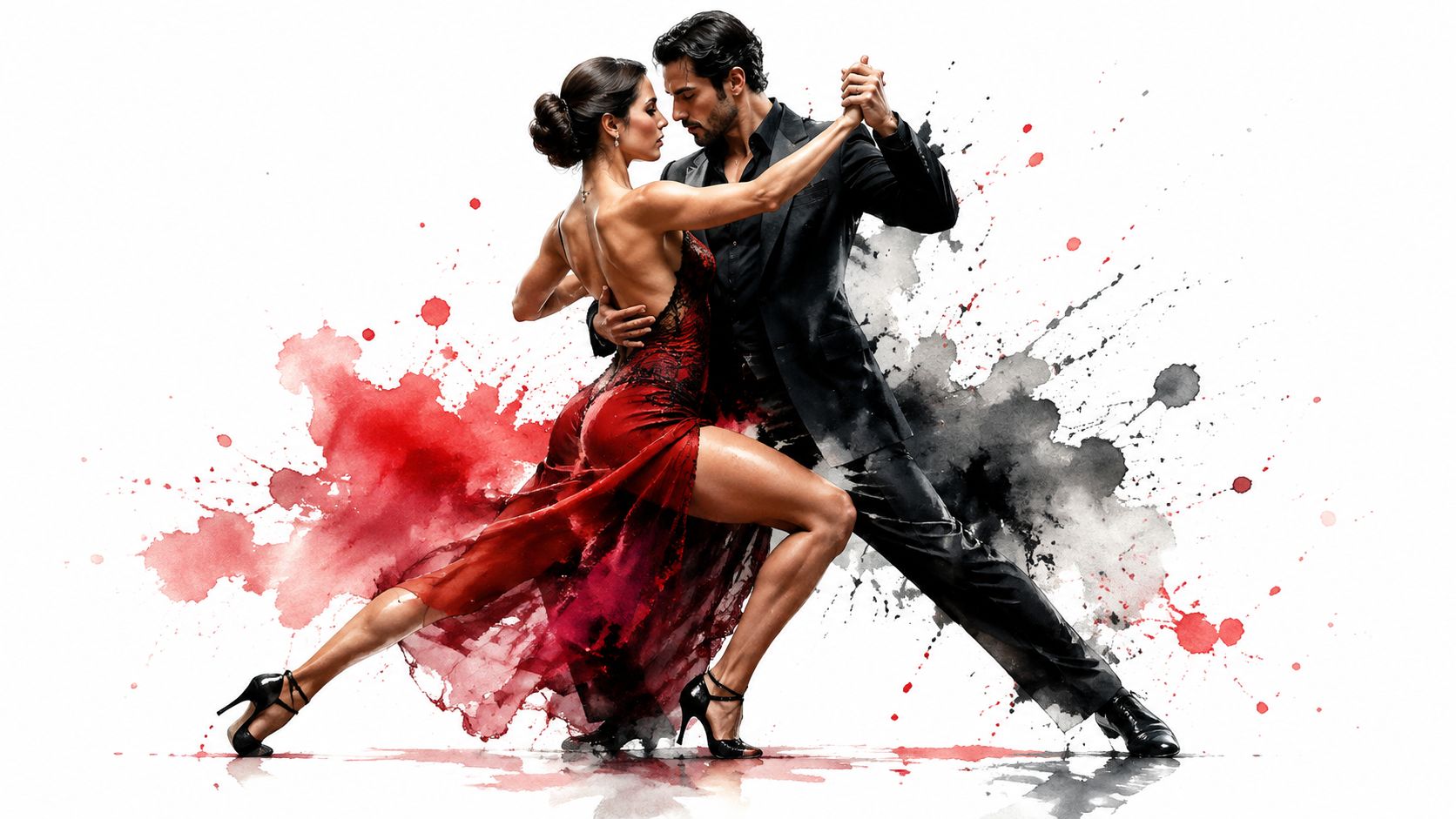
Tango's visual drama comes from control rather than rushing. This demonstration can help you observe posture, pauses, and directional changes before trying them yourself.
5. Rumba
Rumba offers a slower, more deliberate route into Latin partner dancing. Its Cuban roots, 4/4 musical structure, and slow-quick-quick phrasing encourage dancers to focus on weight transfer, body control, and connection instead of speed.
The dance often feels intimate because partners maintain a clear relationship through the frame while allowing the body to express the music. Cuban motion develops as the knees alternate and the weight settles, creating movement through the hips while the upper body stays controlled. That contrast gives rumba its smooth, expressive character.
Let the weight change create the motion
Begin with the basic square step. Transfer your weight completely before trying to exaggerate the hip action. Keep your feet active and your shoulders relaxed, then practice counting slow-quick-quick until the pattern feels connected to the music.
Rumba appears in ballroom Latin competitions, dance studios, television programs such as Dancing with the Stars, and social venues around the world. It suits a learner who values control, musical interpretation, and close partner communication more than rapid combinations.
A useful first lesson should focus on the relationship between feet, knees, hips, and frame. Danza Academy can introduce those elements progressively, helping you develop technique without turning the dance into a collection of memorized poses.
6. Foxtrot
Foxtrot is built around walking, smooth travel, and polished partnership. Its 4/4 rhythm gives it a different character from waltz, even though both styles use flowing movement and controlled rise and fall. Foxtrot's feather steps and continuous floorcraft make it a natural choice for formal ballroom events, galas, and dancers who want elegance without tango's dramatic intensity.
The movement should look effortless because the couple manages the technique underneath it. Long lines come from extending the legs and maintaining a stable frame, while the lower body glides forward and the upper body remains composed. Lead-and-follow communication helps both partners share the direction rather than compete for it.
Make walking your first technique
Walk to the music while keeping the stride comfortable. Practice the rhythm slowly, then add the rise-and-fall action as part of the step. Don't lift the body separately from the movement. Let the legs, feet, and frame work as one system.
Fred Astaire and Ginger Rogers helped make foxtrot familiar through films such as Top Hat. Today, the style remains useful for social dancers who want a versatile formal dance and for couples preparing a refined first dance.
At Danza Academy, a complimentary lesson can show you how frame control, musical phrasing, and floor movement fit together. Start with walking quality before adding more complex patterns.
7. Cha-Cha
Cha-Cha is lively, playful, and rhythmically precise. The Cuban-rooted style grew from mambo and uses a distinctive quick-quick-slow pattern with the recognizable cha-cha-cha shuffle. The music invites sharp weight changes, hip action, and a sense of flirtatious interaction between partners.
Unlike rumba's slower romantic quality, cha-cha encourages more buoyant energy and quick responses. Dancers can move between open and closed positions, which makes the style practical for group classes, parties, ballroom settings, and social floors where partners need room to vary the shape of the dance.
Protect the rhythm
Start with the basic step and the shuffle before learning turns. Count the pattern repeatedly, keeping the upper body relatively quiet while the hips respond to weight transfer. Speed doesn't replace precision. A rushed shuffle makes it harder for partners to stay connected.
- Use small steps: Compact footwork helps you change weight quickly without losing balance.
- Keep the frame available: Your partner needs clear information, even during playful styling.
- Dance the music: Let accents shape your movement instead of repeating every action with the same force.
Cha-cha appears in ballroom Latin competitions, group fitness classes, parties, and television dance programs. It can suit a beginner who wants a social dance with visible personality and an upbeat learning experience. Danza Academy's complimentary first lesson gives you a chance to test the rhythm before choosing a regular class.
8. West Coast Swing
West Coast Swing combines a smooth appearance with demanding musical responsiveness. Developed in California during the 1960s, it uses a slot pattern, meaning dancers generally move forward and backward along a narrow line. That structure works well on smaller dance floors and gives the partners a clear space for improvisation.
The style can fit country, pop, and R&B music, all in a 4/4 framework, so dancers must listen rather than rely on one fixed mood. Elastic connection, anchor steps, and controlled body movement help partners stretch and release the connection without pulling. The result looks relaxed, but the communication underneath requires attention.
Mark the slot
Imagine a line on the floor and keep your steps organized along it. Learn the basic pattern and anchor step before adding arm styling or musical variations. Smoothness matters more than dramatic shapes, especially when you're still learning how to maintain connection.
A dancer who likes contemporary music and freestyle choices may prefer West Coast Swing to a more formal ballroom style. Its social setting can include country venues, nightclubs, competitions, showcases, and metropolitan dance communities.
Your first practical goal is to stay connected while changing the length and direction of the movement. The West Coast Swing basic moves provide a starting point, and a Danza Academy lesson can help you understand the slot, anchor, and lead-follow relationship in person.
9. Samba
Samba brings fast weight changes, rhythmic bounce, and Brazilian musical character to the social dance floor. Originating in Rio de Janeiro, it carries cultural influences from African, Portuguese, and Indigenous traditions and is closely associated with Brazilian Carnival celebrations.
The samba bounce shouldn't look like jumping up and down. It develops through coordinated action in the hips, knees, and ankles while the dancer maintains posture and keeps the feet responsive. Partners may dance in open or closed positions, and the style leaves room for improvisation once the foundational rhythm feels secure.
Practice the bounce in place
Begin with small weight transfers and relaxed knees. Listen to authentic samba music and let the 2/4 rhythm guide the timing. Keep the torso lifted while allowing the lower body to absorb and express the pulse.

Samba can be social, competitive, and community-based. In ballroom competition, it belongs to the Latin dance set, while Brazilian dance schools and cultural communities offer other ways to encounter the style. A respectful class should teach musicality and body mechanics alongside the joy of the movement.
Danza Academy's complimentary first lesson can help you decide whether samba's energy matches your goals. Start with rhythm, posture, and mobility before chasing speed.
10. Quickstep
Quickstep is the high-energy choice among these ballroom social dance examples. It developed from foxtrot and Charleston and combines a light, playful character with rapid footwork, syncopation, changes of direction, and continuous travel across the floor.
The closed position and shared frame still matter, even when the steps accelerate. Dancers need clean weight transfers, light feet, and enough floor awareness to move safely around other couples. Unlike foxtrot's extended glide, quickstep can include runs, hops, and sharper directional changes.
Slow the challenge down
Learn the basic actions at a manageable speed before increasing the tempo. Begin with foxtrot fundamentals if you need more confidence with frame and traveling movement. Keep the bounce light through the knees, listen closely to the phrasing, and avoid shortening the posture as the feet become faster.
A ballroom competition or professional exhibition shows quickstep's technical side, while televised programs such as Strictly Come Dancing and Dancing with the Stars have made its lively personality familiar. The style suits dancers who enjoy a clear challenge and want to develop timing, footwork, and partnership together.
Your first action is to practice the rhythm without trying to cover the whole floor. Once your feet remain organized, an instructor can introduce directional changes and more demanding combinations safely.
10 Social Dances: Side-by-Side Comparison
| Dance | Implementation complexity | Resource requirements | Expected outcomes | Ideal use cases | Key advantages |
|---|---|---|---|---|---|
| Salsa | Moderate, Cuban motion, timing, spins to master | Partner recommended; medium floor; upbeat Latin music (clave) | Improved cardio, hip flexibility, musicality, social skills | Nightclubs, social events, festivals, group classes | Energetic, highly social, beginner-friendly community |
| Waltz | Moderate, rise-and-fall, upright frame, 3/4 timing | Partner; smooth floor; slow 3/4 music | Better posture/frame, graceful floorcraft, partnership skills | Weddings, formal events, ballroom classes/competitions | Elegant, timeless, low impact, ideal for couples |
| Swing (Lindy Hop/East Coast) | Moderate–High, triple-step, bounce; aerials advanced | Partner; open floor for lifts; jazz/swing music | Aerobic fitness, improvisation, strong social connection | Social dances, retro events, swing festivals | Fun, improvisational, strong community, high energy |
| Tango | High, precise technique, sharp footwork, close embrace | Trusting partner; grounded floor; dramatic tango music | Intense partner connection, control, expressive musicality | Milongas, performances, competitions | Passionate, sophisticated, highly expressive |
| Rumba | Moderate, slow-quick-quick timing, pronounced Cuban motion | Partner; moderate space; romantic Latin music | Body control, Cuban hip action, musical interpretation | Ballroom Latin, romantic social dancing, competitions | Sensual, controlled, develops body awareness, low impact |
| Foxtrot | Moderate, flowing walking patterns, rise-and-fall | Partner; ample floor for traveling; 4/4 music | Smooth movement, posture, extended frame control | Formal events, social ballroom, competitions | Refined, versatile, smooth and graceful across music |
| Cha-Cha | Moderate, quick-quick-slow rhythm, sharp weight changes | Partner; lively music; moderate floor space | Rhythm precision, hip control, cardio benefits | Parties, group classes, Latin competitions | Playful, accessible, energetic, good cardio |
| West Coast Swing | Moderate, linear slot, elasticity, improvisation | Partner; slot-friendly/limited space; pop/R&B/country music | Musical interpretation, improvisation, lead/follow clarity | Clubs with limited space, social dancing, freestyle | Adaptable to many music styles, space-efficient, contemporary |
| Samba | High, rapid samba bounce, hip/knee coordination | Partner; high fitness level preferred; 2/4 Brazilian music | Strong cardio, hip mobility, rhythmic precision | Carnival, Latin festivals, ballroom Latin competitions | Explosive, joyful, culturally rich, excellent workout |
| Quickstep | High, very fast tempo, syncopated footwork, stamina | Partner; large floor; fast 4/4 music | Advanced footwork, timing, athleticism | Competitions, exhibitions, technical training | Athletic, showy, highlights technical skill and speed |
Choose a Style and Take the First Step
The best social dance example isn't automatically the most famous or technically impressive. It's the style that matches the way you want to listen, move, and connect with other people.
Choose Salsa, Cha-Cha, or Samba if you want energetic Latin movement, quick weight changes, and music that encourages expressive hips and lively interaction. Salsa offers a strong social-club feel, Cha-Cha adds playful rhythmic precision, and Samba brings Brazilian energy with a distinctive bounce.
Choose Waltz or Foxtrot if you prefer elegance, formal occasions, and smooth floor travel. Waltz gives you the familiar three-beat rise and fall of a romantic ballroom dance. Foxtrot uses a walking-based four-beat flow that suits galas, wedding dances, and dancers who enjoy refinement without sharp dramatic accents.
Choose Swing or West Coast Swing if improvisation matters most. Swing feels buoyant and playful, with jazz phrasing and elastic connection. West Coast Swing gives you a narrower slot, contemporary musical options, and room to respond creatively to changes in the song.
Choose Rumba for control, musicality, and close connection. Choose Tango if you want intensity, grounded movement, and precise communication. Choose Quickstep if you want a technical challenge that combines speed, floorcraft, and partnership.
You don't need to arrive with a partner. A good social dance lesson teaches you how to lead, follow, change roles when appropriate, and communicate respectfully with different people. At Danza Academy, significant others are welcome, but solo newcomers can also begin in a supportive learning environment.
A complimentary lesson gives you a practical way to compare your expectations with the actual experience. You can discuss whether you're preparing for a wedding, looking for fitness and fun, hoping to join group classes, or interested in more advanced training. Dance research supports taking structured instruction seriously. An eight-week randomized trial found higher intrinsic motivation among partner-dance participants than among exercise participants at every measured point, with statistically significant differences at two, four, six, and eight weeks in the reported intervention. A separate University of Sydney summary reported that a structured dance program lasting at least six weeks significantly improved psychological and cognitive health outcomes, with effects equivalent to other structured exercise interventions in its summary of the research.
Danza Academy also offers a broad social and ballroom pathway, from beginner instruction to workshops, showcases, wedding preparation, and competitive coaching. The academy's Philadelphia locations in Center City and Exton give local adults, couples, families, and advanced dancers different ways to start.
Book the complimentary lesson before trying to decide from a list alone. You'll feel the music, test the connection, ask direct questions, and leave with a clearer idea of which class or workshop fits your goals.
Danza Academy of Social Dance offers private lessons, group classes, wedding dance preparation, workshops, and supportive instruction in Ballroom, Latin, and social styles, including Salsa, Waltz, Rumba, Swing, and West Coast Swing. Visit Danza Academy of Social Dance to explore the class calendar and book your free complimentary lesson, then take the first practical step toward finding your place on the dance floor.