
You've picked a restaurant, checked the menu, and realized you'll spend most of the evening sitting across from each other. You want something different, but the thought of dancing together brings a familiar worry: what if you both look awkward, forget the steps, or end up frustrated?
That anxiety is normal. Date night dancing isn't a performance test. With the right style, teacher, and expectations, it becomes a shared activity where you listen, respond, laugh, and improve together. You don't need previous experience, natural rhythm, or expensive dance clothes. You need a manageable first step and a partner willing to learn beside you.
Why Date Night Dancing Works for Couples
A couple arrives at a beginner class with the same concern many adults bring to their first lesson: one partner expects to struggle, while the other worries about looking foolish. Within minutes, the instructor gives them a simple rhythm, demonstrates the movement, and asks them to focus on transferring weight rather than producing a polished routine. Their attention shifts from self-consciousness to cooperation.
That shift is what makes date night dancing different from passive entertainment. Dinner gives you conversation, and a movie gives you a shared story, but partnered dance requires both people to stay present. You notice pressure through a hand, adjust your timing, offer space, and respond to movement without needing a long explanation. Those small exchanges create a practical form of non-verbal communication.
A national U.S. arts survey found that social dancing was the most common form of personal arts performance and creation in both 2020 and 2022, involving 21.8% of adults in 2020 and 22.5% in 2022. The category includes dancing at weddings, clubs, and other social settings, so partner dancing belongs to a familiar, broadly practiced cultural activity rather than an obscure hobby. You can review the survey's definitions and findings in the 2022 Survey of Public Participation in the Arts.

The relationship benefit comes from learning together
Couples gain more from structured participation than from moving beside each other at a party. Research on romantic partners dancing together found that motivation for joint dancing had direct and indirect relationships with relationship satisfaction, while couple functioning shaped satisfaction during the activity and in the broader relationship. Another study of ballroom dancing in marriages reported improved communication, greater intimacy, more physical contact, renewed courtship feelings, and stronger conflict-management strategies after couples learned together. These findings are discussed in the study on couple dancing and relationship satisfaction.
The lesson isn't that dance magically fixes relationship problems. The useful point is more specific: a teacher creates a neutral setting where both partners solve the same small problem. No one has to win. You're trying to hear the rhythm, coordinate your bodies, and recover when something goes wrong.
If you're planning a broader evening, try these 2025 date night ideas for ways to pair movement with food, conversation, or another shared experience. For a practical overview of why social dance can support connection, explore the benefits of social dancing.
Practical rule: Choose a lesson where the goal is shared progress, not an impressive routine.
Choosing Your Dance Style and Venue
Choose the experience before you choose the shoes. A couple who wants lively music and playful movement shouldn't start with a slow, formal style because it appears traditional. The right first class feels recognizable, achievable, and enjoyable within the first few minutes.
Start with the music you already like.
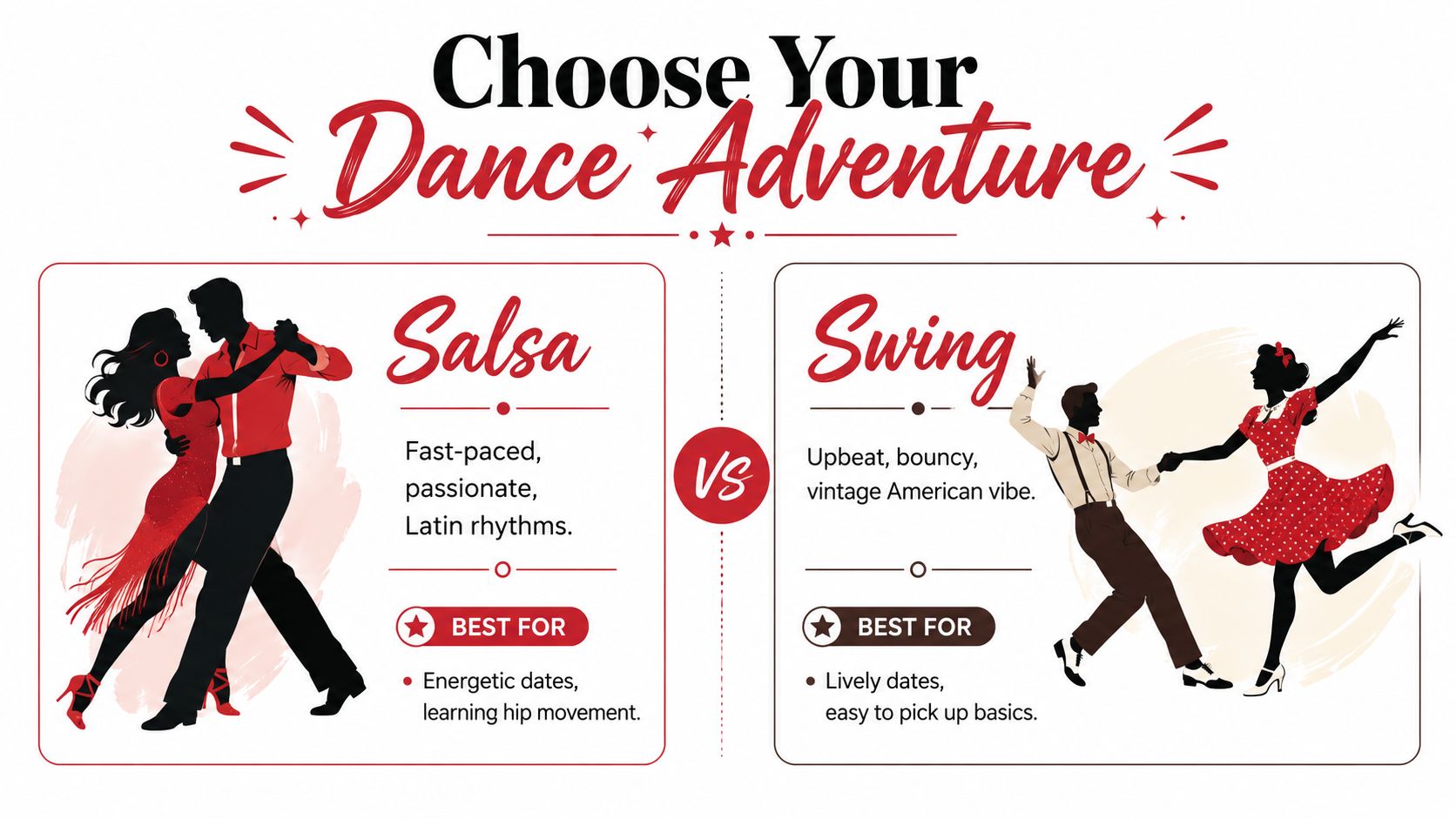
- Salsa: This is fast-paced, passionate, and driven by Latin rhythms. It suits energetic dates and couples who want to explore hip movement.
- Swing: Swing feels upbeat, bouncy, and rooted in a vintage American vibe. It works well for lively dates because beginners can pick up the basic pattern without needing elaborate choreography.
- Waltz: Waltz offers a smooth, flowing quality and a clear sense of partnership. Choose it if you prefer elegant music, spacious movement, and a calmer pace.
- Cha-Cha: Cha-Cha combines a crisp rhythmic pattern with playful styling. It's a good choice for couples who want a Latin option that feels structured and expressive.
Evaluate the venue, not just the schedule
A beginner-friendly studio should explain what happens when you arrive, whether you need a partner, and what clothing and shoes are practical. Look for instructors who demonstrate before asking students to move, offer corrections without embarrassment, and give couples time to repeat a pattern. A welcoming venue won't assume you know terminology such as frame, triple step, or progressive movement.
Ask these questions before booking:
- Can complete beginners attend? The answer should be clear and confident.
- Is a partner required? A no-partner-needed policy removes pressure if one person's schedule changes.
- What format fits us? Private lessons provide focused attention, group classes add community, and social dance nights offer practice after instruction.
- How does the instructor handle different learning speeds? A good teacher gives each couple a version of the exercise they can manage.
- What should we wear? Comfort matters more than costume. Shoes should stay securely on the feet and allow controlled movement.
Danza Academy of Social Dance offers private lessons, group classes, workshops, and social styles including Salsa, Swing, Hustle, and Country Two-Step at locations in Center City Philadelphia and Exton, Pennsylvania. Its instructors teach technique, musicality, and partner connection in a setting where no partner is required. Use this guide to choosing a dance studio to compare studios by teaching approach and atmosphere.
Choose a style you want to hear again. Enjoyment makes repetition easier, and repetition creates confidence.
Planning Your Date Night Dancing Timeline
Uncertainty creates more nerves than dancing itself. Remove it with a simple plan that gives you enough structure to feel prepared while leaving room for the evening to feel spontaneous.
Before you leave home
Book the class or venue ahead of time and confirm the address, parking, check-in process, and expected duration. Wear clothes that let your shoulders, hips, and legs move comfortably. Avoid shoes that could slip off or catch on the floor, and skip anything so restrictive that you'll spend the lesson adjusting it.
Use this preparation checklist:
- Confirm logistics: Save the address and check where you'll park or exit public transportation.
- Pack lightly: Bring water and anything the studio specifically requests.
- Set expectations: Agree that neither of you is responsible for teaching the other.
- Eat sensibly: Choose enough food to stay comfortable, but don't arrive weighed down.
- Arrive early: Give yourselves time to check in, use the restroom, and meet the instructor without rushing.
A practical evening roadmap
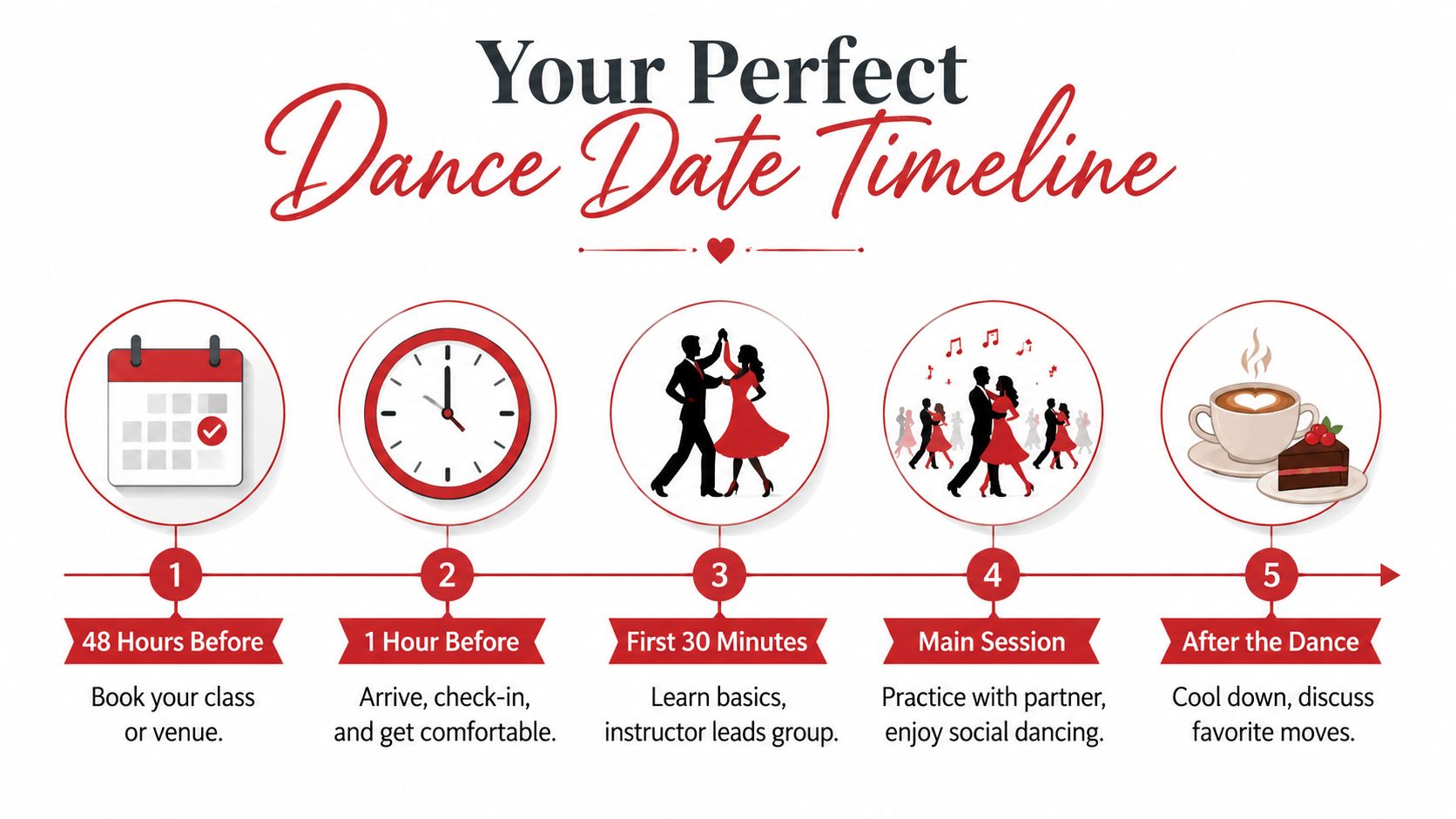
Forty-eight hours before: Book the lesson or event and confirm the details.
One hour before: Arrive, check in, change shoes if needed, and let your body settle. Tell the instructor that you're new and mention any physical limitation that affects movement.
During the first part of the lesson: Expect a demonstration, a basic rhythm, and a slow practice round. The instructor should lead the group or guide the couple rather than handing you a complicated routine immediately.
During the main session: Practice with your partner, take brief breaks, and allow the teacher to adjust your frame, weight transfer, or timing. Don't measure success by how many moves you complete. Measure it by whether you can recover and continue.
After dancing: Cool down, get a drink or dessert, and discuss the moment you enjoyed most. That conversation turns the class into a memory instead of a task you completed.
The evening should end while you still feel curious. Leaving with energy for the next lesson is better than forcing one more difficult sequence after concentration has faded.
Three Simple Moves You Can Learn Tonight
You can create a satisfying first dance with a small vocabulary. The following movements appear in beginner social-dance settings in different forms, but the exact styling changes by genre. Keep the steps small, stay relaxed, and let the rhythm lead.
The basic weight shift
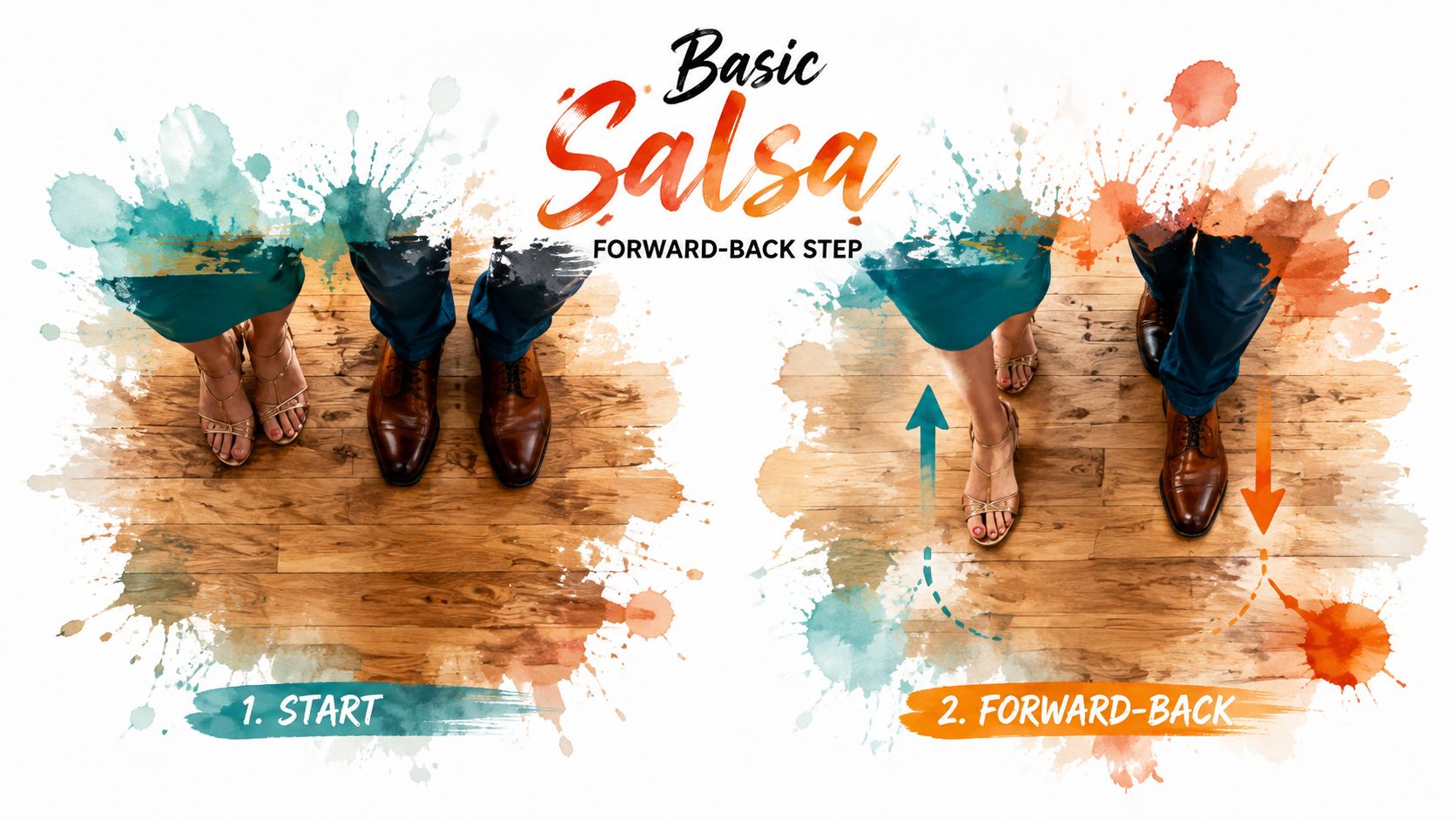
Stand facing your partner with comfortable space between you. Shift your weight forward, replace the weight back to the original foot, then shift back and replace again. Think of the movement as forward, replace, back, replace, not as a large traveling step.
The partner moving backward mirrors the timing while preserving room. Keep your upper body quiet and let the feet do the work. Beginners often lean from the waist or reach with the foot, which makes the movement feel unstable. Ask your partner to move from a clear weight transfer instead.
For Salsa timing, an instructor may count the pattern in a way that leaves a pause within the musical phrase. Don't rush to match a recording. First make the weight changes predictable, then add the music.
For a visual introduction to foundational footwork, use these Salsa dancing steps for beginners.
The side step
Begin with both feet underneath you. Step to one side, bring the other foot toward it without clapping or locking the knees, then step back to the starting side. Reverse the direction and repeat.
This move helps couples practice lateral awareness, which matters on a social floor. Keep the steps compact, especially near other dancers. The common mistake is turning a side step into a lunge. Smaller movements give you more control and make it easier to change direction.
The promenade walk
Instead of facing directly toward each other, turn slightly in the same direction while maintaining a comfortable connection. Walk forward together for a few steps, then return to facing your partner or slow into a basic step.
This works because it adds travel without demanding a complicated figure. The leading partner should indicate direction through clear, gentle body movement rather than pulling an arm. The following partner should keep the connection responsive without anticipating.
Practice each movement separately, then combine the weight shift, side step, and promenade walk only when the earlier pattern feels stable. Dance motor-learning guidance recommends observing a skill, copying it, receiving corrective feedback, and repeating it before increasing speed. Short practice bouts and gradual tempo changes help the movement become dependable, while jumping directly into full choreography weakens retention. The IADMS resource on motor learning and teaching in dance explains this approach in more detail.
Building Confidence on the Dance Floor
Most beginners don't fear the steps as much as they fear being watched. They assume experienced dancers are evaluating every mistake, but social dancers are usually focused on their own partners, rhythm, and navigation. Your job isn't to look advanced. It's to stay kind, attentive, and willing to restart.
Use three mindset changes:
- Replace perfection with recovery: A missed step is a normal part of learning. Pause, smile, return to a basic pattern, and continue.
- Choose connection over display: Ask whether your partner feels comfortable and supported, not whether the movement looked impressive.
- Treat feedback as information: Give one useful observation at a time, such as “let's make the step smaller,” rather than a stream of corrections.
Don't teach your partner unless they ask. Unsolicited instruction often sounds like criticism, especially when both people are still learning. Let the instructor mediate technical corrections so the relationship stays focused on encouragement.
A good dance partner makes mistakes feel temporary, not personal.
Social etiquette also protects the atmosphere. Ask clearly and kindly, keep the dance within your partner's comfort level, avoid unsolicited teaching, and use small steps on a crowded floor. These widely recognized etiquette principles are summarized in this social-dance etiquette guide.
If a movement causes discomfort, stop and adjust. If you lose the rhythm, return to a basic step. If one partner learns faster, don't turn the difference into a competition. A supportive couple measures the evening by how well they communicate under mild pressure, not by who remembers more figures.
Your Next Step to Unforgettable Date Nights
One successful lesson can become a recurring relationship ritual. You learn a pattern, practice it at home, attend a social event, and return with a clearer sense of what you want to improve. That cycle gives couples regular opportunities to cooperate, celebrate small wins, and create stories that don't come from sitting in the same place every week.
Dance also offers benefits beyond the relationship. Partnered dance has been associated with physical fitness, cognitive functioning, social functioning, mood, and self-confidence, with perceived benefits tending to increase as participation becomes more frequent and longer. A review of partnered dance research describes these outcomes in its analysis of dance participation and well-being. Adults are generally advised to complete 150 minutes of moderate-intensity aerobic activity each week, and active dancing can contribute toward that benchmark when the intensity is sufficient, as explained by GoodRx's overview of dancing and exercise.
The most useful first lesson isn't the one that makes you look polished immediately. It's the one that gives you a repeatable basic, a clearer connection, and enough confidence to keep learning.
Danza Academy of Social Dance provides a complimentary first lesson for newcomers who want to explore Ballroom, Latin, or social dance in a welcoming setting. Book it as a date, arrive without performance pressure, and let an instructor give you both a practical foundation.
Book your complimentary first lesson with Danza Academy of Social Dance and turn your next date night into a shared learning experience. You'll receive welcoming instruction designed to meet your goals, with no partner required and plenty of room to build confidence together.