
You're standing in front of the closet with a social dance in an hour, staring at three versions of the same outfit and wondering which one says, “I know what I'm doing,” without trying too hard. That's the core west coast swing outfits problem, not “What's the fanciest thing I own?” It's, “What will let me walk in, move cleanly, stay comfortable, and not think about my clothes once the music starts?”
West Coast Swing is the rare partner dance where the clothing question should feel simple, not intimidating. It grew out of Lindy Hop, moved through Hollywood and club settings, picked up the label “West Coast Swing” by 1961, and kept changing with the music, including later shifts into disco/hustle, then hip-hop and R&B by the late 1990s. That history matters because it explains the culture: no fixed costume code, no pressure to dress like a ballroom finalist, and no reason to overbuild an outfit for a dance that was always more about movement, connection, and practicality than uniforms. See the basics in West Coast Swing basic moves.
Why West Coast Swing Outfits Are Different From Other Dances
The biggest mistake dancers make is dressing for the dance they think West Coast Swing ought to be, not the dance they're stepping into. A new dancer often shows up to a Wednesday social in something stiff, formal, or overthought, then spends half the night adjusting sleeves, yanking at a hem, or feeling like their clothes are louder than their dancing. That's the wrong problem to solve.
Social-first, not costume-first
West Coast Swing developed in clubs, studios, and social settings, not in a single rigid institutional pipeline. One historical reference says the style had “no certain dress style” and usually used the casual dress of the day, while another notes that clothing choices changed as the dance evolved through late-20th-century swing, hustle, and rock-influenced eras. The result is a dance where clothing has always followed the floor, not the other way around.
That's why a WCS social doesn't demand ballroom sparkle, Latin cutouts, or a polished “dance uniform.” It rewards clothes that let you travel, rotate, redirect, and stay connected without fuss. If you want a practical benchmark for your first few nights, start with the same rule I give beginners in class, wear something you'd feel fine walking into a studio in, then check whether it lets you move through the room without thinking about it. For a simple starting point, what to wear to dance class is a better model than anything borrowed from competitive ballroom culture.
What that means on a real floor
West Coast Swing isn't a dress-code dance. It's a function-first dance. If your outfit supports the slot, connection, and musical changes, it's doing its job. If it catches on your partner, rides up when you turn, or makes you avoid certain moves, it's failing.
Practical rule: if you can't forget your outfit after the first song, it's too much outfit.
The Three Technical Rules of Movement-Friendly Clothing
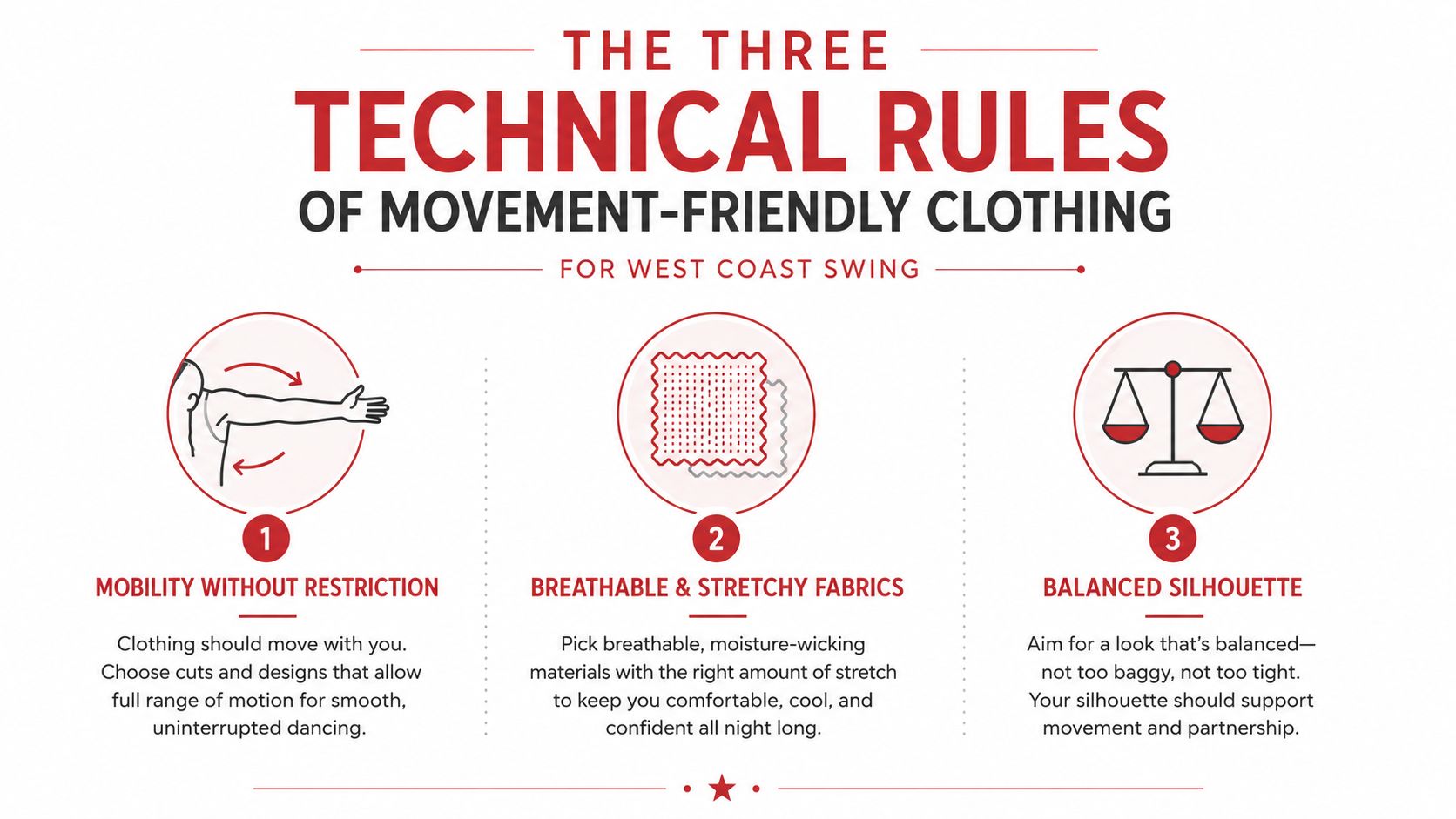
Walk into a West Coast Swing room in the wrong outfit and you feel it immediately. The dance is built on travel, rotation, connection, and quick corrections, so clothing has to cooperate with all four. If a garment fights your movement, distracts your partner, or hides what your body is doing, it fails the test.
Mobility without drag
The first rule is mobility without drag. West Coast Swing asks for frequent rotation, direction changes, and partner connection, so stiff, bulky, or tuggy clothing becomes a problem fast. For WCS, comfortable, non-restrictive fabrics make better sense than anything that locks up at the hips, knees, or shoulders, and many dancers choose pants over skirts or dresses because loose hems can interfere with movement and body positioning.
Skirts and dresses can still work, but only if they move cleanly. If the fabric swings into your legs during a turn, catches at the knee, or keeps pulling your attention away from lead-and-follow, the cut is wrong for that night. Save the outfit that behaves like part of your body, not a prop you have to manage.
No hem or sleeve interference
Nothing should snag your partner or get in the way of hand changes, wraps, or spins. Long sleeves that bunch, trailing belts, oversized cuffs, and floating layers may look polished at rest, then turn into a problem once the dance starts.
Tight clothing can cause a different issue. It may limit range of motion and expose alignment problems during bends, wraps, and spins. In competition-oriented advice, flowing materials such as rayon, wool, or polyester can improve visual line because they drape and move with footwork, while denim, twill, and cotton tend to look stiffer and can obscure technique. If you want a fit that works with your frame instead of against it, achieve the perfect fit gives a useful reference for how a garment should sit on the body.
Visible leg line for technique feedback
The third rule is about what you can see, not just what you feel. West Coast Swing technique improves when leg line, weight changes, and body position stay readable. That is why dancers often choose lower-body clothing with enough structure to hold shape, but enough drape to show footwork.
Bottom line: stretch, breathability, and clean line. If the fabric hides your knees, grabs your hips, or traps heat, leave it on the hanger.
For a quick studio check, what to wear to dance class is a practical place to start when you are deciding whether a piece belongs in your dance bag.
Outfits for Class, Social Nights, Competitions, and Weddings
The right outfit depends on where you're going, not on some imaginary universal WCS uniform. Class, social nights, competition, and weddings all ask for a different balance of polish, comfort, and visual impact. Pick the context first, then dress for that job.
Class and social night are not the same dress code
For class, wear comfortable casual layers that move with you and can handle warm-up, repetition, and correction. Jeans can work if they're flexible enough, but I'd rather see a dancer in clean leggings, stretch trousers, or a simple fitted top with room to breathe. If you're heading to a regular social, the best default is sleek but relaxed. Think dark jeans that stretch, a breathable shirt, and shoes that stay on your feet.
A Saturday social is the least formal setting in the bunch. It's the place for clothing that breathes, stretches, and doesn't make you self-conscious while you're learning. If you're undecided, dress like someone who expects to dance a lot, not pose a lot.
Competition and wedding looks need different priorities
Competition changes the equation because the audience can see everything. Fitted performancewear helps sharpen lines, highlight partnership, and keep the silhouette readable under stage lighting. That's where coordinated styling matters more, and where you can lean into a more polished look without sacrificing freedom.
Weddings sit in a different lane. You want formal enough for the event and functional enough for the dance. That means elegant fabrics, secure fits, and no skirt or dress detail that will fight you on a crowded floor. If the outfit looks great standing still but falls apart on a turn, it's wrong for a wedding first dance.
Quick context check
- Class: choose comfort, temperature control, and easy movement.
- Social night: choose relaxed polish and low-maintenance layers.
- Competition: choose fitted, coordinated, and technique-friendly clothing.
- Wedding: choose formal appearance with real mobility.
If you're trying to decide what works for your own first event, Danza Academy of Social Dance offers classes and private instruction that can help you pressure-test clothing choices in a real studio setting, not just online.
Footwear, Fabrics, and Gender-Inclusive Styling Choices
Shoes solve more outfit problems than people want to admit. The wrong pair will make a good look unusable, while the right pair makes a basic outfit feel confident. That's why footwear comes first, not last.
Shoes that actually work
For West Coast Swing, smooth soles matter. Danza Academy's own West Coast Swing basics page notes that dress shoes, flats, or socks can work for the style, which lines up with the dance's slotted movement and the need to pivot cleanly. Smooth-soled dance shoes are the safest long-term choice, but sneakers can be fine for early classes if they don't stick to the floor. Character heels can look sharp, but only if they stay secure and don't fight your balance.
If you're new, don't chase the fanciest shoe. Chase the pair you can trust when you're rotating, stopping, and redirecting.
Fabrics by sweat level and season
The easiest fabric rule is this, breathe first, flatter second. In warm rooms, lightweight knits and drapey blends feel better than heavy cotton. In cooler halls, layers matter more than bulk, because a long social night swings between warm-up, cooldown, and time off the floor.
If your fabric is stiff, scratchy, or slow to dry, it will feel worse by the third song. If it stretches and drops back into shape, you'll stop thinking about your clothes and start dancing.
Styling is not gendered
West Coast Swing outfits are not gendered by function. Leads can wear fitted tops, trousers, jumpsuits, or polished shirts. Follows can wear dresses, skirts, well-fitted pants, or fitted separates. The only test that matters is whether the outfit supports motion and connection.
For a practical shopping frame, WearView is useful when you want to compare how different silhouettes read on the body before you buy or alter anything. That kind of visual check is especially helpful if you're choosing between a dress and a jumpsuit, or between a straighter trouser and a looser one.
| Context | Best Footwear | Best Fabrics | Avoid |
|---|---|---|---|
| Class | Smooth-soled dance shoes, flats, or controlled sneakers | Breathable knits, stretch blends | Stiff denim, slippery straps |
| Social night | Secure dance shoes with smooth soles | Drapey shirts, stretch trousers, light layers | Heavy hems, restrictive waistbands |
| Competition | Fitted dance shoes, stable heels, or polished shoes with traction control | Rayon, wool, polyester blends that drape | Bulky layers, loose cuffs |
| Wedding dance | Secure dress shoes or stable dance heels | Elegant stretch fabrics, lined pieces, soft drape | Tight necklines that limit movement, trailing fabric |
Seasonal Outfit Formulas That Actually Work
Seasonal dressing for West Coast Swing is mostly about managing temperature swings. The room may start cool, heat up fast, then feel cold again when you sit out two dances. If you dress for only one of those moments, you'll regret it.
| Season | Class / Casual Social | Saturday Social Night | Competition / Showcase | Wedding Dance |
|---|---|---|---|---|
| Winter | Layered top, stretch pants, light jacket | Long-sleeve or wrap layer, breathable base, smooth shoes | Structured, fitted look with removable outer layer | Elegant dress or suit with warm base layers underneath |
| Spring | Light cardigan, breathable shirt, flexible trousers | Mix of short sleeves and a packable layer | Clean silhouette with fabric that moves well | Formal look with adjustable layers for indoor comfort |
| Summer | Minimal layers, sweat-friendly fabrics, open neckline | Lightweight separates, moisture-friendly materials | Lightweight performancewear that still holds shape | Formal outfit in lighter fabric, avoid heavy lining |
| Fall | Midweight top, easy-to-remove layer, comfortable pants | Layered look that can be shed during dancing | Fitted layers that don't bulk up | Transitional formalwear with mobility built in |
Why layering wins
Layering matters because social nights are long. If you start too warm, you'll sweat through your clothes before the room gets busy. If you start too light, you'll spend the first hour cold and distracted.
The smartest formula is a breathable base, a layer you can remove, and an outer piece you're happy to carry. That works across seasons and across venues, especially in rooms where the temperature never feels the same twice in one evening.
Build around the venue, not the calendar
A winter competition in a hot ballroom doesn't dress like a winter class in a cool studio. A summer workshop hall can feel harsher than a fall social in a climate-controlled venue. Choose clothes that let you adjust quickly, then stop overthinking the weather forecast.
Danza Academy's what-to-wear guidance for dance class fits this logic well, because it treats comfort and movement as the baseline instead of pretending the outfit has to be fancy to be functional.
Three Outfit Myths Worth Letting Go
The fastest way to feel awkward in West Coast Swing is to build your outfit around someone else's outdated idea of what a dancer should look like. The style has always been adaptable, and the clothes should be too. Three myths still trip people up more than they should.
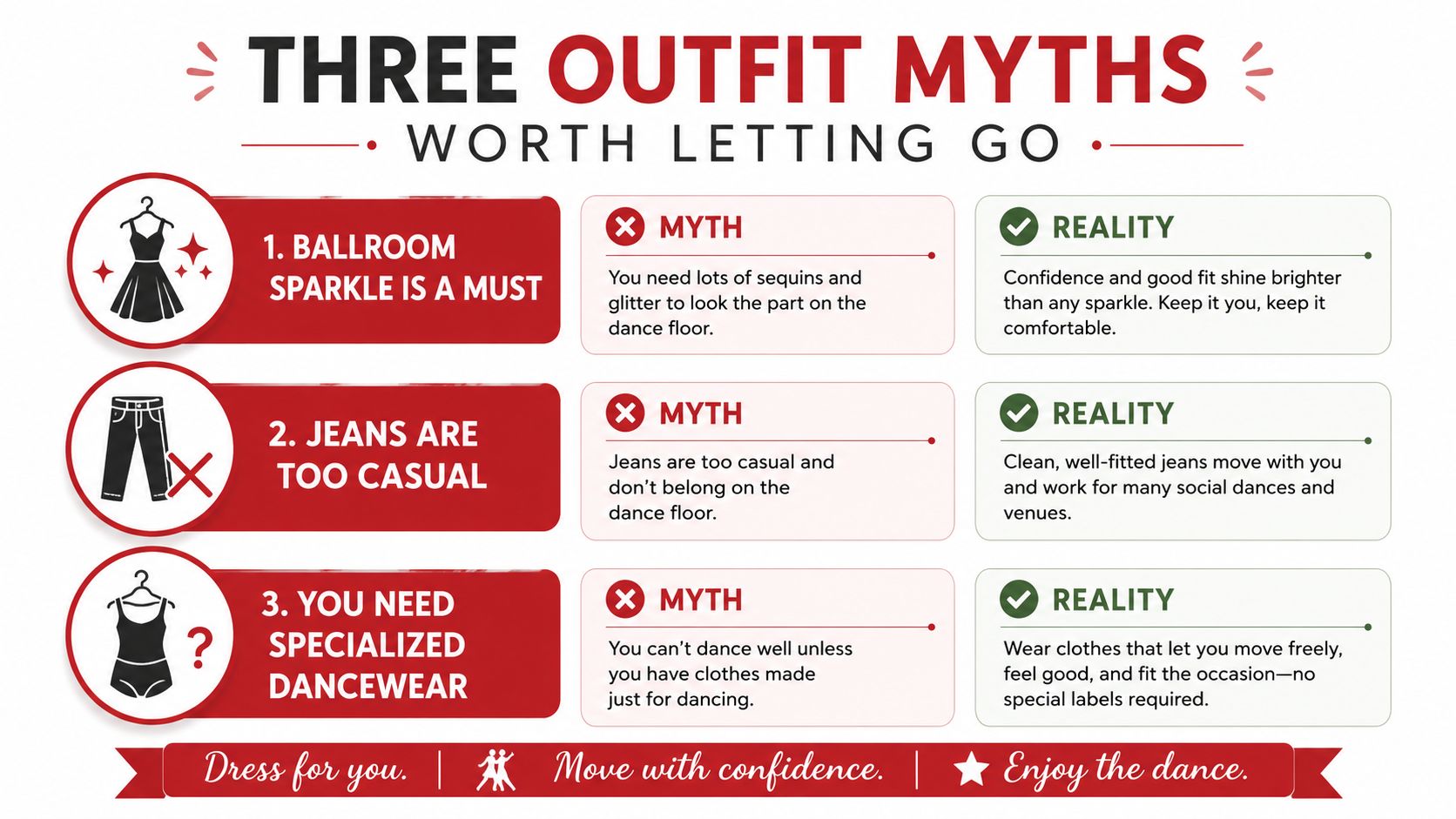
Ballroom sparkle is a must
It isn't. West Coast Swing developed with a social, flexible identity, and the clothing never became locked into a single formal tradition. A clean fitted shirt, stretch trousers, or a simple dress can look better on the floor than something overloaded with rhinestones and stage decoration. If the dance floor is social, your outfit can be social too.
Jeans are too casual
Not if they move well. The problem isn't jeans, it's jeans that are too stiff, too heavy, or cut so tightly that they fight the dance. A dark pair with stretch can be a solid social-night choice, especially if the rest of the outfit is clean and balanced.
Outfits must follow traditional lead-and-follow gender norms
They don't. The dance cares about partnership and movement, not whether someone is wearing trousers, a dress, or a jumpsuit. Once dancers stop treating clothes as role labels, they usually dress better, because they start choosing for fit, comfort, and confidence instead of habit.
Real-world test: if an outfit feels authentic and moves cleanly, it belongs on the floor.
Packing, Alterations, and Last-Minute Fixes
When you're headed to a workshop weekend, destination social, or wedding trip, packing should be boring and efficient. Bring the pieces that move well, not the ones that merely look good on a hanger. That's how you avoid dragging half your closet across town for one dance weekend.
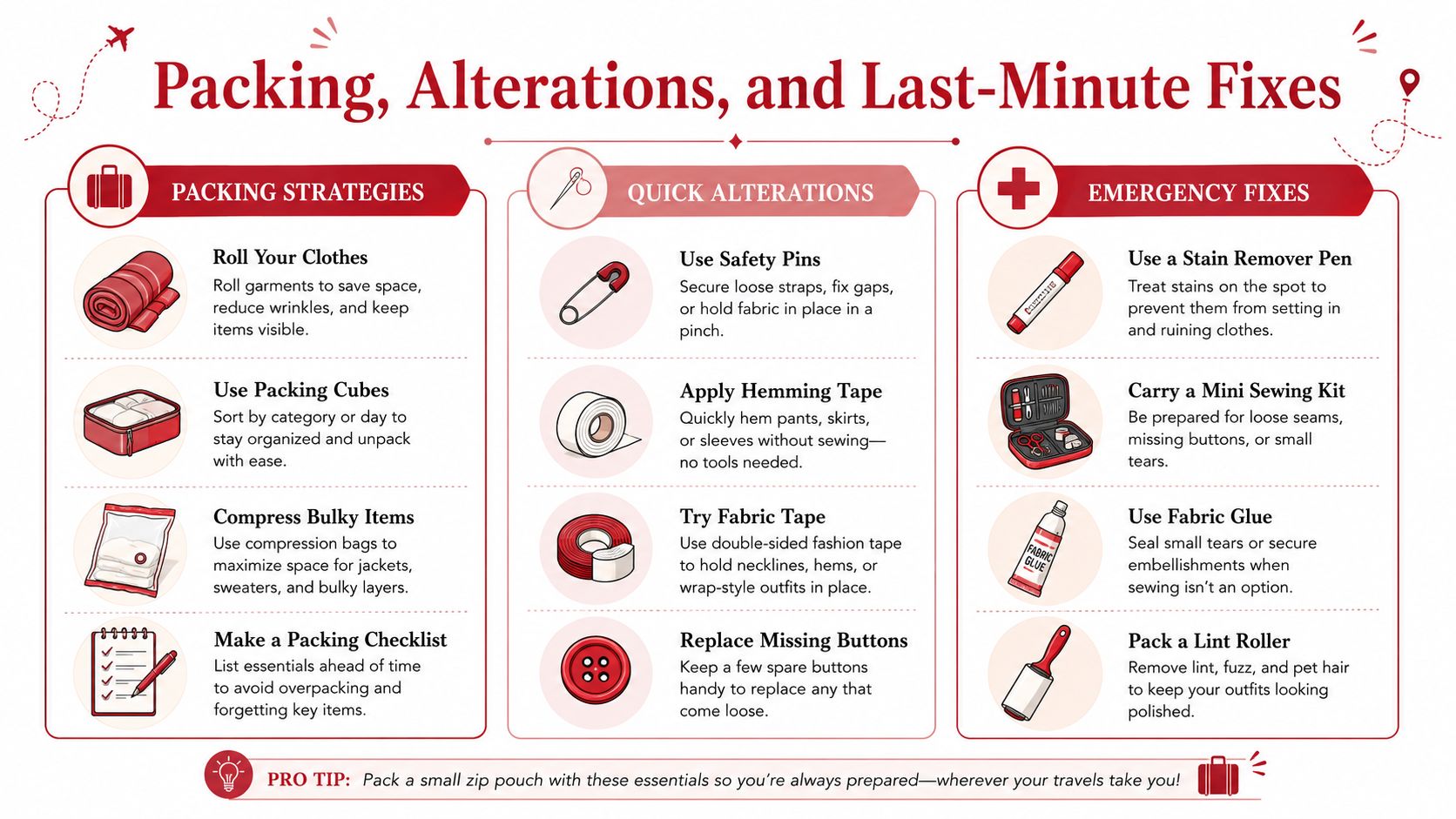
Pack for function first
Roll clothes that wrinkle easily, use packing cubes to separate socialwear from practice clothes, and bring one backup layer for temperature swings. If a piece only works in one pose, leave it home. Traveling dancers need pieces that can survive sitting, walking, and spinning, not just standing in a mirror.
Fix the hem before it betrays you
If a hem is close to the ankle and catches when you turn, shorten it before the event. A local tailor can do the cleanest job, but simple DIY hemming techniques from B-Sew Inn are enough for quick prep when you're on a tight timeline. The same logic applies to sleeves that slide over your hand when you lift your frame.
Keep a small dance kit
Put a few practical items in your dance bag and leave them there.
- Safety pins: for straps, hems, and quick repairs.
- Fashion tape: for necklines and slippery layers.
- Stain remover pen: for food or drink mishaps.
- Backup shoes: for the pair that looked fine at home and feels wrong at midnight.
- Mini sewing kit: for emergency fixes before doors open.
If you can solve a wardrobe issue in under two minutes, it won't ruin your night.
Step Onto the Floor With Confidence
West Coast Swing outfits get easier once you remember the three technical rules, mobility without drag, no interference, and a visible leg line that helps you read your own movement. Add the four context checks, class, social, competition, wedding, and your seasonal formula, and you've got a usable decision system instead of a closet panic. That's enough to stop second-guessing yourself and start dancing.

If you want a second set of eyes before your first social, take a class and ask in person. You can also check West Coast Swing classes near me and see how the room feels before you commit to a full night out.
Danza Academy of Social Dance offers West Coast Swing instruction, private lessons, group classes, and wedding dance coaching in Center City Philadelphia and Exton, PA. If you want outfit advice that's grounded in actual dancing, visit Danza Academy of Social Dance and book the free complimentary lesson on the contact page so you can walk into your next social already knowing what works.