
You're probably here because heels dance looks magnetic from the outside and intimidating up close. Maybe you've watched clips online, loved the confidence, and then immediately thought, “I'd fall in five seconds,” or “Is this even for beginners?”
That reaction is normal. A good heels dance class doesn't ask you to show up already polished. It asks you to show up ready to learn balance, control, posture, timing, and how to move with intention in a shoe that changes your alignment from the moment you stand in it.
Heels isn't just “sexy dancing.” It's a trained movement style with specific mechanics, real physical demands, and a strong technical base. Once you understand that, the class makes more sense. It stops feeling like a performance test and starts feeling like a skill you can build.
More Than a Dance A New Kind of Confidence
You step into your first heels class expecting attitude and choreography. Five minutes later, you are working to hold your ribcage over your hips, keep your ankles from wobbling, and place each step without throwing your weight forward. That surprise is useful. It shows what heels training really is.
A heels dance class blends jazz lines, hip-hop texture, and floorwork into a style performed in stilettos. Its roots connect to burlesque, showgirl performance, and commercial dance, but the modern class experience is built on repeatable technique. Dancers train posture, weight transfer, timing, leg strength, and control under a very specific physical demand. The shoe changes your alignment the moment you stand in it, so every movement asks more of your body than it would in sneakers.

Why the stereotype gets it wrong
Beginners often come in thinking heels is mostly about looking confident. In practice, confidence is the byproduct of technique. If your core is not engaged, your standing leg is not stable, or you cannot control a slow descent to the floor, the performance quality falls apart fast.
Heels asks for real athletic skill. You need ankle stability, clean weight shifts, coordination through the spine and hips, and enough strength to stay precise while the choreography gets sharper or more fluid. I tell new students the same thing I tell trained dancers crossing over from other styles. Heels rewards discipline. The polished look comes later.
A lot of beginners quit early because they underestimate the technical side. They try to perform before they can organize their alignment, and that usually creates frustration. Good instruction fixes that by treating heels as a movement practice, not a confidence contest.
Heels works best when you treat confidence as the result of technique, not the substitute for it.
Confidence that comes from control
The confidence students talk about after a few weeks is different from stage bravado. It is quieter and more durable. You know where your weight is. You recover faster from mistakes. You stop rushing. You start trusting your body because you have trained it.
That shift carries beyond this style. Dancers who study salsa, bachata, jazz, or other movement forms often recognize the same gains in posture, musicality, and body awareness. The broader benefits of social dancing overlap more than people expect.
A solid heels dance class gives you more than styling. It builds strength, coordination, and the kind of self-confidence that comes from doing hard things well.
Your Most Important Partner Finding the Right Heels
A beginner can have good focus, a solid attitude, and a strong teacher, then lose half the class fighting the wrong shoes.
I see it all the time. Someone arrives in fashion stilettos because they look close enough to a dance heel. Ten minutes later, the foot is sliding forward, the ankle is wobbling, and every walk feels heavier than it should. Poor footwear does more than make class uncomfortable. It changes how you place weight, how you push off the floor, and how safely you can repeat basic movement.
For heels training, the shoe is equipment. Treat it that way.
What a beginner shoe needs
A good beginner heel should let you articulate through the foot, stay connected to the floor, and keep the shoe attached to you during turns, weight shifts, and directional changes. That usually means choosing function before style.
Look for these features:
- Secure ankle support: A strap or well-fitted boot keeps the shoe from shifting when your weight changes quickly.
- Flexible sole: You need enough bend through the ball of the foot to walk, roll through, and pivot with control.
- Moderate heel height: Start with a height you can organize your alignment in. If you cannot stand tall and steady in it, it is too high for training.
- Slim heel with stable placement: The heel should sit cleanly under you so you can stack your weight and feel where center is.
- Dance-specific construction: Dance heels are built for repeated movement. Fashion heels are usually built for appearance and short wear.
If you also need help choosing clothes that will not restrict movement, this guide on what to wear to dance class covers the basics.
Dance Heels vs. Fashion Heels What Beginners Need to Know
| Feature | Dance Heel (Recommended) | Fashion Heel (Avoid for Class) |
|---|---|---|
| Sole | Flexible enough for articulation and controlled movement | Often stiff, which makes walking drills and pivots harder |
| Ankle security | Usually includes a strap or secure hold | May slip, gap, or shift during movement |
| Weight distribution | Designed with dancing in mind | Often designed for standing or short-term wear |
| Heel shape | Slim heel is commonly preferred for class technique | Wide or bulky heels can interrupt clean weight placement |
| Platform | Usually best avoided by beginners | Platforms can reduce floor feel and make balance less precise |
| Purpose | Built for training, choreography, and repeated movement | Built primarily for appearance |
One trade-off surprises a lot of beginners. A platform can feel easier at first because it reduces the angle of the foot, but it also dulls your connection to the floor. That makes clean walking technique harder to learn. Chunky heels can feel more familiar too, yet they often encourage sloppy weight placement. In class, easier is not always better.
What doesn't work
Street stilettos with slick soles are a poor choice. Very high platforms create extra guesswork. Shoes that pinch the toes, gap at the arch, or slide off the heel will force compensation all the way up the leg. You may still get through class, but you will be practicing around the shoe instead of training the skill.
The right pair will not carry your technique for you. It will let you build it safely, with better balance, cleaner mechanics, and a lot less frustration.
What to Expect in Your First Heels Class
Most first classes start before the choreography starts. You arrive, put your things down, test the floor, and get a quick read on the room. Some people look excited. Some look nervous. A few are pretending they're not nervous at all.
That's all fine. A beginner heels dance class should account for that energy and ease you into the work.
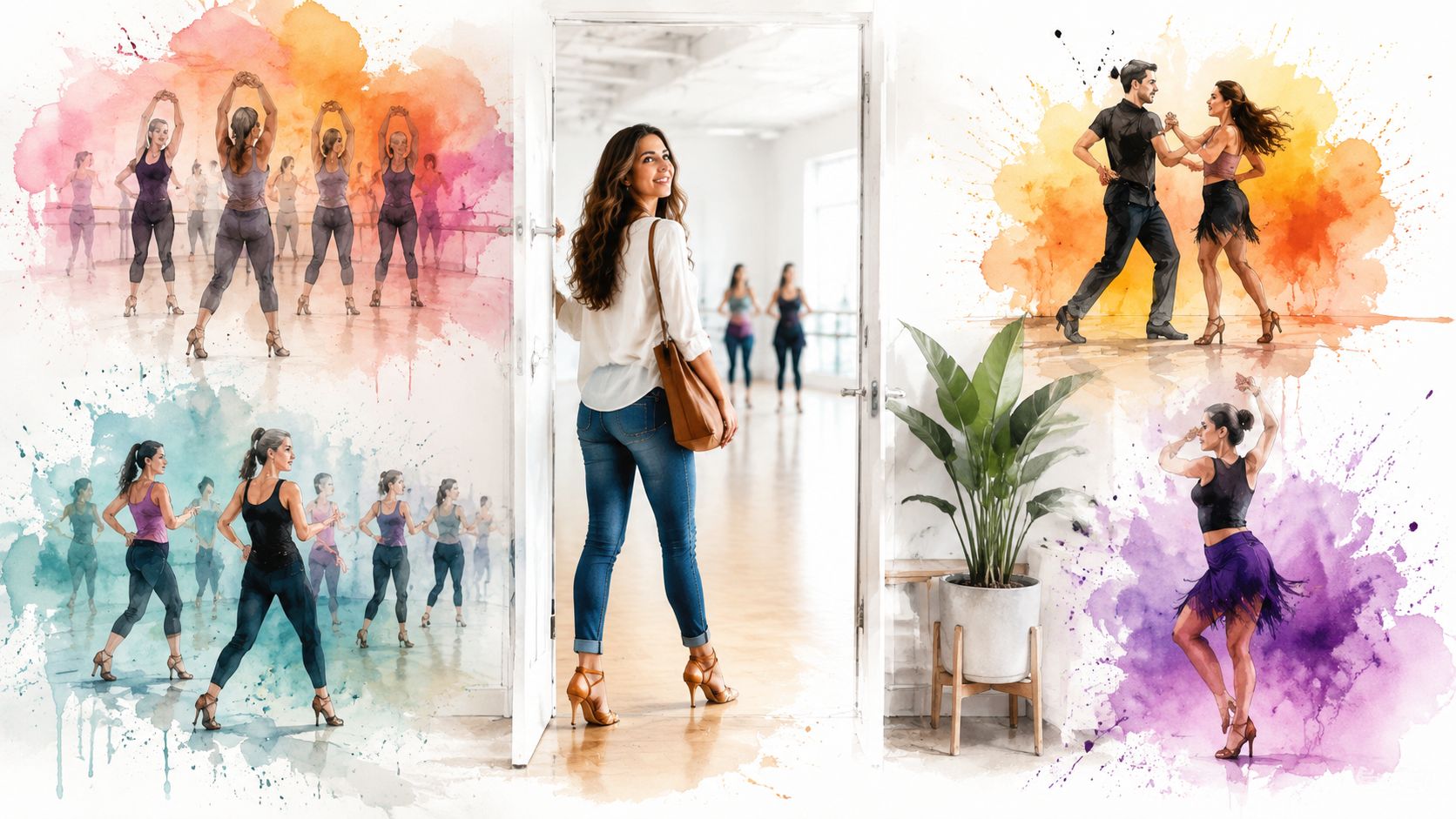
The first part of class
A strong class usually begins with a warm-up that targets ankles, calves, feet, hips, and core. That isn't filler. It's preparation for a style that asks your body to manage force, balance, and repeated loading in a heeled shoe.
That preparation matters because a single 60-minute heels dance class at moderate intensity measurably increases circulating markers of muscle tissue degradation, which confirms the style's physical rigor and the need for proper warm-ups and conditioning, according to this research article on stiletto dance physiology.
After warm-up, many classes move into across-the-floor basics. Expect walks, directional changes, simple balance patterns, and maybe a turn prep or body line exercise. Then comes a short phrase of choreography where those basics start connecting.
What to wear and bring
You don't need a costume. You need clothing you can move in.
A practical first-day checklist:
- Fitted but comfortable clothing: Leggings, shorts, or a top that lets you see your posture.
- Your dance heels or a safe alternative: If you're easing in, ask whether you can begin in supportive shoes.
- Water: You'll want it.
- A realistic mindset: You are there to learn, not to look advanced.
If you're still deciding whether your first class should be private or group-based, a beginner dance lesson can help you understand what kind of learning environment suits you best.
A quick visual can also help settle first-day nerves:
What beginners usually feel
The most common first-class experience is not failure. It's overload. You're tracking counts, posture, feet, arms, and where to look, all at once. That's why awkwardness at first is normal.
If class feels mentally busy, you're not doing it wrong. You're learning a new coordination system.
A good instructor doesn't expect polish on day one. They expect attention, effort, and a willingness to repeat fundamentals until they start feeling natural.
Walking Before You Dance Fundamental Techniques
The first skill in a heels dance class isn't a dramatic dip or a hair whip. It's walking with structure. If your walk is unstable, everything layered on top of it becomes harder.
That's why foundational training matters more than flashy choreography in the beginning.
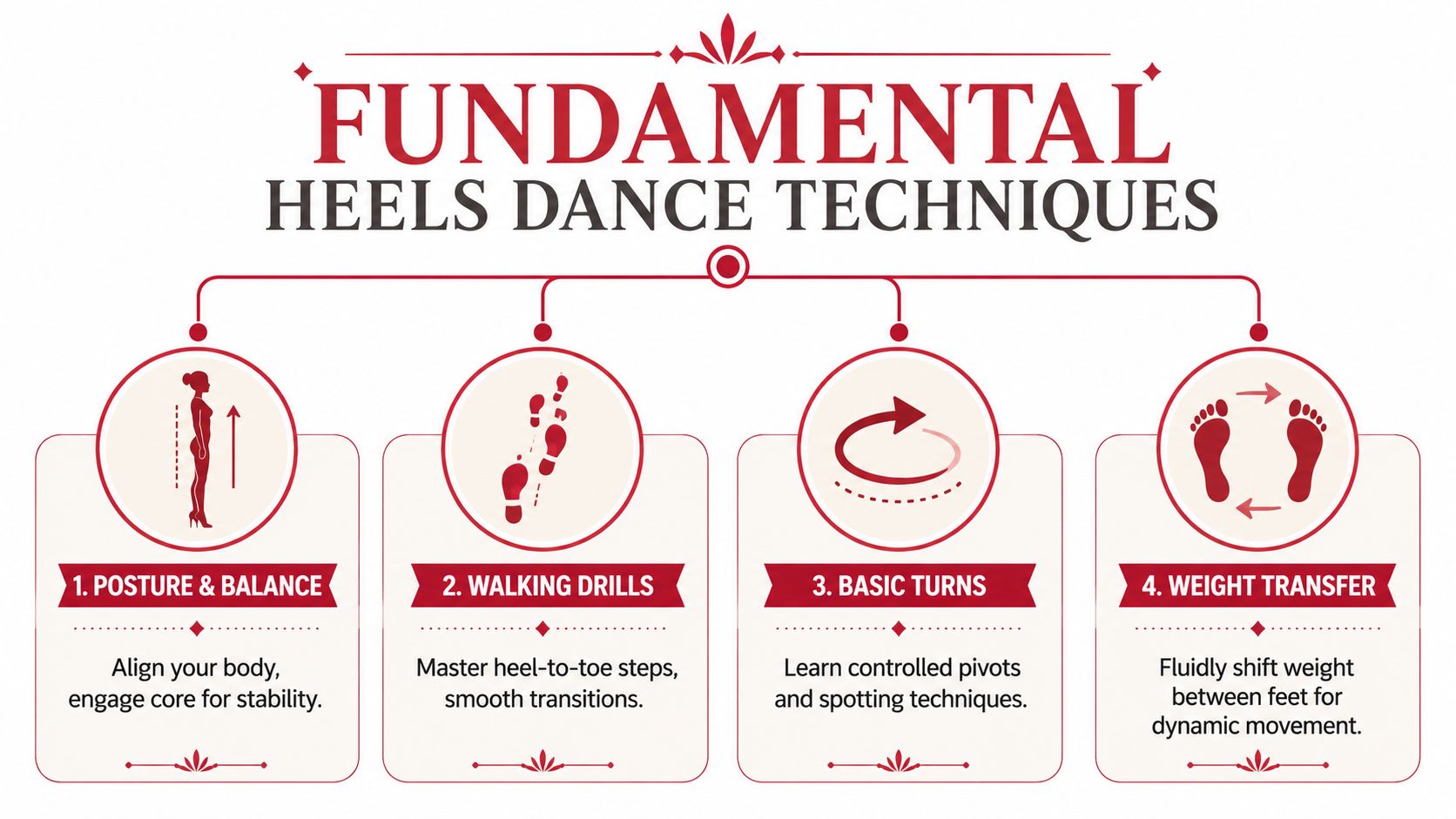
Start with posture
Good posture in heels isn't stiff. It's organized.
Think about these checkpoints:
- Ribcage controlled: Don't flare the ribs forward.
- Core engaged: Your midsection supports the movement so your lower back doesn't take over.
- Shoulders open: Let the chest feel lifted without pinching the shoulder blades together.
- Hips under you: Avoid dumping your weight forward or letting your pelvis drift behind.
A beginner often tries to compensate for the shoe by gripping everything. That creates tension and makes movement look heavy. Organized posture gives you a cleaner line and more options.
Learn the heel placement correctly
The foundational step pattern begins with the heel down first, then a roll through the foot. That pattern helps build ankle stability and teaches you how to place the foot intentionally instead of dropping into it.
But that's only the first half of the lesson. During active movement, your weight can't live back on the heel.
Core mechanic: For turns, transitions, and dynamic movement, center your weight over the ball of the foot.
That distinction is where many beginners get stuck. Failing to shift weight correctly is a pitfall that 70% of novice dancers encounter, which hurts balance and makes turns more difficult, as explained in this beginner guide to high heels dance moves.
Three drills that actually help
A lot of beginners want more choreography when what they need is repetition. These simple drills build usable skill.
Straight-line walks
Walk slowly across the floor and focus on clean placement. Don't rush. Feel the foot arrive, then travel through it with control.Ball-of-foot holds
Rise into the active position you'd use in motion and pause. The goal isn't height. The goal is centered balance without clawing the floor.Quarter turns with spotting
Practice small rotations before full turns. Keep the torso responsive, the neck relaxed, and the eyes deliberate.
What to stop doing
Many beginners lean back because the shoe feels unstable. Others throw the hips forward and lose their center. Some press heavily into the heel during movement because it feels safer.
It isn't safer. It just feels familiar for a second and then makes pivots, floor transitions, and directional changes harder.
Try this correction list:
- If you wobble in walks: Slow down and shorten the step.
- If turns feel stuck: Check whether your weight is sitting back.
- If your ankles feel overwhelmed: Reduce speed before increasing complexity.
- If your upper body freezes: Loosen the chest and breathe before the next pass.
Clean basics look powerful long before advanced tricks do.
A strong heels dancer isn't the one doing the most. It's the one placing weight precisely, maintaining line, and moving without panic.
Dancing Safely and Preventing Common Injuries
Halfway through class, this is usually where beginners find out whether they are dancing with technique or just surviving the shoe. The choreography gets faster, the floorwork asks for control, and every shortcut shows up in the ankles, knees, or low back.
Heels training asks for athletic preparation. It is not just about looking confident. It is about producing force cleanly, absorbing it well, and keeping your alignment when the shoe changes your base of support. Dancers who understand that early tend to progress faster and get hurt less.
The feet and ankles matter, but they are only part of the system. If the calves are weak, the landing gets noisy. If the glutes are late, the knees drift. If the core switches off during turns or body rolls, balance starts leaking before the mistake is visible.
I tell beginners to prepare the body they dance with, not the one they wish they had after three months of class.
A useful pre-class setup includes:
- Calf raises: Build strength for controlled lowering and cleaner weight transfer.
- Single-leg balance work: Train the small stabilizers that keep you centered over the shoe.
- Ankle circles and foot articulation: Wake up the foot so pivots and directional changes feel more precise.
- Hip activation drills: Help the legs track under the pelvis instead of collapsing inward.
For dancers who want a clinical resource alongside studio training, Lake City Physical Therapy's dance program shows what dance-specific rehab and performance support can look like.
Injury prevention is usually boring. That is a good sign.
The habits that protect dancers are simple, but they require discipline:
- Warm up before class: Do not use the first combo as your warm-up.
- Respect fatigue: Once the legs stop responding, technique slips and the shoe stops feeling predictable.
- Choose heel height: A lower, more stable shoe often produces better training than a taller heel you cannot control.
- Check the floor: Sticky, slick, or uneven surfaces change how turns, slides, and descents load the body.
- Stop on sharp pain: Muscle effort is part of training. Sharp joint pain is a cue to stop and assess.
There is a real trade-off here. Beginners often want the highest heel, the fastest choreography, and the hardest floorwork because it feels closer to the image of heels dance they have in mind. Safer progress usually looks less dramatic. Lower heels. Slower reps. Fewer full-out attempts. Better mechanics.
That approach builds the kind of confidence that lasts, because it is based on strength, control, and repeatable technique rather than adrenaline.
Take the First Step at Danza Academy
The right studio changes the entire beginner experience. You want instructors who teach technique clearly, correct safely, and create a room where beginners don't feel judged for being beginners.
That matters because a trial class isn't just a preview of choreography. It tells you whether you connect with the teaching style, the pace, and the overall environment. The most critical advantage of a free trial is verifying whether a student enjoys the class and teacher, which directly relates to long-term enrollment since dissatisfaction is the primary reason for early dropout, according to this discussion of making the most of a free trial.
What to look for in your first visit
A quality studio usually makes a few things obvious right away:
- Clear instruction: You should understand what your feet and body are supposed to do.
- Attention to safety: Warm-ups, corrections, and pacing should feel intentional.
- A welcoming room: You shouldn't feel like you need prior experience to belong there.

If you've been waiting until you feel “ready,” this is the better move. Start where you are, get in the room, and let good instruction do its job. The fastest way to know whether heels training fits you is to experience it in person.
Book a complimentary first lesson with Danza Academy of Social Dance through the contact page. It's a simple, no-pressure way to meet the instructors, experience the studio, and see whether a heels dance class feels like the right next step for you.