
You might be here because you saw a couple glide across a wedding floor and thought, “That looks amazing, but I could never do that.” Or maybe you've watched a dance scene in a film, noticed how calm and connected the dancers looked, and wondered what they know that you don't.
That feeling is normal. Most beginners don't start with confidence. They start with curiosity, a little hesitation, and a lot of questions.
Ballroom dancing is much more approachable than it looks. Behind the polished movement, there's a clear system you can learn step by step. You don't need a dance background, perfect rhythm, or a performer's personality. You need a willingness to try, a little patience, and a teacher who can make the process feel simple.
An Introduction to the World of Ballroom Dance
A new student once told me she fell in love with ballroom by accident. She was at a friend's wedding, standing off to the side, watching one couple move through the crowd with what looked like effortless ease. They weren't doing tricks. They were in sync. They turned, paused, and smiled at each other as if the music was carrying them.
That moment captures what people are really asking when they ask, what is ballroom dancing.
Ballroom dancing is a partner dance built around connection, rhythm, and shared movement. Two people dance together to music, usually with one person leading and the other responding. That may sound formal, but in practice it feels more like a conversation than a performance. One person suggests the direction. The other reads it and answers through movement.
It also has a long history as a structured dance tradition. The International Style of ballroom dancing began to crystallize between 1910 and 1920 around five core Standard dances, Waltz, Foxtrot, Tango, Quickstep, and Viennese Waltz, and by the 1920s these styles were taught in thousands of dance studios across Europe and North America, as described in this history of ballroom dancing.
More than fancy steps
Many people assume ballroom is mostly about memorizing patterns. It isn't. Steps matter, of course, but the heart of ballroom is learning how to move with another person while staying balanced, musical, and aware.
That's why beginners often relax once they try it.
Ballroom isn't reserved for “dance people.” It's a skill set, and skills can be taught.
Some students come for a wedding dance. Others want a social hobby, better posture, or a new way to meet people. Some want to feel less awkward on a dance floor. All of those reasons are valid, and ballroom can meet each one in a practical way.
The Core Elements That Define Ballroom Dancing
If ballroom seems mysterious, it usually comes down to three things people can't quite see from the outside. They notice the dress, the music, or the turns, but they miss the invisible structure underneath. That structure is what makes ballroom feel smooth instead of chaotic.
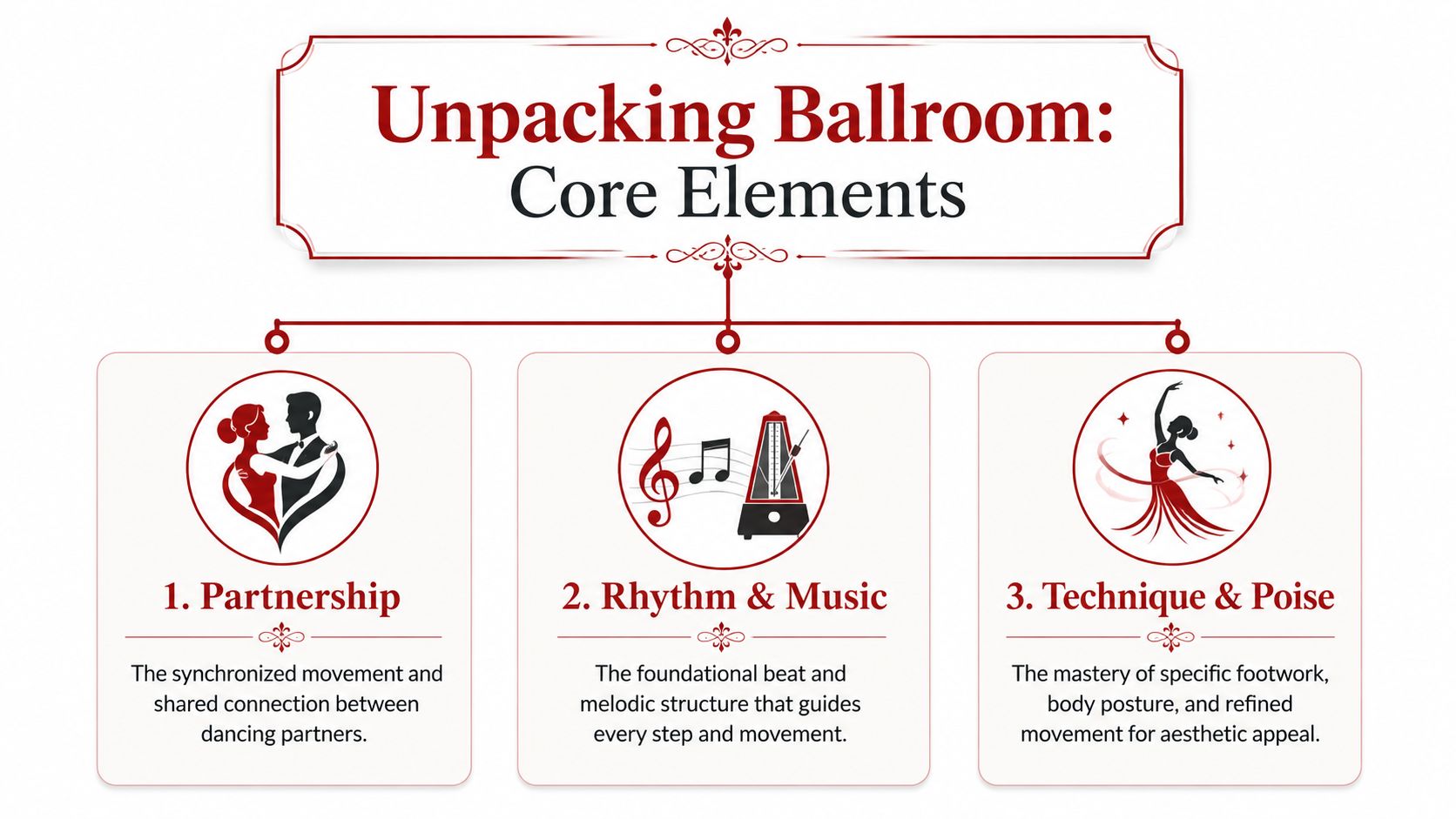
Partnership
Ballroom is about partnership. One person leads. One person follows. Those roles are not about status or control. They're about clarity.
Imagine walking through a crowded room with someone. If both people try to decide the path at the same moment, they bump into each other. If one person signals the direction clearly and the other stays responsive, movement becomes easy.
In dance, that signal happens through the body. A good lead doesn't shove or drag. A good follow doesn't guess. They share information through timing, shape, and pressure.
Frame and posture
The second pillar is frame. This is the way dancers hold their bodies so they can communicate without words. I often tell beginners to think of frame like a telephone line. If the line is clear, the message comes through. If it collapses, the message gets scrambled.
A useful frame usually includes:
- Lifted posture so the spine feels long rather than slouched
- Stable arms and upper body so your partner can read direction
- Balanced weight so each step feels grounded
- Consistent connection so movement travels through the partnership
This is why ballroom often helps people become more aware of how they stand and walk in daily life.
Rhythm and technique
The third pillar is musical movement supported by technique. Ballroom isn't random motion to a song. It's organized movement that fits the character and timing of the music.
According to EBSCO's ballroom dance overview, ballroom dancing is a codified partner dance system with standardized techniques. A Waltz, for example, must be danced at 28–30 measures per minute, or around 96 bpm, and figures such as a Natural Turn use specific footwork, including heel to toe, and body shaping so dancers in Philadelphia and Europe can be judged by the same criteria.
That sounds technical, but here's the beginner version. Technique gives you reliable habits. Reliable habits make dancing feel easier.
Practical rule: Don't try to “look advanced” at first. Build a steady frame, hear the beat, and place your weight cleanly from foot to foot.
When students focus on those basics, the dance starts making sense fast.
Exploring the Main Ballroom Dance Styles
One reason ballroom stays interesting is that it isn't one single look or mood. It's a family of dances, and each one has its own personality. Some feel smooth and floating. Others feel playful, dramatic, or sharp.
The easiest way to sort them is by grouping them into Standard and Latin styles.
The Standard family
The Standard side of ballroom grew around the core dances that took shape in the early twentieth century. These include Waltz, Tango, Viennese Waltz, Foxtrot, and Quickstep.
Waltz feels flowing and spacious. Many beginners love it because the rise and fall creates a soft, elegant motion. If you like the idea of gliding rather than bouncing, Waltz often feels welcoming.
Tango is more grounded and dramatic. It uses sharper changes and a more staccato quality. People who enjoy precision and character often connect with Tango quickly.
Foxtrot has a smooth, relaxed sophistication. It can feel a bit like strolling with style. It teaches control without feeling stiff.
Quickstep is lively and bright. It travels with energy and a touch of playfulness. Dancers who like light feet and upbeat music often enjoy it.
Viennese Waltz turns more continuously and creates that classic sweeping ballroom image many people recognize from formal events.
The Latin family
Latin dances use a different body action and a different relationship to the floor and rhythm. They often feel more rhythmic, grounded, and expressive.
Cha-Cha is crisp and cheeky. Its rhythm gives it a playful personality, and many students enjoy the way it encourages sharp timing.
Rumba slows things down. It often feels expressive and controlled, with a stronger focus on weight transfer and connection.
Samba has bounce and drive. It can feel festive and athletic at the same time.
Jive is energetic and spirited. It suits dancers who like speed and a bit of a challenge.
How to choose a style
Most beginners don't need to pick a forever favorite right away. A better approach is to notice what kind of movement feels natural to you.
You might prefer:
- Smooth travel across the floor if you enjoy elegance and flow
- Rhythmic footwork in place if you like musical accents and personality
- Dramatic shapes if expression matters more to you than speed
- Playful energy if you want dancing to feel light and social
The chart below gives you a quick snapshot.
Ballroom Dance Styles at a Glance
| Dance | Category | Mood / Feeling | Tempo |
|---|---|---|---|
| Waltz | Standard | Romantic, flowing, graceful | Moderate |
| Tango | Standard | Dramatic, sharp, grounded | Moderate |
| Foxtrot | Standard | Smooth, relaxed, sophisticated | Moderate |
| Quickstep | Standard | Light, lively, playful | Fast |
| Viennese Waltz | Standard | Sweeping, elegant, continuous | Fast |
| Cha-Cha | Latin | Flirtatious, crisp, upbeat | Moderate |
| Rumba | Latin | Expressive, controlled, intimate | Slow to moderate |
| Samba | Latin | Festive, buoyant, energetic | Fast |
| Jive | Latin | Spirited, bouncy, joyful | Fast |
A simple truth helps here. You don't have to match a dance to your current personality. Sometimes a dance brings out a side of you you haven't used in a while.
Social Dancing versus Competitive DanceSport
A lot of beginners only see ballroom through television clips, stage shows, or competition videos. That creates a common misunderstanding. They think ballroom automatically means sequins, pressure, judges, and routines performed under bright lights.
Generally, it doesn't.
Social dancing
Social ballroom is the everyday version. It's the kind of dancing people use at weddings, parties, studio socials, and community events. The goal isn't to impress a judge. The goal is to enjoy the music, connect with your partner, and feel comfortable moving with confidence.
That's why social dancing often feels more useful to beginners. It gives you a real-life skill.
If you want a fuller look at how partner dancing works in everyday settings, this guide to social dancing basics is a helpful next read.
Competitive DanceSport
DanceSport is the athletic, judged side of ballroom. It uses standardized technique, formal categories, and evaluation criteria. The World DanceSport Federation was founded in 1957 and has over 90 member nations, representing an estimated half-million competitive dancers, while partner dance participation remains a leisure activity for millions in Europe and North America, as summarized in this ballroom dance overview.
That competitive side is real, disciplined, and impressive. But it's only one path.
Social ballroom asks, “Can we enjoy this dance together?” Competitive ballroom asks, “How precisely can we perform this dance under scrutiny?”
Which path is right for you
You don't have to decide on day one. Many dancers start socially and stay there for years. Some eventually grow curious about performance or competition because they enjoy setting technical goals.
A good studio can support either route. The key is knowing your reason for starting. If your goal is to feel relaxed at events, connect better with a partner, or build confidence in your body, social ballroom is already enough to change your experience of dancing.
The Surprising Benefits of Ballroom Dancing
People often come to ballroom because they want to dance. They stay because dancing improves parts of life they didn't expect.
A beginner may notice it first in a small way. Standing taller at work. Feeling steadier on stairs. Worrying less about looking awkward in public. Those shifts matter because they make ballroom useful, not just entertaining.
Physical benefits you can actually feel
Different dances challenge the body in different ways.
Waltz encourages length through the spine and controlled movement through the feet. For someone who spends long hours at a desk, that can build better awareness of posture and reduce the habit of collapsing through the chest and shoulders.
Foxtrot asks for smooth weight transfer. That can help adults become more aware of balance and how they move from one foot to the other.
Cha-Cha and other rhythm-based dances sharpen foot placement and timing. That combination can improve coordination and make your body feel quicker and more responsive.
Latin styles often encourage stronger use of the center of the body. Many students notice better core awareness once they start learning how the torso supports movement.
Mental and emotional gains
Ballroom also asks the brain to work in a healthy way. You listen, respond, remember patterns, adjust to music, and coordinate with another person all at once. That kind of learning keeps the mind engaged.
A 2022 review in the Journal of Clinical Medicine highlighted that dance interventions, including ballroom, positively affect executive function, mood, and motor performance across age groups, as discussed in this overview of ballroom and health.
That matters for adults who feel mentally overloaded but physically under-moved. Ballroom gives the mind something focused to do without feeling like homework.
Some forms of exercise help you burn energy. Ballroom also helps you organize it.
If you'd like a deeper look at the practical upside, this article on the benefits of ballroom dancing breaks down how dance supports everyday life.
Confidence, connection, and real-world comfort
One of ballroom's most underrated benefits is social confidence. A lot of adults avoid dance floors because they don't know what to do once the music starts. Ballroom changes that.
When you know how to hold a partner, hear a beat, and move through a few basics, social events feel different. Weddings become more enjoyable. Date nights become less stressful. Even walking into a room can feel easier when you're more comfortable in your body.
A short performance clip can also help you see how connection and technique come together in motion.
Why these benefits stick
Ballroom works because it combines structure with enjoyment. You aren't just repeating motions. You're learning a skill that gives immediate feedback. If your posture improves, you feel it. If your balance gets better, you notice. If your confidence grows, people around you often notice before you do.
That blend of movement, music, and partnership is why so many adults keep coming back.
Your First Class What to Expect at Danza Academy
Most beginners aren't worried about the steps first. They're worried about how they'll feel walking through the door.
They wonder if everyone else will already know what they're doing. They worry they'll freeze, miss the beat, or feel silly standing face to face with a stranger. Those concerns are common, and they're more important than people think. Research on adult dance learners shows that social anxiety and fear of embarrassment are major barriers, especially for beginners, and a studio environment built around psychological safety, clear communication, and a no-partner-required policy can reduce anxiety and improve retention, according to this discussion of beginner barriers in ballroom dance.
What the first few minutes feel like
A strong first class feels welcoming, not intimidating. You're greeted, shown where to go, and given a simple starting point. Nobody expects polished dancing. The teacher's job is to make the room feel clear and manageable.
At Danza Academy of Social Dance, beginner instruction includes ballroom, Latin, and social styles with a no-partner-required approach, so adults can start learning the basic ideas of partner connection, rhythm, and step patterns without needing prior experience.
What you'll actually do in class
Your first lesson usually focuses on a few essentials:
- Finding the beat so you can tell where the music feels steady
- Learning a basic hold so dancing with a partner feels less awkward
- Practicing a simple pattern that repeats enough to build comfort
- Switching attention gradually between feet, music, and connection
No good teacher floods a first-time student with complexity. The goal is to help you succeed quickly enough that your body says, “Oh, I can do this.”
What you should wear and bring
You don't need specialty clothing to begin. Comfortable clothes that let you move are enough. Shoes should feel secure and let you step without sticking hard to the floor.
Bring a beginner's mindset. That matters more than anything in your bag.
If you think you have two left feet, you're in excellent company. Many confident social dancers started with that exact sentence.
What changes after that first lesson
The biggest shift is usually internal. The mystery starts to disappear. Ballroom stops looking like something only “talented dancers” can do and starts feeling like a learnable process.
That first class doesn't need to make you advanced. It only needs to make the next class feel possible.
Take the Lead Book Your Complimentary Lesson Today
Trying ballroom in person is the fastest way to understand it. Reading helps. Watching helps. But the true change happens when you take a few steps, hear the music, and feel how partner dancing works in your own body.
A complimentary lesson gives you a low-pressure way to start. You can meet the instructors, ask questions, and get a feel for the studio without needing to commit to being “good” at dancing first.
If ballroom has been sitting in the back of your mind for a while, this is a simple next step. You can book your free complimentary lesson through the Danza Academy contact page.
Common Questions About Starting Ballroom Dance
A few practical questions tend to come up right before someone decides to start. Here are the ones I hear most often.
Frequently Asked Questions
| Question | Answer |
|---|---|
| Do I need to bring a partner? | No. You can start on your own. Many beginners do. |
| What should I wear? | Wear comfortable clothes you can move in and shoes that feel secure. |
| What if I've never danced before? | That's completely fine. Beginner lessons are designed for people starting from zero. |
| Am I too old to learn ballroom? | Not at all. Adults start ballroom at many different stages of life. |
| How long does it take to feel comfortable? | Everyone learns at a different pace, but most students feel more at ease once they've had a few guided experiences. |
| Will I have to perform or compete? | No. You can learn purely for social dancing, fun, fitness, or personal growth. |
If you're ready to stop wondering and start moving, book a free complimentary lesson with Danza Academy of Social Dance. It's a simple way to try ballroom in a welcoming setting, ask your questions, and take your first step onto the dance floor.