
The dance floor often feels very far away when you're planning a wedding. You're choosing music, juggling timelines, thinking about photos, and wondering whether your first dance will feel natural or painfully exposed. Then the reception starts, dinner ends, everyone turns toward the floor, and that short window becomes one of the most memorable parts of the night.
That's why the best wedding first dance choreography ideas start with movement, not just music. Your first dance is a shared statement about who you are as a couple. Some pairs want elegance. Some want warmth and intimacy. Some want a playful surprise. Some want something polished but still relaxed enough to feel like themselves. If you want inspiration beyond the usual song list, it helps to explore wedding films and notice how different movement styles change the mood of the room.
A choreography-first approach is also more practical. The wrong style can make a great song feel awkward. The right style can make even simple steps look intentional, confident, and distinctly personal. The ideas below focus on how the dance feels in the body, what it communicates visually, and where couples usually succeed or struggle.
1. Classic Waltz with Modern Twists
The couple steps onto the floor in formalwear, the room goes quiet, and the first three counts matter more than any fancy figure that comes later. Waltz suits that moment because it reads clearly from across the room. Guests see rise and fall, soft rotation, and a shape that feels unmistakably bridal.
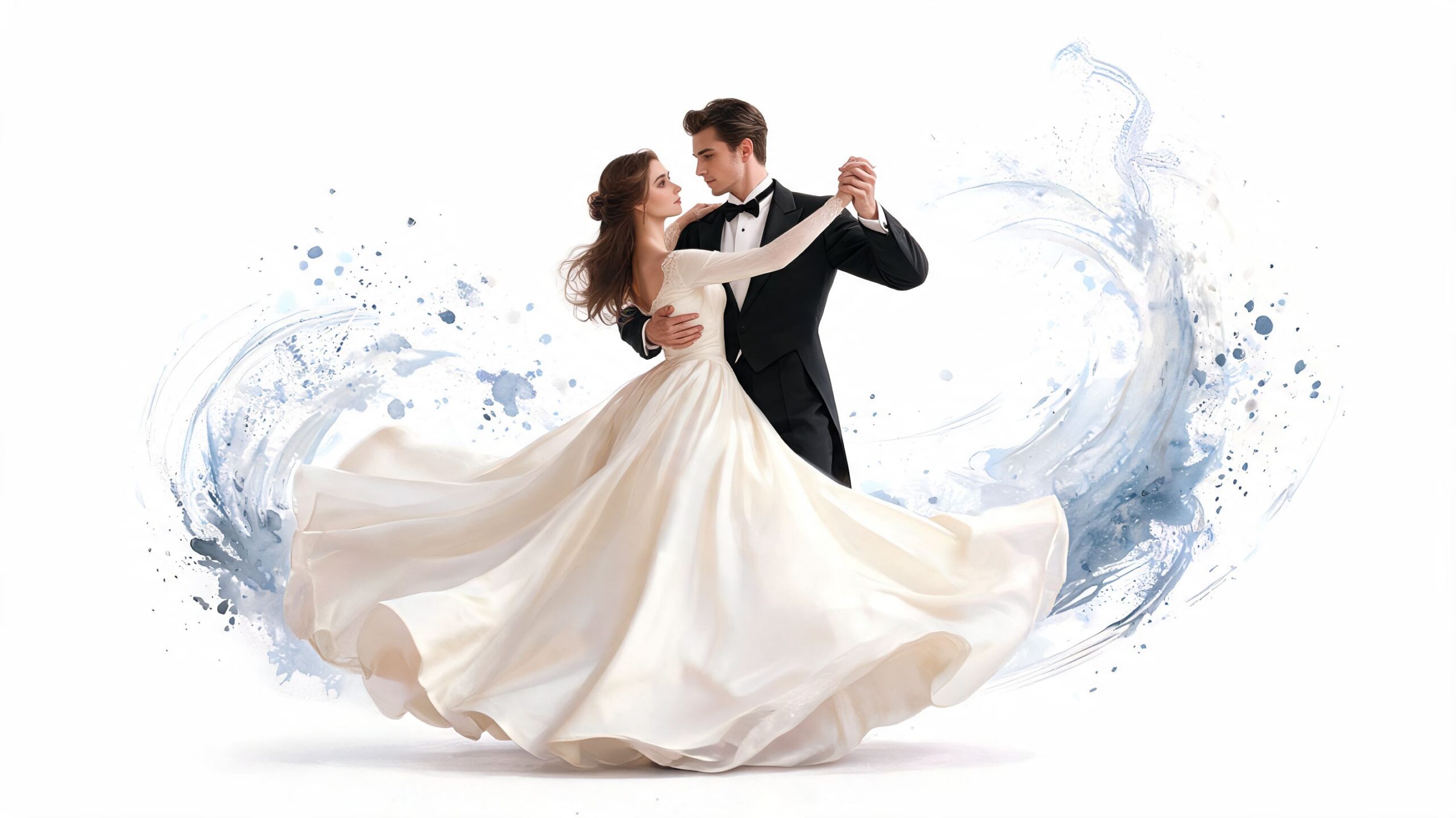
For wedding choreography, I start with the style before the song. Waltz is a strong fit for couples who want grace, structure, and a romantic flow that does not depend on big tricks. Then we match it to music with a clear three-count pulse. That order saves a lot of frustration. A song people love can still fight the body if the movement style is wrong for it.
The modern twist usually comes from styling choices, not from piling on difficult steps. Keep the Waltz foundation, then loosen the presentation a little. A softer top line, a cleaner traveling turn, or a brief underarm turn can make the dance feel current while preserving the classic shape that makes Waltz so flattering in photos.
What works in practice
Connection comes first. If the couple can stand offset comfortably, keep a steady frame without locking the shoulders, and move through a basic box with consistent timing, the dance already looks intentional. Many beginners rush because they are nervous. In Waltz, rushing kills the very quality people choose it for. The movement needs space.
The best routines stay selective. One turning pattern, one promenade line, and one ending that lands with confidence are usually enough. More content often creates more mistakes, especially in a long dress or on a crowded floor. Simpler choreography also leaves room for breath, eye contact, and those natural moments that make the dance feel personal instead of rehearsed.
A modern Waltz works well for couples drawn to contemporary ballads, acoustic tracks, or orchestral pop with a true triple meter. If the song only hints at a Waltz rhythm, the dance starts to feel forced. In lessons, that mismatch shows up quickly. The couple can memorize the steps, but they never quite settle into the music.
Practical rule: Choose Waltz if you want elegance with clear structure, then modernize it through styling, musical choice, and one or two open moments instead of a crowded routine.
A strong real-world version looks like this: the couple wants timeless movement, but not a full ballroom showcase. They dance mostly in closed hold, use natural rotation to travel, open once for visual variety, and finish with a still, well-placed pose. That combination feels refined, fits the wedding setting, and remains manageable for beginners with limited practice time.
2. Foxtrot Fusion with Popular Music
Foxtrot is one of the most forgiving and flattering options for modern couples. It travels like a smooth walk, not a dramatic display. If Waltz feels too formal and Rumba feels too intimate, Foxtrot sits in the middle. It has sophistication without stiffness.
This style works especially well for couples who want their first dance to look natural in a suit and gown. The movement glides across the floor, and the rhythm supports songs with a clear pulse. Many couples who say, “We don't want anything too ballroom,” respond very well to Foxtrot once they try it because it feels familiar under the feet.
Why Foxtrot often looks easier than it is
Foxtrot can look deceptively simple. That's part of its appeal. Guests don't see a list of steps. They see two people moving together with calm control. But that look depends on timing and lead-follow clarity. If one partner pushes ahead or the other waits too long, the whole dance starts to look hesitant.
The strongest version keeps the movement low-pressure and musical. Think feathered walking patterns, a natural turn, and one place where the couple changes direction with intention. That's enough to create visual variety without overcomplicating things.
The best Foxtrot first dances feel effortless because the couple has stopped trying to “perform steps” and started moving like they belong together.
A common scenario is a couple choosing a romantic pop ballad with a clear beat, then discovering that a Foxtrot base gives them far more freedom than a strict slow sway. They can travel, rotate, open slightly, reconnect, and finish in a clean pose. It reads as confident, and it doesn't demand extreme flexibility, speed, or showmanship.
If you're considering wedding first dance choreography ideas that balance elegance with ease, Foxtrot deserves serious attention. It's especially strong for couples who want to look composed rather than flashy.
3. Latin-Inspired Salsa Routine
The DJ starts a track with a crisp Latin groove, family members perk up, and the room changes. A Salsa first dance creates that effect fast. It feels social, warm, and full of personality, which makes it a strong choice for couples who want movement that reads as celebration from the first eight counts.
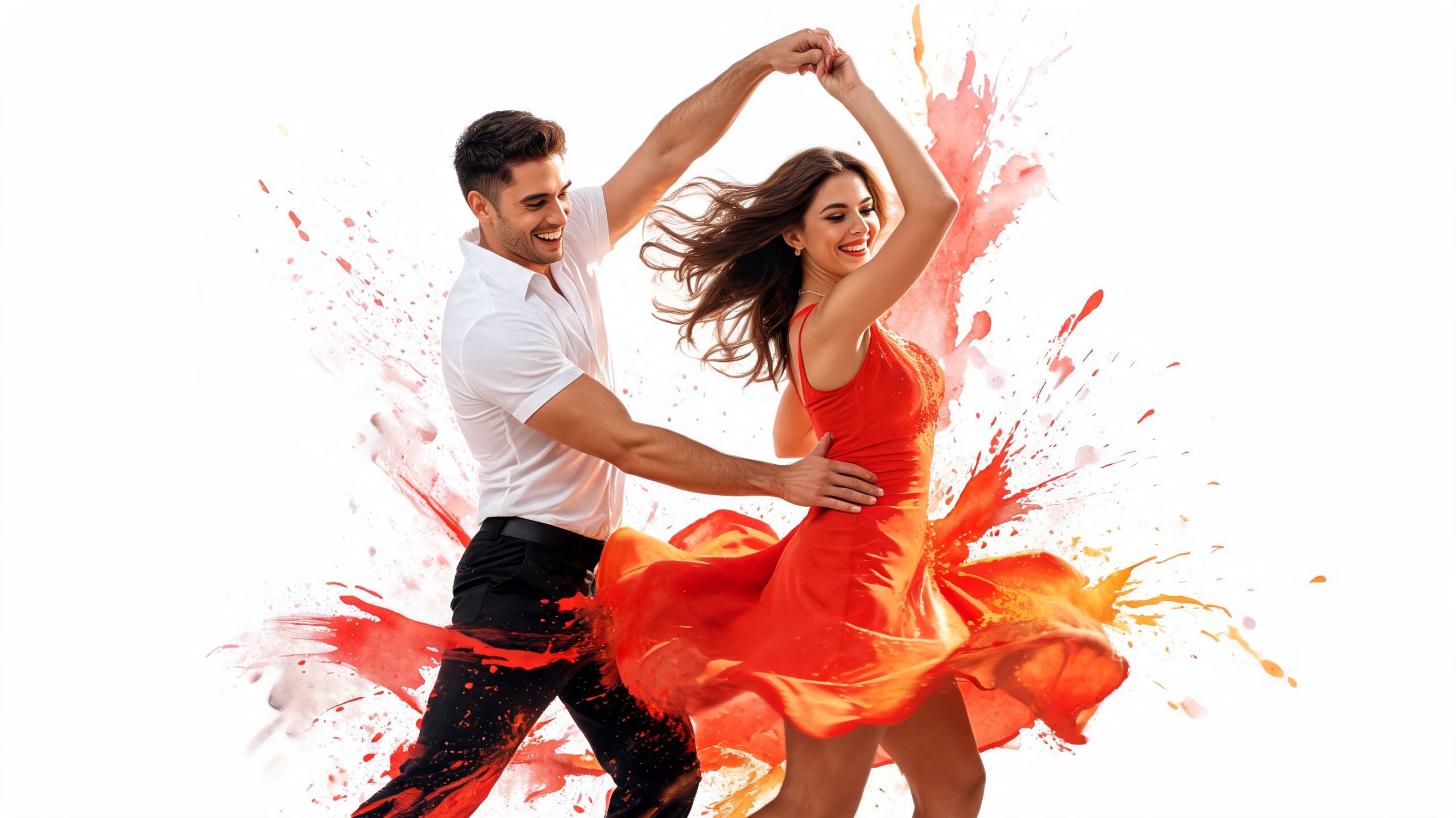
The best wedding Salsa routines are edited for the couple in front of me, not copied from a club floor or a competition video. For most beginners, that means a grounded basic step, one clean turn, an open break, and a short traveling pattern that brings them back together with control. Guests remember confidence and rhythm. They do not count how many patterns you used.
Salsa is a style-first decision, which is why it works so well in a choreography guide like this. Choose it because you want bounce, syncopation, and playful interaction. Then match it to music that supports those qualities. Songs with a clear clave feel, steady percussion, and a tempo you can manage will produce a better first dance than forcing Salsa onto a track that only sounds vaguely Latin.
What makes Salsa look good at a wedding
Timing matters, but so does restraint. Couples usually struggle when they rush into spins, complicated hand changes, or fast footwork before they can settle their weight and hear the phrase. The routine starts to look busy instead of sharp.
A stronger build usually follows this order:
- Start in a comfortable closed hold: Get the basic rhythm stable and let both partners feel where the weight changes happen.
- Add one featured turn: A well-led underarm turn gives the dance shape without raising the stress level.
- Use open position sparingly: A clean break apart and reconnect often gets a better reaction than a long sequence of disconnected patterns.
- Let the hips respond naturally: Good Cuban motion comes from bent knees, grounded feet, and complete weight transfer.
I often tell couples that Salsa rewards clarity more than ambition. If the lead is late, the follow guesses. If the basic is rushed, every turn after it gets harder. If the music is too fast, the whole routine tightens up. A simpler routine danced on time will always look better than a complicated one danced in survival mode.
This style is especially effective for couples with Latin family roots, couples who are naturally playful together, or pairs who want guests clapping by the second phrase. It can also be adapted for mixed experience levels. One partner can keep the footwork compact while the other adds a little more styling, and the dance still reads as polished.
For a wedding first dance, Salsa does not need nightclub speed or performance-level tricks. It needs clean rhythm, a few memorable moments, and music that fits the movement. Get those pieces right, and the dance feels joyful instead of forced.
4. Romantic Rumba with Emotional Storytelling
The room goes quiet, the music starts, and a couple who looked tense all day suddenly settles the moment they take the first slow step together. That is where Rumba shines. It gives couples a style-led way to build a first dance around closeness, phrasing, and intention before they worry about finding the perfect song.
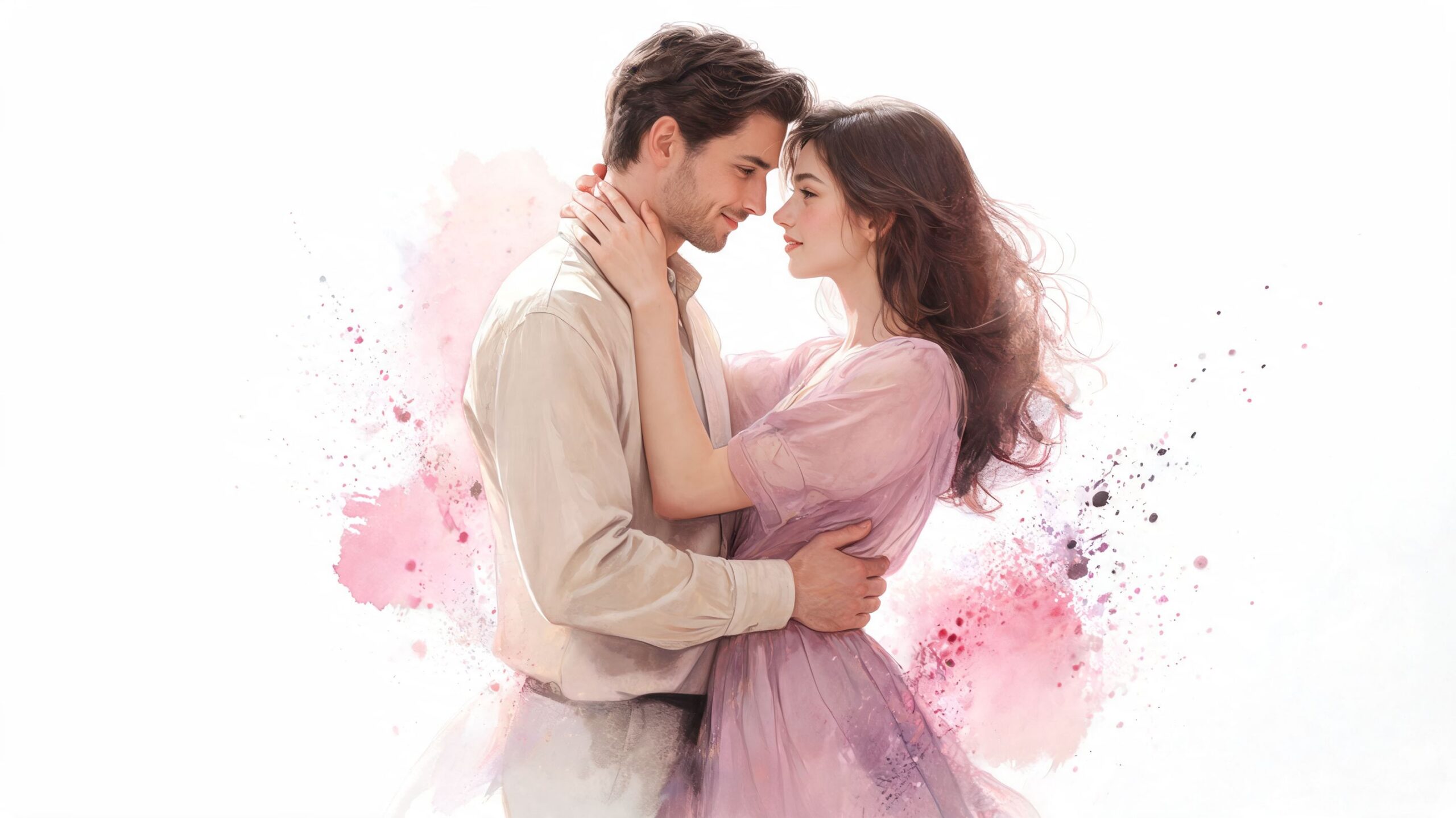
Rumba suits couples who want the dance to feel personal rather than busy. The movement is compact, grounded, and patient. That creates space for eye contact, breath, and musical pauses that read as genuine emotion instead of staged drama.
Restraint is what makes this style work at a wedding.
Couples often assume romance requires dips, lunges, and a long list of patterns. In practice, a stronger Rumba routine usually comes from four things done well. Clean walks. A measured rotation. One change of position that feels earned. A pause that matches the lyric and lets the audience feel the moment with you.
Why Rumba tells a story so well
Rumba is one of the best choices for beginners because the slower timing exposes meaning, not just mistakes. That is the trade-off. You do not need speed or stamina, but you do need control. If the weight transfer is incomplete, or the arms move without the body, the dance can look disconnected very quickly.
The solution is simple. Build the choreography around emotional beats in the music first, then choose figures that support them. If the song has a tender verse, stay closer and keep the steps small. If the chorus opens up, add a side break, a turn to open position, or a soft promenade. This movement-first approach almost always produces a better first dance than starting with a favorite song and forcing random ballroom steps onto it.
Instructor's note: If the lyric lands, hold the moment. You do not need to fill every count.
Rumba also handles meaningful songs well, especially tracks that are slightly too free in phrasing for a strict ballroom treatment. I often guide couples toward a short routine with a clear beginning, one emotional high point, and a gentle finish. That structure keeps the dance focused, prevents repetition, and gives nervous dancers something reliable to return to if adrenaline kicks in.
For couples who want guests to feel the relationship in the movement, Rumba is hard to beat. It does not ask for tricks. It asks for presence, timing, and trust, and on a wedding day, those qualities usually leave the strongest impression.
5. Swing-Influenced Fun and Playful Choreography
The music starts, one of you laughs too early, the other answers with a little spin, and suddenly the room relaxes. That is why swing works so well for certain couples. If your relationship has wit, spark, and a bit of mischief, the choreography should show that in the movement before the song choice does.
Swing is often the right fit for couples who want the first dance to feel social instead of formal. The trade-off is control. Playful choreography reads beautifully when the timing is clean and the connection stays consistent. Without that structure, the dance can look rushed, bouncy, and harder than it needs to be.
For weddings, I usually keep swing choreography built around a few reliable ingredients: compact triple steps, a rock step, one underarm turn, one pass-by, and a change of direction that lets the couple travel without losing each other. That gives the dance shape while keeping it teachable under real wedding timelines.
How to keep playful from becoming messy
The biggest mistake is choosing speed over groove. Couples hear an upbeat track and assume the dance needs more tricks, more rotation, more travel. In practice, smaller footwork and a steadier pulse create a better result. Guests notice clarity first.
A strong swing first dance usually follows a few practical rules:
- Pick a style before the song: East Coast Swing suits a clear downbeat and simple, upbeat structure. West Coast Swing suits a smoother groove, more stretch in the connection, and a more modern look.
- Use patterns you can repeat under pressure: If a turn works once but falls apart when you are tired or excited, cut it.
- Keep the bounce natural: Swing has rhythm through the knees and body, not vertical hopping.
- Save one surprise for the chorus: A synchronized break, a side-by-side moment, or a playful send-out is usually enough.
This style also solves a common first-dance problem. Some couples want energy without having to perform a full showpiece. Swing gives that energy through rhythm and interaction. The audience feels the fun because the movement has conversation in it.
I also like swing for couples planning a lively reception, because it bridges into the party better than many ballroom styles. You can finish with a dip, a tuck turn, or a send-out to open position, then invite guests in without an awkward reset. That makes the first dance feel connected to the night instead of isolated from it.
If you want a dance that looks joyful, social, and like the two of you, swing is one of the smartest choreography-first choices in the room.
6. Contemporary Fusion with Multiple Styles
The music starts with a slow, intimate opening. You settle into a soft contemporary hold, then the chorus hits and the room expects the dance to grow. That is where fusion earns its place. It gives couples a way to show more than one side of their relationship, but it only works when the movement changes feel earned, not pasted on.
This style-first approach matters. Couples often choose a song medley first, then try to force choreography on top of it. I get better results the other way around. Choose the movement identities first. Maybe you want contemporary flow with a brief rumba center, or a lyrical opening that shifts into swing-inspired celebration. Once the body language is clear, the music edit becomes much easier to build.
Fusion has a real trade-off. Variety makes the dance feel personal, but every added style raises the memory load and increases the chance of awkward transitions. For most couples, two styles are enough. Three can work if one section is short and the change is obvious in the music. Beyond that, the routine often starts to feel like cue-by-cue survival.
How to make multiple styles read as one dance
The strongest fusion routines share one movement thread all the way through. That might be a repeated turn shape, the same quality of rise through the body, or a consistent way of reconnecting after open work. Without that thread, each section can look like a separate lesson recital.
A practical structure looks like this:
- Start with your easiest shared vocabulary: The first section should calm nerves and establish timing.
- Shift styles at a musical phrase change: A chorus lift, beat drop, or lyric change gives the transition a clear reason.
- Reduce technical demand after the switch: Couples usually lose precision when the style changes, so the next pattern should be simpler, not harder.
- End with a section you can perform, not just remember: The last 20 seconds need confidence and presence more than complexity.
One common build is contemporary into rumba, then a short upbeat finish. That works well because the emotional arc is clear. The mistake is making each style too pure. A wedding fusion routine does not need competition-level technique in every section. It needs clean weight changes, readable intention, and transitions that match the music.
I coach couples to rehearse the joins more than the patterns themselves. The join is where the dance either looks polished or uncertain. Practice the last two counts of one style and the first four counts of the next until that hand change, body rotation, or shift in timing feels automatic.
Among wedding first dance choreography ideas, this one gives you the most room to tell a layered story. It also asks for the most restraint. A well-built fusion dance feels fresh because it says exactly enough.
7. Open Position Choreography with Frame Variety
Not every couple wants to stay in a traditional ballroom hold for the entire dance. Some feel stiff in closed frame. Some want more visual space. Some relate better to side-by-side or separated-but-connected movement. Open position choreography solves that problem without losing the sense of partnership.
This style can look contemporary, musical, and very personal. You can face each other, mirror each other, travel apart, then come back together at meaningful moments. That makes it especially good for couples who want movement variety without committing to a highly technical ballroom vocabulary.
Why this style feels more natural for some couples
Open position gives each partner a little more autonomy. That can reduce tension immediately. Instead of worrying about perfect ballroom posture for every count, couples can focus on timing, spacing, and shared intent. The challenge, though, is synchronization. Once you separate, sloppy timing becomes obvious.
A strong open-position routine usually includes:
- Mirrored basics: Simple repeated movement both partners can execute cleanly.
- One reunion moment: A return to closed or connected hold that gives emotional contrast.
- Clear spacing: Equal distance matters. If one partner drifts, the whole picture gets messy.
This style is also useful for couples with comfort, mobility, or accessibility considerations. Existing wedding content often leaves those dancers with generic advice, even though a gap identified in first dance accessibility coverage points to the need for modified, inclusive choreography approaches. In practice, open position can be a smart solution. It allows smaller ranges of motion, independent balance choices, chair-supported moments, and less strain than constant rotation in closed frame.
A realistic example is a couple with a height difference, a healing knee, or just a dislike of prolonged formal hold. Open choreography gives them a way to look intentional and connected without forcing a shape that doesn't suit them.
8. Quickstep with Celebratory Energy
The band shifts into something bright and fast, guests start clapping on the beat, and the room suddenly feels ready to celebrate. Quickstep fits that moment beautifully. For couples who want ballroom structure with more sparkle and momentum than a waltz or foxtrot, it creates a lively, polished first dance that feels like the reception is officially underway.
It also asks for discipline. Quickstep looks effortless only when the couple stays organized through the legs, center, and frame. In wedding choreography, that usually means choosing fewer patterns and dancing them well. A clean progressive sequence with one well-rehearsed turn reads better than a rushed routine packed with hops, chasses, and directional changes.
This style suits couples who enjoy moving with purpose and do not mind a bit of athletic demand. It works especially well for pairs who want their dance to feel upbeat, social, and confident rather than dreamy or intimate. The trade-off is simple. Quickstep exposes weak connection fast. If one partner rushes, grips, or falls behind the music, the whole dance starts to look hurried.
I usually coach wedding couples to make three decisions early with Quickstep:
- Keep the frame quiet: The energy should travel through the feet and body flight, not through busy arms or bouncing shoulders.
- Practice at half speed first: Foot placement, rise, and direction have to be clear before tempo goes up.
- Test actual conditions: Long dresses, slick floors, and formal shoes can change what is realistically comfortable.
Music choice matters here, but the style choice matters more. That is true throughout wedding choreography, and Quickstep makes the point clearly. Couples often fall in love with a fast song before asking whether they can move cleanly to it. The better approach is to decide first whether they want light, traveling ballroom with celebratory lift. Then match that movement quality to music with a clear pulse and enough space for breath.
For the right couple, Quickstep is a joy. For the wrong couple, it feels like a sprint in formalwear. If the goal is a dance that looks buoyant, classy, and festive, this style can be a standout, provided the choreography respects stamina, space, and control.
8-Style Wedding First Dance Comparison
| Style | Implementation complexity | Resource requirements | Expected outcomes | Ideal use cases | Key advantages |
|---|---|---|---|---|---|
| Classic Waltz with Modern Twists | Low–Moderate (basic steps easy; posture practice needed, ~4–6 weeks) | Weekly lessons, moderate practice time, clear 3/4 music, rehearsal in attire | Elegant, smooth, timeless first-dance visuals | Traditional/formal weddings; couples seeking classic romance | Universally recognized, flatters attire, versatile music choices |
| Foxtrot Fusion with Popular Music | Moderate (rhythm/timing and patterns; ~6–8 weeks) | 6–8 weeks of lessons, beat-focused music selection, practice for lead/follow clarity | Refined, fluid movement with contemporary feel | Couples wanting sophistication with modern songs | Natural walking feel, adaptable to pop, allows personality |
| Latin-Inspired Salsa Routine | High (hip isolation, timing, spins; 8–12+ weeks) | Intensive lessons (8–12 weeks), tempo-specific music, stamina and comfort with hip movement | Energetic, rhythmic, celebratory performance | Cultural expression or lively, party-focused weddings | Highly expressive, joyful, strong guest engagement |
| Romantic Rumba with Emotional Storytelling | Low–Moderate (slow controlled technique; ~6–8 weeks) | 6–8 weeks lessons focusing on connection and Cuban motion, practice close holds | Intimate, emotional, story-driven moment | Couples prioritizing emotional intimacy and meaningful song choices | Deep emotional expression, slower tempo easier for beginners |
| Swing-Influenced Fun and Playful Choreography | Moderate (quick footwork, coordination; ~4–6 weeks basics) | 4–6 weeks lessons, upbeat music, trust for partner tricks or lifts | Playful, high-energy, memorable routine | Couples wanting fun, upbeat, crowd-pleasing dances | Fast learning curve for basics, improvisation-friendly, joyful |
| Contemporary Fusion with Multiple Styles | Very High (multiple style transitions; 10–16+ weeks) | Extensive instruction (8–16+ weeks), custom music editing, consistent rehearsal | Unique, dynamic, varied routine that maintains guest interest | Couples wanting bespoke, narrative, multi-moment performances | Completely personalized, showcases versatility and storytelling |
| Open Position Choreography with Frame Variety | Low–Moderate (focus on sync and spacing; ~4–6 weeks) | Lessons on spatial patterns and synchronization, practice individually and together | Modern, visually interesting routine with individual expression | Couples uncomfortable with close holds or preferring contemporary aesthetics | Comfortable for beginners, modern look, highlights individual skills |
| Quickstep with Celebratory Energy | Moderate–High (fast precise footwork; ~6–8 weeks) | 6–8 weeks training, cardiovascular fitness, fast-tempo music, rehearsal in attire | Energetic, polished, impressive performance | Couples seeking exuberant, high-energy polished dance | Sophisticated, showy, highly memorable when executed well |
Ready to Find Your Rhythm and Book Your Lesson?
You're on the dance floor, your song starts, and every eye in the room turns your way. In that moment, couples do best with choreography that feels natural in their bodies, suits the room, and matches the mood they want to set. That is why I always start with movement first, then music. Style gives the dance its character. The song should support that choice, not force it.
A classic Waltz creates sweep and elegance. Foxtrot keeps things smooth and relaxed. Salsa brings rhythm and spark. Rumba slows the moment down and makes space for connection. Swing adds bounce and personality. Fusion gives you room to combine different parts of your story. Open-position choreography works well for couples who want less closed hold and more visual variety. Quickstep delivers celebration and polish, but it also asks for stronger timing and stamina.
The practical question is not how many steps you can fit in. It is how much choreography you can perform confidently under pressure.
In lessons, I usually guide couples toward a routine that covers 60 to 90 seconds of music with a clear beginning, a middle that builds, and a clean finish. That length keeps the dance memorable without exposing weak spots. A longer routine can work, but only if the couple has the time to rehearse consistently and stay calm when the adrenaline hits. Copying advanced social clips online rarely translates well to a wedding floor, especially in formal shoes, heavy dresses, or a tight space.
Trying a style in person answers questions that reading never can. A couple may arrive asking for Salsa, then discover they move more naturally in Foxtrot. Another may assume Waltz is the safe choice, then realize open-position choreography looks more like them and feels far less stiff. Good instruction should make those trade-offs clear early, before you spend weeks practicing the wrong routine.
Danza Academy of Social Dance brings more than 40 years of teaching experience to that process. Couples get clear coaching, honest feedback, and choreography built around real conditions, including floor size, attire, comfort level, and preparation time. That approach helps the dance look polished without making it feel forced.
If you're ready to test styles and choose one that fits, book a free complimentary lesson through the Danza Academy contact page.
Book your free complimentary lesson with Danza Academy of Social Dance and turn these wedding first dance choreography ideas into a routine that fits your personality, music, and comfort level. Whether you want elegant ballroom, playful Swing, romantic Rumba, or a custom fusion, Danza Academy will help you choose the right style and build it step by step.