You might be reading this after watching a salsa video and thinking, “That looks amazing, but not for me.” Maybe you feel stiff. Maybe you’re over 40, over 50, carrying extra stress, or convinced everyone else was born knowing how to move on beat.
They weren’t.
Most adults who walk into their first salsa class feel awkward for the first few minutes. That’s normal. Good salsa dance classes for adults are built for people who are learning from scratch, not for people who already look polished on a dance floor.
Salsa is social, physical, and mentally refreshing. It gives you something rare in adult life: a skill you can feel getting better in real time. One class can turn “I can’t dance” into “I think I’m starting to get this.”
Why It's Never Too Late to Learn Salsa
A lot of adult beginners carry the same private worry. They think they missed their chance.
They picture younger dancers spinning easily, smiling, changing partners without hesitation. Then they decide salsa must be for “natural” dancers, or for people who started years ago. I’ve taught long enough to tell you that this story is one of the biggest things holding people back.

Adult beginners often start with the same fears
Some worry they’ll be the oldest person in the room.
Some worry they’ll be out of breath too quickly. Others worry they’ll embarrass themselves because rhythm doesn’t come naturally yet. And many people hesitate because they don’t have a partner.
All of those concerns are common. None of them disqualify you.
Practical rule: If you can walk, listen, and laugh at yourself a little, you can start salsa.
What changes once you actually step into class
The first surprise is usually how simple the beginning looks.
A beginner class doesn’t start with flashy turns. It starts with repeating a basic step, learning where your weight goes, and hearing the count often enough that your body begins to organize itself. Adults usually do well here because they listen carefully, notice patterns, and ask smart questions.
The second surprise is how quickly the room feels human. People miss counts. They turn the wrong way. They reset and try again. That shared learning takes the pressure down.
There’s also joy in learning something social as an adult. You’re not just exercising. You’re connecting movement, music, and another person in a structured way that feels playful instead of performative.
If you’ve been curious, that curiosity matters. It’s usually a better sign than confidence. Confidence comes later. Curiosity gets you in the door.
What to Expect from a Salsa Class
You walk into class after work, a little unsure, and notice something right away. The room is not full of experts performing for each other. It is full of adults learning, counting, resetting, and trying again.
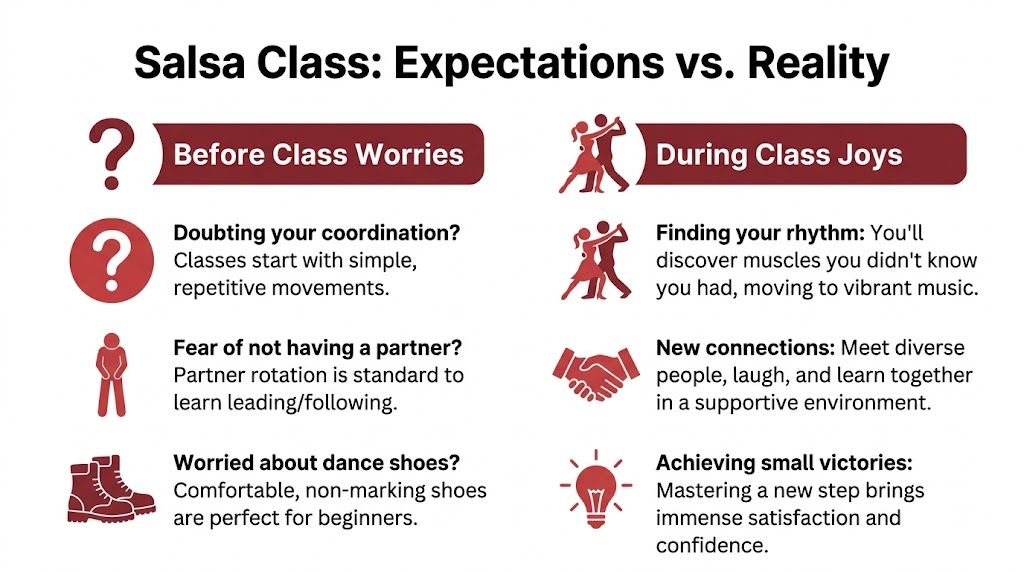
That matters, especially if you are wondering whether you are fit enough, young enough, coordinated enough, or too late to start. A beginner salsa class is built for people who do not know the system yet. The first goal is not to look impressive. The first goal is to understand how the dance is organized so your body has something clear to follow.
Start with the count, not the flash
Beginners often assume salsa starts with fast turns and complicated footwork. In class, it usually starts with counting, stepping, and shifting weight from one foot to the other.
That weight shift is the foundation. It works like learning where to place your feet when climbing stairs in the dark. Once your body knows where to go, everything feels calmer.
Your teacher will usually count out loud and demonstrate a simple pattern several times. You do not need to hear every instrument in the song or know anything about salsa styles on day one. You just need to match a steady count to a basic step. For many adults, that is a relief.
Roles are jobs, not personality tests
Salsa classes usually teach two roles: leader and follower.
The leader suggests direction and timing. The follower reads that signal and responds. Both roles require attention, timing, and practice. Neither role is easier. Neither role says anything about confidence, gender, or how outgoing you are.
New students sometimes worry about choosing the "wrong" role. You are not making a lifelong decision. You are learning a job description. Once that makes sense, the dance starts to feel far less mysterious.
You do not need natural rhythm or partner dance experience to start. You need clear instruction and a few rounds of repetition.
A typical beginner class flow
Most adult beginner classes follow a predictable structure, which helps people relax:
- Warm-up: Simple steps to wake up your feet, posture, and timing.
- Basic footwork: You practice the core rhythm without a partner first.
- Partner connection: The teacher explains how to hold frame and communicate movement without pulling or gripping.
- One simple pattern: Often a basic turn or a cross-body lead.
- Rotation and practice: Students switch partners so everyone learns the movement itself, not just one person's habits.
- Review: You repeat what you learned enough times to leave with something you can remember.
If you come alone, partner rotation usually makes the class easier, not harder. It removes the pressure of arriving with someone and helps the whole room progress together.
What beginners are often surprised by
The pace is usually more manageable than expected.
A good teacher does not throw a long combination at you and hope you survive it. They break the dance into pieces, then connect those pieces one at a time. First the feet. Then the timing. Then the hands. Then the turn. Adults often learn well this way because they like knowing why something works.
You may also be surprised by how adjustable salsa can be. If your fitness level is modest, you can dance smaller and take breaks between rounds. If you are over 40, 50, or beyond, that does not put you behind. It often helps, because adult students tend to listen closely, pace themselves well, and stay patient with the process.
Common styles you might hear about
Different studios may mention different salsa styles, but a beginner does not need to master those differences right away.
| Style | Timing | What it feels like |
|---|---|---|
| LA style | On1 | Slot-based movement, often centered around the cross-body lead |
| NY style | On2 | A different break timing that feels more connected to certain accents in the music |
| Cuban style | Circular feel | Partners travel in a more circular path rather than a straight slot |
If that table feels technical, do not worry. Your first class is usually about learning one clear framework well. One strong basic step is more useful than a head full of style terms.
The best beginner classes make salsa feel learnable. By the end of the hour, you may still be counting out loud, but you will also know where your feet go, how partner work begins, and why so many adults end up leaving class smiling.
Finding Your Rhythm with Progressive Class Levels
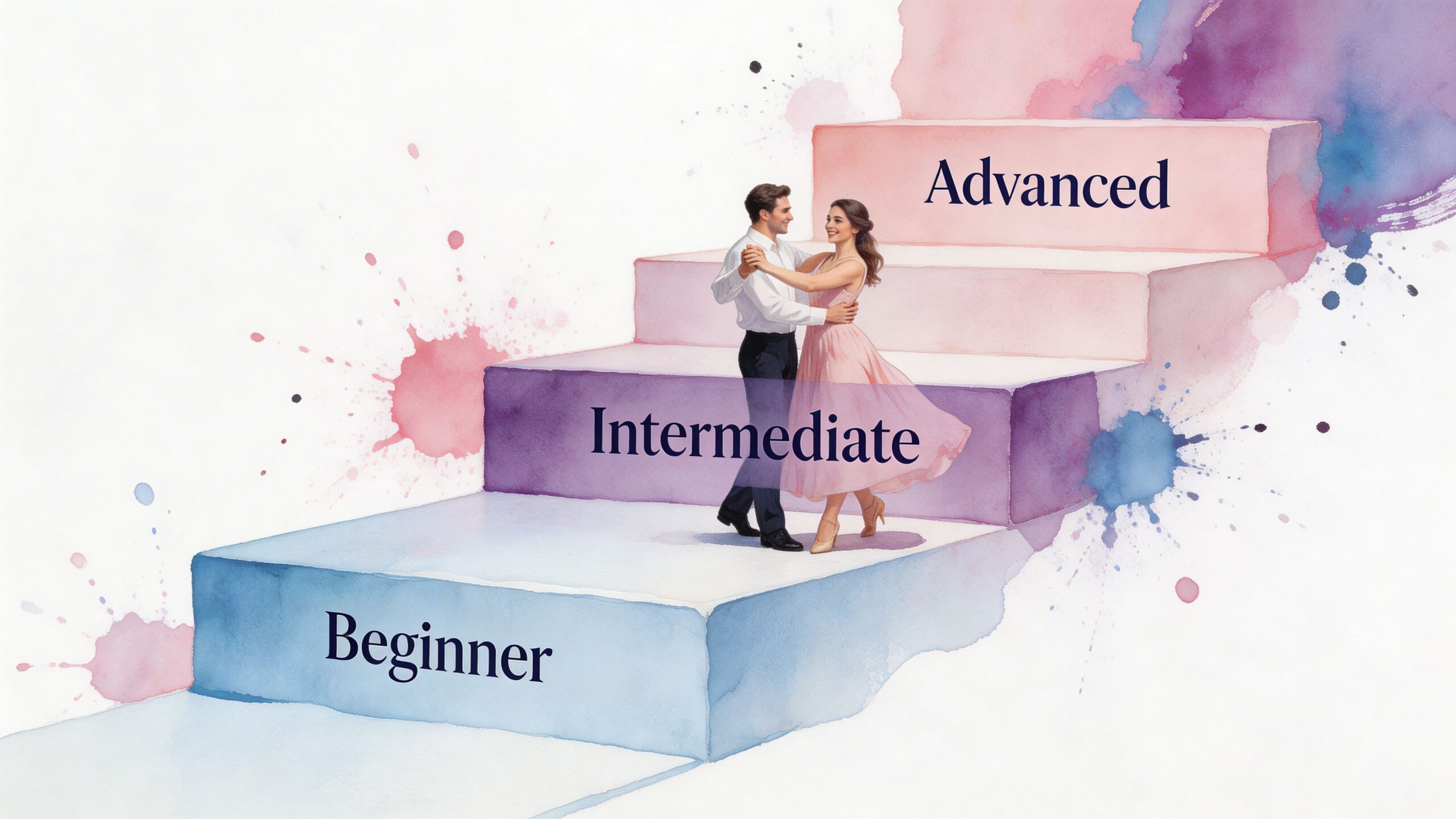
One of the smartest things a beginner can do is choose a class structure that builds from one level to the next. Randomly dropping into classes can be fun, but it often leaves adults feeling like they’re collecting pieces without a full picture.
Why levels help adults learn faster
A progressive beginner format gives your body time to repeat the same movement enough times that it starts becoming automatic.
That automaticity is what dancers mean when they talk about muscle memory. It’s not magic. It’s repetition organized in the right order.
A beginner salsa course taught across 6 weeks can use spaced repetition, which can improve motor learning retention by up to 200% compared to massed practice, according to The Salsa Beat’s discussion of in-studio salsa learning. That kind of repetition helps students build dependable basics like the cross-body lead before they move on.
What each level usually feels like
A solid progression often looks something like this:
- Level 1: You learn the basic step, timing, simple turns, and one or two core partner patterns.
- Level 2: You stop thinking so hard about your feet and start paying more attention to connection, direction, and cleaner timing.
- Level 3 and beyond: You work on smoother transitions, styling, musicality, and combining patterns without freezing.
What confuses many adults is that they expect progress to feel dramatic. Usually it feels quieter than that. One week you can’t find the count. A few weeks later, you recover after a mistake instead of stopping. That’s real progress.
Why consistency beats intensity
Adults often think they need long practice sessions to improve. In dance, regular exposure matters more.
If you attend class consistently, your brain starts recognizing the same cues over and over. Your body becomes less tense. Your reactions get quicker. You no longer need to think through every step before it happens.
A student doesn’t become confident by learning more patterns. A student becomes confident by needing less effort to do the basic ones well.
That’s why progressive salsa dance classes for adults work so well. They reduce overload. You don’t have to master everything at once. You just have to stay with the process long enough for the basics to settle in.
How to Choose the Best Adult Salsa Class
You find a beginner salsa class near home. The schedule works. The price seems fair. Then questions begin to surface. Will everyone be younger than me? Do I need to be in shape first? What if I come alone and feel out of place?
Those concerns are normal, and a good class accounts for them before you ever step onto the floor.
Look for a class that welcomes adult beginners in practical ways
A strong adult salsa class does more than label itself “beginner.” It shows, in plain ways, that beginners are expected.
Look for signs that the instructor teaches adults with different starting points. Some students have not exercised in years. Some are active but have never danced. Some are in their 50s, 60s, or beyond and want clear instruction without pressure to keep up with faster dancers. A class can still be warm, social, and fun while giving people time to learn.
Ask a few direct questions before you register. The answers will tell you a lot.
- Does this class start from zero? You want a true beginner class, not a mixed group where new students are expected to catch up.
- How is partner rotation handled? If you are coming alone, you should know whether rotating partners is standard and whether solo students are common.
- Can the teacher offer options for physical limitations? Knee, hip, back, and balance concerns are common among adults. A thoughtful instructor knows how to adjust without making anyone feel singled out.
- What is the room like? Ask whether the atmosphere is social and relaxed or more performance-focused.
A helpful studio treats these questions as ordinary. If staff sound impatient or vague, that tells you something too.
Pay attention to how the teacher explains movement
For adult beginners, teaching style matters as much as schedule and location.
A good salsa teacher builds the dance the way a good driving instructor builds confidence. First you learn how the car responds. Then you practice basic control. Only after that do you handle more traffic and speed. Salsa works the same way. You want an instructor who breaks skills into small pieces, gives you a chance to repeat them, and explains what your body should feel, not just what it should look like.
That matters even more if you feel self-conscious about coordination or fitness. Adults usually learn better with clear cause-and-effect instruction. For example, “keep your steps small so you can stay on time” helps more than “just relax.” Specific teaching lowers frustration.
If you are comparing local options, this step-by-step guide to finding adult dance classes near you can help you evaluate a studio beyond convenience alone.
Use a simple filter before you commit
Many adults overcomplicate the decision. You do not need the perfect studio. You need a class you can attend consistently and feel comfortable returning to.
Use this checklist:
- Beginner clarity: The class description clearly says what prior experience, if any, is expected.
- Adult-friendly pace: The teacher includes review instead of stacking new material too fast.
- Comfort for solo students: You do not need to bring a partner, and the class has a normal system for rotating.
- Physical accessibility: The instructor can adjust for different mobility and fitness levels.
- Schedule fit: The class time works with your real life, not your ideal week.
- Emotional fit: You can picture yourself coming back after making a few mistakes.
That last point matters more than many adults expect. The best class is often the one that makes you feel safe enough to be new. Confidence in salsa usually grows the same way rhythm does. One small, steady beat at a time.
Preparing for Your First Salsa Lesson
Your first class goes better when you remove as many small worries as possible before you arrive. You don’t need special talent. You just need a few practical decisions made in advance.
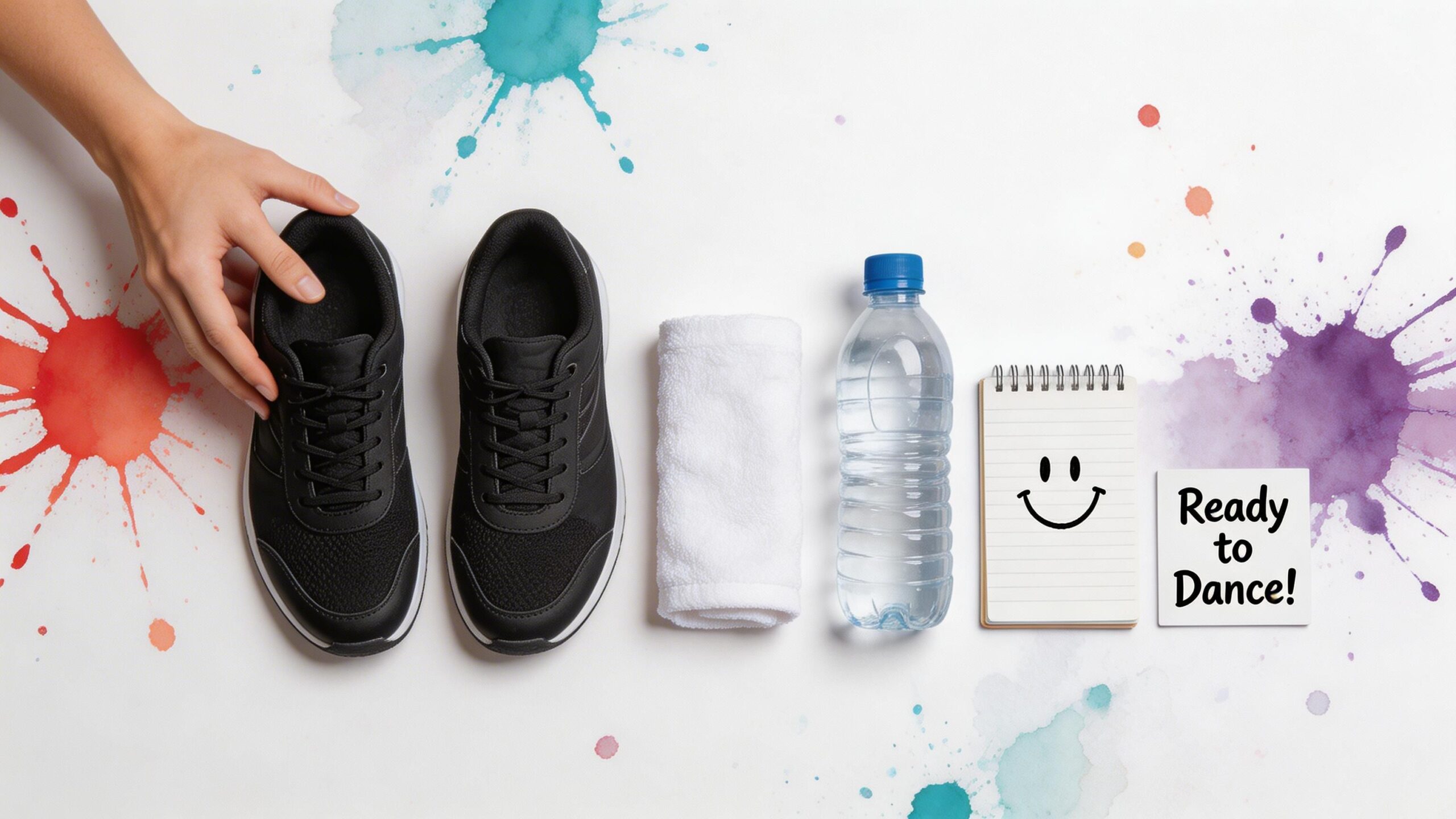
What to wear and what to bring
Wear clothes that let you move easily without constant adjusting.
For most beginners, a breathable top and comfortable pants or leggings work well. You don’t need dancewear. You just want to bend, step, and turn without feeling restricted.
Shoes matter more than outfits. Pick something comfortable with a sole that lets you pivot without fighting the floor. If all you have are clean sneakers, that’s usually enough for a first lesson unless the studio says otherwise.
Bring a few basics:
- Water bottle: Salsa gets warm quickly, even in a beginner class.
- Small towel: Helpful if you perspire easily.
- Extra shirt if needed: Some students like having a fresh layer after class.
Class etiquette that makes everything smoother
Partner rotation is common in salsa. It helps everyone learn.
That can feel awkward if you’re shy, but it usually becomes easier after the first few switches. A simple smile, eye contact, and “thank you” go a long way. You don’t need polished social skills. Just be respectful and open.
Good hygiene is part of dance etiquette too. Since salsa involves close partner work, arriving fresh makes the experience more comfortable for everyone.
If you want more first-lesson basics, this guide on how to prepare for your first private dance class covers practical details that help adults feel more settled before they walk in.
How to get more from the hour
Show up a little early if you can.
That gives you time to check in, meet the instructor, and settle your nerves before music starts. The first few minutes feel much better when you’re not rushing through the door.
A quick visual walkthrough can also help before class:
A few mindset tips help too:
- Let mistakes happen: Everyone misses counts at first.
- Ask short questions: “Which foot starts?” is a great beginner question.
- Focus on one win: Maybe you kept time better. Maybe your turn felt clearer. That counts.
If you leave your first class knowing a little more than when you walked in, the class worked.
Start Your Salsa Journey in Philadelphia Today
By the time most adults finish researching salsa, they already know that the primary concern isn’t whether salsa looks fun. It does. The primary concern is whether the first step feels safe enough to take.
That first step gets easier when a studio offers clear instruction, a welcoming room, and options that match how adults learn. Some people do best in group classes because the shared energy keeps them relaxed. Others want a private lesson first so they can slow things down and ask questions freely.
Philadelphia dancers have strong options, and it helps to choose a place that supports both paths. If you’re exploring local adult programs, you can start by looking at adult dance classes in Philadelphia.
The easiest next move is to try a class experience without putting pressure on yourself to “be good” right away.
If you’ve been waiting for the perfect moment, this is usually it. Not because you suddenly feel fearless, but because you finally have enough clarity to begin. A complimentary first lesson gives you a no-pressure way to meet the instructor, see the space, and feel what salsa is like in your own body instead of only imagining it from the sidelines.
Your Salsa Questions Answered
A lot of adults reach this point with the same quiet worries. What if everyone else is younger? What if you miss the beat? What if showing up alone feels awkward?
Those concerns are normal. They are also much more manageable than they seem before your first class.
Do I need to bring a partner
No. Many adult beginners come by themselves.
In salsa class, rotating partners works like practicing a conversation with different people instead of only one friend. You learn to notice timing, pressure, and lead or follow signals more clearly because each partner gives you slightly different feedback. If you come with a partner, you can usually stay together for part or all of class, depending on the studio.
If partner rotation makes you nervous, ask before you book. A good studio will explain how it works so there are no surprises.
What if I have no rhythm
This is one of the most common fears, and it usually means, "I have not learned how to hear the beat in my body yet."
That skill can be taught. Beginner salsa classes often start with counting, clapping, simple weight changes, and repeated footwork. It works like learning to hear the pulse in a song before trying to sing the melody. First you find the beat. Then your steps begin to settle into it.
You do not need great timing on your first day. You need patient practice.
Am I too old to start
No.
Adults begin salsa in their 30s, 40s, 50s, 60s, and beyond. Some want a social outlet. Some want movement that feels more alive than a gym routine. Some want to try something new after years of putting themselves last.
The better question is not your age. It is whether the class teaches adults with respect for different starting points, comfort levels, and learning speeds.
What if I’m out of shape
You do not need to get in shape before taking salsa. For many adults, salsa is the activity that helps them become more active again.
A beginner class is not a fitness test. You will step, pause, reset, and build stamina over time. If you need a water break, you take one. If your knees, back, or energy level need a slower pace, tell the instructor. Good teachers would rather help you modify early than watch you push through discomfort and lose confidence.
Is salsa good exercise
Yes. Salsa gets you moving for a full class period, and that steady movement can add up to a meaningful workout, especially if you attend regularly.
As noted earlier, partnered salsa can support calorie burn, step count, coordination, and mood. That is part of its appeal for adults who do not enjoy exercise for its own sake. You are not staring at a machine or counting down minutes. You are listening, learning, and moving with other people, which makes the effort feel lighter.
How long until I feel comfortable
Comfort usually arrives in stages.
First, you recognize the basic count. Then you stop looking at your feet quite so often. Then you recover more easily when you lose the pattern. One day, you notice you are enjoying the music instead of bracing for the next mistake.
That is real progress.
If you are ready to stop wondering and start moving, book a complimentary first lesson with Danza Academy of Social Dance. It’s a simple, low-pressure way to try salsa, ask questions, and see how achievable it can feel when you’re guided by experienced instructors in a welcoming adult learning environment.