
You're standing at the edge of the dance floor, your guests watching, your song queued, and suddenly the question feels much bigger than it did during wedding planning: what is the first dance at a wedding, exactly, and what are you supposed to do once everyone is looking at you?
The answer is simpler than the nerves suggest. The first dance is a short, private-feeling dance shared by the newlyweds at the reception. It can be a gentle sway, a polished ballroom routine, or a lively surprise that reflects your personalities. In Philadelphia, where weddings can range from elegant Center City celebrations to relaxed gatherings in the suburbs, there's no single correct version. The best first dance gives you room to feel connected instead of asking you to perform someone else's idea of romance.
A Quick Moment Every Couple Imagines
The room settles after the introductions. Your DJ lowers the background music, the photographer moves toward the edge of the floor, and your names bring a fresh wave of applause. Then the lights find you.
For a moment, the dance floor belongs only to you and your partner. The first note begins, you take each other's hands, and the room seems to grow quieter even though every friend and relative is still there. One couple might begin with a slow step and a nervous laugh. Another might glide into a turn they practiced in a Philadelphia studio. Both moments can feel completely right.
That combination of magic and mild panic is normal. Many couples arrive at their first lesson believing they need natural rhythm, formal dance experience, or a complicated routine to look comfortable. They don't. They need a reliable way to start, a song that supports their movement, and enough practice that they can look at each other instead of counting every beat.
A useful instructor's rule: Your first dance should help you remember your partner, not remind you that guests are watching.
Think of the dance as a small window inside a busy day. You've spent hours greeting people, taking photographs, answering questions, and moving from one scheduled event to the next. This is one of the few reception moments where you can pause together. Preparation doesn't remove the emotion. It gives the emotion somewhere to go.
Defining the First Dance at a Wedding
The first dance at a wedding is the newlywed couple's opening dance at the reception, usually performed alone on the dance floor before other guests join. It's generally scheduled after the grand entrance and often comes before parent dances, dinner, or speeches, although the couple and coordinator can adjust the order.
That definition separates the first dance from several other wedding traditions:
- Parent dances feature the newlywed with a parent, such as a father and daughter or mother and son. They're meaningful, but they aren't the couple's first dance.
- The bouquet and garter traditions are reception activities, not dances shared by the newlyweds as a formal opening.
- Open dancing begins when the floor is opened to guests. Your first dance is the planned couple-only moment before that invitation.
- A choreographed surprise is still a first dance if it begins as the newlyweds' opening dance. It doesn't need to look slow, traditional, or solemn.
The first dance also acts as a transition. The ceremony focused attention on your vows and the people standing beside you. The reception shifts that attention toward celebration, conversation, food, music, and movement. Your dance helps signal that change without requiring a long announcement.
Where it usually appears
A common sequence is:
- Grand entrance
- First dance
- Parent dances
- Dinner or speeches
- Open dancing
Some couples prefer to dance immediately after entering while the room is attentive and the floor is clear. Others wait until after dinner so guests feel relaxed and the atmosphere is softer. Neither choice changes the meaning. It changes the energy surrounding the moment.
If you're unsure, ask your planner, DJ, or bandleader to consider the room's layout, meal service, photography plan, and your comfort level. The first dance works best when the practical details support the emotional one.
How the First Dance Became a Wedding Tradition
The room is ready, the couple has entered, and guests turn toward the open floor. That familiar wedding moment began far from modern receptions. Histories commonly trace the first dance to 16th- and 17th-century European royal and aristocratic balls, where the highest-ranking host or honored couple opened the event before everyone else joined. The gesture announced status and established the room's tone, rather than celebrating a newly married partnership. The history of wedding dances and their evolution connects that ballroom practice with the wedding tradition that followed.
During the 19th century, the waltz became prominent in Europe, and a couple beginning a celebration together took on a more romantic meaning. By the Victorian era, the first dance had become an established reception tradition among upper- and middle-class families in Europe and America. Its purpose gradually shifted from displaying public hierarchy to expressing personal connection.
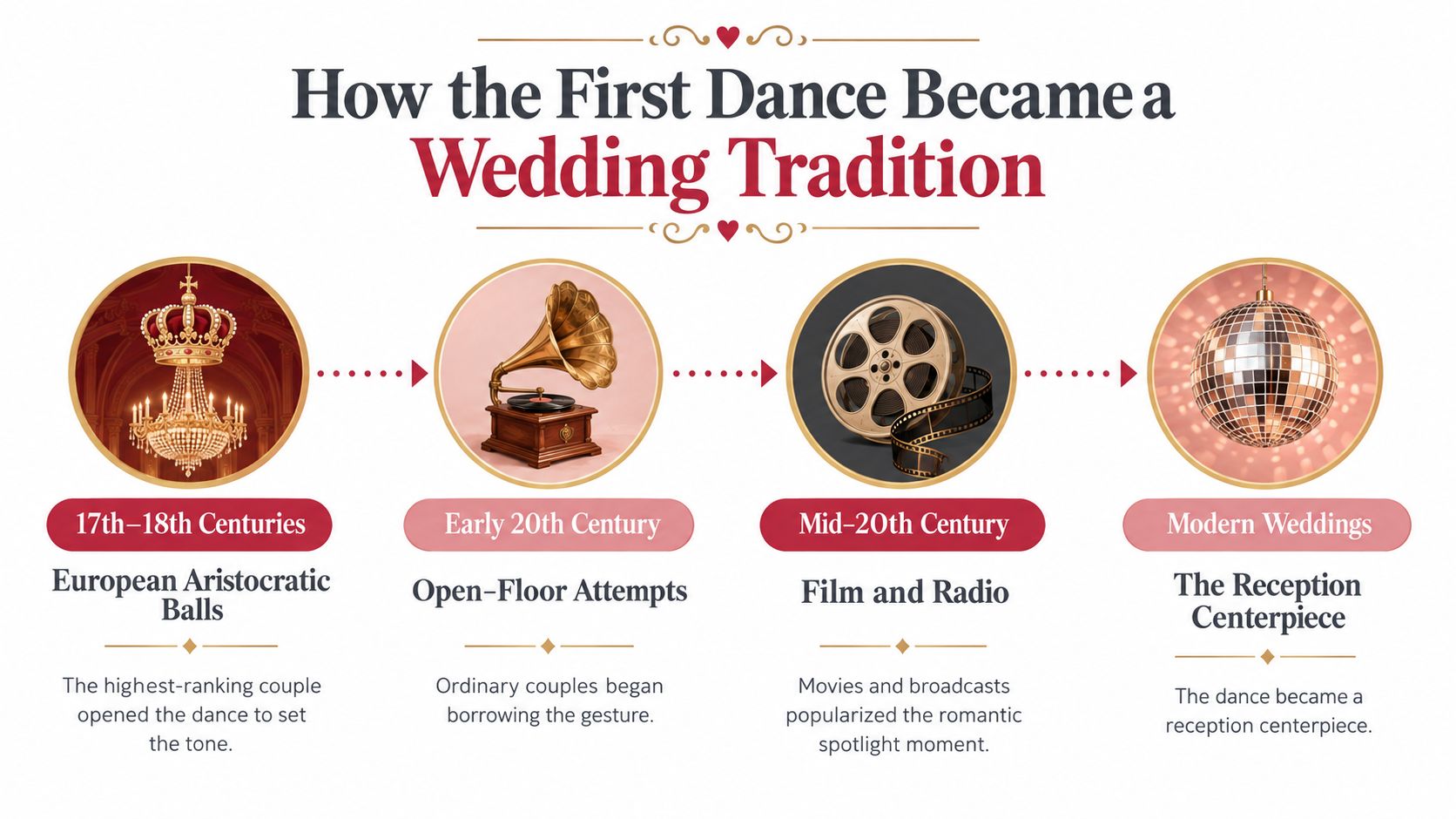
Early twentieth-century etiquette shows that reception dancing was still developing. In 1922, Emily Post's Etiquette advised newlyweds to wait until guests had begun dancing before joining them. That detail shows how the familiar order of events was being formalized. A historical overview of the first dance describes the wider change from a public ball-opening ritual to a short, emotionally focused centerpiece.
The history also explains today's practical choices. Couples are adapting a tradition that has already changed shape, so a simple sway, planned choreography, or personal song can all fit its meaning. That long tradition of pairing and continuity is why many couples also choose matching bands. This guide to wedding band sets for couples compares styles worth considering together.
Choosing a Dance Style That Fits You
Your style should match your comfort, the song's rhythm, and the feeling you want guests to experience. You don't need to select a formal dance label before you begin. Start by noticing how you naturally move together.
| Style | What It Looks Like | Best Fit For |
|---|---|---|
| Classic slow sway | Partners rock gently side to side in a small circle, with their arms held close | Couples who want intimacy, simplicity, and a short song clip |
| Relaxed modern hold | A comfortable social-dance position with a few easy steps, turns, and weight changes | Couples with natural rhythm who want movement without a staged performance |
| Traditional ballroom | Structured patterns from waltz, foxtrot, or rumba, often with changes of direction and graceful shaping | Partners who want elegance, clear technique, and the feeling of gliding |
| Upbeat swing or Latin | Lively rhythm, turns, expressive accents, and playful interaction, drawing from styles such as Lindy Hop, salsa, or salsa-inspired cumbia | Energetic couples who want smiles, applause, and a celebratory atmosphere |
The understated choice
A classic sway isn't a lesser option. It can look very romantic when your posture is comfortable and your attention stays on each other. This works especially well for couples who prefer a brief spotlight and don't want to memorize many details.
The structured choice
Ballroom patterns give you a plan for navigating the floor. A waltz can feel sweeping, a foxtrot can feel polished, and a rumba can create a slower, expressive quality. These styles suit couples who enjoy clear technique and want their movement to look intentional without becoming theatrical.
The high-energy choice
Swing and Latin styles let your personalities lead. You might use a salsa-inspired rhythm for a lively reception or add a few swing turns to a song that makes you both grin. Choose this direction because you enjoy the feeling, not because you think your guests require a surprise.
Picking the Right Song for Your First Dance
Song choice becomes easier when you test three things separately: meaning, danceability, and length. A song can hold a beautiful memory and still be difficult to move to. Another can have a perfect tempo but lyrics that shift toward heartbreak or separation.
Start with emotional meaning. Ask what the song brings back for both of you, then read the lyrics from beginning to end. A romantic chorus doesn't always represent a romantic story. If the words feel right and the song makes you want to move toward each other, keep it on the list.
Next, check the tempo. Count the beats you hear during 10 seconds, then multiply that count by 6 to estimate beats per minute. A slower rhythm often supports a beginner-friendly sway or rumba, while a stronger, quicker beat may suit swing, salsa, or a more active routine. Don't treat the number as a rule. Use it to understand why a song feels comfortable or rushed.
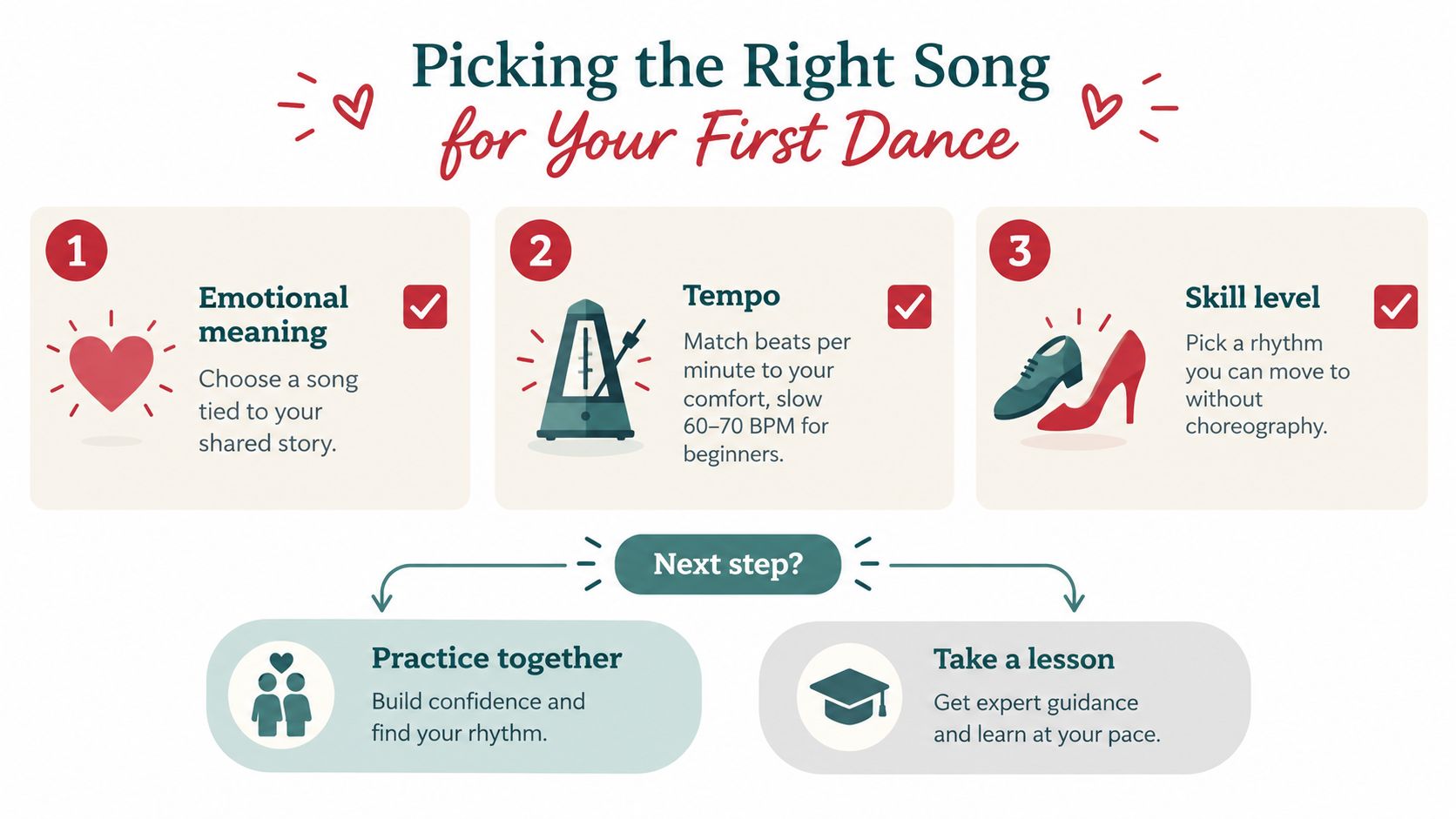
Duration matters because the first dance is performed in front of the entire reception. Many couples find that editing the song to about 2 minutes preserves the emotional peak while keeping the moment comfortable. You can trim the opening of the song, remove a repeated verse, or ask the DJ to create a clean fade.
Try this short process:
- Make a shortlist of three songs.
- Play each one at home and try a slow sway.
- Notice which song makes you relax rather than overthink.
- Watch real couples dance to each song, paying attention to whether the rhythm looks manageable.
- Share the finalists with your instructor and DJ.
You can also browse first dance song ideas for weddings when you need inspiration. The right song isn't necessarily the one that sounds most impressive through headphones. It's the one that feels natural when you stand together on the floor.
Choreography Options From Simple to Fully Staged
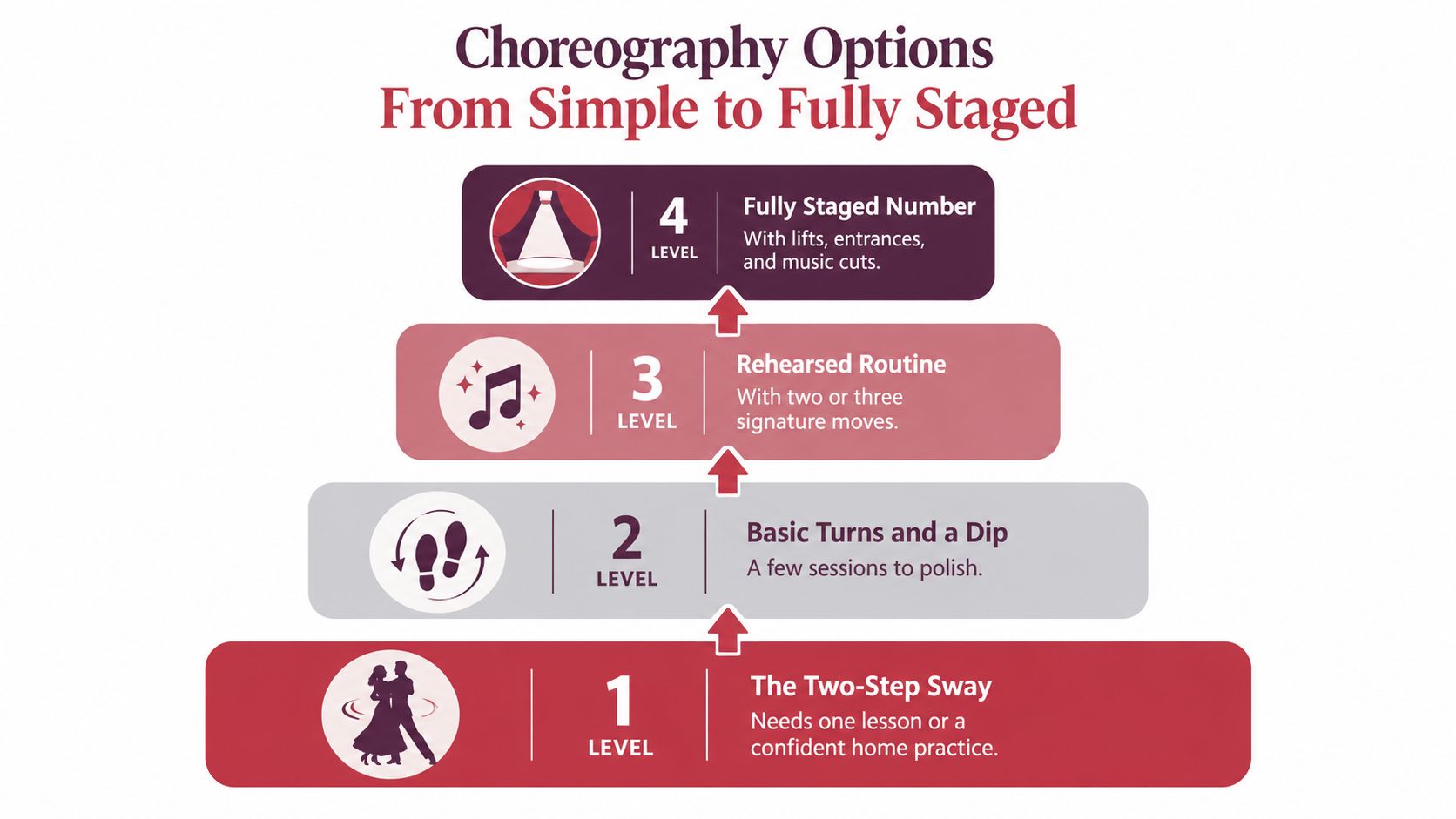
Choreography should give you confidence, not create a second wedding to organize. Most couples fit comfortably into one of four levels, depending on their experience, available practice time, and appetite for performance.
Level one is a dependable sway
At the simplest level, you learn how to shift weight together, maintain a comfortable hold, and turn gradually so guests and photographers can see you. A two-step sway may take a single lesson or confident home practice. To guests, it looks relaxed and affectionate. Your job is to keep breathing, stay connected, and let the music carry the moment.
Level two adds direction
The next level introduces a few basic turns, a guided drift across the floor, and perhaps a gentle dip. Expect to spend a few sessions learning the pattern and then repeat it at home until the transitions feel familiar. This option suits couples who want more visual variety without memorizing a full routine.
Level three creates a signature sequence
A brief choreographed section can arrive when the lyrics change or the music reaches its emotional peak. You might include a dramatic dip, a partner change, or a carefully prepared lift for an athletic couple. The dance still feels personal and social, but guests recognize that you planned a few moments for them to enjoy.
Level four stages the entire number
Fully staged choreography may include multiple patterns, entrances, music cuts, costume cues, lifts, or a reveal involving friends. It can be joyful and memorable, but it requires a higher practice commitment and careful coordination with the DJ, band, photographer, and venue.
A lift deserves special care. Don't attempt one because a video made it look easy. An instructor should assess the partners' balance, strength, footwear, floor surface, and the exact entry and exit. If either partner feels uncertain, replace the lift with a turn, dip, or shape that creates the same visual accent without unnecessary risk.
This demonstration shows how a routine can build from clear foundations into expressive movement:
A simple dance rehearsed well usually looks more polished than an ambitious routine performed with hesitation. Choose the highest level you can enjoy practicing, not the highest level you can imagine.
Timing Etiquette and How Long to Dance
The first dance usually follows the grand entrance, before parent dances and often before dinner or speeches. This guide to the order of wedding dances outlines that common sequence while recognizing that couples can arrange the reception differently.
Opening the evening with your dance keeps guests focused and gives the reception a clear starting point. Placing it after dinner can create a gentler mood, though guests may be talking, standing, or returning from the bar. Whichever order you choose, ask the coordinator to reserve a clean floor. Give the DJ the exact introduction cue, music starting point, and any edited ending.
Choosing the length
Most first dances run 2 to 3 minutes, and The Knot's first-dance advice recommends that range for comfort and audience attention. A choreographer may occasionally stretch the routine to about 4.5 minutes when the couple wants a fully staged performance, but a longer song needs enough material to keep the movement interesting.
A shorter edit can remove repeated transitions and give you less time to manage nerves. You can fade after the emotional high point, then move into a parent dance or invite everyone onto the floor. If the routine feels comfortable and guests remain engaged, use more of the song. If you are counting every step, end sooner.
Preparing the room
Give your wedding team a short logistics checklist:
- Clear the floor: Ask the venue to move chairs, tables, and loose décor.
- Plan the lighting: Provide enough light for photographs without creating a harsh spotlight.
- Place the photographer: Leave a clean shooting angle near the edge of the floor.
- Prepare a recovery plan: If you wobble, smile, reconnect, and return to your basic step.
- Tell the DJ the cue: Confirm the exact recording, starting point, edit, and fade.
The floor should support the dance you practiced. Check for slippery areas, tight corners, and décor that could interfere with turns or a dress hem before guests take their seats.
A wobbly beginning will not ruin the moment. Guests remember how you looked at each other far more than whether the first step landed perfectly.
Preparing With Confidence and Booking Your Lesson
A calm first dance usually comes from a modest plan followed consistently. You don't need to rehearse for hours every night. You need to make decisions early enough that your body can learn them without pressure.
About two months out
Choose your song, decide whether you want a sway or choreography, and take one or two private lessons to establish the basics. Your instructor can test the music, identify awkward transitions, and shape the dance around your height, comfort, floor space, and clothing.
If you're searching locally, wedding dance lessons near you can help you find an instructor who works with couples rather than handing every pair the same routine. Bring your actual song file to the first appointment. A dance that works beautifully to one recording may feel different with another version or edit.
During the following weeks
Practice in short, focused run-throughs. Wear shoes with a similar feel to your wedding footwear, and occasionally rehearse in the clothing layers you expect to wear. Pay attention to practical details such as a long dress, a jacket, a slippery sole, or a crowded dance floor.
Rehearsal principle: A simple routine you can repeat calmly will serve you better than a difficult routine you can only perform on your best day.
During the final week
Do one complete run-through in full attire, then confirm the music details with your DJ or band. Share the opening cue, desired length, fade point, and any planned transition into a parent dance or open dancing. Your instructor can also help you create a backup version that begins with a basic sway if nerves take over.
Private preparation is especially useful when one partner feels more confident than the other. A good lesson doesn't turn the more nervous partner into a performer overnight. It gives both of you a shared language, a clear starting point, and permission to keep the movement natural. That's why Danza Academy of Social Dance offers customized wedding dance preparation alongside Ballroom, Latin, and social dance instruction, with private lessons shaped around each couple's goals.
You're allowed to keep the dance small. You're allowed to make it playful. You're allowed to choose a song that isn't conventional, as long as it belongs to your story and gives you a way to move together.
Book a free complimentary lesson with Danza Academy of Social Dance to test your song, explore a comfortable style, and learn a first-dance foundation that fits your wedding floor. Come as beginners, bring the music you love, and leave with a clear plan for feeling connected when the spotlight turns to you.