
Beginner dance classes for teenagers are the perfect way to build confidence, make new friends, and find a healthy outlet away from screens. Styles like Salsa, Swing, and Ballroom offer a fun, social, and low-pressure environment where any teen can learn to move, connect with others, and express themselves.
Why Dance Is a Powerful Outlet for Modern Teens
Let's face it, getting teenagers to put down their phones and engage in a screen-free activity can feel like a battle. But we're seeing more and more young people discover a timeless answer: dance. It’s so much more than a hobby; it’s a real social scene, a confidence booster, and a healthy escape from the daily grind of school and social media.
This isn't just something we're noticing in our own studio. The global dance education market hit an impressive USD 5.2 billion in 2024, largely driven by young people looking for creative outlets beyond typical sports. In fact, teens aged 13-19 now make up about 25% of new students in dance studios worldwide. And the best part? Over 60% of these classes are designed for total beginners, focusing on social styles perfect for making connections.
A Space for Expression Without Pressure
Unlike competitive sports, social dance styles like Salsa, Swing, and Ballroom create a welcoming vibe. The focus is on having fun and growing as an individual, not just on winning. There are no intense rivalries or pressure to make the team. The goal is simple: learn, connect with your partner, and enjoy the music.
This supportive setting delivers a fantastic mix of benefits:
- Physical Activity: Dance is a great full-body workout that improves coordination, posture, and heart health—and it never feels like a chore.
- Social Connection: Partner dancing teaches real-world communication, teamwork, and respect. Teens learn to lead, follow, and cooperate with different people in a structured, positive way.
- Mental Well-being: Focusing on steps and music gives the brain a much-needed break from academic stress and social pressures. Learning a new skill is also a powerful way to build self-esteem. You can read more about how dance classes can improve your mental health in our detailed article.
Beginner Dance Styles Perfect for Teens
To help you get started, here's a quick look at some popular social dance styles. We've found these are fantastic starting points for any teenager, regardless of their experience.
| Dance Style | Vibe & Energy | Why It's Great for Beginners |
|---|---|---|
| Salsa | High-energy, vibrant, and incredibly social. | The basic steps are easy to pick up, and the upbeat music makes it impossible not to have fun. |
| Swing | Bouncy, playful, and full of personality. | It's very forgiving and focuses on connection and rhythm, not perfect technique. |
| Ballroom | Elegant, classic, and structured. | Teaches foundational skills like posture, frame, and leading/following that apply to all dances. |
Each of these styles offers a unique way to get moving and connect with others. The best one really just depends on the kind of music and energy your teen enjoys most!
Building Confidence One Step at a Time
Maybe the biggest win we see is the boost in self-confidence. Mastering a new step, successfully leading a partner through a turn, or just feeling comfortable on the dance floor are all small victories that really add up.
The journey from feeling like you have "two left feet" to confidently navigating a dance floor is empowering. It teaches teens that with a little practice and guidance, they can master skills they once thought were totally out of reach.
This newfound confidence doesn't stay in the studio. We see it spill over into everything from public speaking to navigating school dances and other social events. Ready to see the benefits firsthand? The best way to start is to just give it a try. Claim your teen's free trial lesson now by booking on our contact page: https://danzaacademy.com/contact.
Matching a Dance Style to Your Teen's Personality
The real secret to getting your teen to stick with dance isn’t about picking the most popular or technically difficult style. It’s all about finding one that just clicks with who they are. This is more than just learning steps; it's about helping them connect with the music, the feeling, and the story behind the dance.
Think about what your teen is naturally drawn to. Are they the life of the party, always gravitating toward upbeat music? A style like Salsa could be perfect. The fast footwork and energetic partner connection make it incredibly social and a ton of fun.
Or maybe they're more into classic films and vintage style? The timeless grace of a Waltz or the smooth, cool confidence of a Foxtrot might be exactly what they’re looking for.
For the High-Energy Social Butterfly
If your teen thrives in group settings and loves to move, look for dances that are naturally social and full of energy. These styles are built on connection and having a good time.
- Salsa and Swing: Both are high-energy, partner-focused dances with infectious music. They're fantastic for building social skills and learning to think on your feet on the dance floor.
- Cha-Cha: This dance is playful, flirty, and packed with personality. The catchy, syncopated rhythm makes it almost impossible not to smile while you're learning.
For the Creative and Expressive Soul
If your teen is more of an artistic, introverted, or storytelling type, they might prefer a dance that offers more room for personal expression and emotion. These styles often feel more dramatic or graceful.
- Rumba: Often called the "dance of love," Rumba is slower and more sensual. It’s all about telling a story through body movement and the connection you build with your partner.
- Waltz: The definition of elegance. The Waltz teaches incredible posture, control, and flowing movement, which really appeals to teens with a classic or romantic side.
This simple decision tree can help you and your teen visualize the options, guiding the choice based on whether they're looking for a fun social scene or a creative outlet.
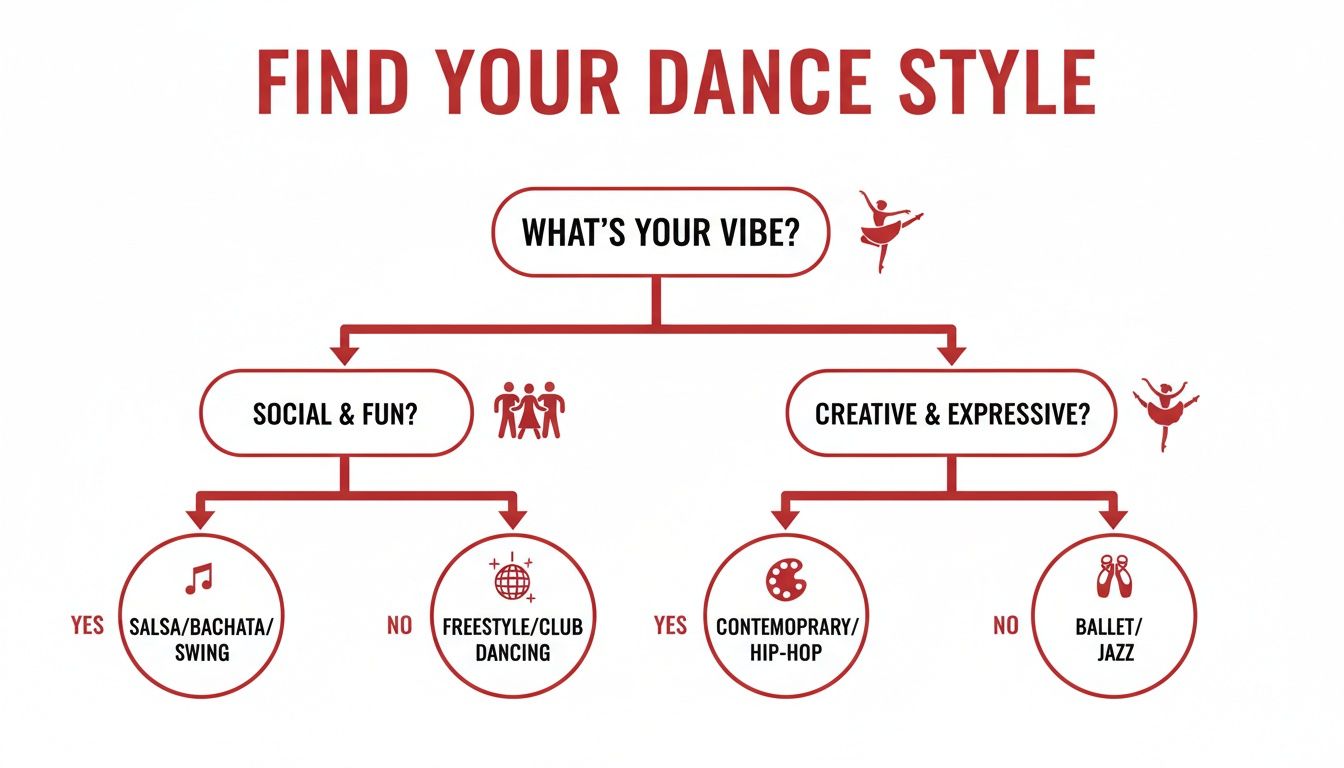
As you can see, matching the "vibe" of the dance to a teen's personality is the key to finding a style they'll genuinely love and want to continue.
The best teenage dance classes for beginners don't try to force a student into a single box. Instead, they introduce a variety of rhythms and movements, letting teens discover for themselves what feels most natural.
Ultimately, the goal is to find a dance that feels less like a lesson and more like a fun way to be themselves. For more ideas on what's out there, you might find our guide on how to find dance classes near you that fit your style helpful.
But honestly, the best way to know for sure? Try it out. Guesswork only gets you so far. Experiencing the music and movement firsthand is what really makes the difference.
How to Find a Studio That Supports Young Dancers
Choosing a dance studio is about so much more than just location and price. The right environment is everything—it’s the difference between a teen feeling excited for their next class or feeling too intimidated to ever go back. Your mission is to find a space that feels genuinely supportive, not just instructional.The key is to understand the studio's core philosophy. Do they focus on high-pressure competitions, or is their primary goal to build personal confidence and a lifelong love for dance? For a beginner, a community-focused approach is almost always the better choice.
This is especially true as dance becomes more popular with teens, many of whom are inspired by pop culture. After just 12 weeks in a supportive program, research shows 80% of teens improve fitness metrics like flexibility by up to 30%. Studios with decades of experience in social styles like Ballroom and Latin are often ideal because they excel at creating no-partner-needed group classes that build confidence without the pressure.
Look Beyond the Dance Floor
A great studio is built on the quality of its instructors and the atmosphere they create. An amazing dancer isn't automatically an amazing teacher, especially for beginners. You need someone who is patient, encouraging, and skilled at breaking down complex moves into simple, manageable steps.
Before you commit, it’s time to do a little homework. Here’s a quick checklist of what to look for:
- Instructor Experience: How long have they been teaching beginners, specifically teenagers? Do they have a knack for making new students feel welcome from the moment they walk in?
- Class Size: Smaller classes mean more personalized attention. This is crucial for a novice who needs that extra bit of feedback and encouragement to get a move right.
- Community Vibe: If you can, observe a class. Do the students seem happy and relaxed? Is there laughter and easy interaction? A positive community is a powerful motivator.
A studio's true value isn't just in the steps it teaches, but in the supportive community it builds. The goal is to find a place where your teen feels safe to make mistakes, ask questions, and grow at their own pace.
Questions to Ask a Potential Studio
Once you have a shortlist, it's time to dig a little deeper. Calling or visiting the studio with a few prepared questions can tell you everything you need to know about their approach to teenage dance classes for beginners.
Here are some specific questions that will help you gauge if it's the right fit:
- What is your philosophy for teaching beginner teens?
- How do you help new students get comfortable and integrate into the class?
- Are partners required, and how do you handle uneven numbers of students?
- What does the typical progression path look like for a new student?
These questions go beyond logistics; they get to the heart of the studio's culture. You can also explore our detailed guide on how to find the perfect dance academy near you for more tips.
Ultimately, the best way to evaluate a studio is to experience it firsthand. Nothing beats seeing the teaching style, feeling the energy in the room, and meeting the instructors in person.
That’s why a trial lesson is so invaluable. Book your teen's complimentary first lesson on our contact page: https://danzaacademy.com/contact. It’s the perfect, no-pressure way to step onto the floor and see if our community is the right one for them.
Getting Ready for the First Dance Class
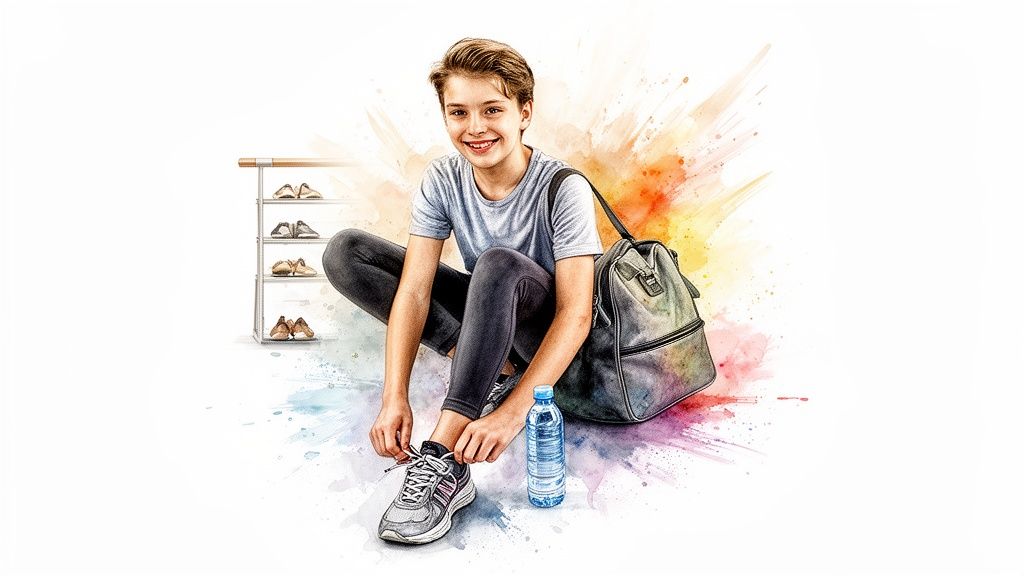
Walking into that first dance class can feel like a big deal, but a little prep work is all it takes to swap those nerves for genuine excitement. Knowing what to wear and what to expect helps your teen walk onto the floor feeling cool, confident, and ready to move.
The most important rule for the first lesson is simple: wear something comfortable that allows for easy movement. There’s absolutely no need for a special outfit right away.
- Clothing: Think athletic wear. T-shirts, leggings, joggers, or shorts are all great choices. The goal is to wear something that isn't too baggy or restrictive.
- Footwear: A clean pair of sneakers or any comfortable flat-soled shoes will work just fine for a trial class. We want you to get a feel for the steps without stressing about gear.
Down the road, proper dance shoes will make a huge difference. They have special suede soles designed for the perfect balance of grip and slip on a ballroom floor, making turns and footwork much smoother and safer. But for now? Comfort is king.
What to Expect in a Beginner Class
Every beginner class is designed with newcomers in mind. The instructor knows most students are just starting out and structures the lesson to make everyone feel comfortable, regardless of their experience. The first class usually follows a simple, welcoming format.
Here's a rough idea of what to expect:
- A Gentle Warm-Up: The class will kick off with some light stretching and basic movements. This gets the muscles ready to work and helps prevent injuries.
- Learning the Basics: Next, the instructor will break down the fundamental rhythm and a few core steps of a specific dance, like a simple Salsa or Foxtrot pattern.
- Partnering Up and Practice: Students will then practice the steps, usually rotating partners. This is a key part of social dance—it ensures everyone gets to dance and learn together.
Tackling Common First-Day Fears
It’s completely normal to have a few worries before trying something new. Believe it or not, most teens in our beginner classes share the exact same concerns, and a good studio is ready to put those fears to rest from the moment you walk in.
One of the biggest worries we hear is about feeling clumsy or having "two left feet." But here's the thing: coordination is a skill you learn, not something you're born with. Our instructors are experts at breaking every single movement down into simple, easy-to-follow pieces. Everyone learns at their own speed, and there is zero judgment.
The secret is that nobody is born a great dancer. Every single person in that room, including the instructor, started from the very beginning. The class is a safe space to be awkward, make mistakes, and have fun while learning.
Another common fear is not having a partner. Our teenage dance classes for beginners are specifically designed so that no partner is necessary. We rotate partners constantly throughout the class because it’s the fastest way to build strong lead-and-follow skills and meet new people. Our instructors make sure everyone is included and gets plenty of time on the floor.
Ready to see just how welcoming a first class can be? Take the first step and book your teen's 100% free complimentary lesson at our studio by visiting our contact page. It's the perfect no-pressure way to experience it for yourself.
Building Confidence by Tracking Dance Progress
Success in dance isn't about hitting every move perfectly in one night. True, lasting confidence comes from the small, consistent wins. For a teenager, tracking their progress is what turns abstract goals into real, tangible achievements they can feel proud of.
What "progress" means is totally personal. For one teen, it might be finally feeling brave enough to ask someone to dance at the school formal. For another, it's nailing the basic Cha-Cha timing or even deciding to join a studio showcase.
These goals give every class a purpose. They make the journey just as important as the destination, and celebrating each little milestone is what keeps the motivation going strong.
What Does Progress Look Like?
In teenage dance classes for beginners, progress shows up in ways that go far beyond just remembering steps. It’s often subtle, but the impact is huge.
You’ll start to see it in their posture—they’ll stand a little taller and move with more purpose, both on and off the dance floor. It shows up in their musicality when they start feeling the rhythm instead of counting "one, two, three, four" under their breath.
Most importantly, you'll see it in how they connect with a partner, leading or following with an ease that just wasn't there before.
Progress isn't about perfection; it’s about persistence. It's that "aha!" moment when a teen realizes they navigated the dance floor without looking at their feet, or when they lead a turn that stumped them last week. These are the victories that truly matter.
Choosing Your Teen's Learning Path
Every beginner learns differently. That's why we offer different class formats—so you can find the perfect fit for your teen’s personality and goals.
- Group Classes: This is where the social dance community comes alive. Group classes are fun, energetic, and a great way for teens to learn alongside their peers. They build friendships, practice with different partners, and develop social skills naturally.
- Private Lessons: If your teen wants to speed up their learning or has a specific goal in mind, private lessons are the way to go. This one-on-one instruction lets the teacher tailor everything to the student's needs, fixing bad habits before they start and accelerating their improvement.
We’re also seeing a shift in how teens get started. Today, as many as 70% of teen beginners first explore dance styles online, with 50% of them joining a physical studio within a few months. This lets them dip their toes in the water before committing. To help build their self-esteem in other areas, you can also look into other confidence-building activities for kids to complement their dance journey.
Of course, the best way to choose is to see how it feels. Stop wondering and start dancing! Book a free complimentary lesson at Danza Academy by visiting our contact page: https://danzaacademy.com/contact. It’s the perfect, zero-obligation opportunity to experience our supportive environment and start building confidence from the very first step.
Take the First Step with a Complimentary Lesson
You can read about the benefits of dance all day long, but let’s be honest—the real magic happens when you feel the music and actually start moving. That initial spark, that first "aha!" moment on the dance floor, is what turns curiosity into a real passion.
That’s why we invite your teen to discover the world of social dance with a complimentary first lesson here at Danza Academy. Think of it as the perfect, no-pressure way to dip a toe in the water. There’s absolutely no obligation to continue and zero prior experience is needed.
This isn't just a free class; it's a risk-free chance to meet our friendly instructors, see our supportive studio for yourself, and discover just how fun and rewarding dancing can be. It's an opportunity to build confidence from the very first step.
One of our expert instructors will personally guide your teen through some basic steps in a welcoming group setting. They’ll get to meet other beginners and see firsthand that nobody walks in as an expert. Everyone starts somewhere!
Ready for the fun to begin? Booking is simple. Visit our contact page to schedule your teen's free introductory lesson and claim their spot today: https://danzaacademy.com/contact. Let's get them started!
Frequently Asked Questions About Teen Dance Classes
We get it—starting something new comes with a lot of questions. Here are the honest, straightforward answers to the most common things we hear from parents and teens thinking about beginner dance classes.
Does My Teen Need a Partner for Dance Classes?
Not at all! In fact, most of our students come on their own. Our teenage dance classes for beginners are designed so everyone can participate individually.
During group lessons, we rotate partners all the time. This is actually one of the best ways to learn because it exposes students to different lead and follow styles. It also ensures everyone is included, gets plenty of floor time, and makes new friends along the way.
What If My Teen Is Clumsy or Has "Two Left Feet"?
This might be the number one concern we hear, and it’s precisely why beginner classes are so important. No one walks in a pro. Coordination, rhythm, and grace are all skills you develop with practice and the right guidance.
Believe it or not, feeling awkward is the first step toward getting good! Our instructors specialize in breaking down movements into simple, manageable steps that build confidence from the first lesson. Everyone starts somewhere.
What Should My Teen Wear to Their First Class?
For the first lesson, comfort is everything. Anything that’s easy to move in works perfectly, like athletic wear or comfortable casual clothes.
While proper dance shoes make a big difference down the line, they aren’t necessary for the trial class. A clean pair of sneakers or any comfortable flat-soled shoes will do just fine.
How Can We See If Your Studio Is the Right Fit?
The best way to know is to simply try it out. We offer a complimentary first lesson for this very reason.
It’s a totally free, no-pressure opportunity for your teen to meet our instructors, check out the studio, and get a feel for our community before making any commitments. You can book this free lesson in under 60 seconds on our contact page: https://danzaacademy.com/contact.
Ready to stop wondering and start dancing? Danza Academy of Social Dance invites your teen to see just how fun it can be. Book your free complimentary lesson by visiting our contact page today.