
Summer arrives, your schedule loosens a little, and the same question keeps popping up. What would make these next few months feel memorable instead of repetitive? For some families, that means finding an activity that helps a child move, make friends, and grow in confidence. For engaged couples, it might mean finally starting that first dance instead of putting it off again. For adults, it can be as simple as wanting one thing each week that feels social, energizing, and fun.
That's where summer dance classes can be such a good fit.
I've seen students walk in for all kinds of reasons. A parent wants a class that's more meaningful than just filling an afternoon. A beginner says, “I have no experience, but I've always wanted to try.” A couple wants to stop worrying about the wedding dance. They all start in different places, but they're usually looking for the same thing. They want a class that matches a real goal.
Embrace the Season of New Beginnings
Summer has a way of making people ready for change. The weather is warmer, evenings stretch longer, and routines feel a little less fixed. That often gives people the push they need to try something they've been postponing.
A child who felt shy during the school year may be more open to movement, music, and meeting new classmates in a fresh setting. An adult who spent months saying “maybe later” may finally decide this is the season to learn salsa, waltz, or swing. A couple juggling work and wedding planning may realize they need a structured hour together that feels joyful.
Dance works so well in summer because it gives you both activity and connection. You're not just checking a box on a calendar. You're learning to use your body in a new way, listening more closely to music, and sharing a room with other people who are also trying something new.
Different goals, same starting point
Some students come in wanting a clear result. They want better balance, stronger technique, or a polished first dance. Others come in wanting a feeling. They want confidence, a social outlet, or a way to reconnect with themselves after a long stretch of work and responsibilities.
Both reasons are valid.
What matters is finding the kind of summer dance class that matches what you want from the experience. A playful kids' camp feels very different from a goal-focused wedding lesson. A social beginner class has a different energy than a technically demanding intensive.
Summer is often the easiest time to start because people give themselves permission to be beginners.
When you choose with your goal in mind, the process gets much simpler. You stop asking, “What class sounds impressive?” and start asking, “What class will help me or my child leave stronger, happier, and more confident by the end of summer?”
The Unexpected Benefits of Summer Dance
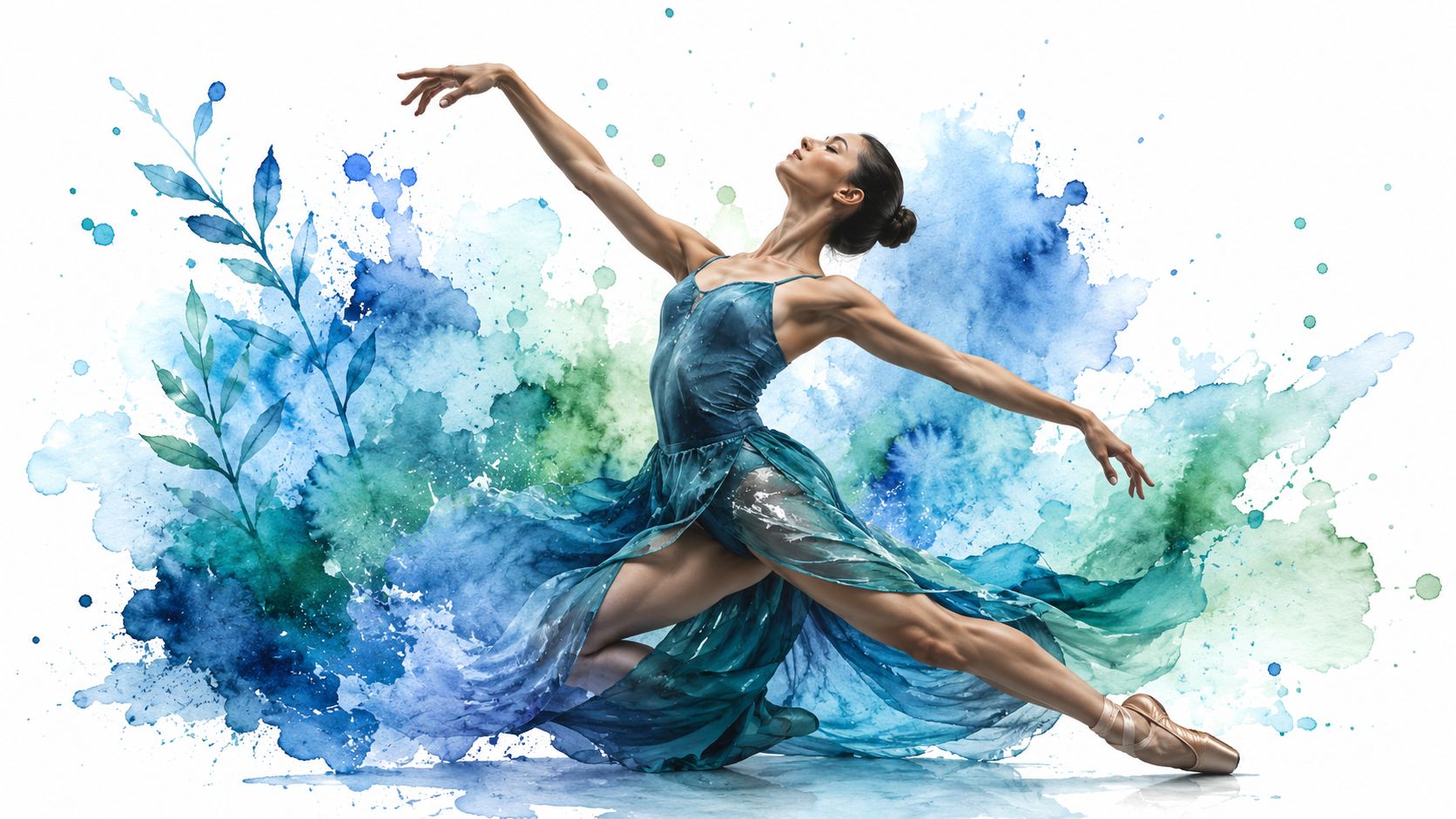
Dance is often first considered as exercise. That makes sense. You're moving, sweating, balancing, turning, and building coordination. But the most lasting benefits usually show up somewhere else first. They show up in the way students carry themselves.
A child learns a short routine and suddenly wants to demonstrate it at home. An adult who arrived apologizing for having “two left feet” starts stepping into class with more ease. A couple that felt awkward during the first lesson begins to move together without overthinking every count.
Confidence grows through repetition
Confidence in dance doesn't usually arrive all at once. It builds from small wins. You remember the basic step. You hear the beat more clearly than you did last week. You stop freezing when it's your turn to try.
That process matters outside the studio too. Learning movement patterns teaches patience, focus, and resilience. You make mistakes in public, recover, and keep going. That's one reason dance can feel so rewarding for both children and adults.
Many families also want more than entertainment from a summer program. Youth-dance organizations such as Dance to Success describe their residencies as designed to enhance social and emotional development, teamwork, collaboration, confidence, and self-esteem, which is a helpful reminder that the best classes support growth beyond technique, as described by Dance to Success and Dancing Classrooms North Texas.
Social skills get practiced, not just discussed
Dance gives students a real setting to practice skills that are hard to teach through words alone. You listen. You take turns. You adjust to other people. You communicate with posture, timing, and attention.
For kids, that can look like following directions while still expressing personality. For adults, it often means becoming more comfortable in shared space, whether that's rotating partners in a social class or learning not to panic when all eyes are not on you.
A quick visual example can help if you're trying to picture how structured movement training feels in action.
It can change the tone of your whole week
One good class can affect more than that single hour. Students often leave feeling mentally lighter because dance requires attention. When you're counting, listening, and moving, it's harder to stay stuck in the stress of the day.
Practical rule: If a summer class helps a student feel more capable at the end than at the beginning, it's doing much more than teaching steps.
That's why I always encourage people to look past the brochure language and ask what the class is really building. Good summer dance classes don't just fill time. They build confidence you can see.
Finding Your Rhythm A Guide to Summer Dance Programs
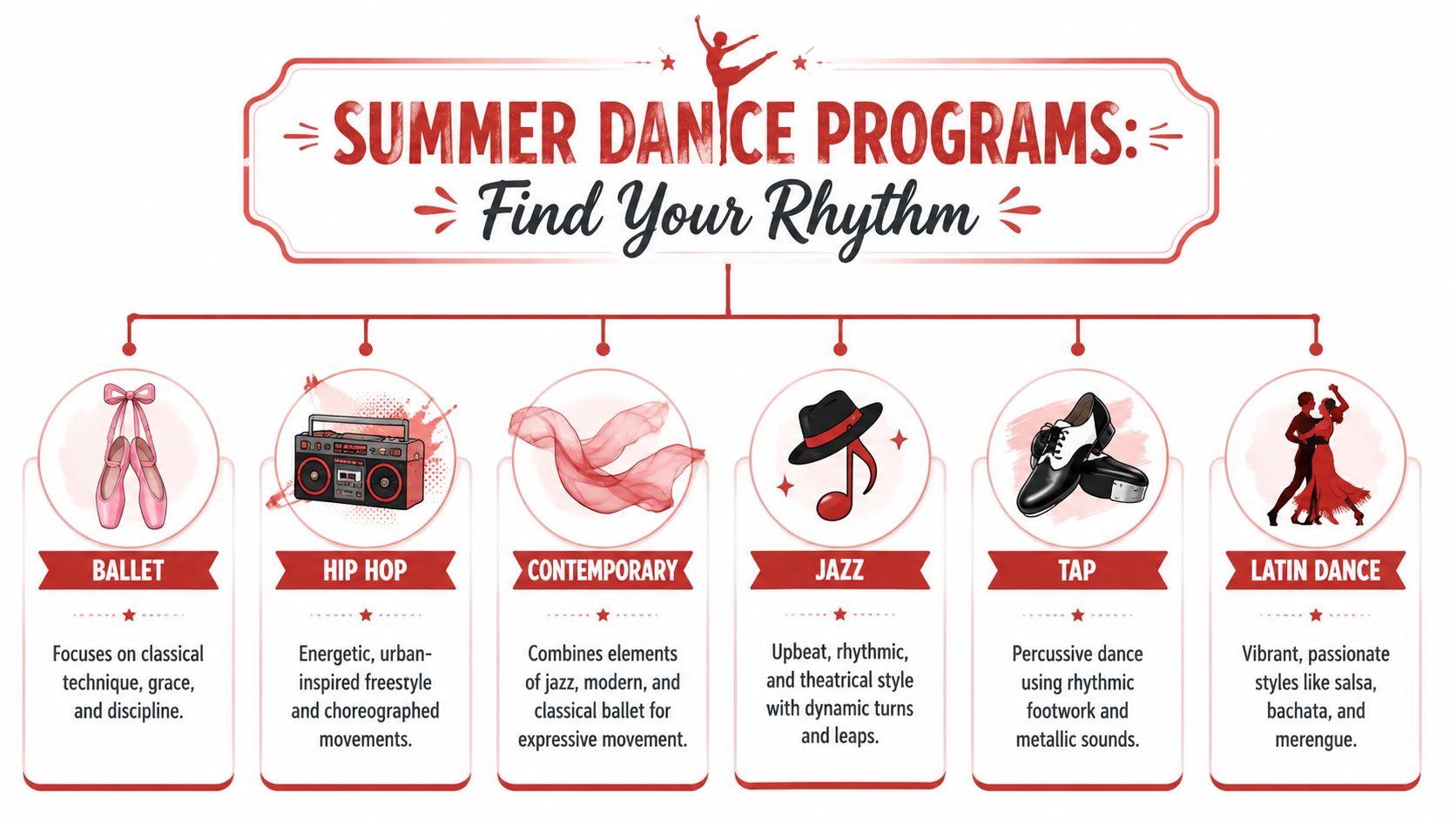
The term summer dance classes covers a lot of ground. That's where people get stuck. They compare programs that are built for completely different goals and end up more confused than when they started.
A better approach is to sort options by outcome. Are you looking for fun and structure for a child? A social hobby for yourself? A polished wedding dance? More technical training? Once you answer that, the right format usually becomes obvious.
Kids' classes and camps
For children, summer dance programs often work best when they balance structure with energy. Young dancers need clear direction, but they also need room to explore movement, rhythm, and expression.
A strong kids' program usually emphasizes things like:
- Coordination: Learning patterns, levels, and timing in a way that feels playful
- Confidence: Giving children a chance to participate, perform small combinations, and feel successful
- Routine: Creating a predictable class flow so students know what happens next
- Joy in movement: Helping kids associate dance with curiosity rather than pressure
Parents sometimes ask whether a class should be “serious” or “fun.” For younger students, that's often the wrong split. The best classes do both. They give children clear goals while keeping the experience welcoming.
Adult group classes
Adult beginners often do well in group settings because they realize very quickly that they are not the only new person in the room. That alone lowers the pressure.
Some group classes are built around social dance, which usually means partner styles and a relaxed atmosphere. Salsa, waltz, swing, and tango are common examples. In a beginner social class, the goal is often practical. Learn the basic rhythm, understand how to move with music, and leave able to use what you practiced.
Other adult classes are less partner-focused and more centered on individual movement, musicality, or choreography. If your goal is to meet people and enjoy a shared experience, social group classes are often a strong choice. If your goal is personal expression or movement exploration, a solo format may suit you better.
Wedding dance preparation
Wedding dance lessons are different from general classes because the goal is specific. You're not just learning for the sake of learning. You're preparing for a moment that matters.
That changes how lessons are structured. Instead of broad exposure to many patterns, instruction usually focuses on music choice, comfort level, timing, and how to create a dance that fits your personalities. Some couples want something elegant and simple. Others want a more choreographed routine with distinct highlights.
The best wedding lessons don't try to turn every couple into performers. They help couples look natural, connected, and prepared.
Intensives and pre-professional training
For dancers with more experience, summer can also be a time for concentrated training. Some advanced programs are intentionally structured as intensives rather than casual classes. One example is a workshop format that separates a Performer's Track from a Choreographer's Track and includes Contemporary, Modern, African, Ballet, Jazz, Repertoire, Composition, Improvisation, grant writing, and show production, as outlined by Threads Dance Project's summer intensive.
That kind of design tells you something important. Serious summer programs don't only add hours. They often combine technical work with creative and professional development.
A similar pattern shows up in admissions standards. Some programs require prior technical training, specific technique classes, daily improvisation or composition, or set age and readiness expectations. One university-linked program also offers college credit for advanced students who complete a full intensive, which shows how summer study can be used to assess readiness and accelerate development, as described by DeSales University's summer dance intensive.
Private lessons
Private lessons are useful when the goal is personal and specific. They're especially helpful for adults who feel nervous in groups, couples with a wedding deadline, or dancers who want targeted coaching.
Here's the simplest way to understand it:
| Program type | Best for | Typical experience |
|---|---|---|
| Kids' classes | Confidence, coordination, summer routine | Guided, energetic, age-appropriate |
| Adult group classes | Social fun, beginner learning, community | Shared instruction, low-pressure practice |
| Wedding lessons | One clear event and outcome | Customized, goal-focused |
| Intensives | Technical growth and artistic development | Fast-paced, demanding, immersive |
| Private lessons | Personal attention and faster correction | Tailored instruction |
How to Choose the Perfect Summer Dance Studio
A parent wants a class that helps their child come out of their shell. An engaged couple wants to feel steady and connected at the wedding instead of stiff and self-conscious. An adult beginner wants exercise and a friendly place to meet people, but worries about falling behind. Each goal points to a different kind of studio experience.
That is why the best choice is not always the studio with the longest style list or the flashiest photos. The better question is simpler. Can this studio help you reach your specific summer goal, and can they explain how?
Start with the result you want
Results-driven instruction does not mean harsh teaching or advanced-only classes. It means the studio has a clear plan for what students are practicing, how skills build from week to week, and what progress looks like in everyday class life.
For a child, progress might look like following directions with more confidence, remembering combinations, and participating without hanging back. For a couple, it might mean learning an entrance, a few easy turns, and how to recover smoothly if nerves show up. For an adult trying something new, it might mean leaving class a little less anxious each week and a little more comfortable moving with other people.
A good studio can describe that path in plain language.
Look for teaching you can picture
Helpful instruction works like a well-marked trail. You should be able to see where class begins, what students are working on, and where that work is leading.
Ask how teachers handle beginners. Do they break steps into pieces. Do they offer corrections kindly. Do they give options for different comfort levels or learning speeds. In kids' classes, ask how they balance structure with fun. In adult classes, ask whether students rotate partners, repeat fundamentals, or have time to ask questions. Those details tell you far more than a polished class title.
Reviews can help if you read them with this in mind. This collection of Afro classes on Testimonial is useful because students talk about class energy, clarity, and whether they felt included. Even if you are choosing another style, those are the same signs to look for.
Parents should ask what class time feels like
Summer classes are short seasons. Every week counts.
Parents often ask about recital plans or dress code first, but class structure matters just as much. Researchers reported in the Pediatrics study on physical activity in youth dance classes that young dancers were not moving vigorously for the full class period. That does not make dance less worthwhile. It does mean you should ask how the teacher keeps children engaged instead of waiting through long stretches.
Try questions like these:
- How much of class is active movement?
- How do you keep younger students involved when you are giving corrections?
- If a child is shy or distracted, what does the teacher do to bring them back in?
Those answers help you judge whether the studio is organized around real learning, not just filling the hour.
Practical access matters too
A wonderful class is only a good fit if you can attend it consistently. Summer schedules get messy fast. Camps change. Vacation weeks pop up. Adults juggle work and childcare. Ask about make-up options, session length, and whether there is a trial class or observation period before you commit.
This also helps nervous beginners. One easy first visit often teaches more than ten minutes on a website.
A short checklist for comparing studios
Use these questions like a matching tool, not a scorecard:
- Goal fit: Does the studio offer the kind of outcome you want, such as confidence for a child, wedding preparation, fitness, or social connection?
- Beginner support: Can the instructor explain how they teach brand-new students?
- Class structure: Is there a clear plan for warm-up, skill practice, and repetition?
- Atmosphere: Does the room feel welcoming and respectful?
- Consistency: Can your family or schedule realistically keep up with the session?
- Progress: Can the studio explain what a student is likely to be able to do after several summer classes?
If you want another helpful reference point, this guide on how to choose a dance studio walks through many of the same decision points in a clear, practical way.
What to Expect in Your First Dance Class
The hardest part of a first dance class is usually the hour before it starts. That's when people imagine everything that could go wrong. They worry about wearing the wrong thing, not understanding the teacher, or being the least experienced person in the room.
Most first classes are much calmer than that.
You arrive, check in, and take a moment to look around. Some people stretch. Some chat. Some stand to themselves and try not to look nervous. The instructor usually begins with a welcome and a short explanation of what the class will cover.
What to wear and what to bring
For your first class, aim for clothing that lets you move comfortably. You don't need to dress like an expert. You need to be able to step, turn, and lift your arms without adjusting your outfit every few seconds.
In many beginner classes, special shoes can wait. Clean, comfortable footwear that allows movement is often enough for a first visit, though certain styles may have specific recommendations. If you're unsure, ask the studio before class.
A simple first-day checklist helps:
- Comfortable clothes: Something you can move in without distraction
- A water bottle: Especially in summer
- An open mind: You won't need perfect rhythm on day one
- A willingness to repeat: Most learning happens through trying the same thing several times
How the class usually unfolds
The teacher often starts with a warm-up or a very simple foundational exercise. That could be basic posture, weight changes, timing, or a gentle introduction to the rhythm of the style.
Then comes the first pattern. It's usually shorter than beginners expect. One basic step, then another. The teacher demonstrates, explains, and has everyone try it together. If it's a partner class, you may rotate or practice with one partner depending on the format.
Most beginners don't struggle because they lack talent. They struggle because everything is new at once. That's normal, and it passes quickly.
By the middle of class, students are usually laughing more. Not because they've mastered everything, but because they've stopped expecting instant perfection. That shift is important.
What “doing well” really looks like
A successful first class doesn't mean getting every step right. It means understanding a little more than when you walked in. Maybe you hear the count more clearly. Maybe you stop looking at your feet. Maybe you leave thinking, “I can do this.”
If you'd like a preview of that first-step experience, this introduction to a beginner dance lesson gives a helpful sense of how new students ease into the process.
Start Your Dance Journey in Center City and Exton
If you're looking for summer dance classes in the Philadelphia area, location matters. Convenience makes it much easier to stay consistent, especially during a season when schedules can still shift between vacations, camps, weddings, and weekend plans.
For local students, two practical options are Center City Philadelphia and Exton, PA. That gives adults, couples, and families a better chance of finding lessons that fit real life instead of adding another long drive to the week.
What many students want from a local studio
Most beginners aren't searching for the most intimidating room or the most complicated choreography. They want teachers who can explain clearly, classes that feel welcoming from day one, and instruction that leads somewhere. They also want variety.
For social dance students, styles such as Salsa, Waltz, Tango, and Swing often appeal because they each offer a different feeling. Salsa brings energy and musical conversation. Waltz feels smooth and classic. Tango adds control and drama. Swing gives students a lively, social option that's great for parties and events.
That variety is useful in summer because goals vary so much. One student wants a new hobby. Another is preparing for a wedding. Another wants to become more comfortable on a social dance floor.
Why a complimentary first lesson helps
Starting is easier when there's a chance to experience the environment before making a larger commitment. A complimentary first lesson lets students ask questions, meet instructors, and get a feel for teaching style in a way a website alone never can.
That matters for adults who feel rusty, couples who don't know where to begin, and parents trying to gauge whether a child will feel comfortable. It also makes it easier to choose between group classes, private lessons, and goal-specific instruction.

If you're exploring local options, it also helps to look at the range of styles available. This overview of salsa classes near me is a good example of how students can start with one style and build confidence from there.
A good first lesson should leave you feeling informed, welcomed, and excited to come back.
Your Summer Dance Questions Answered
A parent may be wondering whether their child will feel shy on day one. An engaged couple may be asking how many lessons they need before the wedding. An adult beginner may be thinking, “What if I walk in and everyone else already knows what they're doing?” Those are normal questions, and good summer programs answer them clearly before you ever step onto the floor.
Do I need to bring a partner to social dance classes
Usually, no. Many social dance classes are designed for solo students, because learning to dance socially often starts with learning how to connect with different partners, follow directions, and stay relaxed in the music.
If you do come with a spouse, friend, or fiancé, that works too. The right fit depends on your goal. Someone looking for a social hobby may enjoy rotating partners in a group class. A couple preparing for a wedding may do better with private lessons that focus on one routine and one shared result.
I have no rhythm. Are these classes really for me
Yes.
Rhythm is a trained skill, not a personality trait. Students build it the same way children learn to read. First you hear the pattern, then you clap it, then you match your steps to it, and after enough repetition your body starts to recognize the beat without so much effort.
New students often confuse “I feel awkward” with “I can't do this.” Those are not the same thing. A teacher who works in a results-driven way will break music down into pieces you can use in class, instead of expecting you to somehow absorb it by watching others.
How much commitment does a summer program require
That depends on what you want from the season.
If your goal is simple exposure for a child, one class a week may be enough to build comfort and interest. If your goal is a first dance for a wedding, a short timeline usually calls for more focused instruction. If your goal is an adult social hobby, consistency matters more than intensity. Regular practice, even in small amounts, helps you remember patterns and feel less nervous each time you return.
Ask a studio a practical question. “If I attend at this pace, what progress should I expect?” A strong answer should sound specific, not vague.
What if cost is my biggest concern
That concern is real for families, couples, and adult beginners. Summer classes can range from low-commitment group options to more personalized private instruction, so it helps to compare pricing with your actual goal instead of looking at numbers in isolation.
A weekly group class may be the better match if you want a fun introduction. Private lessons may make more sense if you need focused progress for a wedding or want extra support as a nervous beginner. Some studios also offer a complimentary first lesson or trial class, which lowers the pressure and helps you decide based on the teaching, the atmosphere, and the plan for progress.
The best next step is usually the simplest one. Ask your questions in person, take the first class, and notice how the instruction feels in your body. You can learn more in one well-taught lesson than in another hour of scrolling.