If you’ve noticed line dancing popping up everywhere from TikTok videos to your local bar, you’re not just seeing things. The search for line dancing lessons near me has absolutely skyrocketed as people rediscover just how fun and social this dance style is. It’s not just a country-western thing anymore; it's a full-blown movement for all ages.
Why Everyone Is Looking for Line Dancing Classes
The new buzz around line dancing isn't a fluke. It's the perfect mix of social trends, health benefits, and our natural desire to connect with other people. What used to be a niche hobby has exploded into a mainstream social event, pulling in crowds who want a fun, structured way to get moving and meet new people.
And this isn't just a feeling—the numbers back it up. A recent poll found that a massive 89% of the American population has heard of line dancing. More importantly, nearly 38% of them have a positive view of it, which signals a huge, interested audience just waiting to hit the dance floor. You can see more details about this growing trend over at YouGov.com.
No Partner Required, Just Fun
One of the best things about line dancing is how easy it is to get started. You don’t need to bring a partner, which is a huge relief for a lot of people who want to learn to dance.
- Individual Focus: You learn the steps on your own, but in a group setting. This lets you move at your own pace without any pressure.
- Social Vibe: Even though you’re dancing solo, you’re surrounded by a whole group of people doing the same thing. It creates an instant sense of community.
- Perfect for Anyone: It’s great for individuals, groups of friends, or anyone just looking to get out and socialize in a low-stress environment.
This welcoming, no-partner-needed format is a big reason so many people are drawn to studios like Danza Academy in Philadelphia, where the whole point is learning as an individual within a fun, supportive group.
The real beauty of line dancing is its simple, powerful promise: show up just as you are, and there's a spot for you on the floor. It’s a shared activity that celebrates individual participation.
More Than Just a Dance—It's a Great Workout
Beyond being a ton of fun, line dancing is fantastic exercise. It's a low-impact cardio workout that helps with coordination, balance, and memory as you nail down the routines. Each class is an easy way to get your steps in without it feeling like a trip to the gym.
Many dancers also find that the concentration it takes to learn choreography is a great mental workout, sharpening their focus and melting away stress. You can learn more about all the benefits in our guide on how dance classes improve fitness, flexibility, and focus.
Ready to experience this for yourself? Your first step is the easiest. Claim your free complimentary lesson at Danza Academy and discover the fun firsthand. Booking takes less than a minute on our contact page.
How to Find the Right Line Dancing Class for You
So, you’ve searched for "line dancing lessons near me" and now you’re staring at a list of options—everything from a class at the local VFW to a polished dance studio. It can feel like a dance in itself just figuring out where to start. The secret is to look past the first few results and find a class that truly matches what you're looking for.
Don't just stop at a basic Google search. Get more specific. Try searching on Google Maps for things like "beginner line dance class Philadelphia" or "social dance studio Exton." You’ll also want to poke around local community Facebook groups and event pages. A lot of independent instructors and smaller venues post their schedules there first.
Choosing Between Casual and Structured Classes
Not all line dancing classes are built the same. You'll generally run into two types, and each offers a completely different vibe.
Casual Drop-In Classes: Think bars, breweries, and community centers. These are fantastic for a fun night out. The atmosphere is super relaxed, the goal is usually to learn one or two popular dances, and it's the perfect way to see if you even like line dancing without a big commitment.
Structured Studio Classes: These are what you’ll find at dedicated dance academies. They follow a real curriculum, meaning you'll build your skills progressively from one week to the next. You learn proper technique and a much wider variety of dances. This is the path for you if your goal is to become a confident dancer who can hold their own on any social dance floor.
At Danza Academy, we take a structured but fun and supportive approach. Our curriculum is designed to build your skills from the ground up, so you’re not just memorizing steps—you’re understanding the why behind the movement. That foundation makes it so much easier to pick up new dances wherever you go.
The right class really boils down to your "why." Are you just looking for a one-off fun activity with friends, or do you want to build a real skill and connect with a community of dancers? Answering that question will make your choice a whole lot clearer.
How to Vet Your Future Instructor
Honestly, the instructor makes or breaks the class. A great teacher can make even the most complicated-looking steps feel totally doable, while a poor one can leave you feeling frustrated and clumsy. Before you sign up, do a little digging.
Look for instructors with clear teaching experience and plenty of positive student reviews. Do they have a website or a social media page where you can see clips of them in action? Pay attention to their teaching style. Are they patient? Energetic? Do they make people feel comfortable making mistakes? Reading what former students have to say is often the best way to get a feel for an instructor’s personality. If you want to dive deeper, our guide on how to find dance classes near me that fit your style is a great resource.
Starting your first class is the first step toward better health, new friends, and a whole lot of joy.
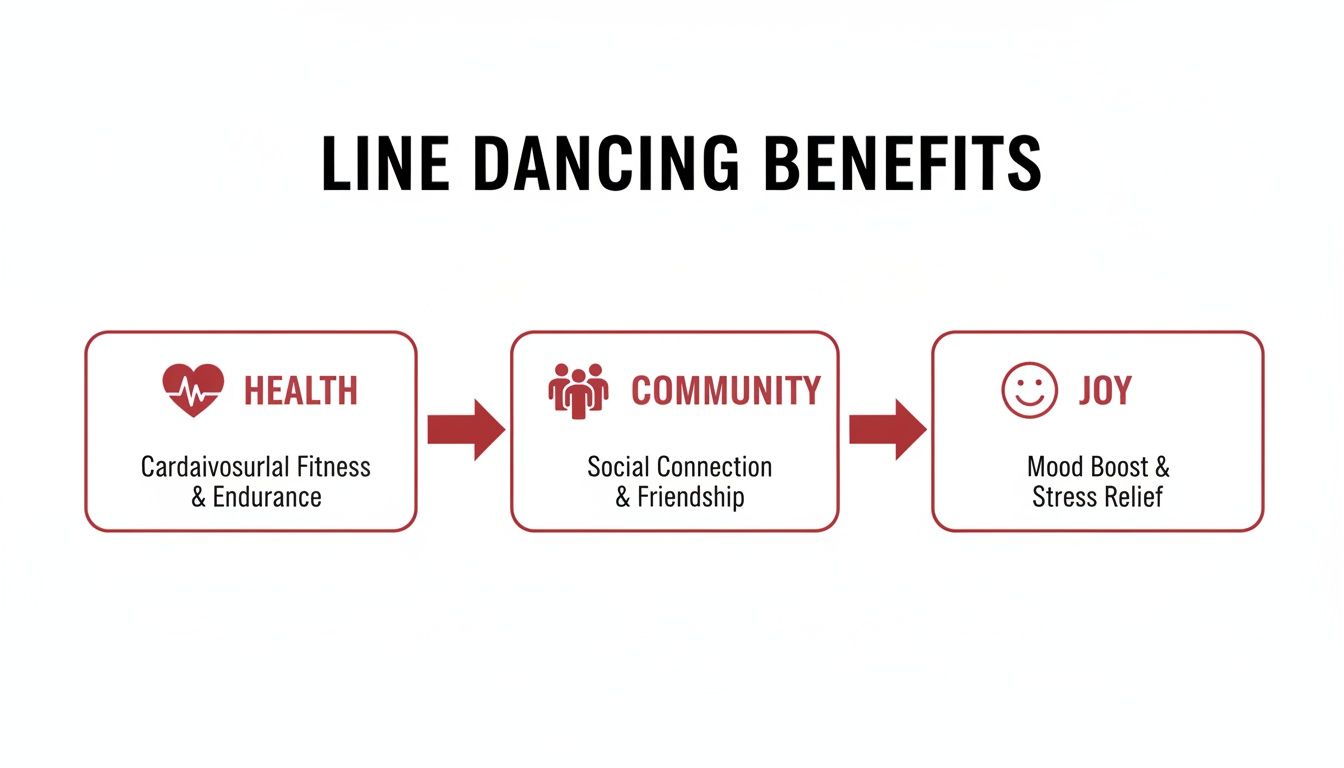
As you can see, it's a simple flow: the physical act of dancing leads to social connections, which in turn boosts your overall happiness and well-being. It all starts with that first step onto the dance floor.
The best way to know if a class is right for you is to try it. We're so confident you'll love our friendly instructors and proven curriculum that we want you to experience it risk-free. Book your free complimentary lesson now by visiting our contact page. Your spot is waiting!
What to Look for in a Great Dance Studio
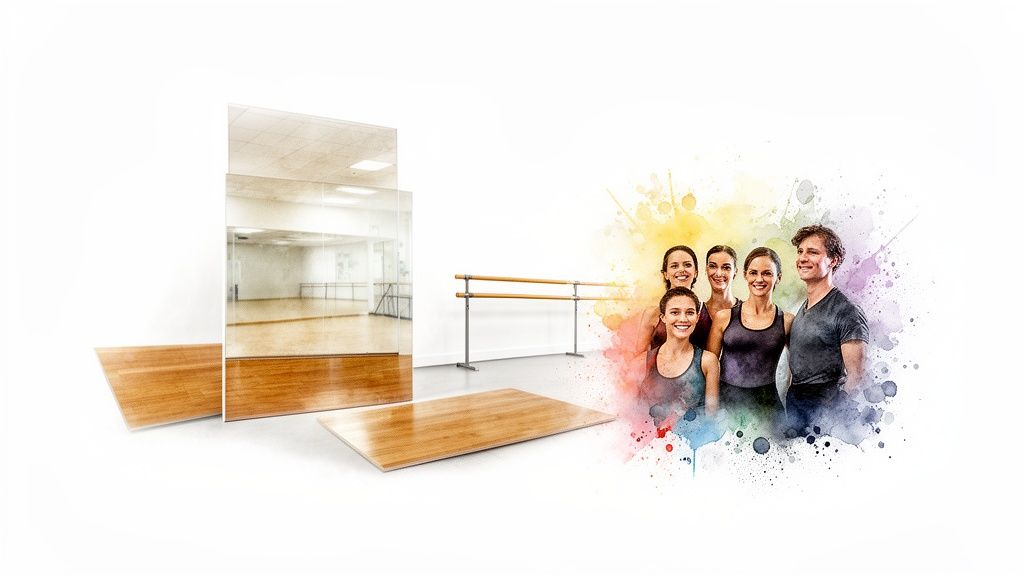
The place you learn to dance is where you’ll build your confidence, so picking the right one is a huge deal. It’s about so much more than what pops up first in your “line dancing lessons near me” search. You’re looking for a spot where you feel supported, comfortable, and actually excited to show up and learn.
A great studio becomes your partner in this journey, guiding you from those first hesitant steps to feeling like you own the social dance floor.
Before you sign on the dotted line, take a good look at the physical space and the general vibe. Is the dance floor well-kept and big enough for everyone to move without bumping elbows? A quality floor is no small thing—it helps prevent injuries and makes all those slides and turns feel so much smoother.
Just as important is the atmosphere. Does it feel welcoming and full of energy, or is it quiet and a little intimidating? You want a place where making mistakes is just seen as part of the process, not something to be embarrassed about.
Finding Your Perfect Dance Environment
Where you learn to dance directly impacts how well you learn. A bar or social club is all about a fun, party-like atmosphere. On the other hand, a dedicated dance academy gives you a structured path designed to deliver real, noticeable progress.
To help you sort it out, let’s compare the most common places you'll find line dancing. Really think about what you want out of this: are you looking for a casual night out with friends, or are you hoping to build a skill that lasts a lifetime?
Choosing Your Ideal Line Dancing Venue
This table breaks down common places offering line dancing to help you find the best fit for your learning style and goals.
| Venue Type | Best For | Learning Environment | Typical Cost |
|---|---|---|---|
| Professional Studio | Structured learning and skill building | Curriculum-based, expert instructors, varied styles | $$ – $$$ |
| Community Center | Casual, budget-friendly classes | Relaxed, mixed skill levels, social focus | $ – $$ |
| Bar or Social Club | A fun night out with friends | High-energy, loud music, limited instruction | $ (often free with cover) |
Ultimately, a professional studio is built for learning, while other venues are more about the social experience. Neither is right or wrong—it just depends on your goals.
Key Questions to Ask Any Studio
To really get a feel for a place, come prepared with a few questions. The answers will tell you a lot about their teaching philosophy and whether it's the right match for you.
- What is the average class size? Smaller classes are a huge plus for beginners. It means you'll get more one-on-one attention from the instructor when you need it most.
- Do you focus only on country line dance? This is a great question to ask. Many modern studios now teach line dances to all kinds of music—pop, rock, even Latin. It's a fun way to build a more versatile skill set.
- What is your teaching methodology for beginners? A good studio should have a clear, time-tested approach for getting new dancers up to speed and feeling successful right from day one.
A professional setting truly makes a world of difference in how quickly and confidently you learn. We've seen it time and time again. You can read more about why a professional dance studio matters for your training in our other guide.
Your goal is to find a place that feels like a community. The best studios, like Danza Academy, aren't just selling lessons; they're creating a space where people can connect, grow, and share a love for dance.
Ready to see what a top-tier studio experience feels like? Don’t wait another day to start your dance journey. Book your free complimentary lesson on our contact page and discover the supportive, expert instruction that has defined Danza Academy for over 40 years.
Your First Line Dancing Lesson: What to Actually Expect
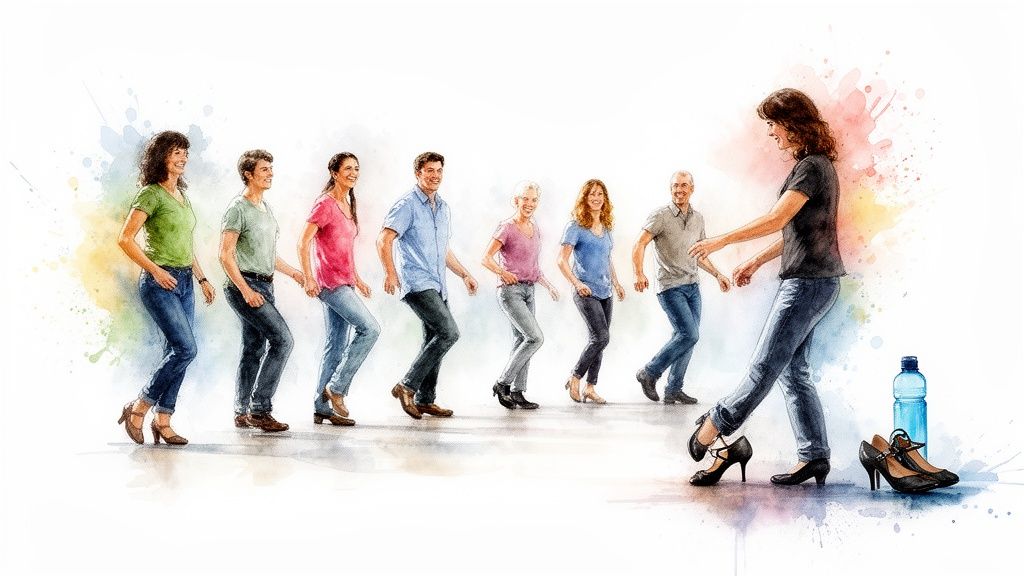
Walking into your first class can feel a bit like the first day of school. The good news? Knowing what’s coming is the best way to trade those first-day jitters for genuine excitement. Beginner line dancing lessons are designed for one person: you. Someone with zero experience.
So, forget any pressure to be perfect. The whole point is to have fun and learn something new. The atmosphere is almost always welcoming, led by instructors who expect mistakes and filled with fellow dancers who were once beginners, too.
What to Wear for Maximum Comfort and Movement
Your outfit for your first lesson is all about comfort and function. You definitely don't need to show up in full country-western gear (unless you want to, of course!). Just pick clothing that lets you move freely.
For most, this means comfortable jeans, leggings, or any pants that aren’t restrictive. A breathable shirt is also a great idea—line dancing can be a surprising workout, and you'll probably work up a little sweat.
The most critical part of your outfit, though, is your footwear. Here’s a quick guide:
- What to Wear: Look for shoes with a smooth, slightly slippery sole. This is the secret for the glides, turns, and pivots you'll be learning. Cowboy boots are great for this reason, but so are loafers or any dress shoe with a leather bottom.
- What to Avoid: Stay away from running shoes or sneakers with heavy rubber tread. Their amazing grip is perfect for the gym, but it will make turning on the dance floor feel clunky and can be hard on your knees.
Don’t overthink it for your first class. The goal is to wear something that makes you feel comfortable and confident. As long as your shoes let you slide instead of stick, you'll be in great shape.
Decoding the Dance Floor Lingo
Every hobby has its own language, and line dancing is no different. A good instructor will always explain everything clearly, but you might hear a few common terms tossed around. Knowing them ahead of time will help you feel more in the loop from the very first count.
Here are a few basic terms you'll almost certainly run into:
- Grapevine: This is a super common four-count move. You’ll step to the side, step behind with your other foot, step to the side again, and then finish with a touch or scuff.
- Pivot Turn: A simple half-turn. You just step forward on one foot and then turn 180 degrees on the balls of your feet to face the opposite direction.
- Shuffle Step: A quick "step-together-step" pattern that moves you across the floor. It’s used all the time to travel forward, backward, or sideways.
These steps are the building blocks for countless dances. Your instructor will break each one down slowly, without music at first, so you’ll have plenty of time to get the hang of it.
Ready to Take Your First Step?
The typical beginner lesson follows a really simple, easy-to-follow structure. The instructor will announce the dance, break down the first section of steps, and have the class practice it on a loop. Once that part feels good, they’ll add the next section. This piece-by-piece method makes sure no one gets left behind.
The best way to see how effective our method is is to try it for yourself. We're so confident you'll love our welcoming style that your first lesson is complimentary. What have you got to lose?
Book your free trial lesson in seconds on our contact page and let our team at Danza Academy show you just how fun and easy your first class can be.
From Beginner Steps to Confident Social Dancer
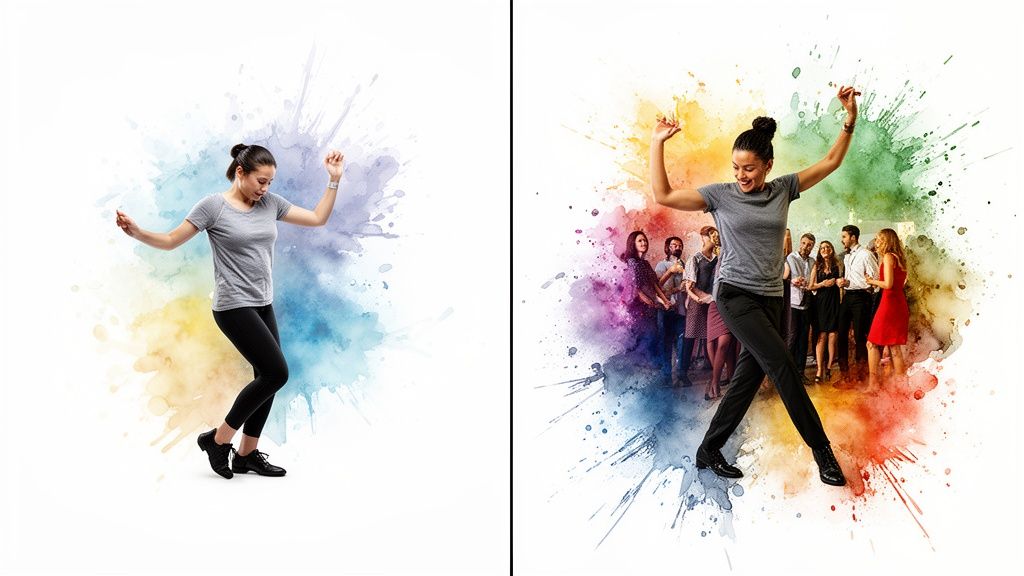
After you've got a few basic dances down, that’s when the real journey begins. Moving from the classroom to the social dance floor is where you start to feel the magic happen, turning learned steps into pure fun.
Line dancing has a surprisingly broad reach. While many people think of Billy Ray Cyrus's 1992 smash 'Achy Breaky Heart,' the dance was already evolving. Just two years later, in 1994, choreographer Max Perry created the global hit 'Swamp Thang,' blending line dance moves with techno music. It proved line dancing was for everyone, not just country fans.
You can explore more about the dance's diverse history to see just how adaptable it truly is.
From the Classroom to the Social Floor
Taking line dancing lessons isn't just about memorizing steps—it's about getting out there and actually using them. As your list of known dances grows, you’ll feel the pull to connect with other dancers and test your skills in a real-world setting. This is how you find your dance tribe and truly start to own the floor.
There’s no feeling quite like stepping onto a packed dance floor, hearing a song you know, and joining in without a second thought. That moment of belonging is what gets you hooked.
Line Dancing as a Gateway to Other Dances
Here’s something a lot of new dancers don’t realize: line dancing gives you a massive advantage in other social dances. The core skills you build—like timing, balance, musicality, and coordination—are completely transferable. You aren't just learning routines; you're learning the language of movement.
At Danza Academy, we see it all the time. Students start with line dancing and soon find themselves curious about other styles. The foundation you build makes the transition surprisingly smooth.
- Country Two-Step: Your grasp of rhythm and footwork makes picking up this classic partner dance a breeze.
- Swing: The energetic footwork patterns in line dancing are directly applicable to East Coast Swing.
- Salsa and Hustle: Once you know how to count music and execute patterns, you’re already halfway there.
This foundation doesn't just teach you a few dances; it shapes you into a versatile and confident social dancer for life. Ready to build skills that open up a new world of fun? Book your free complimentary lesson on our contact page and start your journey today.
Your First-Class Line Dancing Questions, Answered
It's totally normal to have a few questions swirling around before you commit to your first class. We get it. After teaching for decades, we've heard them all, especially from people searching for line dancing lessons near me.
So, let's clear up those last-minute hesitations. Here are the honest answers to the questions we hear most often from new dancers just like you.
Do I Really Need a Partner for Line Dancing?
Not at all—and that’s one of the best things about it! Line dancing is designed to be a solo dance performed in a group. Everyone learns the same steps and dances on their own, side-by-side.
This makes it an amazing social activity whether you're coming by yourself, grabbing a few friends, or looking to meet new people in a fun, no-pressure environment. You never have to sit one out waiting for a partner.
What Are the Best Shoes for a Beginner?
For your first few classes, don't overthink it. Just wear something comfortable with a smooth sole that lets you slide and turn without getting stuck on the floor.
- Good choices: Shoes with a leather sole, loafers, dance sneakers, or even your favorite pair of cowboy boots will work great.
- What to avoid: Definitely skip the running shoes or anything with a heavy rubber grip. That tread is great for the street, but it can make turning a real challenge and even strain your knees.
You don't need to run out and buy special dance shoes right away. Comfort and a bit of slide are all you need to get started.
The most common myth we have to bust is the "I have two left feet" excuse. We promise, it’s not a real thing! Dancing is a skill you learn, not a talent you’re born with. Everyone starts at square one.
How Fast Can I Learn to Line Dance?
You’ll be shocked at how quickly it clicks! The basic steps are very easy to pick up, and because the dances are built on repeating patterns, most beginners can learn an entire routine in their very first lesson.
Real confidence, though, is built with practice. If you come to class regularly, you can expect to feel completely comfortable hitting any social dance floor in just a couple of months. It all comes down to a great instructor who builds your skills step-by-step.
I Think I Have Two Left Feet. Can I Still Learn?
Yes, 100% yes! This is hands-down the biggest fear we hear from new students, and it's a complete myth. Nobody is born a great dancer, and nobody is cursed with two left feet.
Line dancing is just a series of simple, repetitive steps. A good teacher breaks it all down, piece by piece, and we practice each part slowly until it feels natural. With over 40 years of experience, our team at Danza Academy has perfected a method for making absolute beginners feel successful from day one. It's all about patient instruction and creating a space where it's okay to make mistakes—that’s how you learn!
Ready to prove to yourself that you've got the moves? Stop wondering and start dancing! At Danza Academy of Social Dance, we’re so confident you’ll have a great time and learn something new that your first lesson is on us. Book your free complimentary lesson by visiting our contact page and let's get you on the dance floor