
Thinking about trying line dancing classes for beginners but picturing a room full of cowboy hats and nothing but country twang? Let's bust that myth right now. Modern line dancing is so much more—it’s fun, incredibly social, and a fantastic way to learn to dance without ever needing a partner.
Your First Step into Modern Line Dancing
Forget everything you think you know. Today’s line dancing classes have exploded beyond their country-western roots. Picture yourself moving in perfect time with a group, feeling the beat, and nailing steps to your favorite pop, Latin, or even disco tracks. It’s an energetic, welcoming scene that’s perfect for anyone looking to get moving and meet new people.
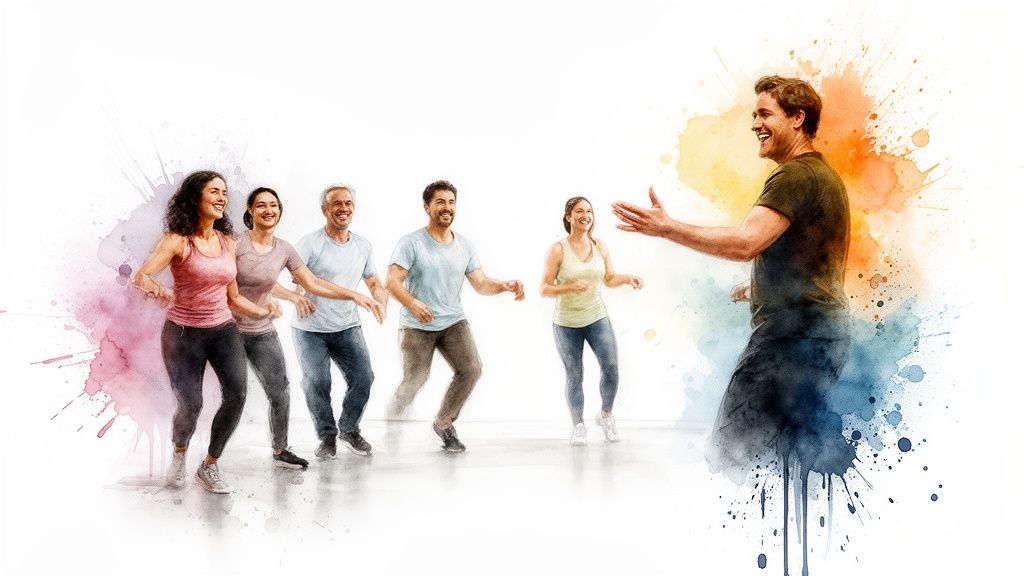
In a typical beginner's class, the entire vibe is about creating a supportive space where you can learn one step at a time. There's no pressure to be perfect, just to make progress. Our instructors will break down the foundational movements, making sure you feel confident before they add the next piece of the puzzle. This method helps build muscle memory and makes the whole learning process feel natural and genuinely exciting.
More Than Just Country Music
The sheer variety of music is one of the biggest surprises for newcomers. Sure, the country classics still get plenty of play, but you’re just as likely to find yourself dancing to chart-topping hits from today. This diversity keeps every class feeling fresh and has a little something for everyone, no matter what’s on your playlist.
This global appeal really took off after a huge moment in music history: when Billy Ray Cyrus released "Achy Breaky Heart." That song catapulted line dancing into the mainstream, turning it into the worldwide social activity we know and love today.
Line dancing is the perfect example of individual expression within a group setting. You learn on your own, but you’re never dancing alone.
A Community on the Dance Floor
Because it’s a partner-free style of dance, anyone can jump in at any time. It completely removes that awkward pressure of having to find a partner, which makes it an incredibly inclusive and social experience. You’ll be surrounded by other beginners who are all there for the exact same reason—to have fun and learn something new.
And while line dancing is a great solo activity, if you find you enjoy dancing with a partner, you might also be interested in exploring our guide on the Country Two-Step.
Ready to feel the fun for yourself? Don't wait! Book your 100% free complimentary lesson now by visiting our secure booking page at https://danzaacademy.com/contact and discover the joy of line dancing firsthand.
What to Expect in Your First Class
Walking into any new class can feel like you’re stepping onto a stage, but don’t worry—our line dancing classes for beginners are designed to be fun and welcoming, never intimidating. The moment you walk in, you’ll find a friendly atmosphere where the goal is to have a good time and make everyone feel comfortable, no matter their skill level.
There’s no need to stress about being thrown into a complex routine right away. Every class kicks off with a simple warm-up. This isn’t some high-intensity workout; it’s just a few gentle stretches and basic movements to get your body ready to dance and your mind tuned into the music.
Breaking Down the Moves
Once everyone is warmed up and feeling loose, your instructor will introduce the first few steps. Think of it like learning the alphabet before you try to write a sentence. Each move is taught slowly and methodically, so it’s easy to pick up.
- Step-by-Step Instruction: Instructors demonstrate every step clearly, usually facing the same direction as the class so you can just follow along like you’re looking in a mirror.
- Simple Counts: You'll learn how to move to the rhythm using easy counts, like "one, two, three, four." This is the key to connecting what your feet are doing to the beat of the music.
- Lots of Repetition: Practice makes progress, not perfection. You’ll go over each new step multiple times to build that muscle memory until the movement starts to feel second nature.
This patient, repetitive process makes sure that nobody gets left behind. It's all about steady progress and having fun with it. You’ll be surprised how quickly a few individual steps start linking together into a sequence that feels like real dancing.
The real magic of line dancing is that you learn as an individual but succeed as a group. There's a shared energy on the dance floor that makes every small victory feel like a team win.
Putting It All Together
After you’ve practiced the basic parts, the most exciting moment arrives—putting it all together into your very first dance routine. The instructor will guide the whole class through the sequence, calling out the steps as you go. It’s an incredible feeling when it all clicks and you find yourself moving in sync with everyone else on the floor.
And maybe the best part? No partner is ever needed. This single detail creates a wonderfully inclusive and social environment. Everyone is just there to learn, laugh, and have a good time, building a supportive community from your very first lesson.
Ready to see this welcoming environment for yourself? The best way to understand the experience is to live it. We invite you to claim your free complimentary lesson right now by visiting our contact page. It's the perfect, no-pressure way to take your first step onto the dance floor.
Mastering The Fundamental Steps
Every line dance you've ever seen, no matter how slick or complicated it looked, is built from the same handful of basic moves. Seriously. Think of them like the chords to a guitar—once you know a few, you can play hundreds of songs. In your first line dancing classes for beginners, we won't throw you into a complex routine. Instead, the whole focus is on getting comfortable with these core patterns. They're the building blocks for just about every dance out there.
This approach makes learning feel natural and, most importantly, fun. You build confidence step-by-step, not all at once. The flowchart below shows you exactly how we structure a typical beginner class here at Danza Academy to make sure you succeed.
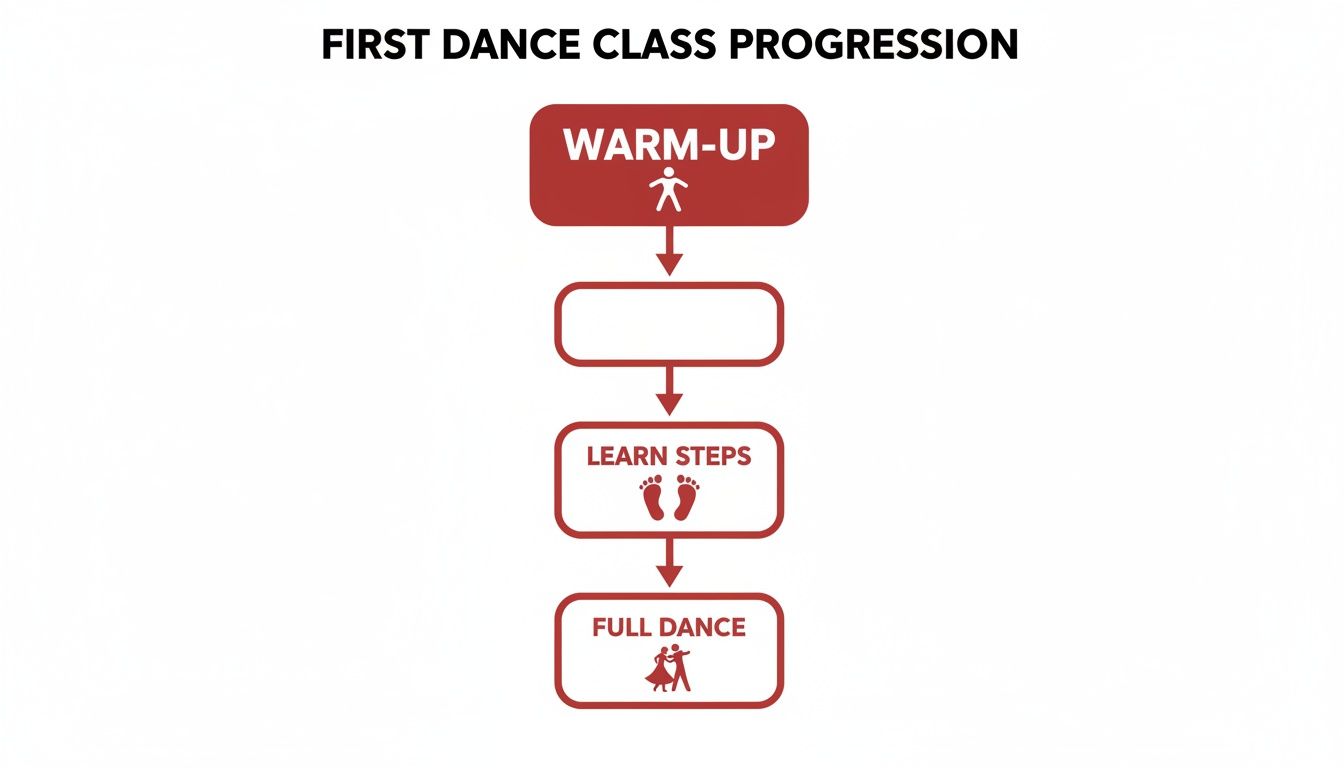
As you can see, it’s a simple progression. We get you warmed up, break down the individual steps, and only then do we put it all together into a full dance. No pressure, just progress.
Your First Core Moves
In class, your instructor will introduce you to a few key steps that pop up again and again in dances, whether you're dancing to country, pop, or rock. Don't think of it as just memorizing footwork; each move is more like a short, rhythmic phrase you can use.
One of the very first you’ll meet is the Grapevine. It's a classic for a reason and you’ll see it everywhere. It’s just a simple side-to-side traveling motion: step to the side, step your other foot behind, step to the side again, and finish with a little touch or tap of your foot. Easy.
Then there’s the Shuffle Step, a quick, three-step pattern that feels like a "one-and-two" count. It's that smooth, gliding move you see that lets dancers travel forward, backward, or sideways while perfectly matching the beat. You’ll also get to know the Rock Step, which is all about shifting your weight without actually traveling—an essential little move for changing direction on a dime.
Learning these foundational steps is like learning the chords on a guitar. Once you know a few, you can start playing hundreds of different songs. The same steps are just rearranged to create new dances.
Connecting Steps to Music
Getting the moves down is one thing, but the real magic happens when you start feeling how they connect to the music. Your instructor will guide you to listen for the cues in a song—the little shifts in the beat that tell you it's time for a new step. If you want a head start, you can check out these 10 easy dance moves anyone can learn which are staples in tons of different dance styles.
To give you an idea, here’s a quick breakdown of some of the first steps you’ll learn, what they feel like, and when you'll likely hear them called out in class.
Your First Five Line Dancing Steps Explained
This table is a handy little cheat sheet for the core moves that will get you started on the dance floor.
| Step Name | Basic Movement Description | Common Music Cue |
|---|---|---|
| Grapevine | Step side, step behind, step side, touch. | Used to travel smoothly across the floor during verses or choruses. |
| Shuffle Step | Three quick steps in a "cha-cha-cha" rhythm. | Perfect for upbeat moments or transitions between other steps. |
| Rock Step | Shift weight forward/back or side/side. | Often used at the end of a phrase to change direction. |
| Weave | A series of steps crossing in front and behind. | Adds flair and intricacy, typically during instrumental parts of a song. |
| Heel Strut | Step forward on the heel, then drop the toe. | A confident move that adds style, great for song intros. |
Once you master these fundamentals, you’ll have that "aha!" moment where you realize even the most impressive-looking dances are just clever combinations of these simple patterns. Ready to try them for yourself?
The Surprising Benefits of Line Dancing
Thinking line dancing is just a fun way to pass the time? Think again. It’s one of those rare activities that’s a triple threat—boosting your mind, body, and social life all at once. The benefits stretch far beyond the dance floor, making it a fantastic choice for anyone looking for an engaging way to stay active that doesn't feel like a chore.
It’s a complete workout that feels more like a party than exercise.
The physical perks are some of the first things you’ll notice. Line dancing is a great cardio workout that builds stamina and improves heart health without ever making you feel like you're slogging it out on a treadmill. Every class gets your blood pumping, helping you burn calories while you're lost in the fun of the music and the movement.
All that constant motion also does wonders for your coordination and balance. As you learn to link steps together and shift your weight with the rhythm, you’re actively training your body to be more stable and agile. These are skills that make a real difference in all aspects of daily life.
More Than Just a Physical Workout
Beyond the steps, line dancing classes for beginners give your brain a fantastic workout, too. Learning and memorizing choreography is a powerful way to keep your mind sharp, helping with memory retention and cognitive function. The focus it takes to follow the instructor and recall the sequences is almost like a form of active meditation, melting away stress and clearing your head.
Line dancing is an incredible stress reliever. For that one hour in class, you’re completely focused on the music and the moves, leaving all your daily worries behind.
But the social side is where line dancing truly shines. It’s an activity built around community, creating connections in a warm, welcoming group setting. It's a perfect example of social learning, where you pick things up through collaboration and shared experience. You’ll find yourself laughing with classmates as you learn together, building real friendships along the way.
A Global Community Awaits
That strong sense of community isn't just a local thing; it's a global phenomenon. The world record for the largest line dance brought together an incredible 18,431 participants in Xianghe, China, back in 2015. Events like this prove you’re not just joining a class—you’re joining a worldwide community with millions of active dancers. You can find out more about this and other line dancing world records.
The unique blend of physical activity, mental engagement, and social connection makes line dancing an incredibly rewarding experience.
Ready to experience these benefits firsthand? Your journey starts with a single step. Book your free complimentary lesson on our contact page and join our vibrant community today.
How to Prepare for Your First Class
Showing up for your first beginner line dancing class is exciting, but it’s totally normal to have a few butterflies. Don't worry! A little prep work is all it takes to walk in feeling confident and ready to have a blast from the very first step.
Think of it like getting ready for a fun day out—having the right things with you just makes the whole experience better. The most important thing? Just come with an open mind. Everyone in a beginner's class is starting from the same place, and trust me, mistakes are just part of the fun. The goal is to learn and laugh, not to be perfect.
What to Wear for Comfort and Movement
When it comes to your outfit, think function over fashion. You need clothes that let you move without feeling like you’re in a straightjacket. You definitely don’t need any special gear; your favorite comfortable clothes will do the trick.
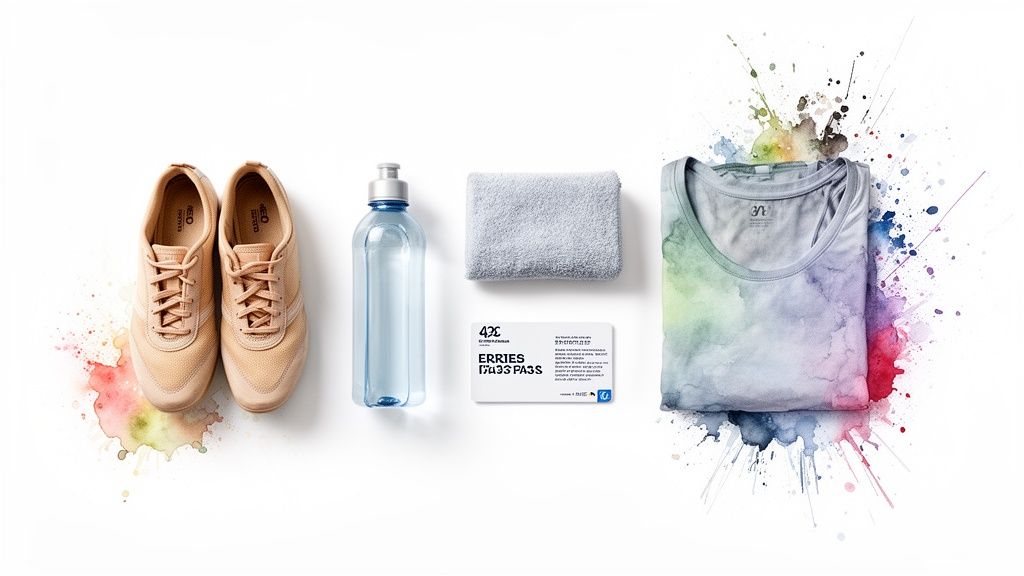
- Clothing: Go for things like athletic wear, leggings, comfy jeans, or even shorts. If you can stretch, bend, and step in it easily, you're good to go.
- Footwear: Supportive shoes are a must. While cowboy boots look the part, they aren't necessary. A simple pair of sneakers or any shoe with a smoother sole is perfect for letting you pivot and slide. Try to avoid shoes with a heavy grip, like some running shoes, because they can make turns a bit tricky.
What to Bring to Class
You really don’t need to pack much. A few small things will make your class much more comfortable and let you focus on what matters—the dancing!
Honestly, your two most important accessories for your first class are a positive attitude and a bottle of water. Staying hydrated and ready to learn are the real keys to having an amazing time.
If you want a few more pointers, check out our guide on how to prepare for your first private dance class.
The number one thing you can bring is your own enthusiasm. You’ve already taken the biggest leap just by deciding to try it. Now all that's left is to show up and have some fun.
Ready to see for yourself? The best preparation is jumping right in. We’ve made it super easy to get started with our free complimentary lesson. Book yours in just a few clicks at https://danzaacademy.com/contact and discover just how much fun your first class can be.
Ready to Start Your Line Dancing Journey?
You've seen what line dancing is all about, learned why it's so good for you, and realized how simple it is to get started. Now, the only thing left to do is take that first fun step onto the dance floor, right here in Philadelphia.
At Danza Academy, our line dancing classes for beginners are built on one simple idea: dancing should be for everyone, and it should be fun. Our instructors create a friendly, no-pressure atmosphere, and our community is always there to cheer you on. We truly believe the best way to get it is to just do it.
Your Invitation to the Dance Floor
We want to make this decision as easy as possible. That's why your first class is on us. To make your line dancing journey smooth and accessible, many studios utilize modern solutions for easy class booking, and we've made our process just as simple.
No pressure. Nothing to lose. You just might discover a fantastic new hobby in a fun, supportive setting.
This is your chance to stop wondering and start dancing. Claim your complimentary lesson today and see for yourself how rewarding it can be. Click the link below to book your free class and kick off an unforgettable journey.
Book your free complimentary lesson now by visiting us at: https://danzaacademy.com/contact
Got Questions About Line Dancing? We've Got Answers
Stepping into something new always comes with a few questions. It's totally normal! Taking that first leap into line dancing classes for beginners can feel a little intimidating, but we want to make sure you walk onto that dance floor feeling excited, not nervous.
Let's clear up some of the most common things we hear from people who are thinking about giving it a try.
Do I Need to Bring a Partner?
This is the number one question we get asked, and the answer is a big, resounding NO! Line dancing is all about dancing as an individual within a group. It's one of the best things about it—it's incredibly social and easy for anyone to jump in at any time.
You’ll be right there on the floor with everyone else, but you get to move at your own pace. This setup completely removes the pressure of having to find a partner, making it a super welcoming and fun atmosphere for everybody.
Am I Too Uncoordinated to Learn?
Not a chance. If you're convinced you have two left feet, then you are exactly who our beginner classes are for. Seriously. We designed them specifically for people who think they can't dance.
Here's a little secret: Coordination isn't something you're just born with. It's a skill you build, and our studio is the perfect place to do it. You'll be amazed at how quickly you pick things up.
Our instructors are experts at breaking down every single step into simple, easy-to-follow pieces. You'll be building both your skills and your confidence from the very first class.
What Kind of Music Will We Dance To?
Get that old image of only country music out of your head! While we definitely love a good classic, our playlists are jam-packed with all kinds of music. One minute you might be dancing to a huge pop hit from today's charts, and the next you could be moving to an upbeat Latin track or a timeless favorite you can't help but tap your feet to.
This variety is what keeps every class feeling fresh, high-energy, and fun for everyone, no matter what your musical tastes are.
How Long Until I Feel Comfortable on the Floor?
You’ll get the hang of it way faster than you think. Everyone learns differently, of course, but most of our beginners start feeling confident with the basic steps and can get through a whole dance within just their first few lessons. We focus on progress, not perfection. The goal is to have fun, and you'll be surprised by what you can do in just a short amount of time.
Feeling a bit more confident? The best way to really get a feel for it is to just come and try it for yourself. At Danza Academy, we make it completely risk-free to get started.
Book your free complimentary lesson on our contact page. Come discover the pure joy of dance in a place that’s all about support and fun.
Claim your free class now at: https://danzaacademy.com/contact