
You're probably here because you tried West Coast Swing in regular shoes and something felt off. Your turns grabbed. Your feet lagged behind the music. Maybe you even thought, “Is it me, or are my shoes fighting me?”
Most beginners assume any comfortable shoe will do. That's understandable. West Coast Swing looks smooth and casual, so it's easy to think footwear doesn't matter much. In practice, the wrong pair can make a relaxed dance feel awkward, heavy, and surprisingly hard on your knees and calves.
The good news is that choosing the right West Coast Swing shoes isn't mysterious. Once you understand how this dance moves, the shoe choices start to make sense.
Why Your Sneakers Are Holding You Back in WCS
West Coast Swing has a very particular feel. It travels in a slot, uses elastic connection, and asks your body to move with control instead of bounce. If you wear grippy sneakers, your feet can get trapped on the floor right when you need to pivot or glide.
That's why so many new dancers feel clumsy at first. They're not always struggling with the dance itself. Often, their shoes are interrupting the movement.
West Coast Swing evolved from Lindy Hop in the 1940s and is the official state dance of California. Its rhythm sits at 22 to 35 measures per minute, which supports a smooth, grounded style rather than a springy, high-energy attack associated with other swing forms, as described in the West Coast Swing history overview.
What your shoes are supposed to help you do
In West Coast Swing, your shoes should help with a few basic jobs:
- Move forward cleanly: The dance favors forward travel on early counts rather than a rocking, stuck-back feeling.
- Pivot without strain: Turns need a controlled slide, not a hard stop.
- Stay grounded: You want contact with the floor, but not drag.
- Protect your body: If the shoe grips too much, the knee often pays for it.
Practical rule: If you feel your upper body turning but your foot refuses to follow, the sole is probably too sticky for West Coast Swing.
There's also a posture issue. Bulky sneakers often pitch your weight in ways that don't match the dance's easy, walking quality. Instead of feeling fluid, you start fighting for balance.
Why this matters beyond dance technique
A lot of dancers blame themselves for soreness that starts with poor movement mechanics. Good footwear doesn't replace training, but it supports it. If you want a clearer sense of how walking patterns and foot mechanics affect comfort, this overview of pain relief through gait training is a useful companion read.
Here's the simple takeaway. In West Coast Swing, shoes aren't decoration. They're part of the technique. The right pair makes your basics easier, your connection cleaner, and your confidence much steadier from the first social dance onward.
The Anatomy of a Great West Coast Swing Shoe
A strong West Coast Swing shoe works like the right tire on the right road. Too much traction and you can't turn. Too little and you slide when you need control. The best pair gives you measured grip and measured freedom at the same time.
This is the foundation to look for.
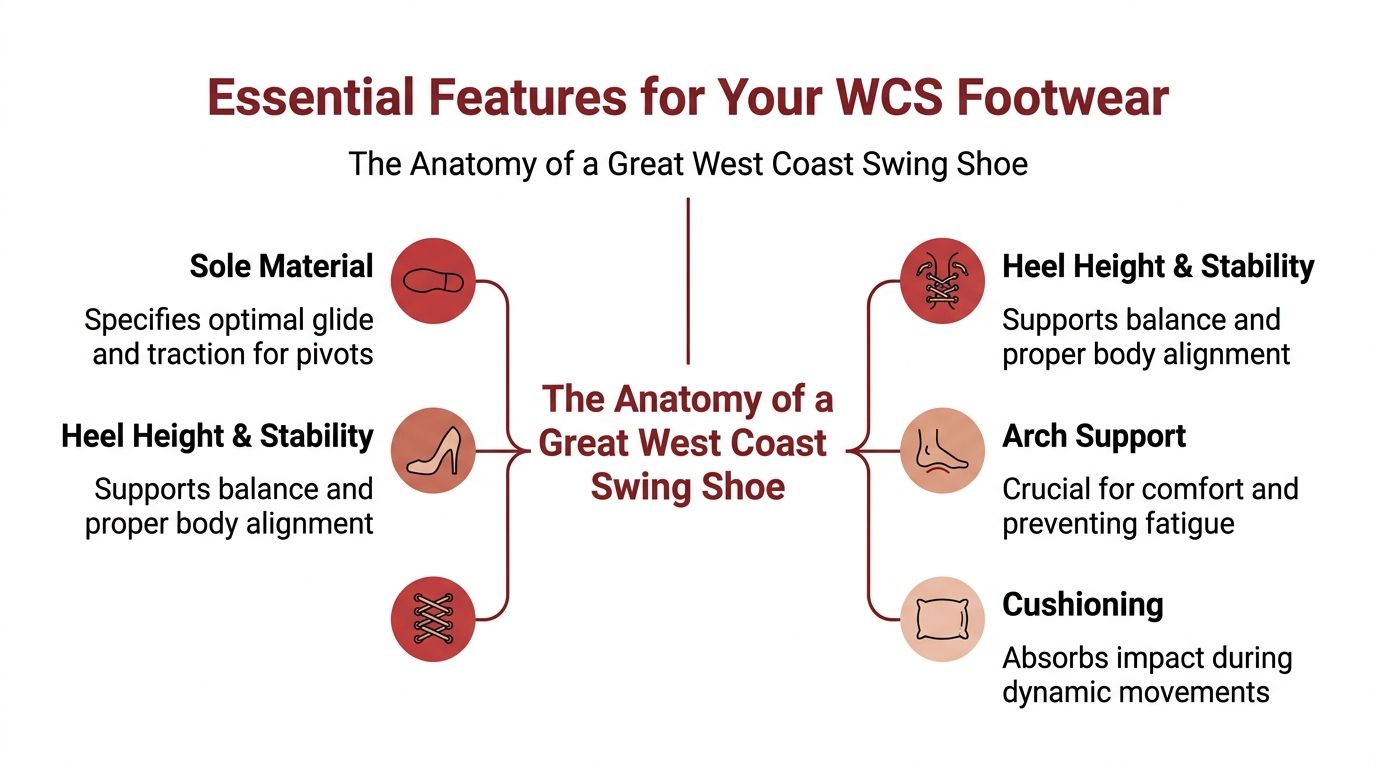
Sole material matters most
For West Coast Swing, the sole is the first thing I check. A smooth dance sole changes everything.
According to Werner Kern's guidance for dance footwear, optimal WCS shoes require leather soles because they create the right grip-to-slip balance for turns and weight transfer, while rubber soles create excess friction that can lock the foot and increase torque on the knees. The same guidance also states the heel should not exceed 1.5 cm, or about 0.6 inches, to preserve balance and reduce calf fatigue in this style of movement. You can read that directly in their notes on WCS shoe construction and sole behavior.
If you're shopping and trying to compare categories, looking at examples of essential dance studio footwear can help you spot how dance-specific soles and profiles differ from normal athletic shoes, even if you still need to filter for West Coast Swing-friendly features.
Heel shape changes your balance
A very high or narrow heel makes West Coast Swing harder than it needs to be. This dance wants a grounded, natural look. If the heel lifts you too far forward, your calves work overtime and your body starts to look perched instead of relaxed.
A better heel profile for this dance usually has these qualities:
- Low height: It keeps your weight more centered.
- Stable base: It helps during anchors, changes of direction, and long nights of social dancing.
- Minimal forward pitch: It supports the easy, walking character of the dance.
A good West Coast Swing shoe should disappear under you. You should notice your dancing, not your footwear.
Upper construction and flexibility
The upper is the part wrapping your foot. It doesn't need to be rigid, but it does need to hold you securely. If your foot swims inside the shoe, your balance gets sloppy fast.
Look for:
| Feature | Why it helps in WCS |
|---|---|
| Secure straps or laces | Keeps the foot from sliding inside the shoe during spins |
| Flexible forefoot | Helps the foot articulate without feeling stiff |
| Breathable material | Makes long practices more comfortable |
| Moderate structure | Supports the foot without making the shoe feel heavy |
Leather uppers often mold nicely over time. Some synthetic materials work well too, especially if they're light and flexible. The key is fit and function, not hype.
Two features many dancers overlook
A lot of guides stop at soles and heels. That's not enough for many real dancers.
- Arch support: If your foot collapses or overworks, dancing gets tiring quickly.
- Cushioning: You don't need a marshmallow sole, but you do need enough comfort to practice without feeling battered.
These details matter even more if you dance several nights a week or have a history of foot pain.
Matching Your Shoes to Your Dance Journey
Not every dancer needs the same shoe on day one. The best choice depends on where you are, where you dance, and how demanding your nights tend to be.
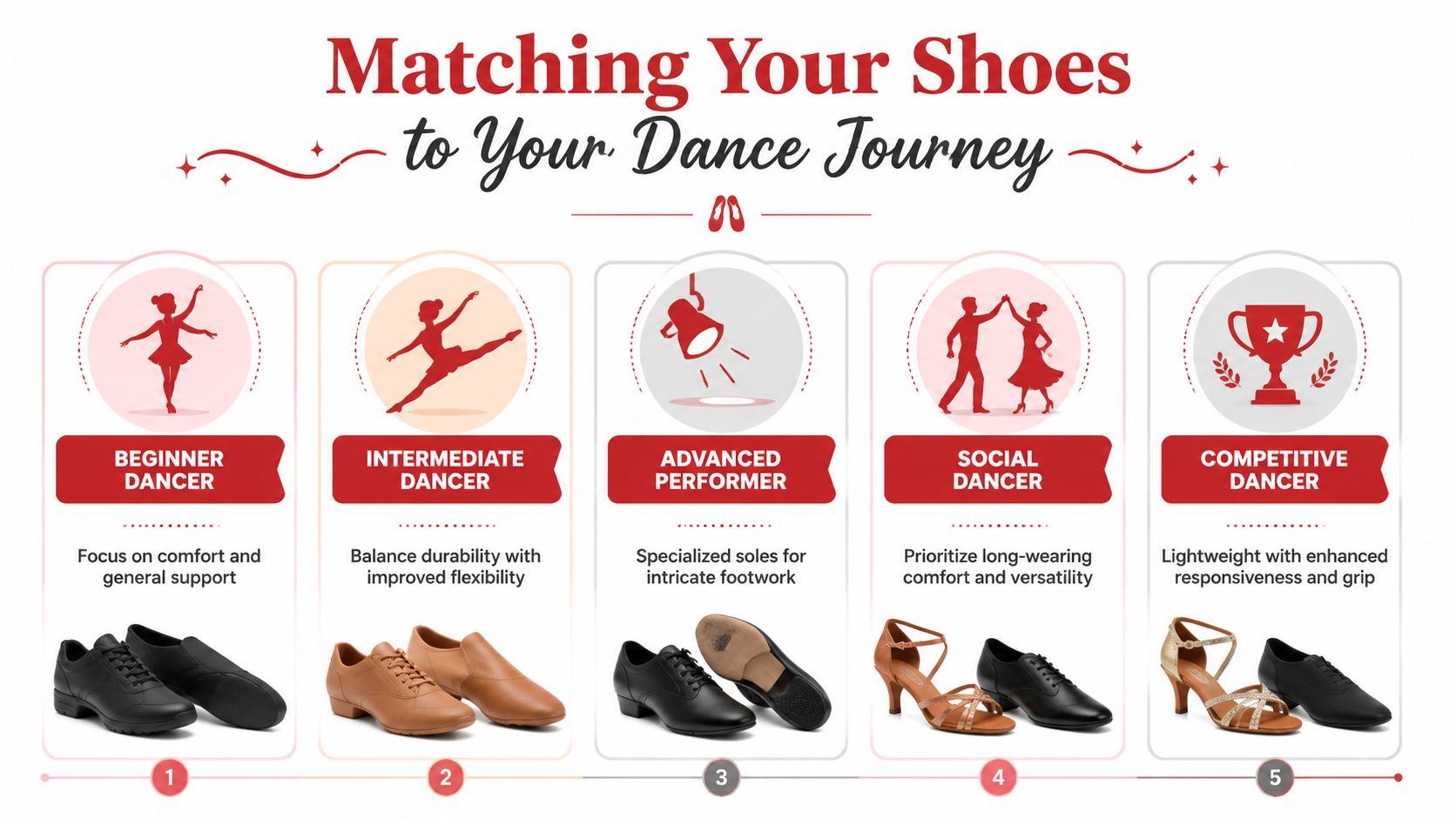
The beginner dancer
If you're just starting, don't chase the flashiest shoe. Your first priority is a pair that feels secure, lets you turn, and doesn't punish your feet.
Beginners usually do best with:
- A low-profile shoe that feels close to the floor
- A smooth sole that allows controlled pivots
- Simple support instead of extreme flexibility
- Neutral styling so the shoe works for class, practice, and socials
A beginner often benefits from versatility more than specialization. You're still learning what your feet like. A shoe that feels dependable is more useful than one that looks advanced.
The social dancer
Social dancers need durability and comfort. That's because a social night asks more from your shoes than a short class does. Floors vary. Energy shifts. One hour turns into several.
The social dancer should think about real-world questions:
| Situation | Helpful shoe trait |
|---|---|
| Mixed floor conditions | Sole that pivots smoothly without feeling slippery |
| Long dance nights | Better cushioning and stable fit |
| Frequent partner changes | Reliable balance and easy foot placement |
| Travel to events | A versatile pair that handles practice and social use |
If that sounds like you, comfort becomes a performance feature. Once your feet get tired, your timing and connection often go with them.
The competitor
Competitive dancers often become more exacting about response, appearance, and movement quality. They may keep different pairs for practice, workshops, and performance because each environment asks for something slightly different.
Competitive dancers usually stop asking, “Is this a dance shoe?” and start asking, “Does this shoe support the way I dance?”
For competition-focused dancers, common priorities include a cleaner line, faster response under the foot, and a more customized fit. At that stage, you're often refining details rather than solving basics.
A fast decision guide
If you're unsure where you fit, use this quick filter:
- Taking your first classes: Choose forgiveness and comfort.
- Going out social dancing often: Choose endurance and balanced glide.
- Training seriously or performing: Choose precision and consistency.
- Dancing at a wedding or one-time event: Choose the most stable option that still lets you pivot safely.
A shoe isn't “good” in the abstract. It's good if it matches how and where you dance.
Solving for Comfort Shoes for Arch Support and Long Nights
Many dancers feel ignored by common shoe advice. Plenty of shoe guides tell you to get a smooth sole and a low heel, then stop there. That advice helps, but it doesn't answer the harder question: what if your feet hurt anyway?
A significant pain point for dancers, highlighted in online discussions and summarized by West Coast Swing Online, is the lack of guidance for WCS shoes with enough arch support and padding for issues like plantar fasciitis. Their article points to a real need for more specific help around comfort-focused choices and modifications for dancers with foot concerns. You can see that gap discussed in their piece on West Coast Swing dance shoes and support needs.
If you have plantar fasciitis or high arches
You are not being difficult if you need more support. You are being realistic.
Dancers with plantar fasciitis, high arches, or general foot fatigue usually do better when they prioritize these features:
- Removable insoles: They give you room to test supportive inserts.
- A secure upper: Support doesn't help much if the foot slides around.
- Moderate cushioning: Enough softness for comfort, but not so much that you lose floor feel.
- A shape that matches your foot: A beautiful shoe that squeezes your forefoot won't become comfortable through willpower.
Smart modifications that often help
Many dancers assume a dance shoe must stay exactly as purchased. That's not always true. Small adjustments can make a good pair much more wearable.
Consider these practical options:
- Swap the insole if the original one is flat and unsupportive.
- Try a slim orthotic if your shoe has enough depth.
- Use targeted padding for pressure points instead of over-cushioning the whole shoe.
- Break them in gradually at home before taking them to a long social.
If you're managing recurring soreness, it also helps to pay attention to the larger picture of training and recovery. This guide on how to avoid dance injury is a solid next read if you want to pair shoe choices with safer dancing habits.
Comfort and style can coexist. You just have to stop treating pain as a normal price of entry.
What not to do
A few common mistakes make foot problems worse:
- Don't buy ultra-thin fashion shoes just because other dancers wear them.
- Don't ignore the arch issue and hope the shoe stretches into support.
- Don't choose grip over comfort if every turn leaves your feet aching.
- Don't test new shoes for the first time at a major event.
If your feet need support, your shoe strategy should reflect that from the start. The best West Coast Swing shoes for you may not be the lightest or prettiest pair in the room. They'll be the pair that lets you dance the third hour as comfortably as the first.
Getting the Perfect Fit Every Time
A well-made dance shoe can still fail if the fit is off. Too loose, and you slide inside it. Too tight, and your foot tenses up all night. Good fit should feel snug, supported, and stable without cramping your toes.
This matters even more with dance shoes because sizing often differs from street shoes.
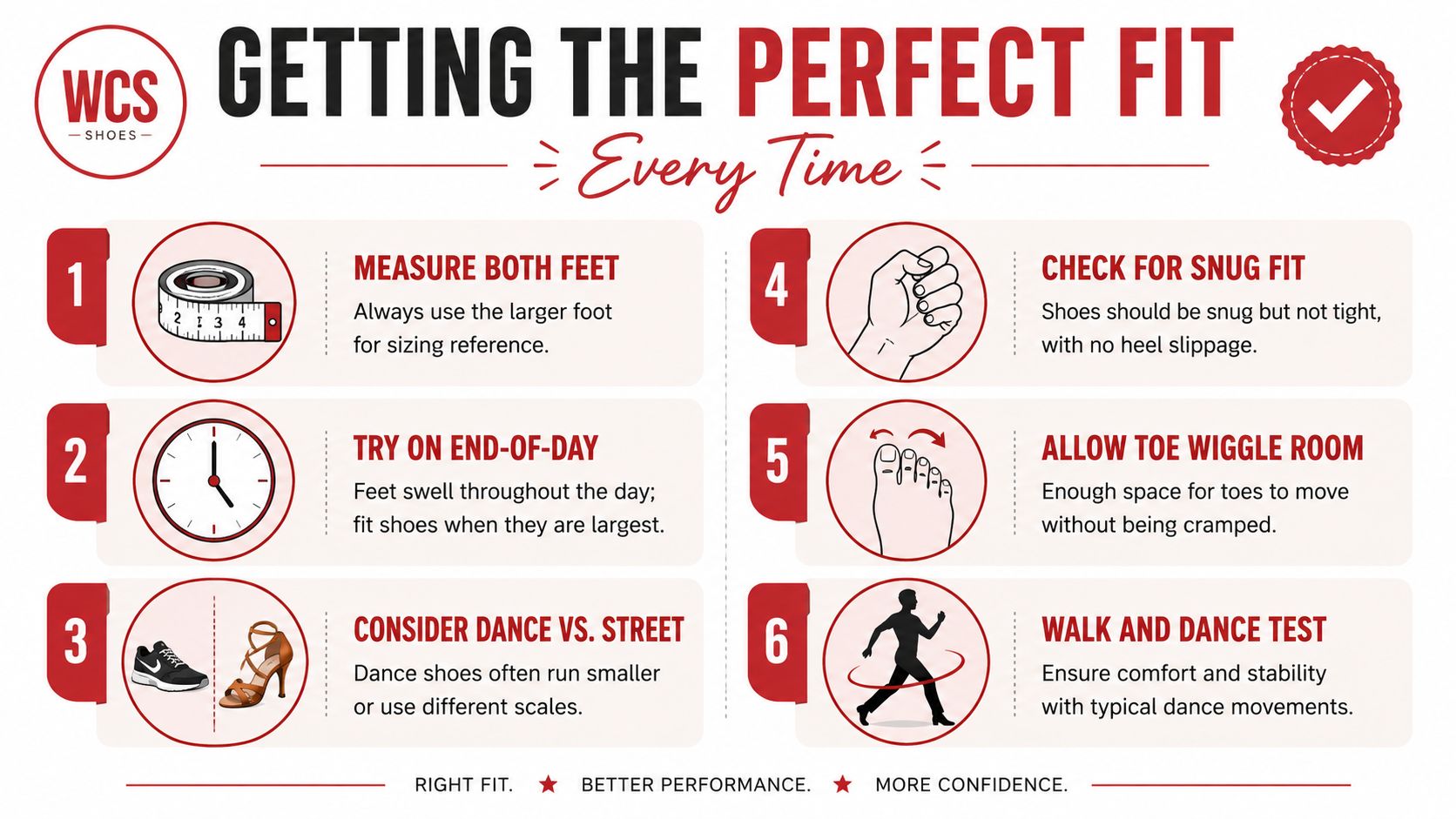
A practical fitting checklist
Use this sequence before you buy:
- Measure both feet: One foot is often slightly larger than the other. Fit the larger foot.
- Check size late in the day: Feet often feel fuller by evening, which gives you a more realistic fit.
- Match the shoe to your dance setup: If you dance barefoot in the shoe, test it that way.
- Test movement, not just standing: Walk, pivot, and shift weight side to side.
- Look for heel security: Your heel shouldn't pop up when you move.
- Leave toe freedom: Your toes need a little room to articulate, not spread wildly, but not get crushed either.
The broader logic is similar to what runners use when evaluating fit under real movement conditions. If you want a simple outside reference on how movement changes sizing decisions, the Swift Running shoe fit guide offers a useful reminder that static fit and active fit aren't always the same thing.
Online versus in-store
Both buying methods can work. They just require different habits.
| Buying method | Best practice |
|---|---|
| In-store | Bring the socks or inserts you'll actually use, and test movement on a clean surface |
| Online | Read sizing notes carefully, measure at home, and confirm the return policy before ordering |
If you're buying online for dance class, it also helps to know what kind of clothing and shoe setup will feel most natural in a studio environment. This quick guide on what to wear to dance class can help you think through the full picture.
The fit should feel like this
A good West Coast Swing shoe should feel close to your foot, but not aggressive. You shouldn't need to grip with your toes to keep it on. You also shouldn't feel pressure spots the moment you put it on.
If the shoe already hurts while you're standing still, dancing won't fix it.
One final tip. Studio-friendly shoes are clean, non-marking, and reserved for indoor use. Even a great pair will wear out faster and track dirt onto the floor if you treat it like an everyday street shoe.
Keeping Your Shoes in Dance-Ready Condition
Once you find a pair you love, maintenance keeps them usable. Dance shoes age fast if you toss them in a bag, wear them outdoors, and ignore the soles until they're slick or damaged.
A little care after each use goes a long way.
Your basic care routine
For leather or suede-style dance soles, the main goal is to preserve a surface that still behaves predictably on the floor. If the sole gets dirty, packed down, or unevenly worn, the shoe won't respond the way it did when you bought it.
A simple routine works best:
- Brush the sole as needed: This helps restore texture and remove debris.
- Store shoes dry: Moisture breaks materials down faster.
- Use them indoors: Outdoor pavement can ruin a dance sole quickly.
- Air them out after dancing: Don't trap sweat in a sealed bag overnight.
Repair or replace
Not every problem means the shoe is finished. Some issues are fixable. Others mean it's time to move on.
Here is a straightforward way to understand it:
| Sign | What to do |
|---|---|
| Sole surface is worn smooth but upper is sound | Consider professional repair or resoling |
| Straps or closures feel loose | Repair may help if the structure is still strong |
| Footbed feels collapsed | Replacement is often the better choice |
| Shoe twists, slips, or has lost shape | Replace it |
Know when you've outgrown the shoe
Sometimes the shoe isn't worn out. You've just become a more demanding dancer.
Your first pair may have been perfect for beginner classes, then started feeling limiting once your turns got cleaner or your social nights got longer. That's normal. Upgrading isn't vanity. It's often a response to better technique and clearer preferences.
Treat your shoes like training tools. Keep them clean, keep them dry, and notice when they stop supporting the way you dance now.
Take Your First Step with Confidence
The right West Coast Swing shoes change more than comfort. They change how the dance feels in your body. You stop fighting the floor. You turn more cleanly. You trust your balance. That frees up attention for the fun part, which is listening to the music and connecting with your partner.
By now, you know what to look for in the sole, why heel height matters, how to choose based on your dance life, and how to think about arch support if your feet need more care than generic guides usually mention. You also know that fit and maintenance matter just as much as the original purchase.
For many dancers, the next challenge isn't buying the shoe. It's testing whether it works in motion.
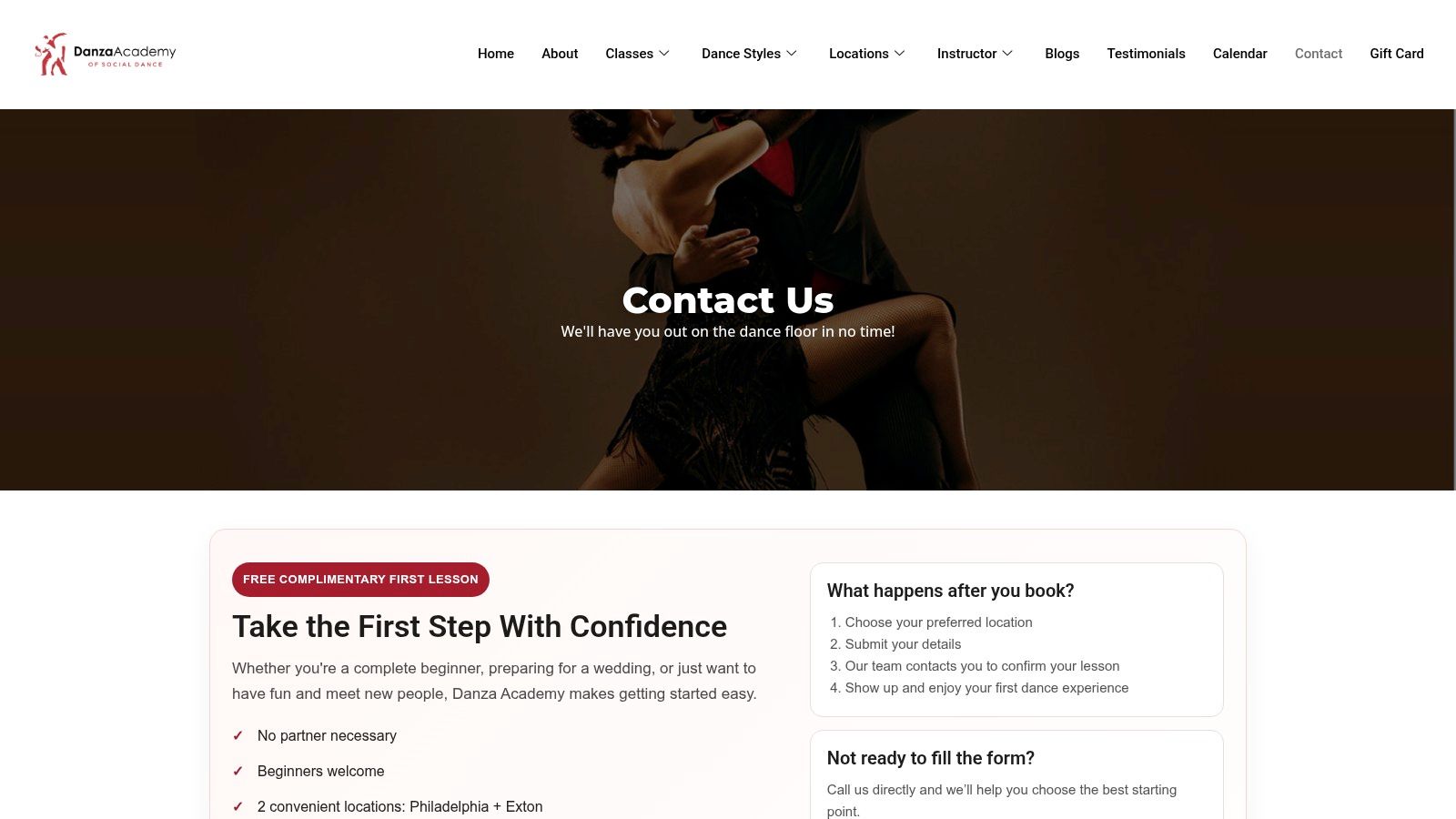
There's a good reason free trial lessons matter here. Studios that offer free trial classes remove financial pressure, and one case study reported trial bookings rising from 12 to 38 per month, which was a 3.2x improvement, when studios used strategies such as free or low-cost trials and clearer trial-class structure, according to this dance studio trial booking case study.
That makes sense from a dancer's point of view. Trying a class with no financial barrier is the easiest way to feel whether your shoes, posture, and movement choices are working. If you're looking for a place to start practicing that in a real setting, these West Coast Swing classes near you are a practical next step.
You don't need perfect shoes before your first lesson. You just need a better understanding of what your feet are telling you, and a place to learn with guidance.
A complimentary first lesson is the easiest way to put all of this into practice with expert feedback and no pressure. Book your free lesson with Danza Academy of Social Dance through their contact page, and you'll get a chance to test your movement, ask shoe questions, and start dancing with more confidence from your very first step.