
I still remember stepping in from West 16th Street, hearing the room before I fully saw it. The lights were low, the floor felt alive, and for a moment the whole place seemed to move as one body.
Remembering the Highline Ballroom Club
There are venues you visit, and there are venues you carry with you. The Highline Ballroom Club belongs in the second group. For many New Yorkers, it was a concert spot. For many dancers, it was something more personal: a room where sound, space, and crowd energy created the kind of night that stayed with you long after the music ended.
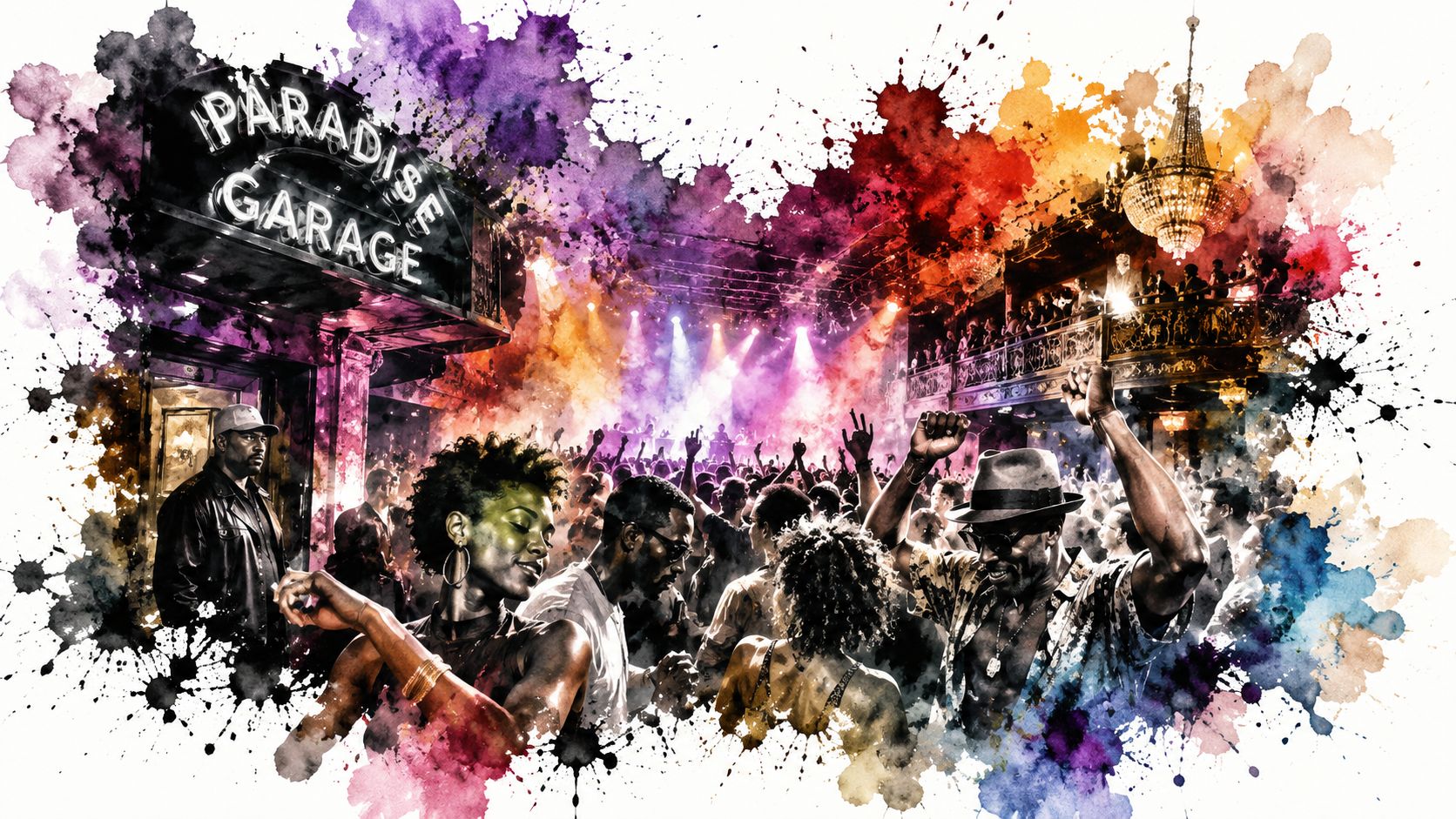
Set at 431 West 16th Street in Chelsea, near the Meatpacking District, the venue had the right kind of arrival. You weren't just heading to another room with a bar and a stage. You were heading into a part of Manhattan that already felt cinematic at night. That mattered. Dance memories don't happen in a vacuum. They happen when neighborhood, crowd, sound, and anticipation all line up.
One reason the club still looms so large is scale. According to the Highline Ballroom venue history on Wikipedia, the Highline Ballroom was a 700-capacity standing and 400-capacity fully seated music venue that hosted major international stars including Amy Winehouse, Paul McCartney, Lady Gaga, Adele, and Stevie Wonder, making it a premier destination for both Broadway and pop culture events. That list explains the prestige. It doesn't fully explain the feeling.
Why dancers remember it differently
A dancer doesn't judge a room the way a casual patron does. We notice whether the crowd can breathe. We notice whether sightlines let you track movement. We notice whether a room invites performance, flirting, celebration, or just awkward shuffling near a drink rail.
That's why the word “ballroom” in the name still catches people's attention. Readers searching for the club today are often looking for more than nightlife nostalgia. They're looking for that old blend of music, social connection, and movement. If you've ever wondered what social dancing really means in practice, this venue sat close to that spirit, even when it was booked primarily as a live-music hall.
Some rooms make you watch. Others make you want to move.
More than a famous guest list
Its reputation was built on famous names, but its legacy was built on atmosphere. The room could hold a high-profile performance one night and still feel intimate enough to spark real interaction the next. That's rare. Plenty of clubs are loud. Fewer are memorable. Fewer still leave behind a sense that they could have become an even bigger home for social dance than history usually gives them credit for.
The History and Closing of a NYC Icon
The Highline Ballroom didn't appear out of nowhere. Part of its appeal came from the fact that the address already carried nightlife memory. Rooms like this often hold traces of previous eras, and dancers tend to feel that faster than others.
Before Highline Ballroom
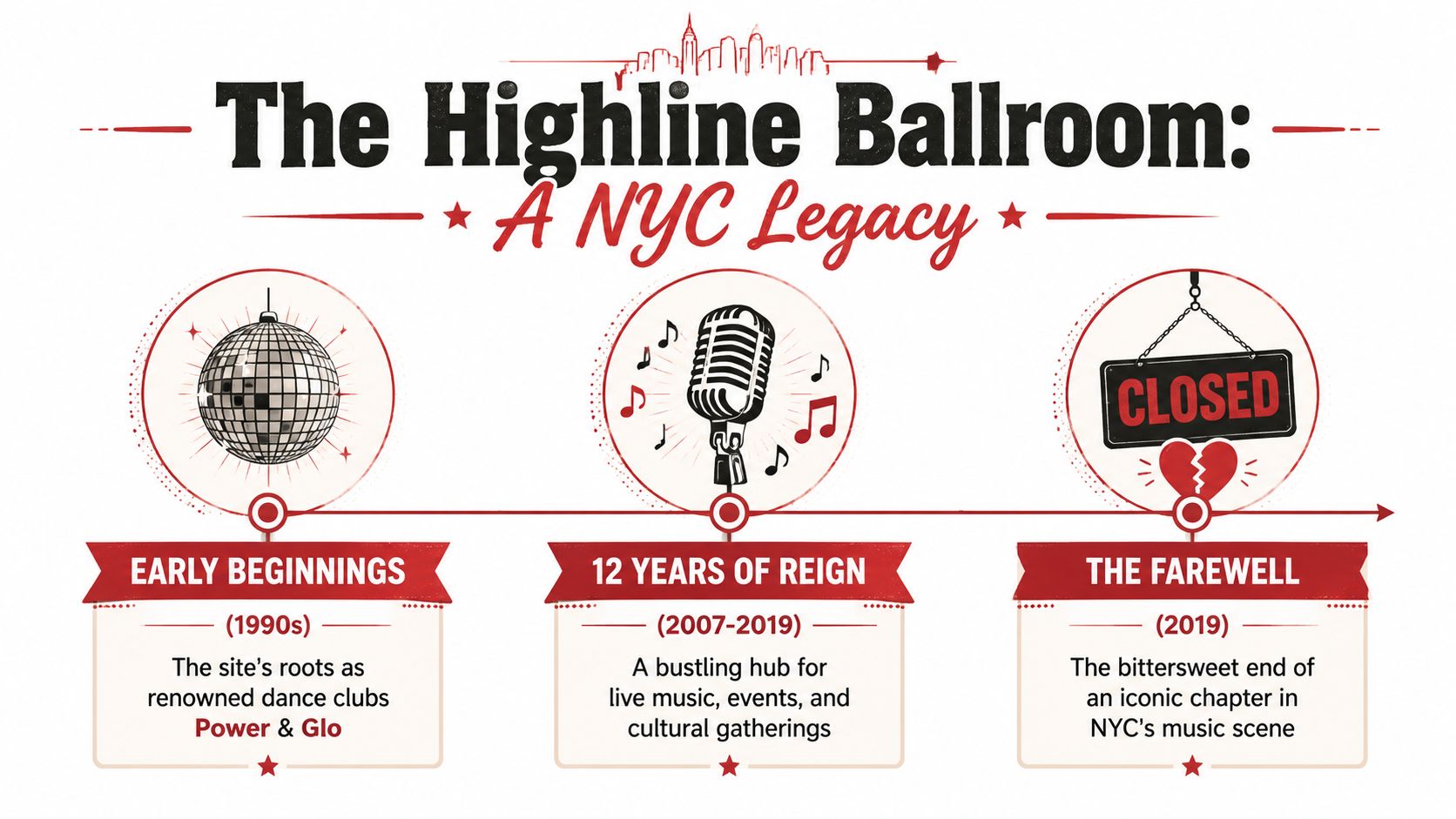
The site was formerly home to the dance clubs Power and Glo. That detail matters more than it may seem at first glance. It links the venue to New York's earlier electronic dance music history and helps explain why the room never felt like a generic box built only for passive audiences.
According to the archived Highline Ballroom Instagram reference, the Highline Ballroom operated for 12 years before closing, with owner Steven Bensusan announcing the landlord decided not to renew the lease. The venue was formerly home to the dance clubs 'Power' and 'Glo', linking it to NYC's earlier electronic dance music history.
Why it worked for so long
A venue lasts when it serves more than one type of night. Highline Ballroom did that well. It could present major acts, support nightlife, and host private events without losing its identity. That flexibility made it useful to promoters and appealing to regulars.
A few details help explain the draw:
- Location: The club sat in a part of Manhattan people already wanted to visit for a night out.
- Programming range: Its reputation wasn't tied to one narrow genre or one kind of crowd.
- Room design: It could feel energetic without feeling chaotic.
- Memory factor: People remembered not just who performed there, but who they were with.
Historical clue: Venues with dance-club roots often keep a different rhythm in the room, even after their programming changes.
The closing felt abrupt because it was personal
When beloved venues close, people usually search for a hidden reason. They assume attendance dropped, the concept got tired, or the city moved on. In this case, the official explanation was much simpler and more frustrating. The landlord chose not to renew the lease.
That's one reason the loss still stings. It wasn't remembered as a place that slowly faded. It was remembered as a place people still wanted. For longtime nightlife followers, that distinction matters. It turns the story from “a venue had its run” into “a New York institution was cut short.”
The club's closure also created a kind of digital confusion. People still search for it because the name remains vivid, but the real-world answer is that the original chapter ended. Even when spaces are later reused or reimagined, the emotional map doesn't update so neatly. People aren't just asking where the old venue went. They're asking where that feeling went.
What Made It a Premier Venue for Dancers
Most write-ups treat Highline Ballroom as a place to hear music. A dancer notices something else first. The room was built in a way that supported movement, visibility, and shared attention.
Sound that reached the room evenly
According to the NYC Tourism profile of Highline Ballroom, Highline Ballroom featured a state-of-the-art audio installation with L-Acoustics monitor wedges and digital sound boards, while its column-free, open-sightline architecture provided unobstructed visual access to the stage from every area, maximizing engagement for nightlife and private events.
If you're not used to dance spaces, that may sound technical. In practice, it means something simple. Better sound placement helps people move with confidence because the beat feels stable across the room, not muddy in one corner and harsh in another.
For dancers, that changes everything. Timing gets cleaner. Partnering feels easier. You stop fighting the room and start responding to the music.
Sightlines matter more than people think
The phrase column-free is easy to skim past, but it's one of the biggest clues to why the venue worked so well. Columns interrupt attention. They split crowds into pockets. They create dead spots. In a dance setting, they also block the little details that make social movement contagious.
When people can see the stage, the band, and each other, a room behaves differently. Energy travels. A stylish couple near the front influences the back of the floor. A performer can pull the whole space into one mood.
Here's why that layout mattered from a dancer's point of view:
- You could read the room quickly. That helps beginners settle in and helps experienced dancers decide how big or subtle to dance.
- Groups stayed connected. Friends didn't vanish behind awkward architectural obstacles.
- Performance and participation could coexist. You could watch and move in the same evening without feeling split between two unrelated experiences.
A good dance room doesn't just hold people. It lets people see how to belong in it.
The overlooked ballroom idea
The club's story reveals an interesting contrast. The name “Highline Ballroom” suggests a formal dance identity, but most public coverage emphasized live music, celebrity bookings, and nightlife buzz. That wasn't wrong. It was incomplete.
A room with strong acoustics, open sightlines, and flexible event use already has many of the traits dancers value. Add a crowd ready for social energy, and you have a space that naturally brushes against ballroom, Latin, swing, and other partner-dance traditions, even if that's not how the broader media remembered it.
That's why so many people still search for the Highline Ballroom Club with dance in mind. They aren't confused. They're picking up on something real that got overshadowed.
The Unfilled Void for Social Dance Venues
Search behavior tells a story that nightlife coverage has mostly missed. People aren't only hunting for old photos, concert memories, or closure news. Many are trying to find a current place where the promise of the word “ballroom” still lives.
According to DXA Studio's High Line Ballroom project page, recent data from 2025–2026 shows a 30% increase in Google searches for ‘ballroom dance venues NYC' with ‘wedding' or ‘lesson' intent, yet no updated content redirects these users from the defunct Highline Ballroom to active dance spaces. That gap is bigger than it looks.
What people are actually searching for
A person typing in the old venue's name may be asking one of several things:
- Can I still go there?
- Is there a room like it where people dance?
- Where do I take lessons if I want that classic social atmosphere?
- What if I need a place that feels elegant enough for ballroom or wedding preparation?
Those aren't museum questions. They're practical questions.
Why nostalgia alone isn't enough
The problem with closed-venue nostalgia is that it can trap people in research mode. They keep reading retrospectives and never arrive at a real dance floor. For social dancers, that's a dead end. Dance only becomes meaningful when it moves from memory into practice.
Practical rule: If a venue no longer exists, use your nostalgia as a compass, not a destination.
What made the Highline Ballroom Club compelling wasn't only fame. It was the possibility of connection in a room that felt alive. Today, that same need shows up in adults looking for ballroom and Latin classes, engaged couples trying to prepare for a first dance, and former club-goers who want movement without the chaos of a packed nightlife scene.
The void isn't just the loss of one address. It's the lack of clear guidance for people who want a modern version of the social dance experience.
Modern Alternatives for Today's Dancers
The old Highline Ballroom chapter is closed, and the site has since been redeveloped into Racket NYC, as noted earlier in the article's historical discussion. That's useful to know, but it doesn't solve the core problem for someone who wants to learn, practice, and build confidence on a dance floor.
A nightclub and a dance studio can both be social. They don't serve the same purpose.
What a studio gives you that a club can't
A club gives you atmosphere. A studio gives you skill, repetition, feedback, and community. If you already dance well, a club can be thrilling. If you want to become the kind of person who feels natural dancing in public, a studio is where that transformation happens.
You can see the difference clearly:
| Feature | Nightclub (e.g., Highline Ballroom) | Dance Studio (e.g., Danza Academy) |
|---|---|---|
| Primary focus | Entertainment and nightlife | Learning and social development |
| First-timer experience | Often unstructured and intimidating | Guided and welcoming |
| Feedback | You mostly figure things out yourself | Instructors correct timing, posture, and lead-follow skills |
| Partner dance growth | Inconsistent practice | Repeated practice with clear progression |
| Wedding preparation | Rarely designed for it | Built for customized first-dance help |
| Community | Social, but often fleeting | Ongoing relationships and regular events |
That's why adults who miss the energy of a legendary room often do better in a modern dance community than in a replacement club. The goal isn't to recreate the exact old night. The goal is to create new ones with more confidence and less guesswork.
For readers who enjoy exploring nightlife culture through a dance lens, this guide to Latin dance clubs in Philadelphia shows how social dancing can still thrive when the setting supports real participation.
The emotional difference
Clubs tend to ask, “Can you keep up?” Studios ask, “Would you like to learn?”
That shift matters for adults who feel rusty, shy, or curious but not yet fluent. In a studio setting, you don't need to perform coolness. You need willingness. That's a much kinder starting point.
A good dance studio also handles different goals under one roof. One person wants salsa for fun. Another wants foxtrot for a wedding. Another misses the elegance of classic partner dancing and wants a weekly ritual again. Those goals can coexist in a way nightlife venues rarely support.
If you miss the old magic
What people often miss about the Highline Ballroom Club isn't only the room. They miss the moment when music, anticipation, and movement made them feel more alive. You can still find that. It just tends to happen now in places built for participation rather than celebrity billing.
Claim Your Free Lesson and Start Dancing
If you've been reading this with a little ache in your chest, that's probably not just about one closed New York venue. It's about wanting a place to move again, or maybe wanting to begin for the first time without feeling out of place.
A trial lesson is one of the easiest ways to cross that gap between curiosity and action. According to Exoclass on the value of trial classes, nearly 60% of students who try a lesson go on to subscribe for a regular monthly membership, which reflects how directly a first lesson can reduce commitment anxiety.
Why a complimentary first lesson works
People hesitate for ordinary reasons. They worry they'll be awkward. They worry they need a partner. They worry everyone else will know more. A complimentary lesson answers those fears with experience instead of promises.
In one visit, you learn things you can't get from browsing:
- How the room feels
- Whether the teaching style makes sense to you
- How partner work is introduced
- Whether you can imagine yourself coming back
That's why a first lesson matters so much. It replaces fantasy, both hopeful and fearful, with something solid.
You don't need to decide your whole dance future. You only need to step into one lesson.
If you're especially concerned about starting from zero, these adult beginner dance lessons can help you picture what a welcoming entry point looks like.
A quick look inside the learning experience helps too:
Start with the memory you want to make next
You don't need the original Highline Ballroom Club to reopen for your dance life to begin. What you need is a room where instruction is clear, the atmosphere is friendly, and showing up feels possible.
That's the warm truth beneath all this nostalgia. Great dance memories aren't only found. They're built, one lesson and one song at a time.
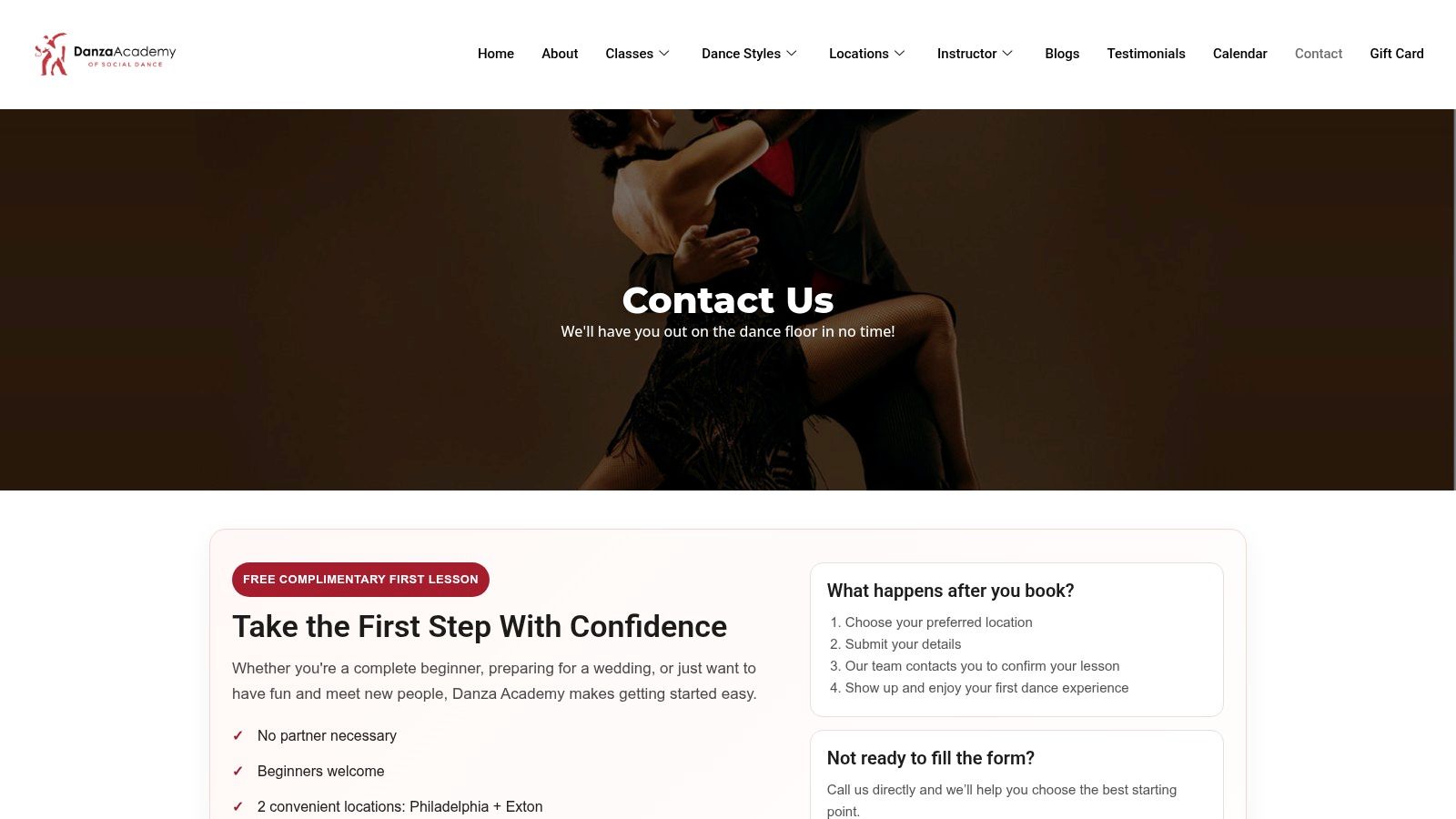
A complimentary first lesson is a simple way to stop searching and start dancing with Danza Academy of Social Dance. If you want a welcoming place to explore ballroom, Latin, and social dance, you can book your free lesson through the Danza Academy contact page.