
A lot of couples reach the same point at the end of a long week. You've already done dinner. You've already watched another show. You want something that feels like time together, not just time spent in the same room.
That's usually where dancing starts to make sense.
Ballroom dance classes for couples give you something rare. You're learning a skill, moving together, laughing at the awkward parts, and building a kind of teamwork that doesn't feel like work. For absolute beginners around Philadelphia and Exton, that matters. You don't need performance goals. You don't need special shoes on day one. You just need the willingness to try something new as a pair.
At a local studio, the first win usually isn't looking polished. It's realizing that dancing is teachable, welcoming, and much less intimidating than you expected.
Find a New Rhythm in Your Relationship
A couple usually walks in with one simple goal. They want a better date night.
Maybe you're searching for something that gets you off your phones. Maybe one of you has always wanted to dance and the other is just curious enough to give it a try. Maybe you have a wedding coming up, or maybe you just want a shared hobby that feels fresh.
Ballroom dance classes for couples work because they give you a reason to pay attention to each other again. Not in a heavy, serious way. In a practical, enjoyable way. You listen, respond, adjust, and improve together. That creates momentum fast.
Why couples stick with it
The couples who enjoy dancing most aren't usually the ones with natural rhythm. They're the ones who let themselves be beginners.
You don't have to know the names of the dances. You don't have to choose between Waltz and Salsa before you've taken a step. You start by learning how to stand together, move to music, and understand basic lead and follow. Once that clicks, the whole experience opens up.
A good local studio should make that feel normal, not intimidating. In the Philadelphia and Exton area, beginners usually want three things:
- Clear instruction: You want to know what to do with your feet, your frame, and your timing.
- A relaxed atmosphere: You don't want your first lesson to feel like an audition.
- A path forward: You want to know what comes after the first class if you enjoy it.
Dancing together isn't about getting everything right. It's about getting comfortable enough to keep going.
That's where the fun starts. One lesson turns into a new routine. A new routine turns into a skill you can use at weddings, parties, social events, and nights out.
More Than Just Steps The Benefits of Dancing Together
Couples often come in thinking dance is mainly about learning patterns. The patterns matter, but they aren't the whole value. The bigger shift is what happens between you while you learn them.
A good partner dance asks each person to stay present. One person leads information clearly. The other responds clearly. Then you switch from thinking too much to feeling the music together. That process changes how couples interact, even in the first stretch of learning.
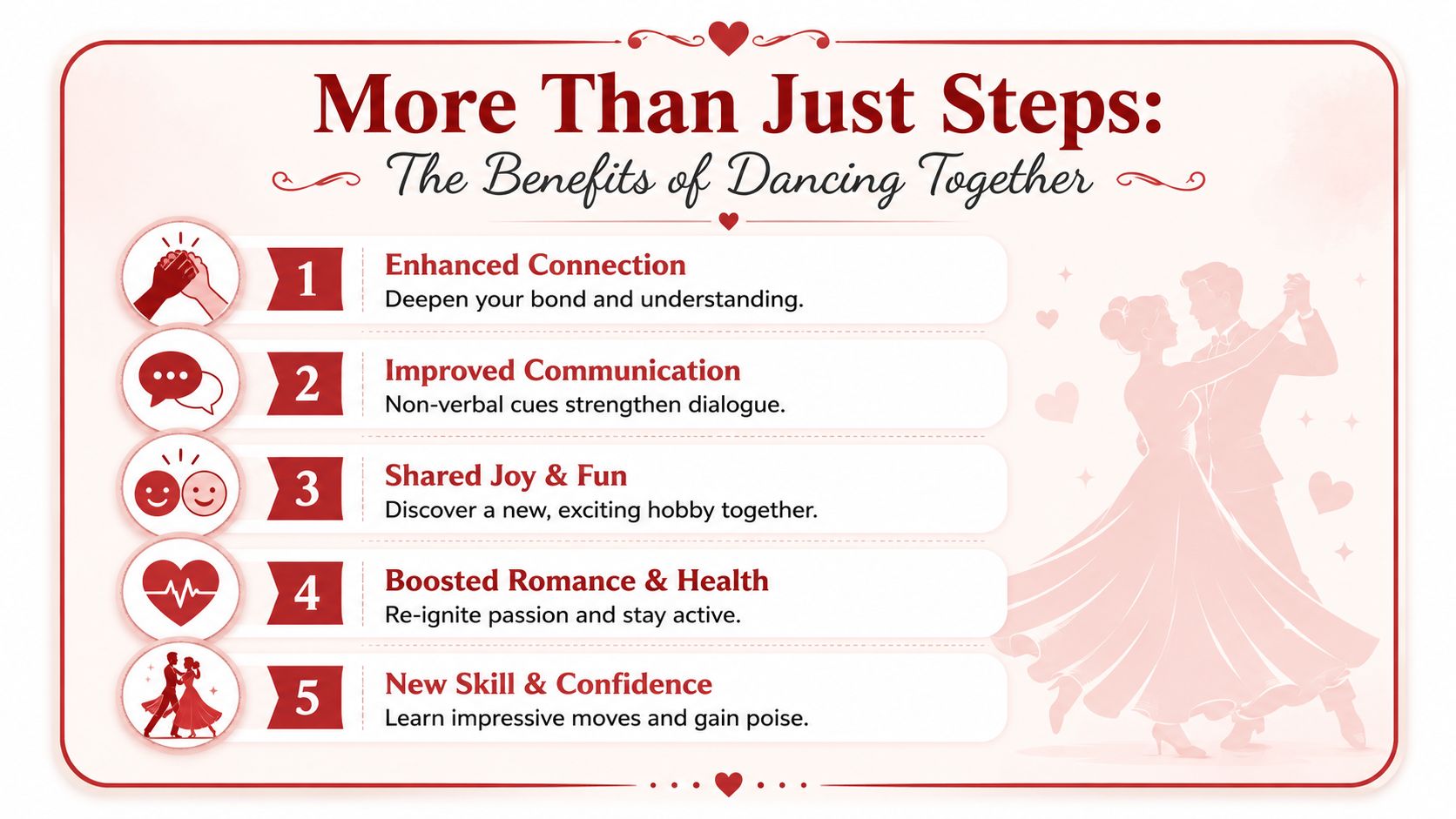
You learn to communicate without overtalking
Most beginners are surprised by how little ballroom depends on spoken instructions once you're moving. Lead and follow is physical communication. If the lead is too forceful, the dance feels rough. If the signal is unclear, the follow can't read it. If the follow disconnects, the partnership feels heavy.
That makes dancing useful for couples in a very practical way. You start noticing timing, tone, and responsiveness.
For a broader look at how movement, posture, and social dancing support adults beyond the dance floor, Danza Academy also shares practical insights in its guide to the benefits of ballroom dancing.
You replace passive time with shared effort
Dinner is enjoyable. A movie can be relaxing. Neither asks much from you as a team.
Dance does. You have to try, miss, repeat, and improve together. That shared effort creates better memories than another routine night out. Even when the lesson feels messy, couples usually leave with one thing they didn't have when they walked in. A new inside joke, a small win, or a clearer sense that they can learn together.
You get joy without needing perfection
Swing and Salsa bring out playfulness. Waltz and Foxtrot create a smoother, calmer feeling. Tango gives couples a sharper, more focused connection. Different styles create different moods, but the common thread is simple. Dancing gives you a reason to be light with each other.
That matters more than people think.
- Connection grows through repetition: When you practice the same movement together, trust builds naturally.
- Confidence comes from small wins: One clean turn or one successful basic can change how beginners feel.
- Stress drops when your attention is on the music: You can't obsess over your inbox while counting rhythm and moving across the floor.
Practical rule: If you wait to feel “ready” before dancing, you'll wait too long. Confidence usually shows up after you start, not before.
It gives you a hobby that can stay with you
This is one reason couples keep returning to ballroom dance classes for couples long after the first date-night impulse fades. It's social, useful, and expandable. You can stay casual. You can focus on weddings and events. You can branch into Latin, smooth ballroom, or social partner dancing.
You're not just buying an evening out. You're learning a skill you can keep using.
Your First Dance Moves What You Will Learn
Beginners usually want to know one thing before anything else. What are we going to dance?
The answer depends on the class, but most couples start with styles that are easy to enjoy socially and clear to teach step by step. In many markets, recurring couples programs use familiar ballroom and Latin dances such as Waltz, Foxtrot, Tango, Rumba, Cha Cha, East Coast Swing, Salsa, and Hustle, often in a format with 3 weeks of learning and 1 week of review with a mini social party, as shown in one current ballroom date-night series example.
Four styles beginners connect with quickly
Waltz feels graceful and unhurried. If you want a dance that glides and gives you time to breathe, Waltz is often the easiest place to feel elegant before you feel advanced.
Foxtrot is smooth and social. It fits a wide range of music, and couples often like it because it feels usable. You can picture it at weddings, parties, and classic dance events.
Tango has more shape and intention. It isn't about speed. It's about control, direction, and clear partnership. Couples who like a dramatic feel often gravitate to Tango right away.
Salsa brings more energy into the room. The rhythm is lively, the footwork feels sharper, and the atmosphere is usually playful. If you want movement that feels upbeat and outgoing, Salsa is a strong fit.
What a beginner class usually focuses on
The first phase of ballroom dance classes for couples doesn't overload you with technique terms. It builds the parts you need:
- Basic timing: You learn when to step, not just where.
- Frame and posture: This helps the dance feel balanced instead of wobbly.
- Lead and follow connection: You begin to understand how information travels between partners.
- Core patterns: These are the building blocks you'll reuse later in turns, transitions, and social dancing.
That structure matters. Couples do better when the material is compact and progressive rather than random.
The fastest way to make dancing feel hard is to chase flashy moves before your basics feel steady.
How the class experience usually unfolds
A recurring social-learning program works well because it gives couples enough repetition to remember the material, but not so much pressure that the class becomes stiff. You learn a little, review a little, and then use it socially.
That final social component is more important than many beginners realize. It helps you stop treating dance as a memorization task and start treating it as movement with another person.
If one style doesn't click, that's normal. Some couples love the softness of Waltz. Others wake up when the music shifts to Cha Cha or Swing. The right starting dance is usually the one that makes you want another lesson.
Group Fun or Private Focus Choosing Your Class Format
You and your partner are ready to start, but one of you wants a lively class with other beginners and the other wants more privacy. We hear that in Philly and Exton all the time. The right answer depends on what you want your lessons to do first.
Group classes and private lessons build different strengths.
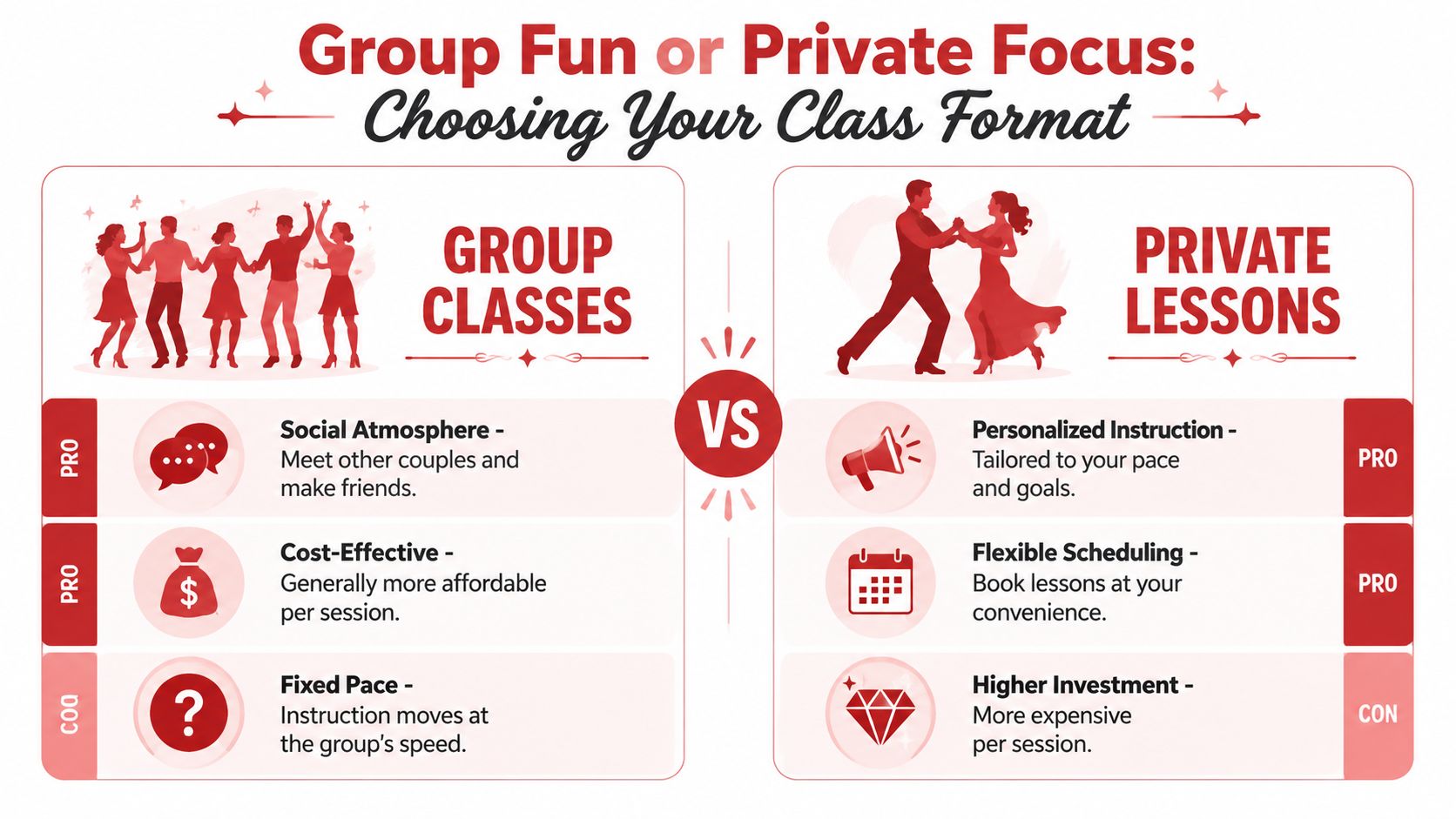
When group classes are the better starting point
Group classes work well for couples who want dancing to feel normal, social, and low pressure. In a room with other beginners, you stop treating every step like a test. You learn to keep going, even if a pattern gets messy, and that is a big part of becoming comfortable on a real dance floor.
They also teach room awareness. You adjust to the music, the energy of the class, and the fact that other couples are moving around you. For social dancers, that matters just as much as memorizing the pattern.
Start with group classes if you want to:
- Get comfortable dancing around other people
- Try a style before committing to more focused training
- Keep the mood relaxed while you build confidence
- Practice partner skills in a setting that feels social instead of intense
For many beginners at Danza Academy, group classes take the edge off. The class energy helps. You see quickly that nobody is expected to be polished on day one.
When private lessons are the smarter choice
Private lessons make more sense when you have a specific goal, a deadline, or a learning gap that needs attention. Wedding couples often fit here. So do couples where one partner picks things up fast and the other needs more repetition.
That is the trade-off. Private instruction gives you personal feedback and faster correction, but it also puts more focus on you as a couple. Some people love that. Some feel less relaxed at first.
If you want that one-on-one structure, private dance lessons for adults give you space to work at your own pace, repeat what needs work, and build around a clear goal.
A simple way to decide
Use your next goal, not your ideal future goal.
| Your main goal | Better starting format |
|---|---|
| Feeling comfortable at parties, socials, and community events | Group classes |
| Preparing one dance for a wedding or special event | Private lessons |
| Sampling styles before choosing a favorite | Group classes |
| Cleaning up specific habits or building choreography | Private lessons |
A blended approach often works best. Many couples start with group classes to get comfortable, then add a few privates when they want sharper feedback or help with a specific routine.
That mix is one of the biggest things generic guides miss. Here in the Philadelphia area, we see couples do better when the format matches the stage they are in, not some fixed rule about what beginners are "supposed" to do.
If you are planning a wedding, that choice can affect more than the dance itself. A private lesson track usually fits couples who want a polished first dance and a cohesive look in photos and video, especially if the overall celebration is being styled with fine art wedding photography in mind.
Start with the format that fits your immediate goal. You can always add the other later.
Crafting Your Perfect Wedding First Dance
Wedding couples often carry more stress into dance lessons than social couples do. That's understandable. You're not just learning for yourselves. You're preparing for a moment people will watch.
The good news is that your first dance doesn't need to be complicated to feel polished. It needs to fit your music, your comfort level, and the mood you want to create.
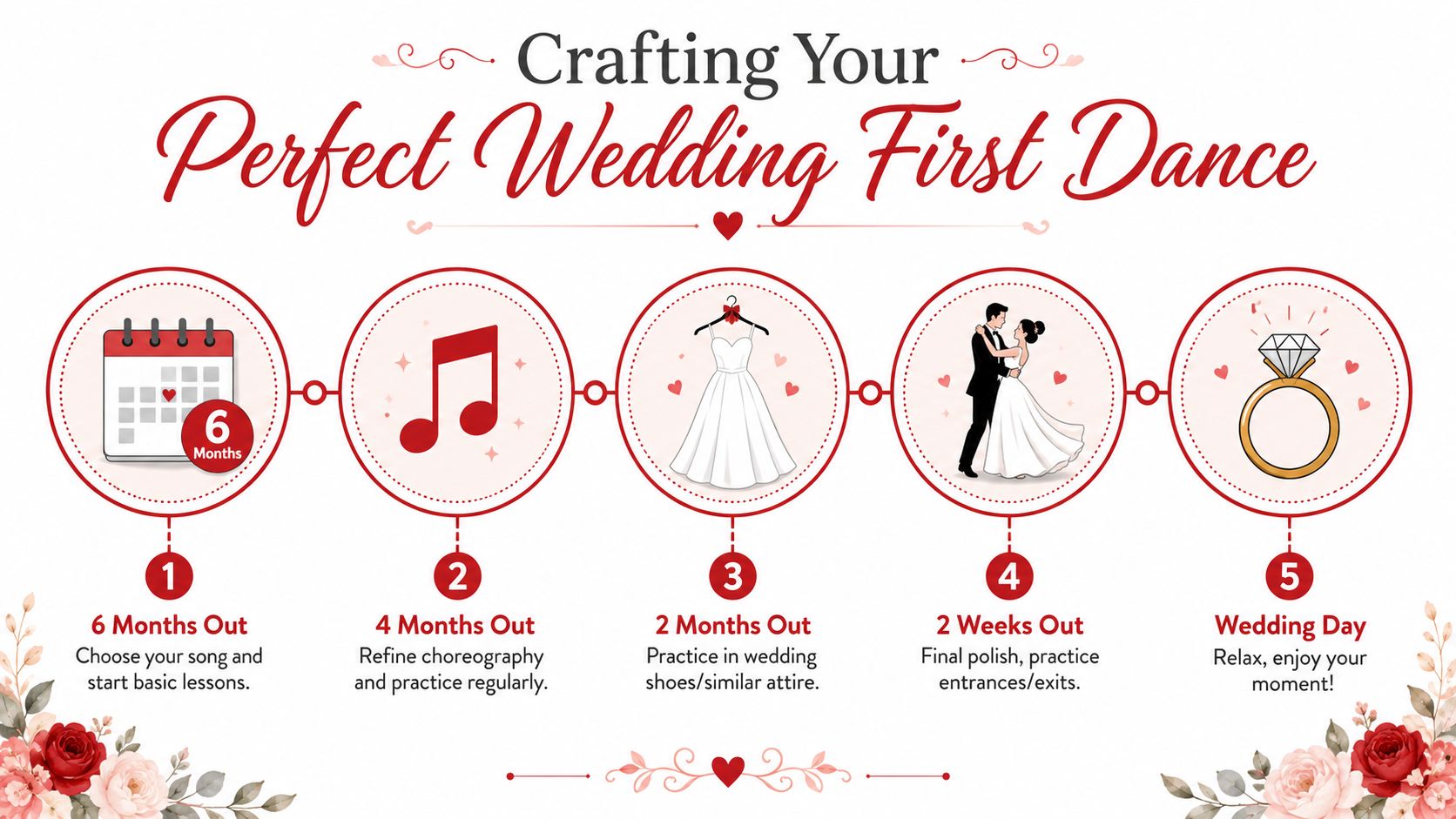
A simple planning timeline
If you have plenty of time before the wedding, use it. Spacing your lessons out makes practice calmer and gives your movement time to settle.
- 6 months out: Choose your song and begin basic lessons.
- 4 months out: Refine the structure of the dance and practice consistently.
- 2 months out: Practice in wedding shoes or clothing that feels similar.
- 2 weeks out: Clean up entrances, exits, and any featured moments.
- Wedding day: Trust the work and enjoy the room.
That timeline works because it keeps the dance from becoming a last-minute problem.
What couples can realistically expect early on
One of the most useful benchmarks for wedding dance planning is what changes after the first 4 to 8 lessons. A practical introductory resource notes that couples often gain measurable progress in that span, including feeling comfortable on the floor, understanding lead-follow connection, and mastering the core patterns of a dance that can support a confident first dance, as described in this wedding dance learning overview.
That's the sweet spot for many couples. Not perfection. Stability.
Here's what often matters most:
- Comfort over complexity: A clean basic with good posture looks better than rushed choreography.
- One memorable highlight: A turn, dip, or entrance can be enough to make the dance feel special.
- Music that suits you: Some couples want romantic and elegant. Others want relaxed and playful.
Make the dance fit the full wedding aesthetic
Your first dance doesn't stand alone. It's part of the visual and emotional memory of the day. The music, the lighting, your movement, and the photography all work together.
If you're thinking through how the moment will look as well as feel, this guide to fine art wedding photography is a useful reference because it shows how timeless wedding imagery is shaped by atmosphere, composition, and intentional detail.
A strong first dance feels like you. Guests respond to comfort and connection more than complexity.
Couples who do best with wedding dancing usually stop asking, “How impressive should this be?” and start asking, “What version of us do we want people to see?”
Get Ready for Your First Lesson in Philly or Exton
Most first-lesson nerves have nothing to do with dancing. They're logistical. What should we wear? What shoes should we bring? Are we going to feel out of place?
The answer to the last one is usually no. Beginner lessons are built for people who haven't done this before. The less you try to perform on day one, the easier it is to learn.
What to wear and bring
Start simple. You do not need costume energy for a beginner lesson.
- Comfortable clothing: Wear something you can move in without adjusting constantly.
- Shoes with a smoother sole: Avoid heavy sneakers if possible because they can grip the floor too much.
- A little water and a good attitude: That's enough for a first visit.
If you're attending local Philadelphia ballroom dance classes, it also helps to give yourself a few extra minutes to arrive, settle in, and not rush onto the floor carrying city-day stress with you.
What the first lesson usually feels like
The teacher will usually start by showing you where to stand, how to hold your frame, and how to find the timing. You won't be expected to know dance vocabulary. You'll be guided through it.
Most couples are relieved by how practical the process is. Step here. Shift there. Listen for this count. Repeat. That's how confidence gets built.
A quick studio video can make that first visit feel more familiar before you arrive.
Philly and Exton beginners do better when they keep it simple
If you're choosing between waiting until life calms down and starting now, start now. Adults rarely feel less busy later. The couples who make progress are usually the ones who book the lesson before they feel perfectly prepared.
A first lesson is for orientation, not mastery. You're there to see how the studio feels, how your partnership feels in motion, and what kind of learning path makes sense for you.
Start Your Dance Journey at Danza Academy
Dancing together gives you more than a date night. It gives you a shared language, a useful social skill, and a reason to keep learning side by side. Whether you're interested in social dancing, a wedding first dance, or trying something new in Philadelphia or Exton, the right beginner experience should feel approachable from the first step.
Danza Academy of Social Dance is one local option that naturally fits. It offers ballroom, Latin, social dance, private lessons, group classes, and wedding dance preparation in the Philadelphia area. For new couples, the easiest next step is to try it without pressure.
Book a free complimentary lesson through the Danza Academy contact page. It's a simple way to meet an instructor, ask questions, and find out what dancing together can feel like.
Frequently Asked Questions for New Couples
Do we need dance experience before signing up
No. New couples walk into our Philadelphia and Exton classes every week with zero dance background. Beginner lessons are built to teach posture, timing, partner connection, and a few foundational patterns in a way that feels manageable from day one.
You do not need to "prepare" before you start. You just need shoes you can move in and a willingness to learn together.
Do we have to come with a partner
No. Some classes welcome solo students, while others are set up specifically for couples. That is one reason we always tell new students to ask about class format before enrolling.
If you are signing up as a couple, learning together from the start has real advantages. You build shared habits early, and you get used to each other's timing faster.
What if one of us learns faster
That happens all the time.
In a good beginner class, different learning speeds are normal, not a problem. One partner may pick up footwork first. The other may understand lead and follow more quickly. Progress evens out when both people stay focused on their own job instead of coaching each other between every count.
As instructors, we watch for that dynamic closely at Danza Academy. The couple that improves fastest is usually the one that stays patient, keeps a sense of humor, and lets the teacher handle corrections.
Which dance should couples learn first
Start with your goal, not with a dance that sounds impressive. Couples who want a classic social style often do well with Waltz or Foxtrot. Couples who want something upbeat may connect faster with Salsa, Swing, or Cha Cha.
The best first choice is the one you will enjoy practicing. If you are not sure, we help you test that in the first lesson instead of guessing from a list online.
Are group classes enough for a wedding dance
Sometimes. It depends on the result you want.
Group classes are often enough if your goal is to feel comfortable dancing together, stay on beat, and avoid the middle school sway. Private lessons usually make more sense if you want your dance built around your song, your floor space, your dress, or a specific entrance and finish. That group-versus-private decision matters more than many beginner guides admit, and it is one of the first things we help couples sort out.
If you're ready to try ballroom dance classes for couples in a welcoming local setting, book your free complimentary lesson with Danza Academy of Social Dance. It's the easiest no-pressure way to take that first step together.