Have you ever finished a great dance class and thought, “I want to do something with this”? Not just learn another pattern. Not just dance one more social. Something a little bigger, a little more memorable, and a little more public.
That's where many dancers get stuck. Traditional advice often makes performance sound like a narrow path. Join a competition team, audition for a company, or wait until you're “advanced enough.” But for Ballroom, Latin, and social dancers, performance can mean far more than that. It can be a wedding first dance that feels personal and polished. It can be a studio showcase, a community festival, a charity gala, or a themed social where you step into the center of the room with real confidence.
That wider view matters. Public dance listings and studio pages often lean toward auditions, selective groups, or class-based pathways, which can leave adult beginners and social dancers wondering where they fit. The gap is real, and ODC's overview of performance opportunities reflects how often performance is framed around formal tracks rather than beginner-friendly first experiences.
The good news is that dance performance opportunities are broader than generally assumed. If you dance Salsa, Waltz, Cha-Cha, Rumba, Swing, Tango, or any social style, there's likely a stage that fits your current level and your goals.
Danza Academy helps students turn that next step into a clear plan. Below are 10 practical ways to move from the studio floor to the spotlight, with examples, preparation ideas, and the kind of guidance that helps social dancers perform, not just talk about it.
1. Wedding First Dance Performance
For many adults, the first real performance isn't in a ballroom competition. It's at their own wedding.
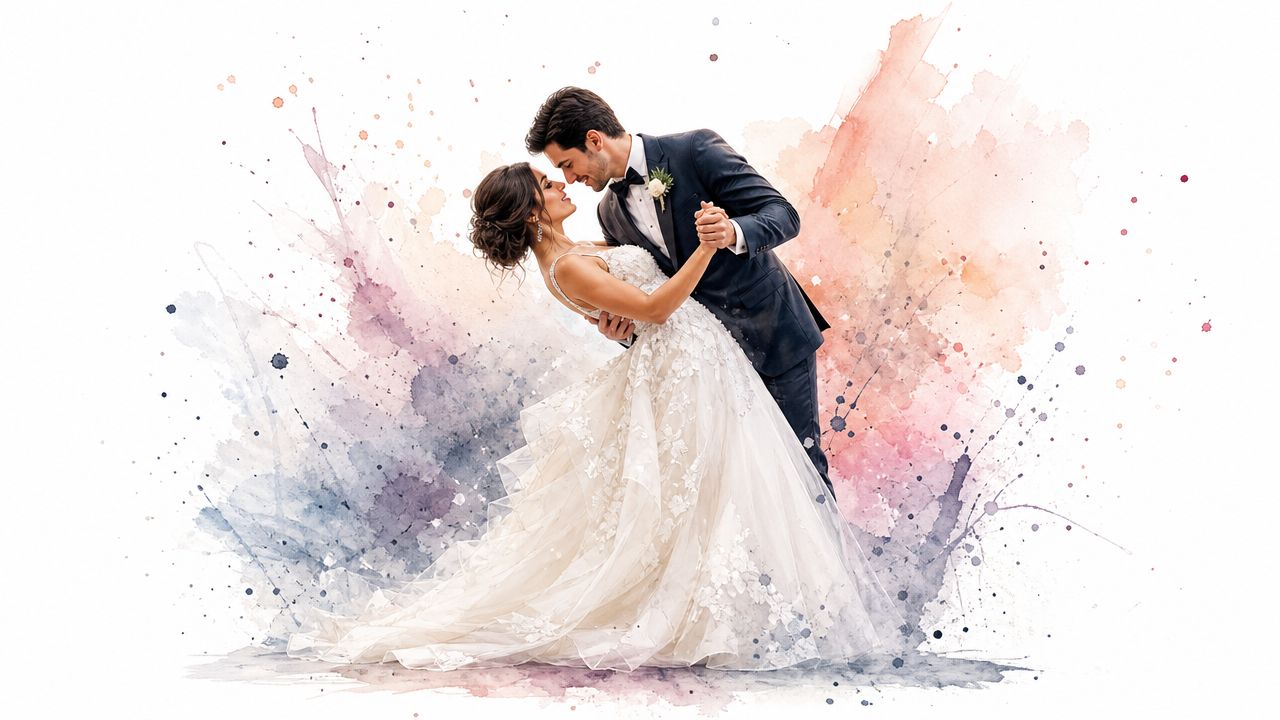
A first dance gives couples a reason to train with focus. The result isn't just a routine. It's a moment that reflects their relationship, their music, and the tone of the celebration. Some couples want a classic Viennese Waltz for a black-tie room. Others prefer Country Two-Step, Swing, Salsa, or a romantic Rumba that feels more natural and relaxed.
A polished first dance starts with a plan, not with random choreography copied from social media.
How to make it feel natural
The strongest wedding dances usually match the couple's actual comfort level. If you're new to dancing, simple movement done confidently will look better than difficult tricks done nervously. That's why good instruction includes music selection, entrance and exit planning, posture, timing, and how to recover if something goes off script.
At Danza Academy, couples can build that moment through first dance lessons for weddings, with coaching that fits the event instead of forcing a one-size-fits-all routine.
Practical rule: Choose a dance that suits your song and your nerves. Guests remember connection and confidence more than complexity.
A useful outside resource is this expert guide for engaged couples, especially if you're also thinking about how the dance floor setup affects movement.
Later in the process, rehearsal videos become especially helpful. Watching your own run-through shows where the timing drifts, where arms get tense, and where transitions need cleaning.
A short demo can also help couples picture what's possible.
2. Social Dance Showcases and Studio Recitals
If you want stage experience without the pressure of a formal competition, studio showcases are one of the best dance performance opportunities available.
These events let students perform in front of friends, family, and other dancers in a supportive setting. A showcase might include a beginner group Salsa, a Ballroom medley, a holiday-themed Latin routine, or a duo that highlights one couple's progress. The atmosphere is usually celebratory rather than judgment-heavy, which makes it ideal for first-time performers.
Why showcases work so well for adults
Adults often learn best when they have a clear deadline and a specific reason to practice. A recital or studio showcase creates both. Instead of taking classes in the abstract, you're preparing for a room, an audience, an outfit, an entrance, and a finish.
That process teaches more than choreography. It teaches spacing, expression, recovery, partnering, and how to keep dancing when adrenaline shows up.
Some dancers start with a group number because it feels safer. Others add a duo or a short featured piece once they've built confidence. Both paths work. What matters is choosing a format that stretches you without making you shut down.
A few preparation habits help a lot:
- Start with one clear role: Group performer, duo dancer, or featured student. Don't overcommit on your first outing.
- Rehearse in performance conditions: Practice with the shoes, skirt, jacket, or shirt you'll wear.
- Run full pieces, not fragments: A stage dance feels different when you have to remember the opening, transitions, and ending in one pass.
For social dancers, a showcase often becomes the bridge between class participation and public performance. It gives you a safe first spotlight, and that first spotlight tends to open the door to many more.
You can even borrow practical event-planning ideas from outside the dance world, like this piece on London wedding marquee advice, especially if your studio or community event uses a temporary venue setup.
3. Competitive Ballroom and Latin Dance Competitions
Competition isn't the only path, but it is a meaningful one for dancers who like structure, feedback, and measurable progression.
Ballroom and Latin competitions create a focused environment where technique matters. Dancers train for clarity, timing, musicality, posture, partnering, and floorcraft. Some compete as amateur couples. Others choose Pro-Am formats, where a student partners with a professional instructor. Local events can be a strong starting point because they let you experience the format before you commit to a bigger calendar.
Who competition suits best
Competition tends to fit dancers who enjoy goals with firm timelines. If you like coaching notes, repeated drills, performance polish, and the challenge of presenting your best version under pressure, this format can be highly motivating.
The labor market around dance also shows that the profession continues to hold real demand. The U.S. Bureau of Labor Statistics projects about 2,500 annual openings for dancers and choreographers from 2024 to 2034, with overall employment expected to grow 5% over that period. Even if you're dancing as an amateur, that broader ecosystem helps explain why coaching, choreography, judging, teaching, and performance training remain active parts of the dance world.
Some dancers discover that competition sharpens their social dancing. Others realize they prefer performance without ranking. Both outcomes are useful.
A smart first step is to enter at a level that matches your actual readiness, not your ambition alone. New competitors usually benefit from fewer dances, clear routines, and realistic expectations. The point of the first event isn't to prove everything. It's to learn how the day feels.
At Danza Academy, this kind of training works best when students combine private coaching with technical group work and plenty of repetition. Competition rewards preparation. It also rewards perspective. You're not just trying to win. You're learning how to perform under pressure with skill and composure.
4. Corporate Events and Team Building Dance Performances
Corporate dance events sit in a useful middle ground. They're public enough to feel exciting, but they're often designed for enjoyment, participation, and shared experience rather than strict performance standards.
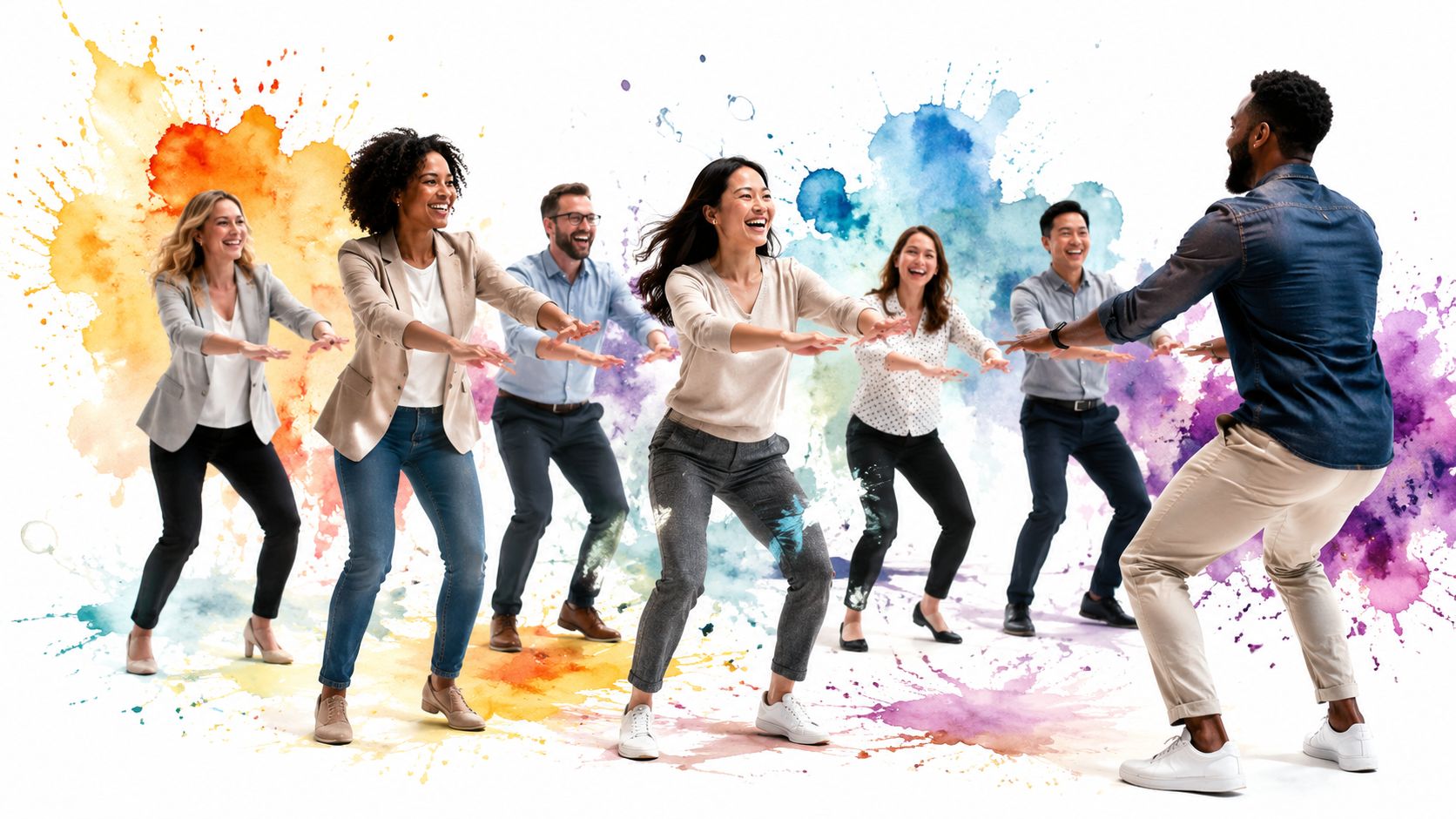
A company might hire dancers to open a gala, lead a Salsa mini-lesson at a holiday party, or teach a partner-dance segment during a retreat. Sometimes the performance comes from instructors. Sometimes employees learn a short routine and present it together. For social dancers, that creates a path to perform in a setting that feels lively and accessible.
What makes corporate events different
The audience usually isn't made up of dance specialists. That changes the job. Clean timing, warm energy, easy-to-read movement, and crowd engagement matter more than highly specialized technique. A short Cha-Cha demonstration, a fun Swing routine, or a beginner-friendly Rumba line-up can land very well in this context.
For dancers who want more performance experience, corporate bookings also teach adaptability. You may deal with carpet instead of a sprung floor, a low stage, changing light, or guests standing close to the performance space.
A few habits help:
- Keep routines audience-friendly: Strong basics often play better than dense choreography.
- Prepare a participation option: Corporate crowds love a simple follow-along moment when it's taught well.
- Plan for space changes: Always rehearse a compact version of the routine.
Studios that work in this area often build relationships with event planners, office managers, and HR teams. That creates recurring opportunities for dancers who are reliable, polished, and comfortable performing in mixed environments.
At Danza Academy, this pathway can be especially appealing for Ballroom and Latin students who want to use their dancing in real-world settings without jumping straight into competition.
5. Social Dance Parties and Themed Dance Nights
Not every performance has to happen on a raised stage. Sometimes the center of the social floor is the stage.
Themed dance nights, studio socials, and community parties give Ballroom and Latin dancers a chance to perform in a more informal but still visible way. You may dance a planned routine during a Salsa night, join a featured demo at a Ballroom gala, or take the floor with enough command that people naturally gather to watch.
That kind of visibility matters, especially for dancers who want to build confidence before committing to a showcase or competition.
Turning a social into a performance opportunity
The line between social dancing and performance gets thinner when you dance with intention. A polished entrance, musical phrasing, clean lead-and-follow, and a clear ending can transform a regular dance into a small public moment.
If you're still defining your relationship to this part of the dance world, Danza Academy's overview of what social dancing is is a helpful place to start. It frames social dance as both a skill and a community practice, which is exactly why these events can become stepping stones toward larger dance performance opportunities.
The market behind this kind of instruction is substantial. IBISWorld estimates the U.S. dance studios industry will reach $5.0 billion in 2026, with 14,622 businesses in the sector and revenue growing at a 0.8% CAGR from 2020 to 2025. That mature but active studio environment helps explain why socials, recitals, classes, and event-based programming remain such common entry points for dancers.
Coach's note: If you can dance comfortably in a crowded social room, you're already learning many of the same composure skills that public performers need.
Themed nights also teach floorcraft, musical adaptability, and partner connection. Those are performance skills, even when the event feels casual.
6. Private Performance and Choreography Services
Some of the most meaningful performances happen far from formal dance venues.
Private choreography services are ideal for people who want a custom routine for a proposal, anniversary, milestone birthday, retirement party, family reunion, or surprise celebration. These performances often carry strong emotional weight, which means the choreography needs to fit the people involved, not just the music.
A daughter and father may want a short Foxtrot for an anniversary event. A group of siblings may want a fun Salsa surprise for a parent's birthday. A couple may want to recreate a song that mattered early in their relationship. The performance can be simple and still land beautifully.
Where private lessons make the difference
Custom routines work best when the coaching is personal from the start. Group classes can support general skill-building, but a private performance usually needs focused attention on timing, transitions, entrances, exits, and confidence under pressure.
That's why many dancers prepare through private dance lessons at Danza Academy. One-on-one instruction makes it easier to shape the routine around the event, the music, and the performer's comfort level.
The strongest private choreography plans usually include:
- A clear event brief: What's the occasion, who's dancing, and what should the moment feel like?
- A realistic practice method: Video recaps and short home assignments help people retain choreography.
- A performance map: Knowing where to start, where to face, and how to end lowers anxiety fast.
Private performances also reward restraint. It's often better to do less, but do it well. A clean box step, a well-led turn, or a smooth dip can feel far more impressive than a crowded routine that no one fully owns.
For social dancers, this format is especially encouraging because it proves performance doesn't belong only to competitors. It belongs to anyone who wants to create a memorable moment through movement.
7. Workshop Series and Intensive Training Events
Some dancers need a deadline. Others need immersion.
Workshops and intensives create a concentrated training period where performance skills can develop quickly. A weekend Salsa intensive, a Tango immersion, a Ballroom styling series, or a performance-prep masterclass gives dancers repeated exposure to the same ideas over a short stretch. That repetition is powerful. Instead of touching a concept once per week, you live in it for several sessions in a row.
What intensives build
These events sharpen details that often get rushed in regular classes. Posture. Frame. Musical accents. Turns under pressure. Presence. Partner responsiveness. Performance quality often improves when dancers spend sustained time on fundamentals instead of constantly learning new patterns.
The broader demand for structured dance education supports this model too. Future Data Stats values the global dance training market at USD 15 billion in 2024 and projects it to reach USD 25 billion by 2032, reflecting a 7% CAGR. Whether instruction happens in person or through blended formats, that projection points to strong interest in organized training across recreational and performance-focused dancers.
A workshop becomes especially useful when it ends with a showing, a mini showcase, or a coached social dance session. The learning then has a public outlet.
Consider these practical uses:
- Performance preparation: Join an intensive before a studio showcase or competition cycle.
- Style specialization: Use workshops to go deeper in Salsa, Tango, Waltz, or Cha-Cha.
- Confidence building: Repeated coached reps help dancers feel less tentative in front of others.
A good intensive doesn't just pile on choreography. It gives you corrections you can actually keep.
8. Community Outreach and Public Performance Events
Community events are one of the most welcoming ways to perform because the purpose reaches beyond the dancers themselves.
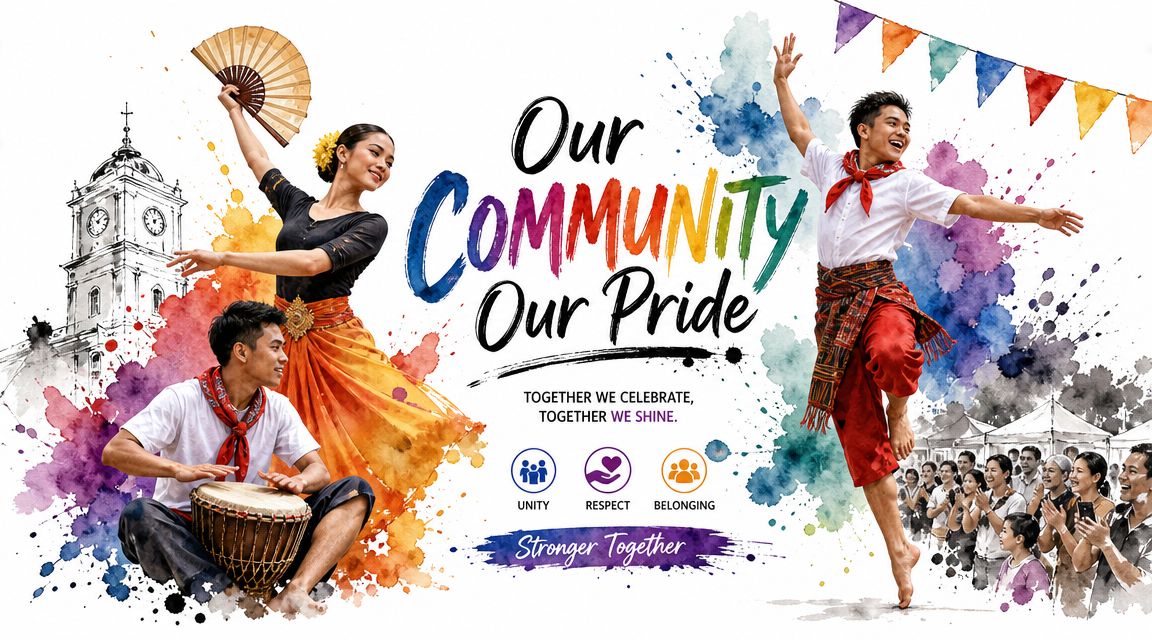
Festivals, neighborhood fairs, cultural events, holiday celebrations, school programs, and wellness gatherings often need lively, audience-friendly performances. Ballroom, Latin, Swing, and social styles fit these settings well because they're rhythmic, recognizable, and easy for the public to enjoy. A student Salsa team at a summer festival or a mixed Ballroom group at a local arts fair can create a memorable public moment without the formality of a theater production.
Why public events are so useful for developing dancers
Community performances teach visibility. You're often dancing in daylight, on a temporary floor, with people walking by, children moving nearby, and sound conditions that aren't perfect. That environment builds resilience fast.
It also teaches communication. In public settings, your dancing needs to read clearly to people who may know nothing about dance technique. Big rhythm, clean partnering, strong smiles, and clear shapes matter.
Public performances are often the first time a dancer realizes they can hold attention outside the studio.
For adult social dancers, that can be a turning point. Suddenly, performance stops feeling exclusive. It becomes part of community life.
Studios that serve this space well usually organize rehearsals that account for travel, spacing, costume coordination, and outdoor uncertainty. Dancers learn how to adapt while still presenting something polished. That's a valuable skill set, and it often leads to repeat invitations from organizers who want dependable performers for future events.
9. Cruise Ship and Travel Package Dance Programs
Travel-based dance programs appeal to dancers who want performance to feel like an experience, not just an event.
Cruise ships, resort programs, and dance travel retreats can include lessons, socials, themed evenings, and guest performances. Some programs focus on participation, where travelers learn and dance socially throughout the trip. Others add a showcase component, allowing attendees or instructors to perform in a more formal setting during the itinerary.
Why this format attracts social dancers
Travel changes the emotional tone of dancing. People arrive ready to enjoy themselves, meet others, and try something new. That can make performance feel less intimidating. A dancer who feels hesitant in a local studio may feel freer on a group trip where the atmosphere is festive and the expectations are lighter.
Ballroom and Latin styles fit especially well here because they work in both instructional and entertainment formats. A daytime Rumba class can lead into an evening social. A small Cha-Cha demo can become a crowd-pleasing part of a themed night.
If you're curious about the travel side of the industry, browsing general information about cruise ships and travel routes can help you understand the variety of settings where dance programming may appear.
For committed students, group travel also creates a strong rehearsal bond. People practice together before the trip, share the event itself, and return with a clearer sense of what kind of performer they want to become.
This path won't be everyone's first step, but it can be a memorable one. For some dancers, a destination performance becomes the spark that leads them back into regular training with renewed focus.
10. Charity Galas, Fundraising, and Benefit Performance Events
Performing for a cause changes the feeling of the room.
At a charity gala, benefit showcase, or fundraising dance night, the performance isn't only about presentation. It also supports a mission people care about. That creates a different kind of energy. Audiences are often more engaged, and dancers often feel more connected to what they're doing because their work contributes to something beyond themselves.
Why benefit performances matter
Benefit events are especially good for dancers who want a meaningful first performance. The focus widens. You're not just asking, “Did I dance well?” You're also part of a larger effort that may support education, health programs, youth services, or community arts.
These events can take many forms. A studio may contribute entertainment for a nonprofit gala. A group may organize a Latin social where proceeds support a local cause. Student dancers may perform as part of a scholarship fundraiser or community celebration.
The best routines for these settings are usually polished, warm, and easy for a mixed audience to follow. A dramatic Tango, joyful Salsa set, elegant Waltz, or upbeat Swing number can work beautifully, depending on the event's tone.
A few practical principles help:
- Choose a cause that aligns: Dancers perform with more conviction when the mission feels genuine.
- Match the room: A formal gala and a community fundraiser need different choreography styles.
- Prepare for hosting duties: Benefit events often blend performance with mingling, teaching, or audience interaction.
These settings also build reputation. Event organizers remember dancers who are generous, prepared, and easy to work with. That can lead to more invitations and a broader place in the local dance community.
Comparison of 10 Dance Performance Opportunities
| Activity | Implementation complexity | Resource requirements | Expected outcomes | Ideal use cases | Key advantages |
|---|---|---|---|---|---|
| Wedding First Dance Performance | Moderate, custom choreography and timed rehearsals | Private lessons, rehearsal space, final-run rehearsal, possible video | Memorable emotional moment, strong client satisfaction, referrals | Engaged couples preparing for a specific wedding date | High-margin, personalized, strong word-of-mouth |
| Social Dance Showcases & Studio Recitals | High, event production and segment coordination | Venue/stage, lighting, sound, rehearsal schedule, volunteers | Student confidence, community visibility, ticket revenue | Annual or seasonal studio showcases, student progress events | Visibility, retention, social media content |
| Competitive Ballroom & Latin Competitions | High, technical coaching and adherence to rules | Intensive training, coaching, competition fees, travel, costumes | Awards, measurable progression, high student engagement | Advanced students seeking rankings and advancement | Prestige, clear goals, networking opportunities |
| Corporate Events & Team-Building Performances | Moderate, client customization and logistics | Travel, adaptable choreography, corporate sales materials, marketing | High revenue per engagement, brand exposure, new audience access | Company retreats, holiday parties, HR team-building sessions | Lucrative contracts, scalable, corporate referrals |
| Social Dance Parties & Themed Nights | Low–Moderate, recurring scheduling and promotion | Studio space, DJ/music, minimal staffing, marketing | Recurring revenue, community building, casual practice opportunities | Weekly socials, themed dance nights, drop-in practice | Low cost to run, builds community, attracts newcomers |
| Private Performance & Choreography Services | Moderate, bespoke creative process and revisions | One-on-one coaching, music editing, video recording, optional costuming | Premium revenue, deep client relationships, testimonial content | Proposals, anniversaries, milestone celebrations | High margins, highly personalized outcomes |
| Workshop Series & Intensive Training Events | High, advanced planning and guest coordination | Guest instructors, larger venues, promotion, multi-day scheduling | Skill acceleration, premium revenue, elevated studio reputation | Weekend intensives, style-specific masterclasses | Attracts serious students, premium pricing, marketing buzz |
| Community Outreach & Public Performance Events | Moderate, coordination with event organizers | Costumes, travel logistics, outdoor staging, promotional materials | Broad community visibility, new student leads, goodwill | Festivals, parades, street fairs, community arts events | Cost-effective marketing, wide audience reach, PR value |
| Cruise Ship & Travel Package Dance Programs | High, partnership negotiation and travel logistics | Travel/time away, accommodations, adaptable curricula, contracts | Premium compensation, portfolio-building, diverse audiences | Dance cruises, resort weeks, international retreats | Travel perks, high-profile venues, lucrative partnerships |
| Charity Galas, Fundraising & Benefit Events | High, coordination with nonprofits and sponsors | Sponsorship outreach, formal production, revenue-sharing logistics | Fundraising revenue, media exposure, strengthened community ties | Benefit galas, charity fundraisers, donor events | Reputation building, access to affluent donors, PR opportunities |
Your First Step Towards Performance
Dance performance opportunities are far more varied than commonly thought. You don't have to join a company, chase a title, or wait until you feel “official” to begin. Performance can start with a wedding dance, a studio recital, a themed social, a community appearance, or a private routine built for one unforgettable moment.
That's especially important for Ballroom, Latin, and social dancers. These styles live in real rooms with real people. They show up at weddings, parties, festivals, galas, cruises, and community gatherings. In other words, they belong to everyday life as much as they belong to formal events. That gives adult dancers more room to participate than they often expect.
The best path usually isn't the most glamorous one. It's the one that fits where you are right now. If you're brand new, a social night or beginner-friendly showcase may be the smartest choice. If you're motivated by structure, competition or an intensive might suit you. If you want something personal, wedding choreography or a private milestone routine may be the perfect entry point.
At Danza Academy, that step-by-step approach matters. Students don't just need choreography. They need a roadmap. They need help choosing the right format, building technique that holds up under pressure, and developing the kind of confidence that lets them enjoy being seen. For many social dancers, that support is the difference between “I'd love to perform someday” and “I'm doing it.”
That guidance matters in a dance world that can still feel fragmented. Many public performance options are tied to auditions, selective groups, or existing class pathways. Danza Academy helps simplify the path to performance. If your goal is to perform, the path should feel clear. You should know what to practice, what kind of opportunity fits you, and what comes next after your first appearance.
That's exactly where a personal starting point helps most.
At Danza Academy, we don't just teach steps. We help build performers with confidence, skill, and a plan. Your next opportunity might be a polished first dance, a community festival routine, a showcase number, or a more ambitious performance track. What matters is getting started with the right support.
You can book a free complimentary lesson with Danza Academy and use that session to talk through your goals, your experience level, and the kind of performance that fits you best. It's a practical first move. You'll get expert guidance, a clearer direction, and a real sense of how to turn training into performance.
A CTA for Danza Academy of Social Dance. Book your free complimentary lesson and let Danza Academy help you find the performance path that fits your style, comfort level, and goals. Whether you want to shine at a wedding, step into a showcase, or build confidence for bigger public performances, the team can help you turn practice into a real moment on the floor.