
You walk into a social dance night, hear a great song, and instantly want to join in. Then the doubts show up. What if you cut someone off in Waltz, hold your partner too tightly, or say yes to a dance and realize you don't know the style well enough to relax?
That tension is common, especially when you're new. The good news is that dance floor etiquette rules aren't there to make dancing stiff or formal. They exist to make the room safer, smoother, and more welcoming, so you can focus on music and connection instead of guessing what's acceptable.
The best dancers on a social floor usually aren't the flashiest. They're the people who feel easy to dance with. They move clearly, protect their partners, respect space, and stay kind when something goes wrong. Those habits build confidence faster than memorizing a dozen fancy patterns.
If you've ever felt awkward at a social, these principles will help. Think of them as practical "do's" that make you a better partner and a more comfortable presence in any ballroom, Latin, or mixed social setting.
1. Maintain Proper Dance Frame and Body Contact
A good frame is one of the first things people notice, even if they don't have words for it. When your posture is stable, your arms are organized, and your contact matches the dance, your partner can understand you more easily. That makes the dance feel calmer right away.
In Waltz or Foxtrot, that might mean a more structured closed position with supportive arms and enough tone to move together. In Salsa or other Latin dances, the shape is often lighter and more flexible. In West Coast Swing, the connection may live more through the hands and stretch than through body contact. Different styles ask for different frames, but the principle stays the same. Your frame should communicate, not crowd.

Make Your Frame Helpful, Not Heavy
A common beginner mistake is confusing firmness with force. If you grip, clamp, or lean, your partner has to work around you. If your frame collapses, they lose information. The sweet spot is supportive, alive, and adjustable.
Here's a simple way to understand it:
- Stand tall: Keep your spine lifted so your partner isn't carrying your balance.
- Use toned arms: Your arms should feel connected, not rigid or limp.
- Match the style: Closed ballroom frame isn't the same as an open Salsa hold.
- Respect comfort: If a position feels awkward for either person, adjust.
Practical rule: Your partner should feel guided and supported, never pinned in place.
If you're not sure what “correct but comfortable” feels like, that's where instruction helps. A strong teacher can show you the difference between shape, pressure, and connection in a few minutes. Danza Academy's technique dance classes are one example of a setting where dancers can refine frame in a hands-on way.
Practice this in front of a mirror, but also with real partners of different heights. A frame that works only with one person isn't finished yet.
2. Respect Your Partner's Space and Personal Boundaries
Good etiquette starts before the first step. The way you invite someone, approach them, and settle into hold tells them whether dancing with you will feel safe.
Personal space isn't identical for everyone. One partner may be completely comfortable in a traditional closed ballroom position. Another may prefer a little more air, especially if you're strangers, the floor is crowded, or the dance style allows options. Skilled dancers notice that quickly and adapt without making it awkward.

Start Light and Adjust
A respectful dancer doesn't assume. They ask someone to dance politely, offer a clear hand, and begin with a level of contact that gives the other person room to settle in.
That matters in small moments:
- Hand placement matters: In Waltz, keep the hand placed where it belongs, not wandering.
- Pressure matters: In Rumba or other closer dances, contact should never become pushy.
- Choice matters: If your partner seems hesitant, soften the hold and give more space.
- Attention matters: Notice body language, not just steps.
One long-standing social guideline says dancers shouldn't ask the same partner for more than two consecutive dances, and the same etiquette tradition also discourages teaching on the social floor, unsafe aerials, and lingering on the floor after the song ends, all in service of shared access and a comfortable atmosphere (social dance etiquette guidance from UT Dallas).
That idea is bigger than one rule. It says the floor belongs to everyone. Respecting boundaries is part courtesy, part awareness, and part emotional maturity. The dancers who understand that are usually the ones others are happy to dance with again.
3. Master the Art of Leading and Following Clearly
Etiquette isn't only about manners. It's also about clarity. If your lead is late, rough, or vague, your partner has to guess. If your follow is tense or resistant, the leader has to drag the dance forward. Neither feels good.
Clear lead and follow creates trust. In Waltz, a body change can prepare a turn before the feet arrive. In Salsa, a small change in direction and timing can make a cross-body lead feel obvious. In Tango, intention often shows up in the body before the step. Whatever the style, the cleanest dancers communicate early.

Clarity Feels Kinder Than Complexity
Social dancers sometimes think impressive means complicated. Usually, the opposite is true. A simple basic led well feels much better than a fancy figure sent with no warning.
Try these habits:
- Leaders go early: Give information before the movement is needed.
- Followers stay available: Keep tone in the body without anticipating everything.
- Use your body, not just your hands: The center should lead the action.
- Finish one idea before starting the next: Rushing creates confusion.
The most enjoyable partner isn't the one with the biggest move set. It's the one who makes you feel like you always know where you are.
When something goes wrong, resist the urge to explain during the dance. Social floors aren't private coaching sessions. Finish the song gracefully. If you're practicing with a regular partner and both of you want feedback, talk after the dance in a calm, specific way.
This rule improves etiquette and technique at the same time. The clearer you are, the safer and more relaxed everyone becomes.
4. Move Around the Floor Safely and Courteously
The music starts, the floor fills, and the couple in front of you stops without warning. In that moment, etiquette is not about memorizing rules. It is about making quick choices that keep people safe, relaxed, and happy to keep dancing with you.
Floorcraft shows how well you share space. A dancer can be clear with one partner and still create stress for everyone else by drifting across lanes, backing up without looking, or sending a large pattern into a crowded corner. Good movement on the floor works like driving in light traffic versus rush hour. The goal stays the same, but the size and speed of each choice must match the room.
One of the most useful skills to build is awareness of the line of dance. In traveling ballroom styles, couples usually move counterclockwise, and many etiquette guides describe an informal lane system where slower dancers stay closer to the center while faster couples pass on the outside. Those same guides also remind dancers to check behind before moving backward, enter the floor without cutting people off, and leave without blocking exits, because those habits reduce collisions and help the room flow better (ballroom line-of-dance etiquette guidance from Sundance Saloon).
What Good Floorcraft Looks Like in Real Life
Knowing the traffic pattern helps. Adjusting calmly in real time is the skill.
If a couple drifts into your path during Foxtrot, change the plan instead of defending it. Shorten the step. Pause for a beat. Turn in place. In Samba or Tango, if the floor gets tight, reduce the shape of the movement and give your partner a clear, protected path. That is not timid dancing. It is skilled dancing.
A helpful way to think about moving on the floor is this:
- Be predictable: Sudden lunges and blind backing create problems quickly.
- Match your movement to the space: Use only the amount of floor the room can comfortably give you.
- Yield early: A small adjustment now prevents a harder stop later.
- Acknowledge mistakes directly: If you bump someone, a quick apology and reset is enough.
This principle builds confidence, too. Dancers who can control size, timing, and direction in a crowded room usually dance better everywhere else, because they are learning balance, spatial awareness, and decision-making under pressure. Those are studio skills as much as social skills, and they can be practiced in class at places like Danza Academy. If you are also preparing for classes and socials, it helps to know what to wear to dance class so your shoes and clothing support smaller, safer movement when the floor gets busy.
Another useful point from etiquette discussions on crowded floors is simple. Ideal floor flow does not always win. In packed conditions, good manners can mean dancing smaller, accepting a moment of stillness, and choosing safety over perfect progression (crowded-floor etiquette discussion from Country Dancing Tonight).
That choice improves your dancing and your reputation at the same time.
5. Dress Appropriately for the Dance Style and Venue
Clothing affects more than appearance. It changes how you move, how safe you feel, and how comfortable your partner is standing close to you.
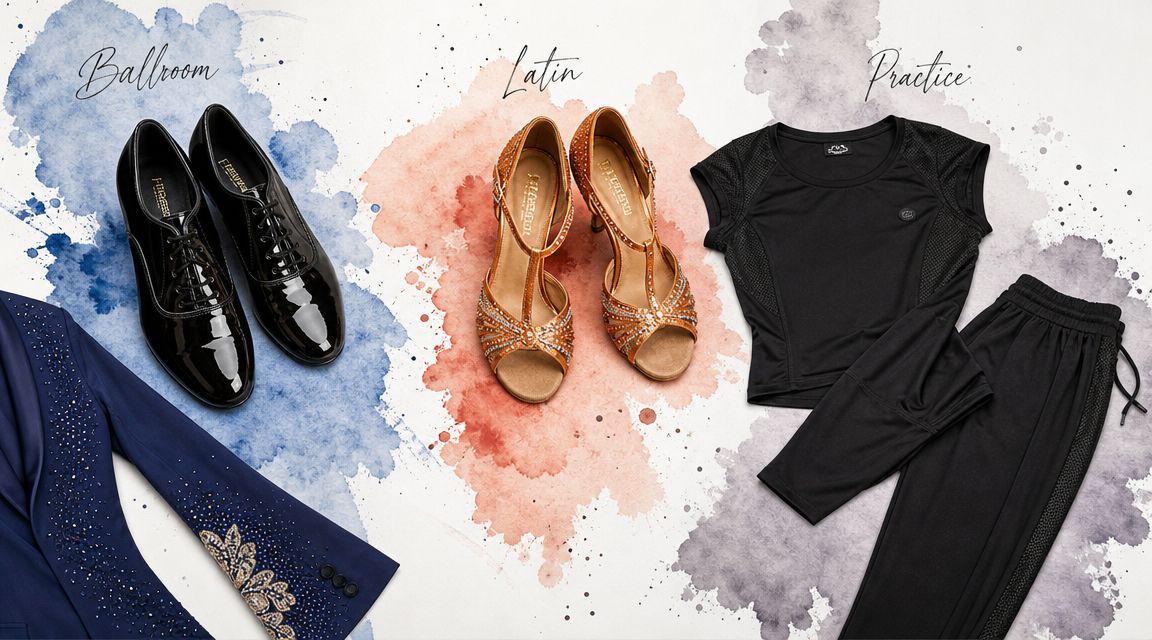
The right outfit depends on where you're dancing. A group class may call for clothes you can move in easily. A ballroom social may feel better with polished practicewear and proper shoes. A Latin night may invite a more expressive look, but you still want security, support, and freedom of movement. Dressing well for the setting tells other dancers you came prepared to participate thoughtfully.
Choose Clothes That Help the Dance
The easiest test is practical. Can you move fully, turn safely, and dance close to another person without constant adjustments?
Keep these points in mind:
- Wear proper shoes: Dance shoes usually allow cleaner turns and better floor feel than heavy street shoes.
- Skip overly baggy clothing: Loose fabric can hide movement and catch on hands or arms.
- Watch jewelry and accessories: Sharp or dangling pieces can scratch or snag.
- Be mindful of scent and texture: Very strong fragrance or itchy materials can make close dancing unpleasant.
If you're unsure what works for a lesson, social, or wedding dance rehearsal, Danza Academy has a practical guide on what to wear to dance class.
Dressing appropriately isn't about looking expensive or formal. It's about reducing distractions. When your shoes work, your clothing stays put, and your outfit suits the room, you can relax and dance better.
6. Be a Gracious Dance Partner and Handle Invitations Well
The social part of social dancing matters. You don't need perfect technique to be appreciated, but you do need grace.
That starts with asking politely. Make eye contact, smile, and ask clearly. If someone says yes, give them your full attention. If they say no, accept it immediately and kindly. People decline for all kinds of reasons. They may be resting, injured, overwhelmed, saving a dance, or not available in that moment.
Good Manners Build a Better Dance Community
The dancers everyone remembers fondly are often the ones who make others feel comfortable. They thank their partners, don't sulk after a rejection, and never act as if a less experienced dancer is wasting their time.
Useful habits include:
- Ask without pressure: An invitation should feel easy to accept or decline.
- Take "no" well: Don't demand explanations or ask again right away.
- Thank every partner: One sincere thank you goes a long way.
- Dance across skill levels: Welcoming newer dancers helps the whole room.
A lot of adults discover this only after they begin attending socials regularly. The dance itself is only part of the experience. The rest is community, which is why learning what social dancing is can help newer dancers understand the culture faster.
Instructor insight: If you want to become a sought-after partner, make people feel at ease within the first few seconds.
You don't need to perform charm. Simple courtesy is enough. Ask clearly, accept answers gracefully, and leave your partner feeling appreciated when the music ends.
7. Maintain Good Hygiene and Personal Cleanliness
This rule is basic, but it has a huge effect on how comfortable the room feels. Partner dancing is close-range communication. Cleanliness isn't cosmetic. It's considerate.
You don't need to look stage-ready for every class or social. You do need to arrive in a way that respects the people you'll be standing inches away from. Fresh clothes, clean hands, manageable breath, and trimmed nails make a real difference.
Small Preparations Matter More Than You Think
Most dancers have had both experiences. One partner feels fresh, prepared, and easy to be near. Another arrives sweaty from rushing over, wearing a shirt that should've been changed an hour ago, with sharp nails and too much cologne. Technique aside, one dance is pleasant and one is distracting.
A few smart habits help:
- Freshen up before dancing: Shower if you can, or at least clean up and change.
- Use deodorant, not clouds of fragrance: Strong scent can be as difficult as body odor.
- Bring backup basics: A hand towel, mints, and an extra shirt can save the evening.
- Keep nails smooth: This matters in turns, hand changes, and close hold.
Cleanliness tells your partner, "I knew I'd be dancing with other people tonight, and I prepared for that."
If you're coming straight from work or the gym, take two extra minutes before stepping onto the floor. That small effort shows maturity and social awareness. In partner dancing, those qualities are part of etiquette, not a bonus.
8. Show Enthusiasm, Encouragement, and a Positive Attitude
The warmest dancers in the room often aren't the most advanced. They're the ones who smile, recover from mistakes lightly, and bring generosity to the floor.
That attitude changes everything. A beginner who misses a step but keeps enjoying the music is often more pleasant to dance with than a technically stronger partner who looks irritated all night. Joy is part of the skill in social dancing because it affects how safe, open, and connected your partner feels.
Positivity Is Part of Good Etiquette
Think about two versions of the same dance. In one, a turn goes wrong, both partners tense up, and the song ends in silence. In the other, the same mistake happens, both people laugh, reconnect, and keep going. The steps may be similar, but the experience is completely different.
Here are a few ways to bring better energy to the floor:
- Smile when it's natural: A relaxed face helps your whole body soften.
- Recover instead of reacting: Missed leads and small mistakes happen to everyone.
- Offer genuine encouragement: A specific compliment feels better than empty praise.
- Cheer for others too: Good social rooms feel communal, not competitive.
You can see this clearly at weddings, group classes, and open socials. The people who create a good atmosphere aren't waiting for perfection. They're participating fully, staying kind, and helping others feel included.
A positive attitude doesn't mean pretending every dance is flawless. It means choosing generosity over criticism. That may be the most powerful etiquette habit of all.
8-Point Dance Floor Etiquette Comparison
A good etiquette rule should do more than tell you what to avoid. It should help you dance better. Read the chart below that way. Each point supports a practical skill you can practice in class, test in social dancing, and gradually make feel natural.
| Etiquette Tip | Implementation Complexity | Resource Requirements | Expected Outcomes | Ideal Use Cases | Key Advantages |
|---|---|---|---|---|---|
| Maintain Proper Dance Frame and Body Contact | Moderate to high, because it combines technique and muscle memory | Instructor feedback, partner drills, mirrors | Better lead and follow, safer movement, cleaner overall look | Ballroom and Latin classes, partnered practice, technique training | Clear nonverbal communication, less physical strain, stronger presence |
| Respect Your Partner's Space and Personal Boundaries | Low to moderate, because it starts with awareness and communication | Social awareness, clear check-ins, adjustable contact | More comfortable partnerships, stronger trust, a more inclusive experience | Beginner classes, social dances, mixed-partner events | Helps people relax, respects differences, builds confidence |
| Master the Art of Leading and Following Clearly | High, because both roles need timing, clarity, and responsiveness | Private coaching, partner practice, role-specific drills | Smooth partnerships, more predictable movement, fewer avoidable errors | Social dancing, performances, wedding choreography | Better flow, easier recovery, more confidence for both partners |
| Handle Floor Traffic Safely and Courteously | Moderate, because it requires constant awareness of the room | Floorcraft training, practice in busy spaces, instructor guidance | Fewer collisions, calmer shared movement, safer events | Crowded socials, group classes, large dance events | Reduces accidents, protects nearby couples, keeps the floor cooperative |
| Dress Appropriately for the Dance Style and Venue | Low to moderate, because it depends on preparation and setting | Proper shoes, breathable clothing, dress code awareness | Better comfort, safer footing, an appearance that fits the event | Competitions, weddings, themed socials, classes | Supports movement, lowers slip risk, shows consideration for the setting |
| Be a Gracious Dance Partner and Handle Invitations Well | Low, because the main requirement is social awareness | Courtesy, empathy, clear etiquette guidance | Friendlier interactions, stronger community, more willingness to participate | Social events, rotating-partner classes, community gatherings | Makes the room more welcoming, reduces awkwardness, encourages connection |
| Maintain Good Hygiene and Personal Cleanliness | Low, because it relies on routine habits | Hygiene products, clean clothes, time to prepare | More comfortable close-contact dancing, fewer distractions | Lessons, weddings, socials, any partner dance setting | Shows respect, improves partner comfort, supports a pleasant atmosphere |
| Show Enthusiasm, Encouragement, and a Positive Attitude | Low to moderate, because it takes intention and practice | Supportive habits, emotional generosity, good class culture | Better energy, stronger confidence, more enjoyable dances | All dance settings, especially beginner classes and socials | Lifts the room, helps people stay engaged, makes learning feel safer |
Be the Partner Everyone Wants to Dance With
The music starts, the floor gets busy, and you invite someone out for a dance. Within a few measures, your partner can tell whether the experience will feel steady, respectful, and easy to enjoy. That first impression usually comes from simple habits you can practice, not from a long list of flashy figures.
That is good news for beginners.
The same habits often labeled as etiquette are also the habits that make social dancing work better. A stable frame makes communication clearer. Respect for space helps both dancers relax. Careful floor awareness keeps movement controlled when the room is crowded. Each of those choices improves the dance itself, which means etiquette is less about restriction and more about building skill you can feel.
It also builds confidence in a very practical way. If you know how to offer a comfortable hold, adjust to your partner, and stay aware of the couples around you, you spend less mental energy worrying about mistakes. You can focus on the music and the connection. That shift is a lot like practicing basic footwork slowly before trying a full routine. Control comes first. Confidence grows from that control.
Studio training helps turn these ideas into reflexes. In a class setting, you can practice keeping your frame steady without becoming stiff, learn how much space different dances need, and get used to reading lighter or stronger partner responses. Danza Academy of Social Dance is one Philadelphia-based studio that teaches Ballroom, Latin, wedding dance, and other social styles for adults, including beginners who want more confidence in real dance-floor situations.
If social dancing still feels intimidating, reverse the usual order. Do not wait for confidence before you practice. Practice the behaviors that make dancing comfortable and clear, and confidence tends to follow.
A complimentary first lesson can give you that kind of guided practice and direct feedback. If you want help with frame, connection, floorcraft, or social dance basics, you can book a free lesson with Danza Academy of Social Dance.