Ready to find a dance workshop without wasting nights on the wrong fit? That’s the main challenge behind most searches for “dance workshops near me.” The hard part usually isn’t finding a studio. It’s figuring out which one matches your goal, your comfort level, and the way you want to learn.
Workshops can move you forward fast. A good one gives you concentrated instruction in a specific style, a tighter focus than a general weekly class, and enough repetition to feel real progress by the end of the session. That’s especially useful if you’re starting from zero, preparing for a wedding, trying to clean up technique, or just want one strong night of dancing instead of a long commitment right away.
The demand is there. In Los Angeles alone, event platforms list over 50 dance workshops monthly, with listings rising year over year on Eventbrite’s Los Angeles dance workshop pages. That tells you something important about the wider market too. Adults want flexible, skill-focused dance experiences they can try without reorganizing their whole week.
Philadelphia gives you several strong options, but they’re not interchangeable. Some studios are best for social dancers who want lots of parties and drop-ins. Some are better for Latin specialists. Others work best if you want ballroom structure, performance training, or a clear beginner ramp.
That’s why this guide stays practical. You’ll get what to expect, who each studio suits best, and the key trade-offs that matter once you walk through the door. If you want a broader view of why people stick with studios that feel more collaborative and community-based, this idea of active learning communities maps surprisingly well to good dance training too.
1. Danza Academy of Social Dance
Want a workshop that feels welcoming on day one but still gives you real technique to build on later?
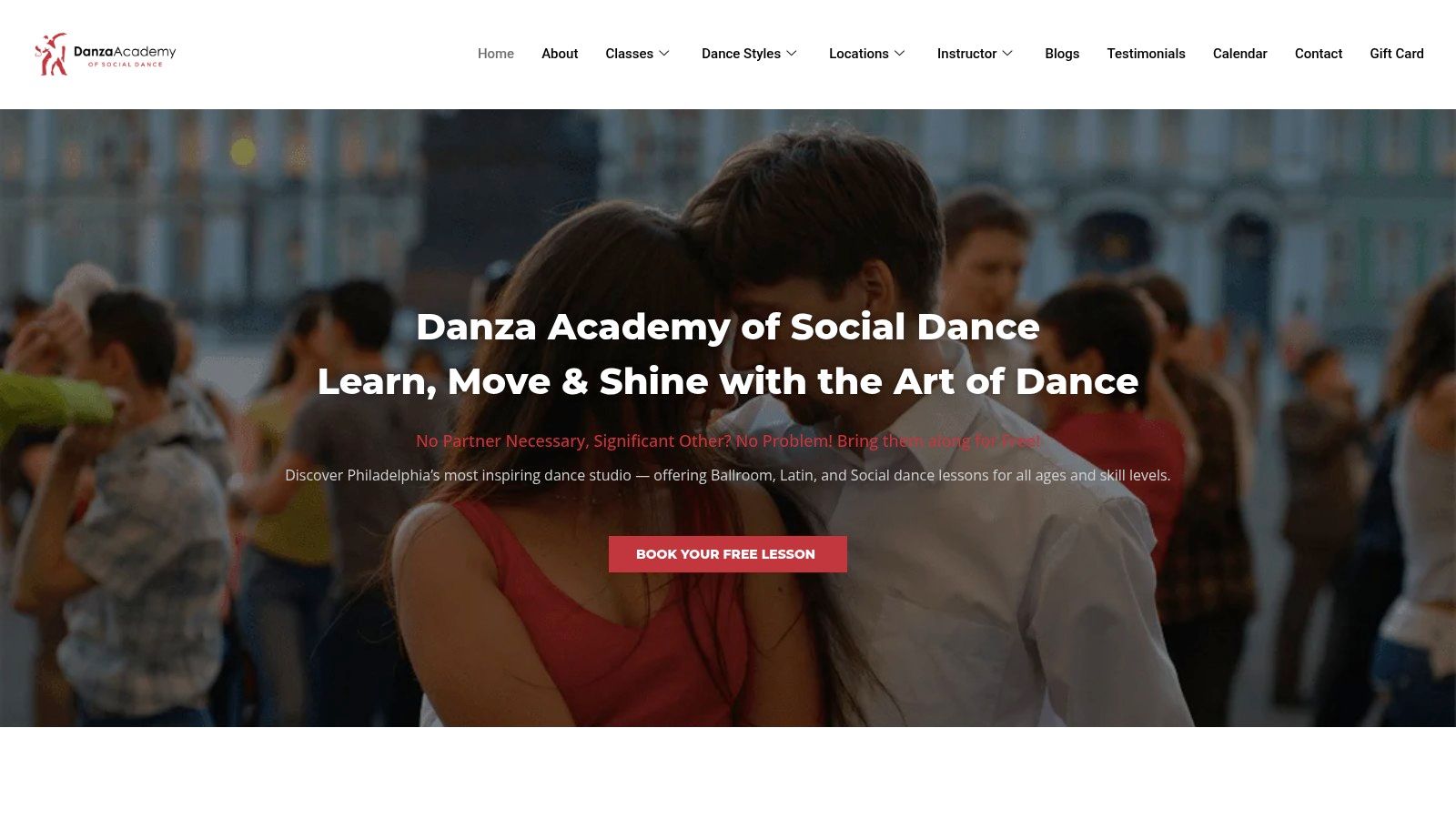
Danza Academy is usually the first studio I mention to adults who want partner dancing without the usual beginner friction. It has taught in the Philadelphia area since 1976, with locations in Center City and Exton, and that long track record shows up in the way classes are structured. New dancers get clear guidance instead of being left to copy combinations, while returning students have room to sharpen timing, posture, connection, and floorcraft.
The style range is wide. Ballroom, Latin, and social dance options commonly include Salsa, Cha-Cha, Rumba, Samba, Waltz, Tango, Quickstep, Hustle, West Coast Swing, and Country Two-Step. That matters if your goals are still taking shape. A studio with a varied schedule lets you try different directions without starting over somewhere else. If you are still comparing priorities, this guide on how to find the right dance academy for your goals is a useful companion.
What to expect
Danza’s workshops tend to focus on skills that transfer beyond one routine. Expect instructors to spend time on lead and follow, rhythm, movement quality, and how to stay comfortable with different partners. That approach serves social dancers well because real dance floors are unpredictable. You need timing and connection more than a memorized pattern.
That said, the studio also works well for goal-specific students. If you are preparing for a wedding, building confidence before socials, or returning after years away from dancing, the instruction usually meets you where you are instead of forcing everyone through the same pace.
The room also feels less intimidating than many first-timers expect. No partner is required, and significant others can join for free. For adults searching for dance workshops near me, that removes a common obstacle right away.
Best for
Danza is a strong fit for a few specific groups:
- Nervous beginners: The entry point is low-pressure, and the teaching style gives structure without making new students feel behind.
- Couples with a deadline: Wedding prep and event-focused coaching are practical strengths here.
- Social dancers who want variety: You can try ballroom, Latin, swing, and country styles under one roof.
- Students who may want more later: The studio can support casual learning, but it also has enough technical depth for dancers who decide to get serious.
Trade-offs to know before you book
No studio fits everyone, and Danza has a couple of real trade-offs.
- Pricing is not posted publicly: You will need to ask about rates, packages, and what is included.
- Location still matters: Center City is convenient for some dancers, Exton is better for others, and commute time can decide whether you attend consistently.
- The broad menu can feel a little open-ended: If you already know you want only one niche style, a specialist studio may give you a tighter track.
Still, Danza stands out because it covers the full early decision process well. You can test the waters, receive instruction, and figure out whether your goal is social fun, wedding readiness, or stronger technical habits. That makes it a useful featured option in this guide, especially for readers who want more than a directory listing and need a clearer sense of how the experience will feel.
2. Society Hill Dance Academy
Society Hill Dance Academy is a strong Center City choice if your ideal workshop experience includes a lot of chances to use what you learned right away. Some studios teach well but don’t give students many natural practice outlets. Society Hill does the opposite. The social side is built in.
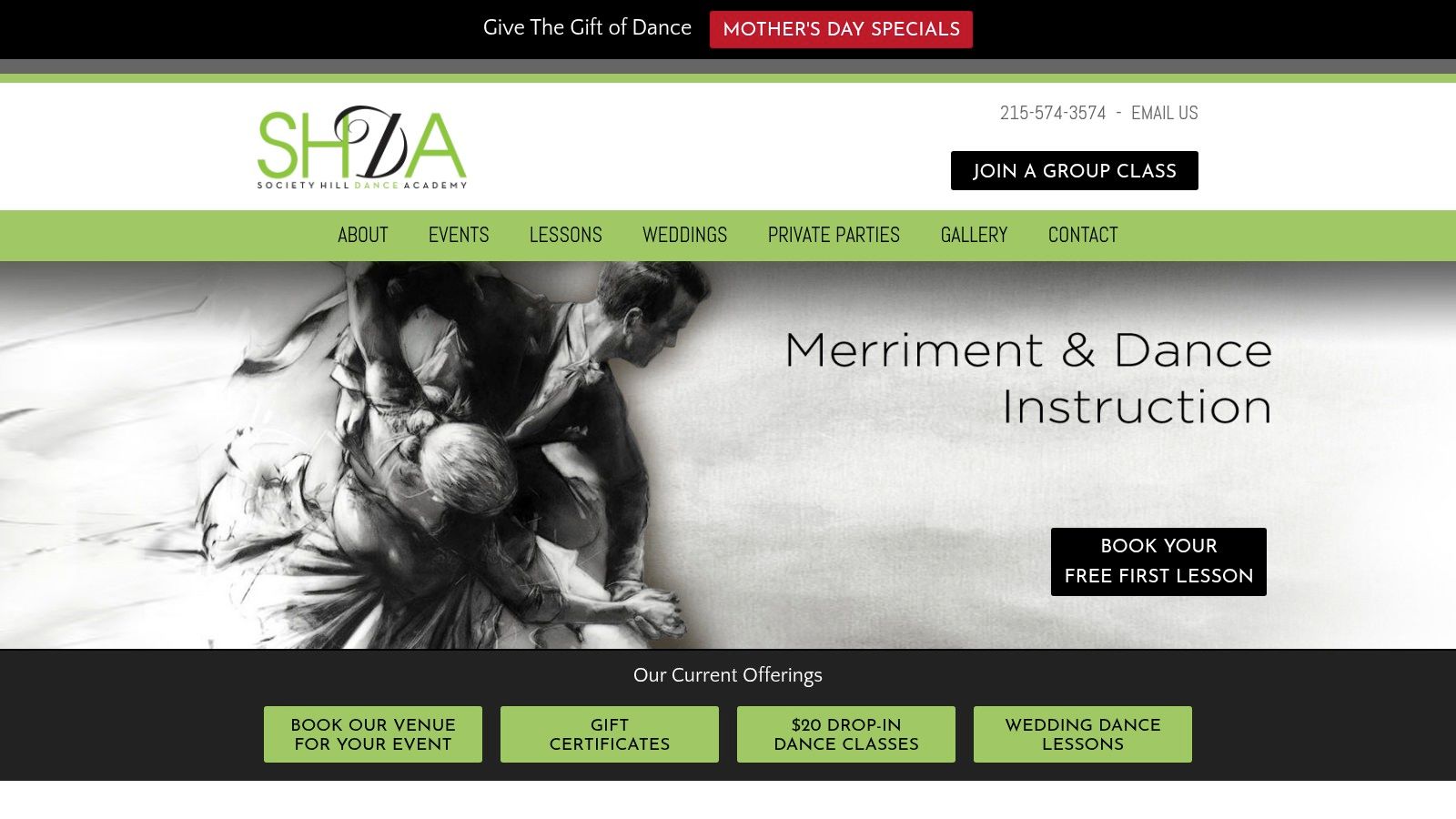
Their schedule usually includes partner-dance staples like Salsa, Bachata, Hustle, Swing, Tango, Waltz, and Foxtrot through Society Hill Dance Academy. The drop-in model is part of the appeal. A group class drop-in is listed at $20, which makes it easier to sample the studio without buying a package.
Why people like it
This is a good studio for adults who don’t want to overplan. You can take a class, show up to a themed event, and build familiarity with the room pretty quickly.
That matters because consistency is often what makes workshop learning stick. One-off instruction is useful, but if there’s no follow-up floor time, many dancers forget details almost immediately.
A lot of students searching for dance workshops near me are really trying to solve a confidence problem, not just a scheduling problem. In that case, a place with regular socials often helps more than a studio with excellent teaching but limited community rhythm.
If you’re still sorting out what kind of studio environment suits you, this guide on how to find the perfect dance academy near me covers the practical questions worth asking before you commit.
Best for and trade-offs
Society Hill is best for the dancer who wants a lively social calendar and easy entry.
- Best for frequent drop-ins: You can test the waters without a big upfront commitment.
- Best for social learners: Themed events help you apply workshop material in a less formal setting.
- Best for broad partner-dance interest: The studio covers multiple styles instead of narrowing into one specialty.
The trade-offs are real too.
- Schedules can shift: Workshop themes and event times change, so you need to check before heading in.
- Popular nights can feel crowded: That’s fun if you like energy. It’s less ideal if you learn best with extra floor space.
Crowded social studios are often great for motivation and less great for precision. If your priority is clean technique, arrive early, take notes, and don’t expect unlimited room on big nights.
Society Hill’s strength isn’t that it feels boutique or highly specialized. Its strength is momentum. If you want to dance often, meet people, and keep skills active between workshops, it delivers that well.
3. Estilo Dance Studio
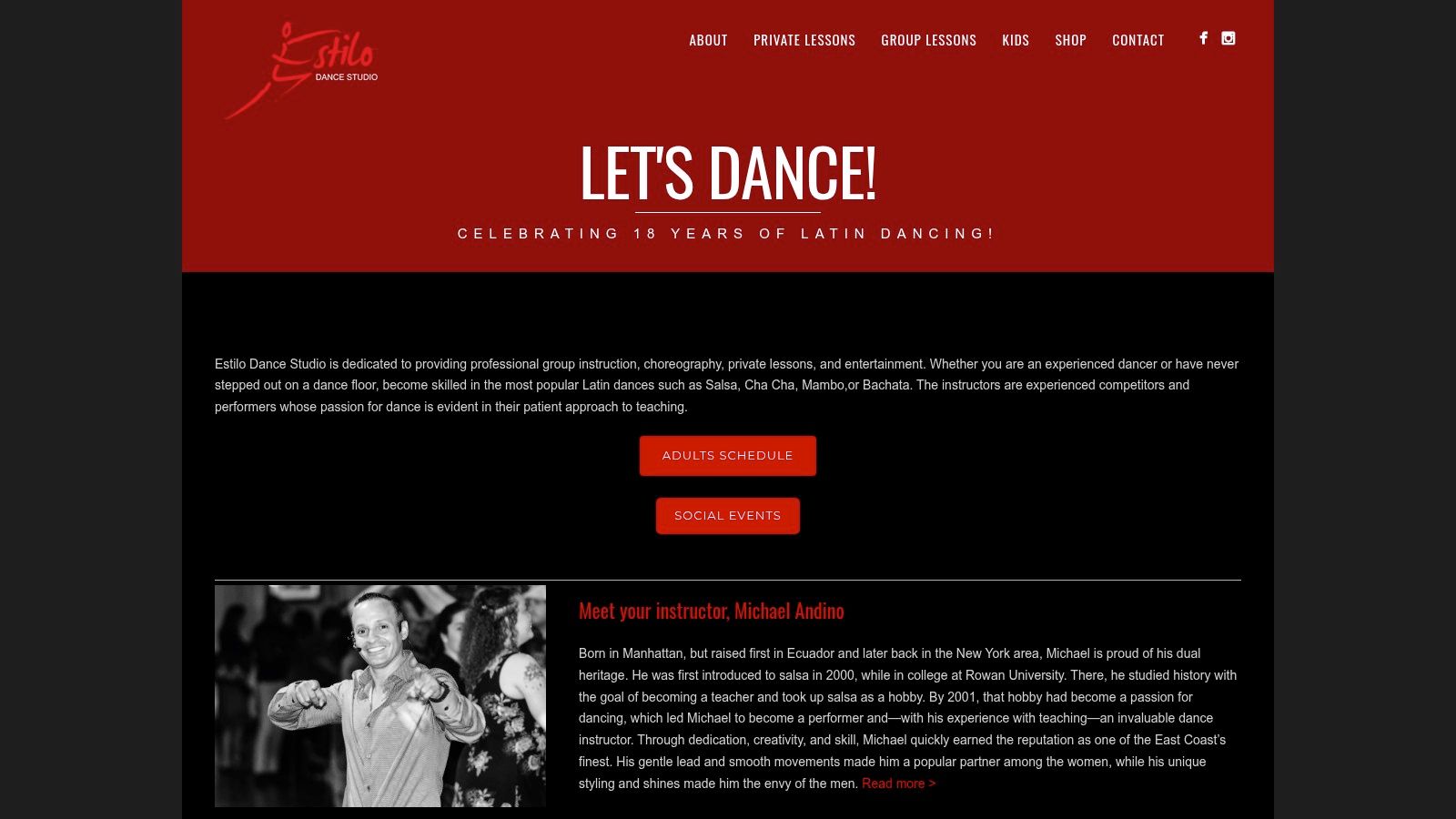
If your search for dance workshops near me really means “I want Salsa and Bachata, not a little bit of everything,” Estilo deserves a close look. This studio leans into Latin dance with more focus than a general social dance school, and that focus changes the learning experience.
At Estilo Dance Studio, you’re more likely to find dedicated Salsa and Bachata tracks, including On1, On2, Mambo, shines, styling, and visiting-artist events. For dancers who already know they love Latin music and want to improve inside that world, specialization is a major advantage.
Where it stands out
Estilo tends to work well for dancers who want concentrated bursts of instruction and a stronger connection between class content and the local Latin social scene. That’s an important distinction.
General studios are great for variety. Specialist studios are often better when you want deeper pattern vocabulary, clearer style identity, and teachers who spend most of their energy inside one dance family.
That means Estilo can be a better fit than a ballroom-first studio if your specific goal is sharper Salsa timing, cleaner turn patterns, stronger Bachata partnerwork, or better body movement.
Best for serious Latin learners
Estilo is especially useful for:
- Latin-focused beginners: You can start without sorting through a dozen styles first.
- Intermediate social dancers: Workshops on styling, shines, and technique give more depth than pure beginner classes.
- Students who like artist-led intensives: Visiting instructors and weekend formats can accelerate growth.
This setup also has a practical upside. The studio often offers both introductory material and higher-level refinement, so dancers can stay in the same ecosystem as they improve.
What doesn’t work as well
The trade-offs mostly come from popularity and specialization.
- Workshop inventory fluctuates: Some events rotate in and out, and some sell out through the online shop.
- Parking can be annoying on busy nights: If you’re heading toward Fishtown-area events, leave time.
A specialist studio can also feel less ideal if you’re still undecided about style. If you’re curious about Waltz one month, West Coast Swing the next, and then Tango after that, Estilo won’t serve that variety as cleanly as a broader academy.
Still, for dancers who already know the music they want to move to, this is one of the better targeted options in the area.
4. Urban Movement Arts
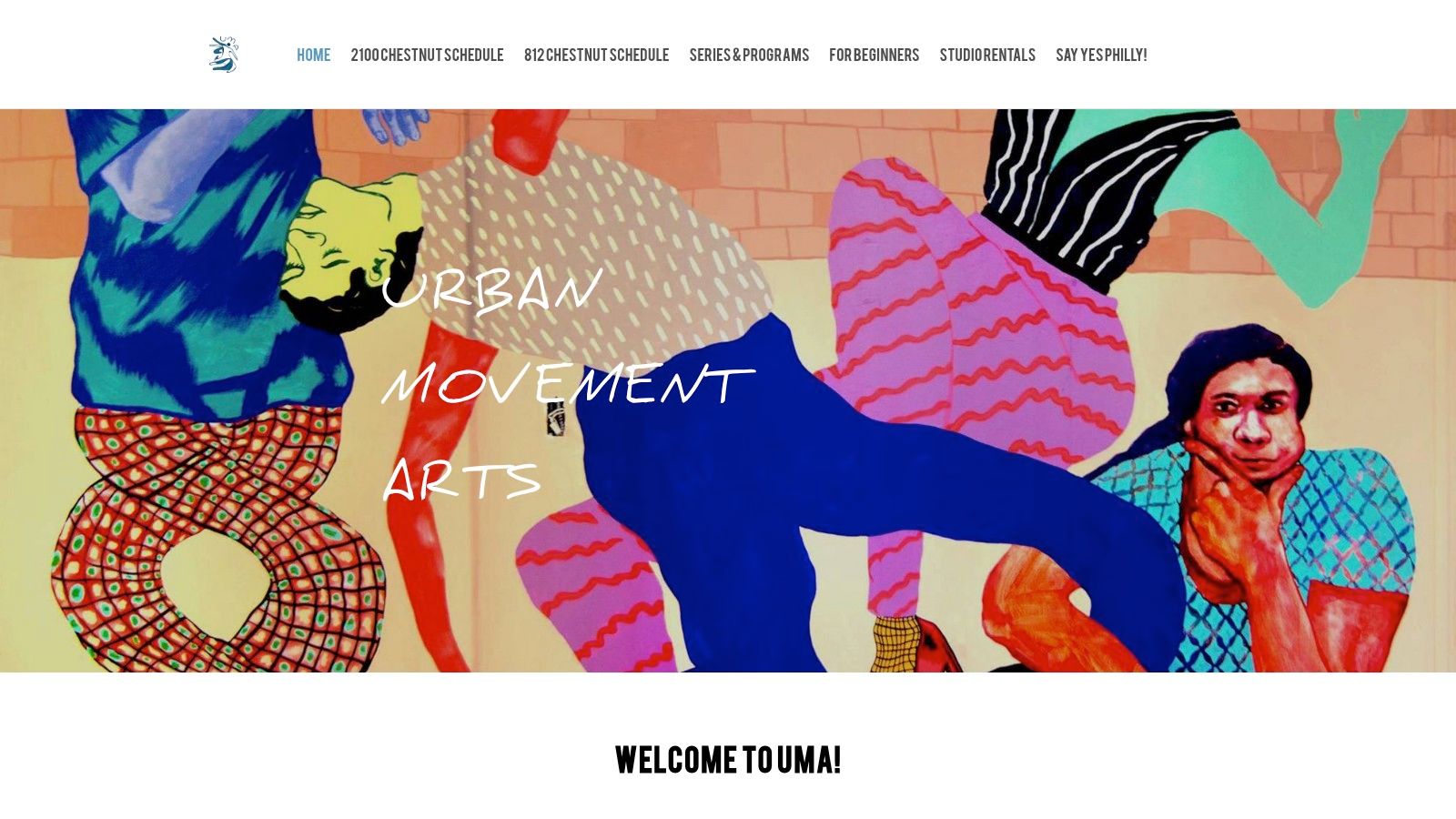
Urban Movement Arts feels different from the partner-dance-heavy studios on this list. If you want Hip Hop, House, Waacking, Popping, club styles, or a more movement-culture-driven environment, this is the one to investigate first.
The studio runs classes, workshops, and performance-based projects through Urban Movement Arts, and it has a reputation for being community-centered rather than intimidating. For adults who want to start dancing but don’t want ballroom etiquette, that can be a huge plus.
The learning environment
Urban Movement Arts tends to suit dancers who want expression, groove, and community as much as structure. It also helps that pricing is relatively transparent, with drop-ins, memberships, cards, and intro options clearly presented on the site.
That transparency matters. One of the fastest ways studios lose beginners is by making basic logistics hard to understand.
This studio is also useful if you’re deciding whether group instruction gives you enough support or whether you need one-on-one help. If you’re weighing that question, this breakdown of group vs private dance classes and which is right for you is a smart companion read.
Best for and practical limits
Urban Movement Arts is a good match for:
- Absolute beginners in street and club styles: The beginner on-ramp is friendlier than many drop-in-only scenes.
- Community-minded dancers: Events and projects give people reasons to return beyond one class.
- Budget-conscious students: Multiple payment formats make it easier to keep dancing regularly.
One thing I like in studios like this is that progress doesn’t only mean technical perfection. It can also mean comfort, rhythm, movement quality, and confidence in your body. For a lot of adult students, that’s exactly the right goal.
The weak spots are mostly logistical.
- Some workshops require separate registration: Memberships don’t always cover every special event.
- Two-location systems can create confusion: You need to know what applies where unless you buy the right plan.
Good beginner studios don’t just welcome new people. They give them a clear next step after the first class. Urban Movement Arts usually does that well.
This one is less about formal partner-dance polish and more about finding a dance home with a broader movement vocabulary.
5. Concierge Ballroom
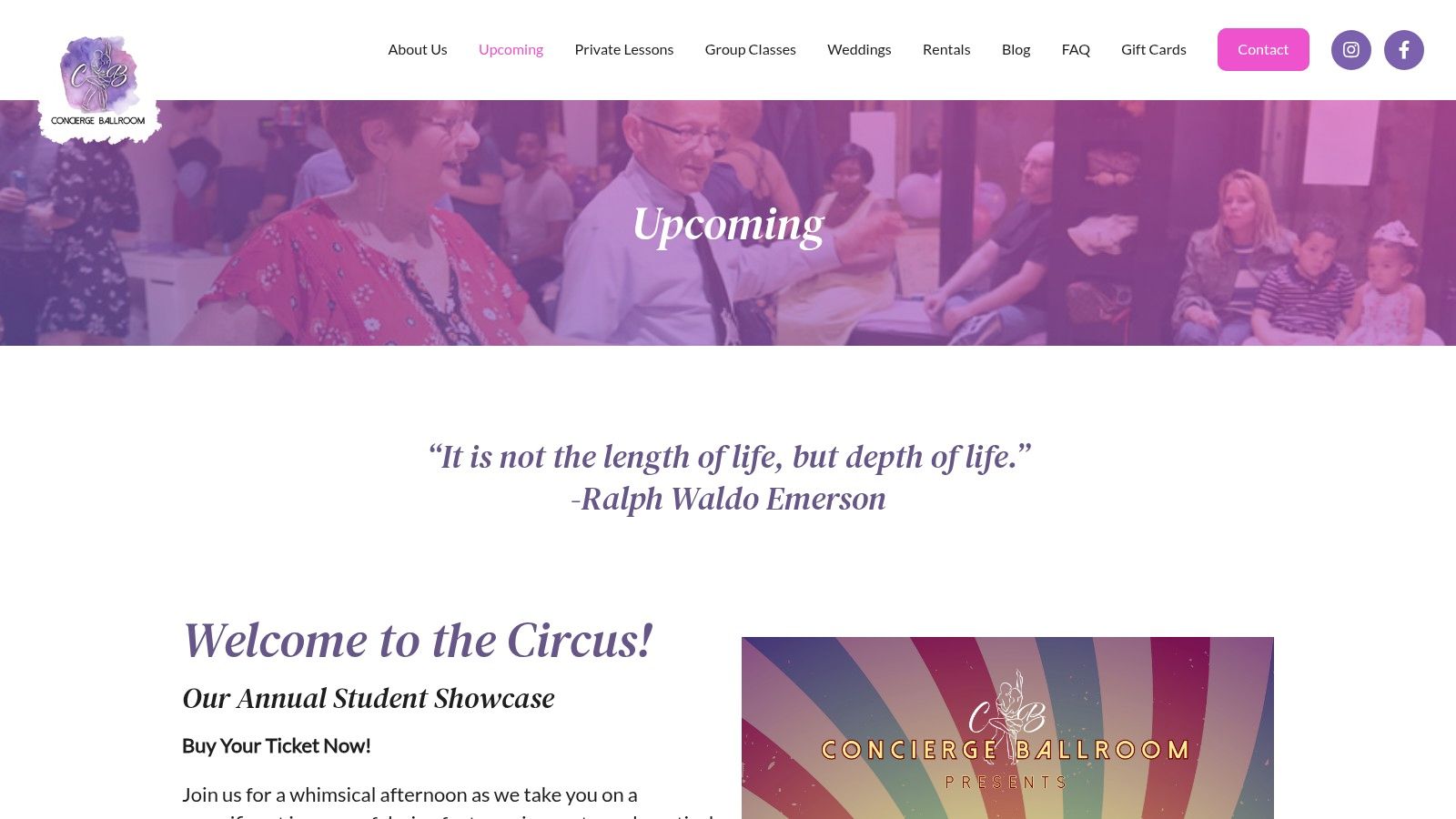
Concierge Ballroom is a useful pick for dancers who like structure. Not rigid structure. Useful structure. Level-labeled series, themed workshop days, visiting instructors, and social practice nights all make it easier to know where you belong on the schedule.
You can browse upcoming events through Concierge Ballroom’s calendar. The studio’s Old City location also gives it a practical advantage for city dancers who want partner dance training without heading far outside Philadelphia.
Why it works
This studio makes sense for adults who want Ballroom, Latin, and West Coast Swing in a setting that feels organized. If you’re brand new, level labels reduce the guesswork. If you’re progressing, practice sessions and guest coaches can help you keep momentum.
That combination matters more than people think. Workshops are most effective when they sit inside a broader learning loop. Learn a concept, try it in guided practice, then test it socially.
Concierge is also a nice fit for dancers who want to understand the ballroom ecosystem more clearly. If you’re trying to get your bearings on core styles, this simple guide to the 10 traditional dances of ballroom dance makes the category less confusing.
Best for and trade-offs
Concierge Ballroom is strongest for:
- Partner dancers who like progression: Level-based programming helps students avoid jumping too far ahead.
- Students who want guest-instructor variety: Intensives can give you a different technical lens.
- Dancers who like workshop-plus-social formats: You can train and then apply the material.
The weaker points are mostly operational.
- Registration can involve third-party systems: Vagaro or Eventbrite flows add extra steps.
- Availability is cyclical: Guest-teacher events and workshop themes shift over time.
A studio like this is often best for the dancer who enjoys having a path. Not everyone does. Some people prefer a looser social scene. But if you want your “dance workshops near me” search to end with a schedule that makes sense, Concierge is one of the better organized options around.
6. La Luna Dance Studio
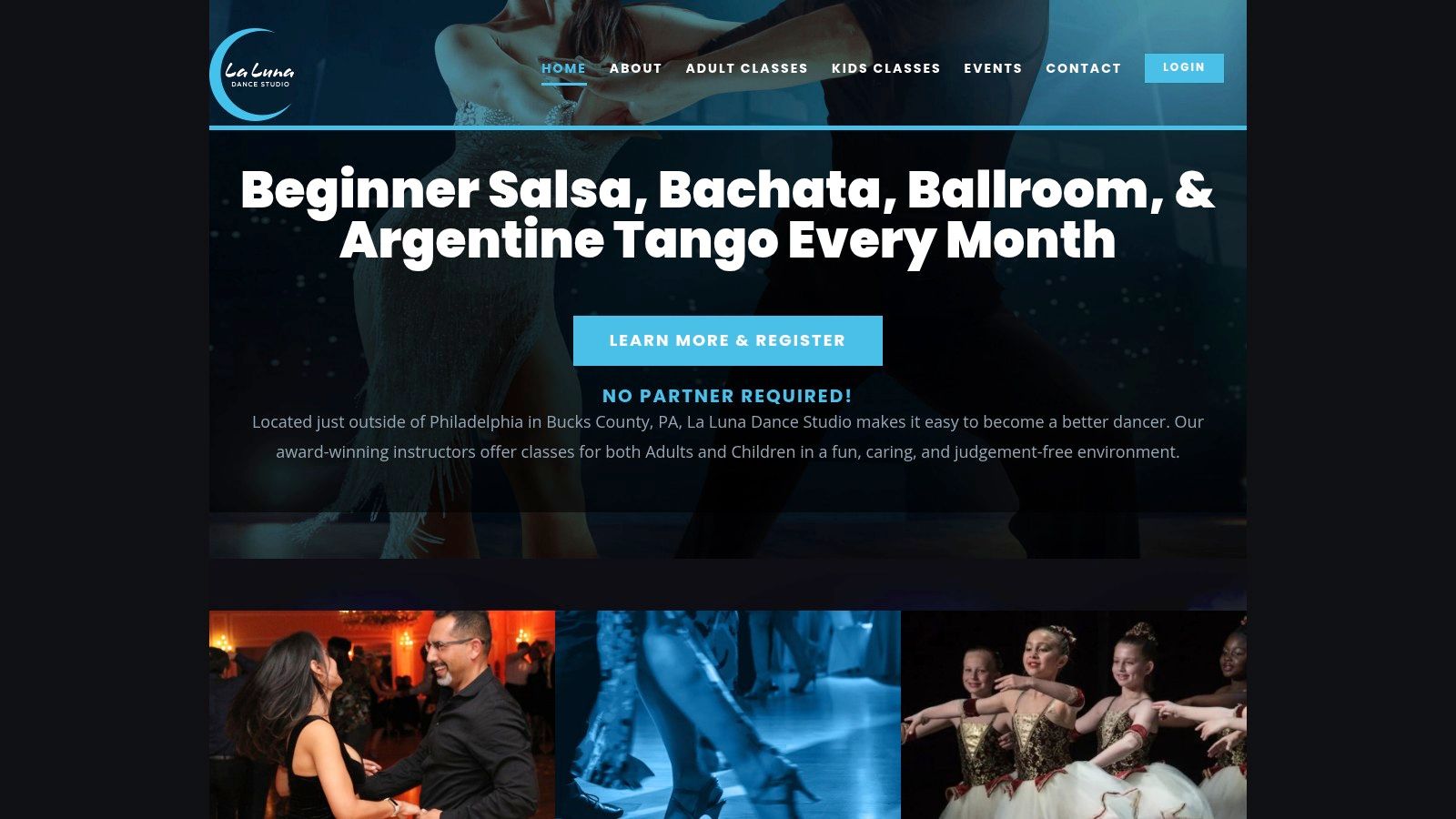
La Luna Dance Studio is outside the city, but a lot of Philly-area Latin dancers know it for a reason. If you’re willing to drive for stronger Salsa and Bachata immersion, La Luna can be worth the trip.
The studio offers classes, workshops, and larger Latin dance event energy through La Luna Dance Studio. It’s a good reminder that the best answer to “dance workshops near me” isn’t always the physically closest option. Sometimes the better fit is the one with the stronger scene.
What to expect
La Luna works best for dancers who want frequent Latin training and a visible pathway from classwork into social dancing. That’s often the difference between improving slowly and improving quickly. You need repetition, yes, but you also need a room where the material lives after class.
The studio’s reputation in the regional Latin community helps there. Specialty workshops, master classes, and larger event formats can make the environment feel more immersive than a standard weekly lesson.
This kind of setup is especially good for students who get motivated by atmosphere. Some dancers improve because they love technical breakdowns. Others improve because they catch the energy of a room packed with people dancing the same style.
The practical trade-offs
La Luna’s strengths come with a few frictions.
- Travel matters: It’s outside central Philadelphia, so commute time is part of the cost.
- Site access can be clunky: Anti-bot protection can slow down access to pricing or schedule pages.
That second issue sounds minor, but it matters. When a studio’s logistics are harder to access, first-time students are more likely to hesitate. Once you get past that, though, the actual value proposition is stronger than the site friction suggests.
A lively social community can compensate for a lot of minor inconvenience. If you leave class with immediate chances to dance, you’re more likely to retain what you learned.
La Luna is not the easiest choice on this list if convenience is your top priority. It is one of the better ones if Latin dance is your lane and you want a deeper regional community around it.
7. Pivot Ballroom
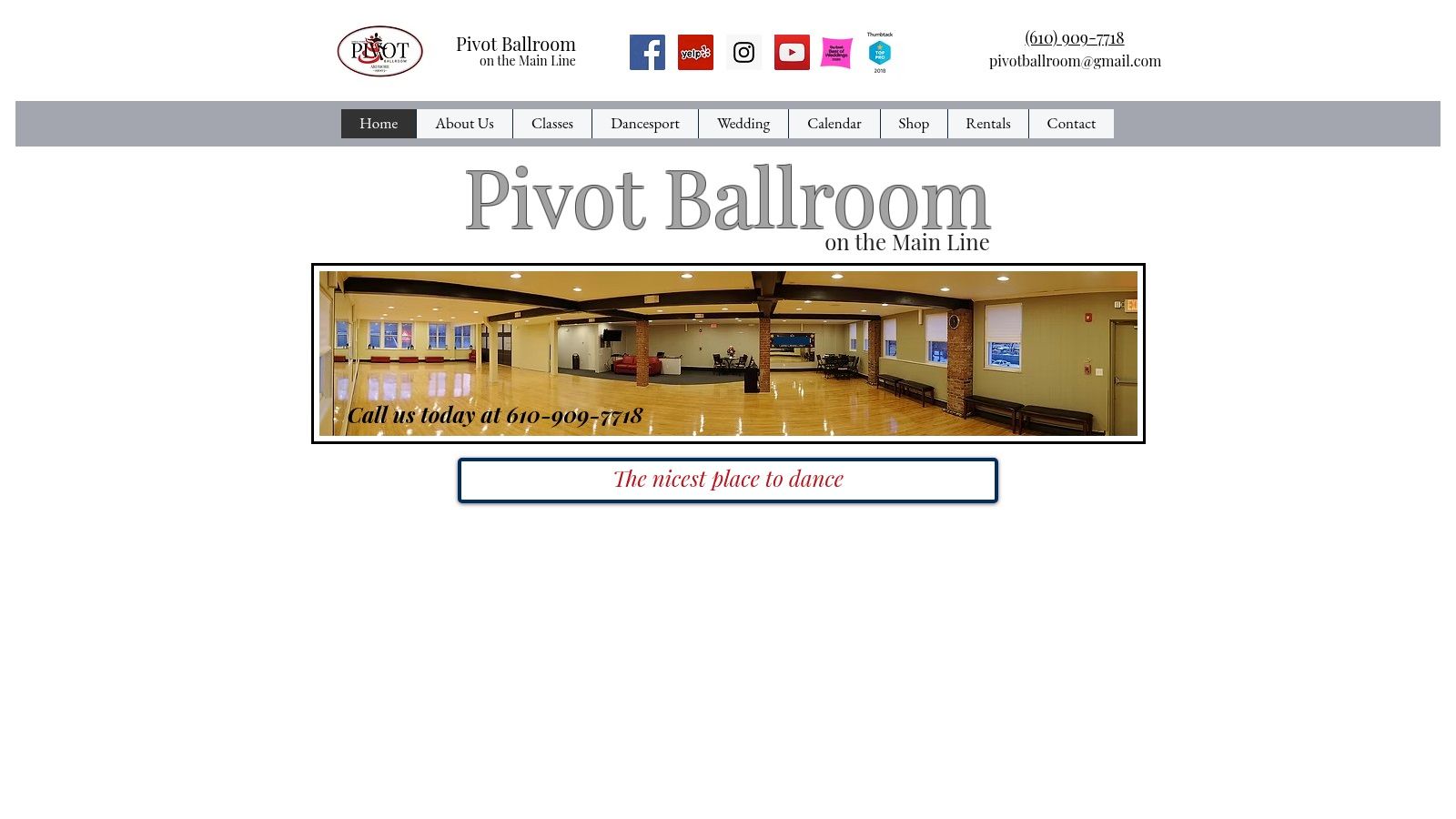
Pivot Ballroom is a practical Main Line option, especially for couples, private-lesson students, and partner dancers who want a studio that also functions as an event venue for workshops and socials.
You can find the studio through Pivot Ballroom. It offers ballroom, Salsa, Tango, wedding dance instruction, and private coaching, and it also hosts outside organizers for social dance events. That gives the place a useful dual identity. It’s both a training space and a room where dancers can apply what they learn.
Where Pivot shines
For couples preparing a first dance, this is one of the more straightforward options. The studio makes room for personalized choreography support, and that kind of focused help is often more valuable than a generic workshop when the goal is one specific performance.
For social dancers, the hosted events are the attraction. A venue that regularly welcomes outside Latin or social-dance organizers can expose you to different teachers and communities without forcing you to leave your local orbit every weekend.
That’s especially appealing if you like workshop variety but don’t want to chase events all over the region.
What to watch for
Pivot’s biggest drawback is discoverability.
- The workshop calendar isn’t always centralized in the clearest way: Some events live on third-party pages.
- Pricing can vary by organizer: Example private-lesson or wedding rates don’t always tell you what a specific workshop will cost.
Fragmented booking details can deter adults from continuing studio research. If you’re organized and willing to click through a bit, Pivot becomes more attractive. If you want everything in one neat schedule, some other studios on this list are easier to evaluate quickly.
Still, Pivot has a clear niche. It’s a good one-stop option for suburban dancers, couples with event goals, and partner-dance students who want both coaching and social opportunities in the same ecosystem.
7-Studio Dance Workshop Comparison
| Studio | Ease of getting started | Resource requirements | Expected outcomes | Ideal use cases | Key advantages |
|---|---|---|---|---|---|
| Danza Academy of Social Dance | Complimentary first lesson; contact required for pricing; two PA locations | In‑person classes/private lessons; schedule varies by location; must contact for rates | Strong technical improvement, wedding choreography readiness, competitive preparation | Weddings, serious technique training, long‑term students | 40+ years experience, world‑class instructors, broad style menu, inclusive community |
| Society Hill Dance Academy | Drop‑in friendly ($20 option); consistent weekly schedule | In‑person Center City classes; low drop‑in cost for sampling | Rapid social‑dance practice and application at themed events | Frequent social dancers, casual drop‑in learners, event practice | Clear drop‑in pricing, busy social calendar, easy to try |
| Estilo Dance Studio | Requires workshop/series sign‑up; focused class blocks | In‑person multi‑week series and weekenders; some events sell out | Concentrated Salsa/Bachata technique and styling gains | Focused Latin training, intensives, performance team prep | Deep Salsa/Bachata specialization, visiting artists, technique focus |
| Urban Movement Arts | Beginner on‑ramps and memberships; easy to join | Two locations; transparent budget options (drop‑ins, memberships); some workshops extra | Broad skill development in Hip Hop/House/club styles and performance pathways | Street/club style learners, community performers, budget‑minded students | Inclusive culture, affordable pricing, active community and performance projects |
| Concierge Ballroom | Level‑labeled series; clear event calendar but third‑party registration common | Central Old City location; some registration via Vagaro/Eventbrite | Structured partner‑dance progression and regular practice at socials | Partner‑dance learners seeking structured series and guided practice | Themed workshops, level‑based programming, monthly social practice nights |
| La Luna Dance Studio | Robust recurring schedule; master workshops and congress events | Located outside city (Bucks County); pricing page behind verification | Intensive Latin skill development and active social integration | Congress‑style weekenders, concentrated workshop attendees | High workshop frequency, visiting artists, large social community |
| Pivot Ballroom | Private coaching available; venue hosts external workshops and socials | Main Line (Ardmore) location; private‑lesson sample pricing shown; some events third‑party | Personalized wedding choreography and applied practice at hosted socials | Couples preparing first‑dance, private coaching clients | One‑stop training + practice venue, flexible choreography support |
Your First Step Starts Now Book Your Free Lesson
Still deciding which workshop is worth your time?
Philadelphia has good options, but they do different jobs. Some studios are better for casual social dancing. Some are better for technical progress. Some work well if you need a clear series and consistent coaching. The right pick depends on what you want your first month to feel like.
Use this simple filter. Danza Academy suits adults who want guided partner-dance instruction, a beginner-friendly entry point, and direct feedback on where to go next. Society Hill fits dancers who want easy drop-ins and a busy social calendar. Estilo and La Luna make more sense for students who want stronger Latin specialization. Urban Movement Arts is the better choice for Hip Hop, House, and community-based movement training. Concierge Ballroom works well for dancers who like level-based structure. Pivot Ballroom is a practical option for Main Line students and couples preparing a wedding dance.
One lesson matters more than a polished website. I have seen plenty of studios with slick branding and a flat room, and I have seen modest booking systems attached to excellent teaching. What matters in practice is straightforward. Are the instructors paying attention? Are corrections clear? Does the room feel welcoming without lowering the standard? Do you leave knowing what to work on next?
That is why a trial lesson is useful. It gives you a direct read on teaching style, pace, and fit.
For adults who want a low-pressure starting point, Danza Academy offers a complimentary first private lesson, as noted earlier. That format solves two common problems fast. New students do not need prior experience, and they do not need to arrive with a partner. It also gives the instructor a chance to assess goals realistically. In one session, you can usually tell whether you need private coaching, group workshops, wedding instruction, more social-floor practice, or a mix.
If you have been searching “dance workshops near me” and still hesitating, stop comparing from a distance. Try a room. Feel the instruction. Ask questions about your goals and timeline.
There’s no obligation. You can meet the instructors, get a sense of the teaching approach, and decide whether the studio’s pace and atmosphere match what you want.
If your schedule is packed, clear reminders help. These ideas on powerful appointment confirmation texts explain why a simple follow-up often makes the difference between planning to go and showing up.
Book your complimentary first private lesson with Danza Academy if you want a clear starting point, personal feedback, and a practical recommendation for your next step.