
Thinking about signing your little one up for a dance class for preschoolers? It's about so much more than just learning steps. Think of it as a magical world where stories, music, and imagination come together to create movement. It's an adventure, and its skyrocketing popularity shows that parents are catching on to just how much it helps children grow in every way.
Why Are Preschool Dance Classes So Popular?
If you've noticed more buzz around dance programs for young children lately, you're definitely not alone. The reason is pretty simple: a great preschool dance class is one of the most effective—and fun—ways to support your child’s development. It's a space where giggles are part of the curriculum, and a simple leap across the floor becomes a daring jump over a magical river.
This isn’t just a feeling; the numbers back it up. Preschool programs are the fastest-growing part of the entire children's dance industry. The market in North America alone is expected to reach USD 4.2 billion by 2033, a huge jump from USD 2.1 billion in 2024. This boom is happening because more parents understand how structured, play-based dance helps build motor skills, confidence, and focus. You can dig into the data behind this trend on Data Insights Market.
A Foundation for Lifelong Skills
Beyond the pure fun of it all, parents are choosing dance for its powerful developmental benefits. We've seen it firsthand for over 40 years here at Danza Academy. Each class is carefully designed to nurture your child in more ways than you might expect.
The table below gives you a quick snapshot of the key advantages your child gains in our preschool dance classes.
Key Benefits of Preschool Dance at a Glance
| Developmental Area | How Dance Class Helps |
|---|---|
| Physical Coordination | Activities like skipping, hopping, and balancing build strength and body awareness. |
| Cognitive Growth | Following rhythms and remembering simple sequences is a fun workout for their memory and focus. |
| Social Confidence | Taking turns, sharing space, and dancing with peers teaches valuable social skills in a supportive setting. |
| Creative Expression | Using props and imagination gives them a healthy, screen-free outlet to express their unique personality. |
Ultimately, dance gives children a happy, welcoming first step into the world of movement and a toolbox of skills they'll use for the rest of their lives.
The best way to know if dance is right for your child is to see the joy for yourself. That's why we invite you to experience it with a free complimentary lesson.
Ready to watch your child discover the magic of dance? Spots for our free trial classes fill up fast! Book your complimentary lesson today on our contact page at Danza Academy and give your child an experience they'll never forget.
How Dance Shapes Your Child’s Development
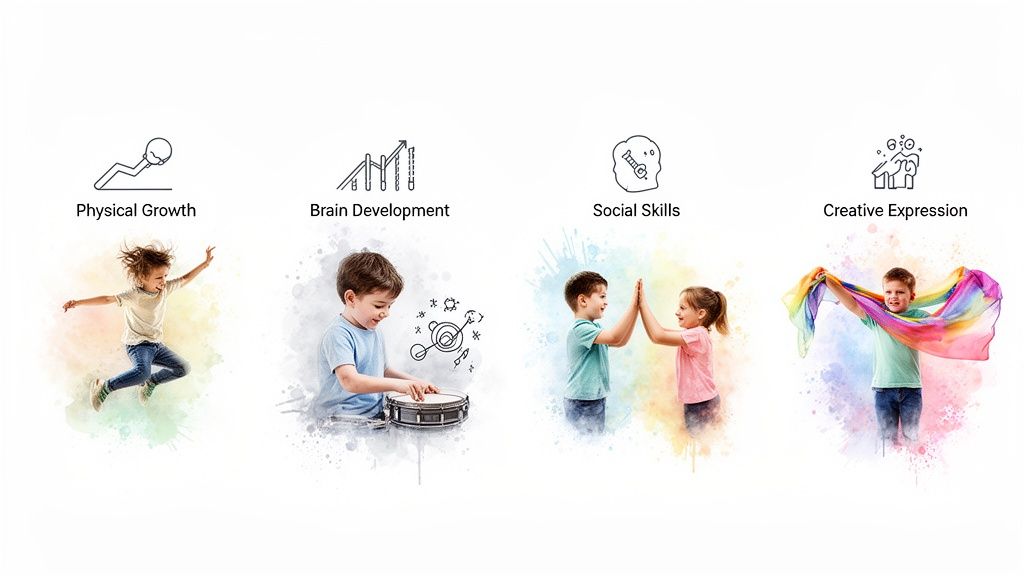
When you watch a preschool dance class, it's easy to just see kids having a blast twirling and jumping around. But there’s so much more happening beneath the surface. It’s not just a fun way to burn off energy; it's a launchpad for growth, building a solid foundation in four key areas of development.
Parents everywhere are catching on. The global children's dance franchise market was already valued at USD 4.8 billion in 2024 and is expected to nearly double by 2033. It just goes to show how many families are recognizing that dance class is an incredible investment in their child's future.
Physical Growth and Coordination
First and foremost, dance teaches a child how to be the "captain of their own body." Through games and playful instruction, they start to master the fundamentals. Think about it: balancing on one foot like a flamingo, leaping over imaginary puddles, or galloping like a horse. These aren't just silly games.
These movements are actually powerful gross motor activities for preschoolers that build muscle control, coordination, and strength in a way that feels like pure fun.
Brain Development and Focus
A dance class is also a fantastic workout for the brain. When a child listens to the music, follows a rhythm, and remembers a simple sequence of moves, they are literally strengthening the neural pathways needed for memory and concentration.
Following an 8-count of claps, stomps, and turns is like a puzzle for their developing minds. It teaches them sequencing and pattern recognition, skills that are directly applicable to learning letters and numbers in school.
This mental workout helps improve their ability to listen to instructions, focus on a task, and process information—all while moving and having a great time.
Social and Emotional Skills
Beyond the physical and mental, dance is deeply social. In a group class, kids learn how to share a space, wait their turn, and cheer for their friends. This gives them a structured and safe place to build teamwork and empathy.
And as they finally nail a tricky step or perform for their peers, you can see their self-confidence blossom. Dance gives them a healthy way to express feelings—joy, excitement, even shyness—through movement, building an emotional vocabulary they'll use for the rest of their lives.
Creative Expression and Imagination
Finally, a dance class for preschoolers is a perfect, screen-free outlet for their wild imaginations. It’s where a colorful scarf becomes a pair of butterfly wings, or the studio floor turns into hot lava they have to leap across.
This kind of imaginative play encourages them to solve problems creatively and tell stories with their entire bodies.
Of course, the best way to see all these benefits in action is to try a class for yourself. Danza Academy offers a complimentary first lesson so your child can dive in without any pressure. Click here to book your child's free trial lesson now on our contact page!
A Look Inside a Great Preschool Dance Class
Ever peeked into a dance class for preschoolers and wondered what all the giggling and hopping is about? It’s not about getting every step perfect or holding a flawless plié. A great class is more like a whirlwind of organized fun, a 45-minute adventure designed to capture a young child's imagination from start to finish.
Think of it as a perfectly paced story with a clear beginning, middle, and end. It has to be, especially when you’re working with the delightful, but short, attention spans of three-to-five-year-olds. At Danza Academy, we’ve spent years refining this flow to make every single moment count.
The Joyful Warm-Up
Every class kicks off with a burst of pure energy. This isn't your typical, boring stretch session. The warm-up is all about waking up the body with familiar songs and movements that feel like a game.
Our instructors guide the little ones through simple actions like wiggling their fingers and toes, reaching up to the clouds, or rolling their shoulders like a bear. It gets the blood flowing and gently prepares their muscles for the fun that’s about to unfold.
Playful Skill-Building
Next up is where the real "dancing" happens, though the kids just think they’re playing. We disguise fundamental dance skills as exciting games and imaginative scenarios.
They might learn to balance on one foot by pretending to be graceful flamingos, or they might practice their first skips by galloping across the floor like wild ponies.
The secret to a successful preschool dance class is that the children don't even realize they're learning foundational dance skills. They’re simply playing, which is the most effective way for them to absorb new information and develop coordination.
This approach builds confidence and motor skills without a hint of pressure. When a child is having fun, they are open to learning, growing, and trying new things.
Imaginative Movement and a Calm Cool-Down
The creative heart of the class is our imaginative movement segment. This is where we bring out props like colorful scarves, flowing ribbons, or even little beanbags to spark creativity and self-expression.
A simple scarf can instantly become butterfly wings, a rushing river, or a magician's cape. It’s here that children learn that movement is a powerful way to tell stories without using any words. For parents curious about our offerings for even younger children, you might find our guide on fun dance classes for toddlers in Philadelphia useful.
Finally, every session winds down with a peaceful cool-down. The music softens, the energy in the room settles, and the instructor leads the children through gentle stretches and calming breaths. This quiet conclusion helps them transition smoothly from the high energy of class back to a state of calm, ending their dance journey on a positive and relaxing note.
Choosing the Right Philadelphia Dance Studio
Picking the perfect dance class for preschoolers in Philadelphia feels like a huge decision, and for good reason. It’s not just about finding a convenient spot; it’s about finding a place that feels like a second home, where your child feels safe, seen, and excited to move.
A great studio is so much more than its curriculum. At its heart, it’s built by passionate instructors who genuinely love working with little ones. Sure, qualifications matter, but what really counts is their ability to connect with a three-year-old and make them feel like a star. This focus on nurturing young dancers is something we've championed at Danza Academy for over 40 years here in Philadelphia and Exton.
What to Look for in a Preschool Program
When you're comparing studios, a few things make a world of difference for your child's first dance experience.
- Small Class Sizes: This is non-negotiable. Smaller groups mean every child gets the personal attention they need to blossom. It also helps instructors create a calm, manageable atmosphere where even the shyest dancer can find their footing.
- The Studio Environment: The space itself should be clean, safe, and inviting. Look for features like sprung floors, which help protect little joints from the impact of jumping and twirling. The vibe should be bright and happy!
- A Play-Based Philosophy: Does the studio prioritize rigid technique or joyful, play-based learning? A fantastic preschool program understands that fun comes first. The goal is to build a lifelong love for movement, not to create perfect little ballerinas overnight.
The right studio feels warm and encouraging from the moment you walk in. It’s a place where instructors know the children’s names, celebrate small victories, and create a positive atmosphere that makes kids excited to come back each week.
A well-designed class has a natural rhythm that keeps little ones engaged from start to finish. It’s not just a free-for-all; there's a thoughtful structure that moves from energetic warm-ups to calming cool-downs.
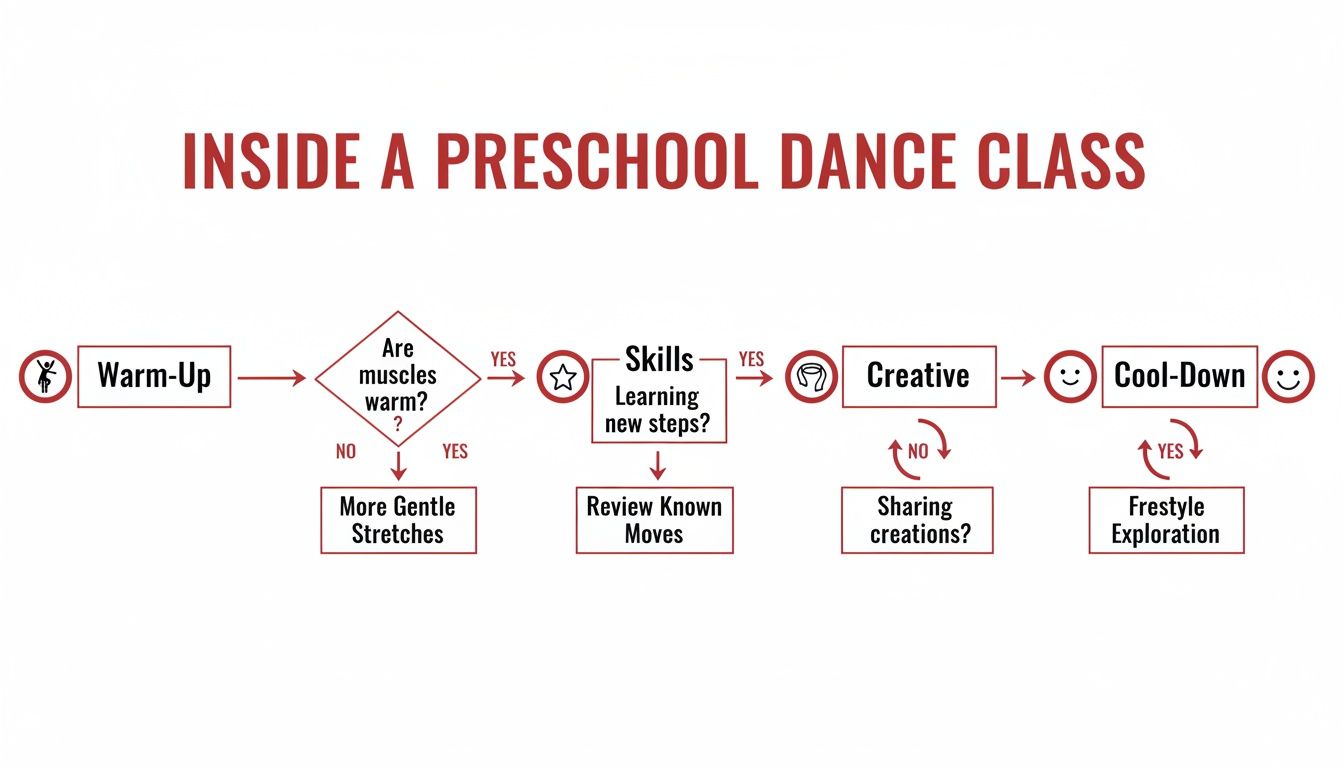
This flow is designed to hold their attention while gently introducing them to the fundamentals of dance. If you want to get a broader overview of the local scene, our guide on dance classes in Philadelphia is a great place to start.
Your Studio Evaluation Checklist
To make your search a little easier, we’ve put together this simple checklist. Use it to compare a few studios and see which one feels like the best fit for your family and your tiny dancer.
| Factor to Consider | What to Look For | Key Questions to Ask |
|---|---|---|
| Instructors | Teachers who are warm, patient, and experienced with the 3-5 age group. | "What experience do your teachers have with preschoolers?" "What's their teaching philosophy?" |
| Class Atmosphere | A focus on fun, creativity, and play-based learning over strict technique. | "How do you handle a child who is shy or doesn't want to participate?" "What's a typical class like?" |
| Class Size | Small groups that allow for individual attention. | "What's the maximum number of children allowed in a preschool class?" |
| Facility | A clean, bright, and safe space with proper flooring (like sprung floors). | "Can we see the studio where the class is held?" "What safety measures are in place?" |
| Trial Class | The opportunity to try a class before committing to a full session. | "Do you offer a trial class so my child can see if they like it?" |
Having these questions ready when you visit or call a studio will give you the confidence that you're making an informed choice.
The answer to that last question about a trial class is a big one. Honestly, the best way to know if a studio is right for you is to see it in action. Watching your child interact with the teacher and the other students will tell you everything you need to know.
That’s why we’ve always offered a complimentary first lesson. It’s a fun, zero-pressure way for your child to step into our world and see if it’s their happy place. Spaces are limited, so book your free lesson today to secure your spot!
Preparing Your Child for Their First Class
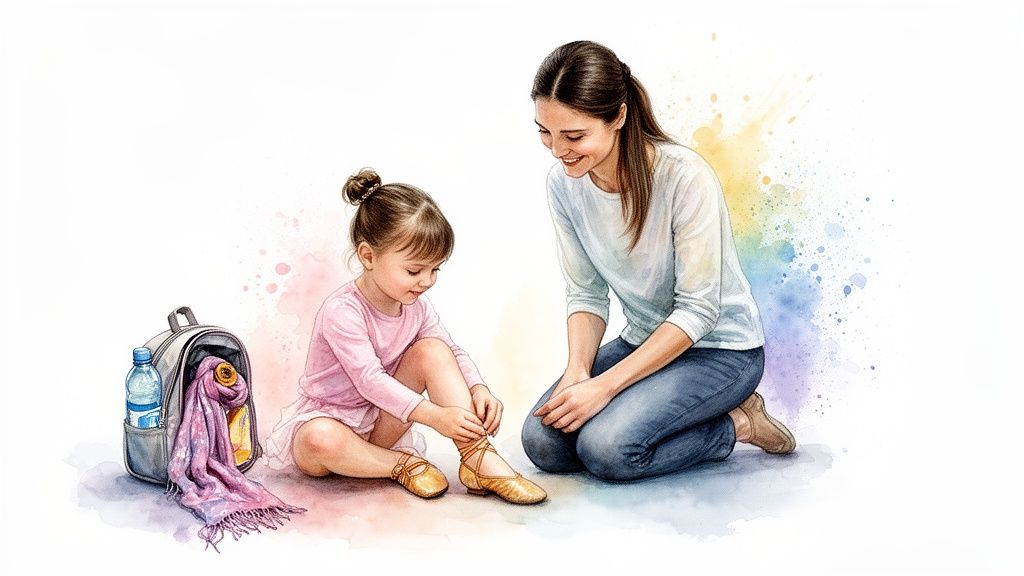
The first day of anything new is a big deal for a little one. It can be a whirlwind of excitement and a few butterflies, too. With a little bit of prep, you can help turn those first-day jitters into pure joy, making their initial dance class for preschoolers an adventure they’ll love.
The trick is to build positive hype and make them feel comfortable and ready before you even walk through the studio door. Talk about the class in a fun, exciting way—it's a place to meet new friends, move to fun music, and play awesome games. You can even explore fun concepts together, like Ballerina themes, to get them familiar with the world of dance.
What to Wear and Pack
For that very first class, comfort is king. You don't need to run out and buy a full uniform just yet. The focus should be on simple clothes that let them move freely.
- Comfortable Clothing: Think leggings, comfy shorts, and a t-shirt. Steer clear of anything too restrictive like jeans or fancy dresses that could get in the way.
- Bare Feet or Socks: For a trial lesson, bare feet or socks with grips on the bottom are usually perfect. This helps them feel the floor and get comfortable before you invest in proper dance shoes.
- A Small Bag: Pack a water bottle with their name on it to keep them hydrated. It’s a good idea to label everything, just in case!
Knowing what to bring and wear can help ease a lot of the unknown. If you want a more detailed breakdown, check out our guide on what parents should know about dance classes for kids in Philadelphia.
First impressions matter. The goal is to make the studio feel like a safe and exciting place, where your child's feelings are respected and their confidence can grow.
Navigating First-Day Jitters
It’s completely normal for a preschooler to feel a little shy or clingy when trying something new. If they seem hesitant, offer gentle reassurance without adding any pressure. Saying something like, "It's okay to feel a little nervous. We're going to have so much fun!" lets them know their feelings are valid.
Of course, the best way to see if a dance class is the right fit is to try it out. That's why Danza Academy offers a free complimentary lesson. It’s the perfect chance for your child to meet our friendly instructors and give it a twirl in a supportive, no-pressure environment.
Ready to watch them shine? Book your complimentary lesson on our contact page and let’s make their first dance class a wonderful success. It takes just a minute!
Your Questions About Preschool Dance Answered
Thinking about signing up your little one for a dance class? It’s completely normal to have a few questions buzzing around. We get it! Let's tackle some of the most common ones we hear from parents. Our goal is to clear up any hesitation so you can feel confident and excited about this new adventure.
What Is the Best Age to Start Dance Classes?
The sweet spot for starting a structured dance class is usually between ages 3 and 5. At this age, most little ones have developed enough coordination and focus to really get something out of a group activity. More importantly, they’re ready to learn through imagination and play.
Here at Danza Academy, our preschool curriculum is built specifically for this magical window. We focus on making their first taste of dance a blast, prioritizing creative movement over strict, formal technique.
Is Dance Good for Both Shy and Energetic Kids?
Absolutely! A great dance class is a wonderful space for kids of all personalities to thrive. For the little ones with endless energy, it offers a positive and structured way to channel all that enthusiasm.
And for shyer children? The class routine and our supportive instructors help them build confidence at their own pace. We’re experts at making every child feel included, whether they’re jumping right in or prefer to watch for a bit first.
A great dance class meets a child where they are. It provides the structure an energetic child needs to focus and the safe space a shy child needs to blossom.
What if My Child Doesn't Want to Participate at First?
First off, don't worry—this is completely normal and happens all the time! A new room, a new teacher, and new friends can feel like a lot for a little person. A good instructor knows this and will never, ever force a child to join in.
Instead, they'll use gentle encouragement and make the class so fun and inviting that your child will want to participate when they feel ready. Sometimes, the best motivation is just seeing the other kids having a great time. This is exactly why a trial class is so important; it’s a no-pressure way to test the waters.
Do We Need to Buy a Special Uniform or Shoes Right Away?
Nope! For the first few classes, comfort is king. Just dress your child in simple, non-restrictive clothes they can move in easily. Think leggings and a t-shirt or a basic leotard. For their feet, barefoot or socks with grips are perfectly fine to start.
We believe a child should fall in love with dancing first. The special leotards and shoes can come later, once you’re both sure it’s a good fit. The focus should always be on the fun, not the gear.
The best way to know if dance is right for your child is simply to give it a try! Danza Academy offers a free complimentary lesson for our preschool programs. It's a fun, no-pressure way for your little one to meet our teachers, explore the studio, and have a twirl. Ready to see them light up? Book your free trial class in seconds by visiting our contact page today!