
Kids ballroom dancing is a fantastic way for children to learn coordination, build confidence, and develop social skills, all through structured, partnered movement. But it's so much more than just learning a few steps. It’s a wonderful introduction to teamwork and self-expression, where styles like the playful Cha-Cha and the elegant Waltz create a foundation for lifelong poise and grace.
Why Kids Ballroom Dancing Is More Than Twirls and Taps
When you first hear "ballroom dancing," you might picture elaborate gowns and intense competitions. For kids, though, it’s a vibrant world filled with fun, music, and new friends.
Think of it less like a high-pressure sport and more like learning a new language. Each step is a word, and stringing them together creates beautiful, flowing sentences on the dance floor.
What makes it truly special is that it’s a unique blend of physical, mental, and social development. Unlike so many solo activities, ballroom dancing is built on partnership. From a young age, children learn to lead, follow, and communicate without words, building a sense of mutual respect and cooperation.
Building Skills Beyond the Dance Floor
The benefits go far beyond mastering a perfect Waltz. The process of learning routines and rhythms actually sharpens a child's memory and focus—skills that translate directly to better concentration in the classroom. The structured environment of a dance class also teaches discipline and the simple joy of seeing practice pay off.
Beyond the twirls and taps, kids ballroom dancing is a powerful way for children to develop crucial soft skills that are increasingly valued in today's world. Learning to navigate the dance floor with a partner fosters:
- Teamwork: Success comes from working together, not just as individuals.
- Respect: Kids learn to respect their partners, their instructors, and the shared space.
- Confidence: There's nothing like the feeling of mastering a new step or performing a short routine to give self-esteem a huge boost.
The real magic of kids ballroom dancing isn't in perfect technique, but in the confident smile a child gets when they master a new move. It's a journey of personal growth disguised as fun.
For parents trying to get a quick sense of what ballroom can offer, here's a simple breakdown.
Kids Ballroom Dancing At a Glance
| Aspect | What It Means for Your Child |
|---|---|
| Physical Development | Improves posture, balance, coordination, and overall fitness in a fun way. |
| Social Skills | Teaches partnership, non-verbal communication, respect, and teamwork. |
| Cognitive Growth | Sharpens memory, focus, and discipline through learning routines. |
| Emotional Confidence | Builds self-esteem by mastering new skills and performing for others. |
| Creative Expression | Offers a healthy outlet for self-expression through music and movement. |
This table shows just how well-rounded the benefits are, touching on nearly every aspect of a child's development.
A Foundation for Physical Literacy
From a physical standpoint, the advantages are clear. Ballroom dancing improves posture, balance, and coordination in a way that just feels like play. Studies have even shown that structured dance classes provide significant physical activity, contributing to a child’s overall health and fitness. For a deeper look, you can learn more about how dance classes improve fitness, flexibility, and focus in our detailed article.
Ready to see how this wonderful activity can light up your child's life? The best way to understand the joy of dance is to experience it firsthand.
Claim your child's free complimentary lesson at Danza Academy. It’s the perfect, no-pressure opportunity for them to step onto the floor and discover a new passion. Book your free trial on our contact page and watch them shine!
What Your Child Gains From Ballroom Dancing
Of course, it’s a joy to watch your child master a new step and light up the dance floor. But the real magic of ballroom dancing happens beneath the surface. Each class is about so much more than movement—it’s a powerful way to build physical strength, emotional intelligence, and a sharper mind. Think of it as a holistic activity that helps your child grow into a well-rounded, confident person from the inside out.
The physical benefits are usually the first thing parents notice. Right from the start, kids develop a new awareness of their bodies. Learning to hold a proper dance frame is a fantastic way to build strong, upright posture, which is a great antidote to the slouching that comes from screen time and sitting at school desks.
As they learn the quick, intricate footwork of a Cha-Cha or the elegant glide of a Foxtrot, their balance and coordination improve in leaps and bounds. This isn't just about not tripping on the dance floor; it's about building a solid foundation of physical literacy that will help them in sports, on the playground, and for the rest of their lives.
More Than Just Getting Active
Ballroom dance isn't just another way to get kids moving; it's a uniquely effective form of exercise. Research has shown that these classes deliver some serious physical and developmental perks. One major study found that 71.1% of elementary students in ballroom programs were getting moderate to vigorous physical activity for at least half the class time, hitting key cardiovascular health targets. On top of that, 72% of parents said it helped their kids develop coordination and got them excited about being active. You can dig into the full study to learn more about the health benefits of dance for children.
This kind of engagement makes dance a fantastic way to channel all that youthful energy into something constructive and healthy.
Social and Emotional Growth on the Dance Floor
The partner aspect of ballroom dancing is where some of the most profound benefits really shine. In a world filled with solo screen time, dance demands teamwork, clear communication, and mutual respect. Kids learn how to lead with confidence and how to follow with attentiveness—skills that translate directly to group projects at school and navigating friendships.
They learn to make eye contact, offer a hand to a partner, and work together to achieve a shared goal. It’s all happening in a structured, safe, and fun environment that builds empathy and social grace.
At its heart, kids ballroom dancing teaches a non-verbal conversation. Kids learn to listen with their bodies and speak through their movements, creating a deep understanding of cooperation and respect.
Dancing is also a huge confidence builder, closely aligning with the principles for raising an emotionally intelligent child. The journey from fumbling with a new step to finally nailing it is an incredible boost to their self-esteem.
Sharpening the Mind Through Movement
The brain gets just as much of a workout as the body. Learning choreography is fantastic for strengthening memory and recall. Dancers have to remember complex sequences of steps, timings, and patterns—all while moving to the music and coordinating with a partner.
This kind of multitasking is amazing for improving a child's ability to focus and concentrate. The discipline it takes to practice and perfect a routine also builds perseverance and a growth mindset, teaching them that effort leads to real improvement.
These skills don't stay in the studio, either. Parents often tell us they see a difference in their child's schoolwork as their focus and memory get sharper.
- Memory Retention: Remembering choreography strengthens neural pathways in the brain.
- Musicality and Rhythm: Learning to count music and move to a beat can improve mathematical and auditory processing skills.
- Problem-Solving: Dancers are constantly making tiny adjustments to their movements, which sharpens their ability to think on their feet.
Ready to see these amazing benefits for yourself? The only way to truly understand the positive impact of dance is to see your child experience it.
Take the first step today. We invite you to claim your free, no-obligation complimentary lesson with our expert instructors. See for yourself if Danza Academy is the right fit for your family. Book your free class today on our contact page and get ready to watch them shine!
From First Steps to Confident Performances
For parents and kids, stepping into a ballroom class for the first time can feel like entering a whole new world. What really happens in there? It’s not as formal or rigid as you might think. We’ve designed a gentle, exciting journey that builds skills piece by piece, making sure every child feels successful and stays excited to come back.
A typical class isn't about strict drills. It's a carefully planned hour of fun, starting with warm-up games. These aren't just for fun, though—they're cleverly designed to get little bodies moving, sharpen coordination, and sneak in basic rhythm practice without any pressure.
The Anatomy of a Dance Class
Once everyone's warmed up and buzzing with energy, the real lesson kicks off. The instructor will introduce a new concept, maybe a basic foot position, a simple rhythm, or the very first steps of a classic dance like the Waltz or Foxtrot. The key is always breaking things down into tiny, manageable chunks.
Think of it like building with LEGOs. You don’t start with a giant castle; you start by learning how to connect two little bricks. In the same way, a young dancer masters one step before linking it with another to create a simple pattern. This methodical approach is the secret to building real confidence.
After the instruction, it's time to practice, often with partners. We frequently have the kids rotate partners, and this is a huge plus! It teaches them how to adapt to different dancers, polishes their social skills, and makes sure everyone gets to dance equally, even if they didn't sign up with a friend.
This following infographic really shows how the skills they pick up in class contribute to a child's all-around development.
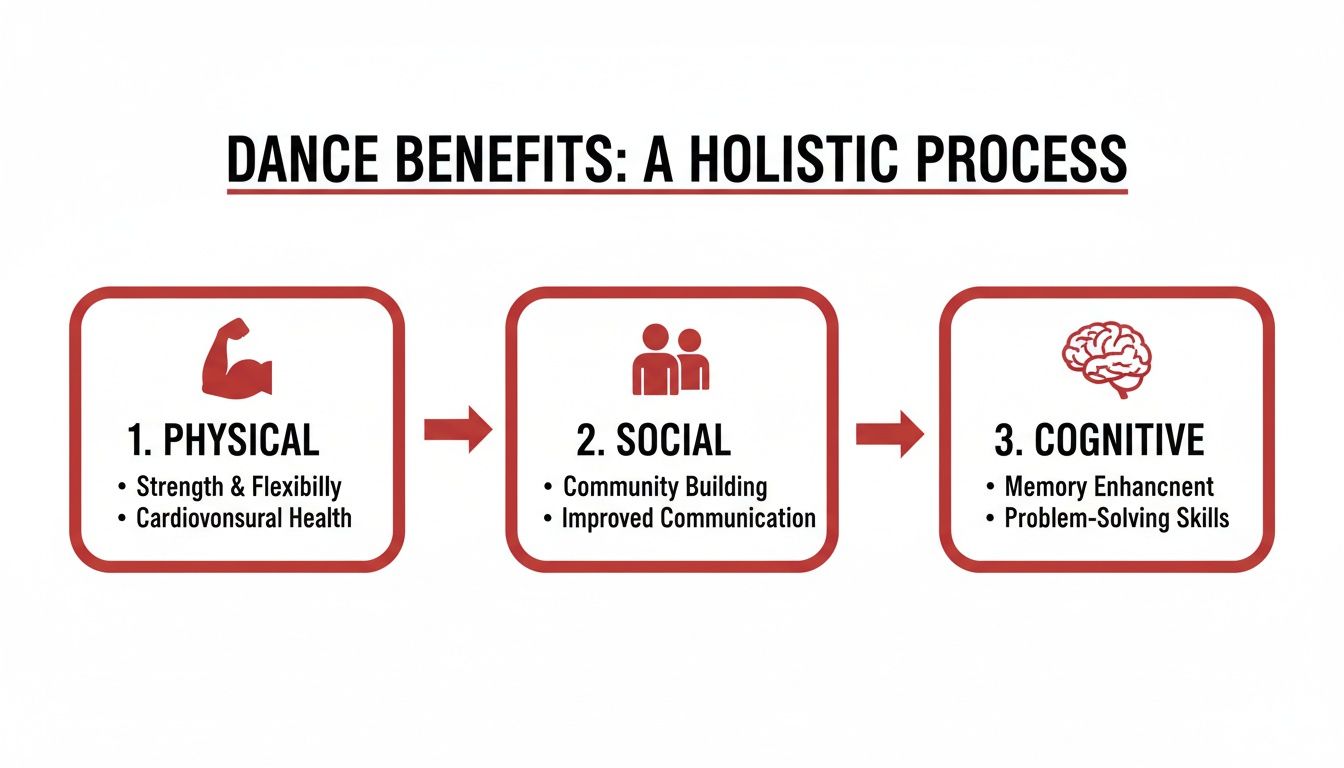
As you can see, ballroom dancing is a complete activity—it strengthens the body, sharpens the mind, and builds social skills all at the same time. Every class wraps up with a creative cool-down, giving the kids a moment to relax their muscles and feel proud of what they accomplished.
From Basic Steps to Intricate Patterns
Learning ballroom is a gradual upward spiral, not a steep, scary climb. A child might start by mastering the simple box step of the Waltz, which is the foundation for the whole dance. Once they're comfortable with that square pattern, their instructor might add a simple turn or introduce the graceful "rise and fall" motion that gives the Waltz its signature elegance.
After getting the hang of a "smooth" dance like the Waltz or Foxtrot, they might jump into the upbeat world of Latin dances. The progression for learning something new could look like this:
- Mastering the Rhythm: First, they’ll learn to hear and clap the unique beat of the Cha-Cha.
- Learning the Basic Step: Next, they’ll practice the "rock step, cha-cha-cha" on their own until it feels second nature.
- Adding a Partner: Then they’ll try the basic step with a partner, getting a feel for leading and following.
- Introducing a Turn: Finally, the instructor might add something fun like a simple underarm turn, combining the basic with a new, slightly more advanced element.
The goal is never perfection on day one. It's about celebrating the small wins—that first time a child completes a step without looking down, or the moment they confidently lead a partner through a simple pattern.
This step-by-step method makes sure kids never feel overwhelmed. Instead, they get a constant sense of achievement as they build on what they know, transforming from hesitant beginners into confident young dancers ready for their first performance. Each lesson layers a new skill onto a solid foundation, which makes learning feel both manageable and incredibly rewarding.
Ready to see this confidence-building process for yourself? Give your child the chance to experience it! We invite you to a free complimentary lesson at Danza Academy. It’s the perfect opportunity to meet our instructors, see our studio, and let your child take their very first step onto the dance floor. Book your free lesson on our contact page and start their dance journey today.
How to Choose the Right Dance Studio for Your Child
Finding the perfect dance studio is a huge part of making sure your child has an amazing time learning ballroom. The right place can spark a passion that lasts a lifetime, but the wrong one can just lead to frustration. Your goal is to find a spot where your kid feels safe, gets inspired, and is genuinely excited to learn.
This decision is about more than just finding the closest or cheapest option. It’s really about matching the studio’s vibe with your child’s personality and what your family is looking for. A truly great studio doesn’t just focus on perfect technique; it builds a positive and supportive community for its young dancers.
What to Look for in an Instructor
The instructor really is the heart and soul of any dance class. A great teacher for kids isn't just a skilled dancer—they’re a mentor, a motivator, and a guide all in one. Of course, they need dance expertise, but they also need real experience and a genuine love for teaching children.
Look for instructors who are patient, encouraging, and know how to make learning fun. If you can, watch them during a trial class. How do they talk to the students? Do they give individual feedback in a positive way? You want to see someone who can manage the class with a calm authority, creating an atmosphere where kids feel comfortable enough to ask questions.
The best instructors for kids' ballroom dancing are the ones who prioritize progress over perfection. They know how to celebrate the small wins and build a child's confidence, keeping the focus squarely on the joy of movement.
This teaching philosophy is everything. A studio that puts fun, personal growth, and teamwork ahead of high-pressure competition is almost always the best place for a young, aspiring dancer to start.
Evaluating the Studio Environment
The physical space and the overall feel of the studio play a massive role in your child's experience. When you visit, take a good look at the facilities. Are the dance floors well-maintained and safe for little feet? Is the studio clean, bright, and welcoming?
Beyond the physical stuff, try to get a sense of the emotional environment. Does it feel like a supportive community? That kind of positive energy is contagious and absolutely essential for building the confidence your child needs to shine on the dance floor. Parents everywhere are catching on to the benefits of dance education, and it shows. In some areas, the demand has led to a 150% increase in dance studios in just five years as more families seek out these positive environments. You can discover more about this trend and its drivers.
Here are a few key things to keep an eye out for:
- Small Class Sizes: This is critical. It ensures your child gets personal attention and doesn’t just get lost in the crowd.
- A Clear Curriculum: The studio should be able to explain how students progress from one level to the next. It shows they have a plan.
- Positive Atmosphere: If you can, watch a class. Do the kids look happy and engaged? Do they seem to support each other?
It can feel like a big decision, but we've got more detailed advice to help you out. Check out our guide on how to choose the right studio for your child.
The Power of a Trial Class
At the end of the day, the only way to really know if a studio is the right fit is to try it out. A trial class lets you and your child see the instructor in action, feel the vibe of the classroom, and maybe even meet a few other students. Think of it as the ultimate test run.
This is your chance to see if your child clicks with the teaching style and feels comfortable in the space. Don't skip this step—it gives you priceless insight that you just can't get from a website or a brochure.
Ready to find that perfect fit? We believe the best decisions come from seeing the magic for yourself. That’s why we invite you to claim your child’s free, no-obligation complimentary lesson at Danza Academy. It’s the best way to see our instructors in action and let your child discover just how fun dancing can be.
Book your free trial on our contact page and let’s get their dance journey started with confidence.
Supporting Your Young Dancer's Journey
As a parent, you’re one of the biggest factors in your child's dance experience. Seriously. The encouragement you give at home can turn a simple after-school activity into a lifelong passion. When you champion their efforts, you're building a foundation of confidence that will serve them well beyond the dance floor.
This support starts with the practical stuff, like making sure they have the right gear for class. Don’t worry, you don’t need fancy costumes right away, but the proper attire is key for both safety and learning good technique.
Dressing for Success on the Dance Floor
Dancewear isn't about looking a certain way; it’s about function. Your child needs comfortable clothes that allow for a full range of motion. Think simple, fitted clothing or athletic wear—nothing so baggy it hides their posture, and nothing so tight it restricts their movement.
The single most important piece of equipment? Their shoes. Sneakers might seem fine for the first few classes, but their rubber soles are designed to grip the floor. This makes turns and glides nearly impossible and can even be risky for their ankles and knees.
Proper ballroom shoes have special suede soles that offer the perfect balance of grip and slide. This is absolutely essential for learning correct footwork safely. As your child gets more serious, investing in a quality pair of dance shoes is one of the best ways you can support their growth.
To help you get started, here’s a simple checklist of what a beginner typically needs.
Beginner Ballroom Dance Attire Guide
| Item | For Boys | For Girls |
|---|---|---|
| Tops | A comfortable, well-fitting T-shirt or polo shirt. | A leotard or a fitted top that allows for easy movement. |
| Bottoms | Dark-colored athletic pants or comfortable dress trousers. | A practice skirt, leggings, or dance shorts. |
| Shoes | Beginner ballroom or Latin shoes with a low, sturdy heel. | Beginner ballroom or Latin shoes with a low, supportive heel. |
| Hair | Kept neat and safely out of the face. | Pulled back securely in a ponytail or bun. |
Making Practice Fun at Home
Progress comes from practice, but it shouldn't feel like a chore. The secret is to turn practice time into a fun family activity. This keeps your child motivated and helps reinforce what they’re learning in the studio in a joyful, low-pressure way.
Here are a few ideas to get you started:
- Host a Family Dance Party: Put on some Waltz, Cha-Cha, or Swing music and just have fun moving together in the living room. Let your child be the teacher and show you the steps they’ve learned.
- Watch Inspiring Performances: Hop on YouTube and find videos of professional ballroom dancers. Even clips from shows like Dancing with the Stars can be incredibly motivating for a young dancer.
- Play Rhythm Games: Clap along to different kinds of music. This is a simple but powerful way to help them develop their sense of timing and musicality—core skills for kids ballroom dancing.
Your job isn't to be a dance critic. Focus on their effort, not on perfection. Celebrate the joy of movement and the courage it takes to try something new. This kind of positive reinforcement builds a resilient mindset and a true, lasting love for dance.
The Power of Positive Encouragement
Your words have a massive impact. When you praise your child, try to focus on their hard work, their great attitude, or their willingness to get back up after a stumble. Instead of saying, "Your steps were perfect," you could say, "I loved how much energy you put into that dance!"
This small shift teaches them that progress is a journey and that every attempt is a victory. It nurtures their passion, skyrockets their confidence, and ensures the dance floor always remains a place of happiness and self-discovery.
Ready to see how our supportive environment can help your child thrive? The best way to experience the magic is to step onto the floor with us. We invite you to claim your child’s free complimentary lesson at Danza Academy. It's a wonderful, risk-free opportunity for your child to discover a new passion and for you to see our community in action. Book your free trial on our contact page and start their journey today.
Watch Your Child Shine on the Dance Floor
You’ve read all about how kids ballroom dancing builds confidence, skill, and just pure joy. Now, it’s time to see that transformation happen right before your eyes. At Danza Academy, we’ve built a welcoming community where every single child is encouraged to find their unique rhythm and potential on the dance floor.
Our instructors aren’t just experienced; they’re genuinely passionate about making dance a positive, rewarding part of a child's life. They get it—the best lessons are filled with encouragement, a whole lot of fun, and a deep respect for each child's individual pace. We truly believe the magic of dance is something you have to feel firsthand.
Your Invitation to a Free First Lesson
The best way to know if our studio is the right fit for your family? Step into one of our classes. We invite you and your child to a complimentary first lesson—it’s the perfect, no-pressure way to meet our teachers, check out our studio, and let your child experience the excitement for themselves.
This isn't just a free trial; it's a chance for your child to feel the music, meet some new friends, and take their very first step towards becoming a more confident and coordinated person.
This first lesson is all about engagement and fun, giving them a real taste of the supportive environment we create in every single session. Honestly, watching them in that first class can be almost as exciting as seeing them in their first recital! Speaking of which, if you're curious about what those big events are like, you might find our guide on how long dance recitals typically are helpful.
Don't wait to give your child this incredible gift. Let them step onto the dance floor and start their journey with us. Book your free class today and get ready to watch them shine.
Ready to get started? Book your child's free complimentary lesson on our contact page now!
Common Questions About Kids Ballroom Dancing
It's completely normal to have a few questions before signing your child up for something new. Even with all the amazing benefits of dance, you want to be sure it’s the right fit. We get it!
Let's clear up some of the most common things we hear from parents just like you, so you can feel confident and excited as your child starts their dance journey.
What Is the Best Age for a Child to Start Ballroom Dancing?
While little ones as young as 4 or 5 can have a blast in fun, movement-based classes, the sweet spot for more structured ballroom instruction is usually between 7 and 9 years old. At this age, most kids have developed the coordination and focus needed to learn specific steps and start working with a partner.
But honestly, there's no "wrong" time to begin. Older kids and teens often pick things up incredibly fast and really come alive in the social atmosphere of a dance class. The key is finding a program that matches their developmental stage to keep things fun and positive.
Does My Child Need a Partner to Join a Class?
Absolutely not! This is probably the biggest myth out there. The vast majority of kids' classes, including all of ours here at Danza Academy, don't require students to enroll with a partner.
Our instructors teach the steps to everyone individually first. When it's time for partner work, the kids rotate partners frequently. This is actually a huge plus—it teaches them to adapt to dancing with different people and helps them feel comfortable interacting with everyone in the group.
Is Ballroom Dancing Too Competitive for a Young Child?
Ballroom dancing definitely has a competitive side (often called DanceSport), but beginner classes for kids are all about fun, learning, and building skills. The goal is to spark a love for music and movement in a supportive, encouraging space, not to create a high-pressure environment.
At Danza Academy, our kids' programs are centered on personal growth, teamwork, and finding the joy in dance. Competition is always an option for students who show interest later on, but it's never required to be part of the fun.
What If My Child Is Shy or Thinks They Have Two Left Feet?
Then ballroom dancing might just be the perfect activity for them! The class structure provides a safe, predictable environment where shy kids can slowly build confidence by mastering new skills at their own pace.
As for having "two left feet," our instructors are experts at breaking down what looks like a complicated dance into simple, easy-to-learn steps. Time and time again, we see kids who were initially unsure of themselves become absolutely amazed by their own progress. That newfound confidence is something they carry with them long after they leave the dance floor.
Here at Danza Academy, we believe the best way to answer your questions is to let you see the magic for yourself. Come see how our welcoming instructors and fun-filled classes can help your child shine!
Take the first step and book a free complimentary lesson. It’s the perfect, no-pressure way for your child to step onto the dance floor and maybe even discover a lifelong passion. Book your free lesson on our contact page and let the journey begin.